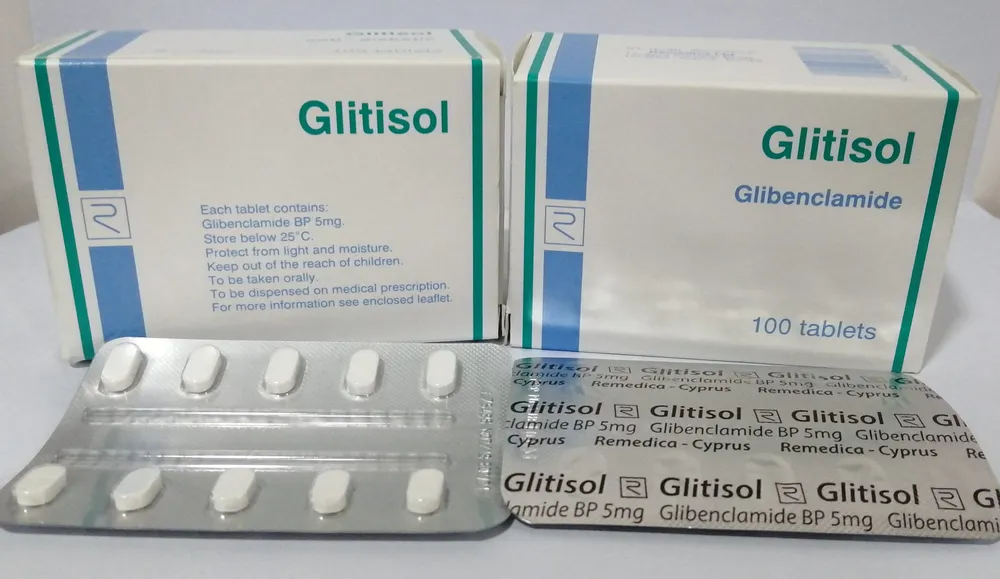
GLITISOL
ItalyIt is an antibiotic used to treat various infections caused by bacteria, including typhoid and paratyphoid fever, brucellosis, whooping cough, respiratory tract infections (such as bronchitis or lung abscesses), and infections of the nose, throat, and urinary tract.
Frequently asked questions
When should Glitisol not be taken?
It must not be used if you are allergic to the active ingredient or any of the components, if the kidneys produce very little urine, if you have disorders in blood cell production, or if you have a glucose-6-phosphate dehydrogenase deficiency.
How should Glitisol be taken?
The medication must be used following the doctor's instructions exactly. For injection use, the adult dose is 2-3 vials per day, divided into 3-4 administrations every 6-8 hours. For aerosol or instillation use, the methods and doses vary according to the medical prescription.
What are the main side effects of Glitisol?
Use via injection may cause changes in blood values, such as a reduction in red blood cells, platelets, and white blood cells. Hair loss has also been reported in patients with kidney problems. Nausea, vomiting, diarrhea, skin rashes, or fever may also occur.
Are there any special precautions for using Glitisol?
Treatment should not exceed 10 days. Caution is necessary if you suffer from renal failure or if you are taking other medications that affect blood cell production. During pregnancy or breastfeeding, it is necessary to consult a doctor, as use is not recommended during breastfeeding.
Can I take other medicines together with Glitisol?
You must inform your doctor if you are taking other medications, and you must avoid the simultaneous intake of other bactericidal antibiotics.
Instructions for use
Table of contents
- Glitisol 500 mg lyophilisate and solvent for injectable solution, for endotracheobronchial instillation, for nebuliser
- 1. What Glitisol is and what it is used for
- 2. What you need to know before using Glitisol
- 3. How to use Glitisol
- 4. Possible side effects
- 5. How to store Glitisol
- 6. Package contents and other information
Package leaflet:
Glitisol 500 mg lyophilisate and solvent for injectable solution, for endotracheobronchial instillation, for nebuliser
Thiamphenicol
Please read this leaflet carefully before using this medicine as it contains important information for you.
- Keep this leaflet. You may need to read it again.
- If you have any questions, ask your doctor or pharmacist.
- This medicine has been prescribed for you only. Do not give it to others, even if their symptoms are the same as yours, as it could be harmful.
- If you experience any adverse reaction, including those not listed in this leaflet, contact your doctor or pharmacist. See section 4.
Contents of this leaflet:
- What Glitisol is and what it is used for
- What you need to know before using Glitisol
- How to use Glitisol
- Possible side effects
- How to store Glitisol
- Contents of the pack and other information
1. What Glitisol is and what it is used for
The active substance of Glitisol is thiamphenicol, an antibiotic used in the treatment of various infectious diseases, including severe ones, caused by bacteria.
Glitisol is indicated for the treatment of infections caused by microorganisms sensitive to thiamphenicol, particularly:
typhoid and paratyphoid fever;
brucellosis;
whooping cough;
respiratory tract infections such as those occurring during inflammation of the bronchi (bronchitis), bronchiectasis, lung abscesses;
otorhinolaryngological infections such as infections of the nose and paranasal sinuses (rhinosinusitis), infections of the pharynx (pharyngitis) and larynx (laryngitis);
genital and urinary tract infections (genitourinary).
2. What you need to know before using Glitisol
Do not use Glitisol
- if you are allergic to thiamphenicol glycinate hydrochloride or to any of the other ingredients of this medicine (listed in section 6);
- if your kidneys produce only very small amounts of urine (anuria);
- if you have pre-existing disorders in blood cell production (pre-existing bone marrow depression);
- if you have glucose-6-phosphate dehydrogenase deficiency (an enzyme).
Warnings and precautions
Talk to your doctor or pharmacist before using this medicine.
Do not use this medicine to treat minor infections.
Treatment with Glitisol, as with other antibiotics, may lead to additional infections (superinfections) caused by bacteria resistant to this medicine or by fungi.
Exercise particular caution with Glitisol :
If you are undergoing concomitant treatment with medicines that cause myelosuppression, i.e. reduced activity in the production of blood precursor cells by the bone marrow (see "Other medicines and Glitisol").
If you have reduced kidney function (renal insufficiency), as this may prolong the presence of this medicine in the blood; in such cases, doses should be spaced further apart (see "How to use Glitisol").
If you need to administer this medicine to premature infants or newborns up to 2 weeks of age, due to their immature kidney function (see "How to use Glitisol").
The duration of Glitisol administration should be limited to the shortest period necessary to treat the infection, and treatment should not exceed 10 days. Prolonged treatment should only occur under medical supervision, and periodic monitoring of blood parameters (blood count) is required, with therapy interruption if appropriate.
Systemic administration (by injection) of Glitisol may cause changes in blood test values (haematological) (see section "Possible side effects"). These changes are reversible and depend on the administered dose. Such effects are more severe and prolonged in case of excessive dosage (overdose) or prolonged treatment, especially if there is reduced kidney function (renal insufficiency) or pre-existing impairment in blood cell production (pre-existing bone marrow depression).
Other medicines and Glitisol
Inform your doctor or pharmacist if you are taking, have recently taken, or might take any other medicines.
Avoid simultaneous use of Glitisol with other medicines used to treat bacterial infections (bactericidal antibiotics).
Pregnancy, breastfeeding and fertility
If you are pregnant, suspect you may be pregnant, planning pregnancy, or are breastfeeding, consult your doctor or pharmacist before using this medicine.
Do not use Glitisol during pregnancy unless strictly necessary.
Use of this medicine during breastfeeding is not recommended. If use is necessary, discontinue breastfeeding during treatment with Glitisol.
Excessive doses of this medicine may interfere with fertility. This effect is reversible upon discontinuation of treatment.
Driving and using machines
It is unknown whether Glitisol affects the ability to drive vehicles or operate machinery.
Glitisol contains sodium
This medicine contains less than 1 mmol of sodium (23 mg) per vial, i.e. it is practically 'sodium-free'.
3. How to use Glitisol
Use this medicine exactly as directed by your doctor or pharmacist. If you have any doubts, consult your doctor or pharmacist.
Treatment should not exceed 10 days.
The recommended dose for systemic use (by injection) is:
Adults: 2-3 vials per day (1-1.5 g)
Use in children: 25-50 mg/kg per day
The daily dose should be divided into 3-4 administrations (every 6-8 hours) in order to maintain sufficient antibacterial concentrations of this medicine in the bloodstream.
Dissolve Glitisol at the time of use by adding 5 or 10 ml (1 or 2 ampoules) of solvent into the vial containing the powder (lyophilized product). This results in solutions of 10% or 5% concentration, respectively (containing 100 mg or 50 mg of thiamphenicol per ml).
- For intramuscular use (injection into the muscle): use the 10% solution.
- For intravenous use (injection into a vein): use the 5% solution.
Do not reuse any remaining solution after partial administration.
The recommended dose for topical use (aerosol or instillations) is:
-
For aerosol
Adults: 2 ml of 10%, 1-2 times daily.
Use in children: 1-2 ml of 5% or 10%, 1-2 times daily (as determined by the physician). -
For instillations
For local delivery of the liquid into the lungs (bronchoinstillation or endotracheobronchial instillation) or into body cavities (intra-cavitary), generally half a vial to one vial diluted to 5% or 10% is used.
For instructions on storage of the reconstituted solution, see the section “How to store Glitisol”.
Use in premature infants and newborns
Due to incomplete renal function, exercise caution when dosing in premature infants and newborns up to 2 weeks of age (typically 25 mg per kg).
Use in elderly patients and patients with impaired kidney function (renal insufficiency)
If you are elderly or suffer from moderate renal impairment (creatinine clearance between 20-50 ml/min), the recommended dose is 500 mg twice daily; in cases of more severe impairment (creatinine clearance between 5-19 ml/min), the recommended dose is 500 mg once daily.
If you have persistently high blood nitrogen levels (azotemia) exceeding 100 mg, the recommended dose is 500 mg every two days.
If you use more Glitisol than you should
In case of accidental overdose, contact your doctor immediately or go to the nearest hospital.
Generally, overdose symptoms are not different from the adverse effects listed in this leaflet (see “Possible side effects”) and from any non-specific problems related to excessive intake of broad-spectrum antibiotics (dysmicrobism, superinfections).
If you have any questions about using this medicine, consult your doctor or pharmacist.
4. Possible side effects
Like all medicines, this medicine can cause side effects, although not everybody gets them.
The main side effects observed following systemic administration (by injection) of thiamphenicol include disorders affecting blood cell production (bone marrow suppression), resulting in a deficiency of red blood cells (anaemia), platelets (thrombocytopenia), and white blood cells (leucopenia).
These effects are dose-dependent and reversible upon discontinuation of treatment.
In patients with renal impairment, loss of hair and body hair (alopecia), possibly leading to baldness, has been reported. This effect is reversible upon discontinuation of treatment.
Frequency not known (frequency cannot be estimated from the available data):
- severe, rapidly occurring allergic reaction (anaphylactic reaction),
- bacterial toxin-related reaction during treatment of typhoid fever (Herxheimer-type reactions),
- deficiency of red blood cells in the blood (anaemia),
- deficiency of platelets in the blood (thrombocytopenia),
- deficiency of white blood cells in the blood (leucopenia),
- inflammation of the optic nerve (optic neuritis),
- damage to the peripheral nervous system (peripheral neuropathy) (after prolonged administration),
- nausea,
- vomiting,
- diarrhoea,
- skin rash,
- loss of hair and body hair (alopecia),
- fever (pyrexia).
Additional side effects in newborns and premature infants
Following systemic administration (by injection), in newborns and premature infants a syndrome may occur, characterized by abdominal swelling (abdominal distension) and bluish discoloration of the skin (pallid cyanosis); once started, this syndrome may progress to severe cardiac and circulatory dysfunction (cardiocirculatory failure) and death.
Following the instructions provided in this leaflet reduces the risk of side effects.
Reporting of side effects
If you experience any side effects, including those not listed in this leaflet, please contact your doctor or pharmacist. You may also report side effects directly via the national reporting system at www.agenziafarmaco.gov.it/it/responsabili. By reporting side effects, you can help provide more information on the safety of this medicine.
5. How to store Glitisol
Keep this medicine out of the sight and reach of children.
Do not use this medicine after the expiry date stated on the packaging after "Exp.". The expiry date refers to the last day of that month. The indicated expiry date applies to the product in its original, unopened packaging stored correctly.
Topical use (aerosol and instillation): 5% Glitisol solutions remain stable for 10 days if stored at a temperature not exceeding 5°C, and 10% Glitisol solutions remain stable for 5 days if stored at a temperature not exceeding 5°C.
Do not dispose of any medicine via wastewater or household waste. Ask your pharmacist how to dispose of medicines you no longer use. This will help protect the environment.
6. Package contents and other information
What Glitisol contains
- The active substance is thiamphenicol. One vial of lyophilisate contains 500 mg of thiamphenicol (equivalent to 631 mg of thiamphenicol glycinate hydrochloride).
- The components present in the solvent vial are: sodium chloride, water for injections.
Description of the appearance of Glitisol and contents of the pack
Glitisol is presented as a powder (lyophilisate) and solvent for injectable solution, for endotracheobronchial instillation and for nebulization
1 vial of lyophilisate + 2 solvent vials of 5 ml each
Marketing Authorization Holder
ZAMBON ITALIA s.r.l. - Via Lillo del Duca 10 - 20091 Bresso (MI)
Manufacturer
ZAMBON S.p.A. - Via della Chimica 9 - Vicenza
The original data is available in the language of the country of manufacture.
Data source: Italian Medicines Agency (AIFA)
Data last verified: September 21, 2026