DEFLAZACORT FG
ItalyIt is used to treat inflammation and to reduce the immune system response in various conditions, including rheumatic diseases, skin diseases, allergies, respiratory diseases, eye diseases, blood diseases, and stomach or intestinal disorders.
Frequently asked questions
How should I take DEFLAZACORT FG?
The medicine should be taken exactly according to the instructions of the doctor or pharmacist. It is recommended to take the daily dose in a single administration, in the morning, together with small amounts of food.
When should I not take this medicine?
It must not be taken if you are allergic to deflazacort, if you suffer from tuberculosis, peptic ulcer, Herpes simplex virus eye infections, or systemic fungal infections, if you suffer from psychosis, or if you have received a live attenuated virus vaccine.
What are the side effects of DEFLAZACORT FG?
Possible side effects include weight gain, sleep or mood disturbances (such as anxiety or depression), vision problems (such as cataracts or glaucoma), bone fragility, delayed wound healing, increased risk of infections, stomach disturbances, and possible skin changes (such as acne or stretch marks).
What should I do if I notice serious skin reactions?
If red patches appear on the body, blisters, skin peeling, or ulcers in the mouth, eyes, or genitals, it is necessary to stop using DEFLAZACORT FG and consult a doctor immediately.
Can I stop treatment suddenly?
No, treatment should not be stopped abruptly. The dose reduction must always be carried out gradually according to the doctor's instructions.
Are there interactions with other medicines?
Yes, some drugs may affect the effect of DEFLAZACORT FG. It is important to inform the doctor if you are taking medicines for seizures, antibiotics, anticoagulants, drugs for diabetes, blood pressure, or asthma, or other treatments for HIV.
Can I take this medicine during pregnancy or breastfeeding?
It may be taken during pregnancy or breastfeeding only in cases of absolute necessity and under the direct supervision of a doctor, as it may cause harm to the fetus and the newborn.
Instructions for use
Package leaflet: Information for the patient
DEFLAZACORT FG 6 mg tablets, 30 mg tablets
Equivalent Medicine
Please read this leaflet carefully before taking this medicine because it contains important information for you.
- Keep this leaflet. You may need to read it again.
- If you have any questions, ask your doctor or pharmacist.
- This medicine has been prescribed for you only. Do not give it to other people, even if their symptoms are the same as yours, because it could be harmful.
- If you experience any adverse reaction, including those not listed in this leaflet, contact your doctor or pharmacist. See section 4.
Contents of this leaflet:
- What DEFLAZACORT FG is and what it is used for
- What you need to know before taking DEFLAZACORT FG
- How to take DEFLAZACORT FG
- Possible side effects
- How to store DEFLAZACORT FG
- Contents of the pack and other information
1. What DEFLAZACORT FG is and what it is used for
DEFLAZACORT FG contains the active substance deflazacort, which belongs to a group of medicines called corticosteroids (or glucocorticoids). Corticosteroids are naturally produced in our body and help regulate important processes essential for general health.
DEFLAZACORT FG is used to treat inflammation and to reduce the immune system's response (the system that protects the body from viruses, bacteria, etc.) in certain diseases.
DEFLAZACORT FG is indicated for the treatment of:
- disorders due to insufficient activity of the adrenal glands (primary and secondary adrenal insufficiency) (alone or in combination with other medicines called mineralocorticoids);
- rheumatic diseases (psoriatic arthropathy, rheumatoid arthritis, ankylosing spondylitis, acute gouty arthritis, post-traumatic osteoarthritis, acute and subacute bursitis, acute nonspecific tenosynovitis, epicondylitis);
- systemic connective tissue diseases (tissue that connects other tissues within the body): [systemic lupus erythematosus (SLE), acute rheumatic carditis (rheumatic heart disease), systemic dermatomyositis (polymyositis)];
- skin diseases [pemphigus, bullous herpetiform dermatitis, severe polymorphic erythema (Stevens-Johnson syndrome), exfoliative dermatitis, mycosis fungoides (cutaneous lymphoma), severe psoriasis, severe seborrheic dermatitis];
- allergies (seasonal or perennial allergic rhinitis, bronchial asthma, contact dermatitis, atopic dermatitis, serum sickness, drug hypersensitivity);
- respiratory diseases [symptomatic sarcoidosis, berylliosis, fulminant or disseminated pulmonary tuberculosis (in association with appropriate chemotherapy), aspiration pneumonia];
- eye diseases due to severe acute and chronic inflammatory or allergic processes (marginal allergic corneal ulcers, ocular herpes zoster, inflammation of the anterior segment of the eyeball, posterior diffuse choroiditis and uveitis, sympathetic ophthalmia, allergic conjunctivitis, keratitis, chorioretinitis, optic neuritis, iritis and iridocyclitis);
- blood disorders, including malignant forms (secondary thrombocytopenia in adults, autoimmune hemolytic anemia, erythroblastopenia, congenital hypoplastic anemia, Hodgkin's disease, non-Hodgkin lymphomas, chronic lymphatic leukemia, acute leukemia in childhood, etc.);
- conditions characterized by fluid accumulation (idiopathic nephrotic syndrome of unconfirmed or secondary origin due to Systemic Lupus Erythematosus);
- gastrointestinal diseases (ulcerative colitis, regional enteritis).
2. What you need to know before taking DEFLAZACORT FG
Do not take DEFLAZACORT FG
- if you are allergic to deflazacort or to any of the other ingredients of this medicine (listed in section 6);
- if you have tuberculosis;
- if you have peptic ulcer;
- if you have an eye infection caused by the Herpes simplex virus;
- if you have systemic fungal infections (systemic mycotic infections);
- if you suffer from mental illnesses (psychosis);
- if you have been administered a live attenuated virus vaccine.
Warnings and precautions
Talk to your doctor or pharmacist before taking DEFLAZACORT FG.
Patients undergoing treatment for more than 3 weeks must carry the prescription for DEFLAZACORT FG therapy and show it to any healthcare professional involved in their care.
Do not stop taking DEFLAZACORT FG suddenly, unless advised by your doctor.
Be especially careful with DEFLAZACORT FG and inform your doctor:
- if you have ever developed a severe skin rash or skin peeling, blisters and/or mouth ulcers after taking DEFLAZACORT FG or other deflazacort-containing medicines. Serious skin reactions, including toxic epidermal necrolysis, have been reported in association with DEFLAZACORT FG treatment. Stop using DEFLAZACORT FG and consult a doctor immediately if you notice any of the symptoms described in section 4.
- if you have or have had particular stress: your doctor will adjust the dose according to the type of stress. Even if you have stopped treatment several months ago, your doctor will decide whether to continue it, restart it, or prescribe appropriate hormone therapy. The dose should always be reduced gradually to minimize impairment of adrenal gland function;
- if you have an underactive thyroid (hypothyroidism);
- if you have liver disease (hepatic cirrhosis);
- if you have tuberculosis: you may use DEFLAZACORT FG in cases of fulminant or generalized disease, provided it is given together with appropriate anti-tuberculosis treatment. Your doctor will monitor you closely;
- if you have a form of inflammation with risk of intestinal perforation (non-specific ulcerative colitis);
- if you have abscesses or infections causing pus formation;
- if you have an intestinal inflammatory disease (diverticulitis);
- if you have recently undergone intestinal surgery (intestinal anastomoses);
- if you have kidney disease (renal failure);
- if you have high blood pressure;
- if you have diabetes;
- if you have reduced mineral content in your bones (osteoporosis);
- if you suffer from a disease causing severe muscle weakness (myasthenia gravis);
- if you have an infection: corticosteroids may mask certain signs of infection, and additional infections may occur during treatment. In such cases, your doctor will assess whether to administer an antibiotic;
- if you need to be vaccinated: you must not be vaccinated during corticosteroid treatment;
- if you have or have had emotional instability or a tendency to develop mental illness, as these may worsen during treatment. Euphoria, difficulty sleeping (insomnia), mood or personality changes, severe depression, or symptoms of actual psychiatric disorders may also occur;
- if you come into contact with people affected by chickenpox or shingles, especially if you have not previously had chickenpox.
Patients receiving DEFLAZACORT FG treatment must pay special attention to avoid exposure to measles and should consult a doctor immediately if such exposure occurs.
Prolonged use of DEFLAZACORT FG, as with other glucocorticoids, may cause clouding of the eye's natural lens known as posterior subcapsular cataract, increased intraocular pressure (glaucoma) with possible damage to the optic nerves, and may increase the risk of fungal or viral eye infections.
Contact your doctor if you experience blurred vision or other visual disturbances.
If you are being treated concomitantly with other medicines such as diuretics and beta2-agonists, your doctor may prescribe blood tests to monitor certain parameters (potassium and blood pH).
For athletes: using this medicine without therapeutic need constitutes doping and may result in a positive anti-doping test.
Children
In early infancy, this product should be used only when strictly necessary and under direct medical supervision.
The doctor will carefully monitor the growth and development of children undergoing prolonged treatment.
Consult your doctor immediately if your child comes into contact with someone affected by chickenpox or shingles and has not previously had chickenpox.
Other medicines and DEFLAZACORT FG
Inform your doctor or pharmacist if you are currently taking, have recently taken, or might take any other medicines.
Although no interactions with other medicines or incompatibilities with DEFLAZACORT FG are known, your doctor may decide to increase the dose during concomitant treatment with:
- anticonvulsant medicines (phenobarbital, diphenylhydantoin, carbamazepine, phenytoin, primidone);
- certain antibiotics used to treat bacterial infections (rifampicin, rifabutin);
- medicines used to prevent blood clot formation (coumarin anticoagulants, e.g. warfarin). Consult your doctor, as specific monitoring (prothrombin time or INR) is required;
- ephedrine, a bronchodilator medicine;
- aminoglutethimide, a medicine used to reduce steroid hormone production.
Your doctor may decide to reduce the dose during concomitant treatment with:
- antibiotics used to treat bacterial infections (erythromycin, troleandomycin);
- ketoconazole, used for fungal infections;
- medicines containing female hormones (estrogens) or estrogen-containing preparations.
Some medicines may enhance the effects of DEFLAZACORT FG, and your doctor may wish to monitor you closely if you are taking these medicines (including certain HIV treatments: ritonavir, cobicistat).
Your doctor will prescribe this medicine cautiously during concomitant treatment with:
- acetylsalicylic acid (an anti-inflammatory medicine), which at low doses is used to prevent blood clots. Consult your doctor if you have blood clotting disorders (hypoprothrombinemia);
- medicines used to reduce stomach acidity (antacids), as they may reduce the intestinal absorption of DEFLAZACORT FG;
- quetiapine, a medicine used for mental disorders;
- medicines used to treat infections (anti-infectives);
- medicines used to treat diabetes (oral agents and insulin);
- medicines used to control blood pressure or heart conditions (antihypertensives, loop diuretics, thiazide diuretics), medicines used to treat asthma (xanthines and beta2-agonists), and carbenoxolone, a medicine used for stomach problems. Consult your doctor, as increased potassium loss from the blood may occur;
- medicines used to relax muscles (non-depolarizing muscle relaxants). Concurrent use of these medicines with DEFLAZACORT FG may cause prolonged muscle relaxation and muscle problems (acute myopathy).
Pregnancy and breastfeeding
If you are pregnant, think you may be pregnant, are planning to become pregnant, or are breastfeeding, consult your doctor or pharmacist before taking this medicine.
If you are pregnant or breastfeeding, take DEFLAZACORT FG only when strictly necessary and under direct medical supervision, as it may cause harm to the fetus or newborn.
Do not take this medicine during pregnancy or while breastfeeding unless carefully evaluated by your doctor.
Driving and using machines
Currently, no effects of glucocorticoids on the ability to drive or operate machinery are known.
DEFLAZACORT FG 6 mg tablets contain lactose and sucrose
This medicine contains lactose and sucrose. If your doctor has diagnosed you with an intolerance to certain sugars, contact him/her before taking this medicine.
DEFLAZACORT FG 30 mg tablets contain lactose
This medicine contains lactose. If your doctor has diagnosed you with an intolerance to certain sugars, contact him/her before taking this medicine.
3. How to take DEFLAZACORT FG
Take this medicine exactly as directed by your doctor or pharmacist. If you have any doubts, consult your doctor or pharmacist.
It is recommended to take the daily dose as a single dose in the morning, with a small amount of food, by mouth.
The tablets cannot be divided. Therefore, if the required dose cannot be achieved with the available dosage strengths, another medicine must be used.
The recommended starting dose in adults ranges from 6 mg to 90 mg per day, depending on the severity and progression of the disease being treated. Your doctor will evaluate whether to maintain or adjust the initial dose to achieve an adequate therapeutic response based on the disease and individual response. The maintenance dose should always be the lowest dose capable of controlling symptoms.
Dose reduction should always be carried out gradually.
Use in children
In early infancy, this product should be used only when strictly necessary and under direct medical supervision. Children undergoing prolonged corticosteroid treatment must be closely monitored with regard to growth and development.
If you take more DEFLAZACORT FG than you should
If you accidentally take an excessive dose of this medicine, contact your doctor immediately or go to the nearest hospital.
If you forget to take DEFLAZACORT FG
Do not take a double dose to make up for the missed tablet.
If you stop taking DEFLAZACORT FG
Do not stop treatment abruptly. Your doctor will instruct you on how to gradually reduce the dose.
If you have any questions about the use of this medicine, consult your doctor or pharmacist.
4. Possible side effects
Like all medicines, this medicine can cause side effects, although not everyone experiences them.
Discontinue use of DEFLAZACORT FG and consult a doctor immediately if you notice any of the following symptoms:
- Reddish patches on the trunk; the patches are target-like or circular macules, often with central blisters, skin peeling, ulcers in the mouth, throat, nose, genitals, and eyes. These severe skin rashes may be preceded by fever and flu-like symptoms (toxic epidermal necrolysis) (frequency not known) within 8 weeks of starting treatment.
The following side effects may occur:
Rare side effects (may affect up to 1 in 1,000 people)
- Blurred vision;
- Heart problems (hypertension and congestive heart failure), induced by changes in blood electrolyte levels (electrolyte imbalance);
During treatment with corticosteroids such as DEFLAZACORT FG, especially with intensive and prolonged therapy, the following side effects may occur with unknown frequency:
- Weight gain, increased appetite, disturbances in carbohydrate metabolism (impaired glucose tolerance), latent diabetes mellitus, need to increase antidiabetic medications in diabetics;
- Increased susceptibility to infections without apparent symptoms, lung infection caused by a bacterium (latent tuberculosis), fungal infections (candidiasis);
- Bone problems (osteoporosis), bone fragility, muscle problems (myopathies), vertebral and long bone fractures, death of bone tissue due to interruption of blood supply (avascular necrosis), tendon inflammation (tendinitis), tendon rupture when administered with quinolones (medicines used to treat bacterial infections);
- Dizziness, headache (cephalalgia), increased intracranial pressure (endocranial pressure), worsening of epilepsy;
- Various psychiatric disorders: irritability, feelings of worry or fear (anxiety), suicidal thoughts, obsessive ideas and behaviors (mania), depression, hallucinations, worsening of schizophrenia, feelings of well-being (euphoria), sleep disturbances (insomnia), mood or personality changes, severe depression, memory (amnesia) and attention disorders (cognitive disorders), including confusion;
- Delayed wound healing, thinning and fragility of the skin, increased hair growth in areas not normally hairy (hirsutism), appearance of pimples (acne), stretch marks (striae), bruising (ecchymoses), dilation of small superficial blood vessels (telangiectasia), swelling in various parts of the body due to fluid accumulation (edema);
- Eye disorders: posterior subcapsular cataract (progressive loss of lens transparency), increased intraocular pressure (endocular pressure), inflammation of the inner membrane of the eye (chorioretinopathy), thinning of the white part of the eye (sclera) or of the membrane covering the eye (cornea), worsening of viral or fungal eye diseases (viral or fungal ophthalmic diseases);
- Stomach and intestinal disorders (gastric or duodenal peptic ulcer), digestive difficulties (dyspepsia), bleeding (hemorrhage), nausea, perforation of peptic ulcer, acute pancreatitis (especially in children), candidiasis (fungal infection);
- Irregular menstrual cycle;
- Heart problems (heart failure: inability of the heart to supply adequate blood flow to meet the body's needs);
- Negative nitrogen balance (decreased body nitrogen due to reduced muscle mass from excessive metabolism); electrolyte imbalance including hypokalemia (reduced potassium in blood) and hypernatremia (increased sodium in blood);
- Disruption of the connection between the brain and adrenal glands (interference with hypothalamic-pituitary-adrenal axis function), particularly under stress conditions, hormonal disorders (endocrine dysfunction), changes in facial appearance ("moon face");
- Increased number of white blood cells in the blood (leukocytosis);
- Allergic reactions (hypersensitivity), including anaphylaxis (a specific pathological reaction in an organism already sensitized to a substance upon re-exposure);
- Formation of blood clots in veins (thromboembolism) in patients predisposed to thrombosis, increased intracranial pressure (benign intracranial hypertension);
- Hiccups.
Additional side effects in children and adolescents
The following side effect may occur:
- Growth disturbances.
Reporting of side effects
If you experience any side effects, including those not listed in this leaflet, speak to your doctor or pharmacist. You may also report side effects directly via the national reporting system at https://www.aifa.gov.it/content/segnalazioni-reazioni-avverse. By reporting side effects, you can help provide more information on the safety of this medicine.
5. How to store DEFLAZACORT FG
Keep this medicine out of the sight and reach of children.
Do not use this medicine after the expiry date stated on the packaging after “Exp”.
The expiry date refers to the last day of that month.
This medicine does not require any special storage conditions.
Do not dispose of any medicine via wastewater or household waste. Ask your pharmacist how to dispose of medicines you no longer use. This will help protect the environment.
6. Package contents and other information
What DEFLAZACORT FG 6 mg tablets contain
- The active substance is deflazacort: each tablet contains 6 mg of deflazacort.
- The other ingredients are: monohydrate lactose, magnesium stearate, pregelatinized starch, microcrystalline cellulose, sucrose, anhydrous colloidal silica.
What DEFLAZACORT FG 30 mg tablets contain
- The active substance is deflazacort: each tablet contains 30 mg of deflazacort.
- The other ingredients are: monohydrate lactose, magnesium stearate, pregelatinized starch, microcrystalline cellulose, anhydrous colloidal silica.
Description of the appearance of DEFLAZACORT FG and contents of the pack
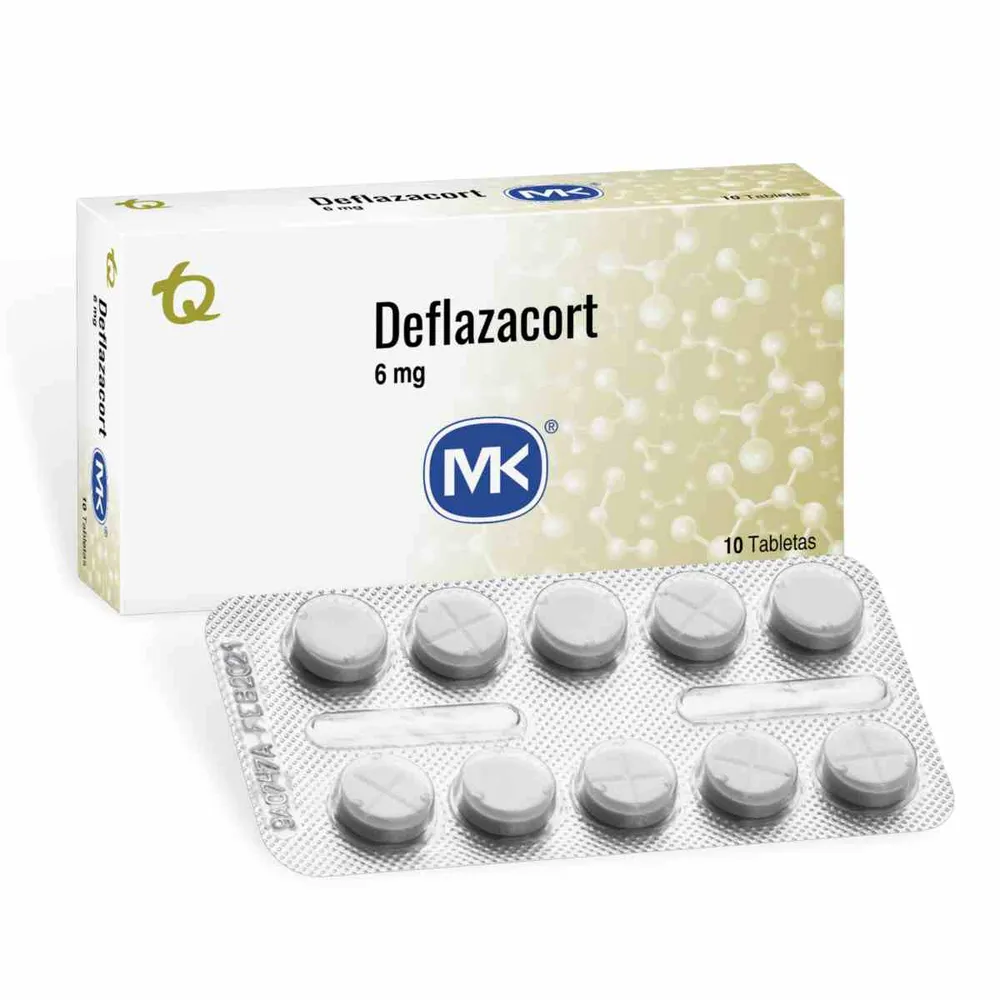
6 mg and 30 mg packs containing 10 tablets in PVC/PVDC/AL blisters.
Marketing Authorization Holder
FG S.r.l. - Via San Rocco, 6 - 85033 - Episcopia (Potenza)
Manufacturer
Doppel Farmaceutici S.r.l. - Via Martiri delle Foibe, 1 - 29016 - Cortemaggiore (Piacenza)
Similar drugs
| Brand name | Dosage form | Active substance / Dosage | Manufacturer |
|---|---|---|---|
| DECOR | tablets | LABORATORIO CHIMICO DECA DR.CAPUANI S.R.L. | |
| DEFLAN | tablets | LABORATORI GUIDOTTI S.P.A. | |
| DEFLAZACORT EG | tablets | EG S.P.A. | |
| DEFLAZACORT PHARMEG | tablets | PHARMEG S.R.L. | |
| FLANTADIN | tablets | TEOFARMA S.R.L. | |
| SURRENOL | tablets | EPIFARMA S.R.L |
The original data is available in the language of the country of manufacture.
Data source: Italian Medicines Agency (AIFA)
Data last verified: September 21, 2026