CITRAFLYT
UkraineThe drug is used for bowel cleansing before radiological examinations, endoscopy, or before surgical operations in adults.
Frequently asked questions
How should Citraflyt be taken correctly?
The contents of one sachet should be dissolved in a glass of water (approximately 150 ml) and consumed immediately. Usually, two sachets are taken at an interval of at least 5 hours. Different administration schedules are possible (for example, one in the evening, the second in the morning), depending on the time of the procedure. 10 minutes after administration, it is recommended to drink 1.5–2 liters of clear fluids (soups or electrolyte solutions), avoiding only pure demineralized water.
Who should not use this drug?
Contraindications include hypersensitivity to the components, congestive heart failure, gastrointestinal ulcers, intestinal obstruction, acute appendicitis, active inflammatory processes in the intestine (Crohn's disease, ulcerative colitis), severe dehydration, hypermagnesemia, and serious renal impairment.
What are the possible side effects of Citraflyt?
The most common side effects are abdominal pain, nausea, diarrhea, thirst, fatigue, headache, and sleep disturbances. Dry mouth, abdominal bloating, dizziness, and skin rashes are also possible. In rare cases, seizures or serious intestinal complications may occur.
Can other medicines be taken together with this product?
The drug may alter the effect of other medicines (for example, antibiotics, anticonvulsants, antidiabetics, or contraceptives). Certain drugs, such as iron, tetracyclines, or digoxin, should be taken either 2 hours before or 6 hours after Citraflyt. Caution should also be exercised when taking diuretics and corticosteroids.
Can the drug be used during pregnancy?
Use during pregnancy is not recommended, as there is insufficient clinical data, and the active substances stimulate intestinal peristalsis.
Can you drive a vehicle during treatment?
You should refrain from driving vehicles, as the drug may cause fatigue or dizziness.
Instructions for use
INSTRUCTIONS FOR MEDICAL USE OF THE MEDICINAL PRODUCT CitraFleet
Composition:
Active substances: sodium picosulfate, magnesium oxide light, citric acid;
1 sachet contains sodium picosulfate 0.01 g, light magnesium oxide 3.50 g, citric acid 10.97 g;
Excipients: potassium hydrogencarbonate, sodium saccharin, lemon flavoring.
Pharmaceutical form. Powder for oral solution.
Main physicochemical properties: white powder. A solution of 15.08 g of the preparation in 150 ml of water becomes cloudy.
Pharmacotherapeutic group. Laxatives. Sodium picosulfate combinations.
ATC code A06AB58.
Pharmacological properties.
Pharmacodynamics.
The active ingredients of CitraFleet are sodium picosulfate, a locally acting stimulant laxative in the large intestine, and magnesium citrate, which acts as an osmotic laxative by retaining fluid in the large intestine. The action results in a powerful cleansing effect combined with stimulation of peristalsis for bowel cleansing prior to radiography, colonoscopy, and surgery. This medication is not intended for use as a regular laxative.
Pharmacokinetics.
The active ingredients act locally in the large intestine, and neither is absorbed in significant amounts.
In patients with significantly impaired renal function, accumulation of magnesium in blood plasma may occur.
Clinical characteristics.
Indications.
For bowel cleansing prior to radiological examinations, endoscopy, or prior to surgical intervention, for use in adults aged 18 years and older (including elderly patients).
Contraindications.
Hypersensitivity to any component of the medicinal product, congestive heart failure, gastric retention, gastrointestinal ulcers, toxic colitis, toxic megacolon, intestinal obstruction, ileus, nausea and vomiting, ascites, acute abdominal conditions requiring surgical intervention such as acute appendicitis, as well as diagnosed or suspected gastrointestinal obstruction or perforation, severe dehydration, rhabdomyolysis, hypermagnesemia, active inflammatory bowel disease such as Crohn’s disease, ulcerative colitis.
In patients with significantly impaired renal function, accumulation of magnesium in blood plasma may occur. In such cases, another medicinal product should be used.
Interaction with other medicinal products and other forms of interaction.
Since CitraFleet is a laxative, it increases gastrointestinal transit rate. Therefore, administration of this product may alter the absorption of other orally administered medicinal products (e.g., antiepileptic and antidiabetic agents, contraceptives, and antibiotics).
Antibiotics of the tetracycline and fluoroquinolone groups, iron, digoxin, chlorpromazine, and penicillamine should be taken at least 2 hours before or no less than 6 hours after administration of CitraFleet to prevent chelation with magnesium.
The efficacy of CitraFleet may be reduced when used concomitantly with laxatives that increase intestinal content volume.
CitraFleet should be used with caution in patients who are already taking medicinal products that may cause hypokalemia (such as diuretics or corticosteroids), as well as products associated with a particular risk of hypokalemia (e.g., cardiac glycosides). CitraFleet should also be prescribed with caution to patients taking nonsteroidal anti-inflammatory drugs or medicinal products that may induce syndrome of inappropriate antidiuretic hormone secretion (SIADH), such as tricyclic antidepressants, selective serotonin reuptake inhibitors, antipsychotic agents, and carbamazepine, as they may increase the risk of water retention and/or electrolyte imbalance.
Special precautions for use.
Bowel cleansing should only be performed when there are clear preoperative indications, as clinical relevance of bowel preparation prior to elective colorectal surgery cannot be proven. The risk-benefit ratio must be carefully evaluated depending on the procedure used.
The drug should be administered with special caution after recent gastrointestinal surgical procedures, and in patients with impaired renal function, cardiac diseases, history of inflammatory bowel diseases, hypotension, or mild to moderate dehydration.
The drug should be prescribed cautiously to patients taking medications that may affect fluid and/or electrolyte balance, such as diuretics, corticosteroids, or lithium.
Since CitraFleet may alter the absorption of drugs intended for regular oral administration, it should be used cautiously in patients taking such medications. Isolated reports have described seizure episodes in patients taking antiepileptic drugs that previously provided effective control of epilepsy.
Insufficient oral intake of fluids and electrolytes may lead to clinically significant deficiencies, especially in debilitated patients. Therefore, elderly and debilitated patients, as well as individuals at risk of developing hypokalemia, should be under medical supervision. Patients showing signs of hyponatremia may require prompt corrective measures to restore fluid and electrolyte balance. Adequate fluid intake should be maintained.
Diarrhea caused by the evacuating effect of CitraFleet may result in fluid and electrolyte loss, hypovolemia, and hypotension. Additionally, vasovagal reflex may be triggered by stimuli in the abdominal cavity, such as pain, potentially leading to decreased blood pressure and loss of consciousness. Patients should consume sufficient clear fluids to maintain adequate hydration.
The bowel cleansing period should not exceed 24 hours, as longer duration may increase the risk of disturbances in fluid or electrolyte balance.
Each sachet of the drug contains 5 mmol (or 195 mg) of potassium. This information should be considered when prescribing the drug to patients with impaired renal function or those on a potassium-restricted diet.
CitraFleet may cause aphthoid ulcers of the colonic mucosa, and there have been reports of serious cases of colitis (including ischemic colitis) requiring hospitalization. Therefore, this diagnosis should be considered in cases of severe and/or persistent abdominal pain, with or without rectal bleeding, following administration of CitraFleet.
This product contains less than 1 mmol of sodium (23 mg) per sachet, i.e., it is practically sodium-free.
The drug is not intended for use as a regular laxative.
Use during pregnancy or breastfeeding.
There is no clinical experience with the use of CitraFleet during pregnancy. For safety reasons, this drug should not be used during pregnancy, as sodium picosulfate has a laxative effect stimulating peristalsis.
There is no clinical experience with the use of CitraFleet during lactation. However, considering the pharmacokinetic properties of the drug, CitraFleet may be used in breastfeeding women.
Ability to affect reaction speed when driving or operating machinery.
During treatment with this drug, patients should refrain from activities requiring rapid psychomotor reactions, due to the possible occurrence of fatigue or dizziness.
Method of Administration and Dosage
Adults aged 18 years and older (including elderly patients)
Treatment can be administered using one of the following regimens:
- Usually, the first sachet is taken in the evening on the day before the procedure, and the second sachet in the morning on the day of the procedure.
- One sachet during the day and the second sachet in the evening before the procedure. This regimen is more suitable when the procedure is scheduled early in the morning.
- Both sachets are taken in the morning on the day of the procedure. This regimen is appropriate only if the procedure is scheduled for the afternoon/evening.
The interval between the administration of the two sachets must be at least 5 hours.
Route of administration: the medication is intended for oral use.
The contents of one sachet should be dissolved in a glass of water (approximately 150 mL). Stir the solution for 2–3 minutes. If the solution becomes warm during mixing, wait until it cools before drinking the entire solution. Immediately after preparation, the solution should be consumed. The solution will appear cloudy.
A low-residue diet or clear liquids only are recommended starting the day before the procedure. Solid food should not be consumed from the beginning of treatment until after completion of the procedure.
Since the osmolarity of the product must be maintained to achieve the desired effect, the contents of each sachet must be dissolved in a glass of water. Do not further dilute the product; that is, do not drink additional fluids immediately after taking each sachet.
Approximately 10 minutes after taking the contents of a sachet, it is recommended to drink about 1.5–2 liters of various clear liquids at a rate of approximately 250–400 mL/hour. Clear soups and/or balanced electrolyte solutions are recommended. It is advisable to avoid drinking only plain or demineralized water.
Oral intake of any substance is prohibited for the patient prior to the procedure (typically for at least 2 hours) according to anesthesia requirements.
Children
The medication is not intended for use in children.
Overdose
Overdose may lead to profuse diarrhea with dehydration and electrolyte loss. Dehydration may also result in orthostatic hypotension and dizziness.
Treatment of overdose consists of general supportive measures and ensuring adequate fluid intake.
Adverse Reactions
The most commonly reported adverse events during clinical trials with the combination of sodium picosulfate and magnesium oxide were related to direct effects on the intestine (abdominal pain and nausea) and consequences of diarrhea and dehydration (sleep disturbance, dry mouth, thirst, headache, and fatigue).
Adverse effects are listed below by system organ classes and according to MedDRA terminology, using the following frequency categories: very common (≥ 1/10), common (≥ 1/100, < 1/10), uncommon (≥ 1/1000, < 1/100). Frequency estimates are based on data obtained from the analysis of clinical outcomes. The frequency of adverse effects not reported during these clinical trials is listed as unknown.
Immune system disorders:
unknown frequency: anaphylactoid reaction, hypersensitivity.
Metabolism and nutrition disorders:
unknown frequency: hyponatremia, hypokalemia.
Psychiatric disorders:
common: sleep disturbance.
Nervous system disorders:
common: headache;
uncommon: dizziness;
unknown frequency: epilepsy, tonic-clonic seizure, convulsions, confusion.
Vascular disorders:
uncommon: orthostatic hypotension.
Gastrointestinal disorders:
very common: abdominal pain;
common: dry mouth, nausea, bloating, anal discomfort, proctalgia;
uncommon: vomiting, fecal incontinence;
unknown frequency: diarrhea*, flatulence (*diarrhea is the primary clinical effect of Citrafleet).
Skin and subcutaneous tissue disorders:
unknown frequency: rash (including erythematous and maculopapular rash), urticaria, pruritus, purpura.
General disorders and administration site conditions:
common: thirst, fatigue;
unknown frequency: pain.
Cases of hyponatremia with or without seizures have been reported. In patients with epilepsy, seizures/tonic-clonic seizures have been reported in the absence of hyponatremia.
Reporting of suspected adverse reactions
Reporting suspected adverse reactions after medicine authorization is important. It allows continued monitoring of the benefit-risk balance of the medicine. Healthcare and pharmaceutical professionals, as well as patients or their legal representatives, should report all suspected adverse reactions and lack of efficacy through the Automated Pharmacovigilance Information System at the following link: https://aisf.dec.gov.ua.
Shelf life. 36 months.
Use immediately after reconstitution.
Storage conditions.
Store at a temperature not exceeding 25 °C.
Keep out of reach and sight of children.
Packaging.
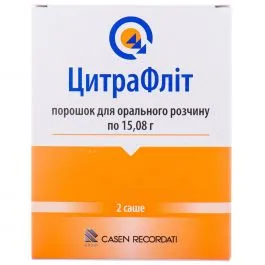
15.08 g of powder in a sachet; 2 sachets or 50 sachets (hospital pack) in a cardboard box.
Prescription category.
Prescription only.
Manufacturer.
Cayser Recordati, S.L.
Manufacturer's address and place of business.
Autovía de Logroño km. 13,300, 50180 Utebo, Zaragoza, Spain.
Similar drugs
| Brand name | Dosage form | Active substance / Dosage | Manufacturer |
|---|---|---|---|
| PICOLPREPP | powder for oral solution | Ferring GmbH (responsible for batch release) |
The original data is available in the language of the country of manufacture.
Data source: State Register of Medicinal Products of Ukraine
Data last verified: August 13, 2026