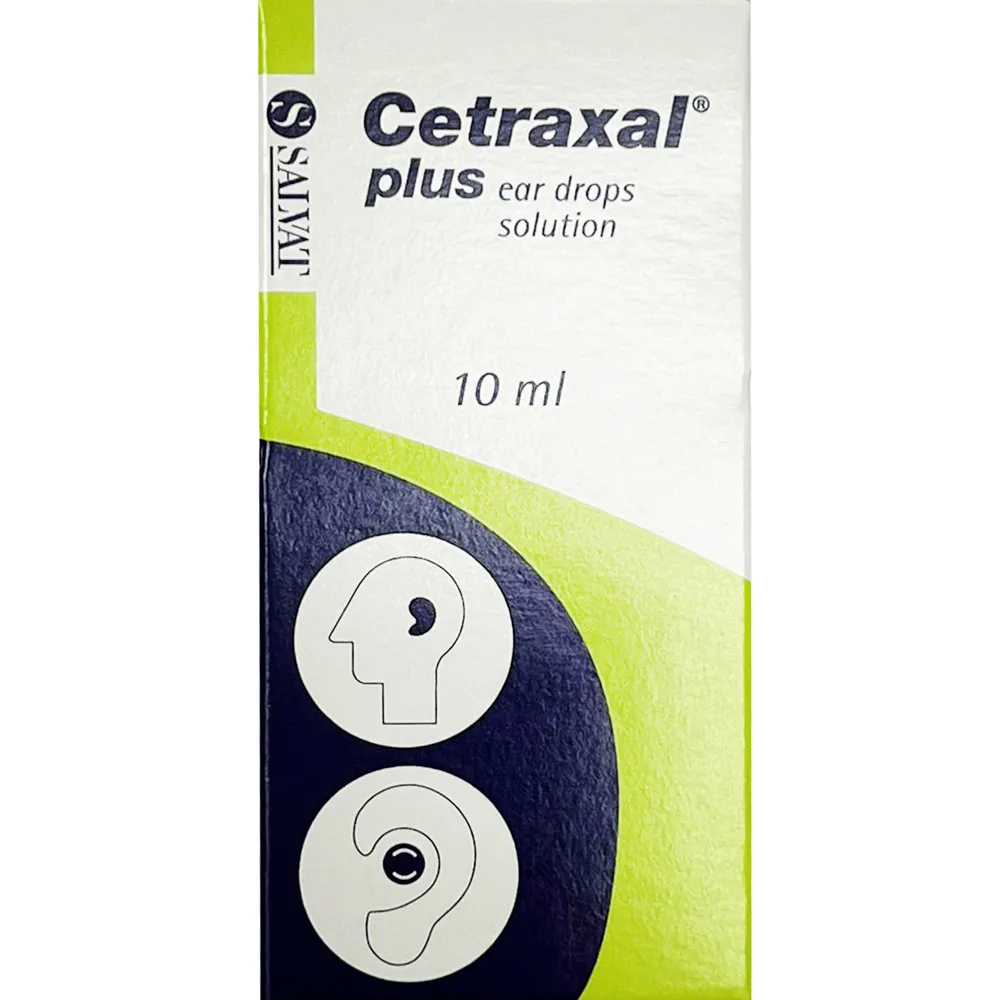
CETRAXAL PLUS
UkraineThe drug is indicated for adults and children from 6 months of age for the treatment of acute otitis externa, as well as acute otitis media in patients with tympanostomy tubes, if these conditions are caused by antibiotic-sensitive microorganisms.
Frequently asked questions
How should Cetraxal plus be taken correctly?
Adults and children from 6 months of age should instill 6–8 drops into the affected ear every 12 hours for 7 days. Before use, it is recommended to warm the bottle in your palms to avoid discomfort from the cold solution. To ensure the drops penetrate better into the middle ear (if tubes are present), press on the tragus 4 times and maintain the position for approximately 1 minute.
Who should not use this drug?
Use is contraindicated in cases of hypersensitivity to the components of the drug, as well as in viral (e.g., chickenpox, herpes) or fungal ear infections.
What are the possible side effects of Cetraxal plus?
Possible reactions include ear pain, congestion, or itching, dizziness, headache, skin rash, vomiting, or allergic reactions. Visual disturbances (e.g., blurred vision) are also possible and should be reported to a doctor immediately.
Can the drug be used with other medicines?
It is not recommended to instill other medicines into the ear canal simultaneously with this drug. If the administration of another agent is necessary, it should be done after a certain interval of time.
Does the drug affect vision?
During the use of corticosteroids, visual disturbances such as blurring may occur. If such symptoms arise, it is necessary to consult an ophthalmologist.
Instructions for use
INSTRUCTIONS for medical use of the medicinal product Cetraxal® Plus Cetrasal Plus
Composition:
Active substances: ciprofloxacin; fluocinolone acetonide;
1 ml contains ciprofloxacin 3 mg (as ciprofloxacin hydrochloride monohydrate 3.49 mg), fluocinolone acetonide 0.25 mg;
Excipients: methylparahydroxybenzoate (E 218), propylparahydroxybenzoate (E 216), povidone, diethylene glycol monoethyl ether, glycereth-26, diluted hydrochloric acid (adjustment to pH 4.6 – 4.7), purified water.
Pharmaceutical form. Ear drops, solution.
Main physicochemical properties: clear solution.
Pharmacotherapeutic group.
Agents acting on the sensory organs. Preparations used in otology. Combined preparations containing corticosteroids and antimicrobial agents. Fluocinolone acetonide and antimicrobial agents.
ATC code S02C A05.
Pharmacological properties.
Pharmacodynamics.
Fluocinolone acetonide is a synthetic fluorinated corticosteroid that exerts pronounced anti-inflammatory, antipruritic, and vasoconstrictive effects. The early anti-inflammatory mechanism of action of topical corticosteroids involves inhibition of macrophage and leukocyte migration into the inflamed area by narrowing blood vessels and reducing vascular permeability. Later stages of the inflammatory process, such as capillary proliferation, collagen production, and keloid scar formation, are also suppressed by corticosteroids.
Ciprofloxacin is a broad-spectrum antimicrobial agent of the fluoroquinolone group. Its antibacterial action is based on the ability of ciprofloxacin to inhibit type II topoisomerase (DNA gyrase) and topoisomerase IV—enzymes essential for bacterial DNA replication, transcription, repair, and recombination.
The primary mechanism of resistance of Pseudomonas aeruginosa to ciprofloxacin involves mutations in genes encoding the target antibiotics (gyrA, gyrB, parC, parE). Another described resistance mechanism is the hyperexpression of efflux pumps that expel the antibiotic from bacterial cells, particularly the Mex (Multiple Efflux) gene system. Single mutations do not necessarily lead to clinical resistance, but multiple-step mutations usually result in clinical resistance to ciprofloxacin.
However, the antibiotic concentration achieved with local treatment is consistently significantly higher than the minimum inhibitory concentration (MIC) of the relevant organisms.
This casts doubt on the development of bacterial resistance. The possibility of microorganisms developing resistance to the drug is minimized with local treatment compared to systemic administration.
Breakpoints
For most topical drugs, pharmacological data are limited, and there is a lack of data regarding clinical treatment outcomes. For this reason, EUCAST recommends using epidemiological cut-off values (ECOFFs) to determine susceptibility to topical agents.
EUCAST breakpoints for ciprofloxacin
| Microorganisms |
Susceptible (S) |
Resistant (R) |
| Staphylococcus species |
S ≤ 1 mg/L |
R ≥ 1 mg/L |
| Streptococcus pneumoniae |
S ≤ 0.125 mg/L |
R ≥ 2 mg/L |
| Haemophilus influenzae Moraxella catarrhalis |
S ≤ 0.5 mg/L |
R ≥ 0.5 mg/L |
| Pseudomonas species |
S ≤ 0.5 mg/L |
R ≥ 1 mg/L |
The following are the levels of antibacterial resistance for certain microorganisms (based on data obtained in the EU).
Usually susceptible species
Aerobic Gram-negative microorganisms:
Proteus vulgaris.
Species for which acquired resistance may be a problem
Aerobic Gram-positive microorganisms:
Staphylococcus aureus*.
Aerobic Gram-negative microorganisms:
Escherichia coli, Klebsiella pneumoniae, Proteus mirabilis, Enterobacter cloacae, Pseudomonas aeruginosa.
Resistant species
Aerobic Gram-positive microorganisms:
Enterococcus faecalis.
*Staphylococcus aureus resistant to methicillin (methicillin-resistant Staphylococcus aureus) is considered resistant to ciprofloxacin.
Preclinical safety data. Ototoxicity of ciprofloxacin was studied in experimental animals by local administration into the ear or intraperitoneally. In none of the studies conducted, which evaluated possible histological changes in the inner ear, were results obtained indicating ototoxicity of ciprofloxacin.
Pharmacokinetics. Blood samples were collected in two AOMT studies to determine plasma levels of ciprofloxacin and/or fluocinolone acetonide. Pharmacokinetic analysis showed either no or negligible levels of active substances in plasma, indicating that topical administration of Cetraxal Plus into the ear is unlikely to result in pharmacokinetically or clinically significant systemic levels of ciprofloxacin and/or fluocinolone acetonide.
Clinical characteristics.
Indications.
Cetraxal Plus is indicated for use in adults and children aged 6 months and older for infections caused by microorganisms sensitive to ciprofloxacin, leading to:
- acute external otitis;
- acute otitis media in patients with tympanostomy tubes.
Official recommendations regarding appropriate use of antibacterial agents should be taken into account.
Contraindications.
Hypersensitivity to fluocinolone, ciprofloxacin, or other quinolones, or to any of the excipients of the medicinal product.
Viral infections of the external auditory canal, including varicella (chickenpox), herpes simplex, and fungal ear infections.
Interaction with other medicinal products and other forms of interaction.
Interaction studies between Cetraxal Plus and other medicinal products have not been conducted. However, given the expected low systemic exposure following administration into the ear, it is unlikely that ciprofloxacin or fluocinolone would cause clinically significant systemic interactions with other medicinal products.
It has been demonstrated that systemic administration of certain quinolones potentiates the effects of the oral anticoagulant warfarin and its derivatives, and is associated with transient increases in serum creatinine levels in patients concurrently receiving cyclosporine.
Oral administration of ciprofloxacin has been shown to inhibit cytochrome P450 enzymes CYP1A2 and CYP3A4, and to alter the metabolism of methylxanthine compounds (caffeine, theophylline). Following topical administration of Cetraxal Plus, plasma concentrations of ciprofloxacin are low, and it is unlikely that interactions involving P450-mediated metabolism of Cetraxal Plus and concomitant medicinal products would lead to clinically significant changes in plasma levels of methylxanthines.
Concomitant administration into the auditory canal with other medicinal products is not recommended. If more than one medicinal product needs to be administered into the auditory canal, it is recommended to administer them with a time interval between applications.
Special precautions for use
This medicinal product is intended for otic use and is not intended for ophthalmic, inhalation or injection use. This medicinal product must not be taken orally or administered by injection.
If otorrhea persists after a full course of therapy or if two or more episodes of otorrhea occur within two months, further benefit assessment should be recommended, with benefits outweighing possible risks, to exclude underlying conditions such as cholesteatoma, foreign body or tumour. If certain symptoms persist after treatment, further evaluation of the condition and treatment is recommended.
Cetraxal Plus should be discontinued at the first sign of rash or other signs of hypersensitivity.
Serious, and sometimes fatal, hypersensitivity (anaphylactic) reactions have been reported in patients receiving systemic quinolones, including cases after the first dose. Serious acute hypersensitivity reactions may require immediate emergency treatment.
As with other antibiotics, use of this product may lead to overgrowth of microorganisms not susceptible to it, including bacterial strains, yeasts and fungi. If superinfection occurs, appropriate measures should be taken.
Some patients taking systemic quinolones have shown skin sensitivity ranging from moderate to severe upon exposure to sunlight. Given the site of administration of this product, it is unlikely that its use would cause photosensitivity reactions.
Corticosteroids may reduce resistance to bacterial, viral or fungal infections and promote their development, as well as mask clinical signs of infection, which may complicate detection of antibiotic inefficacy or suppress hypersensitivity reactions to components of the product.
Cetraxal Plus may cause allergic reactions (possibly delayed), as it contains methylparahydroxybenzoate and propylparahydroxybenzoate.
Visual disturbances
Visual disorders have been reported with systemic or topical corticosteroids. If a patient experiences symptoms such as blurred vision or other visual disturbances, an ophthalmological examination should be performed to determine possible causes, including cataract, glaucoma or rare conditions such as central serous chorioretinopathy (CSC), which has been reported after systemic or topical corticosteroid use.
Children
The safety and efficacy of Cetraxal Plus in children under 6 months of age have not been established.
In exceptional cases, Cetraxal Plus may be used in this paediatric patient group following careful benefit/risk assessment by the prescribing physician, considering that, although there are no known safety concerns or differences in disease course that would preclude use in these patients, clinical experience with such use is limited.
Use during pregnancy or breastfeeding
Available data on ciprofloxacin treatment in pregnant women do not confirm its toxic effect on fetal development or newborn health. Since systemic exposure to ciprofloxacin is expected to be very low, no effect on the fetus is anticipated.
Corticosteroids have been shown to be teratogenic in laboratory animals following systemic administration at relatively low doses.
Some corticosteroids have demonstrated teratogenic effects after dermal application in laboratory animals.
There are no adequate and well-controlled studies in pregnant women evaluating the teratogenic effect of fluocinolone acetonide.
The benefits of treatment should be assessed against the potential risk before administering the medicinal product.
Breastfeeding
Ciprofloxacin is excreted in breast milk. Since systemic exposure to ciprofloxacin is very low, no effect on breastfed infants is expected.
Systemically administered corticosteroids are excreted in human breast milk and may affect infant development, interfere with endogenous corticosteroid production, or cause other adverse effects.
It is unknown whether topical corticosteroid use may result in sufficient systemic absorption to lead to detectable levels in breast milk.
Given that most medicinal products are excreted in breast milk, Cetraxal Plus should be used with caution in women who are breastfeeding.
Fertility
No animal studies have been conducted to evaluate the effect of Cetraxal Plus on fertility.
Ability to drive and use machines
There are no data on the effect of otic drops on the ability to drive or operate machinery.
Given the route of administration, conditions of use and safety profile of Cetraxal Plus, the product does not affect the ability to drive a vehicle or operate machinery.
Method of Administration and Dosage
For instillation into the ear canal.
Adults, including elderly patients.
Acute otitis externa and acute otitis media in patients with tympanostomy tubes: instill 6–8 drops into the affected ear canal every 12 hours for 7 days.
There are no general differences in safety and efficacy between elderly and other adult patients.
Patients with hepatic/renal impairment.
No dose adjustment is required.
Precautions to be taken prior to administration of the medicinal product
It is recommended to warm the bottle before use by holding it in the palm of the hand for several minutes. This helps to avoid discomfort caused by instillation of a cold solution into the ear canal. The patient should tilt the head to one side so that the affected ear is uppermost. Instill the drops into the affected ear and gently pull the pinna several times.
Patients with acute otitis media with tympanostomy tubes should press the tragus four times inward to facilitate penetration of the drops into the middle ear. This position should be maintained for approximately 1 minute to aid entry of the drops into the ear.
Repeat the procedure, if necessary, for the opposite ear.
To prevent contamination of the dropper tip and reduce the risk of bacterial contamination, care should be taken not to touch the ear pinna, external auditory canal, or adjacent areas with the dropper tip. The bottle should be kept tightly closed when not in use.
Children.
Use in children aged 6 months and older is the same as in adults for both indications.
Overdose.
No cases of overdose have been reported.
Due to the minimal systemic levels observed after otic administration, it is unlikely that topically applied ciprofloxacin or fluocinolone acetonide would produce clinically significant systemic effects. However, in cases of chronic overdose or prolonged topical use of other formulations such as ointments or creams, systemic reactions may occur, including signs of hypercortisolism.
The limited retention capacity of the ear canal for topical otic preparations practically prevents overdose by instillation. However, oral ingestion of Cetraxal Plus, leading to overdose, or prolonged therapy for ear disorders may result in suppression of the hypothalamic-pituitary-adrenal (HPA) axis.
Although in the pediatric population reduced growth velocity and/or suppression of plasma cortisol concentration may be more pronounced following significant overdose or prolonged therapy (e.g., several months) with Cetraxal Plus, the effect is expected to be temporary (lasting from days to weeks), reversible, and without long-term consequences.
In case of accidental ingestion, gastric lavage or induction of emesis should be performed, and activated charcoal and antacids containing magnesium and calcium should be administered.
Adverse reactions.
The adverse reactions listed in the table below were identified in clinical studies or from post-marketing experience.
Classification of adverse reaction frequencies: very common (≥ 1/10), common (≥ 1/100 to < 1/10), uncommon (≥ 1/1,000 to < 1/100), rare (≥ 1/10,000 to < 1/1,000), very rare (< 1/10,000), frequency not known (cannot be estimated from the available data).
Within each frequency group, adverse reactions are listed in order of decreasing severity.
| System organ classes |
Adverse reactions(preferred MedDRA term) |
| Infections and infestations |
Uncommon: candidiasis, fungal ear infection, contralateral otitis media |
| Nervous system disorders |
Common: dysgeusia Uncommon: paraesthesia (tingling in ears), dizziness, headache, tearfulness |
| Ear and labyrinth disorders |
Common: ear pain, ear fullness, ear pruritus Uncommon: hypoacusis, tinnitus, otorrhea, ear plug, tympanic membrane disorder, auricular (ear) swelling |
| Eye disorders |
Frequency unknown: blurred vision (for detailed information see section "Special precautions.") |
| Vascular disorders |
Uncommon: hot flushes |
| Gastrointestinal disorders |
Uncommon: vomiting |
| Skin and subcutaneous tissue disorders |
Uncommon: skin exfoliation, erythematous rash, rash, granulation tissue |
| General disorders and administration site conditions |
Uncommon: irritability, fatigue |
| Investigations |
Uncommon: residual medicinal product in ear canal |
| Injury, poisoning and procedural complications |
Uncommon: device blockage (tympanostomy tube obstruction) |
| Immune system disorders |
Uncommon: allergic reaction |
Description of individual adverse reactions
Serious anaphylactic reactions of hypersensitivity, some occurring after the first dose, have been observed in patients receiving systemic quinolone therapy. Some of these reactions were accompanied by cardiovascular collapse, loss of consciousness, angioedema (including laryngeal, pharyngeal, or facial swelling), airway obstruction, dyspnea, urticaria, and pruritus.
Tendon ruptures of the shoulder, hand, Achilles tendon, or other tendons requiring surgical repair or leading to prolonged disability have been observed in patients receiving systemic fluoroquinolones. Clinical studies and post-marketing experience with systemic fluoroquinolones indicate that the risk of such ruptures may be increased in patients receiving corticosteroids, particularly in elderly patients, and in those with substantial tendon stress, including stress on the Achilles tendon.
To date, clinical and post-marketing data have not demonstrated a clear association between the use of this medicinal product and adverse reactions affecting the musculoskeletal and connective tissue.
Pediatric population
Cetraxal Plus has demonstrated safety for use in patients aged 6 months and older.
Reporting of suspected adverse reactions.
Reporting of suspected adverse reactions following the authorization of the medicinal product is extremely important. It allows continuous monitoring of the benefit-risk balance of the medicinal product. Healthcare professionals are requested to report any suspected adverse reactions through the national reporting system.
Shelf life. 2 years.
After opening the bottle, the product should be stored for no longer than one month.
Do not use after the expiry date stated on the packaging.
Storage conditions.
Store at temperatures not exceeding 30 °C.
Keep out of the reach of children.
Packaging.
The bottle contains 10 ml of solution, 1 bottle in a cardboard box.
Incompatibilities. Not described.
Prescription status.
Prescription only.
Manufacturer.
Laboratorios Salvat, S.A.
Manufacturer's address and place of business.
Gall, 30-36, 08950 Esplugues de Llobregat, Barcelona, Spain.
The original data is available in the language of the country of manufacture.
Data source: State Register of Medicinal Products of Ukraine
Data last verified: August 13, 2026