SURVANT
UkraineThe drug is used for the treatment of respiratory distress syndrome (hyaline membrane disease) in preterm infants. It is also used for the prevention of this condition in children with a body weight of less than 1250 g who are at risk of developing the disease or show signs of surfactant deficiency.
Frequently asked questions
What dosage of Survant is used?
The single dose is 100 mg of phospholipids (equivalent to 4 ml of suspension) per 1 kg of the child's body weight. Up to four doses may be administered within 48 hours, with an interval of at least 6 hours between them.
What are the possible side effects of Survant?
The most common observations during administration are transient bradycardia (slowed heart rate) and a decrease in blood oxygen levels. Sepsis may also occur. Immediately after administration, temporary wheezing or moist rales in the lungs may appear, which is not a sign of overdose.
How should the drug be prepared for use correctly?
Before use, the drug must be warmed to room temperature for at least 20 minutes (or for 8 minutes in the hand). Artificial heating methods must not be used. If sediment appears in the vial, it should be gently swirled, but not shaken.
Are there any contraindications for use?
Information regarding contraindications is currently unknown.
How exactly is the drug administered?
The drug is administered intratracheally (directly into the airways) by qualified physicians in a clinical setting. For better distribution of the medication, one dose is usually divided into several parts and administered while changing the child's body position.
How should the drug be stored?
The drug should be stored in a refrigerator at a temperature of 2 to 8 °C in its original packaging. It must not be frozen.
Instructions for use
INSTRUCTIONS FOR MEDICAL USE OF THE MEDICINAL PRODUCT SURVANTA® (SURVANTA®)
Composition:
Active substance:
1 ml of suspension contains beractant, which includes total phospholipids – 25 mg/ml (including dipalmitoyl phosphatidylcholine – 11–15.5 mg/ml (standardized with dipalmitoyl-phosphatidylcholine), free fatty acids – 1.4–3.5 mg/ml (standardized with palmitic acid), triglycerides – 0.5–1.75 mg/ml (standardized with tripalmitin), surfactant-associated proteins.
Excipients: sodium chloride, water for injections, sodium hydroxide, diluted hydrochloric acid.
Pharmaceutical form. Suspension for intratracheal administration.
Main physicochemical properties: opaque liquid, ranging from nearly white to light brown in color.
Pharmacotherapeutic group. Pulmonary surfactants. Combinations. ATC code: R07AA30.
Pharmacological properties.
Beractant is a natural lung surfactant derived from bovine lungs.
Clinical pharmacology. Endogenous lung surfactant reduces surface tension at alveolar surfaces during inspiration and stabilizes alveoli against collapse during decreases in transpulmonary pressure. Surfactant deficiency leads to the development of respiratory distress syndrome (RDS) in premature infants. Beractant replenishes surfactant stores and restores pulmonary surface activity in infants. In vitro experiments have demonstrated that beractant significantly reduces minimal surface tension to less than 8 dyn/cm, as measured by a surfactometer and the Wilhelmy method. In situ, beractant restores lung compliance in rats with experimentally induced surfactant deficiency. In vivo, single doses of beractant improve lung pressure and volume parameters, lung compliance, and oxygenation, as demonstrated in experimental studies in premature rabbits and lambs.
Metabolism in animals. The biophysical effects of beractant occur at the alveolar surface, as the drug is administered directly into the target organ—the lungs. In premature rabbits and lambs with surfactant deficiency, rapid alveolar clearance of isotope-labeled beractant lipids has been observed. The majority of the drug becomes associated with lung tissue within hours after administration, and the lipids enter endogenous surfactant recycling pathways. In adult animals with sufficient surfactant levels, beractant clearance is faster than in premature and young animals. Adult animals also show lower levels of surfactant recycling. Limited animal experiments have not revealed any effect of beractant on endogenous surfactant metabolism.
There is no information available on the metabolism of surfactant-associated proteins in beractant. Metabolic studies involving humans have not been conducted.
Clinical characteristics.
Indications.
- Treatment of respiratory distress syndrome (RDS, hyaline membrane disease) in premature newborns;
- Prophylaxis of RDS in premature newborns weighing less than 1250 g at risk of developing RDS, who require intubation for stabilization or show signs of surfactant deficiency.
Contraindications. Unknown.
Interaction with other medicinal products and other forms of interaction. Not established.
Special precautions for use.
Administration of Surfactant-TA® should be performed exclusively in a clinical setting by qualified physicians who have undergone specialized training and have experience in intubation, mechanical ventilation (MV), and medical care of premature infants. The administration procedure can be facilitated if one specialist administers the dose while other healthcare providers ensure proper positioning of the infant and perform monitoring.
The medicinal product may rapidly affect oxygenation and lung compliance. Noticeable improvement in oxygenation may occur within minutes after administration. To avoid hyperoxia, continuous and careful clinical observation and monitoring of systemic oxygenation are essential.
Cases of transient bradycardia and decreased blood oxygen saturation have been reported during administration of the drug. If these symptoms occur, administration should be stopped immediately and appropriate measures taken to stabilize the infant's condition. Once the patient's condition has stabilized, administration may be continued.
Administration of Surfactant-TA® using a double-lumen endotracheal tube is functionally equivalent to using a suctioning valve, allowing beractant to be delivered at the distal end of the endotracheal tube without interrupting mechanical ventilation. This method is expected to reduce the incidence of hypoxia and bradycardia that may occur immediately after dosing. However, clinical studies have shown no differences in short-term or long-term outcomes compared to other administration methods.
General warnings
Immediately after administration, crackles and wet gurgling sounds may be transiently heard on auscultation; these are not signs of overdose. If clear symptoms of airway obstruction are absent, endotracheal suctioning or other emergency interventions are not necessary.
In controlled clinical trials, an increased incidence of nosocomial sepsis was observed in infants treated with Surfactant-TA®. However, the increased risk of sepsis in the Surfactant-TA® group was not associated with increased mortality. Infectious agents were similar in treated and control groups. There was no significant difference between groups in the incidence of other infectious diseases following treatment.
The use of beractant in infants with birth weight less than 600 g or more than 1750 g has not been studied in clinical trials.
There is no experience with the use of beractant in combination with experimental RDS therapies (e.g., high-frequency ventilation or extracorporeal membrane oxygenation).
There is no information on the use of the drug at doses different from 100 mg/kg, administration of more than four doses, administration more frequently than every 6 hours, or administration to infants beyond 48 hours of life.
Unused, unopened vials of Surfactant-TA® that have been warmed to room temperature should be returned to the refrigerator as soon as possible, within 24 hours after warming, and stored for future use. Surfactant-TA® should not be warmed and returned to the refrigerator more than once. Each single-dose vial may be used only once. Used vials containing residual medicinal product must be discarded.
If the medicinal product has been accidentally frozen, it should not be used, and any unused vial should be discarded.
SURFACTANT-TA® DOES NOT REQUIRE RECONSTITUTION OR ULTRASONIC PROCESSING PRIOR TO ADMINISTRATION.
Use during pregnancy or breastfeeding.
Not intended for use in adults (see section "Indications").
Ability to affect reaction speed when driving or operating machinery.
Not intended for use in adults (see section "Indications").
Method of Administration and Dosage
For intratracheal use only.
Prophylaxis of RDS. The drug should be administered as soon as possible, preferably within the first 15 minutes of life. Treatment (emergency therapy) of RDS. The drug should be administered as soon as possible after initiation of mechanical ventilation, preferably within the first 8 hours of life.
Up to four doses of Surfactant® may be administered within 48 hours, with an interval of at least 6 hours between doses.
The single dose of Surfactant® is 100 mg of phospholipids (4 mL of suspension) per kg of birth body weight.
Preparation for Administration
Check the color of the drug, which should range from nearly white to light brown. If sediment has formed during storage, gently swirl the vial to resuspend. DO NOT SHAKE. Foam formation on the surface may occur, which is characteristic of the drug's nature. Before administration, Surfactant® must be warmed to room temperature for at least 20 minutes or held in the hand for at least 8 minutes. ARTIFICIAL HEATING METHODS MUST NOT BE USED. If the drug is intended for prophylactic use, preparation should begin in advance, prior to delivery of the infant.
Administration Procedure
Surfactant® is administered intratracheally via a size 5 French catheter with an opening at the distal end. The catheter is inserted into the endotracheal tube after quickly disconnecting it from the ventilator, or through the suction port without disconnecting the endotracheal tube from the ventilator; alternatively, instillation may be performed through the additional lumen of a double-lumen endotracheal tube.
Calculate the dose according to the infant’s birth body weight. Slowly draw the entire content of the vial(s) into a plastic syringe using a large-gauge needle (at least 20 gauge). DO NOT FILTER THE MEDICINAL PRODUCT AND AVOID VIGOROUS SHAKING.
To ensure uniform distribution of beractant in the lungs, each dose is divided into fractional (partial) doses. Each dose may be divided into two or four fractional doses. Each fractional dose is administered with the infant in a different position.
For administration in two fractional doses, the following positions are recommended:
- Head and body rotated approximately 45° to the right.
- Head and body rotated approximately 45° to the left.
Positions for administration of four fractional doses are illustrated below:
|
|
|
|
|
|
|
|
|
|
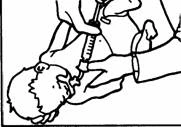
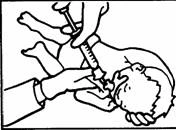
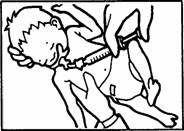
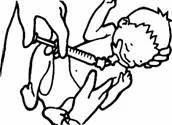
Administration of the first dose.
Administration via a catheter with an end-hole
Trim the catheter length so that the catheter tip slightly protrudes beyond the endotracheal tube, just above the tracheal bifurcation. The drug must not be administered into the main bronchus.
Attach the catheter to the syringe. Fill the catheter with the drug. Expel excess drug through the catheter so that only the full intended dose remains in the syringe. In emergency treatment of RDS, set the mechanical ventilator parameters prior to administering the first fractionated dose as follows: respiratory rate – 60 breaths/min, inspiratory time – 0.5 sec, oxygen concentration (FiO₂) – 1.0. Position the infant appropriately and slowly administer the first fractionated dose through the catheter over 2–3 seconds. After administering the first fractionated dose, remove the catheter from the endotracheal tube. For prophylactic administration, provide manual bag ventilation with sufficient oxygen supply to prevent cyanosis, at a rate of approximately 60 breaths/min and with adequate positive pressure to ensure proper gas exchange and chest wall excursion. In emergency RDS treatment, resume mechanical ventilation using the ventilator. Ventilate the infant for at least 30 seconds or until stabilization between administrations of fractionated doses. Reposition the infant before instilling the next fractionated dose. Administer the remaining fractionated doses using the sequence described above. After administering the final fractionated dose, remove the catheter without flushing it. Do not perform bronchial suctioning within 1 hour after drug administration, except in cases of significant airway obstruction.
Instillation through the second lumen of a double-lumen endotracheal tube
The procedure is performed fractionally through the second lumen without interrupting mechanical ventilation. After administering the final fractionated dose, remove the syringe from the second lumen, INSERT 0.5 mL OF AIR TO CLEAR THE SECOND LUMEN, AND THEN CLOSE IT.
Administration of repeated doses
The need for additional doses of beractant is determined by the persistence of RDS symptoms. Ventilator settings for repeated doses differ from those used for the first dose: increase FiO₂ by 0.20 (or by an amount sufficient to prevent cyanosis), inspiratory time < 1.0 sec, respiratory rate – 30 breaths/min. The respiratory rate remains unchanged during drug administration unless the pre-existing rate exceeds 30 breaths/min.
Manual bag ventilation must not be used for administering repeated doses.
VENTILATOR SETTINGS MAY BE ADJUSTED BY THE PHYSICIAN DURING THE ADMINISTRATION PROCEDURE TO ENSURE ADEQUATE OXYGENATION AND VENTILATION.
Administration in infants with spontaneous breathing
Intubation – Surfactant – Extubation (INSURE)
After intubation and catheter insertion as described above, place the infant in a neutral position and carefully administer the drug dose as a single bolus over 1–3 minutes, either in the delivery room or after transfer to the neonatal unit. After administration, initiate bag ventilation followed by extubation and CPAP, according to clinical indications.
Pediatric population.
This medicinal product is intended for use in preterm newborns (see section "Indications").
Overdose.
No cases of beractant overdose have been reported. Overdose may manifest as acute airway obstruction. Treatment should be symptomatic and supportive.
Adverse Reactions
The most commonly reported adverse reactions were associated with the administration procedure. In controlled clinical studies, transient bradycardia was observed in 11.9% of cases, and decreased oxygen concentration in 9.8% of cases. Other reactions occurring during the administration procedure were observed at a frequency of less than 1% of all administrations and included endotracheal tube reflux, pallor, vasoconstriction, arterial hypotension, endotracheal tube blockage, arterial hypertension, hypocapnia, hypercapnia, and apnea. No fatal events occurred during the administration procedure; all reactions were resolved with symptomatic treatment.
In controlled clinical studies, the incidence of diseases typical for preterm infants was evaluated. Data from all controlled studies are presented in the table below.
Diseases associated with conditions typical for preterm infants, based on data from all controlled studies.
| Associated Disorders |
Preterm infants who received beractant (%) |
Control group (%) |
P-value |
| Patent ductus arteriosus |
46.9 |
47.1 |
0.814 |
| Intracranial hemorrhage |
48.1 |
45.2 |
0.241 |
| Severe intracranial hemorrhage |
24.1 |
23.3 |
0.693 |
| Air leak syndrome |
10.9 |
24.7 |
<0.001 |
| Interstitial emphysema of the lungs |
20.2 |
38.4 |
<0.001 |
| Necrotizing enterocolitis |
6.1 |
5.3 |
0.427 |
| Apnea |
65.4 |
59.6 |
0.283 |
| Severe apnea |
46.1 |
42.5 |
0.114 |
| Sepsis (post-treatment) |
20.7 |
16.1 |
0.019 |
| Infection (post-treatment) |
10.2 |
9.1 |
0.345 |
| Pulmonary hemorrhage |
7.2 |
5.3 |
0.166 |
The incidence of intracranial hemorrhage in children who received beractant did not differ from that in the general population of such patients. Pulmonary hemorrhage has also been reported. No other serious adverse reactions have been reported.
In controlled clinical studies, Surfaxin® has been shown to have no effect on the results of general laboratory tests: leukocyte count, plasma levels of sodium, potassium, bilirubin, and creatinine.
No antibodies to the proteins in Surfaxin® have been detected.
In controlled clinical studies, the following conditions were reported, the frequency of which did not differ between children who received treatment and those in the control group, and none of these complications were associated with beractant.
Blood and lymphatic system disorders:
Coagulopathy, thrombocytopenia, disseminated intravascular coagulation.
Endocrine disorders:
Adrenal hemorrhage, inadequate ADH secretion.
Metabolism and nutrition disorders:
Hyperphosphatemia, feeding intolerance.
Nervous system disorders:
Seizures.
Cardiac disorders:
Tachycardia, ventricular tachycardia, heart failure, cardiac arrest, increased apical pulse, persistent fetal circulation, total anomalous pulmonary venous drainage.
Vascular disorders:
Arterial hypotension, arterial hypertension, aortic thrombosis, air embolism.
Respiratory, thoracic and mediastinal disorders:
Lung consolidation, bleeding from the endotracheal tube, worsening condition after weaning from mechanical ventilation, respiratory decompensation, subglottic stenosis, diaphragmatic paralysis, respiratory failure.
Gastrointestinal disorders:
Abdominal distension, gastrointestinal hemorrhage, intestinal perforation, volvulus, intestinal infarction, stress ulcer, inguinal hernia.
Hepatobiliary disorders:
Liver failure.
Renal and urinary disorders:
Renal failure, hematuria.
General disorders and administration site conditions:
Fever, decompensation.
Long-term studies.
To date, no long-term complications or consequences of beractant therapy have been identified.
INSURE technique
The safety outcomes of the INSURE technique were comparable to those in control groups.
Shelf life. 18 months.
Storage conditions.
Store out of reach of children at a temperature of 2 to 8 °C (in a refrigerator), in the original cardboard packaging. Do not freeze!
Incompatibility. Not established.
Packaging.
4 ml or 8 ml in glass vials stoppered with rubber stoppers and sealed with aluminum caps. One vial per cardboard box.
Prescription status. Prescription only.
Manufacturer. AbbVie Inc., USA.
Manufacturer's address and location of business activity.
1401 Sheridan Road, North Chicago, Illinois (IL) 60064, USA.
The original data is available in the language of the country of manufacture.
Data source: State Register of Medicinal Products of Ukraine
Data last verified: August 13, 2026