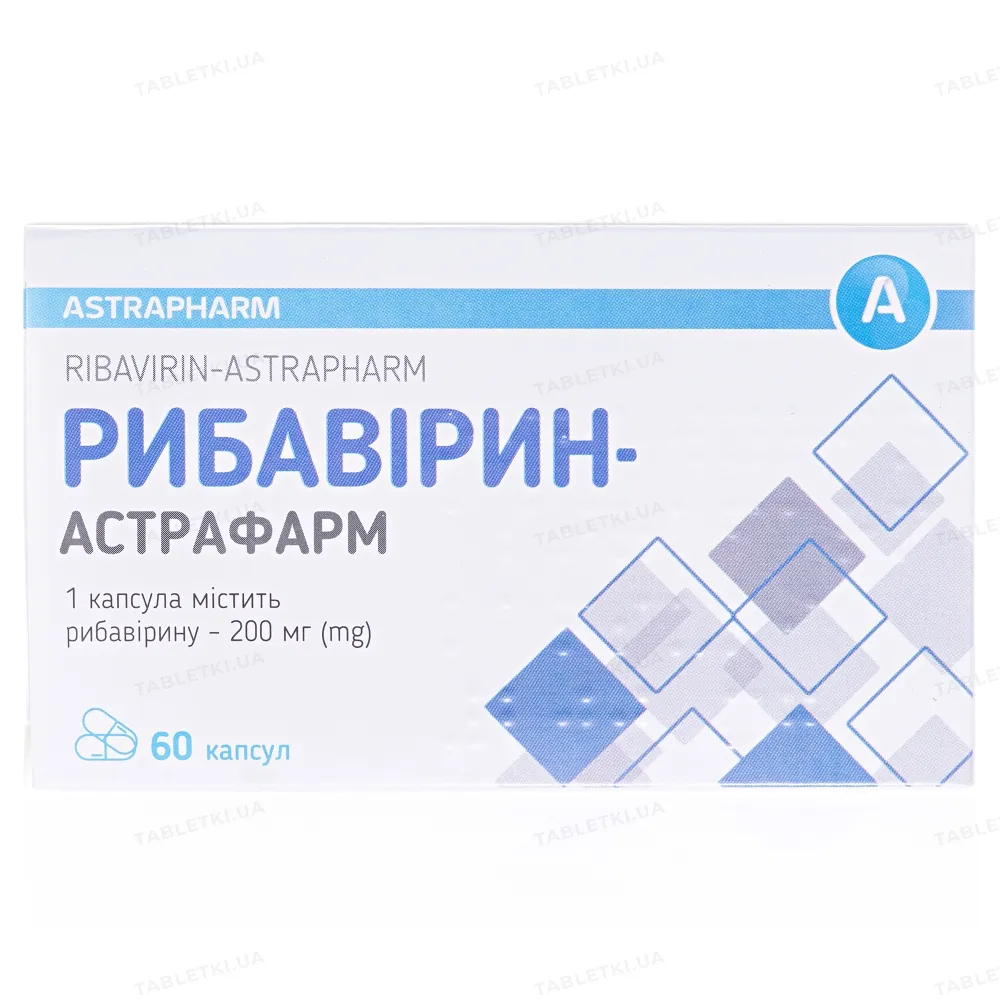
RIBAVIRIN-ASTRAPHARM
UkraineThe drug is prescribed for the treatment of chronic hepatitis C in combination with other medicinal products.
Frequently asked questions
How should Ribavirin-astrapharm be taken correctly?
Capsules should be taken twice daily (morning and evening) with food. Capsules must not be broken. The exact dose and duration of the course depend on the virus genotype and the patient's body weight; therefore, treatment must be administered by a physician.
What are the contraindications for use?
The drug must not be taken in case of hypersensitivity to its composition, severe heart disease, debilitating diseases, chronic renal failure, severe hepatic impairment, autoimmune diseases, and hemoglobinopathies. Use is strictly prohibited during pregnancy, breastfeeding, and for men and women planning pregnancy.
What are the possible side effects of Ribavirin-astrapharm?
The most frequent reaction is anemia (decreased hemoglobin levels). Nausea, vomiting, fatigue, insomnia, headache, skin rash, mood changes, depression, and suicidal thoughts are also possible. During combination therapy, visual disturbances, heart rhythm disorders, and infections may be observed.
Can the drug be taken together with other medicines?
Caution is required when combining with antacids (efficacy may decrease), azathioprine, and anti-HIV drugs (e.g., zidovudine or stavudine), as this increases the risk of anemia or other serious complications. Simultaneous intake with didanosine is not recommended due to the risk of severe toxicity.
How does food affect the action of the drug?
The bioavailability of the drug increases if taken with food, especially food with a high fat content.
Instructions for use
INSTRUCTIONS FOR MEDICAL USE OF THE MEDICINAL PRODUCT RIBAVIRIN-ASTRAPHARM (RIBAVIRIN-ASTRAPHARM)
Composition:
Active substance: ribavirin;
1 capsule contains ribavirin equivalent to 100% substance 200 mg;
Excipients: microcrystalline cellulose, potato starch, magnesium stearate, colloidal anhydrous silicon dioxide;
Capsule shell composition: gelatin, titanium dioxide (E 171), indigo carmine blue (E 132), quinoline yellow (E 104).
Pharmaceutical form. Capsules.
Main physicochemical properties: hard gelatin capsules size 0, cylindrical in shape with hemispherical ends: body white, cap green; contents of capsules – white or almost white powder.
Pharmacotherapeutic group.
Direct-acting antiviral agents. Nucleosides and nucleotides, excluding reverse transcriptase inhibitors. ATC code J05A B04.
Pharmacological properties.
Pharmacodynamics.
Ribavirin is a synthetic nucleoside analogue with activity in vitro against certain RNA and DNA viruses. The mechanism by which ribavirin in combination with peginterferon alfa-2b or interferon alfa-2b affects hepatitis C virus is unknown. Monotherapy with ribavirin for chronic hepatitis C does not lead to elimination of the virus (hepatitis C RNA virus) or improvement in liver histology after 6–12 months of therapy and during the subsequent 6-month follow-up period. However, in clinical trials, combination therapy with ribavirin and peginterferon alfa-2b or interferon alfa-2b resulted in higher treatment response rates compared to monotherapy with peginterferon alfa-2b or interferon alfa-2b.
Pharmacokinetics.
Ribavirin is readily absorbed after single oral administration (Tmax = 1.5 hours) and rapidly distributed throughout the body. The elimination phase is prolonged. The half-lives of absorption, distribution, and elimination after a single dose are approximately 0.05, 3.73, and 79 hours, respectively. Ribavirin is extensively absorbed; only about 10% of a radiolabeled dose is excreted in feces. However, absolute bioavailability is approximately 45–65%, possibly due to first-pass metabolism. A linear relationship exists between dose and bioavailability index (AUCtf) following single oral doses of ribavirin ranging from 200 mg to 1200 mg. The volume of distribution is approximately 5000 L. Ribavirin does not bind to plasma proteins.
Ribavirin transport via non-plasma pathways has been particularly well studied with regard to erythrocytes; it has been shown that overall transport occurs via an equilibrative nucleoside transporter of the es type. This transporter is present in almost all cell types and may contribute to the large volume of distribution of ribavirin. The ratio of ribavirin concentration in whole blood to plasma is approximately 60:1; the excess ribavirin in whole blood exists as ribavirin nucleotides isolated within erythrocytes.
Ribavirin is metabolized via two pathways: reversible phosphorylation and degradative transformation involving de-ribosylation and amide hydrolysis, leading to the formation of a triazole carboxylic acid metabolite. Both ribavirin and its metabolites—triazole carboxamide and triazole carboxylic acid—are excreted in urine.
High pharmacokinetic variability of ribavirin has been demonstrated after single oral administration both within individual patients and among different patients (variability in area under the concentration-time curve (AUC) and maximum concentration (Cmax) within an individual is approximately 30%), which may be explained by extensive first-pass metabolism and significant transport into and beyond the bloodstream.
With repeated administration, ribavirin extensively accumulates in plasma; the ratio of bioavailability indices (AUC12h) after multiple and single dosing is 6. Following oral administration (600 mg twice daily), steady-state plasma concentrations of ribavirin were achieved by the end of week 4, reaching approximately 2.2 ng/mL. After discontinuation, the elimination half-life was approximately 298 hours, suggesting slow elimination from extravascular compartments.
Ability to penetrate seminal fluid. The ability of ribavirin to penetrate into seminal fluid has been studied. Ribavirin concentration in seminal fluid is approximately twice that in blood serum. However, systemic exposure of ribavirin in a female partner following sexual contact with a male receiving treatment remains extremely limited compared to therapeutic plasma concentrations of ribavirin.
Effect of food. The bioavailability of a single oral dose of ribavirin increases when administered with a high-fat meal (both AUCtf and Cmax increase by 70%). The increased bioavailability may be due to slowed transit or altered pH. In a clinical efficacy study, patients were instructed to take ribavirin with food to achieve maximum plasma concentration.
Renal function. In patients with renal impairment, the pharmacokinetics of ribavirin after single-dose administration are altered (AUCtf and Cmax values increase) compared to controls (creatinine clearance > 90 mL/min). This change is primarily due to reduced actual clearance in these patients. Ribavirin concentrations do not undergo significant changes during hemodialysis.
Hepatic function. The pharmacokinetics of a single dose of ribavirin in patients with mild, moderate, or severe hepatic impairment (Child-Pugh class A, B, or C) are similar to those in healthy control volunteers.
Elderly patients (aged 65 years and older). No specific pharmacokinetic studies have been conducted in elderly patients. However, in a population pharmacokinetic study, age was not one of the main factors influencing ribavirin kinetics; renal function was the primary factor.
Population pharmacokinetic analysis was performed using data from studies measuring serum concentration levels (with periodic sampling). The developed clearance model identified body weight, sex, age, and serum creatinine level as the main covariates. Clearance in males was approximately 20% higher than in females. Clearance increased with body weight and decreased in patients over 40 years of age. Due to the presence of substantial unexplained variability in the data, the impact of these covariates on ribavirin clearance has limited clinical significance.
Children
Ribavirin-Astrafarm in combination with peginterferon alfa-2b
The pharmacokinetic properties of ribavirin and peginterferon alfa-2b following repeated administration were evaluated in a clinical study in children with chronic hepatitis C. It was estimated that in children receiving peginterferon alfa-2b at a dose of 60 mcg/m² weekly, adjusted for body surface area, the logarithmically transformed ratio of systemic exposure over the dosing interval exceeded that observed in adults receiving 1.5 mcg/kg weekly by 58% (90% confidence interval: 141–177%). In this study, the pharmacokinetics of ribavirin (dose-normalized) did not differ from data obtained in a previous study of ribavirin in combination with interferon alfa-2b in both children and adult patients.
Ribavirin-Astrafarm in combination with interferon alfa-2b
The pharmacokinetics of Ribavirin-Astrafarm and interferon alfa-2b (dose-normalized) were comparable in adults and children aged 5 to 16 years.
Clinical characteristics.
Indications.
Treatment of chronic hepatitis C (CHC) in combination with other medicinal products.
Contraindications.
- Hypersensitivity to ribavirin or to any of the excipients.
- Severe cardiac diseases, including unstable or uncontrolled conditions observed within 6 months prior to initiation of treatment.
- Severe debilitating diseases.
- Chronic renal failure or creatinine clearance < 50 mL/min and/or conditions requiring hemodialysis.
- Severe hepatic impairment (Child-Pugh class B or C) or decompensated cirrhosis.
- Peginterferon alfa-2b is contraindicated in patients co-infected with hepatitis C virus (HCV)/HIV with liver cirrhosis and liver function impairment > 6 points according to the Child-Pugh classification.
- History or clinical evidence of severe psychiatric disorders, including severe depression, suicidal thoughts, or suicide attempt in children.
- Autoimmune hepatitis or other autoimmune diseases in medical history (due to combination with peginterferon alfa-2b or interferon alfa-2b).
- Hemoglobinopathies (e.g., thalassemia, sickle cell anemia).
- Pregnancy. Treatment with Ribavirin-Astrafarm may be initiated only after a negative pregnancy test immediately prior to the start of therapy.
- Breastfeeding period.
- Men whose female partners are pregnant.
Interaction with other medicinal products and other types of interactions.
The instructions for medical use of medicinal products used in combination with ribavirin should be consulted.
Interaction studies were conducted only in adult patients.
Studies on interactions of ribavirin were performed in combination with peginterferon alfa-2a, interferon alfa-2b, and antacids. Ribavirin concentrations are comparable during monotherapy and in combination with peginterferon alfa-2a or interferon alfa-2b.
After completion of treatment with Ribavirin-Astrafarm, the period of potential interaction lasts up to 2 months (5 half-lives of ribavirin) due to its prolonged elimination half-life.
In vitro studies using human and animal liver microsomes indicate that ribavirin metabolism is not mediated by the cytochrome P450 enzyme system. Ribavirin does not inhibit cytochrome P450 enzymes. Toxicological studies have not shown ribavirin to be an inducer of hepatic enzymes. Therefore, the potential for interactions related to the P450 enzyme system is minimal.
Antacids. The bioavailability of ribavirin 600 mg was reduced when administered concomitantly with an antacid containing a combination of magnesium and aluminum or simethicone; the AUC decreased by 14%. The reduced bioavailability in this study may have been due to delayed transport of ribavirin or changes in pH. This interaction is considered not to be clinically significant.
Nucleoside analogues. In vitro, ribavirin has been shown to inhibit the phosphorylation of zidovudine and stavudine. The clinical significance of these findings is unknown. However, these data suggest the possibility that concomitant administration of Ribavirin-Astrafarm with zidovudine or stavudine may lead to increased HIV viremia in blood plasma. Therefore, careful monitoring of plasma HIV RNA levels is recommended in patients receiving concomitant treatment with Ribavirin-Astrafarm and either zidovudine and/or stavudine. If an increase in HIV RNA levels occurs, concomitant use of Ribavirin-Astrafarm with reverse transcriptase inhibitors should be reconsidered.
Didanosine. Concomitant administration of ribavirin and didanosine is not recommended. In vitro, exposure to didanosine or its active metabolite (dideoxyadenosine 5’-triphosphate) increases when didanosine is administered with ribavirin. Combined use of these drugs may lead to fatal liver failure, peripheral neuropathy, pancreatitis, and symptomatic hyperlactatemia or lactic acidosis.
Azathioprine. Ribavirin, by inhibiting inosine monophosphate dehydrogenase, may affect azathioprine metabolism, potentially leading to accumulation of 6-methylthioinosine monophosphate, which has been associated with myelotoxicity in patients receiving azathioprine. Concomitant use of Ribavirin-Astrafarm and peginterferon alfa-2a with azathioprine should be avoided. In exceptional cases, if the benefit of concomitant use of ribavirin and azathioprine outweighs the potential risk, careful monitoring of hematological parameters is recommended to detect myelotoxicity; if myelotoxicity develops, treatment with these drugs should be discontinued.
HIV-HCV co-infected patients. No marked signs of interaction were observed in HIV-HCV co-infected patients who completed a 12-week pharmacokinetic sub-study evaluating the effect of ribavirin on intracellular phosphorylation of certain nucleoside reverse transcriptase inhibitors (lamivudine and zidovudine or stavudine). However, due to significant variability, confidence intervals were quite wide. Concomitant use of nucleoside reverse transcriptase inhibitors did not affect ribavirin exposure in blood plasma.
Exacerbation of anemia associated with ribavirin treatment has been observed when zidovudine was administered concomitantly as part of an HIV treatment regimen, although the exact mechanism of this phenomenon is unknown. Concomitant use of ribavirin and zidovudine is not recommended due to an increased risk of anemia. In case anemia develops during concomitant use of ribavirin and zidovudine, replacement of zidovudine in the combination antiretroviral regimen should be considered. This is particularly important in patients with a history of zidovudine-induced anemia.
Special precautions for use.
The drug Ribavirin-Astrafarm must not be used as monotherapy.
Combination therapy with ribavirin and peginterferon alfa
Several serious adverse reactions associated with combination therapy using ribavirin and peginterferon alfa have been reported, including:
- severe central nervous system effects (such as depression, suicidal ideation, suicide attempts, and aggressive behavior);
- severe ocular disorders;
- dental and periodontal disorders;
- growth retardation in children, which may be reversible in some patients.
Before initiating treatment, the prescribing information for peginterferon alfa should be consulted for recommendations regarding monitoring and management of these adverse reactions.
Risk of teratogenicity (see section "Use during pregnancy or breastfeeding"). Prior to initiating ribavirin therapy, physicians must fully inform patients about the teratogenic effects of ribavirin, the necessity of using reliable and continuous contraception, the possibility of contraceptive failure, and the potential consequences of pregnancy occurring during ribavirin treatment. For laboratory monitoring of pregnancy, see "Laboratory tests" in this section of the instruction.
Carcinogenicity. Mutagenic effects of ribavirin have been observed in some in vivo and in vitro genotoxicity studies. The potential carcinogenic effect of ribavirin cannot be excluded.
Hemodialysis and cardiovascular system. Hemoglobin levels below 100 g/L have been reported in up to 15% of patients treated for 48 weeks with ribavirin at a dose of 1000/1200 mg in combination with peginterferon alfa-2a, and in up to 19% of patients in combination with interferon alfa-2a. When ribavirin 800 mg was used in combination with peginterferon alfa-2a for 24 weeks, hemoglobin levels decreased to < 100 g/L. The risk of developing anemia is higher in women. Although ribavirin does not directly affect the cardiovascular system, anemia associated with ribavirin use may worsen cardiac function and/or lead to exacerbation of ischemic heart disease. Therefore, Ribavirin-Astrafarm should be used with caution in patients with heart disease. Cardiac status should be evaluated before starting treatment, and clinical monitoring should be performed throughout therapy. Treatment with ribavirin should be discontinued if cardiac function deteriorates. Patients with a history or current diagnosis of congestive heart failure, myocardial infarction, and/or arrhythmias should be closely monitored. Electrocardiography is recommended for patients with cardiac disease before and during treatment. Cardiac arrhythmias (mostly supraventricular) generally respond to standard treatment, but discontinuation of therapy may be necessary.
Cases of pancytopenia and bone marrow suppression have been reported within 3–7 weeks after concomitant use of ribavirin and peginterferon with azathioprine. These manifestations of myelotoxicity were reversible within 4–6 weeks after discontinuation of antiviral therapy for hepatitis C and concomitant azathioprine, and did not recur when each drug was continued separately.
Combination therapy with Ribavirin-Astrafarm and peginterferon alfa-2a in patients with chronic hepatitis C who previously failed therapy has not been adequately studied in patients whose prior treatment was discontinued due to hematological adverse events. When considering re-treatment, the physician must carefully assess benefits versus risks.
Immediate hypersensitivity reactions. In case of acute hypersensitivity reaction (such as urticaria, angioedema, bronchospasm, anaphylaxis), Ribavirin-Astrafarm should be discontinued immediately and appropriate treatment initiated. Transient rashes do not require discontinuation of therapy.
Liver function. Therapy with Ribavirin-Astrafarm in combination with other medicinal products should be discontinued if hepatic decompensation develops during treatment. Treatment should be discontinued in cases of progressive and clinically significant increase in ALT levels despite dose reduction, or if there is a concurrent increase in direct bilirubin levels.
Renal function. The pharmacokinetics of ribavirin are altered in patients with impaired renal function due to reduced ribavirin clearance. Therefore, renal function should be assessed in all patients before initiating Ribavirin-Astrafarm, preferably by estimating creatinine clearance. A significant increase in ribavirin plasma concentration has been observed in patients with serum creatinine levels > 20 mg/L or creatinine clearance < 50 mL/min. Dose adjustment of Ribavirin-Astrafarm is recommended for such patients.
Hemoglobin levels must be closely monitored during treatment, and corrective measures should be taken as necessary throughout the entire treatment period (see section "Dosage and administration").
Post-transplant patients. The safety and efficacy of the combination regimen of peginterferon alfa-2a plus ribavirin have not been established in patients who have undergone liver or other organ transplantation. Cases of liver and kidney transplant rejection have been reported with the use of peginterferon alfa-2a as monotherapy or in combination with Ribavirin-Astrafarm.
HIV/hepatitis C virus (HCV) co-infection. Refer to the prescribing information of antiviral medicinal products that may be used concomitantly in the treatment of chronic hepatitis C to become familiar with management strategies for toxicities specific to each drug, as well as potential cross-toxicity with ribavirin and other medicinal products. In study NR15961, the incidence of pancreatitis and/or lactic acidosis was 3% in patients receiving concomitant stavudine and interferon with or without ribavirin.
In patients with chronic hepatitis C and HIV co-infection receiving highly active antiretroviral therapy (HAART), there may be an increased risk of serious adverse effects (lactic acidosis, peripheral neuropathy, pancreatitis).
In HIV/HCV co-infected patients with advanced cirrhosis receiving HAART, there may be an increased risk of hepatic decompensation and possibly fatal outcomes when Ribavirin-Astrafarm and interferons are used in combination. Baseline factors in HIV/HCV co-infected patients with cirrhosis that may be associated with hepatic decompensation include: elevated serum bilirubin, decreased hemoglobin, elevated alkaline phosphatase, or decreased platelet count, and treatment with didanosine. Therefore, caution should be exercised when considering concomitant use of peginterferon alfa-2a and Ribavirin-Astrafarm with HAART.
Concomitant treatment with ribavirin and zidovudine is not recommended due to increased risk of anemia.
Close monitoring for signs of hepatic decompensation (including ascites, encephalopathy, variceal bleeding, impaired synthetic liver function; e.g., Child-Pugh score ≥ 7) is required during treatment of co-infected patients. The Child-Pugh score does not always reliably reflect the presence of hepatic decompensation and may be influenced by factors such as indirect hyperbilirubinemia or hypoalbuminemia due to medication use. If hepatic decompensation occurs, therapy with Ribavirin-Astrafarm in combination with other medicinal products should be discontinued immediately.
Concomitant administration of Ribavirin-Astrafarm and didanosine is not recommended due to the risk of mitochondrial toxicity. Concomitant use of Ribavirin-Astrafarm and stavudine should be avoided to reduce the risk of cross-mitochondrial toxicity.
Laboratory tests. Standard hematological and biochemical laboratory tests should be performed before initiating treatment (complete blood count with differential, platelet count, electrolytes, glucose, serum creatinine, liver function tests, uric acid levels). Recommended laboratory values prior to starting Ribavirin-Astrafarm therapy: hemoglobin: ≥ 120 g/L (in women); ≥ 130 g/L (in men).
There is insufficient data on the efficacy and safety of combination therapy in HIV/HCV co-infected patients with CD4+ lymphocyte counts < 200 cells/μL. Caution should be exercised when prescribing combination therapy to patients with low CD4+ lymphocyte counts.
Laboratory parameters should be evaluated at weeks 2 and 4 of therapy and periodically thereafter as needed.
Uric acid levels may increase during treatment with Ribavirin-Astrafarm due to hemolysis. Therefore, careful monitoring of uric acid levels is required in patients predisposed to gout.
Disposal of unused and expired medication. Environmental contamination should be minimized. The medication must not be disposed of via wastewater or household waste. Disposal should be carried out via a dedicated "waste collection system" if available.
Use during pregnancy or breastfeeding.
Ribavirin-Astrafarm must not be used during pregnancy (see sections "Contraindications" and "Special precautions for use"). All possible efforts must be made to avoid pregnancy in female patients. Treatment with Ribavirin-Astrafarm may only be initiated after a negative pregnancy test immediately before starting therapy. Any contraceptive method may fail; therefore, it is extremely important that women of childbearing potential and their sexual partners use effective contraception during treatment and for 4 months after completion of therapy. Monthly standard pregnancy tests should be performed during treatment. Female patients must be informed of the significant risk of teratogenic effects on the fetus if pregnancy occurs during or within 4 months after treatment with ribavirin.
All possible measures should be taken to avoid pregnancy in female partners of men receiving Ribavirin-Astrafarm. Ribavirin accumulates intracellularly and is eliminated very slowly from the body. It is not known whether ribavirin in semen exerts teratogenic effects on fertilization. Male patients and their female partners of childbearing potential must be informed of the necessity to use effective contraception during ribavirin treatment and for 7 months after its completion. A negative pregnancy test must be confirmed in women before starting therapy. Men should use condoms to minimize the risk of ribavirin transmission to pregnant partners.
Breastfeeding. It is unknown whether ribavirin is excreted in breast milk. Due to the potential for serious adverse reactions in breastfed infants, breastfeeding should be discontinued before initiating treatment.
Ability to influence reaction rate while driving or operating machinery.
Ribavirin-Astrafarm has no effect or a negligible effect on the ability to drive or operate machinery. However, when used in combination with peginterferon alfa-2a or interferon alfa-2a, some effect is possible. For additional information, see the prescribing information of medicinal products used in combination with ribavirin.
Method of Administration and Dosage
Treatment should be administered by a physician experienced in managing chronic hepatitis C. Ribavirin-AstraPharm should be taken twice daily (in the morning and evening) with food. Due to the teratogenic potential of ribavirin, capsules should not be opened or crushed.
Ribavirin should be used in combination with peginterferon alfa-2a or interferon alfa-2a. The exact dosage and duration of treatment depend on the interferon being used.
For additional information regarding dosing and duration of treatment, refer to the prescribing information for peginterferon alfa-2a or interferon alfa-2a when ribavirin is used in combination with either of these agents.
Combination therapy with peginterferon alfa-2a
Recommended doses of ribavirin in combination with peginterferon alfa-2a, solution for injection, depend on the patient's body weight and hepatitis C virus (HCV) genotype.
The duration of combination therapy with ribavirin and peginterferon alfa-2a depends on the HCV genotype. In patients with HCV genotype 1 who have detectable HCV RNA after 4 weeks of therapy, regardless of baseline viral load, the treatment duration should be 48 weeks.
A 24-week treatment duration may be considered in patients:
- with genotype 1 and low baseline viral load (≤ 800,000 IU/mL);
- with genotype 4 who achieve undetectable HCV RNA at week 4 and remain undetectable at week 24.
Overall, a 24-week treatment duration may be associated with a higher risk of relapse compared to 48 weeks of therapy. In such patients, the decision on treatment duration should take into account tolerability of combination therapy and additional prognostic factors, including the degree of fibrosis. Particular caution should be exercised when considering shortening therapy in patients with genotype 1 and high baseline viral load (> 800,000 IU/mL) who achieve undetectable HCV RNA at week 4 and remain undetectable at week 24, as limited data suggest that shortening therapy may negatively impact the sustained virological response.
In patients with HCV genotype 2 or 3 who have undetectable HCV RNA at week 4, regardless of baseline viral load, the treatment duration should be 24 weeks. Shortening therapy to 16 weeks may be considered in selected patient groups with genotype 2 or 3 and low baseline viral load (≤ 800,000 IU/mL) who achieve undetectable HCV RNA at week 4 and remain undetectable at week 16. Overall, a 16-week course may result in a lower likelihood of treatment response and a higher risk of relapse compared to a 24-week regimen. In such patients, when considering deviations from the standard 24-week treatment duration, the decision should be based on tolerability of combination therapy and additional prognostic factors, including the degree of fibrosis. Particular caution should be exercised when considering shortening therapy in patients with genotype 2 or 3 and high baseline viral load (> 800,000 IU/mL) who achieve undetectable HCV RNA at week 4, as shortening therapy may severely compromise sustained virological response.
Clinical data in patients with genotype 5 and 6 are limited; combination therapy with ribavirin (1000–1200 mg) for 48 weeks is recommended.
Dosing regimen of ribavirin in combination with peginterferon alfa-2a for patients with HCV
Table 1
| Genotype |
Daily dose of the drug |
Treatment duration |
Number of 200 mg capsules |
| Genotype 1, low viral load with RAV* |
<75 kg = 1000 mg ≥75 kg = 1200 mg |
24 weeks or 48 weeks |
5 (2 in the morning; 3 in the evening) 6 (3 in the morning; 3 in the evening) |
| Genotype 1, high viral load with RAV* |
<75 kg = 1000 mg ≥75 kg = 1200 mg |
48 weeks |
5 (2 in the morning; 3 in the evening) 6 (3 in the morning; 3 in the evening) |
| Genotype 4 with RAV* |
<75 kg = 1000 mg ≥75 kg = 1200 mg |
24 weeks or 48 weeks |
5 (2 in the morning; 3 in the evening) 6 (3 in the morning; 3 in the evening) |
| Genotype 1 or 4 without RAV* |
<75 kg = 1000 mg ≥75 kg = 1200 mg |
48 weeks |
5 (2 in the morning; 3 in the evening) 6 (3 in the morning; 3 in the evening) |
| Genotype 2 or 3, low viral load with RAV** |
800 mg (a) |
16 weeks(a) or 24 weeks |
4 (2 in the morning; 2 in the evening) |
| Genotype 2 or 3, high viral load with RAV** |
800 mg |
24 weeks |
4 (2 in the morning; 2 in the evening) |
| Genotype 2 or 3, without RAV |
800 mg |
24 weeks |
4 (2 in the morning; 2 in the evening) |
* Rapid virological response (RVR) – absence of HCV RNA at testing after 4 weeks and after 24 weeks of treatment.
** Rapid virological response (RVR) – negative HCV RNA at testing after 4 weeks.
Low viral load – ≤ 800,000 IU/mL.
High viral load – >800,000 IU/mL.
a It is currently unknown whether a higher dose of ribavirin (e.g., 1000/1200 mg/day depending on body weight) provides a higher rate of sustained virological response compared to the 800 mg/day dose when the treatment duration is shortened to 16 weeks.
The ultimate clinical impact of reducing the initial treatment course from 24 weeks to 16 weeks is unknown, considering the need for retreatment in patients who do not respond to therapy and in patients with relapse.
Chronic hepatitis C – treatment of previously treated patients
The recommended dose of the drug in combination with peginterferon alfa-2a 180 mcg once weekly is 1000 mg/day for patients with body weight < 75 kg and 1200 mg/day for patients with body weight ≥ 75 kg, regardless of genotype.
If virus is detected at week 12 of treatment, therapy should be discontinued. The recommended total duration of treatment is 48 weeks. For the treatment of patients with genotype 1 who did not respond to prior pegylated interferon and ribavirin therapy, the recommended total treatment duration is 72 weeks.
HIV-HCV co-infection
The recommended dose of the drug in combination with peginterferon alfa-2a 180 mcg once weekly for 48 weeks is as follows: for patients with HCV genotype 1 and body weight < 75 kg – 1000 mg/day; for patients with HCV genotype 1 and body weight ≥ 75 kg – 1200 mg/day; for patients infected with other HCV genotypes – 800 mg/day. Treatment courses shorter than 48 weeks have not been adequately studied.
Predictability of response and non-response in treatment-naïve patients
Assessment of early virological response (reduction in viral load below the detection limit of HCV RNA or a decrease of at least 2 log) at week 12 of therapy may predict achievement of sustained virological response (Table 2).
Predictive value of virological response at week 12 of combination therapy with the drug and peginterferon in the recommended regimen
Table 2
| Genotype |
Negative |
Positive |
||||
| No response at week 12 |
No sustained response |
Positive predictive value |
Response at week 12 |
Sustained response |
Positive predictive value |
|
| Genotype 1 (n=569) |
102 |
97 |
95 % (97/102) |
467 |
271 |
58 % (271/467) |
| Genotype 2 and 3 (n=96) |
3 |
3 |
100% (3/3) |
93 |
81 |
87% (81/93) |
A similar negative predictive value was observed in patients with HIV/HCV co-infection who received peginterferon alfa-2a as monotherapy or in combination with ribavirin (100 % (130/130) or 98 % (83/85), respectively). Positive predictive values of 45 % (50/110) and 70 % (59/84) were observed in patients infected with HCV genotype 1 and 2/3, respectively, with concomitant HIV infection, who received combination therapy.
Predictive value of response and non-response in previously treated patients
In patients who did not respond to prior treatment, retreatment for 48 or 72 weeks demonstrated that viral suppression at week 12 (HCV RNA undetectable, i.e., < 50 IU/mL) is a predictive criterion for achieving sustained virological response. The probability of not achieving sustained virological response with 48 or 72 weeks of treatment duration, in the absence of viral suppression at week 12, was 96 % (363 out of 380) and 96 % (324 out of 339), respectively. The probability of achieving sustained virological response with 48 or 72 weeks of treatment duration, when viral suppression was achieved at week 12, was 35 % (20 out of 57) and 57 % (57 out of 100), respectively.
Combination therapy with interferon alfa-2a.
The recommended dose of the drug in combination with interferon alfa-2a injection solution depends on the patient's body weight (Table 3).
The duration of combination therapy should be at least 6 months. The duration of combination treatment in patients infected with HCV genotype 1 should be 48 weeks. In patients infected with other HCV genotypes, the decision to extend treatment to 48 weeks should be based on other prognostic factors (high baseline viral load, male gender, age ≥40 years, advanced fibrosis).
Dosing regimen of the drug in combination therapy with interferon alfa-2a
Table 3
| Body weight |
Daily dose of the drug |
Treatment duration |
Number of capsules of 200 mg |
| <75 kg |
1000 mg |
24 or 48 weeks |
5 (2 in the morning, 3 in the evening) |
| ≥ 75 kg |
1200 mg |
24 or 48 weeks |
6 (3 in the morning, 3 in the evening) |
Dose adjustment due to adverse reactions
Additional information on dose adjustment and discontinuation of peginterferon alfa-2a or interferon alfa-2a can be found in the medical instructions for use when Ribavirin-Astrafarm is used in combination with either of these agents.
If severe adverse reactions develop or laboratory parameters worsen during combination therapy with peginterferon alfa-2a or interferon alfa-2a, the dose should be modified until adverse reactions have completely resolved. Dose modification recommendations were developed based on results of clinical trials (Table 4).
If signs of intolerance occur after dose adjustment, consideration should be given to discontinuing treatment with ribavirin or with ribavirin and peginterferon alfa-2a or interferon alfa-2a.
Table 4
Recommendations for dose adjustment in the event of treatment-related anemia
| Laboratory parameters |
Reduce only the dose of the drug to 600 mg per day if* |
Discontinue the drug if** |
| Hemoglobin in patients without a history of cardiac disease |
< 100 g/L |
< 85 g/L |
| Hemoglobin in patients with a history of stable cardiac disease |
Hemoglobin decrease > 20 g/L within any 4 weeks during treatment (prolonged dose reduction) |
< 120 g/L despite administration of reduced dose for 4 weeks |
* One capsule (200 mg) in the morning and two capsules (200 mg) in the evening (total daily dose 600 mg).
** After the disappearance of adverse reactions, treatment may be resumed at a dose of 600 mg per day, which may then be increased to 800 mg per day at the physician's discretion. Further dose escalation is not recommended.
Special patient groups
Use in renal impairment. Administration of ribavirin according to the recommended dosing regimen (based on body weight) in patients with impaired renal function has been associated with a significant increase in plasma concentrations of the drug. There is insufficient safety, efficacy, and pharmacokinetic data available to recommend dose adjustment in patients with serum creatinine levels > 2 mg/dL or creatinine clearance < 50 mL/min, whether or not on hemodialysis (see section "Pharmacokinetics"). Therefore, Ribavirin-Astrafarm should be used in these patients only if absolutely necessary. Treatment should be initiated (or continued, if renal impairment develops during therapy) with extreme caution. Close monitoring of hemoglobin levels is required, with dose adjustments as necessary throughout the entire treatment period (see section "Special instructions").
Use in hepatic impairment. Liver function does not affect the pharmacokinetics of ribavirin (see section "Pharmacokinetics"); therefore, dose adjustment of Ribavirin-Astrafarm in patients with impaired liver function is not required. However, the use of peginterferon alfa-2a and interferon alfa-2a is contraindicated in patients with decompensated cirrhosis and other forms of severe hepatic dysfunction.
Use in elderly patients (aged 65 years and older). Age has no significant effect on the pharmacokinetics of ribavirin. However, as with younger patients, renal function should be assessed prior to initiating treatment.
Use in children (under 18 years of age). Due to insufficient data on safety and efficacy, the use of ribavirin in combination with peginterferon alfa-2a and interferon alfa-2a in children is not recommended. Data on the safety and efficacy of Ribavirin-Astrafarm in combination with peginterferon alfa-2a in children aged 6 years and older are limited.
Children.
The use of Ribavirin-Astrafarm in children requires a careful benefit-risk assessment in each individual case (see sections "Dosage and administration" and "Special instructions").
Overdose.
The highest known overdose of ribavirin reported during clinical trials was 10 g (50 capsules of 200 mg) taken together with 39 million IU of interferon alfa-2b as an injectable solution (13 subcutaneous injections of 3 million IU each). This amount was ingested by a patient in a suicide attempt over the course of one day. The patient was observed for 2 days in an intensive care unit; no adverse reactions related to the overdose were observed during this period.
Due to its large volume of distribution, ribavirin is not significantly eliminated by hemodialysis.
Treatment: Discontinuation of the drug, symptomatic therapy.
Adverse Reactions
A characteristic feature of ribavirin's safety profile is hemolytic anemia, which occurs within the first weeks of therapy. Hemolytic anemia associated with ribavirin use may lead to worsening of cardiac function and/or exacerbation of pre-existing heart disease. In some patients, increased levels of uric acid and indirect bilirubin associated with hemolysis have also been observed.
Use of ribavirin in combination with direct-acting antivirals (DAAs)
Based on a review of safety data from clinical trials in adults using DAAs in combination with ribavirin, the most commonly reported adverse reactions considered related to ribavirin were anemia, nausea, vomiting, asthenia, fatigue, insomnia, cough, dyspnea, pruritus, and rash. Except for anemia, most of these adverse reactions were non-serious and resolved without discontinuation of treatment.
The adverse reactions listed in this section were observed in clinical trials and/or reported spontaneously, primarily during use of ribavirin in combination with interferon alfa-2a or pegylated interferon alfa-2a.
Adverse reactions in patients receiving ribavirin in combination with interferon alfa-2a were generally similar to those observed with ribavirin in combination with pegylated interferon alfa-2a.
See also the package leaflet of the medicinal products used in combination with ribavirin.
Chronic Hepatitis C
The most common adverse reactions during combination therapy with ribavirin and pegylated interferon alfa-2a at a dose of 180 μg were generally mild or moderate in severity and did not require dose adjustment or drug discontinuation.
Chronic Hepatitis C in Patients Who Did Not Respond to Prior Therapy
Overall, the safety profile of Ribavirin-Astrafarm in combination with pegylated interferon alfa-2a in patients who did not respond to prior therapy was comparable to that in treatment-naïve patients. In a clinical trial involving 48- or 72-week treatment of patients who failed prior therapy with pegylated interferon alfa-2b/ribavirin, laboratory abnormalities or adverse events led to discontinuation of pegylated interferon alfa-2a and ribavirin in 6% and 7%, respectively, in the 48-week treatment group, and in 12% and 13%, respectively, in the 72-week treatment group. Similarly, in patients with cirrhosis or bridging fibrosis, the rate of discontinuation of therapy with pegylated interferon alfa-2a and ribavirin was higher in the group receiving 72 weeks of treatment compared to the group receiving 48 weeks. The study did not include patients who had previously discontinued treatment (pegylated interferon alfa-2b/ribavirin) due to hematological toxicity.
In another clinical trial, patients who failed prior therapy and had advanced fibrosis or cirrhosis (Ishak score 3–6) with baseline platelet counts ≤50,000/mm³ received a 48-week treatment course. Hematological disorders observed during the first 20 weeks of the study included anemia (hemoglobin <100 g/L), neutropenia (absolute neutrophil count <750/mm³), and thrombocytopenia (platelet count <50,000/mm³).
HIV-Chronic Hepatitis C Co-infection
The safety profile of pegylated interferon alfa-2a as monotherapy or in combination with ribavirin in patients with HIV-HCV co-infection was comparable to that in patients with HCV alone. Other adverse events observed in patients with HIV-HCV co-infection during combination therapy with pegylated interferon alfa-2a and ribavirin include: hyperlactatemia/lactic acidosis, influenza, pneumonia, emotional lability, apathy, pharyngolaryngeal pain, cheilitis, acquired lipodystrophy, and chromaturia. Therapy with pegylated interferon alfa-2a was associated with a decrease in absolute CD4+ lymphocyte count during the first 4 weeks of treatment, without change in the percentage of CD4+ cells. CD4+ lymphocyte counts returned to baseline levels after dose reduction or discontinuation of therapy. Administration of pegylated interferon alfa-2a had no negative impact on HIV viral load during or after the end of therapy. Data on use in patients with CD4+ lymphocyte counts below 200 cells/μL are limited (see the package leaflet for pegylated interferon alfa-2a).
Adverse Reactions During Combination Therapy with Ribavirin-Astrafarm and Pegylated Interferon Alfa-2a or Interferon Alfa-2a in Patients with Chronic Hepatitis C
Infections and infestations: upper respiratory tract infections, bronchitis, oral candidiasis, herpes simplex, lower respiratory tract infections, pneumonia, urinary tract infections, skin infections, endocarditis, otitis externa.
Blood and lymphatic system disorders: anemia, neutropenia, thrombocytopenia, lymphadenopathy, pancytopenia, aplastic anemia, pure red cell aplasia.
Immune system disorders: sarcoidosis, thyroiditis, anaphylaxis, systemic lupus erythematosus, rheumatoid arthritis, idiopathic or thrombotic thrombocytopenic purpura, liver and kidney transplant rejection, Vogt-Koyanagi-Harada disease.
Endocrine disorders: hypothyroidism, hyperthyroidism, diabetes mellitus.
Metabolism and nutrition disorders: anorexia, dehydration.
Psychiatric disorders: depression, insomnia, mood alteration, emotional disorders, anxiety, aggression, nervousness, decreased libido, suicidal ideation, hallucinations, irritability, suicide, psychiatric disorders, mania, bipolar disorders, homicidal ideation.
Nervous system disorders: headache, dizziness, attention disturbance, memory impairment, syncope, weakness, migraine, hypesthesia, hyperesthesia, paresthesia, tremor, taste disturbance, nightmares, somnolence, peripheral neuropathy, coma, seizures, facial nerve paralysis, cerebral ischemia.
Eye disorders: visual disturbance, eye pain, ocular inflammatory disorders, xerophthalmia, retinal hemorrhage, optic neuropathy, optic disc edema, retinal vascular lesions, retinopathy, corneal ulcer, vision loss, severe cases of retinal detachment.
Ear and labyrinth disorders: vertigo, ear pain, tinnitus, hearing loss.
Cardiac disorders: tachycardia, palpitations, peripheral edema, myocardial infarction, congestive heart failure, angina pectoris, supraventricular tachycardia, arrhythmia, atrial fibrillation, pericarditis, flushing, arterial hypotension/hypertension, intracerebral hemorrhage, vasculitis.
Respiratory, thoracic and mediastinal disorders: dyspnea, cough, exertional dyspnea, epistaxis, nasopharyngitis, sinus edema, nasal congestion, rhinitis, throat pain, wheezing, interstitial pneumonitis (including fatal cases), pulmonary embolism.
Gastrointestinal disorders: diarrhea, nausea, abdominal pain, vomiting, dyspepsia, dysphagia, oral mucosal ulceration, gingival bleeding, glossitis, stomatitis, flatulence, constipation, dryness of oral mucosa, gastrointestinal hemorrhage, cheilitis, gingivitis, peptic ulcer, pancreatitis, ischemic colitis, ulcerative colitis, tongue pigmentation.
Hepatobiliary disorders: liver function abnormalities, liver failure, cholangitis, hepatic steatosis.
Skin and subcutaneous tissue disorders: alopecia, dermatitis, pruritus, dry skin, rash, hyperhidrosis, psoriasis, urticaria, eczema, skin reactions, photosensitivity reactions, night sweats, toxic epidermal necrolysis, Stevens-Johnson syndrome, angioneurotic edema, erythema multiforme.
Musculoskeletal and connective tissue disorders: myalgia, arthralgia, back pain, arthritis, muscle weakness, bone pain, neck pain, musculoskeletal pain, muscle cramps, myositis, rhabdomyolysis.
Renal and urinary disorders: renal failure, nephrotic syndrome.
Reproductive system and breast disorders: impotence.
General disorders and administration site conditions: fever, chills, pain, asthenia, fatigue, irritability, chest pain, influenza-like syndrome, malaise, lethargy, flushing, thirst.
Investigations: weight loss.
Injury, poisoning and procedural complications: drug overdose.
Laboratory Findings
In studies of ribavirin used in combination with pegylated interferon alfa-2a or interferon alfa-2a, most laboratory abnormalities were managed by dose adjustment. Combination therapy with ribavirin and pegylated interferon alfa-2a was associated with increased alanine aminotransferase (ALT) activity, leading to dose reduction or discontinuation of treatment.
Hemolysis is a specific manifestation of ribavirin toxicity. Hemoglobin levels decreased to <100 g/L in patients receiving combination therapy with ribavirin at a dose of 1000/1200 mg and pegylated interferon alfa-2a for 48 weeks, and in patients receiving combination therapy with ribavirin and interferon alfa-2a. Hemoglobin levels decreased to <100 g/L in patients receiving combination therapy with ribavirin 800 mg and pegylated interferon alfa-2a for 24 weeks. In most cases, hemoglobin reduction occurred early in treatment and stabilized with compensatory reticulocytosis.
Most cases of anemia, leukopenia, and thrombocytopenia were mild (Grade I according to WHO). Grade II laboratory abnormalities (according to WHO) in hemoglobin, leukocytes, and platelets were recorded. Moderate (absolute neutrophil count 0.749–0.5×10⁹/L) and severe (absolute neutrophil count <0.5×10⁹/L) neutropenia were observed in patients receiving ribavirin 1000/1200 mg in combination with pegylated interferon alfa-2a for 48 weeks.
Increased levels of uric acid and indirect bilirubin associated with hemolysis were observed in some patients receiving ribavirin in combination with pegylated interferon alfa-2a or interferon alfa-2a. These laboratory values returned to baseline within 4 weeks after completion of therapy. Rarely (in 2 of 755 patients), this was associated with clinical manifestations (acute gout).
Laboratory Findings in HIV-HCV Co-infection
Although hematological toxicity (neutropenia, thrombocytopenia, anemia) occurs more frequently in patients with HIV-HCV co-infection, most cases are manageable with dose adjustments and use of growth factors. Premature discontinuation of therapy is rarely required. Absolute neutrophil count below 500 cells/mm³ was observed in patients receiving monotherapy with pegylated interferon alfa-2a and in those receiving combination therapy with ribavirin and pegylated interferon alfa-2a. Platelet counts below 50,000 cells/mm³ were observed in patients receiving monotherapy with pegylated interferon alfa-2a and in those receiving combination therapy. Anemia (hemoglobin <100 g/L) was observed in patients receiving monotherapy with pegylated interferon alfa-2a and in those receiving combination therapy with ribavirin and pegylated interferon alfa-2a.
Shelf life: 2 years.
Storage conditions:
Store in the original packaging at a temperature not exceeding 25 °C.
Keep out of reach of children.
Packaging:
10 capsules per blister; 3 or 6 blisters per carton.
Prescription status: Prescription only.
Manufacturer:
TOV "Astrafarm", Ukraine.
Manufacturer's address and location of operations:
6 Kyivska Street, m. Vyshneve, Kyiv-Sviatoshyn district, Kyiv region, 08132, Ukraine.
Similar drugs
| Brand name | Dosage form | Active substance / Dosage | Manufacturer |
|---|---|---|---|
| LEVVEL | capsules |
|
ASTRAFARM LLC (manufacturing, primary and secondary packaging, quality control) |
| VIRORIB | capsules |
|
KUSUM FARM LLC |
The original data is available in the language of the country of manufacture.
Data source: State Register of Medicinal Products of Ukraine
Data last verified: August 13, 2026