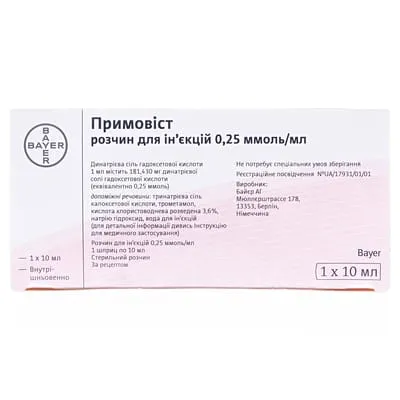
PRIMOVIST
UkraineThe drug is used to detect focal liver lesions and obtain additional data regarding their characteristics during magnetic resonance imaging (MRI).
Frequently asked questions
How should Primovist be taken correctly?
The drug is administered intravenously via bolus injection. The dosage is calculated individually depending on body weight: for adults, the recommended dose is 0.1 ml of the drug per 1 kg of body weight.
Who should not use this drug?
Use is contraindicated in cases of hypersensitivity to the active substance or any other components of the product. Application should also be avoided in patients with severe renal impairment.
What are the possible side effects of Primovist?
The most frequent reactions are nausea, headache, hot flashes, increased blood pressure, back pain, and dizziness. The most serious reaction may be anaphylactic shock.
Can the drug be used during pregnancy or breastfeeding?
The drug is not recommended for use in pregnant women unless there are absolute indications, as gadolinium may cross the placenta. During breastfeeding, the decision to continue or discontinue lactation must be made by a physician.
How does the drug interact with other medicines?
Clinical studies on interactions with other drugs have not been conducted; however, potent OATP inhibitors may reduce the liver contrast effect. Additionally, elevated levels of bilirubin or ferritin may decrease the efficacy of the product.
Are there any specific considerations for elderly people?
Special caution is required for patients aged 65 and older, as renal function may be impaired due to age-related changes.
Instructions for use
INSTRUCTIONS FOR MEDICAL USE OF THE MEDICINAL PRODUCT PRIMOVIST (PRIMOVIST®)
Composition:
Active substance: gadoxetate dimeglumine (Gd-EOB-DTPA);
1 ml of injectable solution contains 181.43 mg of gadoxetate dimeglumine (Gd-EOB-DTPA) (equivalent to 0.25 mmol);
Excipients: trisodium calcium EOB-DTPA (Ca-EOB-DTPA), tromethamine, diluted hydrochloric acid, sodium hydroxide, water for injections.
Pharmaceutical form. Injectable solution.
Main physicochemical properties: clear solution, free from particles.
Pharmacotherapeutic group. Paramagnetic contrast agents.
ATC code V08CA10.
Pharmacological Properties
Pharmacodynamics.
Mechanism of action
Primovist is a paramagnetic contrast agent for magnetic resonance imaging.
The contrast-enhancing effect is due to gadoxetate (Gd-EOB-DTPA), an ionic complex composed of gadolinium (III) and the ligand ethoxybenzyl-diethylenetriamine-pentaacetic acid (EOB-DTPA). During scanning using T1-weighted pulse sequences, the shortening of longitudinal relaxation time of excited atomic nuclei caused by gadolinium ions increases signal intensity and thereby enhances image contrast in certain tissues.
Pharmacodynamic effects
Sodium gadoxetate reduces relaxation time even at low concentrations. At pH 7, magnetic field strength of 0.47 T, and temperature of 40 °C, the relaxivity r1, defined by its effect on the longitudinal relaxation time T1 of protons in plasma, is approximately 8.7 L/mmol/sec; the relaxivity (r2), defined by its effect on transverse relaxation time T2, is approximately 8.56 L/mmol/sec. At a magnetic field strength of 1.5 T and temperature of 37 °C, plasma relaxivity values are: r1 = 6.9 L/mmol/sec, r2 = 8.7 L/mmol/sec. Relaxivity is only slightly dependent on magnetic field strength.
EOB-DTPA forms a stable complex with the paramagnetic gadolinium ion, exhibiting extremely high thermodynamic stability (log KGdL = 23.46). Gd-EOB-DTPA is a hydrophilic compound with high water solubility and a partition coefficient between n-butanol and buffer at pH 7.6 of approximately 0.011. Due to the lipophilic character of the ethoxybenzyl moiety, sodium gadoxetate demonstrates a biphasic mode of action: initial distribution in the extracellular space following bolus injection, followed by selective uptake into hepatocytes. The r1 relaxivity in liver tissue is 16.6 L/mmol/sec (at 0.47 T), which enhances the signal intensity of liver tissue. Subsequently, sodium gadoxetate is excreted via bile.
Lesions lacking hepatocyte function or with reduced function (e.g., cysts, metastases, most hepatocellular carcinomas) do not accumulate Primovist. Well-differentiated hepatocellular carcinoma may contain functioning hepatocytes and may show some enhancement during the hepatobiliary phase. Therefore, additional clinical information is required to establish an accurate diagnosis.
The substance shows no significant enzyme-inhibiting effects at clinically relevant concentrations.
Imaging
Following bolus injection of Primovist, dynamic imaging during the arterial, portal venous, and equilibrium phases allows for the acquisition of distinct temporal enhancement patterns of different types of liver lesions, providing the basis for radiological characterization.
Liver parenchymal enhancement during the hepatocyte phase enables identification of the number of affected liver areas, their segmental distribution, visualization, and boundaries, thereby improving lesion detection. Differentiation of liver lesions based on the dynamics of contrast enhancement/washout provides additional diagnostic information.
The delayed (hepatobiliary) phase can be evaluated 20 minutes after injection, with the imaging window lasting at least 120 minutes.
Diagnostic and technical efficacy results from clinical studies indicate minimal improvement in visualization at 20 minutes post-injection compared to 10 minutes post-injection.
The imaging window is reduced to 60 minutes in patients requiring dialysis and in patients with elevated bilirubin levels (> 3 mg/dL).
Hepatic excretion of Primovist results in contrast enhancement of the biliary system.
Physicochemical properties of the ready-to-use solution of Primovist
| Osmolality at 37 °C (mOsm/kg H2O) |
688 |
| Viscosity at 37 °C (mPa·s) |
1.19 |
| Density at 37 °C (g/mL) |
1.0881 |
| pH |
7.4 |
Paediatric patients
An observational study was conducted involving 52 paediatric patients (aged from 2 months to 18 years). Patients were referred for magnetic resonance imaging (MRI) of the liver using the medicinal product Primovist to evaluate suspected or known focal liver lesions. Additional diagnostic information was obtained by comparing contrast-enhanced and non-contrast MRI images of the liver. Severe adverse reactions were reported; however, none were assessed by the investigator as related to the administration of Primovist. Due to the retrospective nature and small sample size of this study, no conclusions can be drawn regarding the efficacy and safety of the medicinal product in children.
Pharmacokinetics.
Distribution
After intravenous administration, the concentration–time profile of gadoxetate disodium is characterized by biexponential decline. Gadoxetate disodium distributes into the extracellular space (volume of distribution at steady state approximately 0.21 L/kg). The substance shows minimal protein binding (less than 10%). The agent crosses the placental barrier in negligible amounts.
Gadoxetate disodium is a linear gadolinium-based contrast agent (GBCA). Studies have shown that following administration of GBCAs, gadolinium is retained in the body, particularly in the brain and other tissues and organs.
The use of GBCAs may cause dose-dependent increased signal intensity on T1-weighted images in the brain, especially in the dentate nucleus, globus pallidus, and thalamus. Increased signal intensity and preclinical data indicate that gadolinium is released from linear gadolinium-based contrast agents.
Biotransformation
Gadoxetate disodium is not metabolized.
Elimination
Gadoxetate disodium (Gd-EOB-DTPA) is excreted in equivalent amounts via the kidneys and the liver. The elimination half-life of Gd-EOB-DTPA is approximately 1 hour. The pharmacokinetics were linear up to a dose of 0.4 mL/kg (100 µmol/kg). Total clearance (Cltot) was approximately 250 mL/min, while renal clearance (Clr) was approximately 120 mL/min.
Characteristics in specific patient groups
Elderly patients (aged 65 years and older). Due to age-related physiological changes in kidney function, plasma clearance of gadoxetate disodium decreased from 210 mL/min in younger patients to 163 mL/min in patients aged 65 years and older. Terminal half-life and systemic exposure were higher in elderly patients (2.3 hours and 197 µmol × h/L, respectively, compared to 1.6 hours and 153 µmol × h/L). Renal excretion of the administered dose was complete within 24 hours, and no differences in the elimination of gadoxetate disodium between healthy elderly and younger patients were observed.
Renal and/or hepatic impairment. In patients with mild to moderate hepatic impairment, compared to healthy volunteers, slight to moderate increases in plasma concentrations, elimination half-life, and urinary excretion were observed, along with reduced hepatic excretion. However, no clinically significant differences in liver signal enhancement were observed. In patients with severe hepatic impairment, particularly those with abnormally high (>3 mg/dL) bilirubin levels, AUC increased to 259 µmol × h/L compared to 160 µmol × h/L in the control group. The elimination half-life was prolonged to 2.6 hours compared to 1.8 hours in the control group. Hepatobiliary excretion was significantly reduced to 5.7% of the administered dose, and liver signal enhancement was reduced.
In patients with end-stage renal disease, AUC increased six-fold to 903 µmol × h/L, and terminal half-life was prolonged to 20 hours. Haemodialysis increases the clearance of gadoxetate disodium (see section "Special warnings and precautions for use"). Overall, during a 3-hour dialysis procedure, approximately 30% of the gadoxetate disodium dose was eliminated within 1 hour after injection. In addition to the effect of haemodialysis on clearance, a significant fraction of the administered dose of gadoxetate disodium is excreted via bile in these patients, as evidenced by the detection of on average about 50% in faeces over 4 days (range from 24.6 to 74.0%; n = 6 patients).
Preclinical safety data
In standard studies of acute and subchronic toxicity, genotoxicity, and sensitization potential, no specific risk to humans was identified.
Cardiovascular safety. A slight and transient prolongation of the QT interval was observed in dogs at the highest dose tested of 0.5 mmol/kg, corresponding to a 20-fold human dose. At high concentrations, Gd-EOB-DTPA blocks specific cardiac potassium channels (hERG gene) and prolongs action potential duration in isolated guinea pig papillary muscles. This indicates a potential for QT interval prolongation in cases of overdose of Primovist. In safety pharmacology studies, no effects on other organ systems were observed.
Reproductive toxicology and lactation. In embryo-toxicity studies in rabbits following repeated administration of 0.2 mmol/kg Gd-EOB-DTPA, equivalent to 25.9-fold (based on body surface area) or 80-fold (based on body weight) the recommended human dose, an increase in post-implantation loss and a higher frequency of abortions were observed. In rats, less than 0.5% of the intravenously administered dose (0.1 mmol/kg) of radiolabelled gadoxetate was excreted in breast milk, and absorption after oral administration was very low (0.4%).
Data in young animals. Results from single- and repeat-dose toxicity studies in neonatal and young rats were qualitatively similar to those observed in adult rats, but young animals were more sensitive.
Local tolerance. Local intolerance reactions were observed only after intramuscular administration of Gd-EOB-DTPA.
Carcinogenicity. Carcinogenicity studies have not been conducted.
Clinical characteristics.
Indications.
Primovist is indicated for the detection of focal liver lesions and for obtaining additional information regarding the nature of such lesions on T1-weighted magnetic resonance imaging (MRI).
Primovist should be used only when diagnostic information is essential and cannot be obtained by non-contrast magnetic resonance imaging (MRI), and when delayed phase imaging is required.
The medicinal product is indicated for diagnostic use only via intravenous administration.
Contraindications.
Hypersensitivity to the active substance or to any of the excipients of the medicinal product.
Special safety precautions.
Inspection. The medicinal product should be carefully inspected before administration. Primovist must not be used if there is a significant change in its coloration, presence of particulate matter, or if the packaging integrity is compromised.
Handling. Primovist is ready for use. The pre-filled syringe should be prepared for injection immediately prior to use. The cap should be removed from the syringe only immediately before administration of the product.
Disposal. Unused medicinal product or waste materials must be disposed of in accordance with local regulations.
The detachable label from the pre-filled syringe should be affixed to the patient's medical record to ensure clear documentation of the use of gadolinium-containing contrast agents. The administered dose should also be recorded. If an electronic patient record is used, the name of the medicinal product, batch number, and dose should be entered.
Interaction with other medicinal products and other forms of interactions.
Hepatic uptake of gadoxetate may be mediated by organic anion transporting polypeptides (OATPs). It cannot be excluded that potent inhibitors of OATPs may cause interactions and reduce the liver contrast effect. However, there are no clinical data supporting this hypothesis.
Interaction studies in healthy volunteers have demonstrated that concomitant administration of erythromycin did not affect the efficacy or pharmacokinetics of Primovist. Clinical interaction studies with other medicinal products have not been conducted.
Effect of elevated bilirubin or ferritin levels in patients
Elevated levels of bilirubin or ferritin may reduce the liver contrast effect induced by Primovist (see section "Pharmacological properties").
Interaction with diagnostic tests
When measuring serum iron levels using complexometric methods (e.g., ferrozine-based assay) within 24 hours after administration of Primovist, false results may be obtained due to the presence of free complexing agent in the contrast solution.
Special precautions for use
General safety rules for magnetic resonance imaging should be followed, including exclusion of pacemakers and ferromagnetic implants.
Diagnostic procedures involving the use of contrast agents must be performed under the supervision of a physician experienced in the use of contrast agents and adequately trained in the procedure.
After injection, the patient should remain under medical supervision for at least 30 minutes, as clinical experience with contrast agents indicates that most adverse reactions occur within this period.
Renal impairment
Before administration of the medicinal product Primovist, all patients should be screened for renal dysfunction based on laboratory results.
Cases of nephrogenic systemic fibrosis (NSF) have been reported in patients with acute or chronic severe renal insufficiency (glomerular filtration rate < 30 mL/min/1.73 m²) following administration of gadolinium-containing contrast agents. Patients undergoing liver transplantation are at particular risk due to the high incidence of acute renal failure in this population. Because of the risk of NSF, use of Primovist should be avoided in patients with severe renal insufficiency and in patients during the perioperative period of liver transplantation, except when essential diagnostic information is required and cannot be obtained by non-contrast MRI.
Hemodialysis shortly after administration of Primovist may assist in elimination of the agent from the body. However, there is no data on the use of hemodialysis for prevention or treatment of NSF in patients not previously on dialysis.
Elderly patients
Since renal clearance of gadoxetate may be impaired in elderly patients, it is particularly important to assess renal function in patients aged 65 years and older.
Patients with cardiovascular diseases
Primovist should be used with caution in patients with severe cardiovascular diseases due to limited data.
Primovist should not be administered to patients with uncontrolled hypokalemia.
Primovist should be used with extreme caution in patients:
- with congenital long QT syndrome currently or in medical history;
- with a history of arrhythmias during treatment with medicinal products that prolong cardiac repolarization;
- who are receiving medicinal products that prolong cardiac repolarization, such as class III antiarrhythmics (amiodarone, sotalol).
Administration of Primovist may cause transient QT interval prolongation in some patients (see section "Pharmacological properties").
Hypersensitivity
Allergic reactions, including anaphylactic shock, may occur after administration of gadolinium-based MRI contrast agents. Most such adverse reactions occur within 30 minutes after administration. However, as with other agents of this class, delayed reactions may occur from several hours to several days after injection. Appropriate medications for treatment of hypersensitivity reactions and emergency resuscitation equipment must always be readily available.
The risk of hypersensitivity reactions is increased in the presence of the following conditions or diseases:
- previous reaction to contrast agents;
- history of bronchial asthma;
- history of allergic reactions.
The decision to administer Primovist to patients with a predisposition to allergies should be made only after careful assessment of the risk-benefit ratio.
Hypersensitivity reactions may be more severe in patients receiving beta-blockers, especially those with bronchial asthma. It should be noted that patients on beta-blockers may be unresponsive to standard beta-agonist therapy for hypersensitivity reactions.
If a hypersensitivity reaction occurs, administration of the contrast agent should be stopped immediately.
Local intolerance
Intramuscular injection may cause local intolerance reactions, including focal necrosis; therefore, this route of administration is not recommended (see section "Pharmacological properties").
Accumulation in the body
After administration of gadoxetate disodium, gadolinium may be retained in the brain and other tissues (bones, liver, kidneys, skin), leading to dose-dependent increased signal intensity on T1-weighted images in the brain, particularly in the dentate nucleus, globus pallidus, and thalamus. The clinical significance of this is unknown. For patients who may require repeated scans, the diagnostic benefits of using gadoxetate disodium should be weighed against the potential for gadolinium deposition in the brain and other tissues.
Excipients
This medicinal product contains 11.7 mg of sodium per 1 mL, equivalent to 0.585% of the WHO recommended maximum daily intake of 2 g sodium for an adult. For a 70 kg patient, the dose (0.1 mL/kg body weight) contains 82 mg sodium, which corresponds to 4.1% of the recommended daily intake.
Use during pregnancy or breastfeeding
Pregnancy. Data on the use of gadolinium-based contrast agents in pregnant women are limited. Gadolinium can cross the placenta. It is unknown whether gadolinium exposure is associated with adverse fetal outcomes. In animal studies, reproductive toxicity was observed after repeated high doses of the drug (see section "Pharmacological properties"). Primovist is not recommended during pregnancy unless absolutely necessary.
Lactation. Gadolinium-containing contrast agents are excreted in human milk in very small amounts (see section "Pharmacological properties"). After clinical doses, no effect on the breastfed infant is expected due to the minimal amount of active substance excreted in breast milk and poor gastrointestinal absorption. The decision whether to continue or discontinue breastfeeding for 24 hours after administration of Primovist should be made jointly by the physician and the breastfeeding woman.
Fertility. Animal studies have not shown any impairment of fertility.
Ability to affect driving and operating machinery
Primovist has no influence on the ability to drive or operate machinery.
Method of administration and dosage.
Method of administration
The ready-to-use aqueous solution of the medicinal product Primovist is administered undiluted as a bolus injection at a rate of approximately 2 ml/sec. After injection of the contrast agent, the intravenous cannula should be flushed with 0.9% sodium chloride solution.
For information on visualization, see section "Pharmacological properties".
Dosage
For diagnostic purposes, the lowest dose providing sufficient contrast enhancement should be used. The dose should be calculated based on the patient's body weight and must not exceed the recommended dose per kilogram of body weight as specified in this section.
The recommended dose of the medicinal product Primovist is:
Adults: 0.1 ml of Primovist per 1 kg body weight.
Repeat dosing
There is no clinical information regarding the use of repeated doses of the medicinal product Primovist.
Special patient groups
Renal impairment
The use of the medicinal product Primovist should be avoided in patients with severe renal impairment (glomerular filtration rate < 30 ml/min/1.73 m²) and in patients during the perioperative period of liver transplantation, except when diagnostic information is essential and cannot be obtained by non-contrast MRI (see section "Special precautions"). If administration of Primovist cannot be avoided, the dose should not exceed 0.025 mmol/kg body weight. More than one dose should not be administered during a single scanning session. Due to insufficient data on repeat administration, injection of Primovist should not be repeated unless the interval between injections is at least 7 days.
Hepatic impairment
Dose adjustment is not required.
Elderly patients (age 65 years and older)
No dosage adjustment is required for geriatric patients. However, special caution is necessary when administering to elderly patients (see section "Special precautions").
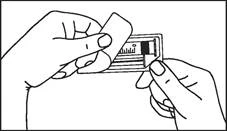
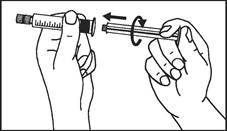
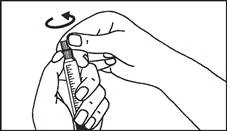
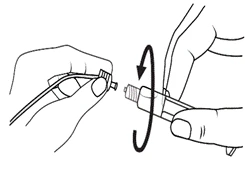
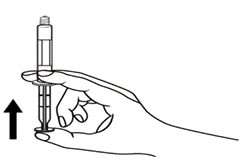
Instructions for syringe use
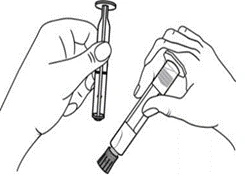
Prefilled syringes should be prepared for injection immediately prior to administration. The cap should be removed from the syringe only immediately before drug administration. Any unused medicinal product or waste material should be disposed of in accordance with local regulations.
The detachable label from the prefilled syringe should be affixed to the patient's medical record to ensure clear documentation of the use of gadolinium-containing contrast agents. The administered dose should also be recorded. If an electronic patient record is used, the name of the medicinal product, batch number, and dose should be entered.
Glass syringe
|
|
|
|
|
|
|
|
|
|
|
|
|
|
|
|
|
|
|
|
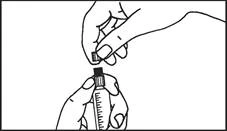
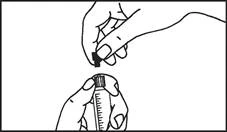
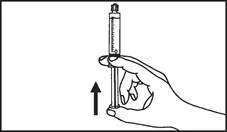
Plastic syringe
| Manual administration
|
Administration using an infusion pump
|
|
|
|
|
|
|
|
|
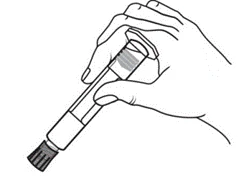
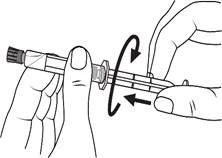
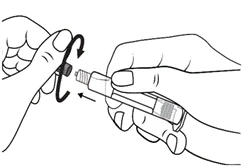
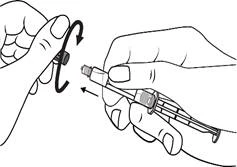
Children.
The safety and efficacy of the medicinal product Primovist in patients under 18 years of age have not been established; therefore, it is not administered to this patient population. Current available data are presented in the section "Pharmacological properties".
Overdose.
Cases of overdose have not been reported, and the symptom profile of overdose is unknown.
Single doses of Primovist up to 0.4 ml/kg (0.1 mmol/kg) body weight were well tolerated. In a limited number of patients, a dose of 0.2 ml/kg (0.5 mmol/kg) body weight was investigated in clinical studies; the frequency of adverse reactions was higher, but no new adverse effects were observed in these patients.
In the event of accidental overdose, patient monitoring is recommended, including cardiovascular monitoring, as QT interval prolongation may occur (see section "Pharmacological properties").
The medicinal product Primovist is eliminated by dialysis. However, there are no data available on the potential utility of hemodialysis for the prevention of nephrogenic systemic fibrosis.
Adverse reactions
The safety profile of the medicinal product Primovist is based on results from clinical studies involving more than 1900 patients and on post-marketing surveillance data.
The most commonly reported adverse reactions (≥ 0.5%) in patients receiving Primovist were: nausea, headache, feeling of warmth, increased blood pressure, back pain, and dizziness.
The most serious adverse reaction observed in patients receiving Primovist was anaphylactic shock. Delayed anaphylactoid reactions (occurring from several hours to several days after administration) were observed rarely. Most adverse effects were transient in nature and of mild to moderate severity.
Adverse reactions observed during administration of Primovist are listed in the table below. They are classified by system organ classes (Medical Dictionary for Regulatory Activities (MedDRA), version 12.1). Appropriate MedDRA terms were used to describe specific reactions, their symptoms, and symptomatically similar conditions.
The adverse reactions listed below, recorded during clinical studies, are categorized by frequency of occurrence: common (≥ 1/100 to < 1/10), uncommon (≥ 1/1000 to < 1/100), rare (≥ 1/10,000 to < 1/1000). The frequency of adverse reactions identified only during the post-marketing period is listed as "frequency not known". Within each group, adverse reactions are listed in order of decreasing severity.
Table. Adverse reactions recorded during clinical studies or in the post-marketing period in patients who received Primovist
| System organ class |
Common |
Uncommon |
Rare |
Frequency not known |
| Immune system disorders |
hypersensitivity/anaphylactoid reactions (e.g., shock*, hypotension, pharyngolaryngeal swelling, urticaria, facial swelling, rhinitis, conjunctivitis, abdominal pain, paresthesia, sneezing, cough, pallor) |
|||
| Nervous system disorders |
headache |
vertigo, dizziness, dysgeusia, paresthesia, parosmia |
tremor, akathisia |
restlessness |
| Cardiac disorders |
bundle branch block, palpitations |
tachycardia |
||
| Vascular disorders |
increased blood pressure, flushing |
|||
| Respiratory, thoracic and mediastinal disorders |
respiratory disorders (dyspnea*, respiratory distress) |
|||
| Gastrointestinal disorders |
nausea |
vomiting, dry mouth |
oral discomfort, hypersalivation |
|
| Skin and subcutaneous tissue disorders |
rash, pruritus** |
maculopapular rash, hyperhidrosis |
||
| Musculoskeletal and connective tissue disorders |
back pain |
|||
| General disorders and administration site conditions |
chest pain, injection site reactions (various types)***, feeling of warmth, fever, fatigue, atypical sensations |
discomfort, malaise |
* Life-threatening conditions and/or fatal outcomes have been reported. These reports were received during the post-marketing period.
** Pruritus (generalized pruritus, eye pruritus).
*** Injection site reactions (various types) are defined by the following terms: injection site haemorrhage, injection site burning, injection site cold sensation, injection site irritation, injection site pain.
Description of selected adverse reactions
During clinical trials, changes in laboratory parameters were reported, such as: increased serum iron levels, increased bilirubin levels, increased liver transaminase levels, decreased hemoglobin levels, increased amylase levels, leukocyturia, hyperglycemia, increased albumin/creatinine ratio in urine, hyponatremia, increased inorganic phosphate levels, decreased serum protein levels, leukocytosis, hypokalemia, increased lactate dehydrogenase levels. ECGs were routinely performed during clinical trials, and transient QT interval prolongation was observed in some patients, without any associated adverse events.
Cases of nephrogenic systemic fibrosis (NSF) have been reported with the use of other gadolinium-containing contrast agents (see section "Special precautions for use").
Reporting suspected adverse reactions
Reporting of suspected adverse reactions after a medicinal product has been authorized is important. It allows continued monitoring of the benefit-risk balance of the medicinal product. Healthcare professionals and patients, or their legal representatives, should report any suspected adverse reactions and lack of efficacy of the medicinal product via the automated pharmacovigilance information system at: https://aisf.dec.gov.ua.
Shelf life.
5 years (glass syringe);
3 years (plastic syringe).
Storage conditions.
No special storage conditions required.
Incompatibilities.
As compatibility studies have not been conducted, this medicinal product must not be mixed with other medicinal products.
Packaging.
10 ml in a glass syringe; 1 syringe in a transparent plastic container closed with paper, placed in a cardboard box;
10 ml in a plastic syringe; 1 syringe placed in a cardboard holder and placed in a cardboard box.
Prescription status.
Prescription only.
Manufacturer.
Bayer AG.
Manufacturer's address.
Müllerstrasse 178, 13353 Berlin, Germany.
The original data is available in the language of the country of manufacture.
Data source: State Register of Medicinal Products of Ukraine
Data last verified: August 13, 2026