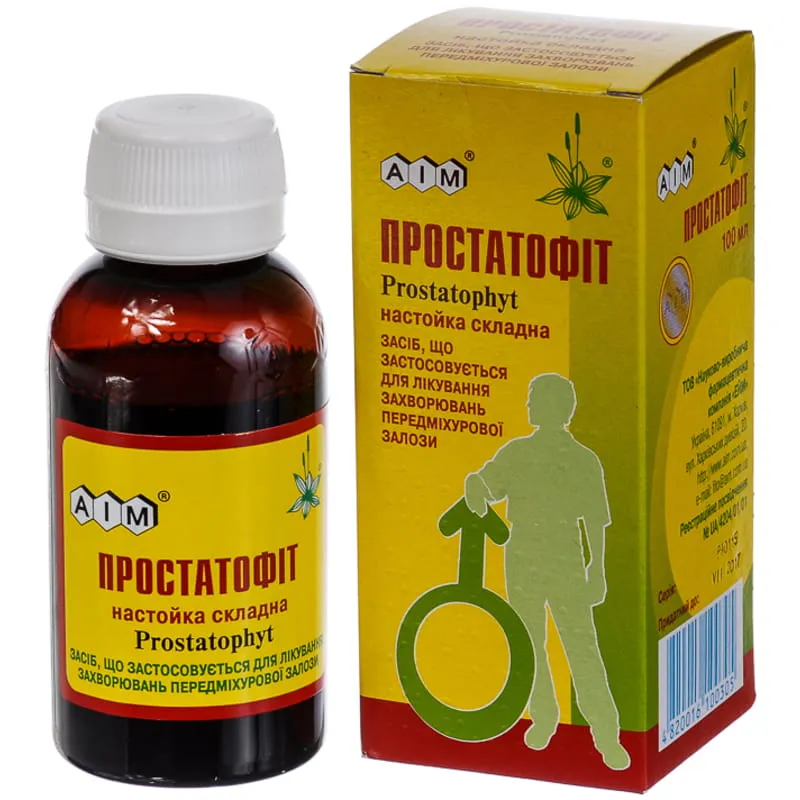
PROSTATOPHYT
UkraineThe drug is used in the complex therapy of chronic prostatitis, at the initial stage of benign prostatic hyperplasia, as well as for non-specific inflammations of the urinary tract. It is also used to improve urinary tract function and to prevent prostatic dysfunction associated with age.
Frequently asked questions
How should Prostatophyt be taken correctly?
Shake the bottle before use. The drug is taken orally 1 hour after meals. The dosage is 5–10 ml (1–2 teaspoons) diluted in 80–120 ml of water, 2–3 times a day. The maximum daily dose should not exceed 20 ml. Usually, the course lasts 21 days.
What side effects can Prostatophyt cause?
Possible allergic reactions (rash, itching, swelling of the face or skin, rhinitis, asthma), dizziness, drowsiness, feelings of fatigue, as well as digestive problems (abdominal pain, nausea, diarrhea, heartburn, flatulence).
Who should not take this drug?
The drug is intended for adult men only. It should not be used in case of hypersensitivity to the components, gastric or duodenal ulcers, hyperacidic states, asthma, epilepsy, angina pectoris, low blood pressure, bradycardia, as well as organic changes in the liver and kidneys or a history of alcoholism.
Can the drug be combined with other medicines or alcohol?
Alcohol or preparations containing ethyl alcohol should not be consumed during treatment. The drug may enhance the effects of hypnotics, sedatives, analgesics, antihypertensives, cardiac glycosides, and tranquilizers.
Does the drug affect the ability to drive a vehicle?
While taking the drug orally, one should refrain from activities that require high concentration and rapid reaction, such as driving vehicles or working with complex mechanisms.
Instructions for use
INSTRUCTIONS FOR MEDICAL USE OF THE MEDICINAL PRODUCT PROSTATOPHYT
Composition:
Active substances: 1 ml of the preparation contains a compound tincture made from a mixture of medicinal plant raw materials (nettle roots (Urticae radix) 40 mg, calamus roots (Calami radix) 20 mg, birch buds (Betulae gemmae) 20 mg, melilot herb (Meliloti herba) 20 mg, motherwort herb (Leonuri cardiacae herba) 20 mg, chamomile flowers (Matricariae flos) 20 mg, Japanese sophora fruit (Sophorae japonicae fructus) 20 mg, greater celandine herb (Chelidonii herba) 20 mg, sage leaves (Salviae officinalis folium) 20 mg) (1:5) (extraction solvent – ethanol 70%).
Pharmaceutical form. Compound tincture.
Main physicochemical properties: clear brown liquid with a specific odor. A slight sediment may be present.
Pharmacotherapeutic group. Agents used in benign prostatic hyperplasia.
ATC Code G04CX.
Pharmacological Properties.
Pharmacodynamics.
The combination of biologically active substances in the medicinal product PROSTATHYTE affects metabolism in the prostate gland and improves urinary dynamics. PROSTATHYTE has anti-inflammatory properties (inhibits exudative processes and the development of fibrous-granulation tissue, reduces the severity of inflammatory response), analgesic and spasmolytic effects, as well as moderate antiandrogenic activity in the presence of elevated androgen levels.
Clinical characteristics.
Indications. In complex therapy of chronic prostatitis, initial stage of benign prostatic hyperplasia, as well as nonspecific inflammatory diseases of the urinary tract; for improvement of urodynamics and prevention of prostate gland functional disorders associated with age.
Contraindications. For oral and rectal administration: hypersensitivity to the components of the drug. For oral administration: hyperacid states, peptic ulcer of the stomach and duodenum, history of pelvic organ bleeding, bronchial asthma, epilepsy, angina pectoris, arterial hypotension, bradycardia, neurological syndromes, anemia, organic changes in liver and kidneys, acute inflammatory kidney diseases. History of alcoholism. Concurrent use of medicinal products containing ethyl alcohol; neuroleptics, tranquilizers; alcohol consumption.
Interaction with other medicinal products and other forms of interaction. The drug may potentiate the effects of sedatives, hypnotics, analgesics, antihypertensive agents, cardiac glycosides, tranquilizers, as well as alcohol.
Special precautions for use
Due to the presence of Chelidonium herb in the composition of the drug, its internal use is possible only under medical prescription and supervision.
Use during pregnancy or breastfeeding. The medicinal product should be used only by men.
Ability to affect reaction speed while driving or operating machinery. During the period of using the medicinal product (internally), patients should refrain from potentially hazardous activities requiring heightened attention and rapid psychomotor reactions (such as driving vehicles or operating complex machinery).
Method of Administration and Dosage
Shake before use. PROSTATOPHYT should be taken orally, 5–10 ml (1–2 teaspoons) diluted in 80–120 ml (⅓–½ cup) of water, 2–3 times daily, one hour after meals. The maximum single dose for oral administration is 10 ml (2 teaspoons); the maximum daily dose is 20 ml. The usual treatment course lasts 21 days. The course may be repeated after a 2-week interval. The duration of treatment and the number of courses are determined by the physician depending on the severity of the disease and the therapeutic response achieved.
To enhance the therapeutic effect, in addition to oral administration of PROSTATOPHYT, it should also be administered rectally as micro-enemas, diluted 1:20 (drug : water). For this purpose, 5 ml of the drug should be diluted in 100 ml (½ cup) of warm water (35–40 °C). Micro-enemas should be administered once daily (preferably at night) every day for 2–3 weeks, depending on the course of the disease.
Children. The medicinal product should be used only in adult males.
Overdose. Overdose is characterized by acute alcohol intoxication, with symptoms similar to those of ethanol poisoning. When blood alcohol concentration reaches 3–4 g/L (300–400 mg%), pronounced intoxication develops.
Treatment: gastric lavage, symptomatic therapy.
Gastrointestinal disturbances and increased manifestation of adverse reactions may also occur.
Adverse reactions.
The medicinal product is generally well tolerated by patients and has not so far caused any adverse reactions. However, published data indicate that the use of individual components may cause allergic reactions such as rhinitis, hyperemia, rashes, itching, anaphylactic shock, asthma, facial and skin edema, contact dermatitis, urticaria; cross-allergic reactions to chamomile are also possible in patients with increased sensitivity to common wormwood (Artemisia absinthium). Renal tissue irritation, dizziness, drowsiness, fatigue, decreased mental and physical performance, dyspeptic symptoms (abdominal pain, nausea, diarrhea), heartburn, sensation of stomach fullness, and flatulence may also occur. In case of any negative reactions, it is necessary to consult a physician.
Shelf life. 2 years. Do not use after the expiry date stated on the packaging.
Storage conditions. In the original packaging at a temperature not exceeding 25 °C, in a place inaccessible to children.
Packaging. 100 ml in jars № 1; 100 ml in bottles № 1.
Availability. Over-the-counter.
Manufacturer. LLC "Scientific-Production Pharmaceutical Company "EYM".
Manufacturer's address and location of business activity. Ukraine, 61091, Kharkiv region, city of Kharkiv, str. Kharkivs'kykh Dyviziy, 20 lit. "A-5".
The original data is available in the language of the country of manufacture.
Data source: State Register of Medicinal Products of Ukraine
Data last verified: August 13, 2026