OVESTIN
UkraineThe drug is used to treat symptoms of vaginal atrophy caused by estrogen deficiency in postmenopausal women. It is also used for preparation before and after vaginal surgical interventions, as well as an adjunct for diagnosis in cases of doubtful cervical smear results.
Frequently asked questions
How should Ovestin be taken correctly?
The cream should be inserted into the vagina using an applicator in the evening before bedtime. For atrophy, typically 1 dose per day is used during the first few weeks (maximum 4 weeks), after which a maintenance dose is gradually introduced (for example, 2 times per week). For surgical preparation, 1 dose per day is used for 2 weeks before the intervention and 1 dose 2 times per week for 2 weeks after surgery.
Who should not use this drug?
Contraindications include hypersensitivity to the ingredients, established or suspected breast or endometrial cancer, vaginal bleeding of unknown origin, untreated endometrial hyperplasia, thromboembolism (venous thrombosis, pulmonary embolism), liver disease, porphyria, and other conditions associated with the risk of thrombosis.
What are the possible side effects of Ovestin?
Possible reactions include: fluid retention, nausea, discomfort or pain in the breasts, vaginal discharge, irritation or itching at the site of application. Bloody vaginal discharge may also occur. If you notice bleeding during treatment, you must consult a physician.
Can the drug be combined with other medicines?
Clinically significant interactions are unlikely due to local application; however, interactions with other vaginal products should be considered. Some drugs (for example, anticonvulsants, certain antibacterial or antiviral drugs, and St. John's wort) may enhance estrogen metabolism, which could reduce the efficacy of Ovestin.
Can the drug be used during pregnancy or breastfeeding?
No, the drug should not be used during pregnancy (if pregnancy occurs during treatment, use must be discontinued immediately) or during breastfeeding, as estriol may pass into breast milk and reduce milk secretion.
Instructions for use
INSTRUCTIONS FOR MEDICAL USE OF THE MEDICINAL PRODUCT OVESTINâ (OVESTINâ)
Composition:
Active substance: estriol;
1 g of cream contains 1 mg of estriol;
Excipients: octyldodecanol, cetyl palmitate, glycerol, cetostearyl alcohol, stearyl alcohol, polysorbate 60, sorbitan monostearate, lactic acid, chlorhexidine, sodium hydroxide, purified water.
Pharmaceutical form. Vaginal cream.
Main physicochemical properties: homogeneous, uniform cream-like mass of white to almost white color.
Pharmacotherapeutic group. Sex hormones and agents used in pathologies of the genital system. Simple preparations of natural and semi-synthetic estrogens. ATC code G03C A04.
Pharmacological properties
Pharmacodynamics
Mechanism of action
Ovestin™ contains the natural female hormone estriol. Unlike other estrogens, estriol is short-acting. It compensates for the decreased production of endogenous estrogen in women. In cases of atrophic vaginitis, vaginal administration of estriol normalizes the epithelium of the urogenital tract and promotes restoration of normal vaginal microflora and physiological pH levels.
Treatment of estrogen deficiency-related vaginal symptoms: estrogen administered vaginally relieves symptoms of atrophic vaginitis caused by estrogen deficiency in postmenopausal women.
Clinical study information
According to data obtained from clinical studies, improvement in vaginal symptoms occurred within the first few weeks of treatment. Additionally, clinical studies have shown that vaginal bleeding after treatment with Ovestin™ occurred only rarely. If vaginal bleeding occurs during treatment with Ovestin™ vaginal cream, women should consult their physician. All cases of vaginal bleeding during treatment must be investigated (see section "Special precautions for use").
Pharmacokinetics
Absorption
Intravaginal administration of estriol ensures optimal bioavailability at the site of action. Estriol is also absorbed into the systemic circulation, as evidenced by a rapid increase in plasma concentration of unconjugated estriol.
Distribution
Maximum plasma concentration (Cmax) is reached within 1–2 hours after administration. After vaginal administration of 0.5 mg estriol, Cmax was approximately 100 pg/mL, minimum plasma concentration (Cmin) was approximately 25 pg/mL, and average concentration (Caverage) was approximately 70 pg/mL. After 3 weeks of daily vaginal administration of 0.5 mg estriol, Caverage decreased to 40 pg/mL.
In a clinical study, the mean plasma level measured 12 hours after cream application during 12 weeks of treatment was 8.5 pg/mL (interquartile range 3.3–24.3). After administration three times per week for 21 months, the mean serum estriol level in patients with chronic disease was 5.5 pg/mL (interquartile range 1.9–10.2).
Biotransformation
Approximately 90% of estriol in plasma is bound to plasma albumin and, unlike other estrogens, is almost not bound to sex hormone-binding globulin. Estriol metabolism occurs primarily via conjugation and deconjugation during enterohepatic circulation.
Elimination
Since estriol is an end metabolite, it is primarily excreted in conjugated form in urine. Only a small fraction (approximately 2%) is excreted in feces, mainly as unconjugated estriol. The elimination half-life after vaginal administration is approximately 6–9 hours.
Clinical characteristics.
Indications.
- Treatment of symptoms of vaginal atrophy due to estrogen deficiency in postmenopausal women.
- Pre- and postoperative treatment of postmenopausal women undergoing vaginal surgery.
- As an adjunct in the diagnosis of suspicious cases of atrophic cervical smear (Pap smear category III according to Papanicolaou) when abnormal cells indicating epithelial atrophy are detected.
Contraindications.
- Hypersensitivity to the active substance or to any of the excipients of the medicinal product.
- Established, previous or suspected breast cancer.
- Established or suspected estrogen-dependent malignant tumors (e.g., endometrial cancer).
- Vaginal bleeding of unknown etiology.
- Untreated endometrial hyperplasia.
- Previous or current venous thromboembolism (VTE) (deep vein thrombosis, pulmonary embolism).
- Established thrombophilic disorders (e.g., protein C, protein S or antithrombin deficiency; see section "Special precautions").
- Active or recent arterial thromboembolic disease (e.g., angina pectoris, myocardial infarction).
- Acute stage liver disease or liver disease in history, after which liver function tests have not returned to normal.
- Porphyria.
Interaction with other medicinal products and other forms of interaction.
Due to vaginal administration and minimal systemic absorption, clinically significant interactions with Ovestinâ are unlikely. However, interaction with other local vaginal products should be considered.
The metabolism of estrogens (and progestogens) may be enhanced when co-administered with medicinal products capable of inducing enzymes involved in drug metabolism, particularly cytochrome P450 enzymes, such as anticonvulsants (e.g., phenobarbital, phenytoin, carbamazepine), antibacterial/antiviral agents (e.g., rifampicin, rifabutin, nevirapine, and efavirenz), as well as herbal preparations containing St. John's wort (Hypericum perforatum).
Ritonavir and nelfinavir are known potent inhibitors, but conversely, they exhibit inducing properties when used with steroid hormones.
Clinically significant increase in the metabolism of estrogens and progestogens may lead to reduced efficacy of Ovestinâ and changes in bleeding pattern.
Special precautions for use.
Hormone replacement therapy (HRT) for the treatment of postmenopausal symptoms should only be initiated when symptoms negatively affect quality of life. In any case, a careful evaluation of risks and benefits must be performed at least once a year, and HRT should continue only as long as the benefits outweigh the risks.
Evidence regarding risks associated with HRT in the treatment of premature menopause is limited. However, due to the low absolute risk in younger women, the benefit-risk balance may be more favorable for them compared to older women.
Medical examination/follow-up monitoring
Before initiating or restarting HRT, a complete personal and family medical history should be reviewed. A physical examination (including pelvic and breast examination) should take into account the patient's history, contraindications (see section "Contraindications"), and warnings. Periodic medical check-ups are recommended during treatment, with frequency and type depending on individual characteristics. Women should be informed about which breast changes should be reported to a physician or nurse (see "Breast cancer" below). Screening examinations, including mammography, should be performed according to current screening practices, adjusted to the individual needs of the patient.
Conditions requiring medical monitoring
The following conditions, if present or previously experienced and/or worsened during pregnancy or previous hormonal therapy, require careful monitoring. These conditions may recur or worsen during treatment with Ovestinâ, including:
- leiomyoma (uterine fibroids) or endometriosis;
- thromboembolic disorders or presence of risk factors (see "Venous thromboembolism" below);
- risk factors for estrogen-dependent tumors, e.g., first-degree family history of breast cancer;
- elevated blood pressure;
- liver disease (e.g., hepatoadenoma);
- diabetes with or without vascular complications;
- gallstone disease;
- migraine or severe headache;
- systemic lupus erythematosus;
- history of endometrial hyperplasia (see "Endometrial hyperplasia and cancer" below);
- epilepsy;
- bronchial asthma;
- otosclerosis.
Reasons for immediate discontinuation of treatment
HRT should be immediately discontinued if any contraindication is detected, or in the following situations:
- jaundice or worsening liver function;
- significant increase in blood pressure;
- new onset of migraine-type headache;
- pregnancy.
Endometrial hyperplasia and cancer
In women with an intact uterus, long-term systemic estrogen monotherapy increases the risk of endometrial hyperplasia and endometrial carcinoma.
When using Ovestinâ vaginal cream or suppositories, systemic exposure to estriol remains close to the normal postmenopausal range when administered twice weekly; therefore, combination with a progestogen is not recommended.
The safety of long-term (more than one year) or repeated use of locally administered vaginal estrogens regarding endometrial effects is unknown. Therefore, treatment should be re-evaluated at least once a year when repeated use is considered.
Estrogen-only HRT may lead to premalignant or malignant transformation of residual endometriosis foci. Therefore, caution should be exercised when using this medicinal product in women who have undergone hysterectomy due to endometriosis if residual endometriosis foci are known to remain.
If bleeding or spotting occurs at any time during treatment, the cause should be investigated, which may require endometrial biopsy to exclude endometrial malignancy.
To prevent endometrial hyperplasia, the daily dose should not exceed one applicator dose (0.5 mg estriol), and this maximum dose should not be used for longer than several weeks (maximum 4 weeks). One epidemiological study demonstrated that long-term low-dose oral estriol, but not vaginal estriol, may increase the risk of endometrial cancer. The risk increases with duration of treatment and disappears within one year after treatment cessation. The increased risk primarily concerns less invasive and highly differentiated tumors.
The following risks have been associated with systemic HRT and are less relevant to Ovestin® vaginal cream and suppositories, which, when used twice weekly, result in systemic estriol exposure close to the normal postmenopausal range. However, these risks should be considered in case of long-term or repeated use of this medicinal product.
Breast cancer
Results from a large meta-analysis of epidemiological studies indicate that low-dose vaginal estrogen use does not increase the risk of breast cancer in women without prior history of the disease. The risk of recurrence in women with a history of breast cancer is unknown.
It is unknown whether estriol use carries the same risk. In several population-based case-control studies, estriol use, unlike other estrogens, was not associated with an increased risk of breast cancer. However, the clinical significance of these data is unknown.
Ovarian cancer
Ovarian cancer is much rarer than breast cancer. A large meta-analysis of epidemiological studies suggests a slightly increased risk in women receiving systemic estrogen-only HRT, which becomes apparent after five years of use and subsequently decreases after treatment cessation.
Venous thromboembolism (VTE)
Systemic hormone replacement therapy increases the risk of VTE (i.e., deep vein thrombosis or pulmonary embolism) by 1.3 to 3 times. The risk is higher during the first year of HRT than thereafter (see section "Adverse reactions").
Patients with known conditions associated with thrombophilic disorders have an increased risk of VTE, and hormone replacement therapy may further increase this risk. Therefore, HRT is contraindicated in such patients (see section "Contraindications"). Risk factors for VTE include estrogen use, advanced age, major surgery, prolonged immobilization, obesity (body mass index > 30 kg/m²), pregnancy, postpartum period, systemic lupus erythematosus, and cancer. The role of varicose veins in VTE development is not clearly established.
As with all postoperative patients, preventive measures should be taken to avoid VTE. If prolonged immobilization is unavoidable following elective surgery, HRT should be temporarily discontinued 4–6 weeks before surgery. HRT may be resumed only after full mobility is restored.
Women without personal history of VTE but with a first-degree relative who experienced thrombosis at a young age may be offered screening after thorough counseling regarding its limitations (only a portion of thrombophilic disorders are detectable by screening). If a hereditary thrombophilic condition associated with familial thrombosis is identified, or if the condition is severe (e.g., antithrombin, protein S or protein C deficiency, or combined disorders), HRT is contraindicated.
For women already receiving long-term anticoagulant therapy, the benefit-risk ratio of HRT must be carefully evaluated.
If VTE occurs after starting treatment with Ovestinâ, the treatment must be discontinued. Patients should be informed about the need to seek immediate medical attention if they experience symptoms suggestive of thromboembolism (e.g., painful leg swelling, sudden chest pain, dyspnea).
Ischemic heart disease (IHD)
Estrogen only
Randomized controlled trials have not shown an increased risk of IHD in women with hysterectomy who received systemic HRT containing estrogen only.
Ischemic stroke
Data indicate that systemic estrogen therapy increases the risk of ischemic stroke by 1.5 times. The relative risk does not vary with age or time since menopause. However, since the baseline absolute risk of ischemic stroke increases significantly with age, the overall stroke risk in women receiving HRT increases with age (see section "Adverse reactions").
Concomitant use of hepatitis C treatments
In clinical trials where patients with hepatitis C virus (HCV) infection received treatment with regimens containing ombitasvir/paritaprevir/ritonavir and dasabuvir with or without ribavirin, ALT elevation >5 times the upper limit of normal occurred significantly more frequently in women receiving medicinal products containing ethinylestradiol. In women receiving other estrogens, such as estradiol, estriol, and conjugated estrogens, ALT elevations were similar to those in women not receiving estrogens. However, due to the limited number of women receiving these other estrogens, caution should be exercised when co-administering Ovestin® with this combination therapy.
Other conditions
Estrogens may cause fluid retention; therefore, careful monitoring is required in patients with cardiac or renal impairment.
Women with pre-existing hypertriglyceridemia should be closely monitored, as rare cases of marked plasma triglyceride elevation leading to pancreatitis have been reported during estrogen therapy in such patients.
Exogenous estrogens may induce or exacerbate symptoms of hereditary or acquired angioedema.
Estrogens increase thyroxine-binding globulin (TBG) levels, resulting in elevated total circulating thyroid hormone levels, measured as protein-bound iodine, T4 (measured by column assay or RIA), or T3 (measured by RIA). T3 resin uptake is reduced, reflecting increased TBG levels. Free T3 and T4 concentrations remain unchanged. Levels of other binding proteins, such as corticosteroid-binding globulin (CBG) and sex hormone-binding globulin (SHBG), may also be elevated, leading to increased circulating levels of corticosteroids and sex hormones. Concentrations of free or biologically active hormones remain unchanged. Levels of other plasma proteins (angiotensinogen, α-1-antitrypsin, ceruloplasmin) may also increase.
HRT does not improve cognitive function. Some evidence suggests an increased risk of possible dementia in women who initiated continuous combined or estrogen-only HRT after age 65.
Use of Ovestinâ vaginal cream at the recommended maintenance dose does not affect endocrine function test results.
Ovestinâ cream contains cetyl alcohol and stearyl alcohol, which may cause local skin reactions (e.g., contact dermatitis).
Use during pregnancy or breastfeeding.
Fertility
Ovestinâ is intended only for the treatment of postmenopausal women (natural or surgically induced).
Pregnancy
Ovestinâ is not used during pregnancy. If a woman becomes pregnant while being treated with Ovestinâ, the treatment should be discontinued immediately. Available epidemiological data on the effects of estrogens on the fetus do not indicate teratogenic or fetotoxic effects.
Breastfeeding
Ovestinâ is not used during breastfeeding. Estriol passes into breast milk and may reduce milk production.
Ability to influence reaction speed when driving or operating machinery.
Ovestinâ does not affect the ability to drive or operate machinery.
Method of Administration and Dosage
The drug Ovestin® contains only estrogen, therefore it can be used both in women with preserved uterus and in women after hysterectomy.
Dosage
At the beginning of treatment or when continuing treatment of estrogen deficiency symptoms in postmenopausal women, the lowest effective dose should be used for the shortest possible duration (see section "Special Precautions").
For atrophy of the lower urogenital tract:
1 dose daily for the first weeks (up to a maximum of 4 weeks), followed by gradual reduction to a maintenance dose (e.g., up to 1 dose twice weekly), depending on the degree of symptom relief.
For pre- and postoperative treatment in postmenopausal women undergoing vaginal surgery:
1 dose daily for 2 weeks prior to surgery; 1 dose twice weekly for 2 weeks after surgery.
As an adjunctive diagnostic aid in cases of doubtful atrophic cervical smear findings:
1 dose every other day for one week prior to obtaining the next smear.
If a dose is missed, the drug should be administered as soon as remembered, provided that the next scheduled dose has not yet been due. If the next dose is due, the missed dose should not be administered; treatment should continue according to the regular dosing schedule.
DO NOT ADMINISTER 2 DOSES OF THE DRUG IN ONE DAY.
Method of Administration
Ovestin® cream should be administered intravaginally using a calibrated applicator. Apply in the evening before bedtime.
One dose of the drug (applicator filled to the ring mark) contains 0.5 g of Ovestin® cream, corresponding to 0.5 mg of estriol.
Instructions for Patient Use
-
Remove the cap from the tube, turn the cap over, and use the sharp projection on it to pierce the tube seal.
-
Screw the end of the applicator onto the tube. Ensure that the plunger is fully inserted into the cylinder.
-
Squeeze the tube slowly to fill the applicator with cream up to the point where the plunger stops at the red ring mark—see arrows in the illustration below.
-
Unscrew the applicator from the tube and replace the cap on the tube.
-
To administer the cream, lie down and insert the end of the applicator deeply into the vagina.
-
Press the plunger slowly until the applicator is completely emptied.
-
After use, remove the plunger from the cylinder by overcoming noticeable resistance, and wash the cylinder and plunger with warm soapy water. Do not use detergents. Rinse thoroughly after washing.
DO NOT PLACE THE APPLICATOR IN HOT OR BOILING WATER.
- After cleaning, reassemble the applicator by fully inserting the plunger into the cylinder, overcoming resistance where felt.
When the tube is empty, the applicator should be discarded.
When Ovestin® vaginal cream or suppositories are used twice weekly, systemic exposure to estriol remains within the normal postmenopausal range; therefore, combination with a progestogen is not recommended (see section "Special Precautions").
Women who are not currently receiving hormone replacement therapy (HRT), or who are switching from continuous combined HRT, may start treatment with Ovestin® at any time. Women switching from a cyclic HRT regimen should start Ovestin® treatment the day after completing the previous cycle.
Children
The drug is not intended for use in children.
Overdose
In case of accidental ingestion of a large amount of the drug, women may experience nausea, vomiting, and withdrawal bleeding. There is no specific antidote. If necessary, symptomatic treatment should be administered.
Adverse reactions.
Adverse reactions usually occur in 3−10% of patients receiving treatment. This may indicate the use of a very high dose of the drug. Typically, adverse reactions resolve within the first weeks of treatment.
The frequency of adverse reactions may vary depending on the indication, dosage of the drug, and concomitant use with other medicinal products.
Frequency categories are defined as follows: very common (≥ 1/10); common (≥ 1/100 to <1/10); uncommon (≥ 1/1000 to <1/100); rare (≥ 1/10000 to <1/1000); very rare (<1/10000); frequency not known (cannot be estimated based on available data).
In literature and during post-marketing surveillance, the following adverse reactions have been reported with unknown frequency:
- Metabolism and nutrition disorders – fluid retention.
- Gastrointestinal disorders – nausea.
- Reproductive system and breast disorders – breast discomfort and pain, postmenopausal bleeding, vaginal discharge.
- General disorders and administration site conditions – irritation and itching at the injection site, influenza-like illness.
These adverse effects are usually transient but may also indicate the use of a very high dose of the drug.
Other reported adverse reactions associated with systemic estrogen/progestogen therapy:
- Benign and malignant estrogen-dependent neoplasms, e.g., endometrial carcinoma (see sections "Contraindications" and "Special warnings and precautions for use" for additional information).
- Gallbladder disease.
- Skin and subcutaneous tissue disorders: chloasma, erythema multiforme, nodular erythema, hemorrhagic purpura.
- Possible dementia in women aged 65 years and older (see section "Special warnings and precautions for use").
Class effects associated with systemic HRT
The risks listed below have been associated with the use of systemic HRT and are less relevant to Ovestin® cream and vaginal suppositories, which, when administered twice weekly, result in systemic exposure to oestriol remaining close to the normal postmenopausal range.
Risk of breast cancer
The risk of developing breast cancer was nearly doubled in women who received combined estrogen-progestogen HRT for more than 5 years.
The risk with estrogen-only therapy is significantly lower than with combined estrogen-progestogen HRT.
The risk increases with duration of treatment (see section "Special warnings and precautions for use").
Results from the largest clinical trial (WHI) and the largest epidemiological study (MWS) are presented below.
Million Women Study (MWS) – estimated additional risk of breast cancer over 5 years of treatment:
| Age group (years) |
Additional cases per 1000 women not receiving HRT, observed over 5 years* |
Risk ratio and 95% CI# |
Additional cases per 1000 women receiving HRT, observed over 5 years (95% CI) |
| Estrogen-only HRT |
|||
| 50−65 |
9−12 |
1.2 |
1−2 (0−3) |
Overall risk ratio. The risk ratio is not a constant value; it increases with increasing duration of use.
* Since the baseline incidence of breast cancer varies across EU countries, the number of additional cases of breast cancer will also vary proportionally.
WHI study in the USA – additional risk of breast cancer after 5 years of treatment
| Age group (years) |
Number of cases per 1000 women in the placebo group over 5 years* |
Risk ratio and 95% CI |
Additional cases per 1000 women receiving estrogen-only HRT over 5 years (95% CI) |
| Estrogen-only HRT |
|||
| 50−79 |
21 |
0.8 (0.7−1.0) |
-4 (-6−0)* |
*WHI study in women with hysterectomy, which showed no increased risk of breast cancer.
Ovarian cancer
The use of systemic HRT is associated with a slightly increased risk of ovarian cancer diagnosis (see section «Special warnings and precautions for use»).
A meta-analysis of 52 epidemiological studies showed an increased risk of ovarian cancer in women currently using systemic HRT compared to women who have never used HRT (RR 1.43, 95% CI 1.31–1.56). In women aged 50 to 54 years, using HRT for 5 years results in one additional case per 2000 women. Among women aged 50 to 54 years not using HRT, ovarian cancer is diagnosed in 2 out of 2000 women over a 5-year period.
Risk of VTE
When using systemic HRT, the relative risk of developing venous thromboembolism (VTE), i.e. deep vein thrombosis or pulmonary embolism, increases by 1.3–3 times. This risk is higher during the first year of HRT treatment (see section «Special warnings and precautions for use»). Results from the WHI study are provided below.
WHI study – additional VTE risk over 5 years of treatment
| Age group (years) |
Number of cases per 1000 women in the placebo group over 5 years* |
Risk ratio and 95% CI |
Additional cases per 1000 women receiving ET over 5 years (95% CI) |
| Oral estrogen-only HRT* |
|||
| 50−59 |
7 |
1.2 (0.6−2.4) |
1 (-3−10) |
* Study in women with hysterectomy.
Risk of ischemic stroke
The use of systemic HRT is associated with a 1.5-fold increase in the relative risk of ischemic stroke. The risk of hemorrhagic stroke is not increased during HRT.
This relative risk is independent of age or duration of treatment; however, because the baseline risk is largely age-dependent, the overall risk of stroke increases with advancing age in individuals using HRT (see section "Special precautions for use").
WHI combined studies – additional risk of ischemic stroke* after 5 years of HRT use
| Age group (years) |
Number of cases per 1000 women in the placebo group over 5 years |
Risk ratio and 95% CI |
Additional cases per 1000 individuals receiving HRT over 5 years (95% CI) |
| 50−59 |
8 |
1.3 (1.1−1.6) |
3 (1−5) |
*Differentiation between ischemic and hemorrhagic stroke was not performed.
Reporting of suspected adverse reactions
Reporting of suspected adverse reactions after the medicinal product has been registered is important. It allows continuous monitoring of the benefit-risk balance of the use of this medicinal product. Healthcare and pharmaceutical professionals, as well as patients or their legal representatives, should report all cases of suspected adverse reactions and lack of efficacy via the Automated Information System for Pharmacovigilance at the following link: https://aisf.dec.gov.ua.
Shelf life.
3 years.
Storage conditions.
Store at a temperature not exceeding 25 °C, in a place inaccessible to children.
Do not freeze.
Packaging.
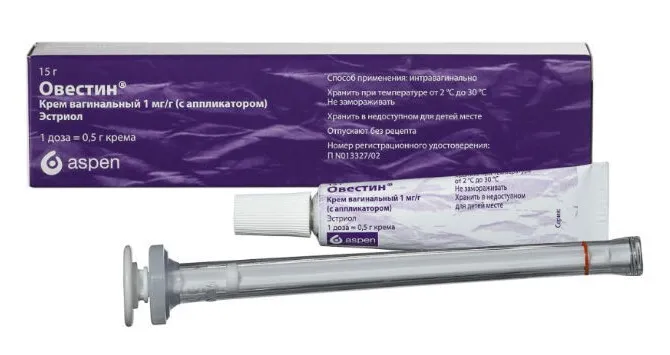
15 g of cream in an aluminum tube closed with a polyethylene cap. The applicator consists of a styrene-acrylonitrile copolymer cylinder and a polyethylene plunger. One tube with an applicator in a cardboard box.
Availability category.
Over-the-counter (without prescription).
Manufacturer.
Aspen Bad Oldesloe GmbH.
Manufacturer's location and address of its business operations. Industriestr. 32–36, 23843 Bad Oldesloe, Germany.
The original data is available in the language of the country of manufacture.
Data source: State Register of Medicinal Products of Ukraine
Data last verified: August 13, 2026