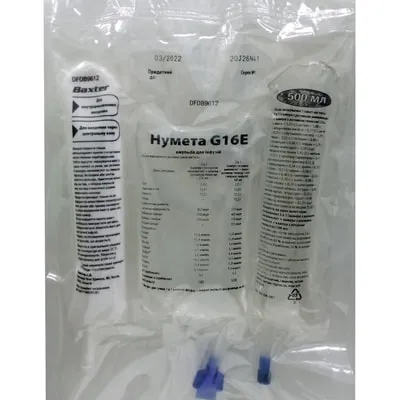
NUMETA G13E
UkraineThe drug is used for parenteral (intravenous) nutrition of preterm infants in cases where they cannot receive sufficient nutrients orally or through the gastrointestinal tract.
Frequently asked questions
Who should not use Numeta g13e?
The drug is contraindicated in cases of hypersensitivity to egg, soy, or peanut proteins, congenital amino acid metabolism disorders, elevated blood levels of sodium, potassium, magnesium, calcium, or phosphorus, as well as severe hyperglycemia. When using the variant containing lipids, severe hyperlipidemia is an additional contraindication.
How should the drug be administered correctly?
Numeta g13e is administered intravenously. Due to its high osmolarity, it is recommended to administer it via central veins. If necessary, when diluted with water for injection, it can be administered via peripheral veins. The infusion rate should gradually increase during the first hour and gradually decrease during the last hour of the infusion.
Which medications should not be combined with Numeta g13e?
The drug must not be administered simultaneously with ceftriaxone (especially in preterm infants), nor should it be administered through the same system as blood, ampicillin, fosphenytoin, or furosemide. Caution should also be exercised when using potassium-sparing diuretics, ACE inhibitors, and anticoagulants (e.g., warfarin).
What are the possible side effects of Numeta g13e?
Possible metabolic disturbances (e.g., changes in blood levels of sugar, phosphorus, calcium, sodium, or potassium), cholestasis, as well as skin or soft tissue damage in case of incorrect (peripheral) administration. Fat overload syndrome is also possible in the event of lipid metabolism disorders or overdose.
What should be done if an allergic reaction occurs during infusion?
If signs of an allergic reaction appear, such as fever, sweating, tremors, headache, skin rash, or shortness of breath, the infusion must be stopped immediately.
Instructions for use
INSTRUCTIONS for medical use of the medicinal product Numeta G13E (Numeta G13E)
Composition:
Active substances: L-alanine; L-arginine; L-aspartic acid; L-cysteine; L-glutamic acid; glycine; L-histidine; L-isoleucine; L-leucine; L-lysine monohydrate (equivalent to lysine); L-methionine; L-ornithine hydrochloride (equivalent to ornithine); L-phenylalanine; L-proline; L-serine; taurine; L-threonine; L-tryptophan; L-tyrosine; L-valine; potassium acetate; calcium chloride dihydrate; magnesium acetate tetrahydrate; sodium glycerophosphate hydrate; glucose monohydrate (equivalent to anhydrous glucose); refined olive oil and refined soybean oil;
1 bag of 300 ml volume contains:
| Active substances |
Chamber with amino acid solution |
Chamber with glucose solution |
Chamber with lipid emulsion |
| L-alanine |
4.66 g/L |
- |
- |
| L-arginine |
4.89 g/L |
- |
- |
| L-aspartic acid |
3.50 g/L |
- |
- |
| L-cysteine |
1.10 g/L |
- |
- |
| L-glutamic acid |
5.83 g/L |
- |
- |
| Glycine |
2.33 g/L |
- |
- |
| L-histidine |
2.21 g/L |
- |
- |
| L-isoleucine |
3.90 g/L |
- |
- |
| L-leucine |
5.83 g/L |
- |
- |
| L-lysine monohydrate (equivalent to lysine) |
7.20 g/L 6.41 g/L |
- |
- |
| L-methionine |
1.40 g/L |
- |
- |
| L-ornithine hydrochloride (equivalent to ornithine) |
1.85 g/L 1.45 g/L |
- |
- |
| L-phenylalanine |
2.45 g/L |
- |
- |
| L-proline |
1.75 g/L |
- |
- |
| L-serine |
2.33 g/L |
- |
- |
| Taurine |
0.35 g/L |
- |
- |
| L-threonine |
2.16 g/L |
- |
- |
| L-tryptophan |
1.17 g/L |
- |
- |
| L-tyrosine |
0.45 g/L |
- |
- |
| L-valine |
4.43 g/L |
- |
- |
| Potassium acetate |
3.83 g/L |
- |
- |
| Calcium chloride dihydrate |
3.45 g/L |
- |
- |
| Magnesium acetate tetrahydrate |
0.63 g/L |
- |
- |
| Sodium glycerophosphate hydrate |
6.15 g/L |
- |
- |
| Glucose monohydrate (equivalent to anhydrous glucose) |
- |
550 g/L 500 g/L |
- |
| Refined olive oil and refined soybean oil |
- |
- |
125 g/L* |
- Proportional content of olive oil (approximately 80% by weight) and soybean oil (approximately 20% by weight).
After mixing, 1 packet contains:
| Active substances |
2 in 1 (chamber with amino acid solution + chamber with glucose solution) 240 ml |
3 in 1 (chamber with amino acid solution + chamber with glucose solution + chamber with lipid emulsion) 300 ml |
| L-alanine |
0.75 g |
0.75 g |
| L-arginine |
0.78 g |
0.78 g |
| L-aspartic acid |
0.56 g |
0.56 g |
| L-cysteine |
0.18 g |
0.18 g |
| L-glutamic acid |
0.93 g |
0.93 g |
| Glycine |
0.37 g |
0.37 g |
| L-histidine |
0.35 g |
0.35 g |
| L-isoleucine |
0.62 g |
0.62 g |
| L-leucine |
0.93 g |
0.93 g |
| L-lysine monohydrate (equivalent to lysine) |
1.15 g 1.03 g |
1.15 g 1.03 g |
| L-methionine |
0.22 g |
0.22 g |
| L-ornithine hydrochloride (equivalent to ornithine) |
0.30 g 0.23 g |
0.30 g 0.23 g |
| L-phenylalanine |
0.39 g |
0.39 g |
| L-proline |
0.28 g |
0.28 g |
| L-serine |
0.37 g |
0.37 g |
| Taurine |
0.06 g |
0.06 g |
| L-threonine |
0.35 g |
0.35 g |
| L-tryptophan |
0.19 g |
0.19 g |
| L-tyrosine |
0.07 g |
0.07 g |
| L-valine |
0.71 g |
0.71 g |
| Potassium acetate |
0.61 g |
0.61 g |
| Calcium chloride, dihydrate |
0.55 g |
0.55 g |
| Magnesium acetate, tetrahydrate |
0.10 g |
0.10 g |
| Sodium glycerophosphate, hydrate |
0.98 g |
0.98 g |
| Glucose monohydrate (equivalent to anhydrous glucose) |
44.00 g 40.00 g |
44.00 g 40.00 g |
| Refined olive oil and refined soybean oil* |
- |
7.5 g |
* The proportional content of olive oil (approximately 80% by weight) and soybean oil (approximately 20% by weight) is calculated to achieve a content of 20% essential fatty acids (linoleic acid plus α-linolenic acid) of the total fatty acid amount.
After reconstitution, the mixture contains:
| Active substances |
2 in 1 (chamber with amino acid solution + chamber with glucose solution) 240 ml |
3 in 1 (chamber with amino acid solution + chamber with glucose solution + chamber with lipid emulsion) 300 ml |
| Nitrogen |
1.4 g |
1.4 g |
| Amino acids |
9.4 g |
9.4 g |
| Glucose |
40.0 g |
40.0 g |
| Lipids |
- |
7.5 g |
| Energy value: |
||
| Total energy |
198 kcal |
273 kcal |
| Non-protein energy |
160 kcal |
235 kcal |
| Glucose energy |
160 kcal |
160 kcal |
| Lipid energy |
- |
75 kcal |
| Non-protein energy / nitrogen ratio |
113 kcal/g |
165 kcal/g |
| Glucose / lipid energy ratio |
- |
68/32 |
| Lipids / total energy |
- |
28 % |
| Electrolytes: |
||
| Sodium |
6.4 mmol |
6.6 mmol |
| Potassium |
6.2 mmol |
6.2 mmol |
| Magnesium |
0.47 mmol |
0.47 mmol |
| Calcium |
3.8 mmol |
3.8 mmol |
| Phosphate* |
3.2 mmol |
3.8 mmol |
| Acetate |
7.2 mmol |
7.2 mmol |
| Chloride |
9.3 mmol |
9.3 mmol |
| Malate |
3.2 mmol |
3.2 mmol |
| pH (approximately) |
5.5 |
5.5 |
| Osmolarity (approximately) (mOsmol/l) |
1400 |
1150 |
* Phosphate for 3-in-1 mixture includes phosphorus from the lipid emulsion (egg phospholipids).
Excipients: amino acid solution: L-malic acid, water for injections;
glucose solution: concentrated hydrochloric acid, water for injections;
lipid emulsion: egg phospholipids for injections, glycerol, sodium oleate, sodium hydroxide, water for injections.
Pharmaceutical form. Emulsion for infusion.
Main physicochemical properties: amino acid solution – clear, colorless or slightly yellow, practically free from particles; glucose solution – clear, colorless or slightly yellow, practically free from particles; lipid emulsion – homogeneous milky-colored liquid.
Pharmacotherapeutic group.
Solutions for parenteral nutrition. Combinations.
ATC code B05B A10.
Pharmacological properties.
Pharmacodynamics.
The nitrogen content (20 L-series amino acids, including 8 essential amino acids) in Numeta G13E, along with energy sources (glucose and triglycerides), enables maintenance of an adequate nitrogen/energy balance. Nitrogen and energy are necessary for normal functioning of all cells in the body and are essential for protein synthesis, growth, wound healing, immune system function, muscle activity, and many other cellular-level processes.
Numeta G13E also contains electrolytes.
The amino acid profile is as follows:
- essential amino acids/total amino acid content − 47.5%;
- branched-chain amino acids/total amino acid content − 24.0%.
The lipid emulsion component of Numeta G13E consists of a mixture of refined olive oil and refined soybean oil (in an approximate ratio of 80/20), with the following fatty acid distribution:
- 15% saturated fatty acids (SFA);
- 65% monounsaturated fatty acids (MUFA);
- 20% polyunsaturated fatty acids (PUFA).
The phospholipid/triglyceride ratio is 0.06. A moderate content of essential fatty acids (EFA) helps improve the status of their higher derivatives while simultaneously correcting EFA deficiency.
Olive oil contains significant amounts of alpha-tocopherol, which, in combination with moderate PUFA intake, contributes to maintaining normal vitamin E levels and is important for limiting lipid peroxidation.
Glucose is the source of carbohydrates. Glucose is the primary source of energy in the body.
Pharmacokinetics.
The components of the infusion emulsion (amino acids, electrolytes, glucose, lipids) are distributed, metabolized, and eliminated via the same pathways as each individual ingredient. Since the preparation is administered intravenously, its bioavailability is 100%, and its components are distributed throughout all body cells and metabolized accordingly.
Clinical characteristics.
Indications.
For parenteral nutrition in preterm neonates when oral or enteral nutrition is impossible, insufficient, or contraindicated.
Contraindications.
General contraindications for the use of Numeta G13E as an activated dual-chamber bag (without lipid emulsion) for intravenous infusion:
- hypersensitivity to egg or soy proteins, peanuts, or to any of the active substances, excipients, or components of the bag material;
- inborn errors of amino acid metabolism;
- pathologically elevated plasma concentrations of sodium, potassium, magnesium, calcium, and/or phosphorus;
- concomitant administration of ceftriaxone, even when separate infusion lines are used (see sections "Interaction with other medicinal products and other forms of interaction", "Special precautions", and "Incompatibilities");
- severe hyperglycemia.
Addition of lipids (administration of Numeta G13E as an activated triple-chamber bag with emulsion for intravenous infusion) is additionally contraindicated in the following clinical situations:
- severe hyperlipidemia or severe disorders of lipid metabolism characterized by hypertriglyceridemia.
Interaction with other medicinal products and other forms of interaction.
Pharmacodynamic interaction studies with Numeta G13E have not been conducted.
Numeta G13E must not be administered simultaneously with blood transfusion through the same infusion system due to the risk of pseudoagglutination.
As with other calcium-containing infusion solutions, concomitant use of Numeta G13E with ceftriaxone is contraindicated in preterm neonates (see sections "Contraindications", "Special precautions", and "Incompatibilities"). Olive and soy oils contain natural vitamin K1, which acts as an antagonist to the anticoagulant activity of coumarin (or coumarin derivatives, including warfarin).
Since Numeta G13E contains potassium, particular attention should be paid to patients receiving concomitant potassium-sparing diuretics (such as amiloride, spironolactone, triamterene) or angiotensin-converting enzyme (ACE) inhibitors, angiotensin II receptor antagonists, or the immunosuppressants tacrolimus and cyclosporine, due to the risk of hyperkalemia.
The lipids contained in this emulsion may interfere with certain laboratory tests (such as bilirubin, lactate dehydrogenase, blood oxygen saturation, hemoglobin) if blood samples are taken before lipid clearance. Lipids are generally cleared within 5–6 hours, unless additional administration is ongoing.
See also section "Incompatibilities".
Special precautions for use.
Infusion should be stopped immediately if any signs or symptoms of an allergic reaction occur (such as fever, sweating, shivering, headache, skin rash, or dyspnea).
Numeta G13E contains glucose derived from cornstarch. Therefore, this preparation should be used with caution in patients with known allergy to corn or corn products.
Fatal cases due to precipitation in the lungs and kidneys have been reported in premature neonates receiving calcium salt of ceftriaxone.
Concomitant administration of ceftriaxone is contraindicated in premature neonates (see section "Contraindications").
Pulmonary embolism and respiratory distress due to precipitates in pulmonary vessels have been reported in patients receiving parenteral nutrition. In some cases, fatal outcomes occurred. Excessive addition of calcium and phosphates increases the risk of calcium phosphate precipitate formation (see section "Incompatibilities"). There have also been reports of suspected precipitate formation within the vascular system.
In addition to checking the solution, the infusion set and catheter should be periodically inspected for precipitate formation.
If symptoms of respiratory distress occur, infusion should be stopped and medical evaluation initiated.
No additives should be introduced into the infusion bag without prior verification of ingredient compatibility, as precipitate formation or destabilization of the lipid emulsion may lead to vascular occlusion (see sections "Incompatibilities" and "Dosage and administration").
Infection and sepsis may occur as a result of using intravenous catheters for parenteral drug administration or poor catheter care. Immunosuppressive effects of disease or medications may predispose to infection and sepsis. Careful monitoring for symptoms and laboratory signs of fever/chills, leukocytosis, technical complications related to the medical device access system, and hyperglycemia may help detect infection at an early stage. Patients requiring parenteral nutrition are often prone to infectious complications due to malnutrition and/or their underlying disease. Strict adherence to aseptic techniques during catheter insertion, care, and preparation of parenteral nutrition formulations is essential to reduce the risk of septic complications.
Fat overload syndrome has been reported during administration of other parenteral nutrition products. Impaired or limited ability to metabolize the fats contained in Numeta G13E or overdose may lead to fat overload syndrome (see sections "Overdose" and "Adverse reactions").
Refeeding severely malnourished patients may lead to refeeding syndrome, characterized by intracellular depletion of potassium, phosphate, and magnesium due to anabolic processes. Thiamine deficiency and fluid retention may also develop. Parenteral nutrition should be initiated cautiously and gradually, with careful monitoring of fluid, electrolyte, trace element, and vitamin levels.
Numeta G13E should be administered only via central veins, except when appropriate dilution has been performed (see section "Dosage and administration"). When adding other substances to the preparation, the final osmolarity of the mixture must be calculated before administration via peripheral vein to avoid venous irritation or tissue damage in case of extravasation. Peripheral administration of Numeta G13E has led to extravasation and subsequent soft tissue damage and skin necrosis.
Infusion bags should not be connected in series to avoid potential air embolism from residual gas in the first bag.
Lipids, vitamins, additional electrolytes, and trace elements should be supplemented as needed.
Precautionary measures
Other medicinal products or substances should not be added to any of the three chambers of the bag or to the reconstituted solution/emulsion without prior confirmation of compatibility and stability of the final preparation (especially stability of the lipid emulsion) (see sections "Incompatibilities" and "Dosage and administration").
After addition of trace elements and/or vitamins to intravenous parenteral nutrition solutions, exposure to light may lead to formation of peroxides and other degradation products, which may adversely affect clinical outcomes in neonates. When administering Numeta G13E to neonates and children under 2 years of age, the product should be protected from light until the end of infusion (see sections "Dosage and administration" and "Shelf life").
Fluid and electrolyte balance, including magnesium levels, serum osmolarity, serum triglyceride concentration, acid-base balance, blood glucose, liver and kidney function, blood cell counts (including platelets), and coagulation parameters should be monitored regularly throughout the treatment period.
Administration of Numeta G13E in unstable conditions (e.g., after severe post-traumatic states, in decompensated diabetes mellitus, during the acute phase of circulatory shock, acute myocardial infarction, severe metabolic acidosis, severe sepsis, or hyperosmolar coma) should be carefully monitored and adjusted according to the patient's clinical needs.
Data on the use of Numeta G13E in preterm infants with a gestational age of less than 28 weeks are limited.
Cardiovascular system
Use with caution in patients with pulmonary edema or heart failure. Fluid balance should be closely monitored.
Kidneys
Use with caution in patients with renal insufficiency. Fluid and electrolyte balance, including magnesium levels, should be closely monitored in such patients.
Severe fluid and electrolyte imbalances, severe fluid overload, and severe metabolic disturbances should be corrected before initiating infusion.
Liver/Gastrointestinal system
Use with caution in patients with severe hepatic insufficiency, including cholestasis, or elevated liver enzymes. Liver function parameters should be closely monitored.
Endocrine system and metabolism
Metabolic complications may occur if nutrient delivery is not adapted to the patient's needs or if metabolic capacity for any dietary component is inaccurately assessed. Undesirable metabolic effects may result from inappropriate or excessive nutrient administration or from improper formulation of the mixture relative to the individual patient's needs.
Serum triglyceride levels and the body's ability to metabolize fats should be regularly assessed. Monitoring of serum triglycerides is recommended when clinically indicated, especially if fat metabolism impairment is suspected.
In case of hyperglycemia, the infusion rate of Numeta G13E should be adjusted and/or insulin administered (see section "Overdose").
Blood
Use with caution in patients with severe coagulation disorders. Blood cell counts and coagulation parameters should be closely monitored.
Use during pregnancy or breastfeeding.
Pregnancy
The medicinal product is intended only for premature neonates.
Breastfeeding
The medicinal product is intended only for premature neonates.
Reproductive function
The medicinal product contains glucose, pediatric amino acid solution, electrolytes, and lipid emulsion, which are unlikely to affect reproductive function.
Ability to influence reaction speed when operating vehicles or machinery.
Not applicable.
Method of administration and dosage.
Dosage
Dosage depends on energy expenditure, body weight, age, clinical condition of the patient, and their ability to metabolize the components of Numeta G13E, as well as on the amount of additional energy or protein entering the body via the oral/enteral route. The overall composition of electrolytes and macronutrients depends on the number of activated chambers (see section "Composition").
The maximum daily dose should not be exceeded. Due to the fixed composition of the multi-chamber bag, it may be impossible to simultaneously meet all of the patient's nutritional requirements. There may be clinical situations in which patients require nutrients in amounts different from those contained in the multi-chamber bag.
The maximum recommended infusion rate per hour and daily volume depend on the components of the medicinal product. If the limits for infusion rate or volume are reached, this determines the maximum daily dose. Table 1 provides the maximum recommended infusion rates per hour and daily volumes.
Table 1
| Parameters |
2 chambers activated (240 ml) |
3 chambers activated (300 ml) |
| Maximum infusion rate (ml/kg/h) |
5.1 |
6.4 |
| Corresponds to: |
||
| Amino acids (g/kg/h) |
0.20ª |
0.20ª |
| Glucose (g/kg/h) |
0.85 |
0.85 |
| Lipids (g/kg/h) |
0 |
0.16 |
| Maximum volume (ml/kg/day) |
102.3 |
127.9 |
| Corresponds to: |
||
| Amino acids (g/kg/day) |
4.0ª |
4.0ª |
| Glucose (g/kg/day) |
17.1 |
17.1 |
| Lipids (g/kg/day) |
0 |
3.2 |
a Restrictive criterion according to the guidelines of the European Society for Clinical Nutrition and Metabolism – European Society for Paediatric Gastroenterology, Hepatology and Nutrition (ESPEN-ESPGHAN).
The Numeta G13E preparation may be unsuitable for some preterm infants, as the patient's clinical condition, in the opinion of the physician, may require the use of individually tailored formulations to meet specific needs.
Method of administration
When administered to neonates and children under 2 years of age, the solution (in bags and administration systems) must be protected from light exposure until the end of the infusion (see sections "Special precautions for use" and "Shelf life").
Due to its high osmolarity, undiluted Numeta G13E must be administered only via a central vein. However, adequate dilution of Numeta G13E with water for injections reduces osmolarity and allows administration via peripheral venous infusion. The following formula shows how dilution affects the osmolarity of the bag contents:
Final osmolarity = (bag volume × initial osmolarity) / (volume of added water + bag volume).
Examples of osmolarities of 2-chamber and 3-chamber mixtures after activation and addition of water for injections are shown in Table 2.
Table 2
| Parameters |
Amino acids and glucose (2 chambers activated) |
Amino acids, glucose and lipids (3 chambers activated) |
| Initial bag volume (ml) |
240 |
300 |
| Initial osmolarity (mOsmol/l, approximately) |
1400 |
1150 |
| Volume of added water (ml) |
240 |
300 |
| Final volume after addition (ml) |
480 |
600 |
| Osmolarity after addition (mOsmol/l, approximately) |
700 |
575 |
The infusion rate should be gradually increased during the first hour. At the end of the infusion, the infusion rate should be gradually decreased during the last hour. The infusion rate should be adjusted according to the dose administered, daily volume, and duration of infusion (see section “Overdose”).
Premature neonates are usually recommended continuous parenteral nutrition for periods exceeding 24 hours; however, the contents of a single bag should not be used for longer than 24 hours. Cyclic infusions should be prescribed according to the patient’s metabolic tolerance.
Parenteral nutrition treatment may be continued as long as the patient’s clinical condition requires it.
This medicinal product contains electrolytes, and other electrolyte preparations may be added at the physician’s discretion depending on the patient’s clinical needs.
Vitamins and trace elements may be added at the physician’s discretion depending on the patient’s clinical needs.
Instructions for use of bags
For single use only.
Do not use damaged bags.
Ensure the integrity of the bag and the non-permanent partitions. Use only undamaged bags with intact non-permanent partitions (i.e., no mixing of the contents of the three chambers) provided that the solutions in the amino acid and glucose chambers are clear, colorless or slightly yellow, practically free from particles, and the lipid emulsion appears as a homogeneous milky liquid (see Figure 1).
For administration of Numeta G13E, a 1.2 µm filter is recommended.
Figure 1
Before opening the outer pouch, check the color of the oxygen indicator. Compare it with the reference color printed next to the “OK” mark and shown in the printed area of the indicator label. Do not use the medicinal product if the color of the oxygen indicator does not match the reference color printed next to the “OK” mark.
Opening: remove the protective outer pouch (see Figure 2). Dispose of the outer pouch and the sachet containing the oxygen absorber/indicator.
Figure 2
Mixing: ensure the product is at room temperature before breaking the non-permanent partitions. Place the bag on a clean, flat surface.
Activation of 3 chambers (breaking two non-permanent partitions)
Begin twisting the bag from the side of the handle D (see Figure 3).
Figure 3
Press until the inter-chamber partitions open (see Figure 4).
Figure 4
Then change direction and twist the bag toward handle D; continue until the partition is fully opened.
Continue in the same direction to complete opening the second inter-chamber partition (see Figure 5).
Figure 5
Turn the bag over at least three times to thoroughly mix its contents (see Figure 6). The mixed solution should appear as a milk-like emulsion.
Figure 6
Remove the protective cap from the administration port (see Figure 7) and connect the intravenous administration set.
Figure 7
Activation of 2 chambers (breaking the non-permanent partition between the amino acid and glucose chambers)
To break only the partition between the amino acid and glucose chambers, begin twisting from the corner of handle D of the partition (see Figure 8) separating the amino acid and glucose chambers, and press to open the partition between these two chambers.
Figure 8
Orient the bag so that the compartment containing the lipid emulsion is closest to the operator, and twist the bag while protecting the lipid emulsion compartment from breaking the partition with the palms (see Figure 9).
Figure 9
Press with one hand while twisting the bag toward the tubing (see Figure 10).
Figure 10
Then begin twisting the bag toward handle D, pressing with the other hand, and continue until the partition between the amino acid and glucose compartments is fully opened (see Figure 11).
Figure 11
Turn the bag over at least three times to thoroughly mix the contents (see Figure 12). The mixed solution should appear as a clear, colorless or slightly yellow liquid.
Figure 12
Remove the protective cap from the administration port (see Figure 13) and connect the intravenous administration set.
Figure 13
Addition of additives
When administered to neonates and children under 2 years of age, the solution should be protected from light exposure until administration is complete.
Exposure of Numeta G13E to ambient light, especially after addition of trace elements and vitamins, may promote the formation of peroxides and other degradation products, which can be prevented by light protection (see sections “Special precautions for use” and “Shelf life”). Any additions may be made to the reconstituted mixture (after opening the non-permanent partitions and after mixing the contents of two or three chambers). Vitamins may also be added to the glucose chamber before reconstitution (before opening the non-permanent partitions and before mixing the solutions and emulsion).
To perform additions
Aseptic technique must be followed.
Prepare the injection site on the bag.
Puncture the bag and administer additional substances using an injection needle or reconstitution device.
Mix the contents of the bag and the additionally administered substances.
Preparation for infusion
Aseptic technique must be followed.
Hang the bag.
Remove the protective cap from the administration port.
Firmly insert the needle of the infusion set into the administration port.
Performing the infusion
Administer the medicinal product only after opening the non-permanent partitions between two or three chambers and mixing the contents of two or three chambers.
Ensure the absence of signs of phase separation in the ready-to-use, activated 3-chamber emulsion for infusion or the absence of particles in the prepared 2-chamber infusion solution.
After opening, the bag contents must be used immediately. Storage for subsequent infusion is prohibited.
Under no circumstances should a partially used bag be connected.
Do not connect bags in series, to avoid air embolism due to possible residual gas in the first bag.
Any unused medicinal products or waste, as well as all necessary disposable materials, must be disposed of and must not be reused.
Children.
The medicinal product is used in premature neonates for parenteral nutrition. The number of studies on the use of Numeta G13E in premature infants with a gestational age of less than 28 weeks is limited.
Overdose.
In case of improper use (overdose and/or exceeding the recommended infusion rate), symptoms such as nausea, vomiting, tremor, electrolyte imbalance, and signs of hypervolemia or acidosis with fatal outcome may occur. In such situations, infusion must be immediately discontinued. Additional interventions may be considered if medically indicated.
If the glucose infusion rate exceeds its clearance, hyperglycemia, glucosuria, and hyperosmolar syndrome may develop.
Overdose or impaired or limited ability to metabolize lipids may lead to the development of fat overload syndrome, the consequences of which usually resolve after discontinuation of lipid administration (see section “Adverse reactions”).
In neonates and infants, fat overload syndrome has been associated with metabolic acidosis and respiratory distress.
There is no specific antidote for overdose. Emergency procedures usually consist of supportive measures, with particular attention to the respiratory and cardiovascular systems. In some severe cases, hemodialysis, hemofiltration, or hemodiafiltration may be required.
Severe cases of fat overload syndrome have been reported in the scientific literature and were treated with exchange transfusion.
Careful monitoring of blood biochemistry is extremely important; any deviations from normal values require appropriate treatment.
Adverse reactions.
Adverse reactions observed in clinical trials and during the post-marketing period
The safety of Numeta G13E was evaluated in one Phase III clinical trial. The study included one hundred fifty-nine (159) children who received Numeta G13E.
Table 3 lists the adverse reactions observed in this study and during the post-marketing period.
Table 3
| System organ class |
MedDRA preferred term |
Frequency2 |
| Metabolism and nutrition disorders |
Hypophosphataemia1 Hyperglycaemia1 Hypercalcaemia1 Hypertriglyceridaemia1 Hyperlipidaemia1 Hypoaatraemia1 |
Common Common Common Common Uncommon Common |
| Hepatobiliary disorders |
Cholestasis |
Uncommon |
| Skin and subcutaneous tissue disorders |
Skin necrosis3 Soft tissue damage3 |
Frequency unknown Frequency unknown |
| General disorders and administration site conditions |
Extravasation3 |
Frequency unknown |
1 Blood samples were taken during infusion (not in the fasting state).
2 Frequency was determined according to the following criteria: very common (≥ 1/10), common (≥ 1/100 to < 1/10), uncommon (≥ 1/1,000 to < 1/100), rare (≥ 1/10,000 to < 1/1,000), very rare (< 1/10,000), frequency not known (cannot be estimated from available data).
3 These adverse reactions were reported only with peripheral administration of Numeta G13E and G16E when insufficiently diluted (see section "Special warnings and precautions for use").
Other reactions
The following adverse reactions have been observed after administration of other parenteral nutrition mixtures.
- Fat overload syndrome may develop due to improper use of the product (e.g., overdose and/or exceeding the recommended infusion rate; see section "Overdose"); however, signs of this syndrome may also appear when the product is administered according to instructions. Reduced or limited capacity to metabolize lipids contained in Numeta G13E is associated with prolonged plasma clearance and may lead to the development of fat overload syndrome. This syndrome is associated with a sudden deterioration in the patient's clinical condition and is characterized by pathological changes such as hyperlipidemia, elevated body temperature, fatty infiltration of the liver (hepatomegaly), impaired liver function, anemia, leukopenia, thrombocytopenia, coagulation disorders, acute respiratory distress, metabolic acidosis, and manifestations from the central nervous system (e.g., coma). The syndrome usually resolves after discontinuation of lipid emulsion infusion.
- Pulmonary vascular precipitates (pulmonary embolism and respiratory distress) (see section "Special warnings and precautions for use").
Reporting of suspected adverse reactions
Reporting suspected adverse reactions after medicine authorization is important. It allows continued monitoring of the benefit/ risk balance of the medicine. Healthcare professionals, as well as patients or their legal representatives, should report any suspected adverse reactions and lack of efficacy through the Automated Pharmacovigilance Information System at the following link: https://aisf.dec.gov.ua.
Shelf life
18 months.
When administered to newborns and children under 2 years of age, the solution (in bags and administration systems) should be protected from light until completion of infusion.
Shelf life after reconstitution
The product should ideally be used immediately after opening the non-persistent partitions between two or three chambers. However, stability data on reconstituted mixtures indicate that the product remains stable for 7 days at 2–8 °C, followed by storage for up to 48 hours at 30 °C.
Shelf life after supplementation (with electrolytes, trace elements, vitamins, water)
Stability of individual mixtures of Numeta G13E has been demonstrated during use for 7 days at 2–8 °C, followed by storage for up to 48 hours at 30 °C.
From a microbiological standpoint, the product should be used immediately. If not used immediately, responsibility for duration and conditions of storage during use lies with the user; storage duration should generally not exceed 24 hours at 2–8 °C, except when reconstitution/dilution/supplementation is performed under controlled and validated aseptic conditions.
Storage conditions
Store in the original packaging at a temperature not exceeding 25 °C. Do not freeze. Keep out of reach of children.
Incompatibilities
This medicinal product should not be mixed with other medicinal products unless compatibility has been established (see section "Method of administration and dosage").
As with other parenteral nutrition mixtures, the calcium-phosphate ratio must be considered. Excessive addition of calcium and phosphate, especially in the form of mineral salts, may lead to the formation of calcium phosphate precipitates.
As with other calcium-containing infusion solutions, concomitant treatment with ceftriaxone and Numeta G13E is contraindicated in preterm neonates (see sections "Contraindications", "Interaction with other medicinal products and other forms of interaction", and "Special warnings and precautions for use").
Due to the risk of precipitate formation, Numeta G13E should not be administered through the same infusion system as ampicillin, fosphenytoin, or furosemide.
Numeta G13E must not be administered simultaneously with blood through the same infusion system (see section "Interaction with other medicinal products and other forms of interaction").
Numeta G13E contains calcium ions, which may pose an additional risk of coagulation of citrate-anticoagulated/conserved blood or its components.
Packaging
300 ml (50 % glucose solution – 80 ml; 5.9 % amino acid solution with electrolytes – 160 ml; 12.5 % lipid emulsion – 60 ml) in a three-chamber plastic bag. The three-chamber plastic bag is packaged in a protective film pouch containing an oxygen absorber and an oxygen indicator. 10 bags per cardboard box.
Prescription status
Prescription only.
Manufacturer
Baxter S.A. / Baxter SA
Manufacturer's location and address of place of business
Boulevard Rene Branquart 80, Lessines, 7860, Belgium / Boulevard Rene Branquart 80, Lessines, 7860, Belgium
Similar drugs
The original data is available in the language of the country of manufacture.
Data source: State Register of Medicinal Products of Ukraine
Data last verified: August 13, 2026