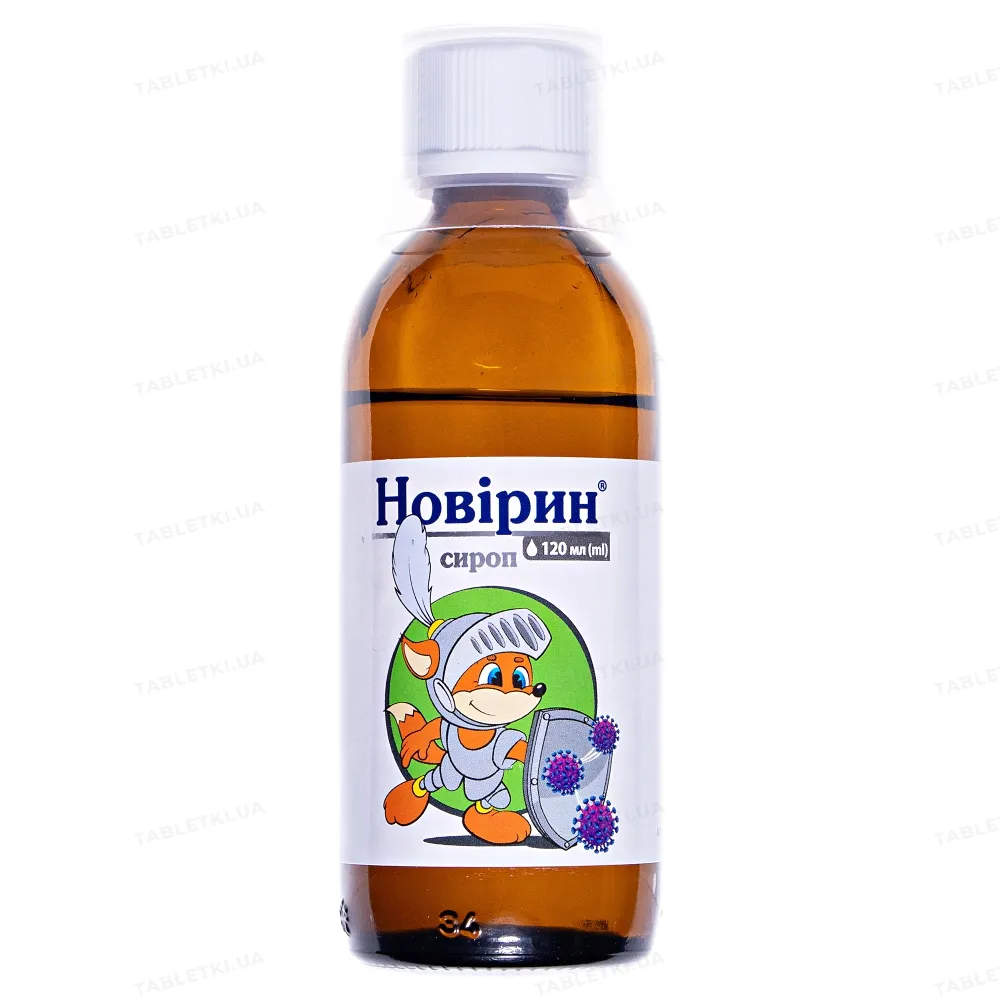
NOVIRIN
UkraineThe drug is used to treat various viral infections, such as influenza, parainfluenza, acute respiratory viral infections, bronchitis, chickenpox, shingles, herpes (various types), infectious mononucleosis, cytomegalovirus, human papillomavirus, and hepatitis B. It is also used for chronic recurrent infections of the respiratory and urogenital tracts in immunocompromised patients.
Frequently asked questions
How should Novirin be taken correctly?
The syrup should be taken orally, preferably after meals, at regular intervals. The dosage and duration of the course are determined by a physician depending on age, weight, and the disease. For adults, the maximum daily dose is 80 ml of syrup. For children from 1 year of age, the dosage is calculated individually by a physician (usually 1 ml of syrup per 1 kg of body weight per day).
What side effects may Novirin cause?
The most common side effects observed are increased levels of uric acid in the blood and urine. Nausea, vomiting, abdominal discomfort, headache, dizziness, fatigue, skin rash or itching, and joint pain are also possible. In rare cases, allergic reactions may occur (edema, urticaria, anaphylactic shock).
Who should not take this drug?
The drug is contraindicated in individuals with hypersensitivity to its components, as well as patients with gout or hyperuricemia (elevated uric acid levels). Due to its sucrose content, it should not be used by individuals with rare hereditary disorders of fructose, glucose, or galactose metabolism.
Can the drug be combined with other medicines?
The drug must not be taken simultaneously with immunosuppressants. Caution should be exercised when using it in combination with diuretics and xanthine oxidase inhibitors. Caution is also advised when used concurrently with azidothymidine.
Can the drug be taken by pregnant or breastfeeding women?
The drug should not be used during pregnancy or while breastfeeding.
Instructions for use
INSTRUCTION FOR MEDICAL USE OF THE MEDICINAL PRODUCT NOVIRIN
Composition:
Active substance: inosine pranobex;
1 ml of syrup contains 50 mg of inosine pranobex (50 mg/ml);
Excipients: sucrose, glycerin, methylparaben (methyl p-hydroxybenzoate) (E 218), propylparaben (propyl p-hydroxybenzoate) (E 216), citrus flavor, purified water.
Pharmaceutical form. Syrup.
Main physicochemical properties: clear, light yellow liquid with a characteristic fruity odor.
Pharmacotherapeutic group. Direct-acting antiviral agents. ATC code J05AX05.
Pharmacological Properties
Pharmacodynamics
Isoprinosine consists of two components: inosine – the active component, which is a purine metabolite, and the salt of 4-acetamidobenzoic acid with N,N-dimethylamino-2-propanol – an auxiliary component that enhances the availability of inosine to lymphocytes.
The active substance, isoprinosine, exerts direct antiviral and immunomodulatory effects. The direct antiviral action is due to binding to ribosomes of virus-infected cells, which slows down the synthesis of viral messenger RNA (mRNA), leading to inhibition of replication of both RNA- and DNA-genome viruses; the indirect effect is explained by induction of interferon production.
In known in vivo studies, isoprinosine was shown to activate reduced synthesis of lymphocyte mRNA proteins and enhance translational efficiency, while simultaneously inhibiting viral RNA synthesis through several mechanisms: incorporation of orotic acid bound to inosine into polyribosomes, inhibition of polyadenylic acid attachment to viral mRNA, and restructuring of intramembranous plasma particles in lymphocytes (IMP), increasing their density by almost threefold.
The immunomodulatory effect is due to its influence on T-lymphocytes (activation of cytokine synthesis) and enhancement of macrophage phagocytic activity. Isoprinosine enhances differentiation of pre-T-lymphocytes, stimulates mitogen-induced proliferation of T- and B-lymphocytes, increases functional activity of T-lymphocytes, including their ability to produce lymphokines, normalizes the ratio between the main regulatory CD4+/CD8+ subpopulations, and promotes normalization of T-memory cell formation.
Isoprinosine significantly enhances production of interleukin-2 (IL-2) by lymphocytes and promotes expression of receptors for this interleukin on lymphoid cells; it also stimulates natural killer (NK) cell activity, enhances macrophage activity in phagocytosis, antigen processing, and antigen presentation, thereby increasing the number of antibody-producing cells in the body from the first days of treatment. Isoprinosine also regulates cytotoxic mechanisms of T-lymphocytes and NK cells.
Isoprinosine stimulates synthesis of interleukin-1 (IL-1), microbial killing activity, expression of membrane receptors, and the ability to respond to lymphokines and chemotactic factors.
In known in vivo studies, a significant increase in endogenous gamma-interferon (IFN-γ) production and a decrease in interleukin-4 (IL-4) production were observed.
In herpes virus infections, the formation of specific anti-herpetic antibodies is significantly accelerated, and clinical symptoms and recurrence frequency are reduced.
Isoprinosine prevents post-viral weakening of cellular RNA and protein synthesis in infected cells, which is particularly important for cells involved in immune defense mechanisms. As a result of this complex action, viral load on the body is reduced, immune system function is normalized, endogenous interferon synthesis is significantly enhanced, promoting resistance to infectious diseases and rapid localization of infection foci if they occur.
Pharmacokinetics
Isoprinosine has high bioavailability. After oral administration, it is rapidly absorbed, with maximum plasma inosine concentration reached within 1 hour; after 2 hours, the concentration decreases to undetectable levels. The half-life is 50 minutes. Pharmacological effects manifest approximately 30 minutes after administration and last up to 6 hours.
Isoprinosine is rapidly metabolized and excreted by the kidneys.
Inosine undergoes metabolism via a pathway typical for purine nucleosides, forming uric acid (first metabolite), whose serum concentration may occasionally increase. The second metabolite (1-(dimethylamino)-2-propanol-(4-acetamidobenzoate)) is excreted by the kidneys as glucuronides and partially in unchanged form.
No accumulation in the body has been observed. Complete elimination of metabolites occurs within 48 hours.
Clinical characteristics.
Indications.
- Viral infections in patients with normal and reduced immune status: influenza, parainfluenza, acute respiratory viral infections, viral bronchitis, rhinovirus and adenovirus infections; epidemic parotitis, measles.
- Diseases caused by herpes simplex virus Herpes simplex type I or Herpes simplex type II (labial, facial skin, oral mucosa, hand skin, and ocular herpes), subacute sclerosing panencephalitis, genital herpes; Varicella zoster virus (chickenpox and herpes zoster, including recurrent forms in immunodeficient patients); Epstein–Barr virus (infectious mononucleosis); cytomegalovirus; human papillomavirus; acute and chronic viral hepatitis B.
- Chronic recurrent infections of the respiratory tract and genitourinary system in patients with weakened immunity (including chlamydia and other diseases caused by intracellular pathogens).
Contraindications.
Hypersensitivity to the active substance or to any of the excipients of the medicinal product, gout, hyperuricemia.
Interaction with other medicinal products and other types of interactions.
The drug should not be taken simultaneously with immunosuppressants. The drug should be used with caution when co-administered with xanthine oxidase inhibitors or agents promoting uric acid excretion, including diuretic drugs, thiazide diuretics (such as hydrochlorothiazide, chlorothalidone, indapamide), or loop diuretics (such as furosemide, torasemide, ethacrynic acid).
Inosine pranobex should not be used during immunosuppressive therapy, as concomitant use of immunosuppressors may affect its expected therapeutic effect due to specific pharmacokinetic mechanisms (use is possible only after completion of immunosuppressive therapy).
When used concomitantly with zidovudine, increased nucleotide formation occurs due to increased bioavailability of zidovudine in blood plasma and enhanced intracellular phosphorylation in human blood monocytes.
Special precautions for use.
Since transient increases in serum uric acid levels may occur during treatment with Novirin®—especially in men and elderly patients—the drug is contraindicated in patients with gout or hyperuricemia. It should also be used with caution in patients with nephrolithiasis or impaired renal function. When treatment lasts longer than 3 months, monthly monitoring of liver and kidney function parameters (transaminases, creatinine), serum uric acid levels, and blood counts is recommended.
Acute hypersensitivity reactions (e.g., angioneurotic edema, anaphylactic shock, urticaria) may occur in some patients. In such cases, treatment with Novirin® should be discontinued immediately.
Prolonged use of the drug may increase the risk of developing nephrolithiasis.
Excipients of the medicinal product.
Novirin® syrup contains methyl parahydroxybenzoate and propyl parahydroxybenzoate, which may cause allergic reactions (possibly of delayed type).
Novirin® syrup contains sucrose. This medicinal product is not recommended for patients with rare hereditary disorders such as fructose intolerance, glucose-galactose malabsorption, or sucrase-isomaltase deficiency.
Use during pregnancy or breastfeeding.
There are no controlled studies on fetal development or fertility effects in humans. It is unknown whether inosine pranobex is excreted in human breast milk. The drug should not be used during pregnancy or breastfeeding.
Ability to affect reaction speed when driving or operating machinery.
The effect of the medicinal product on reaction speed during driving or operating machinery has not been studied. However, patients should be aware that the drug may cause dizziness or other adverse reactions affecting the nervous system (see section "Adverse reactions").
Method of Administration and Dosage
The medicinal product should be taken orally, preferably after meals, at regular intervals. The duration of treatment is determined individually by a physician depending on the nosology, severity of the condition, and frequency of relapses; on average, treatment lasts 5–14 days. If necessary, the treatment course should be repeated after a 7–10-day interval. Treatment with breaks and maintenance doses may last from 1 to 6 months. Dosage is determined individually by a physician depending on age, body weight, and severity of the condition.
Maximum daily dose for adults: 4 g of inosine pranobex, corresponding to 80 mL of syrup.
Recommended dosages and administration regimens of the medicinal product:
- Influenza, parainfluenza, acute respiratory viral infections:
Adults – 20 mL of syrup 3–4 times daily;
Children – daily dose calculated at 50 mg/kg (i.e., 1 mL of syrup/kg) body weight, administered in 3–4 divided doses for 5–7 days; if necessary, treatment may be prolonged or repeated after 7–8 days. For maximum efficacy in acute respiratory viral infections, treatment should be initiated at the first symptoms of disease or on the first day of illness. Usually, the medicinal product should be continued for 1–2 days after symptoms have resolved;
- Viral bronchitis:
Adults – 20 mL of syrup 3 times daily;
Children – daily dose calculated at 50 mg/kg (i.e., 1 mL of syrup/kg) administered in 3–4 divided doses for 2–4 weeks;
- Epidemic parotitis: daily dose calculated at 70 mg/kg (i.e., 1.4 mL of syrup/kg) administered in 3–4 divided doses for 7–10 days;
- Measles: daily dose calculated at 100 mg/kg (i.e., 2 mL of syrup/kg) administered in 3–4 divided doses for 7–14 days;
- Aphthous stomatitis:
Adults – 20 mL of syrup 4 times daily;
Children – daily dose calculated at 70 mg/kg (i.e., 1.4 mL of syrup/kg) administered in 3–4 divided doses for 6–8 days (acute phase); thereafter, adults – 20 mL of syrup 3 times daily, children – 50 mg/kg (i.e., 1 mL of syrup/kg) in 3–4 divided doses twice weekly for 6 weeks;
- Infectious mononucleosis: daily dose calculated at 50 mg/kg (i.e., 1 mL of syrup/kg) administered in 3–4 divided doses for 8 days;
- Cytomegalovirus infection: daily dose calculated at 50 mg/kg (i.e., 1 mL of syrup/kg) administered in 3–4 divided doses for 25–30 days;
- Herpes zoster and labial herpes:
Adults – 20 mL of syrup 3–4 times daily;
Children – daily dose calculated at 50 mg/kg (i.e., 1 mL of syrup/kg) administered in 3–4 divided doses for 10–14 days (until symptom resolution);
- Genital herpes: during acute phase – 20 mL of syrup 3 times daily for 5–6 days; during remission – maintenance dose: 20 mL of syrup (1000 mg) once daily for up to 6 months;
- Subacute sclerosing panencephalitis: daily dose calculated at 50–100 mg/kg (i.e., 1–2 mL of syrup/kg) administered in 6 divided doses (every 4 hours) for 8–10 days; after an 8-day break, 1–3 additional courses for mild cases, up to 9 courses for severe cases;
- Infections caused by Human papilloma virus (anogenital warts): 20 mL of syrup 3 times daily, treatment course – 14–28 days, or in combination with cryotherapy or CO2-laser therapy – 20 mL of syrup 3 times daily for 3 courses with 1-month intervals;
- Hepatitis B: adults – 20 mL of syrup 3–4 times daily for 15–30 days, followed by maintenance dose: 20 mL of syrup (1000 mg) once daily for 2–6 months;
- Chronic recurrent infections of the respiratory tract and genitourinary system in immunocompromised patients (as part of combination therapy):
Adults – 20 mL of syrup 3–4 times daily, treatment course – from 2 weeks to 3 months;
Children – daily dose calculated at 50 mg/kg (i.e., 1 mL of syrup/kg) administered in 3–4 divided doses for 21 days (or 3 courses of 7–10 days each with equal intervals).
To restore immune system function and achieve a sustained immunomodulatory effect in immunocompromised patients, the treatment course should last from 3 to 9 weeks.
Children.
The medicinal product Novirin® syrup may be administered to children aged 1 year and older.
Overdose.
No cases of overdose have been reported. Overdose may lead to increased levels of uric acid in blood serum and urine. Treatment is symptomatic.
Adverse Reactions
The medicinal product is generally well tolerated, even during prolonged use. The most common adverse reaction is a transient and slight (usually within normal limits) increase in serum and urinary uric acid concentration (caused by inosine metabolism), which returns to normal within several days after discontinuation of the drug.
Frequency of adverse reactions is defined as follows: common (≥1/100 to <1/10); uncommon (≥1/1000 to <1/100); very rare (≥1/10000); not known (cannot be estimated due to lack of data).
Very common. Laboratory tests: increased blood uric acid level, increased urinary uric acid level.
Common. Laboratory tests: increased blood urea nitrogen level, increased transaminase levels, increased blood alkaline phosphatase level.
General disorders: increased fatigue, malaise.
Skin and subcutaneous tissue disorders: rash, pruritus.
Gastrointestinal disorders: vomiting, nausea, epigastric discomfort.
Nervous system disorders: headache, dizziness.
Musculoskeletal and connective tissue disorders: arthralgia (joint pain).
Uncommon. Gastrointestinal disorders: diarrhea, constipation.
Nervous system disorders: somnolence, sleep disorders.
Psychiatric disorders: nervousness.
Renal and urinary disorders: polyuria (increased urine volume).
During post-marketing surveillance, the following adverse reactions have been reported, for which frequency cannot be determined due to insufficient data:
Gastrointestinal disorders: abdominal pain (in the upper abdomen);
Immune system disorders: anaphylactic reactions, anaphylactic shock, angioneurotic edema, hypersensitivity, urticaria;
Nervous system disorders: dizziness;
Skin and subcutaneous tissue disorders: erythema.
Reporting of suspected adverse reactions.
Reporting suspected adverse reactions after drug authorization is important. It allows continuous monitoring of the benefit-risk balance of the medicinal product. Healthcare professionals and pharmacists, as well as patients or their legal representatives, should report any suspected adverse reactions and lack of drug efficacy via the Automated Pharmacovigilance Information System at the following link: https://aisf.dec.gov.ua.
Shelf life. 3 years.
Storage conditions.
Store in the original packaging at a temperature not exceeding 25 °C.
Keep out of reach and sight of children.
Packaging.
120 ml in a glass bottle with a measuring cup; 1 bottle per carton.
Prescription status. Prescription only.
Manufacturer.
- JSC "KYIV VITAMIN PLANT".
- A.B.C. Pharmaceutici S.p.A.
Manufacturer's address and place of business.
- 38 Kopilivska St., Kyiv, 04073, Ukraine.
Website: www.vitamin.com.ua
- Via Canton Moretti, 29 (Localita San Bernardo), 10015 Ivrea (TO), Italy.
Similar drugs
| Brand name | Dosage form | Active substance / Dosage | Manufacturer |
|---|---|---|---|
| GROPIVIRIN | syrup |
|
Farmak JSC |
| GROPIVIRIN | syrup |
|
Farmak JSC |
| GROPRINOSIN®-RICHTER | syrup |
|
Hedion Richter Poland LLC (quality control, batch release authorization) |
| IMUNOVIR-HEALTH | syrup |
|
LLC "Pharmaceutical Company "Zdorovya" |
| INOPRANOL | syrup |
|
PJSC "Scientific and Production Center "Borshchahivskyy Chemical and Pharmaceutical Plant" |
| INOSEDA | syrup |
|
WORLD MEDICINE ILAC SAN. VE TIC. A.S. |
| INOSINE PRANOBEX | syrup |
|
DKP "Pharmaceutical Factory" LLC |
| NORMOMED | syrup |
|
ABC Farmaceutici S.p.A. |
The original data is available in the language of the country of manufacture.
Data source: State Register of Medicinal Products of Ukraine
Data last verified: August 13, 2026