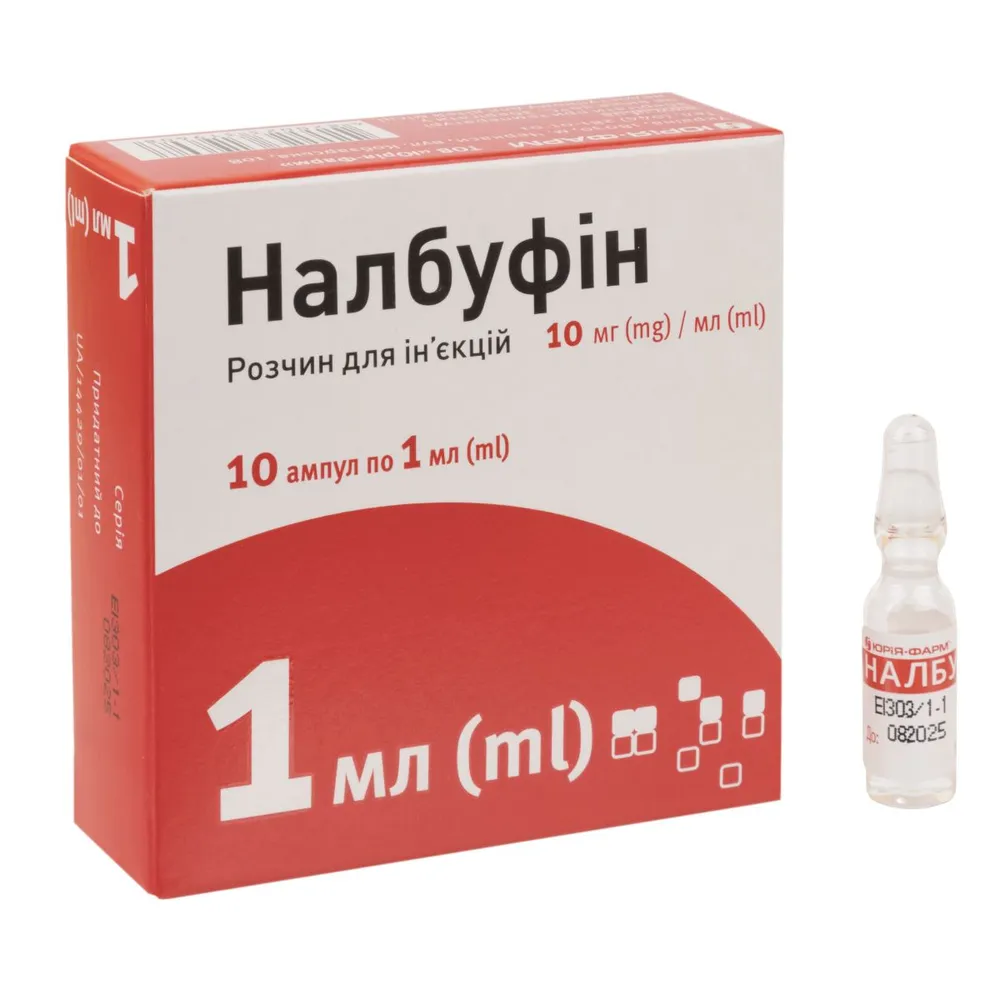
NALBUPHINE-ZN
UkraineThe drug is used for pain relief in moderate to severe pain, as an adjunct during anesthesia, to reduce pain before and after surgery, and for pain relief during childbirth.
Frequently asked questions
How should Nalbuphine-zn be taken correctly?
The drug is administered intravenously or intramuscularly by a medical professional. The dosage is selected individually depending on body weight, pain intensity, and the patient's condition. Typically, 0.1 to 0.3 mg per 1 kg of body weight is administered every 3–6 hours as needed.
What side effects can Nalbuphine-zn cause?
The most common side effect is drowsiness (sedative effect). Nausea, vomiting, constipation, dizziness, headache, sweating, and dry mouth are also frequently encountered. Respiratory depression, mood changes, hallucinations, and decreased blood pressure are also possible.
Who should not use this drug?
Contraindicated in cases of hypersensitivity to the components, gastrointestinal obstruction, acute abdominal pain (suspected appendicitis or pancreatitis), respiratory depression, asthma, head injuries, increased intracranial pressure, as well as in women during pregnancy and breastfeeding (except when used during childbirth).
Can the drug be combined with other medicines?
It must not be combined with other narcotic analgesics (e.g., morphine, fentanyl), as this may weaken the effect or cause withdrawal syndrome. Extreme caution should be exercised when taken simultaneously with alcohol, benzodiazepines, antidepressants, and other sedatives, as this sharply increases the risk of respiratory arrest.
What should be done if the drug is stopped abruptly?
Abrupt discontinuation may cause withdrawal syndrome (restlessness, body aches, diarrhea, nausea, tremors, insomnia, etc.). If the patient has taken the drug for an extended period, the dose must be reduced gradually under medical supervision.
Instructions for use
INSTRUCTIONS FOR MEDICAL USE OF THE MEDICINAL PRODUCT NALBUPHIN-ZN (NALBUPHIN-ZN)
Composition:
Active substance: nalbuphine;
1 ml of the preparation contains 10 mg of nalbuphine hydrochloride, calculated as 100 % substance;
Excipients: sodium chloride; sodium citrate; citric acid monohydrate; water for injections.
Pharmaceutical form. Injection solution.
Main physicochemical properties: clear, colorless or almost colorless liquid.
Pharmacotherapeutic group.
Analgesics. Opioids. Morphinan derivatives. ATC code N02A F02.
Pharmacological properties.
Pharmacodynamics.
Nalbuphine hydrochloride is an opioid analgesic from the group of opioid receptor agonist-antagonists. It acts as a kappa-receptor agonist and a mu-receptor antagonist, disrupting interneuronal transmission of pain impulses at various levels of the central nervous system (CNS) by affecting higher regions of the brain. It suppresses conditioned reflexes, exerts a sedative effect, causes dysphoria, miosis, and stimulates the vomiting center. To a lesser extent than morphine, promethidine, or fentanyl, it impairs respiratory center function and affects gastrointestinal motility. It does not affect hemodynamics. The risk of developing tolerance and opioid dependence with controlled use of nalbuphine is significantly lower than with use of pure opioid agonists.
Pharmacokinetics.
After intravenous administration, the effect develops within a few minutes; after intramuscular administration, within 10–15 minutes. Maximum effect occurs within 30–60 minutes; duration of action is 3–6 hours.
The drug provides rapid analgesia. Time to reach maximum plasma concentration (Cmax) after intramuscular administration is 0.5–1 hour. It is metabolized in the liver. It is excreted in the form of metabolites via bile, and in small amounts via urine. It crosses the placental barrier and during labor may cause respiratory depression in the newborn. It passes into breast milk. Elimination half-life is 2.5–3 hours.
Clinical characteristics.
Indications.
Moderate to severe pain; as an adjunct in anesthesia; for pain reduction in pre- and postoperative periods; analgesia during labor.
Limitations of use
Due to the risk of dependence, abuse, and misuse of opioids, even at recommended doses (see section "Special precautions for use"), nalbuphine should be used only in patients for whom alternative treatment options (e.g., non-opioid analgesics):
- were not tolerated or are not expected to be tolerated;
- did not provide adequate analgesia or such is not expected.
Contraindications.
Hypersensitivity to nalbuphine hydrochloride or to any other component of the medicinal product.
Known or potential gastrointestinal obstruction, including paralytic ileus.
Acute abdominal pain suspected to be due to appendicitis or pancreatitis (since nalbuphine may mask its clinical presentation).
Severe respiratory depression or severe central nervous system (CNS) depression, increased intracranial pressure, head injury, acute alcohol intoxication, alcoholic psychosis, seizures.
Acute or severe bronchial asthma, chronic obstructive airway disease, or status asthmaticus.
Acute respiratory failure, elevated carbon dioxide levels in blood, cor pulmonale.
Concomitant use with monoamine oxidase inhibitors (MAOIs) or within 14 days after discontinuation of MAOIs.
Should not be used for mild pain that can be managed with other analgesic agents.
Combination use of the medicinal product with pure morphine-mimetic agonists is not recommended.
Contraindicated in women during pregnancy and breastfeeding (except for use during labor).
Interaction with other medicinal products and other forms of interaction.
Benzodiazepines and other central nervous system depressants
Although nalbuphine exhibits opioid antagonist activity, evidence suggests that in patients without opioid dependence, it will not antagonize opioid analgesics administered immediately before, concurrently, or immediately after nalbuphine injection. Therefore, due to additive pharmacological effects, concomitant use of other opioid analgesics, benzodiazepines, or other CNS depressants such as alcohol, other sedatives/hypnotics, anxiolytics, tranquilizers, muscle relaxants, general anesthetics, neuroleptics, and other opioids increases the risk of respiratory depression, profound sedation, coma, and death.
Caution is required when prescribing these agents concomitantly to patients for whom alternative treatment options do not provide the expected outcome. The lowest effective dose should be used for the shortest possible duration, with careful monitoring for signs of respiratory depression and sedation.
Serotonergic drugs
Concomitant use of opioids with other drugs affecting the serotonergic neurotransmitter system, such as selective serotonin reuptake inhibitors (SSRIs), serotonin-norepinephrine reuptake inhibitors (SNRIs), tricyclic antidepressants, triptans, 5-HT3 receptor antagonists, and other agents affecting serotonergic neurotransmission (e.g., mirtazapine, trazodone, tramadol), MAOIs (used to treat psychiatric disorders), and other drugs such as linezolid and intravenous methylene blue, has led to serotonin syndrome.
If concomitant use cannot be avoided, close monitoring of patients is required, especially at the beginning of treatment and during dose adjustments. If serotonin syndrome is suspected, the medicinal product should be discontinued.
Neuromuscular blockers
Nalbuphine may enhance the neuromuscular blockade of muscle relaxants and increase the degree of respiratory depression.
Patients should be monitored for signs of respiratory depression, which may be more severe than expected, and the dose of nalbuphine and/or the muscle relaxant should be reduced if necessary.
Diuretics
Opioids may reduce the efficacy of diuretics by inducing the release of antidiuretic hormone.
Patients should be monitored for signs of reduced diuresis and/or effects on blood pressure, and the diuretic dose may need to be increased if necessary.
Anticholinergic drugs
Concomitant use of anticholinergic drugs increases the risk of urinary retention and/or severe constipation, which may lead to paralytic ileus.
Patients should be monitored for signs of urinary retention or decreased gastric motility when nalbuphine is used concomitantly with anticholinergic drugs.
MAO inhibitors
Interaction between MAO inhibitors (e.g., phenelzine, tranylcypromine, linezolid) and opioids may manifest as serotonin syndrome or opioid toxicity (e.g., respiratory depression, coma).
Nalbuphine should not be administered to patients taking MAO inhibitors or within 14 days after discontinuation of such therapy.
If urgent opioid use is required, initiate with a test dose and incrementally add small doses until adequate pain control is achieved, closely monitoring blood pressure, CNS symptoms, and respiration.
Summary
Thus, the medicinal product should not be used concomitantly with other narcotic analgesics due to the risk of reduced analgesic effect and potential to precipitate withdrawal syndrome in patients with opioid dependence.
Combination with phenothiazine derivatives and penicillin preparations may intensify nausea and vomiting.
Concomitant use is contraindicated. Alfentanil, codeine, dextropropoxyphene, dihydrocodeine, fentanyl, methadone, morphine, oxycodone, pethidine, sufentanil, tramadol – reduced analgesic effect is observed due to receptor blockade, with risk of withdrawal syndrome.
Concomitant use is not recommended. Alcohol increases the sedative effect of morphine-type analgesics. Impaired attention may be dangerous when driving or operating machinery. Concurrent consumption of alcoholic beverages and medicinal products containing ethanol should be avoided.
Use with caution:
- With other morphine-type analgesics (antitussives or in substitution therapy), as well as with benzodiazepines and barbiturates, due to increased risk of respiratory depression, which may be fatal in case of overdose.
- With other CNS depressants: other morphine-type analgesics, barbiturates, benzodiazepines, anxiolytics (except benzodiazepines), sedative antidepressants (amitriptyline, doxepin, mianserin, mirtazapine, trimipramine), H1 antihistamines, hypnotics, centrally acting antihypertensives, neuroleptics, thalidomide, baclofen, due to enhanced CNS depression.
Special precautions for use.
Life-threatening respiratory depression
Serious, life-threatening, or fatal respiratory depression has been reported with the use of opioids, even when used as recommended. Respiratory depression, if not promptly recognized and treated, may lead to respiratory arrest and death. Preventive measures for respiratory depression may include careful monitoring, supportive interventions, and the use of opioid antagonists, depending on the patient's clinical condition. Carbon dioxide (CO₂) retention due to opioid-induced respiratory depression may exacerbate the sedative effect of opioids.
Although serious, life-threatening, or fatal respiratory depression may occur at any time during nalbuphine administration, the risk is greatest at the beginning of therapy or following a dose increase. Patients should be closely monitored for respiratory depression, particularly during the first 24–72 hours after initiation of therapy and after dose escalation of nalbuphine.
To reduce the risk of respiratory depression, nalbuphine dosage must be properly selected and titrated. Overdosing nalbuphine when switching patients from another opioid medication may result in fatal overdose with the first dose.
Opioids may cause sleep-related respiratory depression, including central sleep apnea (CSA), and sleep-related hypoxemia. Opioid use increases the risk of CSA in a dose-dependent manner. For patients with CSA, opioid dosage should be reduced to the extent possible, following clinical guidelines for gradual opioid dose reduction.
Risks associated with concomitant use of benzodiazepines or other CNS depressants
Profound sedation, respiratory depression, coma, and death may occur with concomitant use of nalbuphine with benzodiazepines or other CNS depressants (e.g., non-benzodiazepine sedatives/hypnotics, anxiolytics, tranquilizers, muscle relaxants, general anesthetics, neuroleptics, other opioids, alcohol). Due to these risks, these drugs should not be co-prescribed to patients unless alternative treatment options have failed to provide the desired therapeutic effect.
Epidemiological studies have shown that concomitant use of opioid analgesics and benzodiazepines increases the risk of death associated with combination therapy compared to opioid analgesic use alone. Due to similar pharmacological properties, a comparable risk is expected with concomitant use of other CNS depressants with opioid analgesics (see sections "Special precautions for use", "Interaction with other medicinal products and other forms of interaction***"*** ).
If a decision is made to prescribe a benzodiazepine or another CNS depressant concomitantly with an opioid analgesic, the lowest effective doses and shortest duration of concomitant use should be prescribed. For patients already receiving an opioid analgesic, a lower initial dose of the benzodiazepine or other CNS depressant should be used than when administered without opioids, with dose titration based on clinical response. If an opioid analgesic is prescribed for a patient already taking a benzodiazepine or another CNS depressant, a lower initial dose of the opioid analgesic should be used, with dose titration based on clinical response. Patients should be closely monitored for signs and symptoms of respiratory depression and sedation.
Patients and/or their caregivers should be informed about the risks of respiratory depression and sedation when nalbuphine is used concomitantly with benzodiazepines or other CNS depressants (including alcohol and illicit substances). Patients should refrain from driving or operating complex machinery until the effects of combining a benzodiazepine or another CNS depressant with opioids are known. Patients should be monitored for substance use disorders, including opioid misuse and abuse, and warned about the risk of overdose and death associated with additional use of CNS depressants, including alcohol and illicit substances, during opioid therapy (see section "Interaction with other medicinal products and other forms of interaction***"*** ).
Life-threatening respiratory depression in patients with chronic lung disease, elderly, debilitated, or compromised patients
The use of nalbuphine in patients with acute or severe bronchial asthma in the absence of appropriate monitoring or resuscitation equipment is contraindicated.
Patients with chronic lung disease
Patients with serious chronic obstructive pulmonary disease or cor pulmonale, as well as those with significantly decreased respiratory function, hypoxia, hypercapnia, or a history of respiratory depression while taking nalbuphine, are at increased risk of respiratory center depression, including apnea, even at recommended doses.
Elderly, debilitated, or compromised patients
Life-threatening respiratory depression occurs more frequently in elderly, debilitated, or compromised patients, as pharmacokinetics or clearance may be altered compared to younger, healthier patients. Such patients should be carefully monitored, especially at the beginning of therapy and during dose escalation of nalbuphine, as well as when nalbuphine is used concomitantly with other respiratory depressants. As an alternative, non-opioid analgesics may be considered for these patients.
Adrenal insufficiency
Cases of adrenal insufficiency have been reported with opioid use, more commonly after use exceeding one month. The clinical presentation of adrenal insufficiency may include nonspecific symptoms and signs such as nausea, vomiting, anorexia, fatigue, weakness, dizziness, and hypotension. If adrenal insufficiency is suspected, diagnosis should be established as soon as possible. If adrenal insufficiency is diagnosed, treatment with physiological replacement doses of corticosteroids should be initiated. Opioid therapy should be gradually discontinued, and corticosteroid treatment continued until adrenal function recovers. Reintroduction of other opioids may be considered, as recurrence of adrenal insufficiency has not always been reported with other opioids. Available data do not indicate that any specific opioid is more likely to cause adrenal insufficiency.
Severe hypotension
Nalbuphine may cause severe hypotension, including orthostatic hypotension and syncope, in patients with hypotension. The risk is increased in patients with impaired ability to maintain blood pressure due to reduced blood volume or concomitant use of certain CNS depressants (e.g., phenothiazines or general anesthetics). These patients should be monitored for signs of hypotension after initiation or dose adjustment of nalbuphine. In patients with circulatory shock, nalbuphine may cause vasodilation, leading to decreased cardiac output and blood pressure. Nalbuphine should be avoided in patients with circulatory shock.
Risks of use in patients with increased intracranial pressure, brain tumors, head injury, or impaired consciousness
In patients who may be susceptible to the intracranial effects of CO₂ retention (e.g., those with signs of increased intracranial pressure or brain tumors), nalbuphine may reduce respiratory center activity, and consequently, CO₂ retention may further increase intracranial pressure. Such patients should be monitored for signs of sedation and respiratory depression, particularly at the beginning of nalbuphine therapy.
Opioids may also mask symptoms in patients with head injury. Nalbuphine should be avoided in patients with impaired consciousness or coma.
Risks of use in patients with gastrointestinal disorders
Nalbuphine is contraindicated in patients with known or suspected gastrointestinal obstruction, including paralytic ileus.
Nalbuphine may cause spasm of the sphincter of Oddi. Opioids may increase serum amylase levels. Patients with biliary tract disorders, including acute pancreatitis, should be monitored for worsening of symptoms.
Increased risk of seizures in patients with seizure disorders
Nalbuphine may increase seizure frequency in patients with seizure disorders and may increase the risk of seizures in other clinical settings. Patients with a history of seizure disorders should be monitored for seizure activity during nalbuphine use.
Renal or hepatic impairment
Since nalbuphine is metabolized in the liver and excreted by the kidneys, it should be used with caution in patients with renal or hepatic impairment, and administered in lower doses.
Myocardial infarction
Like all potent analgesics, nalbuphine should be used with caution in patients with myocardial infarction who experience nausea or vomiting.
Cardiovascular system
During anesthesia studies with nalbuphine, a higher incidence of bradycardia was reported in patients who did not receive atropine preoperatively.
Use in elderly patients
Elderly patients (aged 65 years and older) may have increased sensitivity to nalbuphine. Dose selection for elderly patients should generally start at the lowest end of the dosing range, due to the higher prevalence of decreased hepatic, renal, or cardiac function, concomitant diseases, or other drug therapies in this population.
Respiratory depression is the primary risk for elderly patients taking opioids. It occurs after administration of high initial doses to opioid-naive patients or when opioids are used concomitantly with other respiratory depressants. Dose escalation in elderly patients should be very gradual.
Nalbuphine is substantially excreted by the kidneys, and the risk of adverse reactions is higher in patients with impaired renal function. Since elderly patients are more likely to have decreased renal function, dose selection should be cautious, and renal function should be monitored when possible.
Laboratory tests
Nalbuphine may interfere with enzymatic methods for opioid detection, depending on the specificity/sensitivity of the test.
Abuse and dependence
Abuse
Nalbuphine has potential for abuse, misuse, addiction, and illegal use.
All patients receiving opioids should be closely monitored for signs of abuse and dependence, as opioid analgesic use carries a risk of dependence, even with appropriate medical use.
Like other opioids, nalbuphine may be used for non-medical purposes and diverted through illegal channels.
Measures to limit opioid abuse include appropriate patient assessment, proper prescribing practices, and periodic therapy evaluation.
Abuse of nalbuphine may lead to overdose and death. Risks are increased with concomitant use of nalbuphine with other CNS depressants and alcohol.
Dependence
Both tolerance and physical dependence may develop during prolonged opioid therapy. Tolerance may develop to both desired and adverse effects of the drugs and may develop at different rates for different effects.
Physical dependence leads to withdrawal syndrome after abrupt discontinuation or significant dose reduction. Withdrawal syndrome may also occur after administration of opioid antagonists (e.g., naloxone, nalmefene), opioid receptor agonist-antagonists (pentazocine, butorphanol, nalbuphine), or partial agonists (buprenorphine).
Discontinuation (withdrawal syndrome)
Nalbuphine should not be abruptly discontinued (see section "Dosage and administration"), as withdrawal syndrome may occur in physically dependent patients. Withdrawal syndrome may present with symptoms such as restlessness, lacrimation, rhinorrhea, yawning, sweating, chills, myalgia, and miosis. Other signs and symptoms may also develop, including irritability, restlessness, back pain, joint pain, weakness, abdominal cramps, insomnia, nausea, anorexia, vomiting, diarrhea, increased blood pressure, respiratory rate, or pulse.
Infants born to mothers physically dependent on opioids will also be physically dependent and may experience respiratory problems and withdrawal symptoms.
Use in substance and alcohol dependence
Nalbuphine hydrochloride is an opioid not approved for treatment of dependence. Its use in individuals with substance or alcohol dependence (active or in remission) is primarily indicated for pain requiring opioid analgesia. Patients with a history of substance or alcohol dependence have a higher risk of becoming dependent on nalbuphine.
Head injury
The respiratory depressant effects of nalbuphine and its ability to increase cerebrospinal fluid pressure may be significantly intensified in the presence of already elevated intracranial pressure due to injury. Additionally, nalbuphine may cause confusion, miosis, vomiting, and other adverse effects that may mask the clinical course in patients with head injury. Nalbuphine should be used with particular caution in such patients and only when deemed truly necessary.
Nalbuphine-ZN is not recommended for outpatient use due to the risk of daytime drowsiness.
Nalbuphine-ZN should be used with caution in women during labor when cervical dilation is 4 cm. In such cases, the drug should be administered exclusively by intramuscular injection.
Excipients
The medicinal product contains less than 1 mmol (23 mg)/dose of sodium, i.e., essentially sodium-free.
Use during pregnancy or breastfeeding.
Pregnancy
Studies in humans have not been conducted. Nalbuphine crosses the placental barrier and is contraindicated in pregnant women.
Prolonged use of opioid analgesics during pregnancy may result in neonatal withdrawal syndrome. Neonatal opioid withdrawal syndrome may be life-threatening.
For humans, the potential risk of serious congenital malformations and miscarriage in this population is unknown. There is a potential risk of congenital malformations, miscarriage, or other adverse outcomes at all stages of pregnancy. Pregnant women taking opioids should not abruptly discontinue medication, as this may lead to pregnancy complications such as miscarriage or stillbirth. Dose reduction should be gradual and under medical supervision to avoid serious adverse effects on the fetus.
Labour and delivery
Placental transfer of nalbuphine is high, rapid, and variable, with maternal-fetal ratios ranging from 1:0.37 to 1:6. Adverse effects in the fetus and newborn reported after maternal administration of nalbuphine during labor include fetal bradycardia, neonatal respiratory depression, apnea, cyanosis, and hypotonia. Some of these effects have been life-threatening. In some cases, administration of naloxone to the mother normalized the situation. Severe and prolonged fetal bradycardia has been reported. Cases of persistent neurological injury associated with fetal bradycardia have also been reported.
Changes in fetal heart rate associated with nalbuphine have also been reported. Nalbuphine should be administered during labor only if necessary and only if the potential benefit to the mother outweighs the risk to the infant. If nalbuphine is used during labor, newborns should be monitored for respiratory depression, apnea, bradycardia, and arrhythmias.
If nalbuphine is used during labor, the maximum dose should not exceed 20 mg for intramuscular administration. Nalbuphine should be avoided during high-risk pregnancies, particularly in cases of preterm labor or twin delivery.
Nalbuphine is not recommended for use in pregnant women during or immediately before labor if alternative pain relief methods are available. Opioid analgesics, including nalbuphine, may prolong labor duration, as they have the property of temporarily reducing the strength, duration, and frequency of uterine contractions. However, this effect is not consistent and may be offset by an increased rate of cervical dilation, which generally shortens labor.
Breastfeeding
Since opioids can cross the placental barrier and are excreted in breast milk, nalbuphine is contraindicated in breastfeeding women and is not recommended for use during labor and delivery unless, in the physician's opinion, the potential benefit outweighs the risks. Life-threatening respiratory depression may occur in infants if mothers are administered opioids. Naloxone should be readily available. Infants whose mothers are taking nalbuphine during breastfeeding should be monitored for excessive sedation and respiratory depression.
If a woman discontinues opioid analgesics during breastfeeding or stops breastfeeding while taking opioid analgesics, the infant may experience withdrawal symptoms.
Reproductive function
Prolonged use of opioids may lead to decreased sex hormone levels, with symptoms such as low libido, erectile dysfunction, or infertility.
Ability to affect reaction speed when driving or operating machinery.
Nalbuphine may impair mental or physical abilities required for potentially hazardous activities such as driving or operating machinery. Patients should refrain from driving or operating dangerous machinery if they lack tolerance to nalbuphine or if their response to the drug is unknown.
Patient monitoring is necessary until the effects of nalbuphine that may affect the ability to drive, operate machinery, or engage in other activities requiring heightened attention are resolved.
Administration and Dosage
The medicinal product should be administered only by healthcare professionals who have undergone special training in the use of intravenous anesthetics and in managing respiratory effects of potent opioids. Immediate availability of naloxone, appropriate resuscitation and intubation equipment, and oxygen is required.
Before administration, ampoules should be inspected visually for the presence of particulate matter and discoloration of the solution.
The drug is intended for intravenous and intramuscular administration.
Caution should be exercised when administering nalbuphine within 12 hours before and 12–24 hours after surgical procedures.
Rapid intravenous administration of opioid analgesics increases the risk of hypotension and respiratory depression.
All opioid doses carry a risk of fatal or non-fatal adverse events. This risk increases with higher doses. If nalbuphine is used for more than 7 days for the treatment of chronic non-cancer pain, it is recommended not to exceed a daily dose of 90 mg of nalbuphine. The risk should be assessed individually for each patient prior to prescribing nalbuphine, as the likelihood of serious adverse effects depends on the duration of treatment, pain intensity, and the patient's pain tolerance. Additionally, pain levels should be monitored regularly to determine the optimal dosage and the continued need for nalbuphine therapy.
Dosage must be individualized for each patient, taking into account pain intensity, response to the drug, prior analgesic treatment experience, and risk factors for dependence, abuse, and misuse (see section "Special Warnings and Precautions for Use").
Patients must be closely monitored for respiratory depression, especially during the first 24–72 hours after initiation of therapy and following any dose increase, with appropriate dose adjustments made as necessary.
Dosage depends on the patient's body weight. Care must be taken to avoid dosing errors due to confusion between milligrams (mg) and milliliters (mL), which may lead to accidental overdose (see dosage table below).
For pain management, the usual dose is 0.1 to 0.3 mg of the drug per kg of body weight, administered intravenously or intramuscularly—equivalent to approximately 10–20 mg of nalbuphine for a 70 kg patient. The single dose may be repeated as needed every 3–6 hours. Dosage should be adjusted according to the severity of pain and the patient's physical condition, taking into account concomitant use of other medicinal products (see section "Special Warnings and Precautions for Use"). The maximum single dose for adults is 20 mg; the maximum daily dose is 160 mg. Duration of use should not exceed 3 days.
| Dose per administration |
Maximum single dose |
Maximum volume per administration |
Maximum daily dose |
Maximum volume of daily dose |
| 0.1–0.3 mg/kg |
20 mg |
2 ml |
160 mg |
16 ml |
In myocardial infarction, 20 mg administered intravenously slowly is often sufficient; however, dose escalation up to 30 mg may be necessary. If there is no clear positive dynamics in pain syndrome, repeat 20 mg after 30 minutes.
Use in special patient groups (patients with renal or hepatic impairment, elderly patients) – see section "Special precautions".
For premedication – 100–200 mcg/kg body weight. For intravenous anesthesia induction – 0.3–1 mg/kg over 10–15 minutes; for anesthesia maintenance – 250–500 mcg/kg every 30 minutes.
During labor analgesia, the dose of the drug should not exceed 20 mg for intramuscular administration.
Dose titration
Appropriate optimization of doses calculated to relieve pain should aim at administering the lowest dose that achieves an optimal balance between pain relief and opioid-related adverse effects.
Dose adjustments should be based on the patient's clinical response.
Dose adjustment or reduction
Physical dependence, with or without psychological dependence, usually develops during continuous use of opioids, including nalbuphine. Withdrawal symptoms may occur after abrupt discontinuation of therapy. These symptoms may include: body aches, diarrhea, goosebumps, loss of appetite, nausea, restlessness or anxiety, runny nose, coughing, tremor, stomach cramps, tachycardia, sleep disturbances, unusual sweating, palpitations, unexplained fever, weakness, and yawning.
After successful control of moderate to severe pain, gradual reduction of opioid doses should be attempted. Dose reduction or complete discontinuation may become likely if the patient's general or mental status changes. Patients receiving long-term therapy should discontinue the drug gradually if it is no longer needed for pain control. Dose reduction must be individualized and conducted under medical supervision.
Patients should be informed that dose reduction or discontinuation of opioids reduces their tolerance to these drugs. If treatment needs to be resumed, therapy should be initiated with the minimum dose, gradually increasing the dose to avoid overdose.
Discontinuation
If a patient who has been taking nalbuphine for a prolonged period and may have physical dependence no longer requires nalbuphine therapy, the dose should be gradually reduced by 25–50% every 2–4 days, with careful monitoring for signs and symptoms of withdrawal. If the patient develops such signs or symptoms, return to the previous dose and reduce the dose more slowly, increasing the interval between dose reductions or decreasing the magnitude of dose change, or both. Abrupt discontinuation of nalbuphine in physically dependent patients is not permitted (see section "Special precautions").
Missed dose
If a dose has been missed, the next dose should be administered at the next scheduled time and in the usual amount.
Children.
Not applicable.
Overdose.
Symptoms
Acute overdose of nalbuphine alone may manifest as respiratory depression and dysphoria. Acute overdose of nalbuphine combined with other opioids or CNS depressants may manifest as respiratory depression, drowsiness progressing to stupor or coma, skeletal muscle flaccidity, cold and clammy skin, constricted pupils, and in some cases, pulmonary edema, bradycardia, hypotension, seizures, rhabdomyolysis, partial or complete airway obstruction, atypical snoring, and death. Marked mydriasis, but not miosis, may be observed in cases of hypoxia due to overdose.
Treatment
In case of overdose, primary measures include restoration and protection of airway patency and, if necessary, application of assisted or controlled ventilation. In cases of circulatory shock and pulmonary edema, other supportive measures should be applied (e.g., oxygen and vasopressors). In case of cardiac arrest or arrhythmia, modern life support methods should be applied.
Opioid antagonists naloxone or nalmefene are specific antidotes in cases of respiratory depression caused by opioid overdose. In cases of clinically significant respiratory or circulatory depression due to nalbuphine overdose, opioid antagonists should be administered. Opioid antagonists should not be administered in the absence of clinically significant respiratory or circulatory depression.
Since the duration of opioid reversal is expected to be shorter than the duration of nalbuphine action, the patient must be monitored until complete recovery of respiration. If the response to an opioid antagonist is incomplete or transient, additional antagonist should be administered according to the recommended dosing guidelines.
In patients physically dependent on opioids, administration of the usual recommended dose of an antagonist will precipitate an acute withdrawal syndrome. The severity of withdrawal syndrome will depend on the degree of physical dependence and the dose of antagonist administered. If treatment of severe respiratory depression is required in a physically dependent patient, administration of the antagonist should begin cautiously, using doses smaller than usual.
Adverse Reactions
Sedative Effect
Sedation is a common adverse effect of opioid analgesics, particularly in individuals who have not previously used opioids. The sedative effect may also occur partly because patients typically recover from prolonged fatigue following relief of persistent pain. Most patients develop tolerance to the sedative effects of opioids within 3–5 days, and if sedation is not severe, no specific treatment is required other than reassurance. If excessive sedation persists beyond several days, the opioid dose should be reduced and alternative causes investigated. These may include concomitant use of CNS depressants, hepatic or renal dysfunction, brain metastases, hypercalcemia, and respiratory insufficiency. After dose reduction, the dose may be cautiously increased again after three or four days if inadequate pain control becomes evident. Dizziness and unsteadiness may be caused by postural hypotension, especially in elderly or debilitated patients. These symptoms may be reduced by having the patient lie down.
Nausea and Vomiting
Nausea is a common adverse effect at the beginning of opioid analgesic therapy and is believed to result from activation of the chemoreceptor trigger zone, stimulation of the vestibular apparatus, and delayed gastric emptying. The frequency of nausea decreases with continued opioid therapy. When initiating opioid therapy for chronic pain, routine prescription of an antiemetic should also be considered. In cancer patients, evaluation of nausea should include potential causes such as constipation, intestinal obstruction, uremia, hypercalcemia, hepatomegaly, tumor invasion of the celiac plexus, and concomitant use of drugs with emetogenic properties. Persistent nausea that does not improve after dose reduction may be due to opioid-induced gastric stasis and may be accompanied by other symptoms, including anorexia, early satiety, vomiting, and a sensation of stomach fullness. These symptoms may respond to chronic treatment with gastrointestinal prokinetic agents.
Constipation
Constipation occurs in virtually all patients receiving continuous opioid therapy. In some patients, particularly the elderly or bedridden, intestinal obstruction may occur. It is important to inform patients about this risk and to establish an appropriate bowel regimen at the beginning of long-term opioid therapy. If necessary, stimulant laxatives and other appropriate measures should be used. Since fecal impaction may present as overflow diarrhea, the presence of constipation should be ruled out in patients receiving opioid therapy before initiating treatment for diarrhea.
In clinical trials of injectable nalbuphine, the most frequently reported adverse reaction in 1066 patients was sedation, observed in 36% of patients. Less frequently observed reactions included: sweating and clammy skin (9% of patients), nausea and vomiting (6%), dizziness and vertigo (5%), dry mouth (4%), and headache (3%).
Other adverse reactions occurring at a frequency of 1% or less are listed below.
Cardiovascular system: increased or decreased blood pressure, orthostatic hypotension, bradycardia, tachycardia, palpitations.
Eye disorders: blurred or disturbed vision, miosis.
Gastrointestinal disorders: constipation, nausea, vomiting, dry mouth, abdominal cramps, dyspepsia, bitter taste in mouth.
General disorders and administration site reactions: hypothermia, local pain, swelling, redness, burning, sensation of warmth, hot flashes, increased sweating.
Hepatobiliary disorders: liver function test abnormalities, spasm of biliary tract.
Immune system disorders: anaphylactic/anaphylactoid and other serious hypersensitivity reactions, which may require immediate supportive treatment. These reactions may include shock, respiratory distress syndrome, respiratory arrest, bradycardia, cardiac arrest, hypotension, or laryngeal edema. Some of these allergic reactions may be life-threatening. Other allergic-type reactions reported include stridor, bronchospasm, rash, weakness, tremor.
Central nervous system disorders: dizziness, headache, muscle rigidity, heaviness, numbness, tingling, increased intracranial pressure, unconsciousness, disorientation, drug dependence, psychomimetic reactions, neurotic reactions, somnolence, unusual dreams, depression, confusion, feelings of unreality, dysphoria, hostility, speech disturbances, mood changes (including crying, euphoria), restlessness, nervousness (irritability), hallucinations.
The potential for physical and psychological dependence, as well as tolerance during prolonged treatment, is the same as with other morphine derivatives.
The incidence of psychomimetic effects such as feelings of unreality, depersonalization, delirium, dysphoria, and hallucinations has been shown to be lower than with pentazocine.
Renal and urinary disorders: antidiuretic effect, spasm of urinary tract, urinary urgency.
Reproductive system and breast disorders: decreased libido or potency.
Respiratory disorders: respiratory depression, dyspnea, asthma.
Skin and subcutaneous tissue disorders: urticaria, pruritus.
When used in obstetric practice – respiratory depression in newborns, which may be prolonged or delayed in onset.
Post-marketing Experience
The following adverse reactions have been identified during the post-marketing period. Because these reactions are reported voluntarily from a population of uncertain size, it is not always possible to reliably estimate their frequency or establish a causal relationship to drug exposure.
Abdominal pain, hyperthermia, lethargy or loss of consciousness, somnolence, tremor, restlessness, pulmonary edema, agitation, seizures, and injection site reactions such as pain, swelling, redness, burning, and sensation of heat. Fatalities due to severe allergic reactions following nalbuphine administration have been reported. Fetal death has been reported following nalbuphine administration to the mother during labor.
Androgen Deficiency
Chronic use of opioids may affect the hypothalamic-pituitary-gonadal axis, leading to androgen deficiency, which may manifest as low libido, impotence, erectile dysfunction, amenorrhea, or infertility. The causal role of opioids in the clinical syndrome of hypogonadism is not fully established, as current studies have not adequately controlled for various medical, physical, lifestyle, and psychological stress factors that may influence gonadal hormone levels. Patients with symptoms suggestive of androgen deficiency should undergo laboratory evaluation.
Serotonin Syndrome
Cases of serotonin syndrome, a potentially life-threatening condition, have been reported with concomitant use of opioids and serotonergic agents.
Adrenal Insufficiency
Cases of adrenal insufficiency have been reported during opioid use, more commonly after prolonged use (more than one month).
Reporting of Adverse Reactions
Reporting of adverse reactions after drug registration is important. It allows continued monitoring of the benefit-risk balance of the medicinal product. Healthcare professionals and pharmacists, as well as patients or their legal representatives, should report all suspected adverse reactions and lack of efficacy through the Automated Pharmacovigilance Information System at: https://aisf.dec.gov.ua.
Shelf Life
3 years.
Storage Conditions
Store in the original packaging at a temperature not exceeding 25 °C.
Keep out of reach of children.
Incompatibilities
Do not mix in the same syringe with other injectable solutions.
Nalbuphine-ZN is compatible with 0.9% sodium chloride solution, 5% glucose solution, and Hartmann’s solution.
Packaging
1 mL or 2 mL in an ampoule; 5 ampoules per blister, 1 or 2 blisters per cardboard box.
Prescription Status
By prescription only.
Manufacturer
Limited Liability Company "Kharkiv Pharmaceutical Enterprise "Zdorov'ya Narodu".
Manufacturer’s Address and Location of Business Activity
41 Kulikovska Street, Kharkiv, Kharkiv Oblast, 61002, Ukraine.
Similar drugs
The original data is available in the language of the country of manufacture.
Data source: State Register of Medicinal Products of Ukraine
Data last verified: August 13, 2026