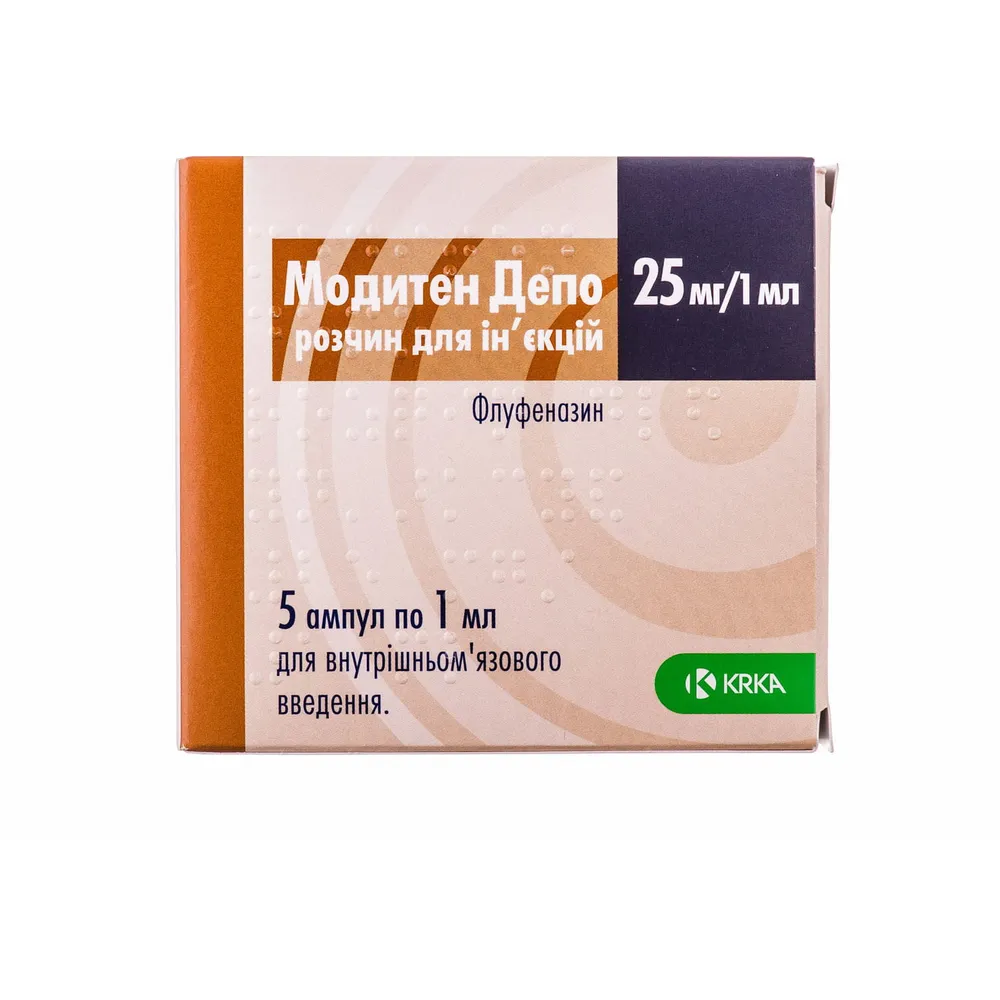
MODITEN DEPO
UkraineThe drug is used for long-term maintenance therapy of chronic forms of schizophrenia, as well as for the prevention of its exacerbations.
Frequently asked questions
How should Moditen depo be taken correctly?
The drug is administered as a deep intramuscular injection. The dosage and intervals between injections (usually from 15 to 35 days) must be determined by a physician individually. Elderly patients usually require lower doses.
Who should not use this drug?
Contraindicated in children under 12 years of age, pregnant and breastfeeding women. It should also not be used in cases of serious consciousness disorders, severe renal or hepatic impairment, heart failure, pheochromocytoma, and acute alcohol or drug poisoning.
What are the possible side effects of Moditen depo?
Possible extrapyramidal disorders (uncontrolled movements, dystonia), tardive dyskinesia (involuntary movements of the face or limbs), drowsiness, blurred vision, nausea, constipation, weight gain, as well as changes in blood pressure and heart rhythm. In rare cases, neuroleptic malignant syndrome may occur, which requires immediate medical attention.
Can the drug be combined with other medicines?
Special caution is required. The drug may enhance the effects of alcohol, sedatives, hypnotics, and narcotic substances. It also interacts with antidepressants, anticoagulants, certain blood pressure medications, and antidiabetic agents. Before starting treatment, it is necessary to inform your doctor about all medications you are taking.
How does the drug affect the ability to drive a vehicle?
The drug may significantly affect the ability to drive vehicles or operate complex machinery; therefore, patients should be prepared for this.
Instructions for use
INSTRUCTIONS FOR MEDICAL USE OF THE MEDICINAL PRODUCT Moditen Depo (ModitenDepo)
Composition:
Active substance: fluphenazine decanoate;
1 ml of injection solution contains 25 mg of fluphenazine decanoate;
Excipients: benzyl alcohol, sesame oil.
Pharmaceutical form. Injection solution.
Main physico-chemical properties: clear, oily, yellowish solution, practically free from mechanical particles.
Pharmacotherapeutic group. Antipsychotic agents. Phenothiazines with piperazine structure.
ATC code N05A B02.
Pharmacological Properties
Pharmacodynamics.
Fluphenazine is a highly potent phenothiazine neuroleptic belonging to the group of classical neuroleptics. Schizophrenia is associated with altered sensitivity of dopamine receptors. Fluphenazine is a more effective blocker of central dopaminergic D2 and D1 receptors than other standard neuroleptics. Like other neuroleptics, but to a lesser extent, fluphenazine also blocks serotonergic 5HT2 and 5HT1 receptors, adrenergic alpha-1 receptors, histaminergic H1 receptors, and cholinergic muscarinic receptors; therefore, anticholinergic and sedative effects are less pronounced compared to some other classical neuroleptics. Blockade of dopaminergic receptors occurs in all three dopaminergic systems—nigrostriatal, mesolimbic, and tuberoinfundibular—thus, in addition to clinical efficacy, various adverse effects may occur, including extrapyramidal reactions and increased prolactin secretion.
Moditen Depot is a parenteral, prolonged-action phenothiazine preparation. It has an extended duration of action.
An important advantage of the Moditen Depot dosage form is reliable patient compliance. This is particularly important in outpatient treatment, as psychiatric patients often take medications irregularly or even refuse to take them altogether.
Pharmacokinetics.
Fluphenazine decanoate, an ester of fluphenazine and decanoic acid, is the active ingredient in Moditen Depot. Fluphenazine decanoate is characterized by gradual hydrolysis, releasing pharmacologically active fluphenazine into systemic circulation. The onset of action ranges from 24 to 72 hours. The biological half-life of fluphenazine in plasma ranges from 7 to 10 days and may reach up to 14.3 days after several consecutive injections. A standard injection of Moditen Depot produces an individual effect in psychiatric patients lasting from 15 to 35 days. A steady state is achieved within 4–6 weeks.
Acute toxicity studies in various animal species revealed high toxicity of fluphenazine. After oral administration in mice, the LD50 was determined to be 220 mg/kg. The target organ of toxic effects is the liver. Long-term administration (up to one year) in rats at doses of 1 mg/kg/day or higher caused behavioral changes manifested as altered reactivity of the central nervous system.
Administration of fluphenazine during pregnancy appears relatively safe. No fetal changes were observed in rats administered fluphenazine hydrochloride at doses of 100 mg/kg/day or fluphenazine decanoate at 25 mg/kg/day. The substance is not teratogenic in rats and rabbits; however, there have been reports of cleft palate in mice and various embryonal abnormalities in chickens. Fluphenazine inhibits calmodulin, leading to altered sperm function in laboratory animals.
Fluphenazine has no mutagenic potential; on the contrary, a protective effect against the mutagenic action of benzo-alpha-pyrene has been demonstrated. This substance has no carcinogenic effect.
Clinical characteristics.
Indications.
Long-term maintenance therapy of chronic forms of schizophrenia. Prevention of schizophrenia exacerbations.
Contraindications.
Hypersensitivity to fluphenazine or to any excipient of the medicinal product.
Obvious or suspected subcortical cerebral disorders.
Severe disturbances of consciousness, severe cerebral atherosclerosis, pheochromocytoma, severe renal or hepatic insufficiency, cardiac failure, hypersensitivity to other phenothiazines.
Acute intoxication with central nervous system (CNS) depressants (alcohol, antidepressants, neuroleptics, sedatives, tranquilizers, hypnotics, and narcotics).
Children under 12 years of age.
Interaction with other medicinal products and other forms of interaction.
Medicinal products that suppress the CNS; analgesics; alcohol
Concomitant administration of fluphenazine enhances the effects of alcohol, CNS depressants (hypnotics, sedatives), and potent analgesics. Concomitant use with narcotic analgesics may cause hypotension, CNS depression, and respiratory depression. Concurrent use of fluphenazine with antihistamines, antipsychotics, hypnotics, and narcotic drugs may enhance CNS depression. Barbiturates, non-barbiturate hypnotics, carbamazepine, griseofulvin, phenylbutazone, and rifampicin increase the metabolism of phenothiazines, whereas paracetamol, chloramphenicol, disulfiram, MAO inhibitors, selective serotonin reuptake inhibitors, and oral contraceptives inhibit it.
Alpha-adrenoblockers
Fluphenazine is an antagonist of adrenaline and other sympathomimetics and suppresses the hypotensive effect of alpha-adrenoblockers.
Anticoagulants
When used concomitantly with anticoagulants, fluphenazine enhances their effects; therefore, periodic monitoring of the prothrombin index is recommended.
Medicinal products affecting the QT interval
Concomitant use of fluphenazine with class IA and III antiarrhythmic agents, arsenic trioxide, halofantrine, levomethadyl acetate, mesoridazine, thioridazine, pimozide, sparfloxacin, gatifloxacin, moxifloxacin, dolasetron mesylate, mefloquine, sertindole, or cisapride may cause QT interval prolongation.
Electrolyte balance
Concomitant use of medicinal products that cause electrolyte imbalance (including hypokalemia or hypomagnesemia) increases the risk of ventricular arrhythmia.
Cytochrome P450 system
Fluphenazine is metabolized by the cytochrome P450 enzyme system (partially CYP2D6). Inhibition of this metabolic pathway by other drugs or increased CYP2D6 enzyme activity may lead to elevated fluphenazine concentrations and an increased risk of adverse effects, including QT interval prolongation. Such agents include antiarrhythmics, direct antidepressants, antipsychotics, beta-blockers, protease inhibitors, and opioids.
Tricyclic antidepressants
Phenothiazines may interfere with the metabolism of tricyclic antidepressants. Plasma concentrations of tricyclic antidepressants may increase, potentially leading to enhanced or prolonged sedative and antimuscarinic effects, as well as cardiac arrhythmias.
Lithium
Concomitant administration of lithium with fluphenazine may increase neurotoxicity.
ACE inhibitors and thiazide diuretics
Concomitant use of phenothiazines and ACE inhibitors or thiazide diuretics may cause hypotension.
Antihypertensive agents
The antihypertensive effect of guanethidine, clonidine, and other antiadrenergic agents may be reduced.
Clonidine
Clonidine may reduce the neuroleptic effect of phenothiazines.
Beta-blockers
Concomitant use of beta-blockers with phenothiazines may increase plasma concentrations of beta-blockers.
Metrizamide
Concomitant administration of metrizamide with fluphenazine may trigger seizures.
It is recommended to discontinue fluphenazine administration 48 hours before myelography and not to administer it for at least 24 hours after myelography.
Epinephrine (adrenaline) and other adrenomimetics
Phenothiazines are pharmacological antagonists of the above-mentioned agents, and their concomitant use may lead to arterial hypotension.
Levodopa
Phenothiazines may reduce the effects of antiparkinsonian agents.
Cholinolytics / antimuscarinic agents
Concomitant administration of fluphenazine with cholinolytics may enhance blockade of cholinergic receptors, especially in elderly patients. Antimuscarinic effects may be intensified or prolonged.
Antiepileptic agents
Fluphenazine may reduce the efficacy of antiepileptic agents.
Antidiabetic agents
Phenothiazines may increase blood glucose levels, as they affect carbohydrate metabolism. Therefore, dose adjustments of antidiabetic agents may be required in diabetic patients.
Cimetidine
Cimetidine may reduce plasma concentrations of phenothiazines.
Amphetamines / anorexigenic agents
Amphetamines / anorexigenic agents are pharmacological antagonists of fluphenazine.
When administering Moditen Depot concomitantly with cholinolytics or antimuscarinic agents, careful patient monitoring and individual dose adjustment are required.
When beta-adrenoblockers and phenothiazines are used concomitantly, dose reduction of both groups of drugs is recommended.
Special precautions for use.
Moditen Depot is not intended for the treatment of non-psychotic disorders or for short-term use (less than 3 months).
Moditen Depot is ineffective in the treatment of behavioral disorders in mentally retarded patients.
Increased mortality in elderly patients with dementia
Data from two large studies have shown a slightly increased risk of death in elderly patients with dementia treated with antipsychotics compared to those not receiving these drugs. There is insufficient data to determine the level of increased risk, and the cause of this increased risk is unknown.
The drug is not intended for the treatment of behavioral disorders associated with dementia.
The drug should be administered with great caution to patients with seizures, as it lowers the seizure threshold and may thus provoke seizures or generalized epileptic seizures.
Cardiovascular effects
Fluphenazine should be used with caution in patients with cardiovascular disorders or a family history of QT prolongation.
Caution is required when administering fluphenazine to patients with cardiovascular diseases (heart failure, ischemic heart disease, dangerous cardiac arrhythmias), as it may significantly reduce blood pressure. If hypotension occurs, epinephrine (adrenaline) should not be used.
Thromboembolism
Cases of venous thromboembolism have been reported during treatment with antipsychotics. Since patients treated with antipsychotics often have acquired risk factors for venous thromboembolism, all possible risk factors for venous thromboembolism should be identified before and during treatment with Moditen Depot, and preventive measures should be taken.
Fluphenazine should be used cautiously in patients with renal impairment.
Fluphenazine should be administered in the smallest effective doses to elderly and debilitated patients, as adverse effects may occur more frequently in these patients.
Fluphenazine should be used with caution in patients working under conditions of high ambient temperature or exposed to organophosphorus insecticides.
Fluphenazine should be used with caution in patients with hyperthyroidism, acute pulmonary diseases, Parkinson's disease, closed-angle glaucoma, myasthenia gravis, or benign prostatic hyperplasia.
Patients undergoing surgery who are receiving fluphenazine are at risk of developing hypotensive reactions; therefore, lower doses of anesthetics or CNS depressants are required.
Fluphenazine should not be administered to patients with blood dyscrasias or impaired liver function, or to patients taking drugs that cause similar disorders, as cholestatic or cholestatic-hepatocellular jaundice may occur. Jaundice usually develops within the first two to four weeks of treatment and does not always depend on dose or duration of treatment.
Caution is advised in patients with a history of breast tumors (although studies have not confirmed any association between increased prolactin secretion and breast tumors during phenothiazine treatment).
As with all phenothiazines, asymptomatic pneumonia may develop during fluphenazine treatment.
Periodic monitoring of blood parameters is recommended during fluphenazine treatment, as isolated cases of leukopenia, agranulocytosis, thrombocytopenia, eosinophilia, and pancytopenia have been reported.
Tardive dyskinesia may develop in patients treated with antipsychotics, including fluphenazine. Therefore, the smallest effective doses should be used in patients requiring long-term treatment, and the need for prolonged therapy should be regularly reassessed. If signs of tardive dyskinesia appear, antipsychotic treatment should be discontinued.
Like other antipsychotic drugs, fluphenazine is associated with neuroleptic malignant syndrome—a rare idiosyncratic reaction characterized by hyperthermia, muscular rigidity, akinesia, hypotension, stupor, and coma. Hyperthermia is often an early symptom of this syndrome. Antipsychotic treatment must be discontinued immediately, and appropriate supportive therapy should be initiated under close monitoring.
Concomitant use of other antipsychotic drugs should be avoided during fluphenazine treatment.
If extrapyramidal symptoms occur, anti-Parkinsonian medications should be prescribed.
If a patient is taking anti-Parkinsonian drugs during treatment with Moditen Depot and suddenly discontinues this medication, they should continue taking the prescribed anti-Parkinsonian agents for several more days.
Fluphenazine should be used with caution in patients with renal impairment or impaired kidney function.
Concomitant use with drugs that impair sweating may lead to disturbances in thermoregulation, especially in elderly patients and during hot and humid weather.
Special information about certain excipients
Moditen Depot contains benzyl alcohol. It is contraindicated in premature newborns, infants, and children under 3 years of age.
Sesame oil may rarely cause severe allergic reactions.
Use during pregnancy or breastfeeding
Use during pregnancy and breastfeeding is contraindicated.
Effect on ability to drive or operate machinery
The drug may have a strong effect on the ability to drive a vehicle or operate machinery. Patients should be warned accordingly. The physician should assess the patient's ability to drive a vehicle based on the course of the underlying disease and response to treatment.
Dosage and Administration
The most effective dose and frequency should be determined individually.
Patients previously receiving maintenance therapy with phenothiazine derivatives in depot form
The usual initial dose is 12.5 to 25 mg of Moditen Depot. Subsequent doses and intervals between injections are determined individually. The interval between individual injections is usually 15 to 35 days. If doses exceeding 50 mg are required, they should be gradually increased by 12.5 mg. The single dose must not exceed 100 mg.
Patients who have not previously received phenothiazine derivatives
Patients who have not previously been treated with phenothiazines should initially undergo therapy with short-acting injectable preparations or oral forms of phenothiazines. Once it is established that the patient tolerates phenothiazines well, they may be switched to Moditen Depot without prior treatment with short-acting injectable forms. The initial dose of 12.5 mg of Moditen Depot is administered intramuscularly. If no serious adverse effects occur, the next dose of 25 mg may be administered after 5–10 days. The dose is then adjusted individually.
Patients previously treated with oral forms of phenothiazine derivatives
If a patient has previously been taking phenothiazines, they may be switched directly to Moditen Depot. Initially, a starting intramuscular dose of 12.5 mg is administered to assess tolerance to Moditen Depot, after which the dose is adjusted individually.
Elderly patients
Elderly patients require lower doses – from 1/3 to 1/4 of the standard adult dose for younger adults.
If extrapyramidal reactions develop, antiparkinsonian agents should be administered.
The drug is administered as a deep intramuscular injection. The needle and syringe must be dry.
If the physician determines that the dose of Moditen Depot is too low, treatment may be supplemented with oral phenothiazine formulations.
Patients with renal or hepatic impairment
Lower doses (3.125 to 6.25 mg) are indicated for patients with impaired renal function.
Fluphenazine should not be administered to patients with impaired liver function.
Children aged 12 to 18 years
Moditen Depot is not recommended for children aged 12 to 18 years due to lack of safety and efficacy data in this patient group. If necessary, the initial dose is 6.25 to 18.75 mg of fluphenazine. Subsequent doses and intervals between administrations are determined individually. The interval between injections is usually 7 to 21 days. If a higher dose is required, it should be gradually increased by 6.25 mg. The single dose must not exceed 25 mg.
This injectable solution must not be mixed with other injectable solutions.
Children
The drug is contraindicated in children under 12 years of age.
Overdose
Overdose and intoxication may lead to severe extrapyramidal disorders, marked drop in arterial pressure, miosis, hypothermia, urinary retention, electrocardiographic changes, and cardiac arrhythmias similar to those seen in quinidine overdose; sedative state and disturbances of consciousness, which may progress to loss of consciousness, absence of reflexes, seizures, and coma. There is no specific antidote. Treatment is symptomatic. The patient's condition must be carefully monitored. In cases of arrhythmia, sodium bicarbonate and magnesium sulfate may be effective. Extrapyramidal disorders are treated with antiparkinsonian drugs. In pronounced hypotension, only noradrenaline should be administered; adrenaline may further lower blood pressure.
Adverse Reactions
Frequency of adverse reactions:
- very common (≥1/10);
- common (≥1/100 to <1/10);
- uncommon (≥1/1,000 to <1/100);
- rare (≥1/10,000 to <1/1,000);
- very rare (<1/10,000);
- not known (cannot be estimated from available data).
Within each frequency group, adverse reactions are listed in order of decreasing severity.
Adverse reactions are listed by system organ class and frequency of occurrence.
Clinical Studies
In individual cases, transient increases in serum cholesterol concentrations have been observed in patients taking fluophenazine orally.
General Disorders and Administration Site Conditions
Phenothiazines may impair thermoregulation. Cases of severe hypothermia and hyperpyrexia have been reported with moderate to high doses of phenothiazines. Elderly patients and those with impaired thyroid function may be particularly susceptible to hypothermia. The risk of hyperpyrexia is increased during hot or humid weather or when used concomitantly with drugs that impair sweating, such as antiparkinsonian agents. Headache, intolerance to lenses, nasal congestion, nausea, fatal cases.
Blood and Lymphatic System Disorders
- not known: leukopenia1, agranulocytosis1, thrombocytopenia1, eosinophilia1, pancytopenia1.
Nervous System Disorders
- common: extrapyramidal disorders (pseudoparkinsonism, dystonia, akathisia, oculogyric crisis, opisthotonus, hyperflexia), tardive dyskinesia2 (involuntary movements of the tongue, face, mouth, lips, trunk, and limbs);
- uncommon: headache;
- rare: neuroleptic malignant syndrome3 characterized by hyperthermia, muscle rigidity, akinesia, decreased blood pressure, stupor, and coma.
Eye Disorders
- uncommon: blurred vision, glaucoma;
- rare: pigmentation of the lens or cornea.
Gastrointestinal Disorders
- uncommon: nausea, loss of appetite, salivation, dry mouth, constipation, intestinal obstruction.
Renal and Urinary Disorders
- uncommon: polyuria, bladder paralysis;
- rare: enuresis, micturition disorders, urinary incontinence.
Endocrine Disorders
- uncommon: gynecomastia, abnormal lactation, libido disorders with impotence, menstrual irregularities, false-positive pregnancy test.
Cardiac Disorders
- uncommon: tachycardia;
- rare: QT interval and T wave prolongation, ventricular arrhythmias (ventricular tachycardia, ventricular fibrillation);
- very rare: arrhythmia, fibrillation;
- not known: cardiac arrest, torsades de pointes arrhythmia.
Vascular Disorders
- uncommon: mild hypertension, fluctuations in blood pressure;
- not known: venous thromboembolism, including cases of pulmonary embolism and deep vein thrombosis.
Respiratory, Thoracic and Mediastinal Disorders
- uncommon: nasal congestion.
Immune System Disorders
- very rare: asthma, laryngeal edema, angioneurotic edema.
Skin and Subcutaneous Tissue Disorders
- uncommon: sweating;
- rare: skin pigmentation, photosensitivity, allergic dermatitis, urticaria, seborrhea, erythema, eczema, exfoliative dermatitis.
Hepatobiliary Disorders
- rare: cholestatic jaundice.
Psychiatric Disorders
- rare: somnolence, lethargy;
- not known: nervousness, agitation or abnormal thoughts, depressive state, increased suicide risk.
Metabolism and Nutrition Disorders
- uncommon: increased appetite, weight gain.
Pregnancy, Puerperium and Perinatal Conditions
- not known: withdrawal syndrome in newborns. Extrapyramidal symptoms in newborns.
Reproductive System and Breast Disorders
- rare: priapism, ejaculation disorders.
1 Blood parameter monitoring is recommended during fluophenazine treatment (see section "Special Warnings and Precautions for Use").
2 In some patients, tardive dyskinesias characterized by choreoathetoid involuntary movements of the tongue, facial muscles, mouth, or jaw (such as tongue protrusion, cheek puffing, mouth twisting, chewing movements), body muscles, or limbs may occur during prolonged treatment or after discontinuation of therapy. The manifestations and worsening caused by this syndrome are highly variable. The syndrome may appear during treatment with reduced doses or after therapy has been discontinued. Early detection of signs of tardive dyskinesia is very important. To detect this syndrome at an early stage, periodic dose reductions (if the patient's condition allows) and careful monitoring during these periods are recommended. This approach is crucial because neuroleptic treatment may mask the symptoms of tardive dyskinesia.
3 Neuroleptic Malignant Syndrome is associated with antipsychotic drug therapy, including fluophenazine (see section "Special Warnings and Precautions for Use"). In such cases, Moditen Depot should be discontinued and appropriate measures taken.
Other Adverse Reactions
Several sudden, unpredictable, and unexplained fatal cases have been reported in hospitalized patients receiving phenothiazines.
If severe adverse reactions occur, treatment with fluophenazine should be discontinued.
Elderly patients may be more sensitive to the sedative or hypotensive effects of the drug.
Reporting of Suspected Adverse Reactions
Reporting suspected adverse reactions after drug authorization is important. It allows continued monitoring of the benefit-risk balance of the medicinal product. Information on any suspected adverse reactions should be reported in accordance with legal requirements.
Shelf Life
18 months.
Storage Conditions
Keep in the original packaging to protect from light at a temperature not exceeding 25 °C.
Keep out of reach of children.
Packaging
1 ml of solution for injection in an ampoule; 5 ampoules in a blister; 1 blister in a cardboard box.
Prescription Category
Prescription only.
Manufacturer
KRKA, d.d., Novo mesto, Slovenia /
KRKA, d.d., Novo mesto, Slovenia.
Manufacturer's Address and Place of Business
Šmarješka cesta 6, 8501 Novo mesto, Slovenia /
Smarjeska cesta 6, 8501 Novo mesto, Slovenia.
The original data is available in the language of the country of manufacture.
Data source: State Register of Medicinal Products of Ukraine
Data last verified: August 13, 2026