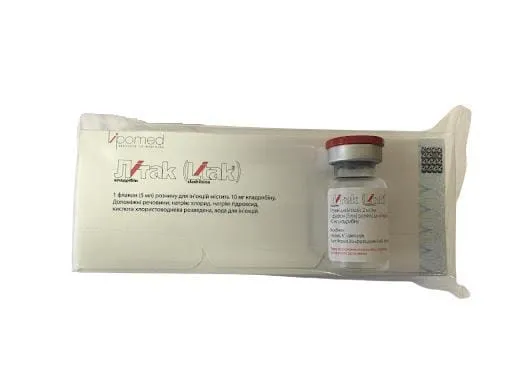
LITAK
UkraineThe drug is prescribed for the treatment of villous lymphocytic leukemia.
Frequently asked questions
How should Litak be taken correctly?
Treatment is carried out in a single course: subcutaneous injections at a dose of 0.14 mg/kg of body weight per day for 5 days. Before administration, the drug should be warmed to room temperature.
Who should not use this drug?
The drug is contraindicated in children under 18 years of age, pregnant women, and breastfeeding women. It should also not be used in cases of hypersensitivity to the ingredients, moderate or severe liver or kidney disease, or during simultaneous administration of other myelosuppressive agents.
What side effects may Litak cause?
The most common side effects observed are suppression of bone marrow functions (decreased levels of leukocytes, platelets, and erythrocytes), immunosuppression, and infections. Nausea, vomiting, diarrhea, fever, headache, dizziness, skin rash, and fatigue are also possible.
Can this drug be combined with other medicines?
Simultaneous use with other nucleoside analogues, corticosteroids, antivirals, or adenosine synthesis inhibitors is not recommended. It should also not be used in conjunction with other myelosuppressive drugs.
What risks exist during treatment?
Treatment may cause prolonged immunosuppression and increase the risk of developing secondary malignancies. There are also risks of developing serious infections and progressive multifocal leukoencephalopathy (PML).
Instructions for use
INSTRUCTIONS FOR MEDICAL USE OF THE MEDICINAL PRODUCT LITAK (LITAK)
Composition:
Active substance: cladribine;
1 ml of solution contains 2 mg of cladribine;
Excipients: sodium chloride, sodium hydroxide, hydrochloric acid, water for injections.
Pharmaceutical form. Solution for injection.
Main physicochemical properties: colorless transparent odorless solution.
Pharmacotherapeutic group.
Antineoplastic agents. Antimetabolites. Purine analogues. Cladribine.
ATC code L01B B04.
Pharmacological Properties
Pharmacodynamics
Cladribine is a purine nucleoside analogue that acts as an antimetabolite. The substitution of hydrogen with chlorine at the 2-position distinguishes cladribine from its natural counterpart, 2'-deoxyadenosine, and renders the molecule resistant to deamination by adenosine deaminase.
Mechanism of Action
Cladribine is a prodrug that is rapidly taken up by cells following parenteral administration and intracellularly phosphorylated to the active nucleotide 2-chlorodeoxyadenosine-5'-triphosphate (CdATP) by deoxycytidine kinase (dCK). Accumulation of the active CdATP occurs predominantly in cells with high dCK activity and low deoxyribonucleotidase activity, particularly in lymphocytes and other hematopoietic cells. The cytotoxicity of cladribine is dose-dependent. Non-hematological tissues are not significantly affected, which explains the low level of non-hematological toxicity.
Unlike other nucleoside analogues, cladribine is toxic to both actively proliferating cells and cells at rest. Cytotoxic effects of cladribine are not observed in solid tumor cell lines. The mechanism of action of cladribine involves incorporation of CdATP into DNA strands: synthesis of new DNA in dividing cells is blocked, and DNA repair mechanisms are suppressed, resulting in DNA strand breaks and decreased concentrations of nicotinamide adenine dinucleotide and ATP even in resting cells. Additionally, CdATP inhibits ribonucleotide reductase—the enzyme responsible for converting ribonucleotides into deoxyribonucleotides. Cell death occurs due to energy depletion and apoptosis.
Clinical Efficacy
In a clinical study involving subcutaneous administration of the medicinal product Litak, 63 patients with hairy cell leukemia were enrolled (33 patients with newly diagnosed disease and 30 patients with relapsed or progressive disease). The overall response rate was 97%, with durable remission, and 73% of patients remained in complete remission after four years of follow-up.
Pharmacokinetics
Absorption
Cladribine exhibits complete bioavailability following parenteral administration.
Distribution
After subcutaneous bolus injection, maximum plasma concentration (Cmax) of 91 ng/mL is reached on average within 20 minutes (dose of 0.14 mg/kg body weight per day). In another study, at a dose of 0.1 mg/kg body weight per day, the maximum plasma concentration (Cmax) after subcutaneous bolus injection was 51 ng/mL (tmax 25 minutes). The clinical relevance of different plasma concentration peaks following subcutaneous administration of cladribine has not been investigated.
Intracellular concentrations of cladribine exceed plasma concentrations by 128–375 times.
The mean volume of distribution of cladribine is 9.2 L/kg. Plasma protein binding averages 25%, with wide interindividual variability (5–50%).
Metabolism
Within the cell, cladribine is primarily metabolized by deoxycytidine kinase to 2-chlorodeoxyadenosine-5'-monophosphate, which is further phosphorylated by nucleoside monophosphate kinases to the diphosphate form, and then by nucleoside diphosphate kinase to the active metabolite 2-chlorodeoxyadenosine-5'-triphosphate (CdATP).
Elimination
Pharmacokinetic study results indicate that the plasma concentration-time curve of cladribine fits a two- or three-compartment model, with α- and β-phase half-lives averaging 35 minutes and 6.7 hours, respectively. The biexponential decline in cladribine serum concentration after subcutaneous bolus injection is comparable to elimination parameters following a 2-hour intravenous infusion, with initial and terminal half-lives of approximately 2 hours and 11 hours, respectively. The intracellular retention time of cladribine in nucleotides in vivo is substantially longer than its plasma retention time: in leukemic cells, a half-life (t1/2) of initially 15 hours and later exceeding 30 hours has been reported.
Cladribine is primarily eliminated via the kidneys. Renal excretion of unchanged cladribine occurs within 24 hours and amounts to 15–18% of the administered dose. Mean plasma clearance is 794 mL/min after intravenous administration and up to 814 mL/min after subcutaneous bolus injection at a dose of 0.1 mg/kg body weight per day.
Pharmacokinetics in Specific Patient Populations
In Renal and Hepatic Impairment
There are no data on the use of the drug in patients with hepatic or renal impairment (see sections "Dosage and Administration" and "Special Warnings and Precautions for Use"). Clinical data are very limited, and the safety of the drug in these patient groups has not been well established. The drug is contraindicated in patients with moderate to severe liver or kidney disease.
Use in Pediatric Patients
The use of the drug in pediatric patients has not been studied.
Use in Elderly Patients
Experience with use in patients over 65 years of age is limited.
Elderly patients should receive treatment according to an individualized regimen. Blood counts and renal and liver function should be monitored in these patients.
Clinical characteristics.
Indications.
Hairy cell leukemia.
Contraindications.
Hypersensitivity to cladribine or to any of the excipients of the medicinal product.
Pregnancy and breastfeeding period.
Pediatric population (under 18 years of age).
Moderate or severe renal impairment (creatinine clearance ≤ 50 mL/min) or hepatic impairment (Child–Pugh score > 6) (see section "Special precautions").
Concomitant use of other myelosuppressive medicinal products.
Interaction with other medicinal products and other forms of interaction.
Due to the potential for increased hematotoxicity and bone marrow suppression, cladribine must not be used concomitantly with other myelosuppressive agents. No influence of cladribine on the activity of other antineoplastic agents has been observed in vitro (e.g., doxorubicin, vincristine, cytarabine, cyclophosphamide) or in vivo. However, in vitro studies have shown cross-resistance between cladribine and nitrogen mustard (chlorambucil); an in vivo case of cross-resistance with cytarabine has been described without loss of activity. Due to similar intracellular metabolism, cross-resistance may occur with other nucleoside analogs such as fludarabine or 2'-deoxycoformycin. Therefore, concomitant administration of nucleoside analogs with cladribine is not recommended. Corticosteroids increase the risk of severe infections when used with cladribine and therefore must not be used concomitantly. Since interactions may occur with drugs affecting intracellular phosphorylation processes, such as antiviral agents, or with inhibitors of adenosine synthesis, their concomitant use with cladribine is not recommended.
Special precautions for use.
Cladribine is an antineoplastic and immunosuppressive agent that may cause significant toxic adverse effects such as myelo- and immunosuppression, prolonged lymphocytopenia, and opportunistic infections. Patients receiving cladribine must be closely monitored for both hematological and non-hematological toxic effects of the drug.
This medicinal product contains more than 45 mg/dose of sodium. Caution should be exercised when administering to patients on a sodium-controlled diet.
The risk/benefit ratio should be carefully evaluated before prescribing cladribine to patients at increased risk of infectious complications, those with significant bone marrow function suppression, patients previously treated with myelosuppressive therapy, and patients with suspected or existing renal or hepatic impairment. Patients with active infectious disease should be treated prior to initiating cladribine therapy. Anti-infective prophylaxis is not generally recommended. It may be beneficial only for immunocompromised patients prior to starting cladribine treatment or for patients with agranulocytosis without clinical signs.
If signs of severe toxicity occur, the physician should consider delaying or discontinuing treatment until these complications resolve. In case of infection, appropriate antibiotic therapy should be initiated.
It is recommended that patients receiving cladribine receive irradiated blood components to prevent transfusion-associated graft-versus-host disease (Ta-GVHD).
Progressive multifocal leukoencephalopathy (PML)
Cases of PML, including fatal cases, have been reported in association with cladribine. PML has been observed from 6 months to several years after cladribine treatment. In some of these cases, an association with prolonged lymphopenia has been reported. Physicians should consider PML in the differential diagnosis of patients presenting with new neurological, cognitive, or behavioral symptoms or worsening of existing symptoms.
Proposed evaluation for PML includes neurological consultation, brain magnetic resonance imaging (MRI), cerebrospinal fluid analysis for JC virus (JCV) DNA by polymerase chain reaction (PCR), or brain biopsy with JCV testing. A negative JCV PCR does not exclude PML. Additional monitoring and evaluation may be warranted if an alternative diagnosis cannot be established. Patients suspected of having PML should not receive cladribine treatment.
Secondary malignancies
Treatment with cladribine, as well as other nucleoside analogs, causes myelosuppression and profound, prolonged immunosuppression. Treatment with these agents is associated with the development of secondary malignancies. Secondary malignancies are expected to occur in patients with hairy cell leukemia. The incidence ranges from 2% to 21%. The peak risk occurs around 2 years after diagnosis, with a median of 40–66 months. The cumulative incidence of secondary tumors is 5%, 10–12%, and 13–14% at 5, 10, and 15 years, respectively, after diagnosis of hairy cell leukemia. After cladribine treatment, the probability of secondary malignancy ranged from 0% to 9.5% during a follow-up period averaging 2.8–8.5 years. The incidence of secondary tumors after treatment was 3.4% in 232 patients with hairy cell leukemia who received therapy over a 10-year period. The highest reported incidence of secondary tumors with Litak was 6.5% after a mean of 8.4 years of treatment. Therefore, patients receiving cladribine should undergo regular monitoring.
Hematology
Myelosuppression is most pronounced during the first month of the next treatment cycle, and transfusions of red blood cells or platelets may be required. Caution should be exercised in patients with symptoms of bone marrow suppression during treatment to avoid further progression of this condition. The therapeutic risk/benefit ratio should be carefully assessed in patients with active infections or suspected infections. The risk of severe myelotoxicity and prolonged immunosuppression is increased in patients with bone marrow infiltration due to disease or prior myelosuppressive therapy.
In such cases, dose reduction and regular patient monitoring are necessary. Pancytopenia is usually reversible, and the intensity of bone marrow aplasia is dose-dependent. An increased incidence of opportunistic infections is expected during cladribine therapy and for 6 months thereafter. Regular monitoring of peripheral blood counts is required during treatment and for 2–4 months after its completion to detect potential adverse reactions and complications (anemia, neutropenia, thrombocytopenia, infections, hemolysis, or bleeding), as well as to monitor hematological recovery. In patients treated for hairy cell leukemia, fever of unknown origin frequently occurs, predominantly during the first 4 weeks of therapy. The cause of fever should be investigated using appropriate laboratory and radiological tests. Less than one-third of febrile episodes are associated with infection. If fever is associated with infection or agranulocytosis, antibiotic therapy should be administered.
Renal and hepatic function
There are no data on the use of Litak in patients with impaired renal or hepatic function. Clinical studies are very limited, and the safety of the drug in these patients has not been established (see section "Pharmacokinetics").
Treatment should be administered with particular caution in patients with existing or suspected renal or hepatic dysfunction. Renal and hepatic function should be periodically monitored in all patients receiving Litak.
Elderly patients
Elderly patients should be treated based on individual assessment and careful monitoring of blood parameters and renal and hepatic function. Risk should be evaluated on an individual basis (see section "Dosage and administration").
Prevention of tumor lysis syndrome
Patients with a large tumor burden should receive prophylactic therapy with allopurinol to control serum uric acid levels, together with adequate or increased hydration, which should begin 24 hours before chemotherapy.
The recommended daily dose is 100 mg of allopurinol orally, with a treatment duration of 2 weeks. If serum uric acid levels exceed normal values, the allopurinol dose may be increased to 300 mg per day.
Reproductive function suppression
Men receiving cladribine are advised to use contraception for 6 months after treatment and are encouraged to consider sperm cryopreservation prior to therapy, as infertility may occur following cladribine treatment (see section "Pregnancy and breastfeeding").
Pregnancy and breastfeeding.
Pregnancy
Cladribine causes significant fetal developmental abnormalities when administered during pregnancy. Studies in animals and in vitro studies with human cells have demonstrated teratogenic and mutagenic effects of cladribine. Cladribine is contraindicated during pregnancy. Women of childbearing potential must use effective contraception during treatment with cladribine and for 6 months after the last dose. If pregnancy occurs during treatment, the woman should be informed of the potential risk to the fetus.
Breastfeeding
It is unknown whether cladribine is excreted in breast milk. However, due to the risk of severe adverse reactions in infants, cladribine is contraindicated during breastfeeding. Therefore, breastfeeding is contraindicated during treatment and for 6 months after the last dose of cladribine.
Fertility
The effect of cladribine on fertility in animals has not been studied. However, toxicity studies in cynomolgus monkeys showed that cladribine suppresses the maturation of rapidly dividing cells, including testicular cells. The effect on human fertility is unknown. Antineoplastic agents such as cladribine, which interfere with DNA, RNA, and protein synthesis, may have a negative impact on human gametogenesis.
Men receiving cladribine are advised to use contraception for 6 months after treatment and are encouraged to consider sperm cryopreservation prior to therapy, as infertility may occur following cladribine treatment (see section "Special precautions for use").
Ability to affect reaction speed when driving or operating machinery.
Litak affects the ability to drive and operate machinery. If certain adverse reactions affecting performance occur (e.g., very common dizziness or somnolence, which may result from anemia), patients should be advised to refrain from driving or operating machinery.
Method of Administration and Dosage
Treatment with Litak must be initiated by a qualified physician experienced in the treatment of cancer.
Dosage
The recommended regimen for the treatment of hairy cell leukemia is one course of administration at a dose of 0.14 mg/kg body weight per day for 5 consecutive days as a subcutaneous bolus injection.
Deviation from the above-mentioned dosage is not recommended.
Use in elderly patients
Experience with use in patients over 65 years of age is limited.
Elderly patients should be treated according to an individualized regimen. In such patients, blood counts and renal and hepatic function should be closely monitored. Risk assessment must be determined individually in each case.
Patients with renal or hepatic impairment
There are no data on the use of Litak in patients with hepatic or renal impairment. Litak is contraindicated in patients with moderate to severe renal impairment (creatinine clearance ≤ 50 mL/min) or moderate to severe hepatic impairment (Child-Pugh score > 6) (see sections "Contraindications", "Special Warnings and Precautions for Use", "Pharmacokinetics").
Children
Litak is contraindicated in patients under 18 years of age (see section "Contraindications").
Method of Administration
Litak is supplied as a ready-to-use injectable solution. The recommended dose is drawn directly from the vial into a syringe and administered as a subcutaneous bolus injection without dilution. The medicinal product should be visually inspected for particulate matter and discoloration prior to administration. The drug should be warmed to room temperature before administration.
Self-administration by the patient
Patients may self-administer Litak. However, prior to self-administration, patients must be adequately instructed and trained.
Children.
The drug is contraindicated in children.
Overdose.
Symptoms: nausea, vomiting, diarrhea, profound bone marrow suppression (including anemia, thrombocytopenia, leukopenia, and agranulocytosis), acute renal failure, and signs of irreversible neurotoxicity (paraparesis/quadriparesis, Guillain-Barré syndrome, and Brown-Séquard syndrome). Acute, irreversible neuro- and nephrotoxicity have been observed in individual patients who received doses ≥ 4 times higher than the recommended dose for the treatment of hairy cell leukemia.
Treatment: discontinue therapy, provide careful monitoring and appropriate supportive measures (blood transfusions, dialysis, hemofiltration, anti-infective therapy, etc.). Hematological monitoring is required for at least 4 weeks in patients who have overdosed on cladribine. There is no specific antidote.
Adverse reactions.
Summary of safety profile
Very common adverse reactions observed during the three most significant clinical studies of cladribine in 279 patients treated for various indications, and in 62 patients with hairy cell leukemia (HCL), included myelosuppression, particularly severe neutropenia (41% (113/279), HCL 98% (61/62)), severe thrombocytopenia (21% (58/279), HCL 50% (31/62)), and severe anemia (14% (21/150), HCL 55% (34/62)), as well as severe immunosuppression/lymphopenia (63% (176/279), HCL 95% (59/62)), infections (39% (110/279), HCL 58% (36/62)), and fever (up to 64%).
Culture-negative fever following cladribine treatment occurs in 10–40% of patients with hairy cell leukemia and is rarely observed in patients with other neoplastic disorders. Skin rashes (2–31%) have mainly been reported in patients who were concurrently receiving medications known to cause rashes (antibiotics and/or allopurinol). Gastrointestinal adverse reactions such as nausea (5–28%), vomiting (1–13%), and diarrhea (3–12%), as well as fatigue (2–48%), headache (1–23%), and decreased appetite (1–22%) have been observed during cladribine treatment. Cladribine is unlikely to cause alopecia; mild and transient alopecia lasting several days was observed in 4/523 patients during treatment, but could not be clearly associated with cladribine administration.
Adverse reactions reported are listed in the table below. The frequency of adverse reactions is defined as follows: very common (≥ 1/10), common (≥ 1/100 to < 1/10), uncommon (≥ 1/1000 to < 1/100), rare (≥ 1/10000 to < 1/1000), very rare (< 1/10000), and not known (cannot be estimated from the available data).
| Infections and infestations |
Very common: infections* (e.g. pneumonia*, sepsis*) |
| Benign, malignant and unspecified neoplasms (including cysts and polyps) |
Common: secondary malignant neoplasms* Rare: tumour lysis syndrome* |
| Blood and lymphatic system disorders |
Very common: pancytopenia/myelosuppression*, neutropenia, thrombocytopenia, anaemia, lymphopenia Uncommon: haemolytic anaemia* Rare: hyper-eosinophilia Very rare: amyloidosis |
| Immune system disorders |
Very common: immunosuppression* Rare: graft-versus-host disease* |
| Metabolism and nutrition disorders |
Very common: decreased appetite Uncommon: cachexia |
| Nervous system disorders |
Very common: headache, dizziness Common: insomnia, anxiety Uncommon: somnolence, paraesthesia, lethargy, polyneuropathy, confusion, ataxia Rare: apoplexy, neurological disturbances in speech and swallowing Very rare: depression, epileptic seizure |
| Eye disorders |
Uncommon: conjunctivitis Very rare: blepharitis |
| Cardiac disorders |
Common: tachycardia, cardiac murmur, hypotension, epistaxis, myocardial ischaemia* Rare: heart failure, atrial fibrillation, cardiac decompensation |
| Vascular disorders |
Very common: purpura Common: petechiae, haemorrhages* Uncommon: phlebitis |
| Respiratory, thoracic and mediastinal disorders |
Very common: abnormal breath sounds, abnormal chest sounds, cough Common: dyspnoea, pulmonary interstitial infiltrates, mainly of infectious aetiology, mucositis Uncommon: pharyngitis Very rare: pulmonary embolism |
| Gastrointestinal disorders |
Very common: nausea, vomiting, constipation, diarrhoea Common: gastrointestinal pain, flatulence Rare: ileus |
| Hepatobiliary disorders |
Common: reversible, predominantly mild increases in bilirubin and transaminases Rare: hepatic failure Very rare: cholecystitis |
| Skin and subcutaneous tissue disorders |
Very common: rash, localized exanthema, sweating Common: pruritus, skin pain, erythema, urticaria Rare: Stevens-Johnson syndrome / Lyell's syndrome |
| Musculoskeletal and connective tissue disorders |
Common: myalgia, arthralgia, arthritis, bone pain |
| Renal and urinary disorders |
Rare: renal failure |
| General disorders and administration site conditions |
Very common: injection site reactions, fever, fatigue, chills, asthenia Common: swelling, malaise, pain |
* See description in the section below.
Description of individual adverse reactions
Non-hematological adverse reactions
Non-hematological adverse reactions are generally of mild to moderate severity. Antiemetic treatment for nausea is usually not required. Skin- and subcutaneous tissue-related adverse reactions are mainly mild or moderate and transient, usually resolving within 30 days.
Blood parameters
Since patients with active hairy cell leukemia generally have low blood counts, particularly low neutrophil counts, transient severe neutropenia (< 1.0 × 10^9/L) occurs in over 90% of patients. The use of hematopoietic growth factors does not improve neutrophil recovery or reduce the incidence of fever. Severe thrombocytopenia (< 50 × 10^9/L) occurs in approximately 20–30% of all patients. Lymphopenia is expected to last for several months, accompanied by immunosuppression and an increased risk of infections. Recovery of cytotoxic T-lymphocytes and natural killer cells occurs within 3–12 months. Complete recovery of T-helper cells and B-lymphocytes may take up to 2 years. Cladribine causes severe and prolonged reduction of CD4+ and CD8+ T-lymphocytes. To date, there is no information available regarding the potential long-term consequences of this immunosuppression.
Infections
Rarely, severe prolonged lymphopenia has been reported, which, however, could not be linked to late infectious complications. Very common severe complications, sometimes fatal, include opportunistic infections (e.g., pneumocystosis, toxoplasmosis, listeriosis, candidiasis, herpes viruses, cytomegalovirus infections, and infections caused by atypical mycobacteria). 40% of patients receiving Litak at a dose of 0.7 mg/kg body weight during the treatment course experienced infections. These were on average more severe than those observed in 27% of all patients receiving a reduced dose of 0.5 mg/kg body weight during the course. 43% of patients with hairy cell leukemia experienced infectious complications under the standard dosing regimen. One-third of these infections should be considered severe (e.g., sepsis, pneumonia). At least 10 cases of acute autoimmune hemolytic anemia have been reported. All patients were successfully treated with corticosteroids.
Rare serious adverse reactions
Serious adverse reactions such as ileus, severe hepatic failure, renal failure, cardiac failure, atrial fibrillation, cardiac decompensation, stroke, neurological disturbances in speech and swallowing, tumor lysis syndrome with acute renal failure, graft-versus-host disease, Stevens-Johnson syndrome / Lyell's syndrome (toxic epidermal necrolysis), hemolytic anemia, and hyper-eosinophilia (with erythematous skin rash, pruritus, and facial swelling) occur rarely.
Fatal cases
Most fatal cases associated with the drug are due to infectious complications. Other reported fatal cases related to chemotherapy with this drug were caused by secondary tumors, stroke and myocardial infarction, graft-versus-host disease triggered by multiple transfusions of non-irradiated blood, and tumor lysis syndrome with hyperuricemia, metabolic acidosis, and acute renal failure.
Reporting of adverse reactions.
Reporting of adverse reactions after drug registration is of great importance. It enables continuous monitoring of the benefit-risk balance of the drug. Medical and pharmaceutical professionals, as well as patients or their legal representatives, should report all suspected adverse reactions and lack of efficacy through the Automated Information System for Pharmacovigilance at the following link: https://aisf.dec.gov.ua.
Shelf life.
4 years.
Storage conditions.
Store at 2 to 8 °C in a refrigerator. Do not freeze.
Keep out of reach of children.
After opening the vial, the drug should be used immediately.
Special precautions for disposal and other handling.
Standard procedures for the disposal of cytotoxic anticancer drugs should be followed. Cytotoxic drugs must be handled with care. Pregnant women should avoid contact with these drugs.
It is recommended to use disposable gloves and protective clothing when handling Litak. If Litak comes into contact with skin or mucous membranes, the affected area should be immediately rinsed thoroughly with large amounts of water.
Parenteral drugs should be visually inspected for particulate matter and discoloration prior to administration.
Vials are intended for single use only. Any unused medication or waste material must be disposed of in accordance with local requirements.
Incompatibilities.
Litak must not be mixed with other medicinal products.
Packaging.
5 mL of solution in a type I glass vial, closed with a bromobutyl stopper, aluminum cap, and flip-off cap. 5 vials per cardboard box.
Prescription status.
Prescription only.
Manufacturer.
Lipomed AG.
Manufacturer's address and location of its operations.
4144 Arlesheim, Fabrikmatte 4, Switzerland.
The original data is available in the language of the country of manufacture.
Data source: State Register of Medicinal Products of Ukraine
Data last verified: August 13, 2026