XYLOMETAZOLINE
UkraineThe drug is used for the symptomatic treatment of nasal congestion caused by the common cold, hay fever, allergic rhinitis, and sinusitis. It also helps facilitate secretion drainage in sinus diseases and may be used as an adjunct therapy for otitis media to relieve edema.
Frequently asked questions
How should Xylometazoline be taken correctly?
Adults and children aged 12 years and older should apply 1–2 pea-sized amounts of the gel (100–200 mcg) to the nasal mucosa every 8–10 hours. It is important not to use the drug for longer than 3–5 days.
Who should not use this drug?
Use is contraindicated in cases of hypersensitivity to the components, dry or atrophic rhinitis, acute coronary diseases, cardiac asthma, hyperthyroidism, and angle-closure glaucoma. It should also not be used following pituitary surgery or dural laceration. The drug should not be used in conjunction with MAO inhibitors or within 2 weeks after discontinuing them.
What are the possible side effects of Xylometazoline?
Possible side effects include headache, insomnia, drowsiness, palpitations, tachycardia, increased blood pressure, nausea, vomiting, sneezing, or nosebleeds. Irritation, dryness, or burning in the nose and throat, as well as allergic reactions (rash, itching, shortness of breath), may also occur.
Can the drug be taken with other medicines?
Simultaneous use with tricyclic or tetracyclic antidepressants, as well as other sympathomimetic drugs (e.g., ephedrine or pseudoephedrine), is not recommended. Use together with β-adrenoceptor blockers may lead to bronchial spasm or decreased blood pressure.
Can the drug be used by pregnant and breastfeeding women?
During pregnancy, the drug should not be used due to the risk of vascular effects. During breastfeeding, the drug may only be used as prescribed by a physician, avoiding prolonged use.
Can the drug be given to children?
This drug must not be used in children under 12 years of age.
Instructions for use
INSTRUCTIONS FOR MEDICAL USE OF THE MEDICINAL PRODUCT KSYLOMETAZOLINE (XYLOMETAZOLINE)
Composition:
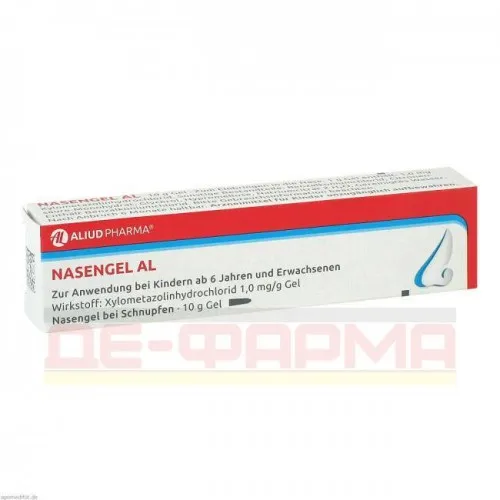
Active substance: xylometazoline;
1 g of the preparation contains 1 mg of xylometazoline hydrochloride;
Excipients: carbomer, glycerol, propylene glycol, concentrated ammonia solution, 96 % ethanol, methylparaben (E 218), propylparaben (E 216), purified water.
Pharmaceutical form. Nasal gel.
Main physicochemical properties: transparent, colorless, homogeneous gel with a weak specific odor.
Pharmacotherapeutic group. Nasal decongestants for local use in nasal cavity disorders. Sympathomimetics, simple preparations.
ATC code R01A A07.
Pharmacological properties.
Pharmacodynamics.
Xylometazoline is an imidazoline derivative with sympathomimetic action. It is a direct agonist of α-adrenergic receptors.
The medicinal product causes vasoconstriction of the mucosal blood vessels, reduces swelling, alleviates mucosal hyperemia in the nasopharynx, and decreases exudate production.
The product is formulated as a gel, which enables moisturizing of the nasal mucosa and prevents the drug from running down into the nasal cavity floor and throat.
Pharmacokinetics.
The medicinal product begins to act within 5–10 minutes, and its effect lasts for up to 10 hours. After application to the nasal mucosa, it induces local vasoconstriction. The drug is generally not absorbed in clinically significant amounts and does not produce systemic effects.
Clinical characteristics.
Indications.
Symptomatic treatment of nasal congestion due to colds, hay fever, other allergic rhinitis, and sinusitis. For facilitating drainage of secretions in diseases of the nasal accessory sinuses.
Adjunctive therapy in cases of otitis media (to reduce swelling of the mucous membrane).
Contraindications.
- Hypersensitivity to any component of the medicinal product.
- Should not be used in patients after hypophysectomy or following other surgical interventions involving opening of the dura mater.
- Dry rhinitis (rhinitis sicca) or atrophic rhinitis.
- Acute coronary diseases, cardiac asthma, hyperthyroidism, closed-angle glaucoma.
- Do not use concomitantly with monoamine oxidase inhibitors (MAOIs) or within 2 weeks after discontinuation of MAOI therapy.
Interaction with other medicinal products and other forms of interaction.
MAO inhibitors: xylometazoline may potentiate the effect of MAO inhibitors and may induce a hypertensive crisis. Xylometazoline should not be administered to patients taking or who have taken MAO inhibitors within the previous 2 weeks.
Tricyclic and tetracyclic antidepressants: concomitant use of tricyclic or tetracyclic antidepressants may enhance the sympathomimetic effect of xylometazoline; therefore, concomitant administration of these agents is not recommended.
Concomitant use of xylometazoline with other sympathomimetic agents (e.g., ephedrine, pseudoephedrine) should be avoided due to their additive effects.
β-adrenergic blockers: concomitant use of xylometazoline with β-blockers may cause bronchospasm or reduction in blood pressure.
Special precautions for use.
The medicinal product should be prescribed with caution to patients who experience strong reactions to adrenergic agents, manifested as insomnia, dizziness, tremor, cardiac arrhythmia, or increased arterial pressure.
The drug should not be used in patients with chronic or vasomotor rhinitis, as they may use it for longer than 5 days. Prolonged or excessive use of xylometazoline may lead to secondary swelling of the nasal mucosa, with a risk of chronic rhinitis and/or atrophy of the nasal mucosa.
This condition is likely caused by inhibited release of noradrenaline from nerve endings due to stimulation of presynaptic α2-receptors.
The drug should be used with caution in patients with cardiovascular disorders, arterial hypertension, diabetes mellitus, thyroid disorders, phaeochromocytoma, prostate hypertrophy, or urinary retention. Do not use the medicinal product concomitantly with monoamine oxidase inhibitors (MAOIs) or within 2 weeks after discontinuation of MAOI therapy.
Isolated cases of posterior reversible encephalopathy syndrome (PRES)/reversible cerebral vasoconstriction syndrome (RCVS) have been reported during the use of sympathomimetic agents. Reported symptoms include sudden severe headache, nausea, vomiting, and visual disturbances. Symptoms usually resolve or improve within several days after appropriate treatment. If signs or symptoms of PRES/RCVS develop, the medicinal product should be discontinued immediately and medical advice sought.
Doses higher than recommended should not be used, especially in children and elderly patients.
Patients with QT interval prolongation syndrome who receive xylometazoline may be at increased risk of serious ventricular arrhythmias.
The medicinal product contains propylene glycol, which may cause skin irritation.
The medicinal product contains methylparaben (E 218) and propylparaben (E 216), which may cause allergic reactions (possibly delayed).
Use during pregnancy or breastfeeding.
The medicinal product should not be used during pregnancy due to its possible vasoconstrictive effect.
There is no evidence of any adverse effect on the infant. There are no data indicating that xylometazoline passes into breast milk; however, caution is advised. During breastfeeding, the drug should be used only on medical advice, and prolonged use should be avoided due to the risk of adverse effects in the infant (tachycardia, excitability, increased blood pressure).
Fertility.
There are no adequate data on the effect of the drug on fertility. Since systemic exposure to xylometazoline hydrochloride is very low, the potential effect on fertility is extremely unlikely.
Ability to affect reaction speed when driving or operating machinery.
Generally, the medicinal product does not affect or has minimal effect on the ability to drive vehicles or operate machinery.
With prolonged use or use at high doses, adverse reactions affecting the cardiovascular and central nervous systems may occur.
Dosage and Administration.
For use in adults and children aged 12 years and older: apply the medicinal product to the nasal mucosa at a dose of 100–200 mcg (corresponding to 1–2 pea-sized amounts of gel) every 8–10 hours. The drug should not be used for longer than 3–5 days.
Children.
Do not use in children under 12 years of age.
Overdose.
Excessive local use of xylometazoline hydrochloride or its accidental ingestion may lead to pronounced dizziness, increased sweating, significant decrease in body temperature, headache, bradycardia, arterial hypertension, respiratory depression, coma, and seizures. Elevated arterial pressure may be followed by hypotension. Impaired consciousness may indicate severe intoxication.
In case of suspected overdose, appropriate supportive measures should be administered to all patients, and, if necessary, emergency symptomatic treatment under medical supervision. Medical care should include patient observation for several hours. In cases of severe overdose accompanied by cardiac arrest, resuscitation efforts should continue for at least 1 hour.
Adverse reactions.
The following undesirable effects are associated with the use of xylometazoline.
Immune system disorders: hypersensitivity reactions, including angioneurotic edema, dyspnea, allergic reactions, rash, pruritus.
Nervous system disorders: headache, insomnia, somnolence.
Eye disorders: transient visual disturbances.
Cardiovascular system disorders: palpitations, tachycardia, arrhythmia, arterial hypertension (especially in patients with circulatory system disorders).
Respiratory, thoracic and mediastinal disorders: sneezing, nasal bleeding.
Prolonged use of the medicinal product beyond the recommended duration and/or in doses exceeding the recommended may lead to secondary drug-induced inflammation of the nasal mucosa.
Gastrointestinal disorders: nausea, vomiting.
General disorders and administration site conditions: fatigue, feeling of weakness. Dryness of the nasal mucosa, irritation of the nasal mucosa, burning sensation in the nose and throat, discomfort related to the nasal mucosa may occur.
Reporting of suspected adverse reactions.
Reporting of suspected adverse reactions after medicinal product registration is important. It allows continuous monitoring of the benefit-risk balance of the medicinal product. Medical and pharmaceutical professionals, as well as patients or their legal representatives, should report all suspected adverse reactions and lack of efficacy through the Automated Information System for Pharmacovigilance at the following link: https://aisf.dec.gov.ua.
Shelf life. 3 years.
Storage conditions.
Store in the original packaging at a temperature not exceeding 25 °C.
Keep out of reach and sight of children.
Packaging. 10 g in a tube in a cardboard box.
Availability. Over-the-counter (without prescription).
Manufacturer: Limited Liability Company "Pharmaceutical Company "Zdorov'ya".
Manufacturer's address and location of business activity.
22, Shevchenka Street, Kharkiv, Kharkiv region, 61013, Ukraine.
Similar drugs
| Brand name | Dosage form | Active substance / Dosage | Manufacturer |
|---|---|---|---|
| GALAZOLIN | gel, nasal |
|
Pharmaceutical Plant "Polpharma" S.A. (manufacturing, primary and secondary packaging, batch control; batch release) |
| GALAZOLIN® | gel, nasal |
|
Pharmaceutical Plant "Polpharma" S.A. (manufacturing, primary and secondary packaging, batch control; batch release) |
The original data is available in the language of the country of manufacture.
Data source: State Register of Medicinal Products of Ukraine
Data last verified: August 13, 2026