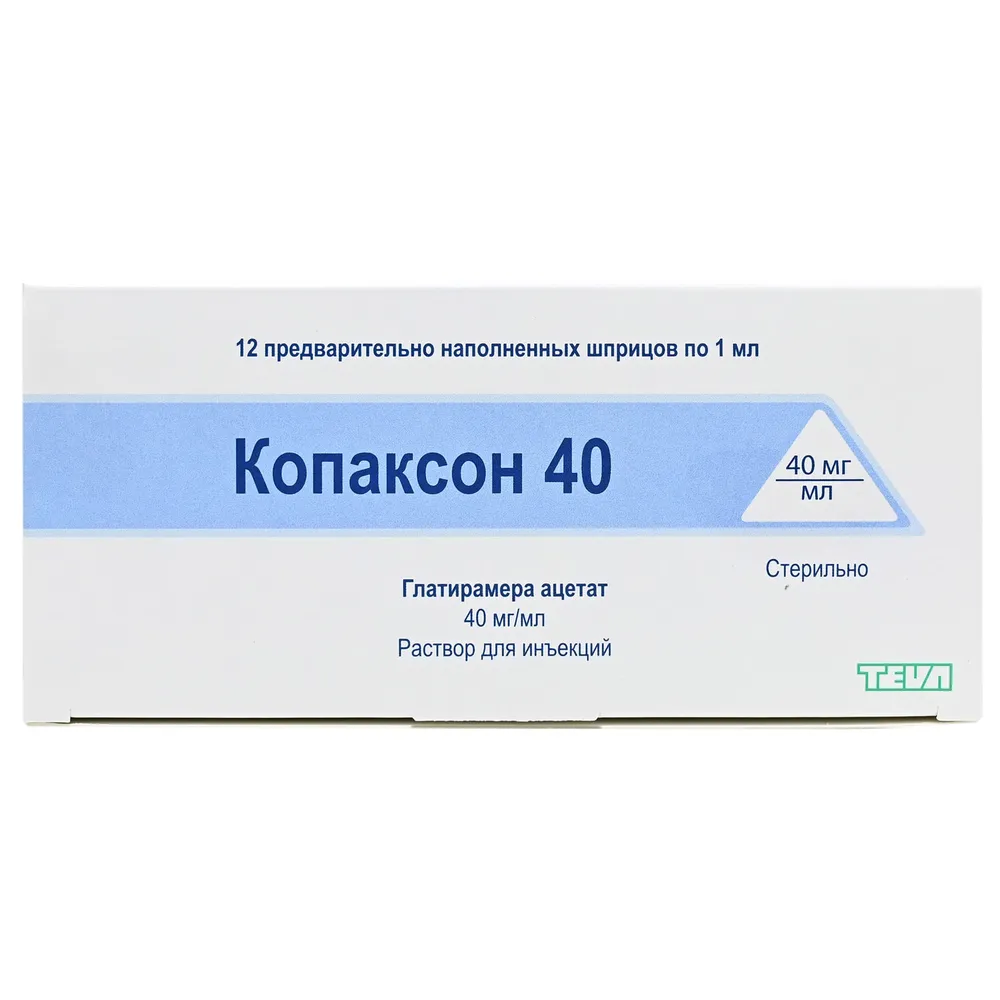
COPAXONE®-TEVA
UkraineThe drug is prescribed for the treatment of patients with relapsing forms of multiple sclerosis.
Frequently asked questions
How should Copaxone®-teva be taken correctly?
Adults and children aged 12 years and older are recommended to administer 20 mg (one syringe) subcutaneously once daily. Injections should be made in different sites (abdomen, arms, thighs, or buttocks) to reduce skin irritation. It is important to administer the drug subcutaneously only; it must not be used intravenously or intramuscularly.
What are the contraindications for use?
The drug must not be used in case of hypersensitivity to the active substance or any other excipient in the composition. It is also not indicated for the treatment of primary- or secondary-progressive multiple sclerosis.
What are the possible side effects of Copaxone®-teva?
The most common side effects are injection site reactions (pain, redness, swelling, itching). Immediate reactions after injection are also possible (flushing, chest pain, shortness of breath, palpitations). Other side effects may include headache, anxiety, depression, nausea, digestive disorders, infections (e.g., influenza), and liver damage.
Can the drug be taken together with other medicines?
There is no official assessment of interactions with other agents; however, no significant interaction has been established with drugs commonly prescribed for multiple sclerosis (including corticosteroids). However, due to its ability to affect the distribution of plasma protein-bound substances, caution should be exercised when using other medicines concurrently, and the patient's condition should be monitored.
Can the drug be used during pregnancy or breastfeeding?
Copaxone®-teva can be used during pregnancy (if necessary) and during the breastfeeding period, as data do not indicate a negative impact on the child.
What should be done if an anaphylactic reaction occurs?
If signs of an anaphylactic reaction occur, you must immediately discontinue the use of the drug and seek emergency medical assistance urgently.
Instructions for use
INSTRUCTIONS FOR MEDICAL USE OF THE MEDICINAL PRODUCT Copaxone®-Teva (Copaxone®-Teva)
Composition:
Active substance: glatiramer acetate;
1 ml of solution for injection contains 20 mg of glatiramer acetate*;
Excipients: mannitol (E 421), water for injections.
* The average molecular mass of the glatiramer acetate mixture ranges between 5000–9000 daltons. Variability in the composition of this substance does not allow identification of a specific polypeptide that could be fully characterized with respect to amino acid sequence, although the final composition of glatiramer acetate is not entirely random. 20 mg of glatiramer acetate contained in 1 pre-filled syringe corresponds to 18 mg of glatiramer base.
Pharmaceutical form. Solution for injection.
Main physicochemical properties: the solution is practically free from visible particles.
Pharmacotherapeutic group. Antineoplastic and immunomodulating agents, other immunostimulants. ATC code: L03A X13.
Pharmacological properties.
Pharmacodynamics.
Mechanism of action. The mechanism by which glatiramer acetate exerts its therapeutic effect in patients with relapsing forms of multiple sclerosis (MS) is not fully understood; however, it is believed to involve modulation of immune processes. Studies in animals and in patients with MS indicate that glatiramer acetate affects innate immune cells, including monocytes, dendritic cells, and B-cells, which in turn modulate adaptive functions of B- and T-cells and induce secretion of anti-inflammatory and regulatory cytokines. It is unknown whether the therapeutic effect is mediated by the cells described above, as the pathophysiology of MS is only partially understood.
In clinical studies of MS patients receiving Copaxone®-Teva, a significant reduction in the number of relapses was observed compared to patients receiving placebo.
Copaxone®-Teva also demonstrated beneficial therapeutic effects compared to placebo on MRI parameters reflecting the course of relapsing-remitting MS.
One study showed that the cumulative percentage of patients with confirmed 3-month progression of disability was lower in the group receiving treatment with Copaxone®-Teva compared to the placebo group.
There is no evidence that treatment with Copaxone®-Teva affects the duration or severity of relapses.
To date, there is no confirmation of the use of Copaxone®-Teva for the treatment of patients with primary or secondary progressive disease.
Pharmacokinetics.
Pharmacokinetic studies have not been conducted in patients. In vitro data and limited data from studies in healthy volunteers indicate that following subcutaneous administration, the active substance is readily absorbed and a large portion of the dose is rapidly degraded into smaller fragments within the subcutaneous tissue.
Clinical characteristics.
Indications.
Copaxon®-Teva is indicated for the treatment of patients with relapsing forms of multiple sclerosis.
Copaxon®-Teva is not indicated for primary or secondary progressive multiple sclerosis.
Contraindications.
Hypersensitivity to the active substance (glatiramer acetate) or to any of the excipients.
Interaction with other medicinal products and other forms of interaction.
Interaction between Copaxon®-Teva and other medicinal products has not been formally evaluated.
Available clinical studies and post-marketing experience do not suggest any significant interaction between Copaxon®-Teva and commonly used drugs prescribed for patients with MS, including concomitant use of corticosteroids within a 28-day period.
In vitro studies indicate that glatiramer acetate is highly bound to plasma proteins in blood, but it is neither displaced by nor displaces phenytoin or carbamazepine. However, since theoretically Copaxon®-Teva may affect the distribution of protein-bound substances, concomitant use of such medicinal products should be carefully monitored.
Special precautions for use
Copaxone®-Teva is administered only by subcutaneous injection. The drug must not be administered intravenously or intramuscularly.
Post-injection reactions and anaphylactic reactions may occur during treatment with glatiramer acetate (see section "Side effects").
Post-injection reactions
The physician prescribing Copaxone®-Teva should inform the patient that a reaction associated with at least one of the following symptoms—vasodilation (flushing), chest pain, dyspnea, palpitations, or tachycardia—may occur within minutes after injection (see section "Side effects"). Most of these symptoms are transient and resolve spontaneously without consequences. In case of a serious adverse reaction, the patient should immediately discontinue Copaxone®-Teva and contact their physician. Symptomatic treatment may be prescribed if necessary.
There is no evidence of increased risk of such reactions in any specific patient group. Nevertheless, Copaxone®-Teva should be used with caution in patients with cardiac disorders. These patients should be monitored regularly during treatment.
Anaphylactic reactions
Anaphylactic reactions may occur immediately or shortly after administration of glatiramer acetate. However, such anaphylactic reactions may also develop several months or even years after initiation of treatment (see section "Side effects"). Cases with fatal outcomes have been reported. Some signs and symptoms of anaphylactic reactions may partially overlap with post-injection reactions.
All patients receiving Copaxone®-Teva and their caregivers should be informed about the signs and symptoms characteristic of anaphylactic reactions and the necessity to seek immediate emergency medical assistance if such symptoms occur (see section "Side effects").
If an anaphylactic reaction occurs, treatment with Copaxone®-Teva must be discontinued (see section "Contraindications").
Antibodies reactive to glatiramer acetate have been detected in the serum of patients receiving daily continuous therapy with Copaxone®-Teva. Peak levels were reached on average after 3–4 months of treatment, after which they declined and stabilized at a level slightly above baseline.
There are no data indicating that these glatiramer acetate-reactive antibodies are neutralizing or that their formation affects the clinical efficacy of Copaxone®-Teva.
Patients with renal impairment should be monitored for kidney function during treatment with Copaxone®-Teva. Although there is no evidence of glomerular deposition of immune complexes in patients, this possibility cannot be excluded.
Rare cases of severe liver injury (including hepatitis with jaundice, hepatic failure, and in isolated cases liver transplantation) have been observed. Liver injury occurred from several days to several years after initiation of Copaxone treatment. In most cases, severe liver injury resolved upon discontinuation of treatment. In some cases, these reactions occurred in patients with excessive alcohol consumption, pre-existing or past history of liver disease, or concomitant use of other potentially hepatotoxic drugs. Patients should be monitored regularly for signs of liver injury, and patients should be informed to seek immediate medical attention if symptoms of liver injury occur. In cases of clinically significant liver injury, discontinuation of Copaxone®-Teva should be considered.
Use during pregnancy or breastfeeding
Pregnancy. Moderate data from pregnant women (300–1000 pregnancy outcomes) indicate no fetal/neonatal toxicity or developmental abnormalities. Animal studies have not shown reproductive toxicity. Copaxone®-Teva may be considered for use during pregnancy if needed.
Breastfeeding. The physicochemical properties of glatiramer acetate and its low oral bioavailability suggest that its impact on newborns/infants via human breast milk is negligible. A non-interventional retrospective study involving 60 infants breastfed by mothers exposed to glatiramer acetate, compared to 60 infants breastfed by mothers not exposed to any disease-modifying therapy, as well as limited post-marketing data, indicate no negative effects of glatiramer acetate. Copaxone®-Teva may be used during breastfeeding.
Ability to affect reaction speed when driving or operating machinery
The effect of Copaxone®-Teva on the ability to drive or operate complex machinery has not been studied.
Method of Administration and Dosage
Treatment with Copaxone®-Teva should be initiated under the supervision of a neurologist or a physician experienced in the management of multiple sclerosis.
The recommended dose for adults and children aged 12 years and older is 20 mg of glatiramer acetate (one pre-filled syringe), administered as a subcutaneous injection once daily.
The duration of treatment with Copaxone®-Teva has not been established.
The decision regarding long-term treatment should be made by the physician for each individual patient.
Patients with renal impairment. Specific studies on the use of Copaxone®-Teva in patients with renal impairment have not been conducted (see section "Special Warnings and Precautions for Use").
Elderly patients. The use of Copaxone®-Teva in elderly patients has not been specifically studied.
Patients should be instructed in the technique of self-injection and should be under medical supervision during the first self-injection and for 30 minutes thereafter.
It is very important to administer Copaxone®-Teva correctly:
- Only subcutaneously (see below "Instructions for Use").
- Only at the dose prescribed by the physician.
- Each pre-filled syringe is intended for single use only. Any unused portion or leftover medication should be discarded.
- Do not mix Copaxone®-Teva with any other medication or administer it simultaneously with other drugs.
- Do not use the solution if particles are present. Use another syringe.
At the first administration, the patient must receive complete instructions and be under the supervision of a physician or nurse. The patient must remain under medical supervision during the first self-injection and for 30 minutes afterward.
Instructions for Use
- Before injection, ensure you have all necessary items:
- Pre-filled syringe with medication;
- Sharps disposal container for used syringes and needles.
- Remove one blister containing a pre-filled syringe from the outer packaging. Store all unused syringes in the refrigerator.
- Wash your hands thoroughly with soap and water before administering the injection.
- Allow the blister with the pre-filled syringe to warm to room temperature for at least 20 minutes before injection.
- Do not use the solution if particulate matter is present. Return to step 1 and use another syringe.
- Select an injection site (Fig. 1). Seven possible injection sites are shown on the body: arms, thighs, buttocks, abdomen – including the periumbilical area. Each injection area contains multiple possible injection points.
Injection sites should be rotated consistently within each specific area.
Do not use painful areas, discolored skin, or areas with lumps or nodules for injection. Maintain a rotation schedule and record it in a diary.
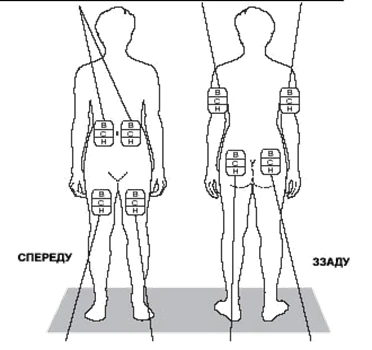
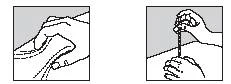
Fig. 2 Fig. 3
- Remove the syringe with needle by moving vertically upward.
- Place the used syringe in the sharps disposal container.
If you forget to inject Copaxone®-Teva, administer the dose as soon as you remember, but do not administer a double dose.
Administer the next dose only after 24 hours.
Do not discontinue Copaxone®-Teva without consulting your physician.
Children.
The safety and efficacy of glatiramer acetate in children and adolescents have not been established. However, limited published data suggest that the safety profile in adolescents aged 12 to 18 years receiving 20 mg of Copaxone®-Teva subcutaneously once daily is similar to that observed in adults. There is insufficient information on the use of Copaxone®-Teva in children under 12 years of age to provide any recommendations for its use. Therefore, Copaxone®-Teva should not be used in children under 12 years of age.
Overdose.
Symptoms. Several cases of overdose (up to 300 mg of glatiramer acetate) have been reported. These cases were not associated with any adverse reactions other than those listed in the section "Adverse Reactions."
Treatment. In case of overdose, monitor the patient and provide appropriate symptomatic and supportive therapy.
Adverse reactions.
Injection site reactions were the most commonly reported adverse reactions during all clinical studies, occurring in the majority of patients receiving Copaxone®-Teva. In controlled trials, the proportion of patients experiencing such reactions at least once was higher with Copaxone®-Teva (70%) than with placebo (37%). The most commonly reported injection site reactions during clinical studies and in the post-marketing period included erythema, pain, nodules, pruritus, swelling, inflammation, hypersensitivity, and rarely, lipodystrophy and skin necrosis.
A reaction involving at least one of the following symptoms—vasodilatation (flushing), chest pain, dyspnea, palpitations, or tachycardia—has been described as an immediate post-injection reaction. This reaction may occur within minutes after injection of Copaxone®-Teva. At least one symptom of an immediate post-injection reaction (individual symptoms of immediate post-injection reaction with frequency specified below) was reported in 31% of patients treated with Copaxone®-Teva compared to 13% of patients receiving placebo.
Adverse reactions identified during clinical studies and in the post-marketing period are listed below. The clinical study data were obtained from four baseline, double-blind, placebo-controlled clinical trials involving a total of 512 patients treated with Copaxone®-Teva and 509 patients treated with placebo over 36 months. In three studies of relapsing-remitting multiple sclerosis, a total of 269 patients received Copaxone®-Teva and 271 patients received placebo over 35 months. The fourth study, involving patients who experienced a first clinical episode and were determined to be at high risk of developing clinically definite MS, included 243 patients treated with Copaxone®-Teva and 238 patients receiving placebo over 36 months.
Adverse reactions are listed by system organ classes and frequency of occurrence. Reactions are categorized by frequency as follows: very common (≥1/10); common (≥1/100, <1/10); uncommon (≥1/1,000, <1/100); rare (≥1/10,000, <1/1,000); frequency not known (cannot be estimated from available data).
Infections and infestations
Very common: infections, influenza.
Common: bronchitis, gastroenteritis, herpes simplex, otitis media, rhinitis, dental abscess, vaginal candidiasis*.
Uncommon: abscess, cellulitis, furunculosis, herpes zoster, pyelonephritis.
Benign, malignant and unspecified neoplasms (including cysts and polyps)
Common: benign skin tumor, neoplasm.
Uncommon: skin cancer.
Blood and lymphatic system disorders
Common: lymphadenopathy*.
Uncommon: leukocytosis, leukopenia, splenomegaly, thrombocytopenia, abnormal lymphocyte morphology.
Immune system disorders
Common: hypersensitivity.
Uncommon: anaphylactic reaction.
Endocrine disorders
Uncommon: goiter, hyperthyroidism.
Metabolism and nutrition disorders
Common: anorexia, weight increase*.
Uncommon: alcohol intolerance, gout, hyperlipidemia, increased blood sodium, decreased plasma ferritin.
Psychiatric disorders
Very common: anxiety*, depression.
Common: irritability.
Uncommon: abnormal dreams, confusion, euphoria, hallucinations, hostility, mania, personality disorder, suicide attempt.
Nervous system disorders
Very common: headache.
Common: dysgeusia, migraine, hypertonia, speech disorders, syncope, tremor*.
Uncommon: carpal tunnel syndrome, cognitive disorder, convulsions, dysgraphia, dyslexia, dystonia, motor dysfunction, myoclonus, neuritis, neuromuscular blockade, nystagmus, paralysis, peroneal nerve paralysis, stupor, visual field defect.
Eye disorders
Common: diplopia, eye disorders*.
Uncommon: cataract, corneal lesion, dry eyes, ocular hemorrhage, ptosis, mydriasis, optic atrophy.
Ear and labyrinth disorders
Common: ear disorders.
Cardiac disorders
Common: palpitations*, tachycardia*.
Uncommon: extrasystoles, sinus bradycardia, paroxysmal tachycardia.
Vascular disorders
Very common: vasodilatation*.
Uncommon: varicose veins.
Respiratory, thoracic and mediastinal disorders
Very common: dyspnea*.
Common: cough, seasonal rhinitis.
Uncommon: apnea, epistaxis, hyperventilation, laryngospasm, lung disorders, suffocation sensation.
Gastrointestinal disorders
Very common: nausea*.
Common: anorectal disorders, constipation, dental caries, dyspepsia, dysphagia, fecal incontinence, vomiting*.
Uncommon: colitis, colon polyp, enterocolitis, eructation, esophageal ulcer, periodontitis, rectal bleeding, salivary gland enlargement.
Hepatobiliary disorders
Common: abnormal liver function tests.
Uncommon: cholelithiasis, hepatomegaly.
Rare: toxic hepatitis, liver injury.
Frequency not known: hepatic failure#.
Skin and subcutaneous tissue disorders
Very common: rash*.
Common: ecchymosis, hyperhidrosis, pruritus, skin disorders*, urticaria.
Uncommon: angioedema, contact dermatitis, erythema nodosum, skin nodules.
Musculoskeletal and connective tissue disorders
Very common: arthralgia, back pain*.
Common: neck pain.
Uncommon: arthritis, bursitis, flank pain, muscle atrophy, osteoarthritis.
Renal and urinary disorders
Common: urinary urgency, polyuria, urinary retention.
Uncommon: hematuria, nephrolithiasis, urinary tract disorders, abnormal urine analysis.
Reproductive system and breast disorders
Uncommon: breast engorgement, erectile dysfunction, pelvic organ prolapse, priapism, prostate disorders, abnormal cervical smear, testicular disorders, vaginal hemorrhage, vulvovaginal disorders.
General disorders and administration site conditions
Very common: asthenia, chest pain*, injection site reactions*^, pain*.
Common: chills*, facial swelling*, injection site atrophy◊, local reaction*, peripheral edema, edema, hyperthermia.
Uncommon: cyst, hangover syndrome, hypothermia, immediate post-injection reaction, inflammation, injection site necrosis, mucosal disorders.
Injury, poisoning and procedural complications
Uncommon: post-vaccination syndrome.
* The number of cases was more than 2% (>2/100) higher in the Copaxone®-Teva group compared to the placebo group. Adverse reactions without the * symbol indicate a difference of less than 2% or equivalent to 2%.
^ The term "injection site reactions" (various types) includes all adverse reactions occurring at the injection site, excluding injection site atrophy and injection site necrosis, which are listed separately.
◊ Includes terms related to localized lipodystrophy at the injection site.
Cases of liver transplantation have been reported.
In the fourth study mentioned above, an open-label phase followed the placebo-controlled period. No changes in the known risk profile of Copaxone®-Teva were observed during the open-label follow-up period, which lasted up to 5 years.
Within uncontrolled clinical trials and in the post-marketing period, hypersensitivity reactions (including anaphylactic reactions) and elevated liver enzymes without clinically significant consequences have been reported in patients with MS treated with glatiramer acetate.
Anaphylactic reactions may occur immediately or shortly after administration of glatiramer acetate. However, such anaphylactic reactions may also occur several months or even years after initiation of treatment (see section "Special precautions").
Suspected adverse reactions reporting. All suspected adverse reactions and lack of efficacy should be reported via the following link: https://aisf.dec.gov.ua
Shelf life. 3 years.
Storage conditions. Store in the original packaging to protect from light at 2–8°C (in a refrigerator), out of reach of children. Do not freeze. If a refrigerator is unavailable, store at 15–25°C for up to 1 month.
If pre-filled syringes containing Copaxone®-Teva 20 mg/mL solution remain unused after this one-month period and are still in the original packaging, they must be stored in a refrigerator at 2–8°C.
Incompatibility. The medicinal product should not be mixed with other medicinal products, as compatibility studies have not been conducted.
Packaging. 1 mL of the medicinal product in a pre-filled syringe. One pre-filled syringe is sealed in a blister pack labeled in Ukrainian, or one pre-filled syringe in a blister pack sealed with film without labeling. 28 pre-filled syringes in blister packs are packed in a cardboard box.
Prescription status. Prescription only.
Manufacturers.
Teva Pharmaceutical Industries Ltd.
Norton Healthcare Ltd. T/A IVAX Pharmaceuticals UK.
Manufacturers' addresses and locations of operations.
18 Eliezer Hurvitz Street, Industrial Zone, Kfar Saba, Israel.
Aston Lane North, Whitehouse Way Industrial Estate, Runcorn, WA7 3FA, United Kingdom.
Similar drugs
| Brand name | Dosage form | Active substance / Dosage | Manufacturer |
|---|---|---|---|
| COPAXONE 40 | solution for injection |
|
Teva Pharmaceutical Industries Ltd. (manufacturing in full cycle) |
| GLAIRAMERU ACETATE-VISTA | solution for injection |
|
Rovi Pharma Industrial Services, S.A. (manufacturing, packaging, quality control; secondary packaging) |
| GLATIRAMER ACETATE-VISTA | solution for injection |
|
Synthon BV (responsible for batch release) / Synthon, s.r.o. (quality control) |
The original data is available in the language of the country of manufacture.
Data source: State Register of Medicinal Products of Ukraine
Data last verified: August 13, 2026