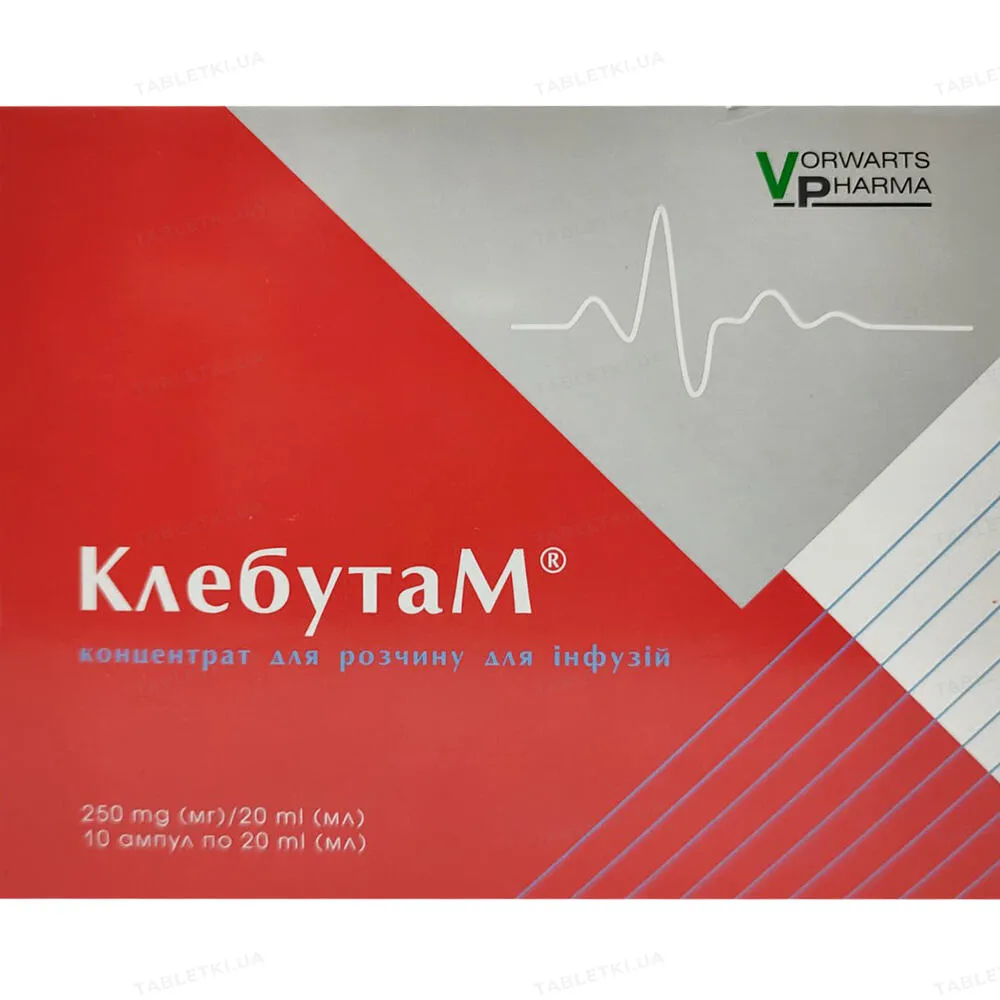
KLEBUTAM®
UkraineThe drug is used for inotropic support in cases of low cardiac output resulting from a heart attack, cardiomyopathy, open-heart surgery, or septic or cardiogenic shock. It may also be used to support or increase cardiac output during positive pressure ventilation, as well as for performing stress echocardiography.
Frequently asked questions
How should Klebutam® be taken correctly?
The drug is administered intravenously only via continuous infusion using an infusion pump. Before use, it must be diluted in an appropriate solution (sodium chloride, dextrose, or sodium lactate). The dosage is determined individually by a physician depending on the patient's age, weight, and condition.
What side effects may Klebutam® cause?
The most common side effects observed are increased heart rate, arrhythmias, increased blood pressure, and angina. Headache, nausea, tremor, feelings of restlessness, increased body temperature, and increased urination are also possible. In rare cases, serious heart rhythm disturbances, myocardial ischemia, or even cardiac arrest may occur.
Who should not use this drug?
The drug is contraindicated in individuals with hypersensitivity to dobutamine or any other component of the formulation, as well as in patients with pheochromocytoma. During stress testing, the drug must not be used in cases of recent myocardial infarction (within 30 days), unstable angina, severe heart failure, and certain other cardiac conditions.
Can the drug be taken with other medicines?
Extreme caution is required when using it in conjunction with halogenated anesthetics and MAO inhibitors (as this may cause life-threatening effects). The effect of the drug may change when used with entacapone or β-blockers. It is also important to consider that dobutamine may alter insulin and blood glucose levels.
Is it safe to use the drug during pregnancy or breastfeeding?
The safety of use in pregnant women has not been established; therefore, the drug should be used only when its clinical benefit outweighs the potential risk to the fetus. Data on whether the drug is excreted in breast milk are unavailable; therefore, when treating breastfeeding mothers, the benefits to both the child and the mother should be weighed.
Instructions for use
INSTRUCTIONS FOR MEDICAL USE OF THE MEDICINAL PRODUCT KLEBUTAM®
Composition:
Active substance: dobutamine hydrochloride;
1 ml of solution contains 14 mg of dobutamine hydrochloride (equivalent to 12.5 mg of dobutamine);
20 ml of solution contains 280 mg of dobutamine hydrochloride (equivalent to 250 mg of dobutamine);
Excipients: sodium metabisulfite, sodium hydroxide, hydrochloric acid, water for injections.
Pharmaceutical form. Concentrate for solution for infusion.
Main physicochemical properties: clear, colorless or slightly yellow solution.
Pharmacotherapeutic group.
Cardiology preparations. Adrenergic and dopaminergic agents. ATC code C01CA07.
Pharmacological properties.
Pharmacodynamics.
Dobutamine is a direct stimulator of β-adrenergic receptors and is generally considered a selective β1-adrenergic agonist. The mechanism of action of the drug is complex. It is believed that β-adrenergic effects occur due to stimulation of adenylate cyclase activity. At therapeutic doses, dobutamine has moderate β2- and α1-adrenergic agonist activity at receptors, which is relatively stable, and exerts minimal direct effect on systemic blood vessels. The primary effect of dobutamine at therapeutic doses is stimulation of the heart.
Due to its positive inotropic effect on the myocardium, the drug is primarily indicated for β-adrenergic stimulation. Experimental studies suggest that α1-adrenergic stimulation may also be involved, and α1-adrenergic activity occurs predominantly due to the (-) stereoisomerism of the drug.
The β1-adrenergic action of dobutamine exerts a positive inotropic effect on the myocardium, resulting in increased myocardial contractility, and has a minimal effect on heart rate, thereby increasing cardiac output in healthy volunteers and in patients with congestive heart failure. At therapeutic doses, dobutamine causes a reduction in peripheral resistance, but systolic pressure and pulse pressure may remain unchanged or may increase due to elevated cardiac output. Heart rate typically does not change significantly at therapeutic doses. Coronary blood flow and myocardial oxygen consumption primarily increase as a result of enhanced myocardial contractility.
Electrophysiological studies show that dobutamine improves atrioventricular (AV) conduction and shortens intraventricular conduction, although significant changes are less common. Dobutamine causes cardiac arrhythmias less frequently than dopamine. Pulmonary vascular resistance may decrease or remain unchanged in the pulmonary artery. Unlike dopamine, dobutamine does not affect dopaminergic receptors and does not cause vasodilation of renal and mesenteric vessels, but it may increase urine output due to increased cardiac output.
Pharmacokinetics.
Absorption
After intravenous administration, onset of effect occurs within 2 minutes. Peak plasma concentration and maximum effect are achieved within 10 minutes. The effect of the drug ends rapidly after discontinuation of the infusion.
Distribution
Volume of distribution is approximately 20% of body weight. It is unknown whether the drug penetrates into breast milk and placenta.
Biological transformation
Metabolized by catechol-O-methyltransferase in the liver and other tissues to form its inactive metabolites (3-O-methyldobutamine and dobutamine conjugates). These metabolites are conjugated with glucuronic acid.
Elimination
The elimination half-life of dobutamine is 2 minutes. Blood clearance rate in humans is 2.4 L/min/m². Most of 3-O-methyldobutamine and dobutamine conjugates are excreted in urine, with a very small amount excreted in feces.
Linearity/Non-linearity
There is a linear correlation between blood levels and infusion rate.
Clinical characteristics.
Indications.
Adults
Klebutam® is indicated when inotropic supportive therapy is required in cases of low cardiac output associated with myocardial infarction, cardiomyopathy, open-heart surgery, septic shock, or cardiogenic shock.
Klebutam® may also be used to support or increase cardiac output during positive-pressure ventilation due to expiration.
Dobutamine stress echocardiography
Klebutam® may also be used as an alternative to exercise electrocardiography in patients unable to perform adequate physical exercise. For this purpose, dobutamine should be administered at doses typically used for stress testing, and appropriate precautions must be taken when performing such tests.
Children
Dobutamine is indicated for all pediatric age groups (from newborns to 18 years of age) in cases of hypoperfusion due to low cardiac output following cardiac surgery, cardiogenic shock, cardiomyopathies, and decompensated heart failure after septic shock.
Contraindications.
Contraindicated in patients with hypersensitivity to dobutamine, sodium metabisulfite, or any component of the product.
Do not administer to patients with pheochromocytoma.
Dobutamine stress echocardiography:
Dobutamine must not be used for diagnostic testing of myocardial ischemia and viable myocardium in the following conditions:
- Recent myocardial infarction (within 30 days);
- Unstable angina;
- Left main coronary artery stenosis;
- Hemodynamically significant left ventricular outflow tract obstruction, including hypertrophic obstructive cardiomyopathy;
- Hemodynamically significant valvular heart disease;
- Severe heart failure (NYHA class III or IV);
- Clinically evident existing arrhythmia or chronic arrhythmia, or history of particularly recurrent persistent ventricular tachycardia, or predisposition to any of these conditions;
- Significant conduction disturbances;
- Acute pericarditis, myocarditis, or endocarditis;
- Aortic dissection;
- Aortic aneurysm;
- Poor echocardiographic image quality;
- Inadequate increase in blood pressure during treatment/monitoring;
- Obstruction of ventricular filling (constrictive pericarditis, pericardial tamponade);
- Hypovolemia;
- History of hypersensitivity to dobutamine;
- Concomitant use of monoamine oxidase inhibitors (MAOIs).
Interaction with other medicinal products and other forms of interaction.
Halogenated anesthetics
Although the risk of ventricular arrhythmia is lower than with adrenaline, Klebutam® should be used with extreme caution during anesthesia with cyclopropane, halothane, and other halogenated anesthetics.
Entacapone
The effect of Klebutam® may be altered when entacapone is administered.
β-blockers
The inotropic effect of dobutamine is mediated by stimulation of cardiac β1-receptors, which is counteracted by concomitant use of β-blockers. Dobutamine is indicated to counteract the effects of β-adrenergic blockers. At therapeutic doses, dobutamine has moderate α1- and β2-agonist properties. Concomitant use of non-selective β-blockers such as propranolol may cause increased blood pressure due to α-mediated vasoconstriction and reflex bradycardia. When used concomitantly with carvedilol, a β-blocker with α-blocking activity, hypotension may also occur due to vasodilation caused by β2-dominance (see section "Special warnings and precautions for use").
Concomitant use with monoamine oxidase inhibitors (MAOIs) may lead to increased blood pressure and heart rate, and an increased risk of arrhythmias. Life-threatening adverse effects such as hypertensive crisis, cardiovascular failure, arrhythmias, and cerebral hemorrhage may even occur.
Special precautions for use.
Adults
In case of undesirable increases in heart rate and blood pressure, or in case of worsening arrhythmia, the dose of dobutamine should be reduced or infusion temporarily discontinued. Dobutamine may accelerate or intensify ventricular ectopic activity, which rarely may lead to ventricular tachycardia or fibrillation. Since dobutamine improves AV conduction, rapid ventricular response may occur in patients with atrial flutter or fibrillation.
Caution should be exercised when administering dobutamine to patients with acute myocardial infarction, as any significant increase in heart rate or excessive rise in blood pressure may exacerbate ischemia and cause angina or ST-segment elevation. Inotropic agents, including dobutamine, do not correct hemodynamics in patients with mechanical obstruction affecting ventricular filling or ejection, or both. Inotropic response may be inadequate in patients with severely impaired ventricular function. Such conditions include cardiac tamponade, aortic valve stenosis, and idiopathic hypertrophic subaortic sten游戏副本.
Minimal vasoconstriction has occasionally been observed, especially in patients recently treated with β-blockers. The inotropic effect of dobutamine is mediated via stimulation of cardiac β1-receptors and is suppressed by β-blockers. However, dobutamine demonstrates reduction of the cardiodepressive effects of β-blockers. On the other hand, β1- and β2-blockers may cause α-blockade, leading to tachycardia and vasodilation.
Dobutamine may alter plasma insulin and glucose levels. Therefore, glucose concentration in blood should be monitored in diabetic patients, and insulin dosage adjusted as necessary.
Dobutamine stress echocardiography
Dobutamine should be administered for stress echocardiography only by physicians experienced in its use for this indication due to potentially life-threatening complications.
The use of the medicinal product Klebutam® as an alternative to exercise for performing a cardiac stress test is not recommended in patients with unstable angina, bundle branch block, valvular heart disease, aortic outflow obstruction, or any cardiac conditions that may render a stress test inappropriate.
Cardiac rupture is a possible complication of myocardial infarction. The risk of myocardial rupture (of the septum or free wall) may be influenced by various factors, including the timing and location of the infarction. During dobutamine stress testing, rare cases of acute fatal cardiac rupture have been reported. These occurred during evaluation of hospitalized patients shortly before discharge following recent myocardial infarction (within 4–12 days). In cases of free wall rupture, resting echocardiography showed dyskinesia and thinning of the anterior wall. Therefore, patients considered at risk for cardiac rupture during dobutamine testing should be carefully evaluated prior to the procedure.
Dobutamine stress echocardiography must be discontinued upon occurrence of any of the following:
- Achievement of target dose;
- Increase in heart rate – assess achievement of maximum predicted heart rate [(220 – age) × 0.85];
- Decrease in systolic blood pressure by more than 20 mmHg;
- Increase in blood pressure above 220/120 mmHg;
- Worsening of symptoms (angina, dyspnea, dizziness, ataxia);
- Worsening of arrhythmias (e.g., grouping, ventricular SALVO);
- Worsening of conduction disturbances;
- Development of new wall motion abnormalities in multiple segments (16-segment model);
- Increase in end-systolic volume;
- Development of repolarization abnormalities (in ischemia-induced patients, appearance of non-myocardial infarction, cumulative or monophasic ST-segment elevation above 0.1 mV, ST-segment depression exceeding 0.2 mV with horizontal or downsloping pattern at 80 (60) ms).
Stress cardiomyopathy (Takotsubo syndrome) is a possible severe complication of dobutamine use during stress echocardiography (see section "Adverse reactions"). Dobutamine for stress echocardiography should be administered only by physicians experienced in performing the procedure. The physician must remain vigilant during and after the test and be prepared to provide appropriate medical intervention. If stress cardiomyopathy (Takotsubo syndrome) develops, dobutamine infusion must be stopped immediately.
During dobutamine infusion, as with other parenteral catecholamines, careful monitoring of heart rate, cardiac rhythm, and blood pressure is required.
If treatment has been initiated, continuous electrocardiographic monitoring is recommended until a stable response is achieved.
Occasionally, rapid reduction in blood pressure may be associated with dobutamine use. Reducing the dose or discontinuing infusion usually results in rapid return of blood pressure to baseline levels, although rarely, intervention may be needed and recovery may not be immediate.
Dobutamine should be used with caution in patients with severe hypertension (mean arterial pressure less than 70 mmHg) complicated by cardiogenic shock.
Hypovolemia should be corrected with blood or plasma infusion if necessary.
Despite adequate ventricular filling pressure or cardiac output, if low blood pressure or progressive decline occurs during dobutamine administration, consider concomitant use of peripheral vasoconstrictors such as dopamine or norepinephrine.
Children
Dobutamine is administered to children with low perfusion status due to decompensated heart failure, cardiac surgery, cardiogenic or septic shock. Hemodynamic effects of dobutamine hydrochloride in children may differ quantitatively and qualitatively from those in adults. Gradual increases in heart rate and blood pressure may occur more frequently and intensely in children. Pulmonary capillary wedge pressure may not decrease as in adults or may even increase in neonates, particularly those under one year of age. The cardiovascular system in neonates is less sensitive to dobutamine, and hypotensive effects may be more common than in older children.
Therefore, these pharmacological characteristics should be taken into account, and dobutamine use in children requires careful monitoring.
This medicinal product contains sodium metabisulfite. Rarely, it may cause severe hypersensitivity reactions (severe allergy) and bronchospasm (difficulty breathing).
This medicinal product contains less than 1 mmol (23 mg) of sodium per dose; essentially "sodium-free".
Special safety measures for handling unused medicinal products and medicinal waste.
For single use only. Discard unused contents.
Any unused solution or waste must be disposed of in accordance with local requirements.
Do not use if color change is observed.
Use during pregnancy or breastfeeding.
Pregnancy
There are no data on the use of Klebutam® in women of reproductive age or its effect on contraception. No studies have been conducted on the use of any contraceptive methods during treatment with Klebutam®.
There are no data on exposure to Klebutam® during pregnancy.
Animal studies have not shown any direct or adverse effects on pregnancy/embryonal/fetal development, parturition, or postnatal development.
Safety of use in pregnant women has not been established. The effect of dobutamine on the human fetus is unknown. Therefore, Klebutam® should be used only when the clinical benefits outweigh the potential risk to the fetus.
Breastfeeding period
It is unknown whether dobutamine is excreted in human breast milk. Excretion of dobutamine into milk has not been studied in animals. When deciding whether to discontinue breastfeeding or discontinue/avoid treatment with Klebutam®, the benefits of breastfeeding for the child and the benefits of treatment with Klebutam® for the breastfeeding mother should be considered.
Fertility
Reproductive studies in rats and rabbits revealed no evidence of impaired fertility, fetal damage, or teratogenic effects due to dobutamine administration.
Ability to influence reaction speed when driving or operating machinery.
This section does not apply due to the indication and very short elimination half-life.
Method of Administration and Dosage
Adults
The usual dosage range is 2.5–10 mcg/kg/min. Occasionally, responses may be observed at lower doses such as 0.5 mcg/kg/min. In some cases, it may be necessary to increase the dose up to 40 mcg/kg/min. The rate of administration and duration of treatment should be adjusted according to the patient's response, monitoring heart rate, arterial blood pressure, urine output, and, if possible, cardiac output measurements. When administering Klebutam® at doses below 10 mcg/kg/min, dose-dependent adverse reactions are infrequent. Even at high infusion rates (greater than 40 mcg/kg/min), significant adverse effects may not occur. The final infusion volume should be determined based on the patient's fluid requirements. In patients with restricted fluid intake, higher concentrations exceeding 5000 mcg/mL may be used. When using infusion pumps to ensure accurate dosing, higher concentrations of Klebutam® are recommended.
Cardiac stress test: When used as an alternative pharmacologic stress agent, the recommended dose is 5–20 mcg/kg/min, with incremental increases of 5 mcg/kg/min. Each dose should be administered as an intravenous infusion over 8 minutes. Continuous ECG monitoring is required, and the infusion must be stopped in case of ST-segment depression >3 mm or any ventricular arrhythmia. Additionally, the infusion should be discontinued upon reaching the age- and gender-predicted maximum heart rate, if systolic arterial pressure rises above 220 mm Hg, or if any adverse reactions occur.
Children
Doses of dobutamine ranging from 1 to 15 mcg/kg/min have been used in pediatric patients. Evidence suggests that the minimum effective dose in children may be higher than in adults. Caution is advised when using high doses, as the maximum tolerated dose in children may be lower than in adults. Most adverse reactions (particularly tachycardia) occur at doses of dobutamine ≥7.5 mcg/kg/min.
Dosage should be titrated carefully, considering that the "therapeutic window" in children is narrower than in adults. A starting dose of 0.5 mcg/kg/min is recommended, increased every 10–30 minutes until the desired response is achieved.
Method of Administration:
For continuous infusion using an infusion pump, the drug should be diluted in 5% dextrose or 0.9% sodium chloride to a concentration of 0.5–1 mg/mL (up to a maximum of 5 mg/mL in patients with restricted fluid intake). For infusions at higher concentrations, a central venous catheter should be used. The drug is incompatible with bicarbonates and other strong alkaline solutions.
Neonatal intensive care: The drug should be diluted to a concentration of 30 mg/kg body weight and added to 50 mL of inhalation solution. This provides a dose of 5 mcg/kg/min at an intravenous infusion rate of 0.5 mL/hour.
For intravenous use only.
Klebutam® must be diluted in an intravenous container to a final volume of at least 50 mL using one of the following intravenous solutions: sodium chloride injection, 5% dextrose injection, 5% dextrose + 0.9% sodium chloride injection, or sodium lactate injection.
For example, dilution to 250 mL or 500 mL provides the following concentrations:
- 250 mL contains 1000 mcg/mL dobutamine;
- 500 mL contains 500 mcg/mL dobutamine.
The prepared solution should be used within 24 hours.
Because Klebutam® has a short elimination half-life, intravenous administration must be continuous. After dilution, the drug should be administered via an intravenous needle or catheter using an infusion set or other calibrated delivery device.
Children.
The drug is used in pediatric practice.
Overdose.
Overdose is rarely reported.
Symptoms of toxicity include anorexia, nausea, vomiting, tremor, nervousness, tachycardia, headache, dyspnea, angina, and nonspecific chest pain. The positive inotropic and chronotropic effects of dobutamine may lead to arterial hypertension, myocardial ischemia, or ventricular fibrillation. Arterial hypotension may also occur due to peripheral vasodilation.
Treatment. The duration of action of dobutamine hydrochloride is generally short (elimination half-life is approximately 2 minutes). Infusion should be temporarily discontinued until the patient's condition stabilizes. Close monitoring is required, and appropriate resuscitation measures should be initiated immediately. The effectiveness of forced diuresis, peritoneal dialysis, hemodialysis, or charcoal hemoperfusion in dobutamine overdose has not been established. Oral or gastrointestinal absorption of dobutamine after ingestion is unpredictable.
Adverse reactions.
Adverse reactions can be classified by frequency of occurrence: very common (≥ 1/10), common (≥ 1/100, < 1/10), uncommon (≥ 1/1000, < 1/100), rare (≥ 1/10 000, < 1/1000), very rare (< 1/10 000), frequency not known (cannot be estimated due to lack of data).
Blood and lymphatic system disorders:
Common – eosinophilia, inhibition of platelet aggregation (only when infusion lasts several days).
Immune system disorders:
Frequency not known – hypersensitivity reactions, including urticaria, fever, eosinophilia, and bronchospasm; anaphylactic reactions and life-threatening asthma episodes may occur due to sensitivity to sulfites (see section "Special precautions").
Metabolism and nutrition disorders:
Very rare – hypokalemia.
Psychiatric disorders:
Frequency not known – restlessness, flushing, and anxiety.
Nervous system disorders:
Common – headache; frequency not known – paraesthesia, tremor, myoclonic jerks. Myoclonus has been observed in patients with severe renal impairment and in those receiving dobutamine.
Cardiac disorders:
Very common – increase in heart rate (≥ 30 beats/min);
Common – ventricular arrhythmias, dose-dependent ventricular extrasystoles, palpitations; increased incidence of ventricular tachycardia in patients with atrial fibrillation (these patients should be evaluated before infusion therapy);
Uncommon – ventricular tachycardia, ventricular fibrillation;
Very rare – bradycardia, myocardial ischemia, myocardial infarction, cardiac arrest;
Frequency not known – eosinophilic myocarditis in heart transplant patients receiving combined therapy with dobutamine or other inotropic agents prior to transplantation.
Elevation of ST segment on electrocardiogram.
In children – marked decrease in heart rate and/or arterial pressure, as well as reduction in pulmonary capillary pressure – less pronounced than in adults.
Vascular disorders:
Common – increase in arterial pressure ≥ 50 mmHg, angina; vasoconstriction, particularly in patients previously treated with β-blockers;
Frequency not known – reduction in pulmonary capillary pressure.
Gastrointestinal disorders:
Frequency not known – nausea.
Stress dobutamine echocardiography
Cardiac disorders:
Very common – ventricular extrasystoles with frequency >6 per minute;
Common – supraventricular extrasystoles, ventricular tachycardia;
Uncommon – ventricular fibrillation, myocardial infarction;
Very rare – secondary development of AV block, palpitations;
Frequency not known – stress cardiomyopathy (Takotsubo syndrome), cardiac rupture with fatal outcome.
Vascular disorders:
Very common – angina;
Very rare – coronary vasospasm, hypertensive/hypotensive decompensation of arterial pressure, formation of intracavitary pressure gradient;
Frequency not known – left ventricular outflow tract obstruction.
Respiratory, thoracic and mediastinal disorders:
Common – bronchospasm, dyspnea (apnea/dyspnea).
Gastrointestinal disorders:
Common – nausea.
Skin and subcutaneous tissue disorders:
Common – exanthema; very rare – hemorrhagic petechiae.
Musculoskeletal and connective tissue disorders:
Common – chest pain.
Renal and urinary disorders:
Common – increased urine output at high doses; frequency not known – urinary retention.
General disorders and administration site conditions:
Common – pyrexia, phlebitis at the infusion site. In case of accidental paravenous leakage, local inflammation may develop.
Very rare – skin necrosis.
Paediatric population
Adverse effects may include increased systolic arterial pressure, systemic hypertension and hypotension, tachycardia, headache, pulmonary edema, and decreased pulmonary capillary pressure leading to edema and symptomatic complaints.
Shelf life. 2 years.
Storage conditions.
Store at temperatures not exceeding 25 °C in the original packaging. Keep out of reach and sight of children.
The prepared solution is stable for 24 hours at room temperature not exceeding 25 °C when diluted with 0.9% sodium chloride solution, 5% dextrose solution, 0.9% sodium chloride + 5% dextrose solution, or sodium lactate solution.
Incompatibilities.
Do not mix Klebutam® with 5% sodium bicarbonate solution or other strongly alkaline solutions for intravenous infusion. Due to possible physical incompatibility, dobutamine hydrochloride should not be mixed with other medicinal products in the same solution. Klebutam® should not be used with solvents or other medicinal products containing sodium metabisulfite or ethanol.
Packaging.
20 ml solution in an ampoule, 10 ampoules per cardboard box.
Prescription category. Prescription only.
Manufacturer.
Polifarma Ilac San. Ve Tik. A.S.
Manufacturer's address.
Vakiflar OSB Mahallesi, Sanayi Kadesi, No: 22/1 Ergene/Tekirdag, Turkey.
Marketing Authorization Holder.
LLC "VORWARDS PHARMA".
Address of the Marketing Authorization Holder.
4 Omelyan Prytsaka St., Kyiv, 03142, Ukraine.
The original data is available in the language of the country of manufacture.
Data source: State Register of Medicinal Products of Ukraine
Data last verified: August 13, 2026