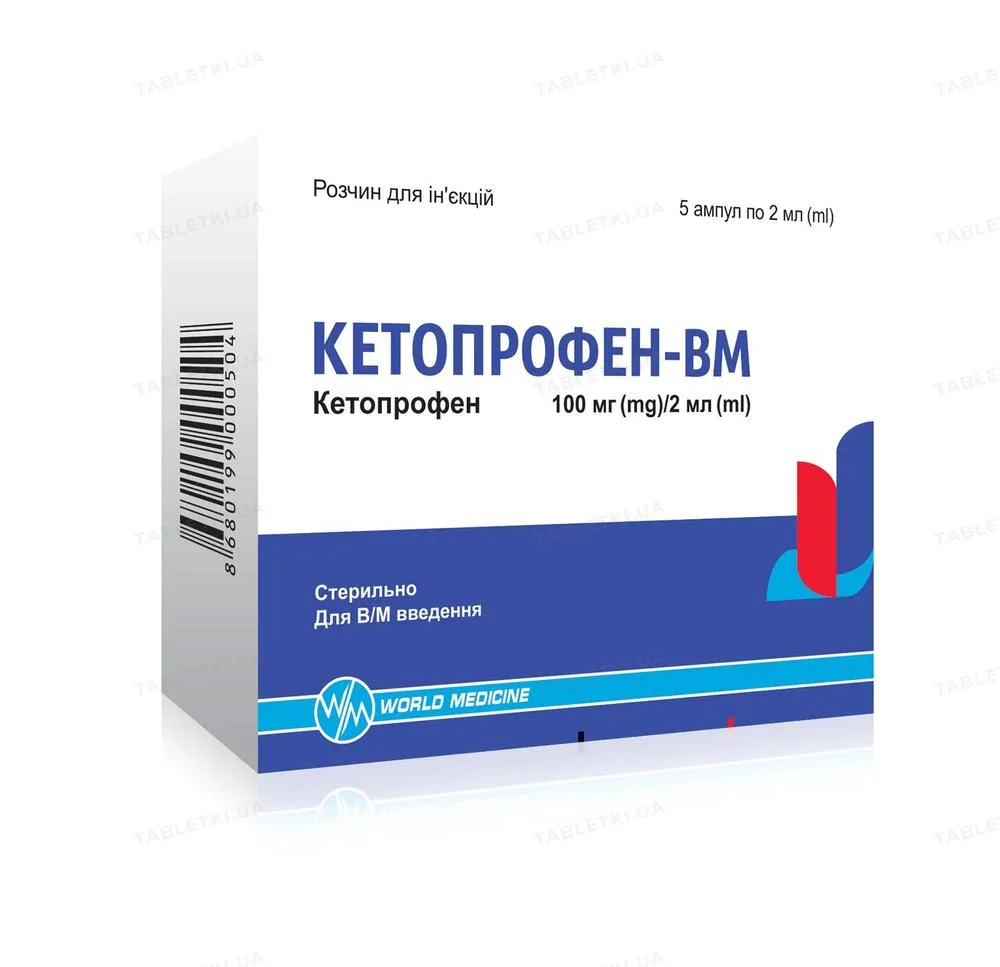
KETOPROFEN-VM
UkraineThe drug is used for the temporary treatment of rheumatoid arthritis exacerbations, acute low back pain, radicular neuralgia, as well as for the relief of pain attacks during renal colic or neoplastic processes.
Frequently asked questions
How should Ketoprofen-vm be taken correctly?
The drug is intended for intramuscular administration only. The dosage depends on the condition: for rheumatological problems and pain, 100–200 mg per day is usually administered (divided into 1–2 injections); for renal colic, 100–300 mg per day (divided into 2–3 injections).
Who should not use this drug?
Contraindications include hypersensitivity to the composition, a history of gastric ulcer, bleeding, or perforation, severe cardiac, renal, or hepatic insufficiency, blood clotting disorders, as well as use from the beginning of the 6th month of pregnancy.
What could be the side effects of Ketoprofen-vm?
Gastrointestinal reactions are most common (nausea, stomach pain, diarrhea, risk of ulcer or bleeding). Edema, increased blood pressure, dizziness, skin rashes, and visual disturbances are also possible.
Can the drug be combined with other medicines?
It is not recommended to combine with other anti-inflammatory drugs (NSAIDs), anticoagulants, lithium, methotrexate, and certain other drugs, as this increases the risk of bleeding, ulcers, or toxicity.
Can the drug be used during pregnancy or breastfeeding?
The drug is not recommended for pregnant women, especially during the first 5 months; its use is strictly prohibited after the 24th week of pregnancy. Use during breastfeeding is not recommended, as the drug passes into breast milk.
Does the drug affect the ability to drive a vehicle?
Yes, since drowsiness, dizziness, convulsions, or visual disturbances may occur during use, one should refrain from driving a car or operating other mechanisms.
Instructions for use
INSTRUCTIONS FOR MEDICAL USE OF THE MEDICINAL PRODUCT KETOPROFEN-WM (KETOPROFEN-WM)
Composition:
active substance: ketoprofen;
1 ampoule (2 ml) of the medicinal product contains ketoprofen 100 mg;
excipients: arginine; citric acid, monohydrate; benzyl alcohol; sodium hydroxide or diluted hydrochloric acid; water for injections.
Pharmaceutical form. Solution for injection.
Main physicochemical characteristics: clear, colorless solution.
Pharmacotherapeutic group
Non-steroidal anti-inflammatory and antirheumatic agents. Propionic acid derivatives. Ketoprofen. ATC code M01AE03.
Pharmacological Properties
Pharmacodynamics
Ketoprofen is a non-steroidal anti-inflammatory drug (NSAID), a derivative of arylcarboxylic acid belonging to the propionic acid group. It exerts peripheral and central analgesic, antipyretic, and anti-inflammatory effects. It also transiently inhibits platelet function. The mechanism of action is based on reduction of prostaglandin synthesis.
The central analgesic effect of ketoprofen has been confirmed by results of numerous experimental studies.
Pharmacokinetics
Absorption
After intramuscular administration, maximum plasma concentration of ketoprofen is reached within approximately 20–30 minutes.
Distribution
Ketoprofen is 99% bound to plasma proteins. It penetrates into synovial fluid. Ketoprofen also crosses the blood-brain and placental barriers. The volume of distribution is approximately 7 liters.
Metabolism
Ketoprofen metabolism occurs via two main pathways: hydroxylation and conjugation with glucuronic acid; the latter being the primary metabolic pathway in humans.
Excretion
Ketoprofen is mainly excreted rapidly via urine. Approximately 50% of the administered dose is eliminated within 6 hours after administration, regardless of the route of administration.
Excretion of unchanged ketoprofen is negligible (less than 1%). Almost all ketoprofen is excreted in the form of metabolites in urine, with 65% to 75% of the administered dose being excreted as glucuronide metabolites.
Elderly patients
In these patients, ketoprofen absorption is unchanged, but elimination half-life is prolonged.
Patients with impaired renal function
In these patients, reduced renal and plasma clearance and prolonged elimination half-life correlate with the severity of renal impairment.
Clinical Characteristics
Indications
- Short-term symptomatic treatment of exacerbation of rheumatoid arthritis, acute low back pain, and sciatica.
- Relief of pain attacks associated with neoplastic processes.
- Relief of pain attacks in renal colic.
Contraindications
- Hypersensitivity to the active substance or to any of the excipients of the medicinal product.
- History of allergic reactions such as bronchospasm, asthmatic attacks, urticaria, angioedema, or acute rhinitis after intake of acetylsalicylic acid or other NSAIDs. In these patients, severe, rarely fatal, anaphylactic reactions have been reported (see section "Adverse Reactions").
- Active peptic ulcer or history of gastrointestinal ulcer, bleeding, or perforation.
- Gastrointestinal bleeding, cerebrovascular bleeding, or any other active bleeding.
- Severe heart failure.
- Severe renal impairment.
- Severe hepatic impairment.
- Coagulation disorders or concomitant use of anticoagulants (contraindications related to the route of administration).
- Use from the beginning of the 6th month of pregnancy (more than 24 weeks of amenorrhea) (see section "Use during pregnancy or breastfeeding").
Interaction with other medicinal products and other forms of interaction
Agents capable of causing hyperkalemia (potassium salts, potassium-sparing diuretics, ACE inhibitors, angiotensin II receptor blockers, angiotensin II antagonists, NSAIDs, heparins (low molecular weight or unfractionated), immunosuppressants (cyclosporine, tacrolimus, trimethoprim)).
Concomitant use of ketoprofen with such agents increases the risk of hyperkalemia. This risk is particularly high when potassium-sparing diuretics are used, especially in combination with each other or with potassium salts, whereas the combination of ACE inhibitors and NSAIDs is less dangerous if recommended precautions are observed.
When assessing the risk and limits caused by potassium-sparing agents, specific drug interactions characteristic of each agent must be taken into account.
Some agents, e.g., trimethoprim, are not risk factors in interaction with other medicinal products. However, they may act as concomitant factors when used with other agents, particularly those mentioned above.
Concomitant use of ketoprofen with the following agents is not recommended
Other NSAIDs (including high-dose acetylsalicylic acid).
Concomitant use with these agents, including acetylsalicylic acid at anti-inflammatory doses (≥1 g/dose and/or ≥3 g/day), as well as at analgesic or antipyretic doses (≥500 mg/dose and/or <3 g/day), increases the risk of ulcers and gastrointestinal bleeding (synergistic interaction).
Anticoagulants (vitamin K antagonists (e.g., warfarin), platelet aggregation inhibitors (e.g., dabigatran), direct thrombin inhibitors (such as apixaban, rivaroxaban, edoxaban)):
Concomitant use increases the risk of bleeding. If concomitant use cannot be avoided, intensive clinical and even biological monitoring is required.
Unfractionated heparins, low-molecular-weight heparins, and related compounds (at therapeutic doses and/or in elderly patients):
Concomitant use of ketoprofen with these agents increases the risk of bleeding (due to irritation of the gastric mucosa caused by NSAID intake). If concomitant use cannot be avoided, intensive clinical monitoring is required.
Lithium:
Concomitant use may increase plasma lithium levels up to toxic levels due to reduced renal excretion of lithium. If concomitant use cannot be avoided, plasma lithium levels must be monitored at the beginning of treatment, during dose adjustments, and after discontinuation of NSAID therapy.
Methotrexate (at doses exceeding 20 mg/week):
Concomitant use increases hematological toxicity of methotrexate due to reduced renal clearance under NSAID therapy. At least 12 hours must elapse between the end or start of ketoprofen treatment and methotrexate administration.
Pemetrexed (patients with mild to moderate renal impairment and creatinine clearance between 45 and 80 mL/min): risk of pemetrexed toxicity (NSAIDs reduce renal clearance of pemetrexed).
Concomitant use of dexketoprofen with the following agents should be performed with caution
ACE inhibitors and angiotensin II receptor antagonists:
Concomitant use in at-risk patients (elderly, dehydration, combined therapy with diuretics, renal dysfunction due to reduced glomerular filtration rate (inhibition of vasodilatory prostaglandin function by NSAIDs)) may lead to acute renal failure. These reactions are usually reversible. Additionally, a reduction in antihypertensive effect may occur. In case of concomitant use, adequate hydration of the patient and monitoring of renal function at the beginning and regularly during treatment are recommended.
Diuretics:
Concomitant use in at-risk patients (elderly and/or dehydrated) may lead to acute renal failure due to reduced glomerular filtration rate (inhibition of vasodilatory prostaglandin function by NSAIDs). Additionally, a reduction in antihypertensive effect may occur. In case of concomitant use, adequate hydration of the patient and monitoring of renal function at the beginning of treatment are recommended.
Methotrexate at low doses (≤20 mg/week):
Concomitant use may increase hematological toxicity of methotrexate (reduced renal clearance of methotrexate). During the first weeks of concomitant use, a complete blood count should be monitored weekly. In patients with renal impairment and in the elderly, careful monitoring of even minor changes in renal function is recommended.
Pemetrexed (patients with normal renal function):
Concomitant use increases pemetrexed toxicity (reduced renal clearance of pemetrexed). In case of concomitant use, monitoring of renal function is recommended.
Cyclosporine, tacrolimus:
Concomitant use may increase the risk of additive nephrotoxic effects, especially in elderly patients. In case of concomitant use, monitoring of renal function at the beginning of NSAID therapy is recommended.
Tenofovir:
Concomitant use increases the risk of tenofovir nephrotoxicity, especially with high-dose NSAIDs or in the presence of risk factors for renal failure. In case of concomitant use, monitoring of renal function is recommended.
Cardiac glycosides:
No pharmacokinetic interaction between ketoprofen and digoxin has been observed. However, caution is advised during concomitant use, especially in patients with renal impairment, as NSAIDs may impair renal function and reduce renal clearance of cardiac glycosides.
When using ketoprofen concomitantly with the following agents, potential interactions should be considered
Acetylsalicylic acid at antiplatelet doses (50–375 mg/day, single or multiple doses):
Concomitant use increases the risk of ulcer formation and gastrointestinal bleeding.
Glucocorticoids (except hydrocortisone in replacement therapy):
Concomitant use increases the risk of ulcer formation and gastrointestinal bleeding (see section "Special Warnings and Precautions for Use").
Antiplatelet agents:
Concomitant use increases the risk of gastrointestinal bleeding (see section "Special Warnings and Precautions for Use").
Selective serotonin reuptake inhibitors (SSRIs):
Concomitant use increases the risk of bleeding (see section "Special Warnings and Precautions for Use").
Unfractionated heparins, low-molecular-weight heparins (prophylactic doses):
Concomitant use increases the risk of bleeding.
Deferasirox:
Concomitant use increases the risk of ulcer formation and gastrointestinal bleeding.
Beta-blockers (except esmolol):
Concomitant use reduces the antihypertensive effect (inhibition of vasodilatory prostaglandin function and water and sodium retention with phenylbutazone use).
Pentoxifylline:
Concomitant use increases the risk of bleeding. Intensive clinical monitoring and frequent monitoring of bleeding time (coagulation time) are required when these agents are used concomitantly.
Other potassium-sparing antiplatelet agents:
Concomitant use increases the risk of hyperkalemia, up to fatal outcomes.
Nicorandil:
Concomitant use increases the risk of serious complications such as gastrointestinal ulcers accompanied by perforations and bleeding (see section "Special Warnings and Precautions for Use").
Special precautions for use
General
Concomitant use of the medicinal product with other NSAIDs, including selective cyclooxygenase-2 inhibitors, should be avoided.
Adverse reactions can be minimized by using the lowest effective dose for the shortest duration necessary to control symptoms (see section "Dosage and administration" and subsections "Gastrointestinal effects" and "Cardiovascular and cerebrovascular effects" below).
Patients with asthma
Patients suffering from asthma in combination with chronic rhinitis, chronic sinusitis and/or nasal polyps are at higher risk of allergy to acetylsalicylic acid and/or NSAIDs than other patients. The use of the medicinal product may provoke asthma attacks or bronchospasm, especially in patients with allergy to acetylsalicylic acid or NSAIDs (see section "Contraindications").
Elderly patients
Elderly patients have a higher frequency of adverse reactions to NSAIDs (including ketoprofen), particularly gastrointestinal bleeding and perforations, which may be fatal (see section "Dosage and administration" and below).
Gastrointestinal effects
Gastrointestinal bleeding, ulceration or perforation have been reported with all NSAIDs at various stages of treatment, regardless of the presence of symptoms or a history of gastrointestinal disorders.
Epidemiological data suggest that ketoprofen may be associated with an increased risk of severe gastrointestinal toxicity compared to other NSAIDs, especially at high doses (see sections "Contraindications" and "Dosage and administration").
The risk of gastrointestinal bleeding, ulceration or perforation increases with higher NSAID doses in patients with a history of peptic ulcer, particularly if complicated by bleeding or perforation (see section "Contraindications"), as well as in elderly patients and those with low body weight. In such cases, treatment should be initiated at the lowest possible dose. For these patients and those taking low-dose acetylsalicylic acid or other agents increasing gastrointestinal adverse reaction risk, concomitant therapy with gastroprotective agents (e.g., misoprostol or proton pump inhibitors) should be considered (see section "Interaction with other medicinal products and other forms of interaction").
Patients, especially elderly ones, with a history of gastrointestinal adverse reactions should be advised to inform their physician about any unusual gastrointestinal symptoms, particularly in the early stages of treatment.
The medicinal product should be used with caution in patients who are concurrently taking agents that may increase the risk of ulceration or bleeding, such as oral corticosteroids, anticoagulants (e.g., warfarin), selective serotonin reuptake inhibitors (SSRIs), antiplatelet agents such as acetylsalicylic acid, or nicorandil (see section "Interaction with other medicinal products and other forms of interaction").
If gastrointestinal ulceration or bleeding occurs, the medicinal product should be discontinued.
The medicinal product should be used with caution in patients with a history of gastrointestinal disorders (ulcerative colitis, Crohn's disease), as there is a risk of exacerbation (see section "Adverse reactions").
Cardiovascular and cerebrovascular effects
Patients with arterial hypertension and/or mild to moderate heart failure require monitoring and medical supervision, as fluid retention and edema may occur during NSAID treatment.
Clinical studies and epidemiological data suggest that use of some NSAIDs (particularly at high doses and for prolonged periods) may slightly increase the risk of arterial thrombotic events (e.g., myocardial infarction or stroke). Data to exclude such risk with ketoprofen use are insufficient.
The medicinal product should be administered only after careful evaluation in patients with uncontrolled arterial hypertension, congestive heart failure, ischemic heart disease, peripheral arterial disease, and/or stroke (including transient ischemic attack).
Careful evaluation should also be performed before initiating long-term treatment with the medicinal product in patients with risk factors for cardiovascular disease (such as arterial hypertension, hyperlipidemia, diabetes mellitus, smoking).
An increased risk of arterial thrombosis has been observed in patients who used NSAIDs (except acetylsalicylic acid) to treat postoperative pain following coronary artery bypass grafting.
Skin effects
There have been reports of very rare cases of serious skin reactions (some with fatal outcome) associated with NSAIDs (including ketoprofen), such as exfoliative dermatitis, Stevens-Johnson syndrome, and Lyell's syndrome (toxic epidermal necrolysis). The highest risk occurs early in treatment, and most cases occur within the first month of therapy. If skin rashes, signs of mucosal involvement, or other hypersensitivity symptoms appear, the medicinal product should be discontinued.
Cases of fixed drug eruption (FDE) have been reported with ketoprofen use.
Ketoprofen should not be re-administered to patients with fixed drug eruption (FDE) associated with ketoprofen.
Masking symptoms of underlying infections
Ketorolac may mask symptoms of infectious diseases, potentially delaying appropriate treatment and thereby complicating disease progression. This has been observed in community-acquired bacterial pneumonia and bacterial complications of varicella. When the medicinal product is used for fever or pain relief during infection, monitoring for infectious disease is recommended. In outpatient settings, patients should consult a physician if symptoms persist or worsen.
Renal effects
NSAIDs (including ketoprofen) may induce functional renal failure by reducing glomerular filtration due to inhibition of the vasodilatory effect of renal prostaglandins. This adverse effect is dose-dependent. Careful monitoring of diuresis and renal function is recommended at the start of treatment or after dose increase in patients with the following risk factors:
- advanced age;
- concomitant use with ACE inhibitors, angiotensin II antagonists, sartans, or diuretics (see section "Interaction with other medicinal products and other forms of interaction");
- hypovolemia (of any origin);
- heart failure;
- chronic renal failure;
- nephrotic syndrome;
- lupus nephropathy;
- liver cirrhosis.
Water and electrolyte balance effects
During ketoprofen use, fluid and sodium retention may occur, potentially leading to edema, worsening or development of arterial hypertension, and heart failure. Patients with arterial hypertension or heart failure should undergo clinical monitoring. Reduced efficacy of antihypertensive drugs is possible (see section "Interaction with other medicinal products and other forms of interaction").
Patients with hyperkalemia
In cases of hyperkalemia associated with diabetes or concomitant use of potassium-sparing agents, plasma potassium levels should be monitored regularly (see section "Interaction with other medicinal products and other forms of interaction").
Effect on fertility
Use of ketoprofen may reduce female fertility; therefore, it is not recommended for women planning pregnancy. Women experiencing fertility problems or undergoing infertility evaluation should consider discontinuation of the medicinal product.
Patients with history of phototoxic reactions
Patients with a history of phototoxic reactions should be closely monitored.
Patients with hepatic impairment
In patients with hepatic impairment, transaminase levels should be regularly assessed, especially during long-term treatment. Rare cases of jaundice and hepatitis have been reported with ketoprofen use.
Long-term use
During prolonged treatment, blood cell counts, as well as liver and kidney function, should be monitored.
Ocular effects
The medicinal product should be discontinued if visual disturbances such as blurred vision occur.
Drug interactions
Concomitant use of the medicinal product with other NSAIDs, anticoagulants, lithium, acetylsalicylic acid in analgesic, antipyretic or anti-inflammatory doses, methotrexate at doses exceeding 20 mg per week, low-molecular-weight heparins and related compounds, unfractionated heparin (in therapeutic doses and/or in elderly patients), and pemetrexed should be avoided (see section "Interaction with other medicinal products and other forms of interaction").
Precautions related to excipients
The medicinal product contains less than 1 mmol sodium (23 mg) per dose, i.e., it is practically sodium-free.
The medicinal product contains 40 mg benzyl alcohol per dose. Benzyl alcohol may cause allergic reactions. Intravenous administration of benzyl alcohol has been associated with serious adverse reactions and fatal "gasping syndrome" in neonates. The minimum amount of benzyl alcohol that may cause toxicity is unknown. Large volumes of the medicinal product should be used with caution and only if absolutely necessary, especially in pregnant women, breastfeeding women, or individuals with hepatic or renal impairment due to the risk of accumulation and toxicity (metabolic acidosis).
Use during pregnancy or breastfeeding
Pregnancy
Inhibition of prostaglandin synthesis may adversely affect pregnancy and/or embryonic/fetal development.
Risks associated with use during the first trimester of pregnancy
Epidemiological studies indicate that use of drugs inhibiting prostaglandin synthesis in early pregnancy increases the risk of miscarriage and congenital heart defects and abdominal wall defects in the fetus. The absolute risk of cardiovascular malformations increases from <1% to approximately 1.5%. The risk is believed to increase with higher drug doses and longer duration of therapy. In animal studies, prostaglandin synthesis inhibitors caused increased pre- and post-implantation losses and elevated embryofetal mortality.
Furthermore, in animals treated with prostaglandin synthesis inhibitors during organogenesis, an increased incidence of fetal developmental abnormalities, including cardiovascular anomalies, was observed.
Starting from the 20th week of pregnancy, ketoprofen use may cause oligohydramnios due to fetal renal dysfunction. This may occur soon after initiation of treatment and is usually reversible upon discontinuation.
Additionally, there have been reports of arterial duct constriction after treatment in the second trimester of pregnancy, most of which resolved after treatment cessation.
Risks associated with use from the 12th gestational week until delivery
From the 12th gestational week until delivery, all NSAIDs, by inhibiting prostaglandin synthesis, may impair fetal renal function:
- intrauterine, starting from the 12th gestational week (formation of embryonic diuresis), oligohydramnios may develop (most often reversible upon discontinuation of therapy), up to anhydramnios, especially with prolonged exposure;
- acute renal failure in the newborn (reversible or irreversible), particularly with prolonged exposure and use of ketoprofen in late pregnancy (with risk of severe, prolonged hyperkalemia) (see above).
Risks associated with use after the 24th week of amenorrhea until delivery
After the 24th gestational week, NSAIDs may cause fetal cardiopulmonary toxicity (premature constriction/closure of the arterial duct and pulmonary hypertension), leading to fetal or neonatal heart failure or even intrauterine fetal death. This risk increases with ketoprofen use in late pregnancy (low likelihood of reversibility). This adverse effect may occur even after a single dose.
At the end of pregnancy, NSAIDs in the mother and newborn may cause:
- prolonged bleeding time in mother and child, reduced platelet aggregation capacity, even with very low doses of ketoprofen;
- inhibition of uterine contractility, potentially leading to delayed or prolonged labor.
The medicinal product should not be used in women planning pregnancy or during the first 5 months of pregnancy (first 24 gestational weeks), except when absolutely necessary. In such cases, the lowest possible dose and shortest duration of treatment should be observed. Long-term use is strictly contraindicated.
Fetal monitoring for oligohydramnios and arterial duct constriction should be considered after several days of ketoprofen exposure starting from the 20th gestational week. The medicinal product should be discontinued if oligohydramnios or arterial duct constriction is detected.
From the beginning of the 6th month of pregnancy (after 24 weeks of amenorrhea), use (even short-term) of the medicinal product is contraindicated. In case of accidental (unintentional) intake after 24 weeks of amenorrhea, careful monitoring of cardiac and renal function, as well as fetal and/or neonatal status, should be performed, considering the duration of exposure. The duration of monitoring depends on the half-life elimination period.
Breastfeeding period
Since NSAIDs pass into breast milk, the medicinal product is not recommended during breastfeeding.
Fertility
Use of ketoprofen may reduce female fertility by affecting ovulation; therefore, it is not recommended for women planning pregnancy. Women experiencing fertility problems or undergoing infertility evaluation should consider discontinuing the medicinal product.
Ability to influence reaction speed when driving or operating machinery
During ketoprofen use, somnolence, dizziness, seizures, and visual disturbances may occur. If such symptoms develop, patients should refrain from driving or operating machinery.
Dosage and Administration
Adverse reactions can be minimized by using the lowest effective dose for the shortest duration necessary to control symptoms (see section "Special Warnings and Precautions for Use").
Dosage
Adults
Rheumatology, non-oncological pain
The medicinal product should be administered at a dose of 100–200 mg per day, divided into 1–2 injections. The duration of treatment is 2–3 days (subsequently, if necessary, continue treatment with oral or rectal formulations).
Renal colic
The medicinal product should be administered at a dose of 100–300 mg per day, divided into 2–3 injections. The duration of treatment should not exceed 48 hours.
Prior to administration of a daily dose of 200 mg, a careful benefit-risk assessment must be performed. Higher doses may be used only for the management of renal colic (when the diagnosis of renal colic is certain), taking into account the maximum recommended therapeutic dose.
Patients with renal impairment and elderly patients
When administering to these patients, a reduced initial dose is recommended and, if necessary, dose adjustment should be made according to renal function and individual tolerance to ketoprofen.
Patients with hypovolemia
See section "Special Warnings and Precautions for Use".
Route of administration
The medicinal product is intended for intramuscular use only.
The injection should be administered slowly and deeply into the upper outer quadrant of the buttock under aseptic conditions. In case of repeated administration, alternate between left and right buttocks. Prior to injection, an aspiration test must be performed to ensure that the needle has not entered a blood vessel.
If severe pain occurs during injection, administration should be immediately discontinued. In patients with hip joint prosthesis, injections should be administered on the contralateral side.
Children
The medicinal product must not be used in children under 18 years of age.
Overdose
Symptoms
Cases of overdose have been reported with ketoprofen doses up to 2.5 g.
In adult patients, the main symptoms of overdose include headache, dizziness, drowsiness, lethargy, nausea, vomiting, diarrhea, and abdominal or epigastric pain. In severe intoxication, hypotension, respiratory depression, and gastrointestinal bleeding have been observed.
Treatment
In case of overdose, the patient should be immediately hospitalized. Supportive measures and symptomatic treatment are required to correct dehydration, monitor renal function, and correct possible acidosis. In case of impaired renal function, hemodialysis is recommended to eliminate the drug. There is no specific antidote.
Side effects
Clinical studies and epidemiological data suggest that the use of certain NSAIDs (especially at high doses and over a prolonged period) may be associated with a small increased risk of arterial thrombotic events (e.g., myocardial infarction and stroke) (see section "Special warnings and precautions for use").
The most commonly observed adverse reactions are gastrointestinal in nature. The most serious potential adverse reactions include peptic ulceration, perforation, or gastrointestinal bleeding, sometimes fatal, particularly in elderly patients (see section "Special warnings and precautions for use").
Nausea, vomiting, diarrhoea, flatulence, constipation, dyspepsia, ulcerative stomatitis, epigastric pain, melena, and haematemesis (vomiting of blood) have been reported during NSAID use. Exacerbations of proctocolitis or Crohn’s disease have also been reported (see section "Special warnings and precautions for use"). Gastritis has been observed less frequently.
Edema, hypertension, and heart failure related to NSAID therapy have been reported. Very rarely, bullous reactions (Stevens–Johnson syndrome, Lyell’s syndrome) have been observed.
The adverse reactions listed below are systematically categorized by MedDRA organ system classes and frequency: very common (≥1/10), common (≥1/100, <1/10), uncommon (≥1/1000, <1/100), rare (≥1/10,000, <1/1000), very rare (<1/10,000), and frequency not known (cannot be estimated from available data).
Blood and lymphatic system disorders:
Rare – anaemia due to bleeding; frequency not known – agranulocytosis, thrombocytopenia, bone marrow failure, haemolytic anaemia, leucopenia.
Immune system disorders:
Frequency not known – angioedema, anaphylactic reactions (including anaphylactic shock).
Psychiatric disorders:
Frequency not known – disorientation, affective disorders.
Nervous system disorders:
Uncommon – headache, dizziness, somnolence; rare – paraesthesia; frequency not known – aseptic meningitis, convulsions, vertigo, taste disturbances.
Eye disorders:
Rare – blurred vision.
Ear and labyrinth disorders:
Rare – tinnitus.
Cardiac disorders:
Uncommon – oedema; frequency not known – heart failure.
Vascular disorders:
Frequency not known – arterial hypertension, vasodilation, vasculitis (including leukocytoclastic vasculitis).
Gastrointestinal disorders:
Common – dyspepsia, nausea, gastrointestinal discomfort, stomach pain, vomiting; uncommon – diarrhoea, constipation, flatulence, gastritis; rare – stomatitis, gastric ulcer, colitis; frequency not known – exacerbation of colitis and Crohn’s disease, gastrointestinal bleeding and perforation, pancreatitis.
Respiratory, thoracic and mediastinal disorders:
Rare – asthma attack; frequency not known – bronchospasm, particularly in patients with known hypersensitivity to acetylsalicylic acid and other NSAIDs, rhinitis.
Skin and subcutaneous tissue disorders:
Uncommon – rash, pruritus; frequency not known – urticaria, exacerbation of chronic urticaria, photosensitivity reactions, alopecia, bullous dermatitis (Stevens–Johnson syndrome and Lyell’s syndrome), fixed drug eruption (FDE).
Hepatobiliary disorders:
Rare – increased transaminase levels, hepatitis, increased plasma bilirubin due to liver disease.
Renal and urinary disorders:
Frequency not known – fluid and salt retention, hyperkalemia (see sections "Interaction with other medicinal products and other forms of interaction" and "Special warnings and precautions for use"), acute functional renal failure in patients with risk factors (see section "Special warnings and precautions for use").
Organic kidney damage, which may lead to acute renal failure; isolated cases of interstitial nephritis, acute tubular necrosis, nephrotic syndrome, papillary necrosis, and renal function abnormalities have been reported.
General disorders and administration site conditions:
Uncommon – fatigue; rare – weight gain; frequency not known – injection site reactions, including cutaneous vascular medication embolism known as Nicolau syndrome. There have been isolated reports of pain and burning at the injection site.
Reporting of suspected adverse reactions
Reporting suspected adverse reactions after a medicinal product is authorized is important. It allows continued monitoring of the benefit-risk balance of the medicinal product. Healthcare professionals and patients, as well as their legal representatives, are encouraged to report any suspected adverse reactions and lack of efficacy via the Automated Pharmacovigilance Information System at: https://aisf.dec.gov.ua.
Shelf life
3 years.
Storage conditions
Store at temperatures not exceeding 25 °C in the original packaging and in a place inaccessible to children.
Incompatibilities
Since compatibility studies are lacking, this medicinal product should not be mixed with other medicinal products.
Packaging
2 ml in an ampoule; 5 ampoules in a blister pack; 1 or 2 blister packs in a cardboard box.
Prescription status
Prescription only.
Manufacturer
PharmaVision San. ve Tic. A.S. /
PharmaVision San. ve Tic. A.S.
Manufacturer's address and place of business
Davutpasa Cad. No:145 Zeytinburnu Istanbul, Turkey /
Davutpasa Cad. No:145 Zeytinburnu Istanbul, Turkey.
Similar drugs
| Brand name | Dosage form | Active substance / Dosage | Manufacturer |
|---|---|---|---|
| ARTROKOL | solution for injection |
|
K.O. Rompharm Company S.R.L. |
| KETONAL® | solution for injection |
|
Lek Pharmaceuticals d.d. (manufacturing bulk, primary and secondary packaging, batch control, batch release) |
The original data is available in the language of the country of manufacture.
Data source: State Register of Medicinal Products of Ukraine
Data last verified: August 13, 2026