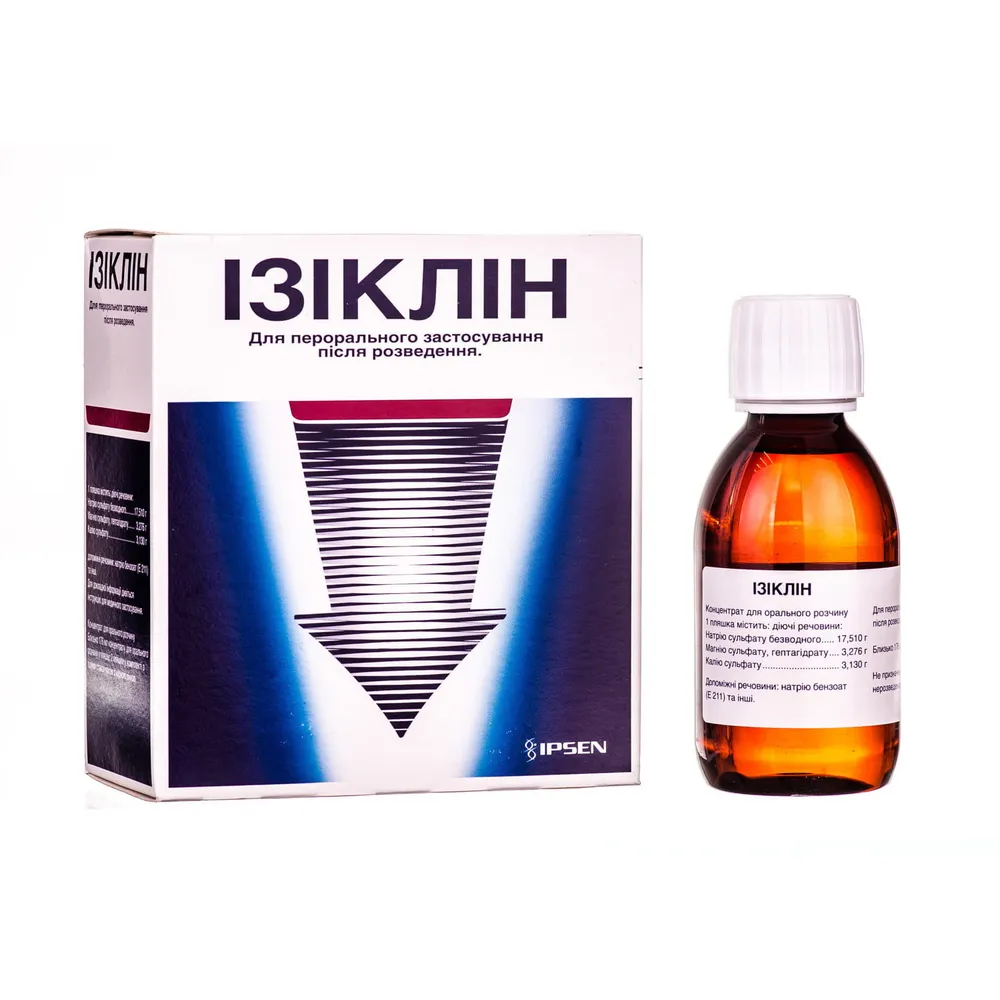
ISIKLIN
UkraineThe drug is prescribed for adults for bowel cleansing before medical procedures, such as endoscopy, radiological examinations, or surgical operations. It is not intended for the treatment of constipation.
Frequently asked questions
How should Isiklin be taken correctly?
To achieve complete cleansing, the contents of 2 bottles must be used. Each bottle should be diluted with water up to the 0.5 L mark in the special measuring cup provided in the kit. After taking the solution, an additional 1 liter of water or other clear liquid must be consumed within 2 hours. The total volume of liquid to be consumed before the procedure is approximately 3 liters. The exact regimen (taken in one day or split over two days) should be determined by a physician.
Who should not take this drug?
Use is contraindicated in cases of hypersensitivity to the ingredients, heart failure, severe dehydration, active intestinal inflammation (e.g., Crohn's disease), acute gastrointestinal disorders (such as appendicitis), intestinal obstruction or perforation, severe renal failure, nausea, vomiting, and ascites.
What are the possible side effects of Isiklin?
The most common side effects may include abdominal bloating, abdominal pain, nausea, and vomiting. Headache, dizziness, dry mouth, chills, and changes in blood tests (e.g., increased uric acid levels or changes in electrolyte levels) are also possible.
Can the drug be taken together with other medicines?
Caution should be exercised when using the drug together with diuretics, lithium preparations, or calcium channel blockers. Since the drug causes diarrhea, it may interfere with the normal absorption of other medications you are taking (e.g., contraceptives, antibiotics, or blood pressure medications) if taken within 1–3 hours after the start of the cleansing process.
Can the drug be used during pregnancy or breastfeeding?
Use is not recommended for pregnant women. When breastfeeding, lactation should be discontinued until 48 hours after the administration of the second dose of the drug.
Instructions for use
INSTRUCTIONS FOR MEDICAL USE OF THE MEDICINAL PRODUCT IZIKLIN (EZICLEN®)
Composition:
Active substances: 1 bottle contains: anhydrous sodium sulfate 17.510 g, magnesium sulfate heptahydrate 3.276 g, potassium sulfate 3.130 g;
Excipients: sodium benzoate (E 211), anhydrous citric acid, malic acid, sucralose, fruit-berry flavoring (a mixture of natural and synthetic flavoring substances, propylene glycol (E 1520), diluted ethanol, acetic acid and benzoic acid (E 210)), purified water.
| Total content of electrolyte ions: |
||||
| Content in grams |
Content in mmol |
|||
| 1 bottle |
2 bottles |
1 bottle |
2 bottles |
|
| Sodium* |
5.684 |
11.367 |
247.1 |
494.42 |
| Potassium |
1.405 |
2.81 |
35.9 |
71.8 |
| Magnesium |
0.323 |
0.646 |
13.3 |
26.6 |
| Sulfate |
14.845 |
29.69 |
154.5 |
309.0 |
| *from anhydrous sodium sulfate (active substance) and sodium benzoate (excipient). |
||||
Pharmaceutical form.
Oral solution concentrate.
Main physicochemical properties: liquid, ranging from clear to slightly cloudy, with a mixed fruit aroma.
Pharmacotherapeutic group.
Osmotic laxatives. Combination of mineral salts.
ATC code A06AD10.
Pharmacological properties.
Pharmacodynamics.
The medicinal product is an osmotic laxative. Its mechanism of action is primarily based on the limited and saturable process of active sulfate transport. Due to saturation of the gastrointestinal transport process, sulfate remains in the intestine. The osmotic effect of non-absorbed ions, when administered together with a large amount of water, causes profuse watery bowel movements. In clinical studies, the mean time to onset of frequent bowel movements was approximately 6.3 hours with a 12-hour dosing interval and about 2.8 hours with a 1-hour interval.
Pharmacokinetics.
Sulfate absorption is a limited and saturable process of active transport; absorbed sulfate is predominantly eliminated via the kidneys. After clinical administration of a medicinal product containing the same sulfate content as that in Iziclin, in six healthy volunteers according to a split-dose regimen—i.e., administration of two doses with a 12-hour interval—the maximum serum sulfate concentration was observed approximately 16 hours after the first dose and 5 hours after the second dose [Cmax: 499.5 µmol/L (CV: 33.03%) compared to baseline values of 141–467 µmol/L, mean value 335 µmol/L (CV: 34.4%)]. Afterward, serum concentration decreased with an elimination half-life of 8.5 hours (CV: 53.76%). The primary route of sulfate elimination was fecal excretion (approximately 70% of the administered dose).
Systemic exposure (AUC and Cmax) of sulfate after administration of the medicinal product was also compared in healthy volunteers, six patients with moderate renal impairment (creatinine clearance 30–49 mL/min), and six patients with mild or moderate hepatic impairment (Child-Pugh score A (N=5) and B (N=1), respectively). Renal impairment led to reduced urinary sulfate excretion. Consequently, mean AUC and Cmax values were approximately 50% higher compared to those in patients with normal renal function. Hepatic impairment did not affect systemic sulfate exposure. Serum sulfate concentrations returned to baseline levels by day 6 after drug administration in all three study groups. In this study, administration of the medicinal product did not result in clinically significant hyper-sulfatemia in patients with hepatic or renal impairment.
Clinical characteristics.
Indications.
The medicinal product is indicated in adults for bowel cleansing prior to any procedure requiring such preparation (e.g., visualization of the bowel, including endoscopy and radiology, or surgical procedures).
The medicinal product is not intended for the treatment of constipation.
Contraindications.
Use of the medicinal product is contraindicated in patients with the following conditions:
- Hypersensitivity to the active substances or to any of the excipients;
- Congestive heart failure;
- Severe impairment of general health status, particularly marked dehydration;
- Active inflammatory bowel disease (e.g., Crohn’s disease, ulcerative colitis);
- Acute gastrointestinal disorders requiring surgical intervention, including acute appendicitis;
- Known or suspected, or history of gastrointestinal obstruction or stenosis;
- Known or suspected, or history of perforation of the stomach or intestinal wall;
- Gastric emptying disorders (e.g., gastroparesis, gastric stasis);
- Known or suspected, or history of paralytic bowel obstruction (ileus);
- Toxic colitis or toxic megacolon;
- Nausea or vomiting;
- Ascites;
- Severe renal impairment (glomerular filtration rate <30 mL/min/1.73 m²).
Special precautions.
Electrolyte disturbances and dehydration
- Due to the potential risk of serious electrolyte disturbances, the benefit-risk ratio of the medicinal product should be carefully evaluated before initiating treatment in patients at increased risk. When prescribing the medicinal product, particular attention should be paid to known contraindications and special precautions for use, including the importance of adequate hydration.
- All patients should be advised to consume sufficient fluids before, during, and after administration of the medicinal product. If a patient develops severe vomiting or signs of dehydration after administration of the medicinal product, measures should be taken to rehydrate in order to avoid potential risks of serious complications related to fluid and electrolyte imbalances (such as seizures or cardiac arrhythmias). In addition, pre-procedure laboratory testing (electrolytes, creatinine, and blood urea nitrogen) should be considered. Patients should be advised to drink additional water or clear fluids in amounts necessary to maintain adequate hydration.
Patients at risk
- In debilitated patients, elderly patients, patients with clinically significant impairment of renal, hepatic, or cardiac function, and patients at risk of electrolyte imbalance, the physician should consider performing laboratory tests for electrolytes and renal function before and after administration of the medicinal product.
- Patients with signs of dehydration or electrolyte disturbances should be corrected prior to administration of the bowel cleansing agent. Furthermore, caution should be exercised in patients who are in conditions at risk of fluid and electrolyte disturbances, or who are taking medicinal products that increase the risk of fluid and electrolyte disturbances (including hyponatremia and hypokalemia), or that may increase the risk of potential complications. Such patients require appropriate monitoring.
- There is a theoretical risk of QT interval prolongation due to electrolyte imbalance.
Use with caution
- In patients with impaired vomiting reflex, and in patients prone to regurgitation or aspiration. Such patients require supervision during administration of the bowel cleansing agent.
- In patients with hypokinetic gastrointestinal disorders or a history of medical conditions or gastrointestinal surgeries predisposing to hypokinetic disorders.
Hyperuricemia
- The medicinal product may cause a transient mild or moderate increase in serum uric acid levels. The potential for increased uric acid levels should be considered prior to administration in patients with a history of gout or hyperuricemia.
Ischemic colitis
- Osmotic laxatives may cause aphthous ulcers of the colonic mucosa. In the post-marketing period, cases of ischemic colitis, including severe cases requiring hospitalization, have been reported. Patients who experience sudden abdominal pain after administration of Isiklin, with or without rectal bleeding, or other symptoms of ischemic colitis, should seek immediate medical attention.
Additional information
- The medicinal product is not intended to be taken undiluted. Direct ingestion of the undiluted solution may increase the risk of nausea, vomiting, dehydration, and electrolyte disturbances. The contents of each bottle should be diluted with water and taken with additional water as recommended to ensure tolerability of the medicinal product.
- The medicinal product contains 247.1 mmol (or 5.684 g) of sodium per bottle. This information should be taken into account for patients on a sodium-restricted diet.
- The medicinal product contains 35.9 mmol (or 1.405 g) of potassium per bottle. This information should be taken into account for patients with impaired renal function or patients on a potassium-restricted diet.
Interaction with other medicinal products and other forms of interaction.
As with any other bowel cleansing agents:
- Use with caution in patients taking calcium channel blockers, diuretics, lithium preparations, or medicinal products that may affect electrolyte levels.
- Caution is recommended when using medicinal products known to have the potential to prolong the QT interval.
- Diarrhea is an expected outcome; concomitant oral medicinal products taken within 1–3 hours of the start of treatment and until completion of the cleansing process may be flushed out of the gastrointestinal tract and not adequately absorbed. The therapeutic effect of regularly administered oral medicinal products with a narrow therapeutic range or short half-life (such as oral contraceptives, antiepileptics, antidiabetics, antibiotics, levothyroxine, digoxin, etc.) may be particularly affected.
Usage characteristics.
Use during pregnancy or breastfeeding.
There are no data on the use of this medicinal product in pregnant women.
The use of the medicinal product during pregnancy is not recommended.
It is unknown whether the medicinal product is excreted in breast milk.
A risk to newborns/infants cannot be excluded.
Breastfeeding should be discontinued until at least 48 hours after taking the second dose of Iziquin.
Fertility.
There are no data on the effect on fertility.
Ability to influence reaction speed when driving vehicles or operating machinery.
The medicinal product does not affect the ability to drive vehicles or operate machinery.
Dosage and Administration
Adults
To achieve adequate bowel cleansing, the contents of 2 bottles of Isocolin must be used. Before administration, the contents of each bottle should be dissolved in water using the provided measuring cup to obtain a total volume of approximately 0.5 L; after administration, an additional 1 liter of water or clear liquid should be consumed within 2 hours.
Permitted clear liquids include: water, tea or coffee (without milk or non-dairy creamers), carbonated or non-carbonated non-alcoholic beverages, strained fruit juices without pulp (not red or purple in color), broth or soup strained until clear.
The total volume of fluid required for bowel cleansing is approximately 3 liters, which must be taken orally before the procedure. This medicinal product may be administered in split doses (over two consecutive days; with the first bottle taken the evening before the procedure and the second the following morning) or in a single-day regimen as described below (see "Administration"). The exact dosing schedule and frequency should be determined by the physician.
If the timing of the procedure permits, the split-dose regimen is preferred over the single-day regimen. The single-day regimen is a potentially beneficial alternative dosing schedule.
Administration
SPLIT-DOSE REGIMEN (two-day regimen)
Day before the procedure:
Early evening before the procedure (e.g., at 6:00 PM):
- Empty the contents of 1 bottle of the medicinal product into the measuring cup provided in the package and dilute with water up to the marked line (i.e., approximately 0.5 L).
- The patient should drink this diluted solution and follow it with an additional two measuring cups filled to the marked line with water or clear liquid (i.e., approximately 1 L), consumed within 2 hours.
Procedure day
On the morning of the procedure (10–12 hours after the evening dose):
- Empty the contents of the second bottle of the medicinal product into the measuring cup provided in the package and dilute with water up to the marked line (i.e., approximately 0.5 L).
- The patient should drink this diluted solution and follow it with an additional two measuring cups filled to the marked line with water or clear liquid (i.e., approximately 1 L), consumed within 2 hours.
The complete intake of the diluted medicinal solution and additional fluids (water or clear liquids) should be completed:
- At least 1 hour before the start of the procedure if no anesthesia is used;
- At least 2 hours before the start of the procedure if anesthesia is administered, in accordance with the anesthesiologist's instructions.
SINGLE-DAY DOSING REGIMEN (an alternative regimen that may be used depending on individual patient clinical needs)
Evening before the procedure:
Early evening before the procedure (e.g., at 6:00 PM):
- Empty the contents of one bottle of the medicinal product into the measuring cup provided in the package and dilute with water up to the marked line (approximately 0.5 L).
- The patient should drink this diluted solution and follow it with an additional two measuring cups filled to the marked line with water or clear liquid (i.e., approximately 1 L), consumed within two hours.
Approximately 2 hours after starting the first dose (e.g., at 8:00 PM):
- Empty the contents of the second bottle of the medicinal product into the measuring cup provided in the package and dilute with water up to the marked line (approximately 0.5 L).
- The patient should drink this diluted solution and follow it with an additional two measuring cups filled to the marked line with water or clear liquid (i.e., approximately 1 L), consumed within 2 hours.
The complete intake of the diluted medicinal solution and additional fluids (water or clear liquids) should be completed:
- At least 1 hour before the start of the procedure if no anesthesia is used;
- At least 2 hours before the start of the procedure if anesthesia is administered, in accordance with the anesthesiologist's instructions.
The necessary steps for both regimens are described below:
Fig. 1. |
Fig. 2. |
Fig. 3. |
Fig. 4. |
Drink two (2) additional cups of water or clear liquid. Each time, fill the cup with water or clear liquid up to the measuring line. Fig. 5. |
Fig. 6. |
Steps 1–6 should take approximately 2 hours and must be repeated for the split-dose regimen.
After the procedure
To restore fluids lost during preparation for the procedure, patients should be advised to consume adequate fluids after the procedure to maintain proper hydration.
Dietary restrictions
On the day before the procedure, a light breakfast is permitted. After that, patients should consume only clear liquids instead of lunch, dinner, and any other meals until the procedure is performed. Red and purple liquids, milk, and alcoholic beverages should be avoided.
Special populations
Elderly patients
Overall, no differences in safety or efficacy were observed between elderly patients and other patients during clinical development of the medicinal product. Dose adjustment is not required for elderly patients; however, special precautions should be taken for this population, as with any other population at increased risk.
Patients with renal impairment
There are insufficient data for this population. Dose adjustment is not required for patients with mild to moderate renal impairment; however, special precautions should be taken for this population, as with any other population at increased risk. The medicinal product should not be used in patients with severe renal impairment.
Patients with hepatic impairment
There are insufficient data for this population. Dose adjustment is not required for patients with hepatic impairment; however, special precautions should be taken for this population, as with any other population at increased risk.
Children
The safety and efficacy of the medicinal product in children (i.e., patients under 18 years of age) have not been established. Data on use in children are lacking.
Overdose
In case of overdose or incorrect use (e.g., failure to dilute the medicinal product and/or inadequate water intake), nausea, vomiting, diarrhea, and electrolyte disturbances are expected. Conservative oral rehydration is usually sufficient. In the unlikely event of a serious metabolic disturbance due to overdose, intravenous rehydration should be administered.
Adverse reactions
The frequency of adverse reactions is classified as follows: very common (≥1/10); common (≥1/100 to <1/10); uncommon (≥1/1,000 to <1/100); rare (≥1/10,000 to <1,000); very rare (<1/10,000); not known (cannot be estimated from the available data).
The table lists adverse reactions based on data from clinical trials and case reports. In addition, adverse reactions reported during post-marketing surveillance are indicated.
| System organ class |
Frequency |
Adverse reaction |
| Immune system disorders |
Unknown (post-marketing surveillance data) |
Hypersensitivity (including urticaria, pruritus, rash, erythema, dyspnea, throat tightness) |
| Nervous system disorders |
Uncommon |
Headache, dizziness |
| Gastrointestinal disorders |
Very common |
Abdominal distension, abdominal pain, nausea, vomiting |
| Uncommon |
Anorectal discomfort, dry mouth |
|
| Renal and urinary disorders |
Uncommon |
Dysuria |
| General disorders and administration site conditions |
Very common |
Discomfort |
| Uncommon |
Chills |
|
| Investigations |
Uncommon |
Increased aspartate aminotransferase, increased blood creatine phosphokinase, increased blood lactate dehydrogenase, hyperbilirubinemia, disturbances in blood chemistry including hyponatremia, hypokalemia, hypocalcemia, and hyperuricemia |
A temporary increase in uric acid levels was observed during clinical trials. For patients with a history of gout or hyperuricemia, see "Special precautions".
There were no differences in safety data between elderly patients and other patients during clinical development. However, elderly patients should be treated as any high-risk group (see "Special precautions").
For patients with renal or hepatic impairment, see "Contraindications" and "Special precautions".
Reporting of adverse reactions
Reporting suspected adverse reactions after authorization of the medicinal product is important. It allows continued monitoring of the benefit-risk balance of the medicinal product. Healthcare professionals are urged to report any suspected adverse reactions via the national reporting system.
Shelf life. 3 years.
After first opening of the bottle and/or dilution in water, the solution should be used immediately.
Storage conditions.
Keep in the original packaging to protect from light.
No special storage temperature requirements.
Do not store after first opening of the bottle and/or after dilution.
Incompatibilities.
The medicinal product must not be mixed with other medicinal products.
Packaging.
Approximately 176 ml of concentrate for oral solution in a bottle with a child-resistant screw cap and a multilayer sealing system; 2 bottles supplied with one measuring cup with graduation marks, in a cardboard box.
Prescription status. Prescription only.
Manufacturer.
BOUHIER IPSEN INDUSTRIE.
Manufacturer's address.
Rue Henri Villon 28100 Dreux, France.
Marketing authorization holder.
IPSEN CONSUMER HEALTHCARE
Simplified joint-stock company
Address of the marketing authorization holder and/or its representative.
65 Quai Georges Gorse 92100 Boulogne-Billancourt, France
The original data is available in the language of the country of manufacture.
Data source: State Register of Medicinal Products of Ukraine
Data last verified: August 13, 2026