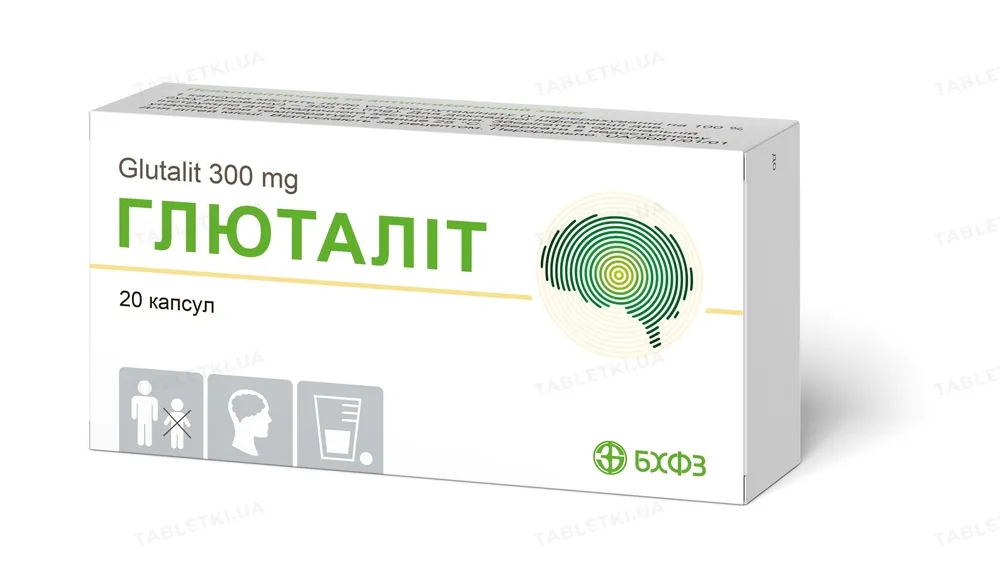
GLUTALIT
UkraineThe drug is used to treat the manic phase of bipolar disorders and to prevent their recurrence, as well as for the prevention of depression in patients with unipolar affective disorders.
Frequently asked questions
How should Glutalit be taken correctly?
For adults, it is recommended to take 1 capsule (300 mg) twice daily (morning and evening) after meals, swallowing with 100-150 ml of water. The maximum daily dose should not exceed 7 capsules (2.1 g).
Who should not take this drug?
Contraindications include hypersensitivity to the components, severe cardiovascular diseases (including Brugada syndrome), thyroid dysfunction, renal failure, hyponatremia, as well as the age of a child.
What side effects can Glutalit cause?
At the beginning of treatment, dizziness, nausea, and general malaise may occur. With long-term use or high doses, hand tremors, renal or thyroid dysfunction, changes in heart function, vision problems, memory impairment, or skin rashes may occur.
Can the drug be combined with other medicines?
Special caution is required. Some drugs (e.g., antibiotics, anti-inflammatory agents, diuretics, and antipsychotics) may increase blood lithium levels to toxic levels or cause serious neurological reactions. Other drugs (e.g., caffeine or certain diuretics) may reduce the effectiveness of the treatment.
Can you drive while taking the drug?
Since the drug may cause decreased concentration and other nervous system impairments, driving vehicles during treatment is not recommended.
Can the drug be taken during pregnancy or breastfeeding?
Use during pregnancy is contraindicated, especially in the first trimester, due to the risk of congenital heart defects in the child. Since lithium passes into breast milk, the drug should be discontinued during breastfeeding.
Instructions for use
INSTRUCTIONS FOR MEDICAL USE OF THE MEDICINAL PRODUCT GLUTALIT (GLUTALIT)
Composition:
Active substance: lithium γ-hydroglutamate;
1 capsule contains lithium γ-hydroglutamate (recalculated to 100% dry substance) – 300 mg;
Excipients: potato starch, magnesium stearate;
Capsule shell contains: gelatin, titanium dioxide (E 171).
Pharmaceutical form. Capsules.
Main physico-chemical characteristics: hard gelatin capsules with white cap and white body. The contents of the capsules are white or almost white powder with a slight odor.
Pharmacotherapeutic group. Psycholeptics. Antipsychotics. Lithium preparations.
ATC code: N05AN01.
Pharmacological properties.
Pharmacodynamics.
Lithium ions alter sodium ion transport in neurons, increase intracellular deamination of norepinephrine, thereby reducing its free concentration, and enhance neuronal sensitivity to dopamine. Glutamic acid is present in significant amounts in brain tissue and participates in transamination processes and ammonia binding, which significantly enhances the therapeutic effect of lithium ions. As a result, the drug has a pronounced normothymic effect.
Pharmacokinetics.
The drug is well absorbed from the small intestine and evenly distributed throughout the body. It crosses the blood-brain barrier and placenta, and penetrates into breast milk. It is excreted by the kidneys through filtration, with 4/5 of the administered dose being reabsorbed. The half-life is approximately 24 hours. A reduced intake of sodium ions into the body leads to an increased half-life of lithium.
Clinical characteristics.
Indications.
- Treatment of the manic phase of bipolar affective disorders and prevention of their recurrence;
- prevention of depression in patients with unipolar affective disorders.
Contraindications.
- Hypersensitivity to the components of the drug;
- severe cardiovascular diseases with signs of decompensation and myocardial conduction disorders, Brugada syndrome (including in family history);
- thyroid gland dysfunction;
- hyponatremia (including due to low-sodium diet, dehydration, Addison's disease);
- severe impairment of kidney function, renal failure.
Interaction with other medicinal products and other types of interactions.
Interactions that increase blood lithium concentration and risk of toxicity:
- any drugs that may impair kidney function – possible increase in blood lithium levels and development of related toxicity. If use of such drugs cannot be avoided, monitoring of blood lithium levels is recommended, with dose adjustment if necessary;
- antibiotics (metronidazole, tetracycline, co-trimoxazole, trimethoprim) – symptoms of lithium intoxication may occur even at low blood lithium levels when used with co-trimoxazole or trimethoprim;
- nonsteroidal anti-inflammatory drugs (NSAIDs) (including selective COX-2 inhibitors) – serum lithium levels should be monitored more frequently at the start and upon discontinuation of NSAID therapy;
- angiotensin-converting enzyme (ACE) inhibitors, angiotensin receptor blockers;
- diuretics (including herbal preparations) – possible reduction in renal lithium clearance, development of hyponatremia, and consequently, lithium intoxication. The use of diuretics (especially thiazide-type) is dangerous and should be avoided. Loop diuretics (e.g., furosemide and bumetanide) are considered to have less impact on increasing blood lithium levels; lithium dose should be reduced before initiating these diuretics;
- drugs affecting electrolyte balance, including steroids, may alter lithium excretion, and such combinations should be avoided.
Interactions that decrease lithium blood concentration (due to increased renal lithium clearance) – risk of reduced efficacy:
- xanthines (theophylline, caffeine);
- products containing high amounts of sodium (e.g., sodium bicarbonate);
- osmotic diuretics and carbonic anhydrase inhibitors;
- urea-containing preparations;
- dapagliflozin.
Interactions causing neurotoxicity:
- antipsychotic drugs (particularly haloperidol at high doses, flupenthixol, diazepam, thioridazine, fluphenazine, chlorpromazine, and clozapine) – risk of severe neurotoxicity with symptoms such as confusion, disorientation, apathy, tremor, extrapyramidal symptoms, and myoclonus. Elevated lithium levels have been observed in some reported cases. Discontinuation of both drugs is recommended at the first signs of neurotoxicity;
- methyldopa;
- triptan derivatives and/or serotonergic antidepressants, such as serotonin reuptake inhibitors (e.g., fluvoxamine, fluoxetine) – this combination may trigger serotonin syndrome, requiring immediate discontinuation of these drugs;
- calcium channel blockers – possible development of neurotoxicity with symptoms such as ataxia, confusion, and drowsiness. Blood lithium concentration may be increased;
- carbamazepine – possible dizziness, drowsiness, confusion, and cerebellar symptoms such as ataxia;
- neuromuscular blocking agents (including muscle relaxants) – possible prolonged effect of muscle relaxants and neurotoxic reactions even at therapeutic blood lithium levels.
Other interactions
Drugs that prolong the QT interval: class IА antiarrhythmics (disopyramide, procainamide, quinidine), class III (amiodarone, sotalol), arsenic trioxide, artemisinin derivatives, dolasetron mesylate, mefloquine, astemizole, intravenous erythromycin, amisulpride, haloperidol, pimozide, ranolazine, sertindole, terfenadine, thioridazine. ECG monitoring is mandatory.
Topiramate: in healthy volunteers, a reduction in systemic lithium exposure (AUC by 18%) was observed when used concomitantly with topiramate at a dose of 200 mg/day. In patients with bipolar disorder, lithium pharmacokinetics were unchanged during treatment with topiramate at doses of 200 mg/day; however, an increase in systemic exposure (AUC by 26%) was observed after administration of topiramate doses up to 600 mg/day. Cases of lithium toxicity have been reported with concomitant use of topiramate. Careful monitoring of lithium levels is required when used concomitantly with topiramate.
Special precautions for use.
Lithium preparations, including Glutalit, should always be used at the lowest effective doses.
Before initiating lithium therapy and throughout treatment, renal function, cardiovascular system, and thyroid gland function should be regularly monitored.
Long-term lithium treatment should only be continued after careful risk/benefit assessment and under thyroid function monitoring every 6 months (more frequently if signs of thyroid dysfunction occur). Renal function should be monitored every 6 months (more frequently if symptoms arise or if the patient has other risk factors, such as concomitant treatment with ACE inhibitors, NSAIDs, or diuretics).
One should be aware of the potential development of hypothyroidism and renal dysfunction during prolonged lithium therapy. In cases of nausea, vomiting, diarrhea, excessive sweating, or other conditions leading to fluid and electrolyte depletion (e.g., strict diet, high ambient temperature, respiratory viral infections, gastrointestinal infections), lithium dosing should be closely monitored and adjusted if necessary. Adequate fluid intake and balanced diet should be maintained to ensure stable fluid and electrolyte balance. Consideration should be given to temporarily discontinuing lithium therapy during any intercurrent illness.
Lithium therapy may lower the seizure threshold and increase the risk of neurological adverse effects following electroconvulsive therapy, especially when used concomitantly with drugs that reduce the seizure threshold or in patients with epilepsy.
Cases of benign intracranial hypertension have been reported; therefore, patients should be advised to promptly inform their physician if they experience persistent headache and/or visual disturbances.
Lithium preparations should be avoided in patients with congenital long QT syndrome, uncorrected hypokalemia, bradycardia, or when used concomitantly with drugs that prolong the QT interval.
Lithium should be used with caution in elderly patients, as lithium excretion may be reduced, and toxic effects may occur at serum lithium concentrations that are generally well tolerated in younger patients.
Regular monitoring of serum lithium levels should be performed weekly after:
- dosage adjustment;
- initiation of treatment;
- serious intercurrent illness;
- significant changes in sodium or fluid intake;
- administration of drugs that alter renal lithium clearance or drugs that may disrupt electrolyte balance.
Once lithium blood concentration has stabilized, monitoring should be performed every 3 months.
Lithium therapy, including Glutalit, should be discontinued 24 hours before major surgical procedures. However, lithium treatment may be continued during minor surgeries provided that fluid and electrolyte balance is carefully monitored.
Patients who have undergone bariatric surgery may require a lower maintenance dose of lithium. Serum lithium levels should be closely monitored due to the risk of toxicity until body weight stabilizes.
Abrupt discontinuation of lithium increases the risk of relapse. Therefore, when discontinuing the drug, the dose should be gradually reduced over a period of at least 4 weeks. Patients should be warned about the risk of relapse associated with abrupt cessation of lithium therapy.
Brugada syndrome. Lithium may unmask or exacerbate Brugada syndrome, a hereditary condition associated with cardiac sodium channel abnormalities, characterized by typical ECG changes (right bundle branch block and ST-segment elevation in the right precordial leads), which may lead to cardiac arrest or sudden death. Lithium is not recommended in patients with known Brugada syndrome or a family history of Brugada syndrome. Caution is advised in patients with a personal or family history of cardiac arrest or sudden death.
Alcohol consumption is not permitted during treatment.
Women of reproductive age taking lithium should use effective contraception. Lithium therapy should be discontinued if pregnancy is planned.
Patients should be informed about the signs of lithium toxicity and provided with clear instructions to seek immediate medical attention if such symptoms occur.
Use during pregnancy or breastfeeding.
Lithium crosses the placental barrier.
Lithium use is contraindicated during pregnancy, especially during the first trimester, due to an increased risk of congenital malformations, particularly cardiovascular abnormalities.
Continuation of lithium therapy in pregnant women should only be considered if alternative treatments cannot be used during this period and if there are serious risks associated with discontinuing lithium treatment.
Lithium is excreted in breast milk. If lithium therapy is necessary, breastfeeding should be discontinued.
Ability to affect reaction speed when driving or operating machinery.
During treatment with Glutalit, central nervous system disturbances and reduced attention concentration may occur; therefore, patients should refrain from driving or operating machinery.
Dosage and Administration
For adults, the initial and maintenance dose is 1 capsule (300 mg) twice daily (in the morning and evening), taken after meals with 100–150 ml of water. If the therapeutic effect is insufficient, the initial dose may be gradually increased, but must not exceed the maximum allowable dose of 2.1 g (7 capsules) per day. After achieving the therapeutic effect, the dose should be reduced to the maintenance level—1 capsule (300 mg) twice daily. The duration of treatment depends on the course of the disease.
The maximum allowable serum lithium concentration is 1.6 mmol/L.
During treatment, serum lithium levels must be monitored regularly.
Children
The use of the drug in children is contraindicated.
Overdose
Acute
The risk of a single acute lithium overdose is generally low and usually manifests with mild symptoms, regardless of serum lithium concentration. More severe symptoms may occur if drug elimination is impaired due to renal dysfunction. The lethal dose for a single acute overdose is likely more than 5 g.
Chronic
Any overdose in patients on long-term lithium therapy should be considered potentially serious.
Lithium intoxication may also develop due to chronic accumulation caused by: acute or chronic overdose, dehydration (e.g., due to concomitant illnesses), worsening renal function, or drug interactions (e.g., thiazide diuretics or nonsteroidal anti-inflammatory drugs).
The risk of lithium intoxication increases in patients with arterial hypertension, diabetes mellitus, intercurrent illnesses, or schizophrenia.
Symptoms
Gastrointestinal disorders: nausea, vomiting, diarrhea, anorexia.
Nervous system disorders: muscle weakness, impaired coordination, lethargy, drowsiness/mental slowing, dizziness, confusion, ataxia, blurred vision, nystagmus, tinnitus, dysarthria, coarse tremor, fasciculations, seizures, myoclonus, extrapyramidal symptoms, urinary and/or fecal incontinence, increasing agitation followed by stupor.
Cardiovascular disorders: cardiac arrhythmias, including sinoatrial block, sinus and nodal bradycardia, AV block, ECG changes (flattening/inversion of T waves, QT interval prolongation), arterial hypotension or, less commonly, hypertension, circulatory collapse.
Other: dehydration, electrolyte imbalances, polydipsia, polyuria, renal failure.
At serum lithium concentrations above 2–3 mmol/L, excretion of a large volume of hypotonic urine and renal failure may occur, along with worsening confusion, seizures, coma, and potentially fatal outcome.
Treatment: discontinue lithium administration and carefully monitor serum lithium levels. Diuretics should not be used. All patients must be under close medical supervision for at least 24 hours. Continuous ECG monitoring and management of arterial hypertension are required.
Activated charcoal does not adsorb lithium. If necessary, gastric lavage should be performed. In cases of severe lithium intoxication, hemodialysis is indicated (especially in patients with severe neurological symptoms or renal failure). Hemodialysis should continue until lithium is no longer detectable in serum or in the dialysate fluid.
Side effects
The drug is usually well tolerated. Serious adverse reactions with Glutalit are rare and generally associated with high doses and/or prolonged treatment.
At the beginning of treatment, dizziness, nausea, and general malaise may occur, which in most cases resolve within the first few days of treatment. Fine hand tremor, polyuria, and mild thirst may persist.
Nervous system: headache, drowsiness, disorientation, muscle tremor (especially hand tremor), vertigo, dysarthria, ataxia, slurred speech, disturbances of consciousness (including confusion, stupor, coma), dizziness, abnormal reflexes (including hyperactive deep tendon reflexes), seizures, myoclonus, benign intracranial hypertension, extrapyramidal symptoms (including athetosis, parkinsonism), peripheral sensorimotor neuropathy, nystagmus, myasthenia gravis, memory impairment, encephalopathy, neuroleptic malignant syndrome, serotonin syndrome, urinary and fecal incontinence. With long-term use of lithium-containing drugs, mild cognitive impairments may occur.
Cardiovascular system: QT interval prolongation, sometimes associated with ventricular tachycardia or torsade de pointes arrhythmia, which may lead to ventricular fibrillation or cardiac arrest and sudden fatal outcome; arrhythmia, bradycardia, sinus node dysfunction, ECG changes such as reversible flattening/inversion of T-waves, AV block, cardiomyopathy; arterial hypotension, peripheral circulatory collapse, edema, Raynaud's syndrome, Brugada syndrome (unmasking/exacerbation) (frequency unknown).
Gastrointestinal tract: dental caries, gastritis, nausea, vomiting, diarrhea, abdominal discomfort/pain, dry mouth, hypersalivation, anorexia, dysgeusia.
Urinary system: polydipsia and/or polyuria, nephrogenic diabetes insipidus (usually reversible upon discontinuation of lithium); histological changes in the kidneys with interstitial fibrosis and impaired kidney function after long-term lithium use, nephrotic syndrome.
Skin and subcutaneous tissue: alopecia, acne/acne-like eruptions, exacerbation or development of psoriasis, pruritus, allergic rashes, hyperkeratosis, folliculitis, skin ulcers, lichenoid reaction, drug reaction with eosinophilia and systemic symptoms (DRESS).
Endocrine system: thyroid dysfunction, including euthyroid goiter and/or hypothyroidism, hyperthyroidism, thyrotoxicosis, hyperparathyroidism, parathyroid adenoma, parathyroid hyperplasia (frequency unknown); hypercalcemia (very common), hypermagnesemia.
Musculoskeletal system: muscle weakness, arthralgia, myalgia.
Reproductive system: sexual dysfunction.
Immune system: increased titer of antinuclear antibodies, allergic vasculitis.
Sensory organs: scotoma, visual disturbances, including blurred vision.
Blood and lymphatic system: leukocytosis/leukopenia, anemia.
Metabolism and nutrition disorders: weight decrease/increase, hyperglycemia.
Adverse effects caused by lithium are more pronounced in elderly patients than in younger patients, despite similar serum lithium concentrations.
If any of the above-mentioned adverse reactions occur, treatment should be discontinued immediately.
Reporting suspected adverse reactions
Reporting suspected adverse reactions after marketing authorization is of great importance. It enables ongoing monitoring of the benefit-risk balance of the medicinal product. Healthcare professionals, pharmacists, patients, or their legal representatives should report all suspected adverse reactions and lack of efficacy through the Automated Pharmacovigilance Information System at: https://aіsf.dec.gov.ua.
Shelf life
2 years.
Storage conditions. In the original packaging at a temperature not exceeding 25°C.
Keep out of reach of children.
Packaging.
10 capsules per blister, 2 or 5 blisters per carton.
Prescription status.
Prescription only.
Manufacturer.
Public joint-stock company "Scientific and Production Center "Borshchagov Chemical and Pharmaceutical Plant".
Manufacturer's address and place of business.
17 Myru Street, Kyiv, 03134, Ukraine.
The original data is available in the language of the country of manufacture.
Data source: State Register of Medicinal Products of Ukraine
Data last verified: August 13, 2026