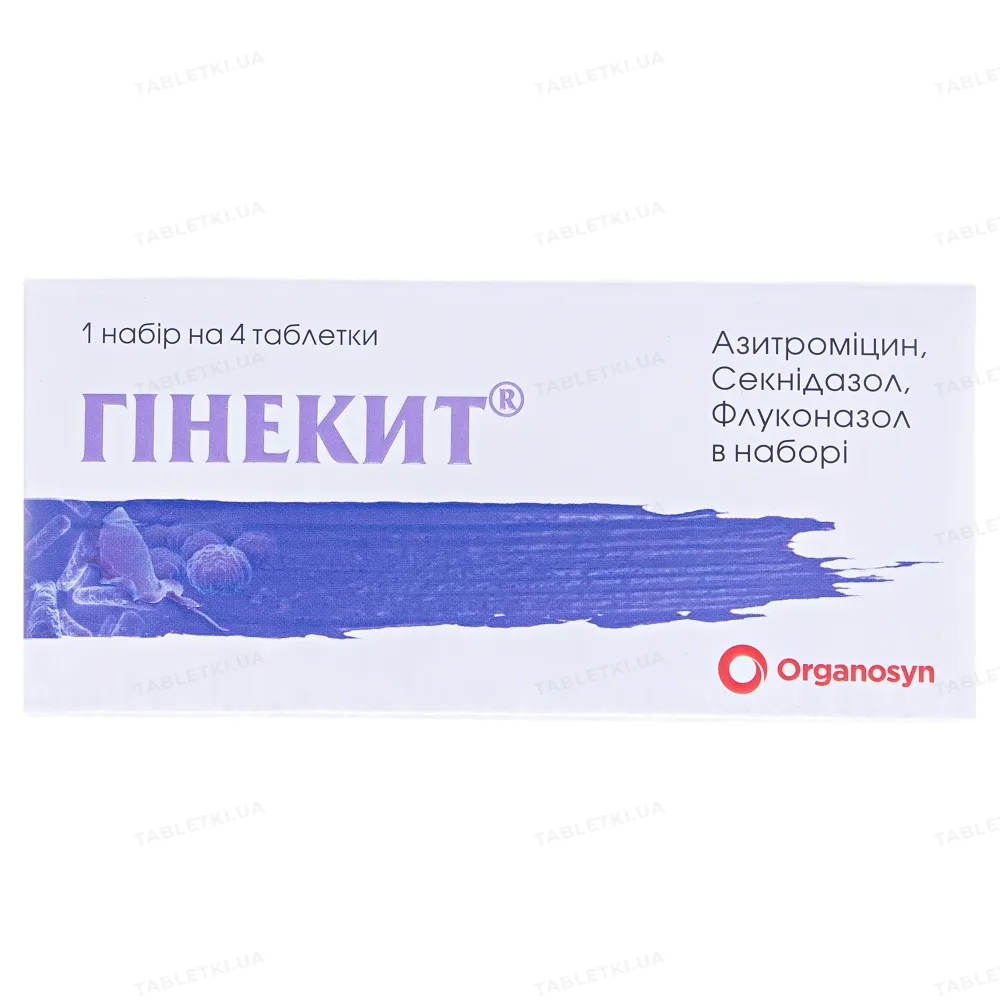
GINEKIT®
UkraineThe drug is used to treat diseases caused by mixed microflora that are sexually transmitted (e.g., urethritis, cervicitis, colpitis, vaginitis).
Frequently asked questions
How should Ginekit® be taken correctly?
The tablets are taken according to a specific schedule: secnidazole in the morning, secnidazole at lunch, fluconazole during the day, and azithromycin in the evening. Secnidazole should be taken with food, while azithromycin should be taken 1 hour before or 2 hours after meals. Fluconazole can be taken regardless of food intake.
Who should not take this drug?
The drug is contraindicated in children under 18 years of age, pregnant women, and breastfeeding women. It should also not be taken in case of hypersensitivity to the components of the composition, severe liver disease, renal dysfunction, organic diseases of the central nervous system, and certain pathological changes in the blood.
What are the possible side effects of Ginekit®?
Possible reactions include the digestive tract (nausea, vomiting, diarrhea, abdominal pain), the nervous system (dizziness, headache, drowsiness), the skin (rash, itching, edema), and the liver (jaundice, impaired liver function). Palpitations and arrhythmia are also possible.
Can alcohol be consumed during treatment?
No, alcohol consumption should be avoided while taking secnidazole, as it can cause severe reactions: abdominal cramps, vomiting, facial flushing, dizziness, and delirious episodes.
How does the drug interact with other medicines?
Ginekit® has many interactions. For example, it should not be combined with certain heart medications (that prolong the QT interval), anticoagulants (which may increase the risk of bleeding), and derivatives of ergot. Caution should be exercised when taking it simultaneously with antibiotics, antifungals, and other drugs that affect the liver.
Does food affect the action of the drug?
Yes, taking azithromycin with food reduces its absorption, so it should be taken separately from meals. Conversely, secnidazole is recommended to be taken with food to reduce stomach irritation.
Instructions for use
INSTRUCTIONS for medical use of the medicinal product GYNEKIT® (GYNEKIT®)
Composition:
Active substance: azithromycin;
One film-coated tablet contains azithromycin dihydrate equivalent to azithromycin 1000 mg;
Excipients: maize starch, microcrystalline cellulose, povidone, magnesium stearate, colloidal anhydrous silicon dioxide, sodium croscarmellose, sodium starch glycolate (type A), hypromellose, talc, titanium dioxide (E 171), polyethylene glycol 6000, Ponceau 4R dye (E 124);
Active substance: secnidazole;
One film-coated tablet contains secnidazole 1000 mg;
Excipients: microcrystalline cellulose, povidone, magnesium stearate, talc, sodium starch glycolate (type A), hypromellose, polyethylene glycol 6000, titanium dioxide (E 171);
Active substance: fluconazole;
One tablet contains fluconazole 150 mg;
Excipients: maize starch, microcrystalline cellulose, povidone, magnesium stearate, colloidal anhydrous silicon dioxide, sodium starch glycolate (type A), sodium croscarmellose.
Pharmaceutical form.
Film-coated tablets.
Film-coated tablets.
Tablets.
Main physicochemical properties:
azithromycin tablets: dark pink, oblong-shaped, biconvex film-coated tablets with a score line;
secnidazole tablets: white, oblong-shaped, biconvex film-coated tablets with a score line. Surface of tablets may show specks;
fluconazole tablets: white, round, flat-faced tablets with bevelled edges on both sides and a score line on one side.
Pharmacotherapeutic group.
Antimicrobial and antiseptic agents used in gynecology.
ATC code G01A.
Pharmacological properties.
Pharmacodynamics. Ginekit® is a set consisting of 3 medicinal products: azithromycin – a systemic antimicrobial agent, macrolide; secnidazole – an antiprotozoal agent of the nitroimidazole group with antibacterial activity; fluconazole – a systemic antifungal agent, a triazole derivative.
Azithromycin is a broad-spectrum antibiotic. It exerts bactericidal activity against S. pyogenes, S. pneumoniae, and H. influenzae, and bacteriostatic activity against staphylococci and most aerobic Gram-negative bacteria.
Active against the following microorganisms:
aerobic Gram-positive bacteria – Staphylococcus aureus, Streptococcus spp. (including Streptococcus pneumoniae, Streptococcus pyogenes /group A/), Corynebacterium diphtheriae;
aerobic Gram-negative bacteria – Haemophilus (influenzae, parainfluenzae, ducreui), Moraxella catarrhalis, Escherichia coli, Salmonella, Shigella, Aeromonas, Bordetella (pertussis, parapertussis, burgdorferi), Neisseria gonorrhoeae, Campylobacter spp., Legionella pneumophila, Pasteurella multocida;
anaerobic bacteria – Bacteroides fragilis, Clostridium perfringens, Fusobacterium spp., Prevotella spp., Porphyromonas spp.;
also active against Chlamydia pneumoniae, Chlamydia trachomatis, Mycoplasma pneumoniae, Mycoplasma hominis, Treponema pallidum, Toxoplasma gondii, Borrelia burgdorferi, Helicobacter pylori, Listeria spp., Mycobacterium avium complex, Ureaplasma urealyticum.
There is complete cross-resistance between erythromycin, azithromycin, other macrolides, and lincosamides for Streptococcus pneumoniae, beta-hemolytic streptococcus group A, Enterococcus faecalis, and Staphylococcus aureus, including methicillin-resistant S. aureus (MRSA).
Azithromycin is less active than erythromycin and clarithromycin against enterococci sensitive to erythromycin.
Secnidazole is characterized by bactericidal (against Gram-positive and Gram-negative anaerobic bacteria) and amebicidal (intra- and extraintestinal) effects. Secnidazole is particularly active against Trichomonas vaginalis, Entamoeba histolytica, Giardia lamblia. Penetrating into the microbial cell, secnidazole is activated by reduction of the 5-nitro group, thereby interacting with cellular DNA. This leads to disruption of its helical structure and strand destruction, inhibition of nucleotide synthesis, and cell death.
Fluconazole is a triazole derivative with a fungistatic effect, which specifically inhibits ergosterol synthesis in fungal cells by suppressing cytochrome P450 enzyme system. This is believed to lead to defects in the cell membrane. Its spectrum of activity includes several pathogens, including Candida albicans, Cryptococcus spp., and dermatophytes. Candida krusei and Candida glabrata are resistant to fluconazole. Fluconazole is not effective in the treatment of infections caused by Aspergillus species.
Pharmacokinetics.
Azithromycin.
Rapidly absorbed from the gastrointestinal tract. Administration with food reduces azithromycin absorption.
Bioavailability is approximately 37%. Maximum plasma concentrations are achieved within 2–3 hours after administration.
It rapidly distributes into tissues and body fluids. It penetrates well into the respiratory tract, organs and tissues of the urogenital tract, skin, and soft tissues. It accumulates intracellularly, resulting in tissue concentrations nearly 50 times higher than plasma concentrations. Azithromycin accumulates in large amounts in phagocytes and fibroblasts. Phagocytes transport the drug to the site of inflammation. Azithromycin remains at bactericidal concentrations at the site of inflammation for 5–7 days after the last dose.
Protein binding in plasma varies with concentration: approximately 50% at 0.02–0.05 µg/mL; approximately 7% at 1 µg/mL. The mean volume of distribution at steady state is 31.1 L/kg.
Approximately 35% of azithromycin is metabolized in the liver via demethylation.
Over 59% is excreted via bile and approximately 4.5% in unchanged form in urine.
The elimination half-life from serum is 11–14 hours when measured at 8–24 hours after a single dose; however, after multiple dosing, the elimination half-life is approximately equal to the tissue half-life. The tissue half-life is 2–4 days.
Secnidazole.
After oral administration, secnidazole is rapidly and completely absorbed from the gastrointestinal tract. Bioavailability is approximately 80%. Secnidazole crosses the blood-brain barrier and penetrates into breast milk. The elimination half-life of secnidazole is approximately 25 hours, which allows simplification of the dosing regimen, making it more convenient for patients.
Fluconazole.
After oral administration, fluconazole is well absorbed. Absolute bioavailability is approximately 90%. Food intake does not affect fluconazole absorption. Maximum plasma concentration is reached within 0.5–1.5 hours. Steady-state concentration (at 90%) is achieved within 4–5 days with once-daily dosing.
The elimination half-life is approximately 30 hours. Plasma concentration of fluconazole is proportional to dose. The volume of distribution approaches total body water content. Protein binding to plasma proteins is relatively low (11–12%).
Fluconazole penetrates well into all body fluids. Drug levels in saliva and sputum are similar to plasma concentrations. High concentrations of fluconazole in the skin, exceeding serum levels, are achieved in the stratum corneum, epidermis-dermis layer, and sweat glands. Fluconazole accumulates in the stratum corneum of the skin.
Fluconazole is primarily excreted by the kidneys. Approximately 80% of the administered dose is excreted unchanged in urine. Fluconazole clearance is proportional to creatinine clearance.
Circulating metabolites have not been identified. The plasma elimination half-life is approximately 30 hours.
The prolonged plasma half-life forms the basis for low-dose therapy of vaginal candidiasis.
Pharmacokinetic parameters of fluconazole in elderly individuals.
In individuals over 65 years of age, pharmacokinetic parameters are slightly higher than those observed in younger individuals. The difference in fluconazole accumulation in elderly patients is associated with reduced renal function in this age group.
Clinical characteristics.
Indications.
Treatment of infections caused by sexually transmitted sensitive mixed microflora (acute non-specific urethritis, cervicitis, colpitis, vaginitis).
Contraindications.
Hypersensitivity to azithromycin, secnidazole, fluconazole, and other nitroimidazole or azole derivatives, erythromycin, macrolide or ketolide antibiotics, as well as to any excipients in the formulation. Concomitant use of fluconazole with other medicinal products that prolong the QT interval and are metabolized by the CYP2C4 enzyme (e.g., cisapride, astemizole, pimozide, quinidine, and erythromycin). Concomitant use of fluconazole and terfenadine in patients receiving repeated doses of fluconazole at 400 mg daily or higher (based on multiple-dose interaction study results).
Concomitant use of azithromycin with ergot derivatives (due to the theoretical possibility of ergotism).
Hematological abnormalities (severe leukopenia), including in medical history. Acute cerebrovascular events, Parkinsonism, depression, severe hepatic impairment, giardiasis, organic central nervous system (CNS) disorders.
Interaction with other medicinal products and other forms of interaction.
Azithromycin
Azithromycin should be administered with caution to patients receiving other drugs that may prolong the QT interval.
Antacids
When studying the effect of concomitant antacid administration on azithromycin pharmacokinetics, no overall changes in bioavailability were observed, although peak plasma concentrations of azithromycin decreased by 25%. Azithromycin and antacids should not be taken simultaneously.
Cetirizine
In healthy volunteers, concomitant administration of azithromycin for 5 days with cetirizine 20 mg at steady state did not reveal any pharmacokinetic interaction or significant changes in QT interval.
Carbamazepine
In a pharmacokinetic interaction study in healthy volunteers, azithromycin did not significantly affect plasma levels of carbamazepine or its active metabolites.
Cyclosporine
In a pharmacokinetic study involving healthy volunteers who received oral azithromycin 500 mg/day for 3 days followed by a single oral dose of cyclosporine 10 mg/kg, a significant increase in cyclosporine Cmax and AUC0–5 was demonstrated. Therefore, caution is advised when these drugs are used concomitantly. If combination therapy is considered appropriate, careful monitoring of cyclosporine levels and appropriate dose adjustment are required.
Coumarin anticoagulants
In a pharmacokinetic interaction study, azithromycin did not alter the anticoagulant effect of a single 15 mg dose of warfarin administered to healthy volunteers. However, post-marketing reports have described potentiation of the anticoagulant effect when azithromycin was used concomitantly with oral coumarin-type anticoagulants. Although a causal relationship has not been established, monitoring of prothrombin time is recommended when azithromycin is prescribed to patients receiving oral coumarin-type anticoagulants.
Digoxin and colchicine
Reports indicate that concomitant use of macrolide antibiotics, including azithromycin, with P-glycoprotein substrates such as digoxin and colchicine may lead to increased serum levels of the P-glycoprotein substrate. Therefore, when azithromycin is used concomitantly with digoxin, the possibility of increased digoxin serum concentration should be considered.
Methylprednisolone
In a pharmacokinetic interaction study in healthy volunteers, azithromycin did not significantly affect the pharmacokinetics of methylprednisolone.
Midazolam
In healthy volunteers, concomitant administration of azithromycin 500 mg daily for 3 days did not cause clinically significant changes in the pharmacokinetics and pharmacodynamics of midazolam administered as a single 15 mg dose.
Terfenadine
Pharmacokinetic studies have not reported interactions between azithromycin and terfenadine. However, as with other macrolide antibiotics, azithromycin should be used with caution in combination with terfenadine.
Theophylline
There are no data on clinically significant pharmacokinetic interactions when azithromycin and theophylline are administered concomitantly to healthy volunteers.
Triazolam
Concomitant administration to healthy volunteers of azithromycin 500 mg on day 1 and 250 mg on day 2 with triazolam 0.125 mg did not significantly affect any pharmacokinetic parameters of triazolam compared to triazolam with placebo.
Zidovudine
Single doses of 1000 mg and multiple doses of 1200 mg or 600 mg azithromycin had minimal effect on the plasma pharmacokinetics and urinary excretion of zidovudine or its glucuronide metabolites. However, azithromycin increased concentrations of phosphorylated zidovudine, a clinically active metabolite, in mononuclear cells of peripheral blood. The clinical significance of these data is unclear, but they may be beneficial in patient treatment.
Azithromycin does not significantly interact with the hepatic cytochrome P450 system. It is considered that the drug does not exhibit pharmacokinetic drug interactions typical of erythromycin and other macrolides. Azithromycin does not induce or inactivate hepatic cytochrome P450 via the cytochrome-metabolite complex.
Didanosine
When daily doses of 1200 mg azithromycin were administered concomitantly with 400 mg didanosine daily in six HIV-positive volunteers, no effect on steady-state pharmacokinetics of didanosine was observed compared to placebo.
Rifabutin
Concomitant administration of azithromycin and rifabutin did not affect plasma concentrations of either drug in serum. Neutropenia was observed in patients receiving both azithromycin and rifabutin. Although neutropenia was associated with rifabutin use, a causal relationship with concomitant azithromycin administration has not been established.
Nelfinavir
Concomitant administration of azithromycin (1200 mg) and nelfinavir at steady-state concentrations (750 mg three times daily) resulted in increased azithromycin concentrations. No clinically significant adverse events were observed; therefore, dose adjustment is not required.
Ergot derivatives
Due to the theoretical possibility of ergotism, concomitant use of azithromycin with ergot derivatives is not recommended.
Pharmacokinetic studies have been conducted on the use of azithromycin with the following drugs, whose metabolism is largely mediated by cytochrome P450.
Atorvastatin
Concomitant administration of atorvastatin (10 mg daily) and azithromycin (500 mg daily) did not alter atorvastatin plasma concentrations (based on HMG-CoA reductase inhibition analysis). However, post-marketing reports have documented cases of rhabdomyolysis in patients taking azithromycin with statins.
Efavirenz
Concomitant administration of a single 600 mg dose of azithromycin and 400 mg efavirenz daily for 7 days did not result in any clinically significant pharmacokinetic interaction.
Fluconazole
A single 1200 mg dose of azithromycin did not alter the pharmacokinetics of a single 800 mg dose of fluconazole. Total exposure and elimination half-life of azithromycin were unchanged when fluconazole was co-administered, although a clinically insignificant 18% reduction in azithromycin Cmax was observed.
Indinavir
A single 1200 mg dose of azithromycin did not cause a statistically significant effect on the pharmacokinetics of indinavir administered at 800 mg three times daily for 5 days.
Sildenafil
In healthy male volunteers, azithromycin (500 mg daily for 3 days) did not affect AUC or Cmax values of sildenafil or its main circulating metabolite.
Trimethoprim/sulfamethoxazole
Concomitant administration of double-strength trimethoprim/sulfamethoxazole (160 mg/800 mg) for 7 days with azithromycin 1200 mg on day 7 did not significantly affect peak concentrations, total exposure, or urinary excretion of trimethoprim or sulfamethoxazole. Serum azithromycin concentrations were consistent with those observed in other studies.
Cimetidine
In a pharmacokinetic study assessing the effect of a single dose of cimetidine administered 2 hours before azithromycin, no changes in azithromycin pharmacokinetics were observed.
Unlike most macrolide antibiotics, azithromycin does not affect the cytochrome P450 system, and there are currently no reports of interactions between azithromycin and the drugs listed above.
Secnidazole
Anticoagulants
Secnidazole enhances the effect of indirect anticoagulants (coumarin and indandione derivatives), increasing the risk of bleeding.
Disulfiram
Concomitant use with secnidazole may cause paranoid reactions and psychoses.
Warfarin
Concomitant use with secnidazole may enhance the anticoagulant effect of warfarin. When these drugs are used together, careful monitoring of the patient and prothrombin time is required, and dose adjustment may be necessary.
Alcohol
Combination with alcohol causes symptoms of a disulfiram-like reaction (abdominal cramps, nausea, vomiting, headache, facial flushing), and delirium or dizziness may occur.
Lithium preparations
Concomitant use with secnidazole increases plasma lithium concentration.
Cyclosporine
Concomitant use with secnidazole may increase cyclosporine plasma concentration. When these drugs are used together, careful monitoring of cyclosporine and creatinine levels in plasma is required.
5-Fluorouracil
Concomitant use with secnidazole enhances 5-fluorouracil clearance, leading to increased toxicity.
Non-depolarizing muscle relaxants (vecuronium bromide)
Combination with secnidazole is not recommended.
Amoxicillin
Concomitant use with secnidazole increases activity against Helicobacter pylori (amoxicillin suppresses resistance development).
Fluconazole
Concomitant use of fluconazole with the following medicinal products is contraindicated.
Cisapride
Cases of cardiac adverse reactions, including torsades de pointes ventricular tachycardia, have been reported in patients receiving fluconazole and cisapride concurrently. In a controlled study, concomitant administration of 200 mg fluconazole once daily and 20 mg cisapride four times daily resulted in significantly increased plasma levels of cisapride and prolonged QT interval. Concomitant use of fluconazole and cisapride is contraindicated (see section "Contraindications").
Terfenadine
Due to cases of severe cardiac arrhythmias caused by QTc interval prolongation in patients receiving azole antifungal agents concomitantly with terfenadine, interaction studies were conducted. In studies using fluconazole 200 mg daily, no QTc prolongation was observed. Another study using fluconazole at doses of 400 mg and 800 mg daily demonstrated that fluconazole doses of 400 mg daily or higher significantly increased plasma levels of terfenadine when used concomitantly. Concomitant use of fluconazole at doses of 400 mg or higher with terfenadine is contraindicated (see section "Contraindications"). When fluconazole is used at doses below 400 mg daily concomitantly with terfenadine, careful patient monitoring is required.
Astemizole
Concomitant use of fluconazole and astemizole may reduce astemizole clearance. The resulting increase in astemizole plasma concentration may lead to QT interval prolongation and, rarely, torsades de pointes ventricular tachycardia. Concomitant use of fluconazole and astemizole is contraindicated.
Pimozide and quinidine
Concomitant use of fluconazole with pimozide or quinidine may inhibit the metabolism of pimozide or quinidine, although corresponding in vitro and in vivo studies have not been conducted. Increased plasma concentrations of pimozide or quinidine may cause QT interval prolongation and, rarely, torsades de pointes ventricular tachycardia. Concomitant use of fluconazole with pimozide or quinidine is contraindicated.
Erythromycin
Concomitant use of erythromycin and fluconazole may potentially increase the risk of cardiotoxicity (QT interval prolongation, torsades de pointes ventricular tachycardia) and, consequently, sudden cardiac death. Use of this combination is contraindicated.
*/Concomitant use of fluconazole with the following medicinal products is not recommended.
Halofantrine
Fluconazole may increase halofantrine plasma concentration by inhibiting CYP3A4. Concomitant use of these drugs may increase the risk of cardiotoxicity (QT interval prolongation, torsades de pointes ventricular tachycardia) and, consequently, sudden cardiac death. The combination should be avoided.
Concomitant use of fluconazole with the following medicinal products requires caution.
Amiodarone
Concomitant use of fluconazole with amiodarone may lead to QT interval prolongation. Fluconazole should be used cautiously with amiodarone, especially when high-dose fluconazole (800 mg) is prescribed.
Effect of other medicinal products on fluconazole
Interaction studies have shown that food intake, cimetidine, antacids, or total body irradiation prior to bone marrow transplantation have no clinically significant effect on fluconazole absorption after oral administration.
Hydrochlorothiazide
In a pharmacokinetic interaction study, multiple concomitant doses of hydrochlorothiazide in healthy volunteers receiving fluconazole increased fluconazole plasma concentration by 40%. These interaction parameters do not require dose adjustment of fluconazole in patients receiving diuretics.
Concomitant use of fluconazole with the following medicinal products requires caution and dose adjustment.
Rifampicin
Concomitant use of fluconazole and rifampicin reduced the area under the concentration-time curve (AUC) by 25% and shortened the elimination half-life of fluconazole by 20%. Therefore, increasing the fluconazole dose should be considered for patients receiving rifampicin.
Effect of fluconazole on other medicinal products.
Fluconazole is a moderate inhibitor of cytochrome P450 (CYP) isoenzymes 2C9 and 3A4. Fluconazole is a potent inhibitor of isoenzyme CYP2C19. In addition to observed/documented interactions described below, there is a risk of increased plasma concentrations of other compounds metabolized by CYP2C9, CYP2C19, and CYP3A4 when used concomitantly with fluconazole. Therefore, such drug combinations should be used with caution; patients must be closely monitored. The inhibitory effect of fluconazole on enzymes persists for 4–5 days after administration due to its long elimination half-life.
Alfentanil
When alfentanil 20 mcg/kg and fluconazole 400 mg were administered concomitantly to healthy volunteers, a twofold increase in AUC10 was observed, possibly due to CYP3A4 inhibition. Dose adjustment of alfentanil may be necessary.
Amitriptyline, nortriptyline
Fluconazole enhances the effects of amitriptyline and nortriptyline. Measurement of 5-nortriptyline and/or S-amitriptyline concentrations is recommended at the start of combination therapy and after 1 week. Dose adjustment of amitriptyline/nortriptyline may be required if necessary.
Amphotericin B
Study data indicate that concomitant use of fluconazole and amphotericin B resulted in: slight additive antifungal effect in systemic C. albicans infection, no interaction in intracranial Cryptococcus neoformans infection, and antagonism between the two drugs in systemic A. fumigatus infection. The clinical significance of these study results is unknown.
Anticoagulants
As with other azole antifungal agents, cases of bleeding (hematomas, epistaxis, gastrointestinal bleeding, hematuria, melena) associated with prolonged prothrombin time have been reported when fluconazole was used concomitantly with warfarin. Prothrombin time increased twofold when fluconazole and warfarin were used together, likely due to inhibition of warfarin metabolism via CYP2C9. Prothrombin time should be carefully monitored in patients receiving coumarin anticoagulants or indanedione derivatives concomitantly. Warfarin dose adjustment may be necessary.
Short-acting benzodiazepines, e.g., midazolam, triazolam
Administration of fluconazole after oral midazolam led to significantly increased midazolam concentrations and enhanced psychomotor effects. Concomitant use of fluconazole 200 mg and oral midazolam 7.5 mg increased midazolam AUC and elimination half-life by 3.7 and 2.2 times, respectively. Administration of fluconazole 200 mg/day and oral triazolam 0.25 mg increased triazolam AUC and elimination half-life by 4.4 and 2.3 times, respectively. Potentiation and prolongation of triazolam effects were observed when used concomitantly with fluconazole.
If a patient receiving fluconazole therapy needs to be prescribed benzodiazepines, the benzodiazepine dose should be reduced and appropriate patient monitoring established.
Carbamazepine
Fluconazole inhibits carbamazepine metabolism and increases serum carbamazepine levels by 30%. There is a risk of carbamazepine toxicity. Dose adjustment of carbamazepine may be necessary depending on its concentration and effect.
Calcium channel blockers
Some calcium antagonists (nifedipine, isradipine, amlodipine, felodipine) are metabolized by CYP3A4. Fluconazole may potentially increase systemic exposure to calcium channel blockers. Careful monitoring for adverse reactions is recommended.
Celecoxib
When fluconazole (200 mg daily) and celecoxib (200 mg) were used concomitantly, Cmax and AUC of celecoxib increased by 68% and 134%, respectively. When celecoxib and fluconazole are used together, a 50% reduction in celecoxib dose may be necessary.
Cyclophosphamide
Concomitant use of cyclophosphamide and fluconazole leads to increased serum bilirubin and creatinine levels. These drugs can be used together, but the risk of increased bilirubin and creatinine concentrations should be considered.
Fentanyl
One fatal case of fentanyl intoxication, possibly due to interaction with fluconazole, has been reported. In a study with healthy volunteers, fluconazole significantly slowed fentanyl elimination. Increased fentanyl concentration may lead to respiratory depression; therefore, careful patient monitoring is required. Fentanyl dose adjustment may be necessary.
HMG-CoA reductase inhibitors
Concomitant use of fluconazole with HMG-CoA reductase inhibitors metabolized by CYP3A4 (atorvastatin, simvastatin) or by CYP2C9 (fluvastatin) increases the risk of myopathy and rhabdomyolysis. When concomitant use is necessary, patients should be closely monitored for symptoms of myopathy and rhabdomyolysis, and creatine kinase levels should be monitored. If significant creatine kinase elevation occurs or myopathy/rhabdomyolysis is diagnosed or suspected, HMG-CoA reductase inhibitors should be discontinued.
Ibritumomab
Moderate CYP3A4 inhibitors such as fluconazole increase ibritumomab plasma concentration, increasing toxicity risk. If such a combination cannot be avoided, ibritumomab dose should be reduced to 280 mg once daily (2 capsules), with clinical monitoring.
Ivacaftor
Concomitant use of fluconazole with ivacaftor, a cystic fibrosis transmembrane conductance regulator (CFTR) modulator, increased ivacaftor exposure threefold and hydroxymethylivacaftor (M1) exposure by 1.9 times. Patients receiving moderate CYP3A inhibitors such as fluconazole and erythromycin concomitantly should have their ivacaftor dose reduced to 150 mg once daily.
Olaparib
Moderate CYP3A4 inhibitors such as fluconazole increase olaparib plasma concentrations; concomitant use is not recommended. If such a combination cannot be avoided, olaparib intake should be limited to 200 mg twice daily.
Immunosuppressants (e.g., cyclosporine, everolimus, sirolimus, tacrolimus).
Cyclosporine
Fluconazole significantly increases cyclosporine concentration and AUC. When fluconazole 200 mg/day and cyclosporine 2.7 mg/kg/day were used concomitantly, cyclosporine AUC increased 1.8-fold. These drugs can be used together provided cyclosporine dose is reduced based on its concentration.
Everolimus
Although in vitro and in vivo studies have not been conducted, fluconazole may increase everolimus serum concentration by inhibiting CYP3A4.
Sirolimus
Fluconazole increases sirolimus plasma concentration, likely by inhibiting sirolimus metabolism via CYP3A4 and P-glycoprotein. These drugs can be used together provided sirolimus dose is adjusted based on concentration and effect.
Tacrolimus
Fluconazole may increase tacrolimus serum concentrations up to fivefold with oral administration by inhibiting tacrolimus metabolism via CYP3A4 in the intestine. No significant pharmacokinetic changes were observed with intravenous tacrolimus. Elevated tacrolimus levels are associated with nephrotoxicity. Oral tacrolimus dose should be reduced based on tacrolimus concentration.
Losartan
Fluconazole inhibits losartan metabolism to its active metabolite (E-3174), which accounts for most angiotensin II receptor antagonism during losartan therapy. Blood pressure monitoring in patients is recommended.
Methadone
Fluconazole may increase methadone serum concentration. Dose adjustment of methadone may be necessary when used concomitantly with fluconazole.
Non-steroidal anti-inflammatory drugs (NSAIDs)
When used concomitantly with fluconazole, Cmax and AUC of flurbiprofen increased by 23% and 81%, respectively, compared to flurbiprofen alone. Similarly, concomitant use of fluconazole with racemic ibuprofen 400 mg increased Cmax and AUC of the pharmacologically active S-(+)-ibuprofen isomer by 15% and 82%, respectively, compared to racemic ibuprofen alone.
Although specific studies have not been conducted, fluconazole may potentially increase systemic exposure to other NSAIDs metabolized by CYP2C9 (e.g., naproxen, lornoxicam, meloxicam, diclofenac). Monitoring for NSAID-related adverse and toxic effects is recommended. NSAID dose adjustment may be required.
Phenytoin
Fluconazole inhibits hepatic phenytoin metabolism. Concomitant multiple administration of 200 mg fluconazole and 250 mg intravenous phenytoin increases phenytoin AUC24 by 75% and Cmin by 128%. Serum phenytoin concentration should be monitored when these drugs are used together to avoid phenytoin toxicity.
Prednisone
A case has been reported where a liver transplant patient developed acute adrenal insufficiency after discontinuation of a three-month fluconazole course while on prednisone. Discontinuation of fluconazole likely enhanced CYP3A4 activity, accelerating prednisone metabolism. Patients receiving long-term concomitant fluconazole and prednisone should be closely monitored to prevent adrenal insufficiency after fluconazole discontinuation.
Rifabutin
Fluconazole increases rifabutin serum concentration, increasing rifabutin AUC by up to 80%. Uveitis has been reported when fluconazole and rifabutin are used together. Symptoms of rifabutin toxicity should be considered when using this combination.
Saquinavir
Fluconazole increases saquinavir AUC and maximum concentration (Cmax) by approximately 50% and 55%, respectively, by inhibiting hepatic saquinavir metabolism via CYP3A4 and P-glycoprotein inhibition. Interactions between fluconazole and saquinavir/ritonavir have not been studied and may be more pronounced. Saquinavir dose adjustment may be necessary.
Sulfonylurea derivatives
Concomitant use of fluconazole prolongs the elimination half-life of oral sulfonylurea derivatives (chlorpropamide, glyburide, glipizide, tolbutamide) in healthy volunteers. Frequent blood glucose monitoring and appropriate dose reduction of sulfonylurea derivatives are recommended when used concomitantly with fluconazole.
Theophylline
In a placebo-controlled interaction study, administration of fluconazole 200 mg for 14 days reduced the average plasma clearance of theophylline by 18%. Patients receiving high-dose theophylline or at increased risk of theophylline toxicity for other reasons should be monitored for signs of theophylline toxicity. Therapy should be modified if toxicity signs appear.
Tofacitinib
The effect of tofacitinib increases when used concomitantly with drugs causing moderate CYP3A4 inhibition and potent CYP2C19 inhibition (e.g., fluconazole). Therefore, tofacitinib dose should be reduced to 5 mg once daily when used in combination with these drugs.
Vinca alkaloids
Although corresponding studies have not been conducted, fluconazole, likely via CYP3A4 inhibition, may increase plasma concentrations of vinca alkaloids (e.g., vincristine, vinblastine), leading to neurotoxic effects.
Vitamin A
Adverse CNS reactions in the form of pseudotumor cerebri have been reported in patients receiving all-trans retinoic acid (vitamin A acid form) and fluconazole concomitantly, which resolved after fluconazole discontinuation. These drugs can be used together, but the risk of CNS adverse reactions should be remembered.
Voriconazole (inhibitor of CYP2C9, CYP2C19, and CYP3A4)
Concomitant oral administration of voriconazole (400 mg every 12 hours for 1 day, then 200 mg every 12 hours for 2.5 days) and fluconazole (400 mg on day 1, then 200 mg every 24 hours for 4 days) to 8 healthy male volunteers increased voriconazole Cmax and AUCτ by 57% (90% CI: 20%, 107%) and 79% (90% CI: 40%, 128%), respectively. It is unknown whether reducing the dose and/or frequency of voriconazole or fluconazole eliminates this effect. When voriconazole is administered after fluconazole, monitoring for voriconazole-associated adverse effects is required.
Zidovudine
Fluconazole increases zidovudine Cmax and AUC by 84% and 74%, respectively, due to approximately 45% reduction in zidovudine clearance after oral administration. Zidovudine elimination half-life was also prolonged by approximately 128% after concomitant use of fluconazole and zidovudine. Patients receiving this drug combination should be monitored for zidovudine-related adverse reactions. Zidovudine dose reduction may be considered.
Azithromycin
In an open-label, randomized, three-way crossover study involving 18 healthy volunteers, the effect of azithromycin and fluconazole on each other's pharmacokinetics after single oral doses of 1200 mg and 800 mg, respectively, was evaluated. No significant pharmacokinetic interactions were observed.
Oral contraceptives
Two multiple-dose pharmacokinetic studies of fluconazole and combined oral contraceptives were conducted. When fluconazole 50 mg was administered, no effect on hormone levels was observed, whereas fluconazole 200 mg daily increased AUC of ethinylestradiol by 40% and levonorgestrel by 24%. This suggests that multiple-dose administration of fluconazole at these doses is unlikely to affect the efficacy of combined oral contraceptives.
Special precautions for use.
Before initiating treatment with Gynekit®, a culture should be performed and microbial sensitivity to the components of the drug should be determined.
Patients with infectious urethritis and cervicitis should undergo appropriate serological testing for syphilis prior to starting treatment with Gynekit®.
Azithromycin.
Allergic reactions. As with erythromycin and other macrolide antibiotics, rare but serious allergic reactions have occurred during azithromycin use, including angioneurotic edema and anaphylaxis (in isolated cases resulting in fatal outcomes), and dermatological reactions, including acute generalized exanthematous pustulosis. Some of these reactions were associated with recurrent symptoms and required prolonged observation and treatment.
Since azithromycin is predominantly eliminated via the liver, caution is advised when administering the drug to patients with severe hepatic disease. Cases of fulminant hepatitis leading to life-threatening liver dysfunction have been reported in patients receiving azithromycin. Some patients may have had a history of liver disease or concomitant use of other hepatotoxic medicinal products.
Liver function tests should be performed if symptoms of hepatic dysfunction develop, such as rapidly developing asthenia accompanied by jaundice, dark urine, bleeding tendency, or hepatic encephalopathy.
Treatment with the drug should be discontinued if signs of impaired liver function occur.
In patients receiving ergot derivatives, concomitant use of certain macrolide antibiotics may rapidly lead to ergotism. Data on possible interactions between ergot derivatives and azithromycin are lacking. However, due to the theoretical risk of ergotism, azithromycin should not be administered concurrently with ergot derivatives.
In patients with severe renal impairment (creatinine clearance < 10 mL/min), a 33% increase in systemic exposure to azithromycin has been observed.
As with other antibiotics, monitoring for signs of superinfection caused by non-susceptible organisms, including fungi, should be performed.
Diarrhea associated with Clostridium difficile (CDAD) has been reported with nearly all antibacterial agents, including azithromycin, with severity ranging from mild diarrhea to fatal colitis. Antibacterial therapy alters the normal flora of the colon, leading to overgrowth of C. difficile.
C. difficile produces toxins A and B, which contribute to the development of CDAD. Hyperproducing toxin strains of C. difficile are associated with increased morbidity and mortality, as these infections may be resistant to antimicrobial therapy and may require colectomy. CDAD should be considered in all patients presenting with diarrhea following antibiotic use. Careful medical history is essential, as Clostridium difficile-associated diarrhea has been reported to occur up to two months after antibiotic administration.
Prolongation of the QT interval. Prolongation of cardiac repolarization and QT interval, associated with an increased risk of cardiac arrhythmias and torsades de pointes-type ventricular tachycardia, has been observed with other macrolide antibiotics. Since conditions associated with an increased risk of ventricular arrhythmias (including torsade de pointes) may lead to cardiac arrest, azithromycin should be administered with caution to patients with proarrhythmic conditions (particularly women and elderly patients), including those with: congenital or documented acquired QT prolongation; concomitant use of other medicinal products known to prolong the QT interval, such as class IA (quinidine, procainamide) and class III (dofetilide, amiodarone, sotalol) antiarrhythmics, cisapride, terfenadine, neuroleptics such as pimozide, antidepressants such as citalopram, and fluoroquinolones such as moxifloxacin and levofloxacin; electrolyte imbalances, particularly hypokalemia and hypomagnesemia; clinically significant bradycardia, cardiac arrhythmias, or severe heart failure.
Myasthenia gravis. Exacerbation of symptoms of myasthenia gravis or new-onset myasthenic syndrome has been reported in patients receiving azithromycin therapy.
Secnidazole.
Secnidazole should not be prescribed to patients with a history of blood dyscrasias. Reversible neutropenia may occur during treatment. Leukocyte counts return to normal after discontinuation of therapy. Alcohol consumption should be avoided during treatment to prevent adverse reactions similar to those seen with disulfiram (e.g., painful abdominal cramps, flushing, vomiting, and tachycardia).
If treatment duration exceeds the recommended period, hematological monitoring (particularly leukocyte count) and monitoring for adverse reactions indicating central or peripheral neuropathies (such as paresthesia, ataxia, dizziness, and seizures) should be performed.
The drug should be used with caution in patients with hepatic encephalopathy.
If disturbances in motor coordination, dizziness, and/or confusion occur, the drug should be discontinued.
Sexual intercourse should be avoided during treatment.
Fluconazole.
In rare cases, fluconazole use may be associated with hepatotoxic effects, including fatal outcomes (mainly observed in patients with severe underlying conditions). In cases where hepatotoxicity has been linked to fluconazole use, no clear correlation has been established with total daily dose, duration of therapy, gender, or patient age.
Hepatotoxic effects of fluconazole are generally reversible, with symptoms resolving after discontinuation of therapy. Patients should be monitored for signs of more severe liver injury if liver function abnormalities occur during treatment.
Patients should be informed about symptoms that may indicate serious liver involvement (marked asthenia, anorexia, persistent nausea, vomiting, and jaundice). The drug should be discontinued if clinical signs of liver injury potentially related to fluconazole appear.
Dermatological reactions.
Drug reaction with eosinophilia and systemic symptoms (DRESS syndrome) has been reported.
Exfoliative skin reactions such as Stevens-Johnson syndrome and toxic epidermal necrolysis are very rare during fluconazole treatment. Patients with AIDS are more prone to severe skin reactions when taking multiple medications. If a patient with superficial fungal infection develops a rash possibly related to fluconazole, the drug should be discontinued. In patients with invasive/systemic fungal infection who develop skin rash, careful monitoring is required, and fluconazole therapy should be discontinued in case of bullous eruptions or erythema multiforme.
As with other azoles, anaphylactic reactions may occur, although rarely.
Cardiovascular system. Some azoles, including fluconazole, are associated with QT interval prolongation on electrocardiogram. Fluconazole prolongs the QT interval by inhibiting the rectifier potassium channel (Ikr). QT prolongation caused by other drugs (e.g., amiodarone) may be potentiated due to inhibition of the CYP3A4 cytochrome P450 enzyme. Very rare cases of QT prolongation and torsades de pointes-type ventricular tachycardia have been reported with fluconazole use. These cases involved patients with severe underlying diseases and multiple risk factors, such as structural heart disease, electrolyte imbalances, and concomitant use of other QT-prolonging drugs. Patients with hypokalemia and progressive heart failure are at increased risk of life-threatening ventricular arrhythmias and torsades de pointes.
Concomitant use with medicinal products that prolong the QTc interval and are metabolized by the CYP3A4 cytochrome P450 enzyme is contraindicated.
Adrenal insufficiency. Ketoconazole is known to cause adrenal insufficiency, and this may also apply to fluconazole, although rarely. A case of acute adrenal cortex insufficiency has been reported in a liver transplant recipient receiving prednisone, following discontinuation of a three-month fluconazole course. Discontinuation of fluconazole likely enhanced CYP3A4 activity, leading to accelerated prednisone metabolism. Patients receiving long-term concomitant therapy with fluconazole and prednisone should be closely monitored to prevent adrenal insufficiency after stopping fluconazole.
Halofantrine. Halofantrine is a substrate of the CYP3A4 enzyme and prolongs the QT interval at recommended therapeutic doses. Concomitant use of halofantrine and fluconazole is not recommended.
Cytochrome P450. Fluconazole is a moderate inhibitor of CYP2C9 and CYP3A4 enzymes and a strong inhibitor of CYP2C19. Patients receiving fluconazole concomitantly with drugs having a narrow therapeutic index metabolized by CYP2C9, CYP2C19, or CYP3A4 should be closely monitored.
Terfenadine. Careful monitoring is required when terfenadine and fluconazole are used concomitantly at fluconazole doses below 400 mg per day.
Symptom improvement typically begins within 24 hours. However, complete resolution may take several days. If no improvement occurs within a few days, the patient should consult a physician.
In rare cases, anaphylactic reactions have been reported.
The drug should be used with caution in patients with renal impairment.
The azithromycin tablets contain the dye Ponceau 4R, which may cause hypersensitivity and severe allergic reactions.
Fluconazole should be prescribed with caution to patients with potential predisposition to arrhythmias.
Use during pregnancy or breastfeeding.
The use of the drug is contraindicated during pregnancy.
Breastfeeding should be discontinued during treatment with the drug.
Ability to affect reaction speed when driving or operating machinery.
In sensitive patients, somnolence and impaired motor coordination may occur during treatment.
Therefore, patients should refrain from driving or operating machinery during treatment.
Administration and Dosage
Tablets from the kit should be taken according to the following schedule: morning – tablet C (secnidazole 1 g), afternoon – tablet C (secnidazole 1 g), daytime – tablet F (fluconazole 150 mg), evening – tablet A (azithromycin 1 g).
Secnidazole tablets should be taken twice daily during meals to prevent irritation of the gastrointestinal mucosa.
Azithromycin tablets should be taken as a single dose 1 hour before or 2 hours after a meal.
Fluconazole tablets may be taken regardless of food intake.
If necessary, depending on the course of the disease, a repeat course may be prescribed, but not earlier than 7 days after completion of the first treatment course.
The number of treatment courses is determined individually by the physician for each patient (e.g., one kit on days 1, 2, 7, 14, 21 or one kit on days 1, 3, 5, 7, 14).
Children
The drug is contraindicated in children (under 18 years of age).
Overdose
Azithromycin
Symptoms: abdominal pain, nausea, vomiting, diarrhea, sometimes anorexia, constipation. Cholestatic hepatitis may develop, with increased liver transaminase activity and jaundice of the sclera and visible mucous membranes. Central nervous system symptoms may include malaise, weakness, headache, dizziness, and hearing disturbances.
Treatment: gastric lavage, administration of activated charcoal, and appropriate symptomatic therapy to support vital organ and system functions.
Secnidazole
Symptoms: possible intensification of adverse effects, particularly those affecting the nervous system.
Treatment: no specific antidote is available. If necessary, symptomatic therapy should be administered. Patient monitoring in a hospital setting is recommended. If needed, hemodialysis may be used to enhance elimination of secnidazole from the body.
Fluconazole
Symptoms: hallucinations and paranoid behavior, nausea, vomiting, diarrhea.
Treatment: gastric lavage. Since fluconazole is primarily excreted in the urine, forced diuresis may accelerate its elimination. A 3-hour hemodialysis session reduces plasma fluconazole levels by approximately 50%. Treatment is symptomatic.
Adverse Reactions.
Azithromycin.
Blood and lymphatic system disorders: Thrombocytopenia, leukopenia, hemolytic anemia, possible transient mild neutropenia, eosinophilia.
Psychiatric disorders: Agitation, aggression, hyperactivity, anxiety and nervousness, delirium, hallucinations, restlessness.
Nervous system disorders: Dizziness/vertigo, somnolence, syncope, headache, convulsions (have been reported with other macrolide antibiotics), altered taste and smell sensation, dysgeusia, paresthesia, asthenia, insomnia, hypesthesia, psychomotor hyperactivity, myasthenia gravis, loss of consciousness, anosmia, ageusia, parosmia.
Ear and labyrinth disorders: Vertigo, hearing impairment, onset of deafness and/or tinnitus.
Cardiac disorders: Reports of rapid heartbeat, arrhythmia (including ventricular tachycardia) (have been reported with other macrolide antibiotics), palpitations. Possible QT interval prolongation and ventricular flutter/fibrillation, torsade de pointes arrhythmia, arterial hypotension, hot flushes.
Respiratory system disorders: Dyspnea, epistaxis.
Gastrointestinal disorders: Dysphagia, dry mouth, oral ulcers, hypersalivation, belching, nausea, vomiting, diarrhea, abdominal discomfort (pain/spasms), loose stools, flatulence, indigestion, anorexia, dyspepsia, gastritis, constipation, tongue discoloration, possible pseudomembranous colitis, pancreatitis.
Hepatic disorders: Hepatitis and cholestatic jaundice, including abnormal liver function tests; cases of necrotic hepatitis and liver dysfunction potentially leading to fatal outcomes; hepatic failure (rarely resulting in death), fulminant hepatitis.
Skin and subcutaneous tissue disorders: Dry skin, hyperhidrosis, dermatitis, allergic reactions including pruritus, rash, angioedema, urticaria; severe skin reactions, erythema multiforme, drug reaction with eosinophilia and systemic symptoms (DRESS), Stevens-Johnson syndrome, toxic epidermal necrolysis; photosensitivity, acute generalized exanthematous pustulosis.
Musculoskeletal and connective tissue disorders: Arthralgia, osteoarthritis, myalgia, back and neck pain.
Renal and urinary disorders: Dysuria, renal pain, interstitial nephritis, acute renal failure.
Infections and infestations: Oral and vaginal candidiasis, vaginal infections, candidiasis and other fungal infections, pneumonia, bacterial infections, pharyngitis, gastroenteritis, respiratory dysfunction, rhinitis, pseudomembranous colitis.
General disorders: Increased fatigue, chest pain, weakness, asthenia, edema, malaise, hyperthermia, peripheral edema.
Reproductive system disorders: Vaginitis, uterine bleeding, testicular disorders.
Eye disorders: Visual disturbances.
Systemic disorders: Hypersensitivity reactions, including anaphylaxis, anaphylactic reactions, angioedema.
Laboratory investigations: Increased platelet count, decreased hematocrit, lymphocyte count, increased eosinophils, basophils, monocytes, neutrophils, deviations in sodium levels, increased bicarbonate levels, increased chloride levels, increased blood glucose levels, elevated bilirubin, urea, creatinine in plasma, increased activity of aspartate aminotransferase (AST), alanine aminotransferase (ALT), alkaline phosphatase, changes in blood potassium levels. These changes were reversible.
Secnidazole.
Gastrointestinal disorders: Indigestion, nausea, epigastric pain, vomiting, diarrhea, constipation, abdominal pain, glossitis, stomatitis, anorexia.
Hepatobiliary disorders: Hepatitis.
Sensory organ disorders: Metallic taste in the mouth.
Skin and subcutaneous tissue disorders: Urticaria, pruritus, skin rashes.
Blood and lymphatic system disorders: Leukopenia, reversible neutropenia, agranulocytosis, thrombocytopenia.
Cardiac disorders: Palpitations.
Nervous system disorders: Convulsions, vertigo, dizziness, peripheral sensory neuropathy, sensorimotor polyneuritis, encephalopathy (e.g., confusion) and subacute cerebellar syndrome (e.g., ataxia, dysarthria, motor disturbances, nystagmus, tremor), which are reversible upon discontinuation of treatment, paresthesias, polyneuropathy, headache.
Psychiatric disorders: Psychosis, confusion, hallucinations.
Immune system disorders: Hypersensitivity reactions, sometimes severe, angioedema, bronchospasm, facial swelling, periorbital edema and laryngeal edema, fever, erythema, and anaphylactic reactions.
Fluconazole.
Blood and lymphatic system disorders: Anemia, agranulocytosis, leukopenia, neutropenia, thrombocytopenia.
Immune system disorders: Anaphylaxis.
Metabolic and nutritional disorders: Decreased appetite, hypertriglyceridemia, hypercholesterolemia, hypokalemia.
Nervous system disorders: Headache, insomnia, somnolence, seizures, dizziness, paresthesias, tremor, taste disturbances.
Ear and labyrinth disorders: Vertigo.
Cardiac disorders: Paroxysmal ventricular tachycardia of the torsade de pointes type, QT interval prolongation.
Gastrointestinal disorders: Abdominal pain, diarrhea, nausea, vomiting, constipation, dyspepsia, flatulence, dry mouth.
Hepatobiliary disorders: Elevated ALT, AST, alkaline phosphatase levels, cholestasis, jaundice, elevated bilirubin levels, hepatic failure, hepatocellular necrosis, hepatitis, hepatocellular injury.
Skin and subcutaneous tissue disorders: Rash, pruritus, drug-induced dermatitis (including fixed drug eruption), urticaria, increased sweating, toxic epidermal necrolysis, Stevens-Johnson syndrome, acute generalized exanthematous pustulosis, exfoliative dermatitis, facial swelling, angioedema, alopecia, drug reaction with eosinophilia and systemic symptoms (DRESS syndrome).
Musculoskeletal and connective tissue disorders: Myalgia.
General disorders: Increased fatigue, malaise, asthenia, fever.
Shelf life. 2 years.
Storage conditions.
Store in the original packaging, protected from light, in a place inaccessible to children, at a temperature not exceeding 30 °C.
Packaging.
Combination pack No. 1:
- 1 tablet of azithromycin, 2 tablets of secnidazole, 1 tablet of fluconazole in a blister; 1 blister per cardboard box.
Combination pack No. 5:
- 1 tablet of azithromycin, 2 tablets of secnidazole, 1 tablet of fluconazole in a blister; 1 blister per cardboard box; 5 boxes per outer pack.
Combination pack No. 1:
- 1 tablet of azithromycin, 2 tablets of secnidazole, 1 tablet of fluconazole in a strip; 1 strip per cardboard box.
Combination pack No. 5:
- 1 tablet of azithromycin, 2 tablets of secnidazole, 1 tablet of fluconazole in a strip; 1 strip per cardboard box; 5 boxes per outer pack.
Prescription category.
Prescription only.
Manufacturer.
Evertogen Life Sciences Limited.
Manufacturer's address.
Plot No: S-8, S-9, S-13/P & S-14/P TSIIC, Pharma SEZ, Green Industrial Park, Polepally (V), Jadcherla (M), Mahabubnagar, Telangana, IN-509 301, India.
The original data is available in the language of the country of manufacture.
Data source: State Register of Medicinal Products of Ukraine
Data last verified: August 13, 2026