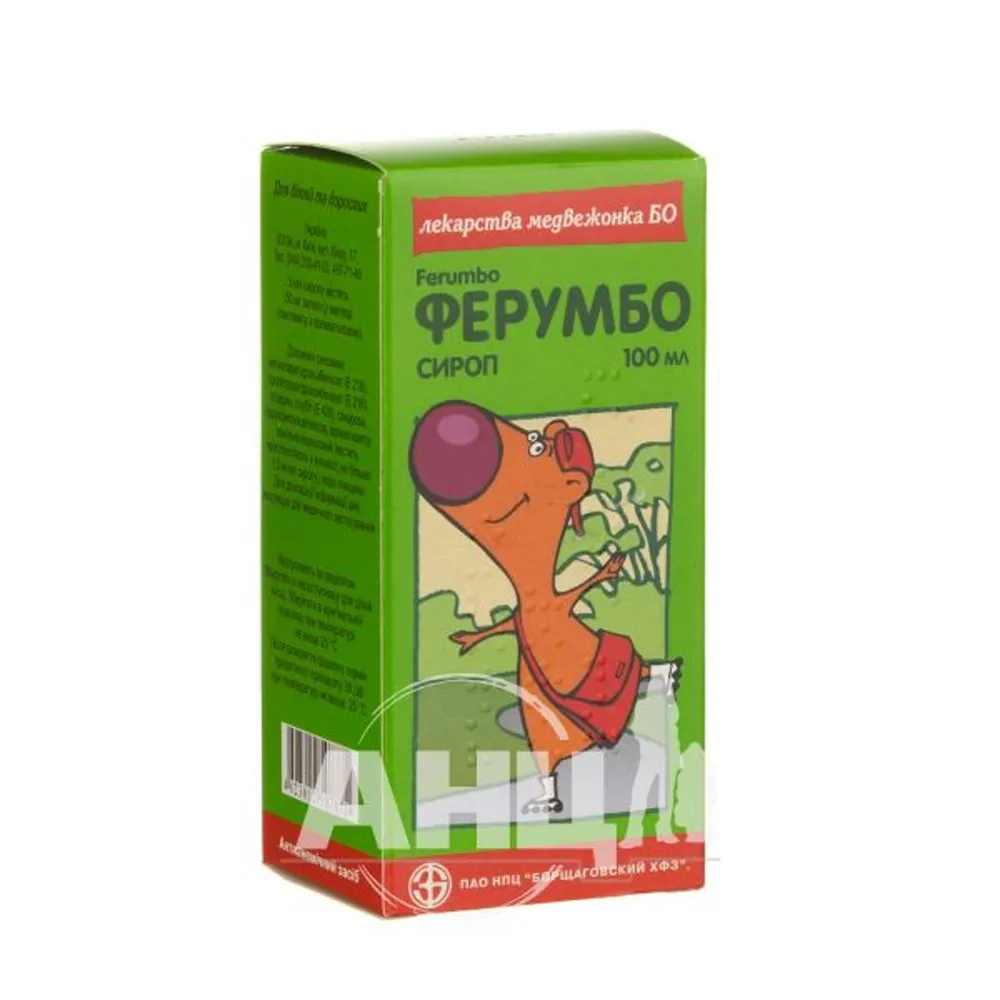
FERUMBO
UkraineThe drug is used to treat iron deficiency (both latent iron deficiency and iron deficiency anemia).
Frequently asked questions
How should Ferumbo be taken correctly?
The syrup should be taken during or immediately after meals. The dose can be divided into one or several administrations. For accurate measurement, use the included dosing pipette. The syrup can also be mixed with vegetable or fruit juices or nutritional supplements.
What are the contraindications for use?
The drug must not be taken in case of hypersensitivity to the components, excessive iron content in the body (hemochromatosis, hemosiderosis), anemias not related to iron deficiency, iron utilization disorders, esophageal stenosis, intestinal obstruction or diverticula, as well as in cases of regular blood transfusions or simultaneous use of intravenous iron.
What side effects may occur from taking Ferumbo?
The most common observation is a change in stool color (this is not dangerous). Abdominal pain, nausea, constipation, diarrhea, flatulence, vomiting, headache, or allergic reactions (rash, itching) are also possible. In children, staining of the tooth enamel may sometimes occur.
Can the drug be taken with other medicines or food?
The drug can be taken with food and is compatible with tetracyclines, aluminum hydroxide, and other phenolic compounds. However, it is not recommended to use this syrup simultaneously with parenteral (injectable) iron preparations.
Are there any special precautions for people with diabetes?
Yes, since the syrup contains carbohydrates (sucrose and sorbitol), patients with diabetes mellitus should take this into account when calculating doses.
Can the drug be used during pregnancy or breastfeeding?
Use during these periods is possible only after consultation with a physician and a thorough assessment of the benefits and risks.
Instructions for use
INSTRUCTIONS FOR MEDICAL USE OF THE MEDICINAL PRODUCT FERUMBO (FERUMBO)
Composition:
Active substance: iron (in the form of a complex with polymaltose);
5 ml of syrup contain 50 mg of iron (in the form of a complex with polymaltose) (calculated as 100 % dry substance);
Excipients: methylparahydroxybenzoate (E 218), propylparahydroxybenzoate (E 216), glycerol, sorbitol (E 420), sucrose, hydroxyethylcellulose, vanilla-cream flavoring (containing propylene glycol in an amount not exceeding 1.5 mg/ml of syrup), purified water.
Pharmaceutical form. Syrup.
Main physicochemical properties: red-brown viscous liquid with a specific odor.
Pharmacotherapeutic group. Antianaemic agents. Iron (III) preparations for oral use. ATC code B03A B05.
Pharmacological properties.
Pharmacodynamics.
The drug replenishes iron deficiency in the body and stimulates hemopoiesis and erythropoiesis. With course treatment, it promotes a rapid regression of clinical and laboratory symptoms of anemia. The complex of iron (III) hydroxide with polymaltose is stable and does not release iron in the form of free ions, thus avoiding such adverse effects as irritation of the gastrointestinal mucosa, tooth discoloration, and metallic taste, commonly associated with iron (II) preparations. It is characterized by a high safety profile. Iron transport in blood plasma is mediated by the gamma-globulin transferrin, synthesized in the liver. Iron bound to transferrin is delivered to body cells, where it is used for the synthesis of hemoglobin, myoglobin, and certain enzymes. Absorbed iron is stored mainly in the liver as a complex bound to ferritin. Trivalent iron participates in heme formation, leading to increased hemoglobin levels. With administration of the drug, clinical symptoms (weakness, fatigue, dizziness, tachycardia, dry skin) and laboratory signs of iron deficiency gradually disappear.
Pharmacokinetics.
When administered orally, iron from the polymaltose complex of iron (III) hydroxide is actively absorbed in the duodenum and small intestine (the greater the iron deficiency, the better the absorption). Active absorption of the iron (III)-containing drug prevents the development of overdose, which may occur with concentration-gradient absorption of simple iron (II) salts. Iron contained in the iron (III) hydroxide polymaltose complex lacks the pro-oxidant properties typical of simple iron (II) salts.
Clinical characteristics.
Indications.
Treatment of iron deficiency without anemia (latent iron deficiency) and iron deficiency anemia (clinically evident iron deficiency).
Iron deficiency and its severity must be confirmed by appropriate laboratory tests.
Contraindications.
- Hypersensitivity to any component of the drug;
- Excess iron in the body (hemochromatosis, hemosiderosis);
- Anemias not caused by iron deficiency (e.g., hemolytic anemia, megaloblastic anemia due to vitamin B12 deficiency, aplastic anemia);
- Disorders of iron utilization (anemia caused by lead poisoning, sideroblastic anemia, thalassemia);
- Esophageal stricture and/or other obstructive gastrointestinal disorders; intestinal diverticulosis, intestinal obstruction;
- Regular blood transfusions;
- Concomitant use of parenteral iron preparations.
Interaction with other medicinal products and other forms of interaction.
To date, no interactions have been reported between the iron(III) hydroxide polymaltose complex and other medicinal products or food.
Animal studies using tetracycline, aluminum hydroxide, acetylsalicylic acid, sulfasalazine, calcium carbonate, calcium acetate, calcium phosphate combined with vitamin D3, bromazepam, magnesium aspartate, D-penicillamine, methyldopa, paracetamol, and auranofin revealed no interactions with iron(III) hydroxide polymaltose complex.
In vitro studies showed no interaction between iron(III) hydroxide polymaltose complex and food components such as phytic acid, oxalic acid, tannins, sodium alginate, choline and choline salts, vitamin A, vitamin D3 and vitamin E, soybean oil, and soy flour. Study results indicate that iron(III) hydroxide polymaltose complex can be administered during or immediately after meals.
Interaction between iron(III) hydroxide polymaltose complex and tetracycline or aluminum hydroxide was investigated in three clinical studies (crossover studies involving 22 patients in each study). No significant reduction in tetracycline absorption was observed. Tetracycline plasma concentrations did not fall below the level required for efficacy. Administration of aluminum hydroxide and tetracycline did not reduce iron absorption from the iron(III) hydroxide polymaltose complex. Therefore, iron(III) hydroxide polymaltose complex may be used concomitantly with tetracyclines, other phenolic compounds, and aluminum hydroxide.
Concomitant use of parenteral iron preparations and Ferumbo is not recommended, as such use may impair absorption of orally administered iron preparations. Parenteral iron preparations may be used when oral therapy is not suitable.
The use of the drug does not affect the results of the fecal occult blood test (hemoglobin-sensitive test); therefore, there is no need to discontinue treatment with the drug prior to performing the test.
Special precautions for use.
Treatment of anemia should always be carried out under medical supervision. If there is no improvement in hematological parameters (an increase in hemoglobin levels by approximately 20–30 g/L within 3 weeks after initiation of treatment), the treatment regimen should be re-evaluated.
Premature discontinuation of treatment usually leads to recurrence of iron-deficiency anemia.
Infections and tumors may cause the development of anemia. It is inappropriate to use the drug in cases of decreased serum iron concentration and anemias associated with chronic inflammatory conditions or neoplasms, since administered iron accumulates in the reticuloendothelial system and is only utilized by the body after recovery from the underlying disease. Oral iron preparations may be administered after resolution of the primary condition, taking into account the benefit-risk ratio.
Iron preparations should be used with caution in patients with leukemia, chronic liver or kidney disease, inflammatory gastrointestinal disorders, peptic ulcer disease of the stomach or duodenum, and intestinal diseases (enteritis, ulcerative colitis, Crohn's disease).
Clinical data on the use of the drug in patients with hepatic or renal insufficiency are limited. A careful benefit-risk assessment must be performed for these patients before prescribing the drug.
Patients with diabetes mellitus should be aware that the drug contains carbohydrates (1 mL of syrup contains 0.02 bread units).
The drug contains sucrose and sorbitol; therefore, it should not be administered to patients with rare hereditary fructose intolerance (fructosemia), sucrase-isomaltase deficiency, or glucose-galactose malabsorption syndrome. Sorbitol may also cause a mild laxative effect. If you have been diagnosed with intolerance to certain sugars, consult your physician before taking this medicinal product.
Use during pregnancy or breastfeeding.
Data on use during the first trimester of pregnancy do not indicate any adverse effects on pregnancy or fetal or neonatal health. Animal studies have not revealed any direct or indirect harmful effects on pregnancy, embryonic or fetal development. Nevertheless, the drug should be used with caution during pregnancy.
Human breast milk contains iron bound to lactoferrin. It is unknown how much iron from the iron (III) hydroxide polymaltose complex passes into breast milk. It is unlikely that administration of the drug will have any adverse effect on a breastfed infant.
Use of the drug during pregnancy or breastfeeding is recommended only after consultation with a physician and careful assessment of the benefit-risk ratio.
Ability to influence reaction rate while driving or operating machinery.
Appropriate studies have not been conducted. It is unlikely that the drug affects reaction speed while driving or operating machinery.
Method of administration and dosage.
Ferumbo syrup should be taken during or immediately after a meal. It may be mixed with fruit or vegetable juices or with nutritional mixtures.
The daily dose can be taken in one or several doses.
The dosage and duration of treatment depend on the degree of iron deficiency.
To properly measure the syrup dose, use the dosing device provided in the package (a dosing pipette marked with graduations from 0.5 to 2.5 mL). 1 mL of the preparation contains 10 mg of iron.
For the treatment of clinically manifest iron deficiency, Ferumbo should be administered according to the recommendations below:
| Age group |
Daily dose in ml |
Daily dose in mg |
| Children under 1 year |
2.5-5 |
25-50 |
| Children from 1 to 12 years |
5-10 |
50-100 |
| Children aged 12 years and adults |
10-30 |
100-300 |
Treatment at the indicated doses lasts on average 3–5 months until hemoglobin levels in the blood are normalized. After this, to replenish iron stores in body tissues, the drug should be continued for several additional weeks at doses recommended for the treatment of latent iron deficiency (1/2 of the therapeutic dose) until serum ferritin levels are normalized.
Treatment of latent iron deficiency should continue for at least 1–2 months under monitoring of ferrokinetic parameters.
For latent iron deficiency, the following Ferumbo administration regimen is recommended:
| Age group |
Daily dose in ml |
Daily dose in mg |
| Children under 1 year |
1.5-2.5 |
15-25 |
| Children from 1 to 12 years |
2.5-5 |
25-50 |
| Children from 12 years and adults |
5-10 |
50-100 |
Children.
The drug can be used in children from birth. Due to the need for administering very small doses of the drug to premature infants, it is recommended to use similar medicinal products with a lower concentration of the active substance.
Overdose.
No signs of intoxication or excessive iron accumulation in the body have been observed following drug administration, even in cases of overdose, due to the specific characteristics of controlled release and the low toxicity of the iron (III) hydroxide polymaltose complex (LD50 in animals > 2000 mg iron/kg body weight). No cases of accidental overdose resulting in death have been reported.
Side effects
The most common side effect is a change in stool color (in 23% of patients), caused by the excretion of unabsorbed iron (not clinically significant).
Gastrointestinal tract: change in stool color; abdominal pain, including epigastric pain, nausea, constipation or diarrhea, flatulence, epigastric fullness, dyspepsia, and vomiting may occur rarely; isolated cases of tooth enamel discoloration in children are possible.
Immune system: allergic reactions, anaphylaxis.
Skin and subcutaneous tissue: skin hypersensitivity reactions such as urticaria, rash, exanthema, pruritus.
Nervous system: headache.
The product contains methylparahydroxybenzoate and propylparahydroxybenzoate preservatives, which may cause allergic reactions (possibly delayed).
If side effects occur, the dose should be temporarily reduced. In most cases, side effects are transient and mild.
Shelf life. 2 years. Do not use after the expiry date stated on the packaging.
After opening the bottle, the product is stable for 30 days when stored at a temperature not exceeding 25 °C.
Storage conditions. Store in the original packaging at a temperature not exceeding 25 °C. Keep out of reach of children.
Packaging. 50 ml in bottles, 100 ml in bottles and jars; 1 bottle or 1 jar per carton with a dosing device.
Prescription status. Prescription only.
Manufacturer. Public joint-stock company “Scientific and Production Center “Borshchagovskiy Chemical and Pharmaceutical Plant”.
Manufacturer’s address and location of business activity.
17, Miru Street, Kyiv, 03134, Ukraine.
Similar drugs
| Brand name | Dosage form | Active substance / Dosage | Manufacturer |
|---|---|---|---|
| AQUAPHERROL | syrup |
|
PJSC "Tekhnolog" |
| MALTOFER® | syrup |
|
Corden Pharma Freiburg SA (manufacturing of unpackaged products, quality control, primary and secondary packaging) |
The original data is available in the language of the country of manufacture.
Data source: State Register of Medicinal Products of Ukraine
Data last verified: August 13, 2026