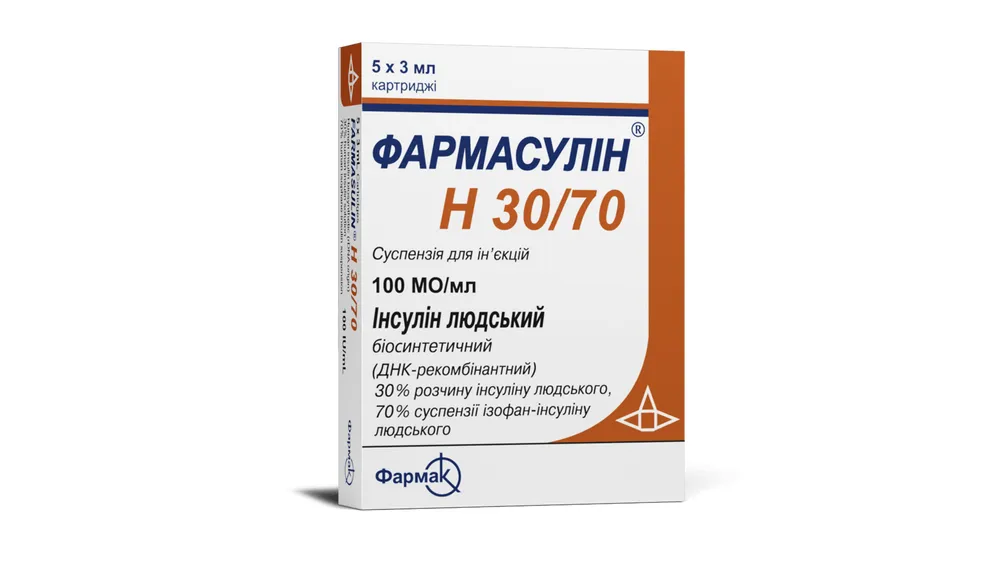
PHARMASULIN ® H
UkraineThe drug is used for the treatment of patients with diabetes mellitus who require insulin administration to maintain normal blood glucose levels.
Frequently asked questions
How should Pharmasulin ® h be taken correctly?
The drug is administered via subcutaneous injection into the area of the upper arm, thigh, buttocks, or abdomen. The dose is determined by a physician. It is important to constantly rotate the injection site (do not use the same site more than once a month) to avoid skin complications. Do not massage the injection site after administration.
What are the contraindications for use?
The drug must not be used in cases of hypoglycemia (low blood sugar), as well as in cases of hypersensitivity to the active substance or any of the excipients of the drug.
What are the possible side effects of Pharmasulin ® h?
The most common effect is hypoglycemia. Local allergic reactions (redness, swelling, itching), lipodystrophy or skin amyloidosis at the injection site, as well as the appearance of edema, are also possible. Very rarely, serious systemic allergic reactions may occur.
Can the drug be taken with other medicines?
Some medicines may change the insulin requirement. For example, thyroid hormones or glucocorticoids may increase the insulin requirement, while alcohol or certain antidepressants may decrease it. It is necessary to consult a physician before taking any other agents.
What to do in case of a hypoglycemic attack?
In mild cases, sugar or glucose-containing products can be consumed. In moderate cases, administration of glucagon or a glucose solution may be required. In case of loss of consciousness or coma, immediate medical assistance is required.
How should the drug be stored?
The original packaging should be stored in a refrigerator at a temperature from 2 °C to 8 °C. Do not freeze. After opening, cartridges or vials can be stored at a temperature from 15 °C to 25 °C for 28 days.
Instructions for use
INSTRUCTIONS for medical use of the medicinal product Farmasulin® H (Farmasulin® H)
Composition:
Active substance: human biosynthetic insulin (recombinant DNA);
1 ml of solution contains 100 IU of human biosynthetic insulin (recombinant DNA);
Excipients: metacresol; glycerin; diluted hydrochloric acid or sodium hydroxide solution; water for injections.
Pharmaceutical form. Solution for injection.
Main physicochemical properties: clear, colorless liquid.
Pharmacotherapeutic group. Antidiabetics. Insulin preparations. Short-acting insulins and analogues. ATC code A10AB01.
Pharmacological properties.
Pharmacodynamics.
Pharmasulin® H is a short-acting insulin preparation.
The primary action of insulin is the regulation of glucose metabolism. In addition, insulin affects various anabolic and anticatabolic processes in different tissues. In muscle tissue, these effects include enhanced synthesis of glycogen, fatty acids, glycerol, and protein, as well as increased amino acid uptake, along with simultaneous suppression of glycogenolysis, gluconeogenesis, ketogenesis, lipolysis, protein catabolism, and amino acid release.
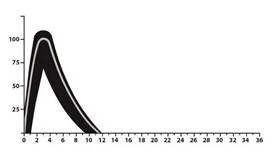
The figure below shows the typical insulin activity profile (glucose utilization curve) following subcutaneous injection as a bold line. The potential variability in duration and/or intensity of insulin activity among different patients is illustrated by the shaded area on the graph. Individual variability depends on factors such as dose volume, temperature at the injection site, and the patient's level of physical activity.
| Insulin activity |
|
Time (hours)
Pharmacokinetics.
Pharmasulin® H is human insulin produced using recombinant DNA technology.
The pharmacokinetics of insulin do not reflect the metabolic activity of the hormone. Therefore, when considering the activity of insulin, it is more appropriate to examine the glucose utilization curves (shown above).
No serious adverse effects related to the use of the drug were observed during toxicological studies.
Clinical characteristics.
Indications.
Treatment of patients with diabetes mellitus who require insulin administration to maintain normal glucose homeostasis.
Contraindications.
Hypoglycemia. Hypersensitivity to the active substance or to any of the excipients of the medicinal product, except in cases where desensitization therapy is applied.
Interaction with other medicinal products and other forms of interaction.
Some medicinal products affect glucose metabolism; therefore, consultation with a physician is recommended regarding the concomitant use of any other medicinal products with human insulin. The physician should consider possible interactions if the patient is taking any medicinal products.
Insulin requirement may increase when using medicinal products with hyperglycemic activity, such as glucocorticoids, thyroid hormones and growth hormone, danazol, β2-sympathomimetics (e.g. ritodrine, salbutamol, terbutaline), thiazides.
Insulin requirement may decrease when using medicinal products with hypoglycemic activity, such as oral hypoglycemic agents, salicylates (e.g. acetylsalicylic acid), certain antidepressants (monoamine oxidase inhibitors), certain angiotensin-converting enzyme inhibitors (captopril, enalapril), angiotensin II receptor blockers, non-selective β-blockers, or alcohol.
Somatostatin analogs (octreotide, lanreotide) may either increase or decrease insulin requirement.
Special precautions for use.
Patients should be advised to regularly rotate injection sites to reduce the risk of developing lipodystrophy and cutaneous amyloidosis. There is a potential risk of delayed insulin absorption and deterioration of glycaemic control following insulin injections into areas affected by these reactions. Changing the injection site to an unaffected skin area has been reported to cause hypoglycaemia. Monitoring of blood glucose levels is recommended after changing the injection site, and adjustment of antidiabetic medication dosage may be considered.
Any change in the type or brand of insulin should be made under close medical supervision. Changes in concentration, brand (manufacturer), type (soluble, NPH, mixed), species (animal insulin, human insulin, human insulin analogue), and/or method of production (recombinant DNA insulin or animal insulin) may require a change in dosage.
Dosage when treating patients with human insulin may differ from that used with animal-sourced insulin. Dosage adjustments may be needed from the first dose or during the first few weeks or months.
In some patients who experienced hypoglycaemic reactions after switching from animal insulin to human insulin, early warning symptoms of hypoglycaemia were less pronounced or different from those previously observed during treatment with animal insulin. Patients with significant improvement in blood glucose levels (e.g. due to intensified insulin therapy) may no longer experience some or any of the early warning symptoms of hypoglycaemia, and they should be informed about this. Conditions in which early warning symptoms of hypoglycaemia may be less specific or less pronounced include long-standing diabetes, diabetic neuropathy, or concomitant use of medications such as β-adrenergic blockers.
Untreated hypoglycaemic or hyperglycaemic reactions may lead to loss of consciousness, coma, or fatal outcome.
Inappropriate dosing or abrupt discontinuation of treatment, particularly in insulin-dependent diabetes, may result in hyperglycaemia and ketoacidosis—conditions that are potentially fatal.
Antibody formation may occur during treatment with human insulin, although usually to a lesser extent than with purified animal insulin.
Insulin requirements may change significantly in diseases of the adrenal glands, pituitary gland, thyroid gland, and in the presence of renal or hepatic insufficiency.
Insulin requirements may also increase during illness or emotional stress. Dosage adjustments may be necessary when there are changes in the intensity of physical activity or usual dietary patterns.
This medicinal product contains less than 1 mmol (23 mg) of sodium per dose, i.e., it is essentially sodium-free.
Combination with pioglitazone.
Cases of heart failure have been reported with concomitant use of pioglitazone and insulin, particularly in patients with risk factors for heart failure. This information should be taken into account when prescribing the combination of Pharmasulin® H with pioglitazone. When using this combination, patients should be monitored for signs and symptoms of heart failure, weight gain, and oedema. Treatment with pioglitazone should be discontinued if cardiac symptoms worsen.
Use during pregnancy or breastfeeding.
Patients with insulin-dependent diabetes mellitus or gestational diabetes receiving insulin therapy require careful monitoring throughout pregnancy. Insulin requirements usually decrease during the first trimester of pregnancy and then increase during the second and third trimesters. Patients with diabetes should inform their physician if they become pregnant or plan to become pregnant.
During pregnancy, patients with diabetes require close monitoring of blood glucose levels and overall health status.
Breastfeeding women with diabetes may require adjustments in insulin dosage and/or dietary regimen.
Ability to affect reaction speed when driving or operating machinery.
The ability of insulin-treated patients to concentrate and react may be impaired as a result of hypoglycaemia. This may represent a risk factor when such abilities are of particular importance (e.g. when driving a car or operating machinery).
Patients should be informed about the specific preventive measures necessary to avoid hypoglycaemia while driving. This is especially important for patients with reduced or absent awareness of hypoglycaemic warning symptoms or those who frequently experience episodes of hypoglycaemia. In such circumstances, the appropriateness of driving should be evaluated.
Method of Administration and Dosage
The dose is determined by a physician according to the individual needs of the patient.
Pharmasulin® H should be administered by subcutaneous injection using a reusable pen device for cartridges or insulin syringes—for vials.
For intravenous administration, Pharmasulin® H in vials may be used.
Subcutaneous injections should be administered in the abdominal wall, thigh, buttocks, or upper arm. Injection sites should be rotated regularly, ensuring that the same site is not used more than once a month, to reduce the risk of developing lipodystrophy and cutaneous amyloidosis (see sections "Special Warnings" and "Adverse Reactions" of this instruction).
Care must be taken during administration of Pharmasulin® H to avoid intravascular injection. The injection site should not be massaged after administration. Patients must be trained in the correct injection technique.
- Instructions for Use of the Medicinal Product
Cartridges
Each pen/cartridge must be used by only one patient, even if the needle is changed, to prevent the transmission of infectious agents.
The 3 mL injectable solution in cartridges must be used with an insulin pen device bearing the "CE" marking, in accordance with the pen manufacturer’s recommendations.
Pharmasulin® H in cartridges does not require resuspension and should only be used if the solution is clear, colorless, free of visible particles, and appears watery.
Cartridges are not designed for mixing different insulins. Empty cartridges must not be reused.
For loading the cartridge into the pen device, attaching the needle, and administering the insulin injection, refer to the insulin pen manufacturer’s instructions.
Each time a new pen device is used, the instructions for use should be carefully read, as they may contain updated information. This information does not replace the necessity of discussing the patient’s health status and prescribed treatment with a physician.
Use of the pen device is not recommended for patients with complete vision loss or impaired vision unless assisted by someone trained in the proper use of the pen.
Vials
Use an insulin syringe with markings corresponding to the insulin dose being administered. It is recommended to use syringes of the same type and brand. Inattention when using syringes may lead to incorrect insulin dosing.
Preparation of the Dose
- Before drawing insulin from the vial, check the clarity of the solution. The product must not be used if flakes appear, if the solution becomes cloudy, if a precipitate forms, or if deposits are observed on the glass of the vial!
Pharmasulin® H does not require resuspension and should only be used if the solution is clear, colorless, free of visible particles, and appears watery.
- Draw insulin from the vial by inserting a sterile needle through the vial stopper, which has been previously disinfected with alcohol. The insulin should be at room temperature before administration.
- Draw air into the syringe up to the mark corresponding to the required insulin dose, then inject this air into the vial.
- Invert the vial and syringe so that the vial is upside down, and draw the required dose of insulin.
- Remove the needle from the vial. Expel air from the syringe and verify the correct insulin dose has been drawn.
Aseptic technique must be followed during injection. To avoid infectious complications, single-use syringes must not be reused.
- Administration of the Medicinal Product
Administer the prescribed insulin dose as directed by the physician.
Children
The dosage, administration schedule, and number of injections for children are determined by a physician based on individual needs and specific circumstances.
Overdose
There is no single definition for insulin overdose, as blood glucose levels result from a complex interaction between insulin levels, glucose intake, and other metabolic processes. Hypoglycemia may result from an excess of insulin relative to food intake and energy expenditure.
Symptoms of hypoglycemia include lethargy, confusion, tachycardia, headache, sweating, and vomiting.
Mild hypoglycemia is usually treated by oral administration of glucose or sugar-containing products. Moderate to severe hypoglycemia may be managed by intramuscular or subcutaneous administration of glucagon, followed by oral carbohydrates once the patient is stabilized. For patients unresponsive to glucagon, intravenous glucose solution must be administered. If the patient is comatose, glucagon should be given intramuscularly or subcutaneously. In the absence of glucagon or if there is no response to glucagon, intravenous glucose solution must be administered. The patient should be fed as soon as he or she regains consciousness.
Continued carbohydrate intake and medical monitoring may be necessary, as hypoglycemia may recur after apparent clinical recovery.
Side effects.
Hypoglycemia is the most common adverse effect of insulin therapy in patients with diabetes mellitus. Severe hypoglycemia may lead to loss of consciousness and, in extreme cases, to fatal outcomes. The exact frequency of hypoglycemic episodes cannot be determined, as it results from the combined influence of insulin dose and other factors, such as the patient's diet composition and level of physical activity.
Local allergic reactions may occur frequently (frequency from 1/100 to < 1/10), including injection site reactions such as skin redness, swelling, and itching. These reactions usually resolve within several days to several weeks. In some cases, these symptoms may not be related to insulin itself but rather to other factors, such as irritants in skin-cleansing agents or improper injection technique.
Systemic allergic reactions are very rare (< 1/10,000), but potentially represent a more serious adverse effect and constitute a generalized allergic reaction to insulin. Symptoms may include generalized rash, dyspnea, wheezing, hypotension, tachycardia, and increased sweating. Severe cases of generalized allergy can be life-threatening. In exceptional cases of severe allergy to Pharmasulin® H, appropriate emergency measures must be taken immediately. Insulin substitution or desensitization therapy may be required.
Lipodystrophy at the injection site occurs infrequently (frequency from 1/1000 to < 1/100).
Skin and subcutaneous tissue disorders of unknown frequency – skin amyloidosis.
Disorders of the skin and subcutaneous tissue – lipodystrophy and skin amyloidosis – may occur at the injection site and may delay local insulin absorption. Regular rotation of injection sites within the same injection area may help reduce or prevent these reactions (see section "Special instructions").
Cases of edema development have been reported during insulin therapy, particularly when previous poor metabolic control is improved by intensive insulin treatment.
Reporting suspected adverse reactions
Reporting suspected adverse reactions after drug registration is highly important. It enables ongoing monitoring of the benefit-risk balance of the medicinal product. Healthcare and pharmacy professionals, as well as patients or their legal representatives, should report all suspected adverse reactions and lack of drug efficacy through the Automated Pharmacovigilance Information System at the following link: https://aisf.dec.gov.ua.
Shelf life. 2 years.
Storage period of the drug in cartridges and vials after opening: 28 days at a temperature of 15 °C to 25 °C, protected from overheating and direct sunlight. Cartridges in use should not be stored in the refrigerator.
Do not use the medicinal product after the expiry date stated on the packaging.
Storage conditions. Store in the original packaging at a temperature of 2 °C to 8 °C (in the refrigerator). Do not freeze. Keep out of reach of children.
Incompatibility. Pharmasulin® H must not be mixed with insulins from other manufacturers or with animal-sourced insulins.
Packaging. 3 mL in a cartridge. 5 cartridges in a blister. 1 blister per carton.
5 mL or 10 mL in a vial. 1 vial per carton.
Prescription category. Prescription only.
Manufacturer. JSC "Farmak".
Manufacturer's address and place of business.
74, Kyrylivska Street, Kyiv, 04080, Ukraine.
Similar drugs
| Brand name | Dosage form | Active substance / Dosage | Manufacturer |
|---|---|---|---|
| ACTRAPID® NM | solution for injection |
|
A/S Novo Nordisk (responsible for release of final product batches) |
| ACTRAPID® NM FLEXPEN® | solution for injection |
|
A/S Novo Nordisk (manufacturer of unpackaged product, primary packaging; quality control of product in primary packaging (PenFill® cartridges) and responsible for batch release of finished product (FlexPen®); manufacturer responsible for assembly, labeling and secondary packaging of finished product (FlexPen®); quality control of finished product (FlexPen®)) |
| HENSULIN R | solution for injection |
|
BIOTON S.A. (manufacturer responsible for manufacturing, primary and secondary packaging, quality control and batch release) |
| HUMODAR® P 100P | solution for injection |
|
PJSC "Production of Insulins "Indar" |
| HUMULIN REGULAR | solution for injection |
|
Lilly France |
| INSULIN® N | solution for injection |
|
Farmak JSC |
The original data is available in the language of the country of manufacture.
Data source: State Register of Medicinal Products of Ukraine
Data last verified: August 13, 2026