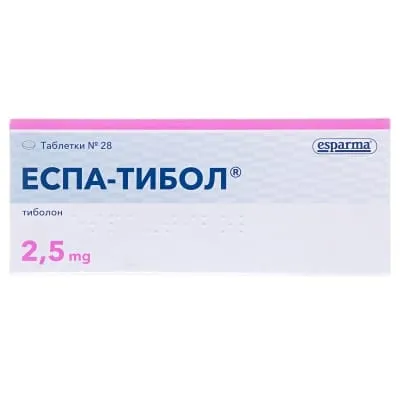
ESPA-TIBOL®
UkraineThe drug is used to treat symptoms of estrogen deficiency in women during the postmenopausal period, if menopause occurred more than one year ago.
Frequently asked questions
How should Espa-tibol® be taken correctly?
The recommended dose is 1 tablet per day. Tablets should be swallowed with a small amount of water, preferably at the same time each day. If you miss a dose, take the tablet within 12 hours; if more than 12 hours have passed, take the next dose at the usual time.
Who should not take this drug?
Contraindications include pregnancy and breastfeeding, suspected or existing breast cancer or estrogen-dependent tumors, unexplained vaginal bleeding, untreated endometrial hyperplasia, a history of thrombosis (venous thromboembolism) or arterial disease (infarction, stroke), acute liver disease, porphyria, and known thrombophilic disorders.
What are the possible side effects of Espa-tibol®?
Possible reactions include vaginal discharge, abdominal or breast pain, changes in body mass, edema, acne, excessive hair growth, and vaginal candidiasis. Dizziness, headache, and changes in liver function parameters may also be observed.
Does Espa-tibol® affect other medicines?
The drug may enhance the effect of anticoagulants (e.g., warfarin), therefore requiring close monitoring. It may also interact with drugs that induce the CYP3A4 enzyme (barbiturates, rifampicin, etc.) and herbal products containing St. John's wort, which may reduce the efficacy of the therapy.
When should treatment be discontinued immediately?
Treatment should be discontinued immediately in case of pregnancy, the onset of jaundice or worsening of liver function, a significant increase in blood pressure, or the onset of new, severe headaches (migraine).
Instructions for use
INSTRUCTION FOR MEDICAL USE OF THE MEDICINAL PRODUCT ESPA-TIBOL®
Composition:
Active substance: tibolone;
1 tablet contains tibolone 2.5 mg;
Excipients: potato starch, magnesium stearate, ascorbyl palmitate, lactose monohydrate.
Pharmaceutical form. Tablets.
Main physico-chemical properties: white or almost white, round tablets.
Pharmacotherapeutic group. Gonadal hormones and drugs used in disorders of the genital system. Estrogens.
ATC code G03C X01.
Pharmacological properties.
Pharmacodynamics.
After oral administration, tibolone is rapidly metabolized into three components which influence the pharmacodynamic profile of the medicinal product ESPA-TIBOL®. Two of these metabolites (3α-OH-tibolone and 3β-OH-tibolone) exhibit estrogen-like activity, while the third metabolite (Δ4-isomer of tibolone) exhibits progestogenic- and androgen-like activity.
ESPA-TIBOL® replaces the decline in estrogen production in postmenopausal women and alleviates symptoms caused by menopause.
Pharmacokinetics.
After oral administration of tibolone, the drug is rapidly and extensively absorbed.
Due to rapid metabolism, plasma levels of tibolone are very low. Plasma levels of the Δ4-isomer of tibolone are also very low. Therefore, some pharmacokinetic parameters cannot be determined. Peak plasma levels of the 3α-OH- and 3β-OH-metabolites are high, but no accumulation occurs.
| Tibolone |
3α-OH metabolite |
3β-OH metabolite |
∆4-isomer |
|||||
| OD |
BD |
OD |
BD |
OD |
BD |
OD |
BD |
|
| Cmax (ng/mL) |
1.37 |
1.72 |
14.23 |
14.15 |
3.43 |
3.75 |
0.47 |
0.43 |
| Caverage |
- |
- |
1.88 |
- |
- |
- |
- |
- |
| Tmax (h) |
1.08 |
1.19 |
1.21 |
1.15 |
1.37 |
1.35 |
1.64 |
1.65 |
| T1/2 (h) |
- |
- |
5.78 |
7.71 |
5.87 |
- |
- |
- |
| Cmin (ng/mL) |
- |
- |
- |
0.23 |
- |
- |
- |
- |
| AUC0–24 (ng/mL·h) |
- |
- |
53.23 |
44.73 |
16.23 |
9.20 |
- |
- |
OD = single dose; BD = multiple doses.
Elimination of tibolone occurs mainly in the form of conjugated (primarily sulfated) metabolites. A portion of the administered drug is excreted in urine, but the majority is excreted in feces.
Food intake does not have a significant effect on the absorption of the drug.
According to observational data, the pharmacokinetic parameters of tibolone and its metabolites are independent of renal function.
Clinical characteristics.
Indications.
Treatment of estrogen deficiency symptoms in postmenopausal women when menopause has occurred more than 1 year ago.
The decision to prescribe tibolone should be based on an assessment of individual risk factors; when prescribing the drug to patients aged 60 years and older, the risk of stroke should be taken into account.
Contraindications.
Hypersensitivity to the active substance or to any of the excipients.
Pregnancy and breastfeeding.
Suspicion of breast cancer, current or past history of breast cancer (the drug increased the risk of breast cancer recurrence in a placebo-controlled study).
Suspected or existing estrogen-dependent tumors (e.g., endometrial cancer).
Vaginal bleeding of unknown etiology.
Untreated endometrial hyperplasia.
History or current venous thromboembolism (deep vein thrombosis, pulmonary embolism).
History of arterial thromboembolic diseases (e.g., angina pectoris, myocardial infarction, stroke, or transient ischemic attack).
Acute liver disease or history of liver disease until liver function tests return to normal.
Porphyria.
Known thrombophilic disorders (e.g., protein C, protein S, or antithrombin deficiency).
Interaction with other medicinal products and other forms of interaction. Since tibolone may increase fibrinolytic activity of the blood, it may enhance the effect of anticoagulants. This effect has been observed during concomitant use with warfarin. Therefore, careful monitoring of the patient is required when tibolone and anticoagulants are used concomitantly, especially at the beginning and end of treatment. Warfarin dosage should be adjusted as necessary.
Information regarding pharmacokinetic interactions with tibolone is limited. An in vivo study showed that concomitant use with tibolone may moderately affect the pharmacokinetics of the CYP3A4 cytochrome substrate midazolam. Based on these data, interactions with other CYP3A4 substrates can be expected.
Substances that induce CYP3A4, such as barbiturates, carbamazepine, hydantoins, and rifampicin, may enhance the metabolism of tibolone and thereby affect its therapeutic efficacy.
Herbal preparations containing St. John's wort (Hypericum perforatum) may stimulate the metabolism of estrogens and progestogens.
Clinically significant increased metabolism of estrogens and progestogens may lead to reduced efficacy and changes in the uterine bleeding pattern.
Effect of estrogen-containing HRT on other medicinal products
It has been shown that estrogen-containing hormonal contraceptives, when used concomitantly with lamotrigine, significantly reduce lamotrigine plasma concentrations due to induction of lamotrigine glucuronidation.
This may reduce seizure control. Although the potential interaction between HRT and lamotrigine has not been studied, a similar interaction is expected, which may lead to reduced seizure control in women taking both medicinal products concomitantly.
Special precautions for use.
Tibolone should be used only for the treatment of postmenopausal symptoms that negatively affect quality of life. In all cases, a careful assessment of risks and benefits should be performed at least once a year. Treatment with tibolone should only be continued if the benefits outweigh the risks.
Each woman should be carefully evaluated for the risk of stroke, breast cancer, and, in women with an intact uterus, the risk of endometrial cancer.
Before initiating or resuming hormone replacement therapy (HRT), particularly tibolone therapy, the physician must review the patient’s complete personal and family medical history and perform a physical examination (including pelvic organs and breasts). Periodic examinations should be conducted during treatment, according to each woman’s individual needs. Women should be informed about the necessity of reporting any changes in their breasts. Diagnostic tests, including mammography, should be performed according to current, recognized screening guidelines, taking into account the clinical needs of each patient.
Conditions requiring monitoring
Patients with any of the following conditions or disorders, either currently present or with a history of, or those who experienced worsening during pregnancy or previous hormonal therapy, require careful monitoring. Consider that certain conditions may recur or worsen during tibolone treatment, particularly:
- leiomyoma (uterine fibroids) or endometriosis;
- risk factors for thromboembolic disorders;
- risk factors for estrogen-dependent tumors, e.g., first-degree family history of breast cancer;
- hypertension;
- liver function disorders (e.g., hepatic adenoma);
- diabetes mellitus, with or without vascular complications;
- gallstone disease;
- migraine or (severe) headache;
- systemic lupus erythematosus;
- history of endometrial hyperplasia;
- epilepsy;
- asthma;
- otosclerosis.
Reasons for immediate discontinuation of therapy
Treatment should be discontinued if any contraindications are detected or in the following situations:
- jaundice or worsening liver function;
- significant increase in blood pressure;
- new onset of migraine-like headaches;
- pregnancy or confirmed diagnosis of pregnancy.
Endometrial cancer
Available data from randomized, controlled trials are conflicting. However, observational studies have shown an increased risk of endometrial cancer in women treated with tibolone in routine clinical practice. According to these studies, the risk increased with longer duration of treatment. Transvaginal ultrasound findings indicate that tibolone increases endometrial wall thickness.
Breakthrough bleeding and spotting may occur during the first months of treatment. Patients should be advised to report any breakthrough bleeding or spotting, especially if such symptoms persist beyond 6 months of treatment or after its discontinuation. A gynecological examination, which may include endometrial biopsy, should be performed to determine the cause and exclude endometrial malignancy.
Ovarian cancer
Ovarian cancer is much rarer than breast cancer. Long-term (at least 5–10 years) use of estrogen-only hormone replacement therapy has been associated with a slight increase in the risk of ovarian cancer. Some studies, such as the Women's Health Initiative (WHI), suggest that long-term use of combined hormone replacement therapy may carry a similar or slightly lower risk. The Million Women Study (MWS) found that the relative risk of ovarian cancer associated with tibolone use is similar to that associated with other types of hormone replacement therapy.
Breast cancer
A meta-analysis of epidemiological studies, including the MWS, showed a significantly increased risk of breast cancer associated with the 2.5 mg dose. The risk emerged within 3 years of use and increased with duration of use. After discontinuation of treatment, the additional risk gradually decreases over time, and the time required to return to baseline risk depends on the duration of HRT use. If HRT is continued for more than 5 years, the increased risk may persist for 10 years or longer.
There are no data on the persistence of increased risk after stopping tibolone, but a similar pattern cannot be excluded.
Venous thromboembolism (VTE)
Estrogen-only or combined estrogen-progestogen hormone replacement therapy is associated with an increased relative risk of venous thromboembolism (VTE), i.e., deep vein thrombosis or pulmonary embolism. Randomized, controlled clinical trials and epidemiological studies have shown a 2–3-fold increased risk in treated women. In 1,000 women not using HRT over 5 years, approximately 3 cases of VTE would occur in the 50–59 age group and 8 cases in the 60–69 age group. In 1,000 healthy women using HRT for 5 years, there would be an additional 2 to 6 cases of VTE in the 50–59 age group and 5 to 15 cases in the 60–69 age group. VTE events were more frequent during the first year of HRT than in subsequent years. The risk associated with tibolone use is unknown.
Established risk factors for VTE include personal or family history of VTE, significant obesity (body mass index > 30 kg/m²), and systemic lupus erythematosus. There is no well-established evidence supporting a role of varicose veins in the development of VTE.
Patients with a history of VTE or thrombophilia have an increased risk of VTE. HRT further increases this risk. A personal and family history of VTE or recurrent spontaneous abortions should be evaluated to rule out thrombophilia predisposition. HRT or tibolone is contraindicated before a thorough assessment of thrombophilic factors or initiation of anticoagulant therapy. For women already taking anticoagulants, the benefit-risk ratio of HRT should be carefully evaluated.
The risk of VTE increases with prolonged immobilization, severe trauma, or major surgery. If a patient is undergoing surgery, preventive measures against VTE should be taken. If prolonged immobilization is expected after elective surgery, particularly abdominal or lower limb surgery, temporary discontinuation of HRT 4 to 6 weeks before the procedure should be considered. Treatment may be resumed only after full recovery of physical activity.
If VTE develops after starting HRT, the medication should be discontinued immediately. Patients should be informed about the necessity of reporting potential thromboembolic symptoms (e.g., painful leg swelling, sudden chest pain, shortness of breath).
Ischemic heart disease (IHD)
Randomized controlled trials provide no evidence of a protective effect against myocardial infarction in women with or without ischemic heart disease receiving combined estrogen-progestogen HRT or estrogen-only therapy. Epidemiological data from the General Practice Research Database (GPRD) do not confirm a protective effect against myocardial infarction in postmenopausal women taking tibolone.
Ischemic stroke
Tibolone increases the risk of ischemic stroke during the first year of treatment. The risk of stroke is strongly age-dependent; therefore, the impact of tibolone increases with advancing age.
Other conditions
Tibolone is not intended for use as a contraceptive.
Tibolone treatment leads to a pronounced, dose-dependent decrease in high-density lipoprotein (HDL) levels (from −16.7% at 1.25 mg to −21.8% at 2.5 mg after 2 years). Total triglyceride and lipoprotein levels also decrease. The reduction in total cholesterol and low-density lipoprotein (LDL) levels is dose-independent. LDL cholesterol levels remain unchanged. The clinical significance of these findings is currently unknown.
Estrogens may cause fluid retention; therefore, careful monitoring is required in patients with cardiac or renal impairment.
Women with hypertriglyceridemia should be monitored during estrogen replacement or HRT, as rare cases of marked increases in plasma triglyceride levels, potentially leading to pancreatitis, may occur.
Tibolone treatment leads to a slight decrease in thyroxine-binding globulin (TBG) and total T4. Total T3 levels remain unchanged. Tibolone reduces levels of sex hormone-binding globulin (SHBG), without affecting corticosteroid-binding globulin (CBG) or circulating cortisol levels.
Hormone replacement therapy does not improve cognitive function. There is evidence of an increased risk of dementia in women who initiated combined or estrogen-only HRT after age 65. Patients with rare hereditary conditions such as galactose intolerance, lactase deficiency, or glucose-galactose malabsorption should not take this medication.
Use during pregnancy or breastfeeding.
Tibolone is contraindicated during pregnancy. If pregnancy occurs during treatment with tibolone, treatment should be discontinued immediately. There are no clinical data on use during pregnancy. Animal studies have shown reproductive toxicity and teratogenicity of tibolone. The potential risk to humans is unknown.
Tibolone is contraindicated during breastfeeding.
Ability to influence reaction speed when driving or operating machinery.
The medication does not affect the ability to drive or operate machinery.
Method of Administration and Dosage.
The recommended dose is 1 tablet per day. Dose adjustment is not required for elderly patients. Tablets should be taken with a small amount of water or other beverage, preferably at the same time each day. For initiation and continuation of treatment of postmenopausal symptoms, the lowest effective dose for the shortest duration should be used. Progestogens should not be used separately during treatment with ESPA-TIBOL®.
Initiation of ESPA-TIBOL® treatment.
In women with natural menopause, treatment with ESPA-TIBOL® should not be started earlier than 12 months after the last natural menstrual bleeding. In cases of surgical menopause, treatment with ESPA-TIBOL® may be initiated immediately.
Prior to starting treatment with ESPA-TIBOL®, the cause of any irregular or unexpected vaginal bleeding, including bleeding occurring during hormone replacement therapy (HRT), should be investigated to exclude malignant conditions.
Switching from sequential or continuous combined HRT regimens.
When switching from a sequential HRT regimen, treatment with ESPA-TIBOL® should be started the day following the completion of the previous regimen. When switching from a continuous combined HRT regimen, treatment with ESPA-TIBOL® may be initiated at any time.
Missed dose.
If a dose is missed, it should be taken as soon as remembered, provided the delay is less than 12 hours. If the delay exceeds 12 hours, the next dose should be taken at the usual time. Missing a dose increases the risk of breakthrough bleeding or spotting.
Children
There is no information available on the use of this medicinal product in children.
Overdose
Acute toxicity of tibolone in animals is very low. Therefore, toxic symptoms are not expected, even after ingestion of several tablets at once. In women, acute overdose may cause nausea, vomiting, and vaginal bleeding. There is no specific antidote. If necessary, symptomatic treatment should be administered.
Adverse reactions
The adverse reactions listed below were recorded during 21 placebo-controlled studies (including the LIFT study) involving 4079 women receiving therapeutic doses of tibolone (1.25 or 2.5 mg), as well as 3476 women receiving placebo. The duration of treatment in these studies ranged from 2 months to 4.5 years.
The table lists adverse reactions that occurred significantly more frequently during tibolone treatment than with placebo.
Tibolone adverse effects
| Organ systems |
Common: > 1%, < 10% |
Uncommon: > 0.1%, < 1% |
Rare: > 0.01%, < 0.1% |
| Metabolism and nutrition disorders |
Edema** |
||
| Gastrointestinal disorders |
Lower abdominal pain |
Abdominal discomfort** |
|
| Skin and subcutaneous tissue disorders |
Abnormal hair growth |
Seborrheic dermatitis (acne) |
Pruritus** |
| Reproductive system and breast disorders |
Vaginal discharge Endometrial wall thickening Postmenopausal hemorrhage Breast discomfort Genital pruritus Vaginal candidiasis Vaginal hemorrhage Pelvic pain Cervical dysplasia Vulvovaginitis |
Breast pain Fungal infection Vaginal mycosis Nipple pain |
|
| Investigations |
Weight increased Abnormal cervical smear* |
* In most cases, benign changes were observed. The incidence of cervical pathology (cervical carcinoma) did not increase during treatment with tibolone compared to placebo.
** These adverse reactions were identified in the context of a surveillance study. The frequency category was estimated based on relevant clinical trials.
Additional adverse effects observed after marketing of the drug include dizziness, rash, seborrheic dermatitis, pruritus, gastrointestinal disorders, edema, headache, migraine, visual disturbances (including blurred vision), depression, effects on the musculoskeletal system such as arthralgia or myalgia, and changes in liver function tests.
Breast cancer risk.
A twofold increased risk of developing breast cancer has been reported in women receiving combined estrogen-progestagen therapy for more than 5 years.
The increased risk in women receiving estrogen-only therapy or tibolone is considerably lower than in those taking estrogen-progestagen combinations.
The level of risk depends on the duration of treatment.
According to the MWS study, the number of additional cases of breast cancer in women taking tibolone was comparable to those using estrogen monotherapy.
The level of risk depends on the length of time the drug is used.
Results from the largest study are provided in the table below:
MWS study – estimation of additional risk of developing breast cancer after 5 years of use:
| Age (years) |
Additional cases per 1000 women using HRT for 5 years * |
Relative risk # |
Additional cases per 1000 women taking HRT for 5 years (95% CI) |
| Estrogen-only therapy |
|||
| 50−65 |
9−12 |
1.2 |
1−2 (0−3) |
| Combined estrogen-progestogen HRT |
|||
| 50−65 |
9−12 |
1.7 |
6 (5−7) |
| Tibolone |
|||
| 50−65 |
9−12 |
1.3 |
3 (0−6) |
| *: Compared to baseline incidence in industrialized countries #: Overall relative risk. The relative risk is not constant and increases with longer duration of use. |
|||
Endometrial cancer risk
The risk of developing endometrial cancer is present in approximately 5 out of 1,000 women with a uterus who do not use HRT or tibolone.
In the LIFT study, no cases of endometrial cancer were diagnosed in the placebo group (n = 1,773) after 2.9 years, compared with 4 cases in the tibolone group (n = 1,746). This corresponds to a rate of 0.8 additional cases of endometrial cancer per 1,000 women taking tibolone annually in this study.
Ovarian carcinoma
The use of estrogen-only or combined estrogen-progestogen hormone replacement therapy (HRT) is associated with a slightly increased risk of ovarian carcinoma diagnosis.
A meta-analysis of 52 epidemiological studies indicates an increased risk of ovarian cancer in women currently using HRT compared to women who have never used HRT. In women aged 50 to 54 years who used HRT for 5 years, there is one additional case per 2,000 users. In women aged 50 to 54 years who do not use HRT, approximately 2 cases of ovarian carcinoma are diagnosed per 2,000 women over a 5-year period.
In the MWS study, 5 years of tibolone use resulted in one additional case per 2,500 patients.
Ischemic stroke risk
In a randomized, placebo-controlled trial over 2.9 years, a 2.2-fold increased risk of stroke was observed in women (mean age 68 years) taking tibolone 1.25 mg compared to those on placebo (28/2249 vs. 13/2257). In most cases (80%), the stroke was ischemic.
The likelihood of stroke increases significantly with age. Thus, the expected incidence over 5 years is estimated to be 3 cases per 1,000 women aged 50–59 years and 11 cases per 1,000 women aged 60–69 years.
Among women taking tibolone for 5 years, the number of additional stroke cases is expected to be approximately 4 per 1,000 women aged 50–59 years and 13 per 1,000 women aged 60–69 years.
Other adverse reactions known to be associated with estrogen-progestogen therapy include:
- estrogen-dependent benign and malignant neoplasms, e.g., endometrial cancer;
- venous thromboembolism (deep vein thrombosis of the legs or pelvic veins), and pulmonary embolism;
- myocardial infarction;
- gallbladder disease;
- skin and subcutaneous tissue disorders (chloasma, erythema multiforme, nodular erythema, vasculitic purpura);
- dementia in women over 65 years of age.
There is no evidence that the risk of myocardial infarction with tibolone differs from that associated with other types of HRT.
The risk of venous thromboembolism (VTE), such as deep vein thrombosis or pulmonary embolism, is 1.3 to 3 times higher with HRT. The occurrence is more likely during the first year of treatment than in subsequent years of use. Relevant results from the MWS study are presented in the table:
MWS study – additional VTE risk after 5 years of HRT
| Age group (years) |
Incidence per 1000 women in the placebo group over 5 years |
Relative risk (95% CI) |
Additional cases per 1000 users of HRT |
| Oral estrogen-only therapy |
|||
| 50−59 |
7 |
1.2 (0.6−2.4) |
1 (-3−10) |
| Combined oral estrogen and progestogen therapy |
|||
| 50−59 |
4 |
2.3 (1.2−4.3) |
5 (1−13) |
*: Study in women without a uterus
Reporting of adverse reactions after marketing authorization of the medicinal product is of great importance. It allows continuous monitoring of the benefit-risk balance of the medicinal product. Healthcare and pharmaceutical professionals, as well as patients or their legal representatives, should report all suspected adverse reactions and lack of efficacy of the medicinal product via the automated pharmacovigilance information system at the following link: https://aisf.dec.gov.ua
Shelf life. 36 months.
Storage conditions.
Store at a temperature not exceeding 25 °C.
Keep out of reach and sight of children.
Packaging.
28 tablets per blister, 1 blister per cardboard box.
Prescription status. Prescription only.
Manufacturer.
Lindopharm GmbH.
Manufacturer's address and place of business.
Neustrasse 82, 40721 Hilden, Germany.
Marketing Authorization Holder.
Esparma GmbH, Germany.
Address of the Marketing Authorization Holder.
Bielefelder Strasse 1, 39171 Zülpich, Germany.
Similar drugs
The original data is available in the language of the country of manufacture.
Data source: State Register of Medicinal Products of Ukraine
Data last verified: August 13, 2026