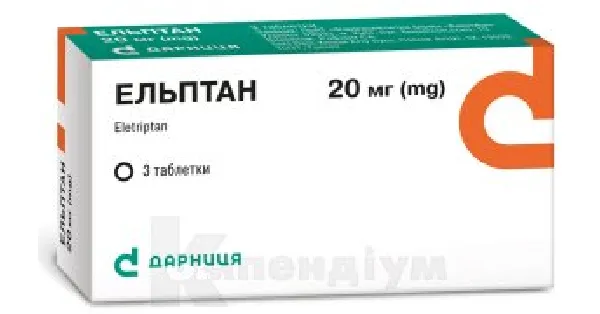
ELPTAN
UkraineThe drug is used for the treatment of acute headache during migraine attacks, with or without aura.
Frequently asked questions
How should Elptan be taken correctly?
Tablets should be swallowed whole with water. It is recommended to take the drug as early as possible after the onset of the headache. If the pain subsides but returns within 24 hours, another dose may be taken, but no earlier than 2 hours after the first dose. The maximum daily dose should not exceed 80 mg.
Who should not take this drug?
Elptan is contraindicated in people with hypersensitivity to its composition, severe liver or kidney impairment, cardiovascular diseases (ischemic heart disease, myocardial infarction, angina pectoris), arrhythmia, heart failure, peripheral vascular diseases, or a history of stroke. The drug should also not be taken together with ergotamine or other 5-HT1 receptor agonists.
What side effects can Elptan cause?
The most common side effects are weakness, drowsiness, nausea, and dizziness. Palpitations, a sensation of tightness in the throat, abdominal pain, dry mouth, flushing, sweating, and back pain are also possible. In rare cases, serious reactions may occur, such as cerebrovascular disorders, ischemia, or myocardial infarction.
Can the drug be taken with other medicines?
Elptan should not be used together with potent CYP3A4 inhibitors (e.g., ketoconazole, erythromycin, itraconazole) and drugs containing ergotamine. Caution should also be exercised when taking it concurrently with antidepressants (SSRIs or SNRIs) due to the risk of developing serotonin syndrome.
Does the drug affect the ability to drive a car?
Yes, the drug may cause drowsiness or dizziness, so caution should be exercised when performing tasks that require increased attention, such as driving a car.
Instructions for use
INSTRUCTIONS FOR MEDICAL USE OF THE MEDICINAL PRODUCT Elptan (Elptan)
Composition:
Active substance: eletriptan;
One film-coated tablet contains 25.17 mg, 50.34 mg or 100.68 mg of eletriptan hydrobromide monohydrate, equivalent to 20 mg, 40 mg or 80 mg of eletriptan, respectively;
Excipients: microcrystalline cellulose PH 102, lactose monohydrate (Tablettose 80), sodium croscarmellose, magnesium stearate;
Film coating: lactose monohydrate, hypromellose, titanium dioxide (E 171), triacetin, yellow azo dye FCF aluminum lake (E 110).
Pharmaceutical form. Film-coated tablets.
Main physicochemical properties:
20 mg tablets – orange-colored, round, biconvex, film-coated tablets.
40 mg tablets – orange-colored, round, biconvex, film-coated tablets, engraved with "40" on one side.
80 mg tablets – orange-colored, round, biconvex, film-coated tablets.
Pharmacotherapeutic group. Analgesics. Medicinal products used for the treatment of migraine. Selective serotonin 5-HT1 receptor agonists. Eletriptan. ATC code N02C C06.
Pharmacological Properties.
Pharmacodynamics.
Eletriptan is a selective agonist of vascular 5-HT1B and neuronal 5-HT1D receptors. Eletriptan also exhibits high affinity for the 5-HT1F receptor, which may contribute to its antimigraine mechanism of action. Eletriptan has low affinity for human recombinant 5-HT1A, 5-HT2B, 5-HT1E, and 5-HT7 receptors.
Clinical efficacy and safety.
The efficacy and safety of eletriptan in the acute treatment of migraine headache were evaluated in 10 placebo-controlled studies involving over 6000 patients (all treatment groups) at doses ranging from 20 to 80 mg. Headache relief was observed as early as 30 minutes after oral administration. Reduction of moderate or severe headache to mild headache or no headache at 2 hours was 59–77% for the 80 mg dose, 54–65% for the 40 mg dose, 47–54% for the 20 mg dose, and 19–40% after placebo. Eletriptan was also effective in treating associated migraine symptoms such as vomiting, nausea, photophobia, and phonophobia.
The recommendation for dose titration up to 80 mg is based on long-term open-label studies and a short-term double-blind study, where only a trend toward statistical significance was observed.
Eletriptan remains effective in menstrually associated migraine. When eletriptan is administered during the aura phase, no prevention of migraine headache has been demonstrated; therefore, eletriptan should be taken only during the headache phase of migraine.
In a pharmacokinetic study not controlled with placebo, patients with renal impairment showed a higher increase in blood pressure (BP) after an 80 mg dose of eletriptan compared to healthy volunteers (see section "Special precautions"). This cannot be explained by any pharmacokinetic changes and may thus represent a specific pharmacodynamic response to eletriptan in patients with renal impairment.
Pharmacokinetics.
Absorption. Eletriptan is rapidly and well absorbed through the gastrointestinal tract (at least 81%) following oral administration. Absolute bioavailability in males and females is approximately 50%. The median time to reach maximum plasma concentration (Tmax) is 1.5 hours after oral dosing. Linear pharmacokinetics have been demonstrated in the clinical dose range (20–80 mg).
The area under the plasma concentration-time curve (AUC) and maximum plasma concentration (Cmax) of eletriptan were increased by approximately 20–30% after oral administration with a high-fat meal. Following oral administration during a migraine attack, a reduction of approximately 30% in AUC was observed, and Tmax increased to 2.8 hours.
After repeated doses (20 mg three times daily) for 5–7 days, the pharmacokinetics of eletriptan remained linear, and accumulation was predictable. With multiple dosing of higher doses (40 mg three times daily and 80 mg twice daily), eletriptan accumulation over 7 days was greater than predicted (approximately 40%).
Distribution. The volume of distribution of eletriptan after intravenous administration is 138 L, indicating tissue distribution. Eletriptan is moderately bound to plasma proteins (approximately 85%).
Metabolism. In vitro studies indicate that eletriptan is primarily metabolized by the hepatic enzyme CYP3A4 of the cytochrome P-450 system. This conclusion is supported by increased plasma concentrations of eletriptan following co-administration with erythromycin and ketoconazole, known selective and potent inhibitors of CYP3A4. In vitro studies also suggest minor involvement of the CYP2D6 enzyme in eletriptan metabolism, although clinical studies do not indicate polymorphism of this enzyme.
Two major circulating metabolites have been identified, significantly contributing to plasma radioactivity after administration of carbon-14 (14C)-labeled eletriptan. In animal in vitro experiments, the metabolite formed via N-oxidation showed no activity, while the metabolite formed via N-demethylation exhibited activity similar to eletriptan. A third metabolite of plasma radioactivity was not formally identified but is likely a mixture of hydroxylated metabolites also observed in excreta (urine and feces). Plasma concentrations of the N-demethylated active metabolite are only 10–20% of eletriptan concentrations; therefore, a significant contribution to the therapeutic effect of eletriptan is not expected.
Elimination. The mean total plasma clearance of eletriptan after intravenous administration is 36 L/hour, resulting in a mean elimination half-life (T1/2) in plasma of approximately 4 hours. The mean renal clearance after oral administration is approximately 3.9 L/hour. Non-renal clearance accounts for approximately 90% of total clearance, indicating that eletriptan is primarily eliminated via metabolism.
Pharmacokinetics in special patient populations.
Gender. Results from meta-analysis of clinical pharmacology studies and population pharmacokinetic analysis indicate that gender has no clinically significant effect on eletriptan plasma concentrations.
Elderly patients (aged 65 years and older). Although not statistically significant, a slight decrease (16%) in clearance associated with a statistically significant increase in T1/2 (from approximately 4.4 to 5.7 hours) was observed between elderly patients (65–93 years) and adults (under 65 years).
Adolescents (12–17 years). The pharmacokinetics of eletriptan (40 mg and 80 mg) in adolescents with migraine, dosed between attacks, were similar to those observed in healthy adults.
Children (6–11 years). Eletriptan clearance in children is unchanged compared to adolescents. However, the volume of distribution in children is lower, leading to higher plasma levels than predicted after the same dose in adults.
Patients with hepatic impairment. In patients with hepatic impairment (Child-Pugh class A and B), statistically significant increases in both AUC (34%) and T1/2 were demonstrated. A small increase in Cmax (18%) was observed. These minor changes are not considered clinically important.
Patients with renal impairment. In patients with mild (creatinine clearance 61–89 mL/min), moderate (creatinine clearance 31–60 mL/min), or severe (creatinine clearance < 30 mL/min) renal impairment, there were no statistically significant changes in the pharmacokinetics of eletriptan or plasma protein binding. An increase in BP was observed in this group.
Clinical Characteristics.
Indications.
Treatment of acute headache associated with migraine attacks, with or without aura.
Contraindications.
- Hypersensitivity to the active substance or to any of the excipients of the medicinal product;
- Severe impairment of hepatic or renal function;
- Moderate to severe hypertension or untreated mild hypertension;
- Confirmed cardiovascular diseases, including ischemic heart disease (IHD) (angina pectoris, previous myocardial infarction, or confirmed asymptomatic ischemia); patients with coronary artery vasospasm (Prinzmetal's angina), or objective or subjective symptoms of IHD;
- Significant arrhythmias or heart failure;
- Peripheral vascular diseases;
- History of cerebrovascular events (CVA) or transient ischemic attack (TIA);
- Use of ergotamine or ergotamine derivatives (including methysergide) within 24 hours before or after treatment with eletriptan;
- Concomitant use of other 5-HT1 receptor agonists with eletriptan.
Interaction with other medicinal products and other forms of interactions.
Effect of other medicinal products on eletriptan.
Key clinical trials of eletriptan lack data on interactions with β-blockers, tricyclic antidepressants, selective serotonin reuptake inhibitors, and flunarizine; however, formal clinical interaction studies with these medicinal products are not available (except for propranolol, see below).
Population pharmacokinetic analysis of clinical studies showed that medicinal products such as β-blockers, tricyclic antidepressants, selective serotonin reuptake inhibitors, estrogen-based hormone replacement therapy, oral contraceptives, and calcium channel blockers are unlikely to affect the pharmacokinetic properties of eletriptan.
Eletriptan is not a substrate for monoamine oxidase (MAO); therefore, interactions between eletriptan and MAO inhibitors are not expected, and formal interaction studies have not been conducted.
In clinical studies with propranolol (160 mg), verapamil (480 mg), and fluconazole (100 mg), the Cmax of eletriptan increased by 1.1-fold, 2.2-fold, and 1.4-fold, respectively. The increase in AUC of eletriptan was 1.3-fold, 2.7-fold, and 2.0-fold, respectively. These effects are not considered clinically significant, as no associated increases in blood pressure or adverse events were observed compared to eletriptan administered alone.
In clinical studies with erythromycin (1000 mg) and ketoconazole (400 mg)—specific and potent inhibitors of CYP3A4—significant increases in Cmax of eletriptan (2-fold and 2.7-fold) and AUC (3.6-fold and 5.9-fold), respectively, were observed. This increased exposure was associated with an increase in the T1/2 of eletriptan from 4.6 to 7.1 hours with erythromycin and from 4.8 to 8.3 hours with ketoconazole (see section "Pharmacokinetics"). Therefore, eletriptan should not be used concomitantly with potent inhibitors of CYP3A4, such as ketoconazole, itraconazole, erythromycin, clarithromycin, josamycin, and protease inhibitors (ritonavir, indinavir, and nelfinavir).
In clinical studies, oral administration of caffeine/ergotamine 1 and 2 hours after eletriptan resulted in a minor but additive increase in blood pressure, which was predicted based on the pharmacology of both medicinal products. Therefore, it is recommended not to use medicinal products containing ergotamine or ergotamine-like compounds (e.g., dihydroergotamine) within 24 hours after taking eletriptan. Conversely, eletriptan should not be taken earlier than 24 hours after administration of medicinal products containing ergotamine.
Effect of eletriptan on other medicinal products.
There is no evidence in vitro or in vivo that clinical doses (and associated concentrations) of eletriptan inhibit or induce cytochrome P450 enzymes, including those involved in the metabolism of drugs via the CYP3A4 enzyme. Therefore, eletriptan is unlikely to cause clinically significant drug interactions mediated by these enzymes.
Selective serotonin reuptake inhibitors (SSRIs)/serotonin-norepinephrine reuptake inhibitors (SNRIs) and serotonin syndrome.
There have been reports describing patients with symptoms consistent with serotonin syndrome (including altered mental status, autonomic instability, and neuromuscular abnormalities) following concomitant use of SSRIs or SNRIs and triptans (see section "Special precautions for use").
Special precautions for use.
Eletriptan should not be used concomitantly with potent inhibitors of CYP3A4, such as ketoconazole, itraconazole, erythromycin, clarithromycin, josamycin, and protease inhibitors (ritonavir, indinavir, and nelfinavir).
Eletriptan should be used only when a clear diagnosis of migraine has been established. Eletriptan is not indicated for the treatment of hemiplegic, ophthalmoplegic, or basilar migraine.
Eletriptan should not be prescribed for the treatment of "atypical" headache, i.e., headache that may be associated with a potentially serious condition (e.g., stroke, aneurysm rupture), where cerebral vasoconstriction could be harmful.
Eletriptan may be associated with transient symptoms, including chest pain and chest tightness, which may be intense and radiate to the throat (see section "Adverse reactions"). If symptoms suggestive of ischemic heart disease (IHD) occur, the drug should be discontinued and appropriate evaluation initiated.
Patients with cardiovascular disease.
Eletriptan should not be used in patients at risk of IHD or without prior cardiovascular evaluation in patients who may have undiagnosed cardiovascular disorders (e.g., patients with hypertension, diabetes, smokers or users of nicotine replacement therapy, men over 40 years of age, postmenopausal women, and those with a strong family history of IHD).
Rare cases of coronary vasospasm, ischemia, or myocardial infarction have been reported in patients receiving 5-HT1 receptor agonists. Therefore, eletriptan and other 5-HT1 serotonin receptor agonists should not be used in patients with established IHD (see section "Contraindications").
An increased frequency of adverse effects may occur with concomitant use of triptans and herbal medicinal products containing St. John’s wort (Hypericum perforatum).
Within the clinical dose range, a slight and transient increase in blood pressure has been observed at eletriptan doses of 60 mg or higher. However, these increases were not associated with clinical consequences in the clinical trial program. The effect was more pronounced in patients with renal impairment and in elderly patients. In patients with renal insufficiency, the mean maximum increase in systolic blood pressure ranged from 14 to 17 mm Hg (normal 3 mm Hg), and in diastolic blood pressure from 14 to 21 mm Hg (normal 4 mm Hg). In elderly patients, the mean maximum increase in systolic blood pressure was 23 mm Hg compared to 13 mm Hg in younger individuals (placebo 8 mm Hg). Post-marketing reports of increased blood pressure have also been received from patients taking eletriptan doses of 20 and 40 mg, as well as from patients without renal insufficiency and from elderly patients.
Medication-overuse headache.
Prolonged use of any analgesic for headache may worsen headache. If this situation is suspected or occurs, the drug should be discontinued and medical advice sought. This diagnosis should be suspected in patients who have frequent or daily headaches despite (or because of) regular use of headache medications.
Serotonin syndrome.
Serotonin syndrome (including mental status changes, autonomic instability, and neuromuscular abnormalities) has been reported following concomitant use of triptans and SSRIs or SNRIs. These reactions may be severe. If concomitant treatment with eletriptan and SSRIs or SNRIs is clinically justified, appropriate monitoring of the patient is recommended, particularly at the beginning of treatment, when increasing the dose, or when adding another serotonergic medicinal product (see section "Interaction with other medicinal products and other forms of interaction").
Important information on excipients.
This medicinal product contains lactose and therefore is contraindicated in patients with rare hereditary conditions of galactose intolerance, Lapp lactase deficiency, or glucose-galactose malabsorption.
The medicinal product contains sodium; therefore, caution should be exercised in patients on a sodium-controlled diet.
This medicinal product also contains sunset yellow, which may cause allergic reactions.
Use during pregnancy or breastfeeding.
Pregnancy.
There is no clinical experience with the use of eletriptan in pregnant women. Eletriptan should be used during pregnancy only in the absence of a safe alternative, and only if the expected benefit to the mother outweighs the potential risk to the fetus.
Breastfeeding.
Eletriptan passes into breast milk. In one study involving 8 women who received a single 80 mg dose, the average total amount of eletriptan in breast milk over 24 hours in this group was 0.02% of the dose. Therefore, caution should be exercised when considering the use of eletriptan in breastfeeding women. The risk to the infant can be minimized by avoiding breastfeeding for 24 hours after administration of eletriptan.
Ability to affect reaction speed when driving or operating machinery.
Eletriptan has a moderate effect on the ability to drive and operate machinery. Drowsiness or dizziness may occur in some patients during migraine attacks or following treatment with eletriptan. Caution should be exercised when performing tasks requiring increased attention, such as driving a car or operating complex machinery, during migraine attacks and after administration of eletriptan.
Method of Administration and Dosage.
Method of administration.
Tablets should be swallowed whole with water.
Dosage.
The medicinal product should be administered as early as possible after the onset of migraine headache; however, it is also effective at later stages during a migraine attack.
If eletriptan is administered during the aura phase, prevention of migraine headache has not been demonstrated; therefore, this medicinal product should be used only during the headache phase of migraine.
The medicinal product should not be used for prophylactic purposes.
Adults (aged 18 to 65 years).
The recommended initial dose is 40 mg.
If headache recurs within 24 hours: if migraine headache resolves but then recurs within 24 hours, eletriptan may be re-administered at the same effective dose to treat the recurrence. If a second dose is required, it should not be taken within 2 hours of the initial dose.
If no response to treatment: if the first dose does not reduce headache within 2 hours, a second dose should not be administered to treat the same attack, as efficacy of a second dose has not been established in clinical studies.
Clinical trials indicate that although treatment may fail to relieve an acute attack, treatment of subsequent attacks may still be effective.
If patients receiving 40 mg do not achieve satisfactory effect (e.g., good tolerability but failure to relieve 2 out of 3 attacks), a dose of 80 mg may be effective for subsequent migraine attacks (see section "Pharmacodynamics"). A second 80 mg dose should not be administered within 24 hours.
The maximum daily dose should not exceed 80 mg (see section "Adverse Reactions").
Elderly patients.
The safety and efficacy of eletriptan in patients aged 65 years and older have not been systematically evaluated due to limited data from clinical trials. Therefore, the use of eletriptan in elderly patients is not recommended.
Patients with hepatic impairment.
Dose adjustment is not required in patients with mild or moderate hepatic impairment. Since eletriptan levels have not been studied in patients with severe hepatic impairment, its use in these patients is contraindicated.
Patients with renal impairment.
As the effects of eletriptan on blood pressure are enhanced in patients with renal impairment (see section "Special Warnings and Precautions for Use"), the recommended initial dose is 20 mg for patients with mild or moderate renal impairment. The maximum daily dose should not exceed 40 mg. The medicinal product is contraindicated in patients with severe renal impairment.
Children.
The use of eletriptan in patients under 18 years of age is not recommended due to lack of experience with its use in pediatric populations.
Overdose.
No significant adverse effects were observed after a single 120 mg dose. However, overdose with selective serotonin 5-HT1 receptor agonists may lead to hypertension or other more serious cardiovascular reactions.
In case of overdose, symptomatic and supportive therapy should be administered as needed. The elimination half-life of eletriptan is approximately 4 hours; therefore, monitoring and provision of symptomatic and supportive therapy after eletriptan overdose should continue for at least 20 hours or until signs and symptoms have resolved.
It is unknown whether hemodialysis or peritoneal dialysis affect serum concentrations of eletriptan.
Adverse reactions.
Summary of safety profile.
The most commonly reported adverse reactions known from clinical trials (5000 patients receiving doses of 20 mg, 40 mg, and 80 mg of eletriptan) were asthenia, somnolence, nausea, and dizziness. A dose-dependent tendency in the frequency of adverse events was also observed.
Table of adverse reactions.
The table below lists adverse reactions (with frequency ≥ 1% and higher compared to placebo) observed in patients receiving therapeutic doses in clinical trials, classified by frequency: common (from ≥ 1/100 to < 1/10), uncommon (from ≥ 1/1000 to < 1/100), or rare (from ≥ 1/10000 to < 1/1000).
| Organ system classes |
Common |
Uncommon |
Rare |
| Eye disorders |
vision disturbance, eye pain, photophobia, and lacrimation disorder |
conjunctivitis |
|
| Ear and labyrinth disorders |
dizziness |
ear pain and tinnitus |
|
| Respiratory, thoracic and mediastinal disorders |
throat tightness |
dyspnea, breathing abnormalities, yawning |
asthma and voice changes |
| Gastrointestinal disorders |
abdominal pain, nausea, dry mouth, dyspepsia |
diarrhea and glossitis |
constipation, esophagitis, tongue swelling, belching |
| Hepatobiliary disorders |
hyperbilirubinemia and increased AST |
||
| Renal and urinary disorders |
increased frequency of urination, urinary tract disorders, polyuria |
||
| Metabolism and nutrition disorders |
anorexia |
||
| Nervous system disorders |
drowsiness, headache, dizziness, paresthesia or abnormal sensations, hypertension, hypoesthesia, myasthenia |
tremor, hyperesthesia, ataxia, hypokinesia, speech disorder, stupor, taste distortion |
|
| Psychiatric disorders |
thinking disorder, excitement, confusion, depersonalization, euphoria, depression, insomnia |
emotional lability |
|
| Cardiac disorders |
palpitations, tachycardia |
bradycardia |
|
| Vascular disorders |
flushing |
peripheral vascular disorders |
increased blood pressure, shock |
| Blood and lymphatic system disorders |
lymphadenopathy |
||
| Skin and subcutaneous tissue disorders |
sweating |
rash, pruritus |
skin disorders, urticaria |
| Musculoskeletal and connective tissue disorders |
back pain, myalgia |
arthralgia, arthrosis, bone pain |
arthritis, myopathy, twitching |
| Reproductive system and breast disorders |
breast pain, menorrhagia |
||
| Infections and infestations |
pharyngitis, rhinitis |
respiratory tract infections |
|
| General disorders |
feeling of warmth, asthenia, chest symptoms (pain, tightness, pressure), chills, pain |
malaise, facial swelling, thirst, swelling, peripheral edema |
Common adverse reactions observed during the use of eletriptan are typical of the adverse reactions characteristic of 5-HT1 receptor agonists as a class.
Adverse reactions reported during post-marketing surveillance are listed below.
Gastrointestinal disorders: Rare reports of ischemic colitis and vomiting.
Nervous system disorders: Serotonin syndrome, rare cases of syncope, cerebral circulation disorders.
Vascular disorders: Hypertension.
Cardiac disorders: Myocardial ischemia or infarction, coronary artery spasm.
Immune system disorders: Allergic reactions, some of which may be serious, including angioneurotic edema.
Reporting of suspected adverse reactions.
Reporting of suspected adverse reactions after authorization of the medicinal product is important. It allows continued monitoring of the benefit/risk balance of the medicinal product. Healthcare professionals are required to report any suspected adverse reactions via the national reporting system.
Shelf life. 3 years.
Storage conditions.
Store in the original packaging at a temperature not exceeding 25 °C. Keep out of reach of children.
Packaging.
3 tablets in a blister; 1 blister in a carton.
Prescription status. Prescription only.
Manufacturer.
Rapharm S.A.
Manufacturer’s address and location of operations.
Thessi Pousi Agiou Luka, Paiania, 19002, Greece.
Marketing Authorization Holder.
JSC "Pharmaceutical Company "Darnytsia".
Address of the Marketing Authorization Holder.
13 Borispilska Street, Kyiv, 02093, Ukraine.
Similar drugs
| Brand name | Dosage form | Active substance / Dosage | Manufacturer |
|---|---|---|---|
| ELET | tablets, film-coated |
|
Chanel Medical Unlimited Company (manufacturer, responsible for manufacturing, primary and secondary packaging, quality control and batch release) |
| ELET | tablets, film-coated |
|
Chanel Medical Unlimited Company (manufacturer, responsible for manufacturing, primary and secondary packaging, quality control and batch release) |
| ELPTAN | tablets, film-coated |
|
Rafarm S.A. |
| ELPTAN | tablets, film-coated |
|
Rafarm S.A. |
The original data is available in the language of the country of manufacture.
Data source: State Register of Medicinal Products of Ukraine
Data last verified: August 13, 2026