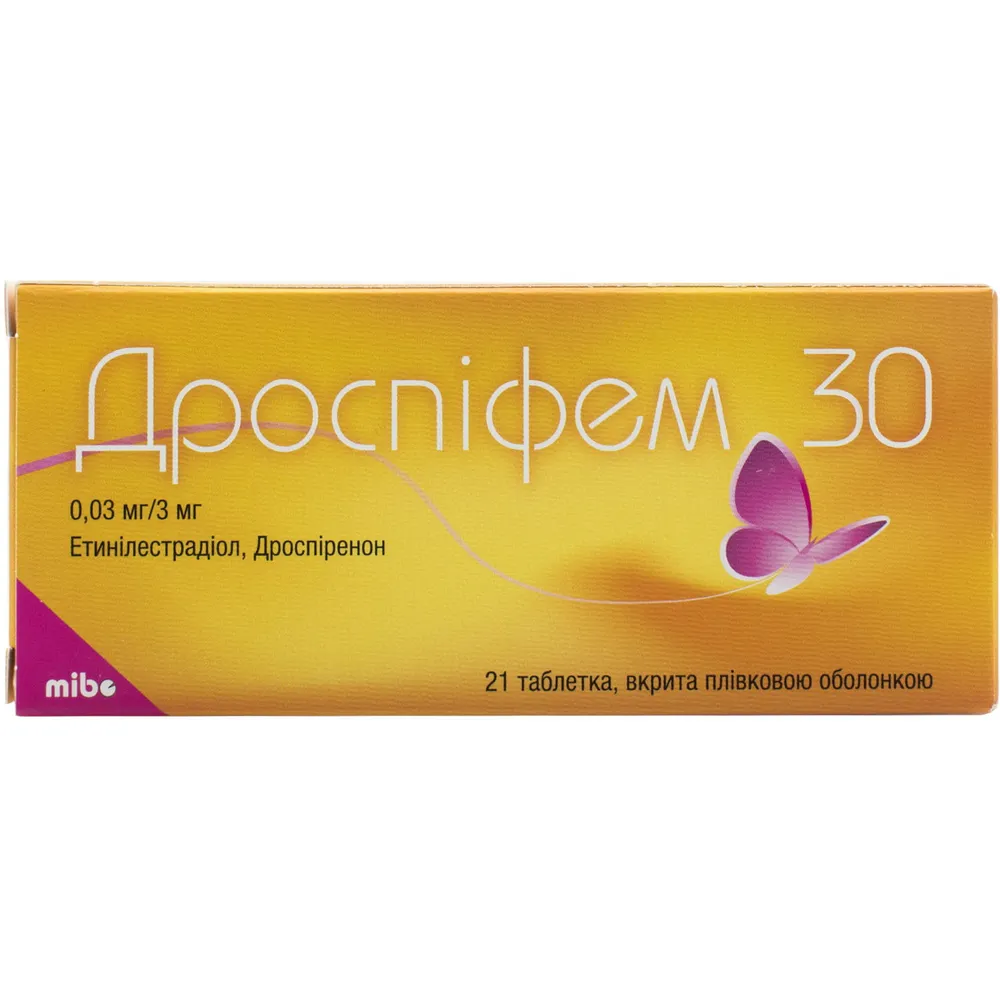
DROSPHIFEM® 30
UkraineThe drug is used for oral contraception (prevention of pregnancy).
Frequently asked questions
How should Drosphifem® 30 be taken?
The instructions do not specify a particular dosage regimen or method of administration (number of tablets per day); however, it is stated that the drug is a combined oral contraceptive.
Who should not take this drug?
Use is contraindicated in the presence or risk of developing venous or arterial thromboembolism, serious liver disease, severe renal impairment, liver tumors, breast cancer, vaginal bleeding of unknown origin, as well as hypersensitivity to the components of the drug.
What are the possible side effects of Drosphifem® 30?
The drug may increase the risk of developing venous thromboembolism (VTE). Symptoms of deep vein thrombosis may include leg swelling, pain, a sensation of heat, or skin discoloration on the leg. Symptoms of pulmonary embolism include sudden shortness of breath, coughing up blood, sharp chest pain, dizziness, or rapid heartbeat.
Does taking other medicines affect the efficacy of the drug?
Yes, some medicines (e.g., barbiturates, rifampicin, certain HIV drugs) may reduce the contraceptive efficacy. In such cases, additional barrier methods of protection must be used. Additionally, some drugs may increase the concentration of the components in the blood.
Is it necessary to use additional protection methods while taking other medicines?
Yes, if you are taking drugs that induce liver enzymes, a barrier method (e.g., a condom) should be used throughout the entire course of treatment and for an additional 28 days after its completion.
Instructions for use
INSTRUCTIONS FOR MEDICAL USE OF THE MEDICINAL PRODUCT DROSPYFEM®30
Composition:
Active substances: ethinylestradiol, drospirenone;
1 tablet contains: 0.03 mg ethinylestradiol and 3 mg drospirenone;
Excipients: lactose monohydrate, maize starch, maltodextrin, magnesium stearate, Opadry 10A32290 yellow (hypromellose, talc, titanium dioxide (E 171), polysorbate 80, yellow iron oxide (E 172)).
Pharmaceutical form. Film-coated tablets.
Main physicochemical properties: yellow, round, film-coated tablets without coating defects.
Pharmacotherapeutic group. Sex hormones and drugs used in disorders of the reproductive system. Systemic hormonal contraceptives.
Fixed combinations of progestogens and estrogens. Drospirenone and ethinylestradiol.
ATC code G03A A12.
Pharmacological properties.
Pharmacodynamics.
Pearl Index of contraceptive failures for the drug: 0.09 (upper two-sided 95% confidence interval (CI): 0.32).
Overall Pearl Index (contraceptive failures + user errors) for the drug: 0.57 (upper two-sided 95% confidence interval (CI): 0.90).
Drosdure® 30 is a combined oral contraceptive containing ethinylestradiol and drospirenone. At therapeutic doses, drospirenone exhibits antiandrogenic and moderate antimineralocorticoid properties. It has no estrogenic, glucocorticoid, or antiglucocorticoid activity. Thus, drospirenone has a pharmacological profile similar to that of natural progesterone.
The contraceptive effect of the drug is based on the interaction of several factors, the most important of which are inhibition of ovulation and changes in cervical secretion.
According to clinical trial data, the moderate antimineralocorticoid properties of Drosdure® 30 result in a moderate antimineralocorticoid effect.
Pharmacokinetics.
Drospirenone
Absorption. After oral administration, drospirenone is rapidly and almost completely absorbed. Maximum serum concentration – 38 ng/mL – is reached approximately 1–2 hours after single administration. Bioavailability ranges from 76% to 85%. Concomitant food intake does not affect the bioavailability of drospirenone.
Distribution. After oral administration, serum concentration of drospirenone declines with a mean terminal half-life of about 31 hours. Drospirenone binds to serum albumin and does not bind to sex hormone-binding globulin (SHBG) or corticosteroid-binding globulin (CBG). Only 3–5% of its total amount in serum is present in free form. The ethinylestradiol-induced increase in SHBG does not affect the binding of drospirenone to serum proteins. The mean volume of distribution of drospirenone is 3.7±1.2 L/kg.
Metabolism. Drospirenone is extensively metabolized after oral administration. The main metabolites in plasma are the acid form of drospirenone, formed by opening of the lactone ring, and 4,5-dihydro-drospirenone-3-sulfate, formed by hydration followed by sulfation. Drospirenone is also subject to oxidative metabolism catalyzed by CYP3A4. In vitro, drospirenone may weakly or moderately inhibit cytochrome P450 enzymes: CYP1A1, CYP2C9, CYP2C19, and CYP3A4.
Excretion. The metabolic clearance rate of drospirenone from serum is approximately 1.5±0.2 mL/min/kg. Only a negligible amount of drospirenone is excreted unchanged. Metabolites are excreted in urine and feces in a ratio of 1.2:1.4; the half-life of metabolites is approximately 40 hours.
Steady state. During the treatment cycle, the maximum steady-state serum concentration of drospirenone (approximately 70 ng/mL) is reached after 8 days of administration. Serum levels of drospirenone increased 3-fold as a result of the relationship between the terminal half-life and the dosing interval.
Special patient populations:
- Renal impairment: Steady-state serum concentration of drospirenone in women with mild renal impairment (creatinine clearance 50–80 mL/min) was comparable to that in women with normal renal function. Serum drospirenone levels were on average 37% higher in women with moderate renal impairment (creatinine clearance 30–50 mL/min) compared to women with normal renal function. Therapy with drospirenone was well tolerated in women with mild to moderate renal impairment. It has been shown that drospirenone administration does not have a clinically significant effect on serum potassium concentration;
- Hepatic impairment: In a single-dose study, oral clearance of drospirenone decreased by approximately 50% in subjects with moderate hepatic impairment compared to volunteers with normal liver function. This observed difference in clearance did not result in any difference in blood potassium concentrations between the two volunteer groups. Even in the presence of diabetes mellitus and concomitant therapy with spironolactone (two factors that may provoke hyperkalemia), no increase in serum potassium concentration above the upper limit of normal was observed. It can be concluded that drospirenone is well tolerated in individuals with mild or moderate hepatic impairment (Child-Pugh class B).
Ethinylestradiol
Absorption. After oral administration, ethinylestradiol is rapidly and completely absorbed. Following administration of 30 µg, peak serum concentration of 100 pg/mL is reached within 1–2 hours. Ethinylestradiol undergoes extensive first-pass effect, which depends on individual variations.
Absolute bioavailability is approximately 45%.
Distribution. The expected volume of distribution of ethinylestradiol is approximately 5 L/kg, and plasma protein binding is about 98%. Ethinylestradiol induces hepatic synthesis of SHBG and corticosteroid-binding globulins. With administration of 30 µg ethinylestradiol, plasma SHBG concentration increases from 70 to about 350 nmol/L.
Ethinylestradiol passes into breast milk in small amounts (0.02% of the dose).
Metabolism. Ethinylestradiol is extensively metabolized in the gastrointestinal tract and during first-pass through the liver. This occurs mainly via hydroxylation of the aromatic ring, resulting in a wide spectrum of hydroxylated and methylated metabolites, present in free form and as glucuronide and sulfate conjugates. Metabolic clearance of ethinylestradiol is approximately 5 mL/min/kg.
In vitro, ethinylestradiol is a reversible inhibitor of CYP2C19, CYP1A1, and CYP1A2, as well as an inhibitor of CYP3A4/5, CYP2C8, and CYP2J2.
Excretion. Ethinylestradiol is practically not excreted unchanged. Ethinylestradiol metabolites are excreted in urine and bile in a ratio of 4:6. The half-life of metabolites is nearly 1 day. The half-life of metabolites is 20 hours.
Steady state. Steady state is achieved in the second half of the treatment cycle, when serum levels of ethinylestradiol increase by a factor of 1.4–2.1.
Ethnicity
No clinically significant differences in the pharmacokinetics of drospirenone or ethinylestradiol were observed between Japanese women and Caucasian women.
Preclinical safety data.
In laboratory animals, effects of drospirenone and ethinylestradiol were limited to those associated with known pharmacological actions. In particular, reproductive toxicity studies in animals revealed species-specific embryotoxic and fetotoxic effects. At exposures exceeding those in users of Drosdure® 30, effects on sexual differentiation were observed in certain animal species.
Clinical characteristics.
Indications.
Oral contraception.
The decision to prescribe Drospifem® 30 should be based on individual patient risk factors, particularly those related to venous thromboembolism (VTE). The VTE risk associated with treatment using Drospifem® 30 should also be compared with that of other combined hormonal contraceptives (CHCs) (see further details in the sections “Contraindications” and “Special precautions”).
Contraindications.
CHCs must not be used if any of the conditions listed below are present. If any of these conditions develop for the first time during CHC use, the drug should be discontinued immediately.
- Presence of, or risk factors for, venous thromboembolism (VTE):
- Current venous thromboembolism, including patients receiving anticoagulant therapy, or history of VTE (e.g., deep vein thrombosis (DVT) or pulmonary embolism (PE));
- Hereditary or acquired predisposition to venous thromboembolism, including activated protein C resistance (including factor V Leiden mutation), antithrombin-III deficiency, protein C deficiency, protein S deficiency;
- Major surgery with prolonged immobilization (see section “Special precautions”);
- High risk of venous thromboembolism due to multiple risk factors (see section “Special precautions”).
- Presence of, or risk factors for, arterial thromboembolism (ATE):
- Current arterial thromboembolism or history thereof (e.g., myocardial infarction), or presence of prodromal symptoms (e.g., angina pectoris);
- Current or past cerebrovascular accident, or presence of prodromal symptoms (e.g., transient ischemic attack (TIA));
- Hereditary or acquired predisposition to arterial thromboembolism, including hyperhomocysteinemia and antiphospholipid antibodies (anti-cardiolipin antibodies, lupus anticoagulant);
- History of migraine with focal neurological symptoms;
- High risk of arterial thromboembolism due to multiple risk factors (see section “Special precautions”) or due to presence of a single serious risk factor such as:
- diabetes mellitus with vascular complications;
- severe arterial hypertension;
- severe dyslipoproteinemia.
- Current or past severe liver disease until liver function tests have returned to normal limits.
- Severe or acute renal insufficiency.
- Current or past liver tumors (benign or malignant).
- Current or past hormone-sensitive breast cancer (see section “Special precautions”, subsection “Tumors”).
- Vaginal bleeding of unknown etiology.
- Concomitant use with medicinal products containing ombitasvir/paritaprevir/ritonavir and dasabuvir, or with medicinal products containing glecaprevir/pibrentasvir, or sofosbuvir/velpatasvir/voxilaprevir (see section “Interaction with other medicinal products and other forms of interaction”).
- Hypersensitivity to the active substances or to any of the excipients of the product.
Interaction with other medicinal products and other forms of interaction.
The appropriateness of using Drospifem® 30 should be discussed with the patient if any of the conditions or risk factors listed below are present.
Effect of other medicinal products on Drospifem® 30
Interactions are possible with drugs that induce microsomal enzymes. This may lead to increased clearance of sex hormones, which in turn may result in breakthrough bleeding and/or loss of contraceptive efficacy.
Therapy
Enzyme induction may occur within a few days of starting treatment. Maximum enzyme induction generally occurs after several weeks. After discontinuation of the inducing drug, enzyme induction may persist for approximately 4 weeks.
Short-term treatment
Women taking enzyme-inducing drugs should temporarily use a barrier method or another contraceptive method in addition to the combined oral contraceptive (COC). The barrier method should be used throughout the duration of concomitant therapy and for an additional 28 days after its discontinuation.
If concomitant therapy continues after the last tablet of the COC pack has been taken, the next pack of COC tablets should be started immediately without the usual tablet-free interval.
Long-term treatment
For women on long-term therapy with enzyme-inducing substances, a barrier method or another reliable non-hormonal contraceptive method is recommended.
The following interactions have been documented according to published data
Substances that increase COC clearance (reduced COC efficacy due to enzyme induction), e.g.:
barbiturates, bosentan, carbamazepine, phenytoin, primidone, rifampicin; HIV medications: ritonavir, nevirapine, and efavirenz; also possibly felbamate, griseofulvin, oxcarbazepine, topiramate, and herbal products containing St. John's wort (Hypericum perforatum).
Substances with variable effects on COC clearance:
When co-administered with COCs, many combinations of HIV protease inhibitors and non-nucleoside reverse transcriptase inhibitors, including combinations with hepatitis C virus (HCV) inhibitors, may either increase or decrease plasma concentrations of estrogens or progestins. The net effect of these changes may be clinically significant in some cases.
Therefore, information on potential interactions and any other recommendations should be reviewed in the prescribing information of the HIV/HCV medicinal products being co-administered. In case of any uncertainty, women should additionally use a barrier method of contraception during therapy with protease inhibitors or non-nucleoside reverse transcriptase inhibitors.
Substances that decrease COC clearance (enzyme inhibitors)
The clinical significance of potential interactions with enzyme inhibitors remains unclear.
Concomitant use of strong CYP3A4 inhibitors may increase plasma concentrations of estrogen, progestin, or both components.
In a multiple-dose study of drospirenone (3 mg/day)/ethinylestradiol (0.02 mg/day) co-administered with the strong CYP3A4 inhibitor ketoconazole for 10 days, the AUC(0-24h) of drospirenone and ethinylestradiol increased by 2.7-fold and 1.4-fold, respectively.
When etoricoxib was administered at doses of 60 to 120 mg/day concomitantly with a combined hormonal contraceptive containing 0.035 mg ethinylestradiol, plasma concentrations of ethinylestradiol increased by 1.4 to 1.6 times, respectively.
Effect on other medicinal products. Oral contraceptives may affect the metabolism of other drugs. They may alter plasma and tissue concentrations of active substances: increasing (e.g., cyclosporine) or decreasing (e.g., lamotrigine).
Based on available in vivo interaction and inhibition studies conducted in female volunteers using omeprazole, simvastatin, and midazolam as probe substrates, the effect of drospirenone at a dose of 3 mg on other medicinal products metabolized by cytochrome P450 is unlikely.
Clinical data indicate that ethinylestradiol inhibits the clearance of CYP1A2 substrates, leading to mild (e.g., theophylline) or moderate (e.g., tizanidine) increases in their plasma concentrations.
Other forms of interaction. In patients with renal impairment, concomitant administration of drospirenone with ACE inhibitors or nonsteroidal anti-inflammatory drugs does not significantly affect serum potassium levels. In such cases, serum potassium levels should be monitored during the first treatment cycle (see also section “Special precautions”).
Laboratory tests
Use of COCs may affect results of certain laboratory tests, such as liver function biochemical parameters, thyroid, adrenal, and kidney function tests, plasma concentrations of transport proteins such as corticosteroid-binding globulin, plasma concentrations of lipid/lipoprotein fractions, carbohydrate metabolism parameters, and coagulation and fibrinolysis parameters. These changes are usually within normal ranges. Drospirenone increases plasma renin and aldosterone activity, induced by its moderate anti-mineralocorticoid activity.
Pharmacodynamic interactions
During clinical trials in patients treated for hepatitis C virus (HCV) infection using medicinal products containing ombitasvir/paritaprevir/ritonavir and dasabuvir, with or without ribavirin, ALT levels significantly increased, exceeding the upper limit of normal (ULN) 5 times more frequently in women using ethinylestradiol-containing products, such as combined hormonal contraceptives (CHCs). Additionally, ALT elevations were also observed with antiviral agents containing glecaprevir/pibrentasvir or sofosbuvir/velpatasvir/voxilaprevir in women using ethinylestradiol-containing products, such as CHCs (see sections “Contraindications”). Therefore, patients taking Drospifem® 30 should switch to an alternative method of contraception (e.g., progestogen-only contraception or non-hormonal contraceptive methods) prior to initiating treatment with these combination drug regimens. Treatment with Drospifem® 30 may be resumed 2 weeks after completion of these combination drug regimens.
Special precautions for use.
If any of the conditions/factors listed below are present, the potential risks and expected benefits of using COCs should be carefully weighed in each individual case. If any of the following conditions or risk factors worsens, deteriorates, or develops anew, it is recommended to consult a physician who may decide to discontinue the medication.
The drug should be discontinued in cases of suspected or confirmed venous thromboembolism (VTE) or arterial thromboembolism (ATE). If anticoagulant therapy is initiated, alternative effective contraception should be provided due to the teratogenic effects of anticoagulants (coumarins).
- Circulatory disorders
The incidence of venous and arterial thrombotic and thromboembolic diseases in women without risk factors who use low-dose estrogen combined oral contraceptives (COCs) (less than 50 mcg ethinylestradiol), such as Drospifem® 30, ranges from 20 to 40 cases per 100,000 women per year, although this risk varies depending on the type of progestogen. For comparison, in women who do not use contraceptives, the incidence of these diseases is between 5 and 10 cases per 100,000.
Risk of venous thromboembolism (VTE)
The use of any COCs increases the risk of venous thromboembolism (VTE) in women who take them compared to those who do not. Medicinal products containing levonorgestrel, norgestimate, or norethisterone are associated with a lower risk of VTE. The use of other medicinal products, such as Drospifem® 30, may double the risk. The decision to use products other than those with the lowest VTE risk should only be made after discussing with the woman. It is essential to ensure she understands the risk of VTE associated with the use of Drospifem® 30, the impact of her individual risk factors, and that the risk of VTE is highest during the first year of use. According to some data, the risk of VTE may increase when resuming COC use after a break of 4 weeks or longer.
The risk of developing venous thromboembolic complications in women using COCs may be substantially higher in the presence of additional risk factors, especially multiple ones (see table).
Drospifem® 30 is contraindicated in women with a combination of risk factors that result in a very high risk of venous thrombosis (see section "Contraindications"). If a woman has more than one risk factor, the increase in risk may be greater than the sum of risks associated with each individual factor; therefore, the overall risk of VTE should be considered. If the benefit-risk ratio is considered unfavorable, COCs should not be prescribed (see section "Contraindications").
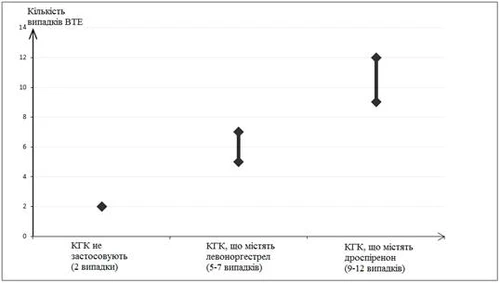
Approximately 2 out of 10,000 women who do not use COCs and are not pregnant will develop VTE over a 1-year observation period. However, for any individual woman, the risk may be much higher depending on risk factors (see below).
It has been established that among 10,000 women using COCs containing drospirenone, 9–12 women will develop VTE within one year. These figures are based on all available epidemiological data, taking into account relative risks associated with different COCs compared to COCs containing levonorgestrel.
This compares to a rate of 6 among women using COCs containing levonorgestrel. On average, 5–7 cases per 10,000 woman-years, based on calculated relative risk of using levonorgestrel-containing COCs compared to non-COC users (approximately 2.3–3.6 cases).
In both cases, the number of VTE events per year was lower than typically expected during pregnancy or the postpartum period.
VTE results in fatal outcomes in 1–2% of cases. The additional risk of VTE is highest during the first year of using a combined oral contraceptive.
Number of VTE cases per 10,000 women per year
Risk factors for VTE development
The risk of venous thromboembolic complications in women using COCs may be substantially increased in the presence of additional risk factors, especially multiple ones (see table).
The use of Drospifem® 30 is contraindicated in women with multiple risk factors that may increase the risk of venous thrombosis (see section "Contraindications"). If a woman has more than one risk factor, the increase in risk may be greater than the sum of risks associated with each individual factor; therefore, the overall risk of VTE should be considered. If the benefit-risk ratio is unfavorable, COCs should not be prescribed (see section "Contraindications").
Risk factors for VTE development
| Risk factor |
Comment |
| Obesity (body mass index exceeding 30 kg/m²). |
Risk increases significantly with increasing body mass index. Particular attention is required when other risk factors are present. |
| Long-term immobilization, major surgery, surgery on the lower limbs or pelvic organs, neurosurgical procedures, or major trauma. Note: temporary immobilization, including flights > 4 hours, may also be a risk factor for VTE, especially in women with other risk factors. |
It is recommended to discontinue the use of the drug (at least 4 weeks before elective surgery) and not resume treatment until at least 2 weeks after full restoration of mobility. Alternative methods of contraception should be used to prevent unintended pregnancy. Antithrombotic therapy should be considered if the drug was not previously discontinued. |
| Family history (venous thromboembolism in a close relative or parent, especially at a relatively young age, e.g., before 50 years). |
If there is a hereditary predisposition, women should consult a specialist before using any COCs. |
| Other conditions associated with VTE. |
Cancer, systemic lupus erythematosus, hemolytic-uremic syndrome, chronic inflammatory bowel disease (Crohn’s disease or ulcerative colitis), and sickle cell anemia. |
| Age. |
Especially over 35 years of age. |
There is no consensus regarding the possible influence of varicose veins and superficial thrombophlebitis on the development and progression of venous thrombosis.
Particular attention should be paid to the increased risk of thromboembolism during pregnancy, especially within 6 weeks after childbirth (for information on pregnancy or breastfeeding, see section "Use during pregnancy or breastfeeding").
Symptoms of VTE (venous thromboembolism: deep vein thrombosis and pulmonary embolism)
Women should be advised to seek immediate medical attention and inform their physician that they are taking COCs if any of the following symptoms occur.
Symptoms of deep vein thrombosis (DVT) may include:
- Unilateral swelling of the leg and/or foot or a region along a vein in the leg;
- Pain or increased sensitivity in the leg, which may occur only when standing or walking;
- A sensation of warmth in the affected leg;
- Redness or change in skin color of the leg.
Symptoms of pulmonary embolism (PE) may include:
- Sudden unexplained shortness of breath or rapid breathing;
- Sudden cough, which may be accompanied by hemoptysis (coughing up blood);
- Sudden chest pain;
- Severe dizziness or vertigo;
- Rapid or irregular heartbeat.
Some of the above symptoms (e.g., shortness of breath, cough) are nonspecific and may be misinterpreted as signs of more common and less serious conditions (e.g., respiratory infection).
Other signs of vascular occlusion may include: sudden limb pain, swelling, acute abdomen, and mild cyanosis of the skin of the extremities.
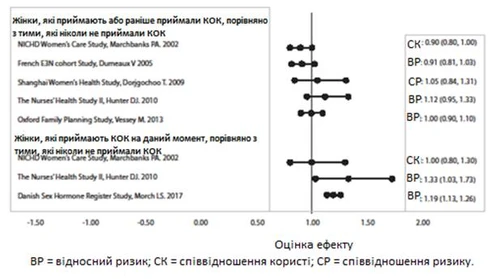
Relevant studies on the risk of breast cancer with combined oral contraceptive use
Three studies compared the risk of developing breast cancer in women who were currently using COCs or had recently used them (<6 months since last use) with women who had never used COCs. One of these studies reported no association between breast cancer risk and COC use. The other two studies found an increased relative risk of 1.19–1.33 with current or recent COC use. Both of these studies also found an increased risk of breast cancer with longer duration of use at the time of the study, with relative risk ranging from 1.03 for use of less than 1 year to approximately 1.4 for use exceeding 8–10 years.
Reporting of suspected adverse reactions
Reporting suspected adverse reactions during post-marketing surveillance is very important. It allows ongoing monitoring of the benefit-risk balance of the medicinal product. Healthcare professionals are encouraged to report any suspected adverse reactions via the national reporting system.
Shelf life. 4 years.
Storage conditions. Store out of the reach of children, in the original packaging, at a temperature not exceeding 30 °C.
Packaging. 21 tablets per blister; 1, 3, or 6 blisters per cardboard pack.
Prescription status. Prescription only.
Manufacturer. mibe GmbH Arzneimittel.
Manufacturer's address and place of business.
Muenchener Strasse 15, Brehna, Saxony-Anhalt, 06796, Germany.
Similar drugs
The original data is available in the language of the country of manufacture.
Data source: State Register of Medicinal Products of Ukraine
Data last verified: August 13, 2026