BIOCYCLIN
UkraineThe drug is used for the complex treatment of premenstrual syndrome (edema, headache, migraine, mood swings, breast tenderness), as well as for menstrual cycle disorders associated with luteal phase deficiency.
Frequently asked questions
How should Biocyclin be taken correctly?
Adult women weighing up to 60 kg should take 1 tablet per day in the morning. If the weight exceeds 60 kg, take 2 tablets per day in the morning. The course of treatment is 3 months without interruption during menstruation.
What side effects may Biocyclin cause?
Possible gastrointestinal disorders (nausea, stomach pain), headache, dizziness, acne, or menstrual cycle disturbances. Allergic reactions (rash, itching, facial swelling, difficulty breathing) are also possible. In rare cases, excitation, confusion, or hallucinations have been observed.
Who should not take this drug?
The drug is contraindicated in cases of hypersensitivity to the components, hereditary galactose intolerance, Lapp lactase deficiency, or glucose-galactose malabsorption. It should not be used by pregnant women, breastfeeding women, as well as children and girls before the onset of regular menstruation.
Can the drug be combined with other medicines?
Interaction is possible with estrogens, antiestrogens, as well as dopamine agonists and antagonists. Before taking it with other medications or in the presence of estrogen-dependent tumors, it is necessary to consult a physician.
Should people with diabetes be cautious?
Yes, since the drug contains lactose, people with diabetes mellitus should use it with caution.
Instructions for use
INSTRUCTIONS FOR MEDICAL USE OF THE MEDICINAL PRODUCT BIOCICLINE (BIOCYCLINE)
Composition:
Active substance: native dry extract of common chaste tree fruits;
1 tablet contains* native dry extract of common chaste tree fruits (Agni casti fructus) (7–13 : 1) 45 mg (extraction solvent: ethanol 60%);
* contains 10% native extract, 90% dry glucose syrup;
Excipients: lactose monohydrate, potato starch, magnesium stearate, povidone.
Pharmaceutical form. Tablets.
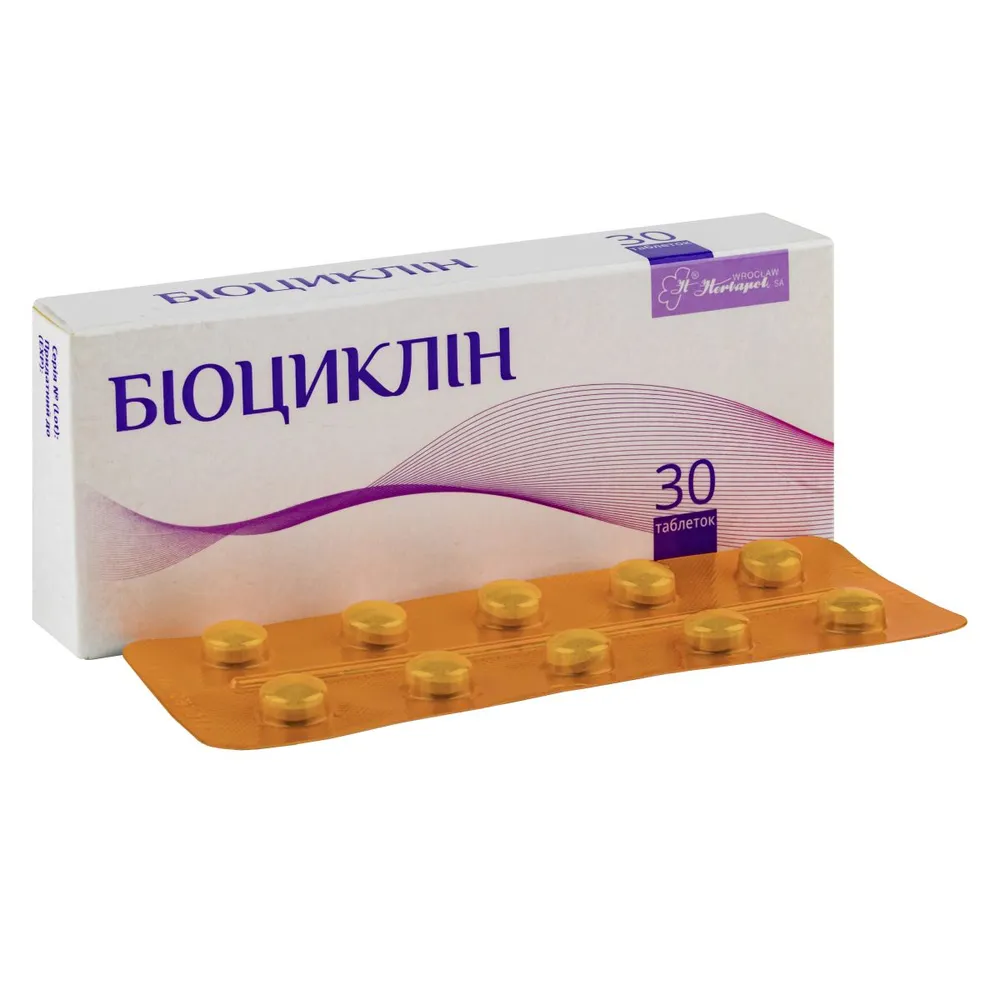
Main physical and chemical properties: round, biconvex tablets with even edges, grey-beige in color, with speckles.
Pharmacotherapeutic group. Agents affecting the reproductive system.
ATC code G03X.
Pharmacological properties.
A medicinal product with a plant-derived active substance used for the treatment of menstrual cycle disorders. The components of the drug exert a regulatory effect on sex hormone levels. The dopaminergic effects of the drug cause a reduction in prolactin production, thereby eliminating hyperprolactinemia. Elevated prolactin concentration disrupts gonadotropin secretion, which may lead to disturbances in follicular maturation, ovulation, and the luteal phase, resulting in an imbalance between estradiol and progesterone. This hormonal imbalance causes menstrual disorders as well as mastodynia. Unlike estrogens and other hormones, prolactin also exerts a direct stimulatory effect on proliferative processes in the mammary glands, promoting connective tissue formation and ductal expansion. Reduction of prolactinin levels leads to regression of pathological processes in the mammary glands and helps alleviate pain syndrome. Rhythmic production and normalization of gonadotropic hormone ratios promote the normalization of the second phase of the menstrual cycle.
Clinical characteristics.
Indications.
To be used in the complex treatment of premenstrual syndrome: psychological lability, headache or migraine, edema, mastodynia (breast swelling and tenderness) before the onset of menstruation; menstrual cycle disorders associated with luteal phase deficiency.
Contraindications.
Hypersensitivity to the fruits of Viburnum opulus or to any of the excipients of the medicinal product.
Interaction with other medicinal products and other forms of interaction.
Currently, there is no information available on interactions with other medicinal products.
Interaction with dopamine agonists, dopamine antagonists, estrogens, and antiestrogens cannot be excluded due to possible dopaminergic and estrogenic effects of Viburnum opulus.
General remarks.
The efficacy of homeopathic medicines may be negatively influenced by an unhealthy lifestyle and the use of stimulants and excitants (e.g., coffee).
If taking other medications, consult a physician.
Special precautions for use.
Contains 0.0988–0.1978 g of lactose per dose (1–2 tablets). Use with caution in patients with diabetes mellitus.
This medicinal product contains a small amount of ethanol (alcohol) – less than 100 mg/dose.
Patients who have or have had estrogen-dependent tumors should consult a physician before using medicinal products containing fruits of common chasteberry (Agni casti fructus).
Patients using dopamine agonists, dopamine antagonists, estrogens, and antiestrogens, as well as those with a history of pituitary disorders, should consult a physician before using products containing fruits of common chasteberry.
This medicinal product should not be used before the onset of regular menstruation during puberty.
If symptoms worsen, consult a physician.
In cases of prolactin-secreting pituitary tumors, the use of common chasteberry fruits may mask tumor symptoms.
The product should not be administered to patients with hereditary galactose intolerance, Lapp lactase deficiency, or glucose-galactose malabsorption.
Use during pregnancy or breastfeeding.
This product must not be used during pregnancy or breastfeeding.
Ability to influence reaction rate when driving or operating machinery.
At recommended doses, the product does not affect the ability to drive or operate machinery.
Dosage and Administration.
Take 1 tablet once daily in the morning for adult women weighing not more than 60 kg; 2 tablets once daily in the morning for women weighing more than 60 kg.
Treatment lasts for 3 months continuously, without interruption during menstruation.
Children.
The drug is not used in this age group of patients.
Overdose.
Cases of overdose have not been reported.
When large doses of the drug significantly exceeding the recommended doses are used, gastrointestinal disorders or a laxative effect may occur in patients with lactose intolerance.
Treatment: symptomatic therapy.
Side effects.
After administration of medicinal products containing fruits of common buckthorn, the following symptoms have been reported: gastrointestinal disorders (nausea, stomach pain), headache and dizziness; acne; menstrual cycle disturbances; occurrence of allergic reactions, including skin rash, itching, urticaria, facial swelling, dyspnea, and difficulty in breathing or swallowing.
In isolated cases: psychomotor agitation, confusion, and hallucinations. Data on the frequency of such adverse reactions are lacking.
If any adverse reactions occur, administration of the drug should be discontinued and medical advice should be sought.
Shelf life.
3 years.
Storage conditions.
Store at a temperature not exceeding 25 °C in the original packaging.
Keep out of reach of children.
Packaging.
10 tablets in a blister; 3 blisters in a cardboard package.
Availability.
Over-the-counter.
Manufacturer.
Wroclaw Phytopharmaceutical Company "HERBAPOL" AT.
Manufacturer's address and place of business:
65/68, Sw. Mikolaja Street, 50-951 Wroclaw, Poland.
The original data is available in the language of the country of manufacture.
Data source: State Register of Medicinal Products of Ukraine
Data last verified: August 13, 2026