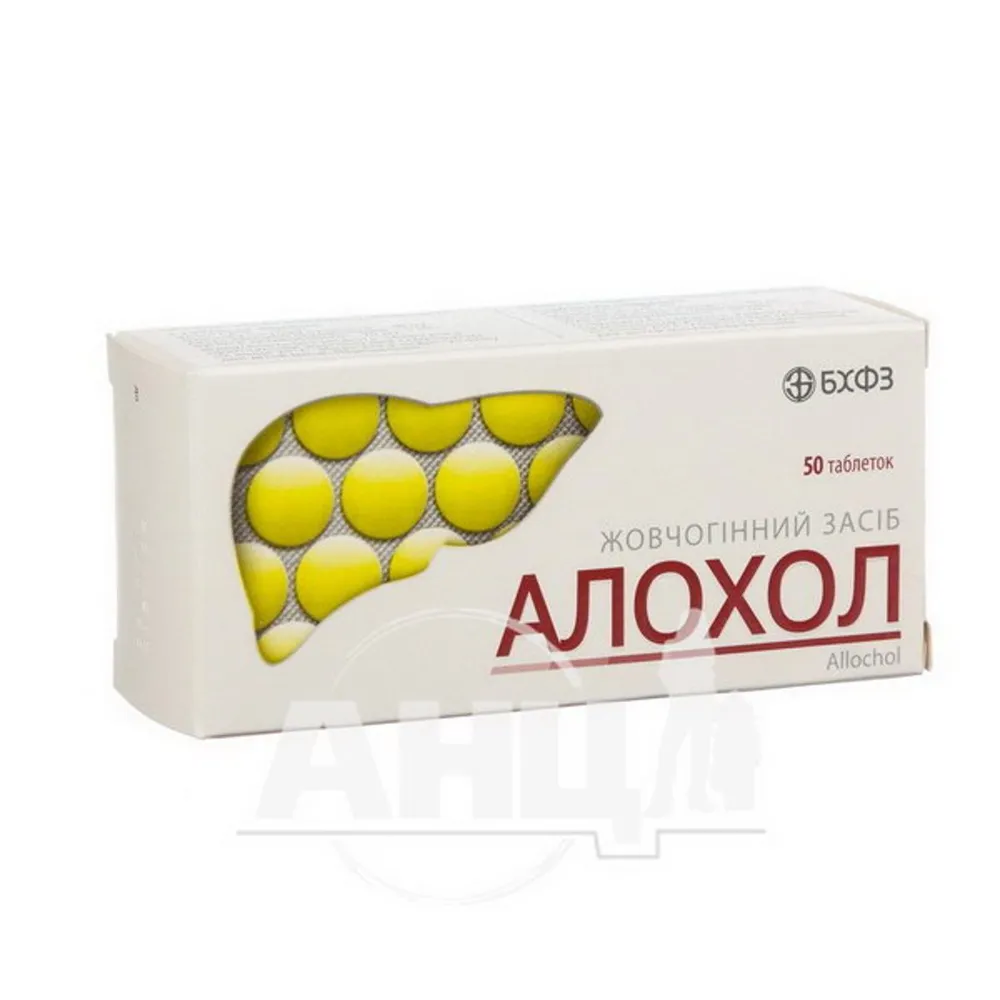
ALLOCHOL
UkraineThe drug is used as part of the complex treatment of chronic cholecystitis, gallbladder dyskinesia, postcholecystectomy syndrome, atonic constipation, and uncomplicated gallbladder cholesterolosis.
Frequently asked questions
How should Allochol be taken correctly?
Adults should take 1-2 tablets 3-4 times a day after meals for 3-4 weeks. Following this, the dosage should be continued at 1 tablet 2-3 times a day after meals for 1-2 months. As prescribed by a physician, the course may be repeated 2-3 times with a 3-month interval.
What are the possible side effects of Allochol?
Possible allergic reactions (manifestations of individual sensitivity to components) and diarrhea may occur. Prolonged exceeding of the recommended dose may lead to nausea, skin itching, and increased blood transaminase levels.
Who should not take this drug?
Contraindications include hypersensitivity to the components, acute hepatitis, gallstone disease, obstructive jaundice, sphincter of Oddi spasm, acute pancreatitis, peptic ulcer disease of the stomach and duodenum in the exacerbation stage, as well as acute enterocolitis. The drug is not intended for children.
Can the drug be taken with other medicines?
The drug enhances the effect of choleretics and laxatives, improves the absorption of fat-soluble vitamins, and increases the effectiveness of antiseptics or chemotherapeutic agents in liver infections. However, it is not recommended to take drugs containing aluminum hydroxide, cholestyramine, or colestipol simultaneously, as they reduce the efficacy of Allochol.
Can the drug be taken by pregnant or breastfeeding women?
Use is only possible after consultation with a physician, who must assess the benefit-risk ratio.
Instructions for use
INSTRUCTION FOR MEDICAL USE OF THE MEDICINAL PRODUCT ALOCHOL (ALLOCHOL)
Composition:
Active ingredients: 1 tablet contains: dried bile (calculated as dry substance and quantitative content of cholic acid) – 80 mg, powdered dried garlic (Allii sativi bulbi pulvis) – 40 mg, powdered nettle leaf (Urticae Folium) – 5 mg, activated charcoal – 25 mg;
Excipients: microcrystalline cellulose, sodium croscarmellose, colloidal anhydrous silicon dioxide, magnesium stearate; film coating: hypromellose, titanium dioxide (E 171), polyethylene glycol (macrogol, PEG 400, PEG 4000), polyvinyl alcohol, talc, lecithin, quinoline yellow (E 104), indigo carmine (E 132).
Pharmaceutical form. Film-coated tablets.
Main physico-chemical characteristics: film-coated tablets of yellow to greenish-yellow color, round-shaped with a biconvex surface. A cross-section reveals a core surrounded by a coating layer.
Pharmacotherapeutic group. Agents used in biliary pathology.
ATC code A05AX.
Pharmacological Properties.
Pharmacodynamics.
Allochol improves the secretory function of liver cells, causing a moderate choleretic effect. It stimulates the synthesis of bile acids; increases the osmotic gradient between bile and blood, resulting in enhanced filtration of water and electrolytes into bile capillaries; accelerates bile flow through the biliary tract, preventing the spread of infection and reducing the intensity of inflammatory processes; decreases the likelihood of cholesterol precipitation followed by stone formation. Cholate formation occurs mainly due to taurocholic and deoxycholic acids present in dried bile. Increased bile release into the intestinal lumen promotes reflex enhancement of secretory and motor activity of the gastrointestinal tract, improves emulsification of dietary fats, and enhances overall digestion processes. Components of garlic contained in the drug inhibit intestinal fermentation processes, reducing flatulence.
Pharmacokinetics.
The drug is well absorbed in the intestine, then partially reabsorbed; the remainder is excreted with feces.
Clinical characteristics.
Indications.
As part of complex therapy:
- chronic cholecystitis;
- biliary dyskinesia;
- postcholecystectomy syndrome;
- atonic constipation;
- uncomplicated cholesterosis of the gallbladder.
Contraindications.
- Hypersensitivity to the components of the drug;
- acute hepatitis;
- cholelithiasis;
- obstructive jaundice;
- sphincter of Oddi spasm;
- acute pancreatitis;
- peptic ulcer of the stomach and duodenum in the stage of exacerbation;
- acute enterocolitis.
Interaction with other medicinal products and other types of interactions.
Concomitant use of Allochol with:
- synthetic or herbal choleretics – enhances bile formation;
- laxatives – helps relieve constipation;
- fat-soluble vitamins – promotes their better absorption;
- antiseptics or chemotherapeutic agents – improves therapeutic efficacy of the latter in infectious processes in the liver or biliary tract;
- agents containing aluminum hydroxide, cholestyramine, colestipol – reduces absorption and diminishes the effect of Allochol; concomitant administration is not advisable.
Special precautions for use
Use with caution in patients with urolithiasis.
Use during pregnancy or breastfeeding
The use of the drug during pregnancy or breastfeeding is possible only after consultation with a physician who will determine the benefit-risk ratio.
Ability to influence reaction rate while driving or operating machinery
There is no data regarding a negative effect of the drug on reaction speed while driving or operating machinery.
Dosage and Administration.
Adults should take 1-2 tablets 3-4 times daily after meals for 3-4 weeks. Then, 1 tablet 2-3 times daily after meals for 1-2 months.
If necessary, the treatment course may be repeated 2-3 times at the physician's discretion, with a 3-month interval between courses.
Usually, the first signs of improvement (reduction of pain in the right hypochondrium, disappearance of dyspeptic symptoms) appear on day 5-8 after starting treatment.
Children.
The drug is not intended for use in children.
Overdose.
No cases of overdose have been reported to date. With prolonged use at doses exceeding the recommended ones, the following symptoms are possible: diarrhea, nausea, skin itching, increased blood transaminase levels.
Treatment: discontinue the drug, symptomatic therapy; there is no specific antidote.
Adverse reactions.
Manifestations of individual sensitivity to the components of the drug (allergic reactions), diarrhea.
Shelf life. 4 years. Do not use after the expiry date stated on the packaging.
Storage conditions. In the original packaging at a temperature not exceeding 25 °C. Store in a place inaccessible to children.
Packaging. 10 or 50 tablets in a blister; 10 tablets in a blister, 5 blisters in a pack; 180 tablets in a container, 1 container per pack.
Prescription status. Over-the-counter.
Manufacturer. Public joint-stock company "Scientific and Production Center "Borshchagovskiy Chemical and Pharmaceutical Plant".
Manufacturer's address and location of its operations.
17 Miru Street, Kyiv, 03134, Ukraine.
INSTRUCTIONS
for medical use of the medicinal product
ALLOCHOL
(ALLOCHOL)
Composition:
Active substances: 1 tablet contains dried bile (calculated on dry matter and quantitative content of cholic acid) – 80 mg, dried garlic powder (Allii sativi bulbi pulvis) – 40 mg, crushed nettle leaves (Urticae Folium) – 5 mg, activated charcoal – 25 mg;
Excipients: microcrystalline cellulose, sodium croscarmellose, colloidal anhydrous silicon dioxide, magnesium stearate; film coating: hypromellose, titanium dioxide (E 171), polyethylene glycol (macrogol, PEG 400, PEG 4000), polyvinyl alcohol, talc, lecithin, quinoline yellow (E 104), indigocarmine (E 132).
Pharmaceutical form. Film-coated tablets.
Main physicochemical properties: film-coated tablets, yellow to yellowish-green in color, round-shaped with a biconvex surface. In cross-section, a core surrounded by a coating layer is visible.
Pharmacotherapeutic group. Agents used in biliary pathology.
ATC code: A05AX.
Pharmacological properties.
Pharmacodynamics.
Allochol improves the secretory function of liver cells, producing a moderate choleretic effect. It stimulates the synthesis of bile acids; increases the osmotic gradient between bile and blood, leading to enhanced filtration of water and electrolytes into bile capillaries; accelerates bile flow through the bile ducts, prevents the spread of infection, and reduces the intensity of the inflammatory process; decreases the likelihood of cholesterol precipitation and subsequent stone formation. Cholates formation occurs mainly due to taurocholic and deoxycholic acids present in dried bile. Increased bile release into the intestinal lumen promotes reflex enhancement of secretory and motor activity of the gastrointestinal tract, improves emulsification of dietary fats, and enhances overall digestion. Components of garlic contained in the drug inhibit fermentation processes in the intestine, reducing flatulence.
Pharmacokinetics.
The drug is well absorbed in the intestine, then partially reabsorbed; the remainder is excreted in feces.
Clinical characteristics.
Indications.
As part of complex therapy:
- Chronic cholecystitis;
- Gallbladder dyskinesia;
- Postcholecystectomy syndrome;
- Atonic constipation;
- Uncomplicated cholesterosis of the gallbladder.
Contraindications.
- Hypersensitivity to the components of the drug;
- Acute hepatitis;
- Cholelithiasis;
- Obstructive jaundice;
- Sphincter of Oddi spasm;
- Acute pancreatitis;
- Peptic ulcer of the stomach and duodenum in the stage of exacerbation;
- Acute enterocolitis.
Interaction with other medicinal products and other types of interactions.
Concomitant use of Allochol with:
- Synthetic or herbal choleretics – enhances bile formation;
- Laxatives – helps relieve constipation;
- Fat-soluble vitamins – promotes improved absorption;
- Antiseptics or chemotherapeutic agents – enhances therapeutic efficacy of the latter in infectious processes in the liver or biliary tract;
- Preparations containing aluminum hydroxide, cholestyramine, colestipol – reduces absorption and diminishes the effect of Allochol; concomitant use is not advisable.
Special precautions.
Use with caution in patients with urolithiasis.
Use during pregnancy or breastfeeding.
The use of the drug during pregnancy or breastfeeding is possible only after consultation with a physician who will assess the benefit-risk ratio.
Ability to affect reaction rate when driving or operating machinery.
There are no data regarding negative effects of the drug on reaction speed when driving or operating machinery.
Administration and dosage.
Adults: take 1–2 tablets 3–4 times daily after meals for 3–4 weeks. Then 1 tablet 2–3 times daily after meals for 1–2 months.
If necessary, the treatment course may be repeated 2–3 times at the physician's discretion, with a 3-month interval between courses.
Usually, the first signs of improvement (reduction of right hypochondrial pain, disappearance of dyspeptic symptoms) appear on days 5–8 of treatment.
Children.
The drug is not intended for use in children.
Overdose.
No cases of overdose have been reported to date. With prolonged use at doses exceeding the recommended ones, the following symptoms may occur: diarrhea, nausea, skin itching, increased blood transaminase levels.
Treatment: discontinue the drug, symptomatic therapy; no specific antidote is available.
Adverse reactions.
Manifestations of individual sensitivity to the components of the drug (allergic reactions), diarrhea.
Shelf life. 4 years. Do not use after the expiry date stated on the packaging.
Storage conditions. In the original packaging at a temperature not exceeding 25 °C. Store in a place inaccessible to children.
Packaging. 10 or 50 tablets in a blister; 10 tablets in a blister, 5 blisters in a pack; 180 tablets in a container, 1 container per pack.
Prescription status. Over-the-counter.
Manufacturer. Public joint-stock company "Scientific and Production Center "Borshchagovskiy Chemical and Pharmaceutical Plant".
Manufacturer's address and location of its operations.
17 Miru Street, Kyiv, 03134, Ukraine.
Similar drugs
| Brand name | Dosage form | Active substance / Dosage | Manufacturer |
|---|---|---|---|
| ARTIHOL | tablets, film-coated |
|
JSC "Kyiv Vitamin Plant" |
| ARTIHOL | tablets, film-coated |
|
JSC "Kyiv Vitamin Plant" |
| CYNARIX FORTE | tablets, film-coated |
|
Pharmazeutische Fabrik Montavit GmbH |
| HOFITOL | tablets, film-coated | Laboratoires Galenique Vernin (manufacturing of unpackaged products, primary and secondary packaging, quality control, responsible for batch release) | |
| IMBROLIV | tablets, film-coated |
|
Ternofarm LLC |
| RAFACHOLIN C | tablets, film-coated | Wroclaw Herbal Pharmaceuticals Enterprise "HERBAPOL" JSC |
The original data is available in the language of the country of manufacture.
Data source: State Register of Medicinal Products of Ukraine
Data last verified: August 13, 2026