AFLUBRIN
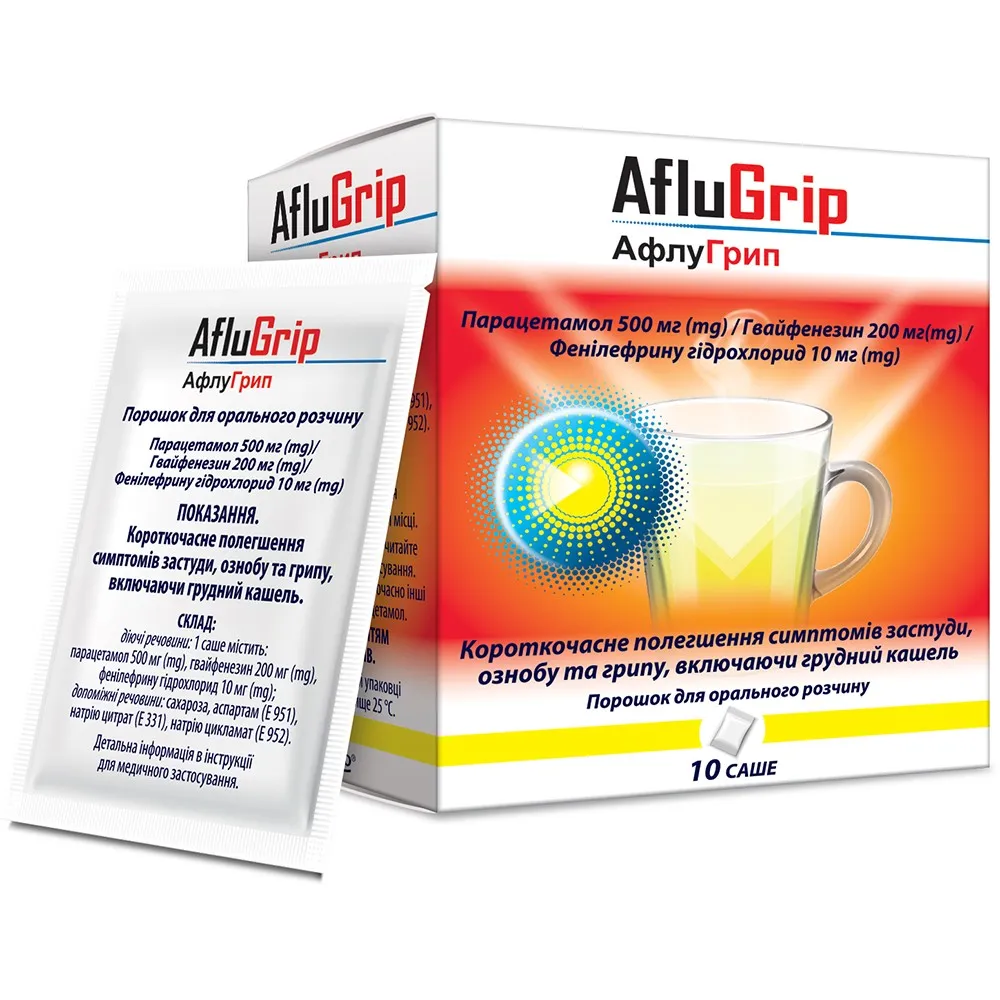
UkraineThe drug is used for the short-term relief of cold and flu symptoms, specifically to reduce body aches and pains, headache, nasal congestion, sore throat, chills, fever, and productive cough with difficult phlegm expectoration.
Frequently asked questions
How should Aflubrin be taken correctly?
Dissolve the contents of one sachet in 250 ml of hot (but not boiling) water and drink while warm. The entire solution should be consumed within 1.5 hours. For adults and children aged 12 and older, it is recommended to take 1 sachet every 4–6 hours as needed, but no more than 4 doses per day.
Who should not take this drug?
The drug is contraindicated in cases of hypersensitivity to its components, impaired liver or kidney function, cardiovascular diseases, hypertension, diabetes, hyperthyroidism, pheochromocytoma, angle-closure glaucoma, urinary retention, as well as during pregnancy. It should not be taken by patients who are using tricyclic antidepressants, β-blockers, or MAO inhibitors.
What are the possible side effects of Aflubrin?
Possible side effects include nervousness, irritability, insomnia, headache, dizziness, increased blood pressure, nausea, vomiting, diarrhea, as well as allergic reactions (rash, itching). Very rarely, serious skin reactions or impaired liver function may occur.
Can the drug be combined with other medicines?
It is not recommended to take Aflubrin together with other products containing paracetamol or other cough medicines. Caution should be exercised when combining it with anticoagulants (e.g., warfarin), antidepressants, decongestants, and drugs that affect liver function. Consult a physician before use if you are already taking any other medications.
Can the drug be taken during pregnancy or breastfeeding?
The drug is contraindicated for pregnant women. During breastfeeding, use is not recommended without consulting a physician due to insufficient safety information.
Does the drug affect the ability to drive a vehicle?
If dizziness occurs after administration, driving a car or operating other mechanisms should be avoided.
Instructions for use
INSTRUCTIONS FOR MEDICAL USE OF THE MEDICINAL PRODUCT AfluGrip (AfluGrip)
Composition:
Active ingredients: 1 sachet contains: paracetamol 500 mg, guaifenesin 200 mg, phenylephrine hydrochloride 10 mg;
Excipients: sucrose, citric acid anhydrous (E 330), tartaric acid (E 334), sodium cyclamate (E 952), sodium citrate (E 331), aspartame (E 951), potassium acesulfame (E 950), lemon flavor 8476 (flavoring agent, natural flavoring substance, maltodextrin, gum arabic (E 414), sodium citrate (E 331), citric acid (E 330), butylated hydroxyanisole (E 320) (0.01 %)), lemon flavor PHS-163671 (flavoring agent, flavoring substances, natural flavoring substance, maltodextrin, modified starch (E 1450), butylated hydroxyanisole (E 320) (0.03 %)), menthol flavor powder (natural menthol, maltodextrin, gum arabic), quinoline yellow (E 104).
Pharmaceutical form. Oral soluble powder.
Main physicochemical properties: Almost white free-flowing powder without large lumps or foreign particles. Has a characteristic citrus/menthol odor.
Reconstituted solution: opalescent yellow solution. Has a characteristic citrus/menthol odor.
Pharmacotherapeutic group. Paracetamol combinations without psychotropic agents.
ATC code N02BE51.
Pharmacological properties.
Pharmacodynamics.
Paracetamol exerts analgesic and antipyretic effects, which are believed to occur primarily through inhibition of prostaglandin synthesis in the central nervous system (CNS).
Guaifenesin is an expectorant that acts by increasing the volume and reducing the viscosity of tracheal and bronchial secretions, thereby facilitating the expulsion of mucus during coughing.
Phenylephrine hydrochloride is a sympathomimetic agent that primarily stimulates α-adrenergic receptors. It acts as a decongestant by constricting blood vessels, thereby reducing swelling, including swelling of the nasal mucosa and paranasal sinuses.
The active substances do not exhibit sedative effects.
Pharmacokinetics.
Paracetamol is rapidly and almost completely absorbed from the gastrointestinal tract, crosses the placental barrier, and a small amount is excreted into breast milk. After administration of paracetamol dissolved in a hot drink, absorption was significantly faster and more pronounced within the first 60 minutes compared to conventional tablets, as evidenced by a more rapid appearance of paracetamol in plasma (mean time to reach a concentration of 0.25 mcg/mL was 4.6 minutes after the hot drink and 23.1 minutes after conventional tablets). Furthermore, the time to reach maximum concentration (tmax) was significantly shorter after administration of the hot drink compared to conventional tablets. This difference can be explained by faster gastric emptying following ingestion of a hot drink. Maximum plasma concentration (Cmax) is achieved within 10–60 minutes after oral administration. Paracetamol is primarily metabolized in the liver via three pathways: glucuronidation, sulfation, and oxidation. It is excreted in the urine mainly as glucuronide and sulfate conjugates. The elimination half-life (t1/2) ranges from 1 to 3 hours.
Guaifenesin is rapidly absorbed from the gastrointestinal tract after oral administration, and Cmax in blood is reached within 15 minutes after dosing. It is rapidly metabolized in the kidneys via oxidation to β-(2-methoxyphenoxy)-lactic acid, which is excreted in the urine. The elimination half-life is one hour.
Phenylephrine hydrochloride is unevenly absorbed in the gastrointestinal tract and undergoes extensive presystemic metabolism by monoamine oxidase in the intestinal wall and liver; oral administration of phenylephrine results in reduced bioavailability. It is excreted in the urine almost entirely as a sulfate conjugate. Cmax in plasma is reached within 1–2 hours, and t1/2 ranges from 2 to 3 hours.
Clinical characteristics.
Indications.
For short-term relief of cold and flu symptoms (body aches and pains, headache, nasal congestion, sore throat, chills, elevated body temperature, productive cough with difficult expectoration of mucus).
Contraindications.
Hypersensitivity to the active or excipient substances of the drug. Hepatic dysfunction, severe renal impairment. Cardiac diseases and cardiovascular disorders. Hypertension. Hyperthyroidism. Diabetes. Pheochromocytoma. Patients receiving tricyclic antidepressants, β-blockers.
Patients receiving monoamine oxidase inhibitors (MAOIs) (or within two weeks after discontinuation of such therapy).
Patients with closed-angle glaucoma. Patients with urinary retention and benign prostatic hyperplasia.
Patients currently receiving other sympathomimetic drugs (decongestants, appetite suppressants, amphetamine-like psychostimulants).
Pregnancy.
Interaction with other medicinal products and other forms of interaction.
Paracetamol.
Pharmacological interactions between paracetamol and other drugs have been reported. Such interactions are considered to have unlikely clinical significance when used within the recommended dosage range.
In case of concomitant therapy with probenecid, the dose of paracetamol should be reduced, as probenecid prevents conjugation of paracetamol with glucuronic acid and thereby reduces paracetamol clearance by 50%.
Metoclopramide or domperidone may increase the rate of paracetamol absorption, whereas cholestyramine may reduce it.
Prolonged regular use of paracetamol may enhance the anticoagulant effect of warfarin and other coumarins, increasing the risk of bleeding; occasional use does not show such an effect. Prior to administration of the drug, consultation with a physician is necessary if the patient is taking warfarin or similar anticoagulant agents.
Hepatotoxicity of paracetamol may be enhanced by excessive alcohol consumption.
Concomitant administration of high doses of paracetamol with isoniazid increases the risk of developing hepatotoxic syndrome.
Drugs that stimulate hepatic microsomal enzyme activity, such as ethanol, barbiturates, MAO inhibitors, and tricyclic antidepressants, may enhance the toxic effect of paracetamol on the liver, especially after overdose. Paracetamol is contraindicated in patients receiving MAO inhibitors or who have discontinued such therapy within two weeks prior to treatment with AflyuGrip, due to the risk of hypertensive crisis.
Concomitant use of paracetamol and zidovudine may reduce zidovudine metabolism, increasing the risk of neutropenia. Therefore, concomitant use of paracetamol and zidovudine should be performed under medical supervision.
Salicylates (acetylsalicylic acid) may prolong the t1/2 of paracetamol.
Concomitant use of paracetamol and nonsteroidal anti-inflammatory drugs (NSAIDs) increases the risk of renal dysfunction.
Paracetamol reduces the effectiveness of diuretics.
Paracetamol may interfere with laboratory test results using phosphotungstic acid reagent for blood levels of uric acid and glucose.
There is limited evidence suggesting that paracetamol may affect the pharmacokinetics of chloramphenicol, but the reliability of these data is questionable, and evidence of clinically significant interaction is insufficient. Although routine monitoring is not required, possible interaction should be considered when these two drugs are used concomitantly, especially in patients with poor nutrition.
Paracetamol should be used with caution concomitantly with flucloxacillin, as this combination has been associated with metabolic acidosis with a high anion gap due to pyroglutamic acidosis, particularly in patients with risk factors (see section "Special precautions").
Guaifenesin.
Guaifenesin enhances the effect of sedatives and muscle relaxants.
When collecting urine samples within 24 hours after administration of this drug, its metabolite may cause color interference in laboratory determinations of 5-hydroxyindoleacetic acid (5-HIAA) and vanillylmandelic acid (VMA).
Phenylephrine hydrochloride.
Phenylephrine hydrochloride should be used with caution in combination with the following medicinal products due to reported interactions:
MAO inhibitors (including moclobemide) – hypertensive interaction may occur with sympathomimetic amines such as phenylephrine and MAO inhibitors.
Sympathomimetic amines – concomitant use of phenylephrine with other sympathomimetic amines may increase the risk of cardiovascular adverse effects.
β-blockers and other antihypertensive drugs (including debrisoquin, guanethidine, reserpine, methyldopa) – phenylephrine may reduce the effectiveness of β-blocking and antihypertensive drugs. The risk of hypertension and other cardiovascular adverse reactions may increase.
Tricyclic antidepressants (e.g., amitriptyline) – concomitant use of phenylephrine with tricyclic antidepressants may increase the risk of cardiovascular adverse reactions.
Phenothiazine drugs used as sedatives – their CNS effects may be enhanced when used concomitantly with phenylephrine.
Ergot alkaloids (ergotamine and methylergonovine) – concomitant use with phenylephrine may increase the risk of ergot poisoning.
Cardiac glycosides (e.g., digitalis preparations) – increased likelihood of arrhythmias or cardiac attack may occur.
Halogenated anesthetics (such as cyclopropane, halothane, enflurane, isoflurane) – concomitant use with phenylephrine may induce or worsen ventricular arrhythmias.
Special precautions for use.
Concomitant use of the medicinal product with other medicinal products containing paracetamol may lead to overdose. Paracetamol overdose can cause liver failure, which may require liver transplantation or result in fatal outcome.
A physician or pharmacist should ensure that sympathomimetic agents are not administered simultaneously via multiple routes, i.e., orally and locally (nasal, ear, or eye preparations).
Sympathomimetic agents should be used with extreme caution in patients with angina.
Sympathomimetic agents may act as central nervous system stimulants, causing insomnia, nervousness, hyperpyrexia, tremor, and epileptiform seizures.
Prior to use, patients with the following conditions should consult a physician:
- Hypertrophy of the prostate gland (urinary retention may occur).
- Occlusive vascular disorders, e.g., Raynaud's phenomenon.
- Cardiovascular diseases.
- Myasthenia gravis – an autoimmune disorder.
- Severe gastrointestinal disorders.
- Glucose-6-phosphate dehydrogenase deficiency.
- Hemolytic anemia.
- Glutathione deficiency.
- Chronic cough, such as that associated with smoking, asthma, chronic bronchitis, or emphysema.
- Chronic alcoholism.
- Gilbert's syndrome (familial non-hemolytic jaundice).
The medicinal product should be used with particular caution in the following conditions:
- Chronic undernutrition.
- Dehydration.
- Elderly patients, adults, and adolescents with body weight less than 50 kg.
Use with caution in patients taking the following medicinal products:
⋅ Vasoconstrictive agents (e.g., ergotamine and methylergometrine);
⋅ Digoxin and cardiac glycosides;
- Medicinal products affecting liver function.
This medicinal product should only be recommended if all symptoms are present (pain and/or fever, nasal congestion, and chesty cough).
Patients with chronic cough or asthma should consult a physician before using this product. Patients should discontinue use and consult a physician if cough persists for more than 3 days or recurs, or if it is accompanied by fever, rash, or persistent headache.
Caution should be exercised in patients with asthma who are sensitive to acetylsalicylic acid, as moderate cases of bronchospasm have been reported in association with the presence of paracetamol in the formulation (cross-reaction).
Do not take together with cough medicines.
A history of liver disease increases the risk of liver damage associated with paracetamol use. Patients previously diagnosed with hepatic or renal impairment should consult a physician before using this product. The risk of overdose is increased in patients with alcoholic liver disease without signs of cirrhosis.
Concomitant use with alcohol should be avoided.
It is not recommended to take other products containing paracetamol simultaneously. Immediate medical attention should be sought in case of overdose, even if the patient feels well, due to the risk of irreversible liver damage (see section "Overdose").
Prolonged use of any type of analgesic for headache may exacerbate headache. If such a situation occurs or is suspected, treatment should be discontinued and a physician consulted. Medication-overuse headache should be suspected in patients who experience frequent or daily headaches despite (or because of) regular use of headache medications.
Hepatotoxicity at therapeutic doses of paracetamol
Cases of paracetamol-induced hepatotoxicity, including fatal cases, have been reported in patients taking paracetamol at therapeutic doses. These cases occurred in patients with one or more risk factors for hepatotoxicity, including low body weight (< 50 kg), renal and hepatic impairment, chronic alcoholism, concomitant use of hepatotoxic drugs, and acute or chronic undernutrition (low hepatic glutathione stores). Paracetamol should be administered with caution in patients with such risk factors. Caution is also recommended in patients receiving concomitant treatment with drugs that induce liver enzymes and in conditions that may lead to glutathione deficiency (see sections "Interaction with other medicinal products and other forms of interaction" and "Overdose"). Paracetamol doses should be reviewed at clinically appropriate intervals, and patients should be monitored for the emergence of new risk factors for hepatotoxicity that may require dose adjustment.
Cases of high anion gap metabolic acidosis due to pyroglutamic acidosis have been reported in patients with severe illnesses such as severe renal failure and sepsis, as well as in patients with malnutrition or other causes of glutathione deficiency (e.g., chronic alcoholism) who received paracetamol at therapeutic doses for prolonged periods or in combination with flucloxacillin. If high anion gap metabolic acidosis due to pyroglutamic acidosis is suspected, immediate discontinuation of paracetamol is recommended, along with close monitoring of the patient. Measurement of urinary 5-oxoproline levels may be useful in identifying pyroglutamic acidosis as the underlying cause of high anion gap metabolic acidosis in patients with multiple risk factors.
Contains sucrose. This medicinal product should not be used by patients with rare hereditary fructose intolerance, glucose-galactose malabsorption, or sucrase-isomaltase deficiency.
Contains aspartame (E 951), a source of phenylalanine. May be harmful for patients with phenylketonuria.
This medicinal product contains 129 mg of sodium per dose, equivalent to 6.5% of the WHO recommended maximum daily intake of 2 g sodium for adults.
Use during pregnancy or breastfeeding.
Pregnancy.
The medicinal product is contraindicated during pregnancy.
Paracetamol. Extensive data on use in pregnant women indicate no malformations or neonatal/fetal toxicity following paracetamol use. Epidemiological studies on neurodevelopment in children exposed to paracetamol in utero have shown inconsistent results. Paracetamol may be used during pregnancy if clinically necessary, at the lowest effective dose, for the shortest possible duration, and as infrequently as possible.
Guaifenesin. There are no data on the use of guaifenesin in pregnant women. The safety of guaifenesin use during pregnancy has not been established.
Phenylephrine hydrochloride. Based on human experience, phenylephrine hydrochloride may cause congenital malformations when used during pregnancy. Additionally, its use may be associated with fetal hypoxia. Phenylephrine should not be used during pregnancy.
Breastfeeding period.
This product is not recommended during breastfeeding without prior consultation with a physician due to insufficient data.
Paracetamol. Paracetamol/metabolites are excreted in breast milk, but at therapeutic doses the product has no effect on newborns/infants during breastfeeding.
Guaifenesin/phenylephrine hydrochloride. There is insufficient information on the excretion of guaifenesin/phenylephrine hydrochloride/metabolites in breast milk.
Fertility.
Data on the use of paracetamol, guaifenesin, or phenylephrine hydrochloride and their effects on fertility are lacking or limited.
Ability to affect reaction speed when driving or operating machinery.
Driving or operating machinery should be avoided if dizziness occurs after taking the product.
Dosage and Administration.
For oral use.
Dissolve the contents of 1 sachet in a standard cup (250 mL) of hot, but not boiling, water. Take while warm. The entire solution should be consumed within 1.5 hours.
Adults, elderly patients, and children aged 12 years and older: 1 sachet every 4–6 hours as needed, but not more than four doses (4 sachets) per day.
If symptoms persist for more than 3 days, medical advice should be sought.
Children.
Do not use in children under 12 years of age.
Overdose.
Paracetamol.
Paracetamol overdose may lead to liver damage, which can be fatal.
Signs and symptoms. Symptoms usually appear within the first 24 hours and may include nausea, vomiting, anorexia, pallor, and abdominal pain, or symptoms may be absent.
Liver damage may become evident 12–48 hours after ingestion. Glucose metabolism abnormalities and metabolic acidosis may occur. Concurrently, elevated levels of liver transaminases (AST, ALT), lactate dehydrogenase, and bilirubin, as well as increased prothrombin levels, may be observed. Paracetamol overdose may cause hepatocellular necrosis; in severe poisoning, liver failure may progress, with encephalopathy, hemorrhage, hypoglycemia, cerebral edema, and death.
Acute renal failure with acute tubular necrosis may develop, clearly indicated by flank pain, hematuria, and proteinuria, even in the absence of severe liver damage.
There are also reports of cardiac arrhythmias and pancreatitis.
In adults, ingestion of 10 g or more of paracetamol may cause liver damage. Ingestion of 5 g or more may lead to liver injury in patients with risk factors (see below).
Risk factors:
- Patients with liver disease.
- Elderly patients.
- Young children.
- Patients receiving long-term treatment with carbamazepine, phenobarbital, phenytoin, primidone, rifampicin, St. John’s wort, or other drugs that induce liver enzymes.
- Patients who regularly consume excessive amounts of alcohol.
- Patients with glutathione deficiency, such as those with malnutrition, cystic fibrosis, HIV infection, fasting, or cachexia.
Immediate treatment is crucial in managing paracetamol overdose. Despite the absence of pronounced early symptoms, patients should be urgently referred to a hospital for emergency medical care. Symptoms may be limited to nausea or vomiting and may not reflect the severity of overdose or risk of organ damage. Treatment. Should be administered according to established guidelines.
Administration of sorbents should be considered if overdose occurred within one hour. Paracetamol plasma concentration should be measured 4 hours or later after ingestion (earlier measurements will be unreliable). N-acetylcysteine therapy may be administered within 24 hours of paracetamol ingestion, but maximum protective effect is achieved within 8 hours after ingestion.
The efficacy of the antidote decreases significantly toward the end of this time period. Intravenous N-acetylcysteine may be administered as per established dosing regimen. If vomiting is not a concern, oral methionine may be a suitable alternative, particularly in areas remote from hospitals. Management of patients with severe hepatic dysfunction within 24 hours of ingestion should be discussed with a toxicology center or liver disease specialists.
Guaifenesin.
Signs and symptoms. Very high doses of guaifenesin may cause nausea and vomiting.
Treatment. Vomiting should be managed with fluid replacement and electrolyte monitoring, as clinically indicated.
Phenylephrine hydrochloride.
Signs and symptoms. Overdose of phenylephrine may lead to effects similar to those listed as adverse reactions. Additional symptoms may include hypertension and the associated reflex bradycardia. In severe cases, confusion, hallucinations, seizures, and arrhythmias may occur; however, the amount of phenylephrine required for serious intoxication exceeds the amount that would cause toxicity from paracetamol ingestion.
Treatment. Clinically appropriate therapeutic measures should be initiated, which may include gastric lavage and symptomatic treatment. Hypertensive effects may be treated with an alpha-receptor blocker (e.g., phentolamine mesylate 6–10 mg) administered intravenously; bradycardia may be treated with atropine, preferably only after adequate blood pressure control.
Adverse Reactions
The frequency of adverse reactions is usually classified as follows:
very common (≥1/10);
common (from ≥1/100 to <1/10);
uncommon (from ≥1/1,000 to <1/100);
rare (from ≥1/10,000 to <1/1,000);
very rare (<1/10,000);
frequency not known (cannot be estimated from the available data).
Paracetamol.
Due to limited clinical trial data, the frequency of adverse reactions is not known (cannot be estimated from the available data). Post-marketing experience shows that adverse reactions to paracetamol occur rarely, and serious adverse reactions occur very rarely.
Blood and lymphatic system disorders: thrombocytopenia, agranulocytosis. These are not necessarily causally related to paracetamol.
Immune system disorders: anaphylaxis.
Respiratory system disorders: bronchospasm in patients with asthma who are sensitive to acetylsalicylic acid and other NSAIDs.
Hepatobiliary disorders: liver function abnormalities.
Gastrointestinal disorders: acute pancreatitis.
Immune system disorders: rarely – allergy (excluding angioedema).
Skin and subcutaneous tissue disorders: very rarely – hypersensitivity skin reactions, including skin rashes and angioedema, pruritus, sweating, purpura, and urticaria, toxic epidermal necrolysis (TEN), Stevens–Johnson syndrome (SJS), drug-induced dermatitis, acute generalized exanthematous pustulosis (AGEP).
Very rare cases of serious skin reactions have been reported.
Renal and urinary disorders: very rarely – sterile pyuria (cloudy urine).
Metabolism and nutrition disorders, frequency not known: metabolic acidosis with high anion gap.
Guaifenesin.
The frequency of adverse reactions is not known, but is considered likely to be rare.
Immune system disorders: allergic reactions, angioedema, anaphylactic reactions.
Respiratory system disorders: dyspnea.
Gastrointestinal disorders: nausea, vomiting, gastrointestinal discomfort, diarrhea.
Skin and subcutaneous tissue disorders: rash, urticaria.
Phenylephrine hydrochloride.
In clinical trials with phenylephrine, the following adverse reactions were observed, which may be common.
Psychiatric disorders: nervousness, irritability, restlessness, and excitability.
Nervous system disorders: headache, dizziness, insomnia.
Cardiovascular disorders: increased blood pressure.
Gastrointestinal disorders: nausea, vomiting, diarrhea.
The following adverse reactions have been identified during post-marketing use. The frequency of these reactions is not known, but they are likely to occur rarely.
Eye disorders: mydriasis, acute angle-closure glaucoma, most likely in patients with angle-closure glaucoma.
Cardiovascular disorders: tachycardia, palpitations.
Skin and subcutaneous tissue disorders: allergic reactions (e.g., rash, urticaria, allergic dermatitis). Hypersensitivity reactions, including cross-sensitivity, which may occur with the use of other sympathomimetics.
Urinary system disorders: dysuria, urinary retention. This most commonly occurs in patients with bladder outlet obstruction, such as those with prostate hypertrophy.
Description of individual adverse reactions:
- Metabolic acidosis with high anion gap.
Cases of metabolic acidosis with high anion gap due to pyroglutamic acidosis have been observed in patients with risk factors who used paracetamol (see section "Special precautions"). Pyroglutamic acidosis may occur as a result of low glutathione levels in these patients.
Reporting of suspected adverse reactions
Reporting suspected adverse reactions after a medicinal product is authorized is important. It allows continued monitoring of the benefit-risk balance of the medicinal product. Healthcare professionals, pharmacists, patients, or their legal representatives should report all suspected adverse reactions and lack of efficacy through the Automated Pharmacovigilance Information System at the following link: https://aisf.dec.gov.ua/.
Shelf life. 3 years.
The shelf life after reconstitution is 1.5 hours.
Storage conditions. Store in the original packaging at a temperature not exceeding 25 °C.
Keep out of the reach of children.
Packaging. 10 sachets in a cardboard box.
Prescription status. Over-the-counter.
Manufacturer.
Rifton Laboratories Limited.
Manufacturer's address and place of business.
Exeter Road, Raffton, Braunton, EX33 2DL, United Kingdom.
Similar drugs
The original data is available in the language of the country of manufacture.
Data source: State Register of Medicinal Products of Ukraine
Data last verified: August 13, 2026