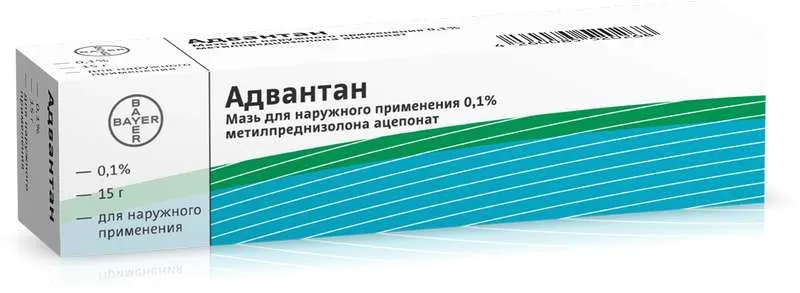
ADVANTAN
UkraineThe drug is used to treat atopic dermatitis (endogenous eczema, neurodermatitis), contact eczema, dysidrotic and nonspecific eczema, as well as eczema in children.
Frequently asked questions
How should Advantan ointment be applied correctly?
The ointment should be applied in a thin layer to the affected areas of the skin with gentle massaging movements once a day, unless otherwise prescribed by a physician.
What is the usually recommended duration of treatment?
For adults, the duration of use should generally not exceed 12 weeks, and for children, 4 weeks.
Who should not use this drug?
Use is contraindicated in cases of hypersensitivity to the ointment components, tuberculous or syphilitic processes in the application area, viral diseases (e.g., chickenpox, herpes zoster), rosacea, perioral dermatitis, ulcers, acne vulgaris, atrophic dermatitis, or post-vaccination reactions at the application site. It is also not recommended for skin infections caused by bacteria or fungi.
What are the possible side effects of Advantan?
Burning or itching at the application site may occur. Dryness, redness (erythema), irritation, edema, or skin atrophy are observed infrequently. Changes in vision (e.g., blurred vision), the appearance of acne, comedones, or skin discoloration are also possible.
Can the ointment be used under a bandage?
Use under an occlusive dressing (tightly covering the area) increases the risk of side effects. Children should not use the ointment under a bandage, as nappies and diapers can act similarly to occlusion.
Can the drug be used during pregnancy or breastfeeding?
Pregnant women should carefully assess the risks with a physician, avoiding use during the first trimester and on large areas of the skin. For breastfeeding women, the drug is prescribed with caution; the ointment must not be applied to the mammary glands.
Instructions for use
INSTRUCTIONS for medical use of the medicinal product ADVANTAN®
Composition:
Active substance: methylprednisolone aceponate;
1 g of ointment contains 1 mg of methylprednisolone aceponate;
Excipients: white wax, mineral oil, soft white paraffin, Dehygras E (Dehymuls E), purified water.
Pharmaceutical form. Ointment.
Main physicochemical properties: opaque ointment of white or slightly yellowish colour.
Pharmacotherapeutic group. Dermatological preparations. Corticosteroids for dermatological use. Simple corticosteroids. Active corticosteroids (Group III). Methylprednisolone aceponate. ATC code D07AC14.
Pharmacological Properties
Pharmacodynamics
Advantan® suppresses inflammatory and allergic reactions of the skin, as well as reactions associated with cellular hyperproliferation when applied topically, thereby alleviating both objective symptoms (erythema, edema, maceration) and subjective complaints (pruritus, burning, pain).
It is known that methylprednisolone binds to intracellular glucocorticoid receptors. This has been clearly demonstrated using its main metabolite—6α-methylprednisolone-17-propionate, which is formed after cleavage in the skin.
Binding of the steroid-receptor complex to specific regions of the DNA molecule initiates a series of biological effects.
The binding of the steroid-receptor complex leads to the induction of macrocortin synthesis. Macrocortin inhibits the release of arachidonic acid and thereby suppresses the formation of inflammatory mediators such as prostaglandins and leukotrienes.
The immunosuppressive effect of glucocorticosteroids can be explained by inhibition of cytokine synthesis and an antimitotic effect, which is not yet fully understood.
Inhibition of vasodilatory prostaglandin synthesis or potentiation of the vasoconstrictive effect of adrenaline accounts for the vasoconstrictive activity of glucocorticosteroids.
Pharmacokinetics
Methylprednisolone aceponate is hydrolyzed in the epidermis and dermis to 6α-methylprednisolone-17-propionate, its main metabolite, which binds more strongly to corticosteroid receptors than the parent compound—clear evidence of cutaneous "bioactivation."
The extent and degree of percutaneous absorption of a topical corticosteroid depend on several factors, including the chemical structure of the compound, excipients, concentration of the compound in the vehicle, conditions of application (surface area treated, duration of exposure, open or occlusive treatment), and skin characteristics (type and severity of disease, anatomical location, etc.).
Percutaneous absorption of methylprednisolone aceponate in the form of cream, ointment, and fatty ointment was studied in healthy volunteers. Percutaneous absorption after application of Advantan® fatty ointment without occlusive dressings (20 g twice daily) for 5 days was approximately 0.35%, corresponding to a systemic corticosteroid load of 4 µg/kg/day.
When occlusive dressings were used and 15 g of Advantan® cream was applied twice daily for 7 days, mean percutaneous absorption was about 2.5%, corresponding to a systemic corticosteroid load of approximately 10 µg/kg/day. Percutaneous absorption of methylprednisolone aceponate through skin experimentally damaged by removal of the stratum corneum was significantly higher. In adults with psoriasis and in patients with atopy, percutaneous absorption of methylprednisolone aceponate in the form of fatty ointment was approximately 2.5%.
Percutaneous absorption of methylprednisolone aceponate was investigated in healthy volunteers after a single application of ≤5 mL of 0.1% topical solution of Advantan®, and in patients with scalp psoriasis after once-daily application for 4 weeks.
No systemic effect of the drug was detected in either of these studies. Considering the limits of quantitative detection, it was established that percutaneous absorption of methylprednisolone aceponate after application of 0.1% topical solution of Advantan® to the scalp is less than 10%, corresponding to a corticosteroid load of less than 4–7 µg/kg/day.
After entering the bloodstream, the main hydrolysis product of methylprednisolone aceponate, 6α-methylprednisolone-17-propionate, rapidly conjugates with glucuronic acid and is thus inactivated.
Metabolites of methylprednisolone aceponate (main metabolite: 6α-methylprednisolone-17-propionate-21-glucuronide) are primarily excreted in the urine, with a half-life of approximately 16 hours. After intravenous administration, complete excretion via urine and feces occurs within 7 days. There is no accumulation of the active substance or its metabolites in the body.
Clinical characteristics.
Indications.
Atopic dermatitis (endogenous eczema, neurodermatitis), contact eczema, dyshidrotic eczema, nonspecific eczema, eczema in children.
Contraindications.
Hypersensitivity to methylprednisolone aceponate or to any of the excipients of the medicinal product; tuberculous or syphilitic processes in the area of application; viral skin lesions (e.g., varicella, herpes zoster), rosacea, perioral dermatitis, ulcers, common acne, atrophic dermatitis, or vaccination reactions at the site of application.
Skin diseases associated with bacterial or fungal infections (see section "Special precautions").
Interaction with other medicinal products and other forms of interaction.
No data available.
Special precautions for use.
Corticosteroids should be used only at the minimal possible doses, especially in children, and only for the period necessary to achieve and maintain the desired therapeutic effect.
When treating large areas of skin, the duration of treatment should be strictly defined by the physician.
Furthermore, when treating skin diseases associated with bacterial and/or fungal infections, additional specific therapy is required.
Local skin infections may worsen during topical glucocorticoid use.
The use of the medicinal product should be avoided in the facial area in cases of rosacea or perioral dermatitis (see section "Contraindications").
When using Advantan® the product should not come into contact with the eyes, deep open wounds, or mucous membranes.
Application of Advantan® ointment over a large skin surface (40–90% of body surface area) without using occlusive dressings did not result in adrenal cortex dysfunction in children. However, after application of Advantan® ointment over 60% of the body surface under an occlusive dressing for 22 hours in healthy adults, a reduction in plasma cortisol levels and disruption of circadian rhythms were observed. Therefore, in such cases, treatment should be applied for the shortest necessary duration.
Application of corticosteroids over large body areas or for prolonged periods, particularly under occlusive dressings, significantly increases the risk of adverse effects. Treatment with occlusive dressings should be avoided unless specifically indicated. It should be remembered that diapers and nappies, as well as areas affected by intertrigo, may produce the same effect as occlusive dressings.
When treating large areas of the body, treatment duration should be kept as short as possible, since it is not possible to completely exclude the possibility of systemic absorption or systemic effects.
As with other corticosteroids, inappropriate use of this medicinal product may mask clinical symptoms.
As with systemic corticosteroid therapy, glaucoma may develop even with topical application (e.g., after high-dose use, application over large skin areas for prolonged periods, use of occlusive dressings, or application around the eyes).
Disorders of the visual organs
Visual disturbances may occur during systemic or topical corticosteroid therapy. If a patient experiences symptoms such as blurred vision or other visual disturbances, he or she should consult an ophthalmologist to identify possible causes, including cataract, glaucoma, or rare conditions such as central serous chorioretinopathy (CSC), which has been reported after systemic or topical corticosteroid use.
Prolonged use of topical medicinal products may lead to sensitization reactions. In such cases, treatment should be discontinued and appropriate therapy initiated.
Use during pregnancy or breastfeeding.
Pregnancy.
Currently, there are no reliable data on the use of Advantan® in pregnant women.
Animal studies using methylprednisolone aceponate at doses exceeding the therapeutic dose have shown embryotoxic and/or teratogenic effects.
Generally, during the first trimester of pregnancy, the use of corticosteroid-containing preparations should be avoided. During pregnancy or breastfeeding, treatment of large skin areas, prolonged therapy, or use of occlusive dressings should be avoided.
Some epidemiological studies suggest a possible increased risk of cleft palate in newborns whose mothers used systemic corticosteroids during the first trimester of pregnancy.
The clinical indications and risk-benefit ratio should be carefully evaluated before prescribing Advantan® to pregnant women.
Breastfeeding.
Studies in rats have shown that methylprednisolone aceponate is not transferred to newborns via breast milk. However, it has not been established whether methylprednisolone aceponate passes into human breast milk, as systemic corticosteroids are known to appear in breast milk. It is not known whether topical application of Advantan® could lead to sufficient systemic absorption of methylprednisolone aceponate to be detectable in breast milk.
Therefore, Advantan® should be used with caution in women who are breastfeeding.
During breastfeeding, Advantan® ointment should not be applied to the mammary glands. Prolonged use of the medicinal product, application over large skin areas, or use under occlusive dressings should be avoided (see section "Special precautions for use").
Fertility.
There are no data available on the effect of the medicinal product on fertility.
Ability to influence reaction speed when driving or operating machinery.
Not established. Visual disturbances may occur during systemic or topical corticosteroid therapy (see sections "Adverse reactions" and "Special precautions for use").
Method of Administration and Dosage.
Apply the ointment once daily in a thin layer to affected skin areas with gentle massaging motions, unless otherwise prescribed by a physician.
Advantan® ointment contains an optimal amount of fats necessary for the skin and, at the same time, does not block moisture evaporation or heat exchange. Due to these properties, Advantan® ointment has a broad range of applications—from moderately exudative to moderately dry skin disorders.
The usual duration of treatment should not exceed 12 weeks in adults and 4 weeks in children.
Children.
The safety of Advantan® ointment has not been established in infants under 4 months of age. Prior to use in children aged 4 months to 3 years, consultation with a physician and assessment of the benefit-risk ratio is recommended. No dose adjustment is required when using Advantan® ointment in children. The treatment course should not exceed 4 weeks. Advantan® ointment must not be used under occlusive dressings. Note that diapers and nappies may produce effects similar to occlusive dressings.
Overdose.
In cases of skin atrophy caused by overdose of the topical medication, treatment should be discontinued. Symptoms usually resolve within 10–14 days.
Acute toxicity studies with methylprednisolone aceponate have shown no risk of acute intoxication following a single excessive topical application (application over a large body surface area under conditions favoring absorption) or after accidental oral ingestion of the medication.
Adverse reactions.
The frequency of adverse reactions observed during clinical studies and listed in the table below was determined according to the MedDRA frequency convention: very common (≥1/10); common (≥1/100, <1/10); uncommon (≥1/1000, <1/100); rare (≥1/10000, <1/1000); very rare (<1/10000); not known (frequency cannot be estimated from the available data; possible adverse reactions not observed during clinical studies).
| Classification by organ systems |
Common |
Uncommon |
Unknown* |
| General disorders and application site reactions |
Burning, itching at application site |
Dryness, erythema, vesicles, irritation, eczema, papules at application site, peripheral oedema |
Folliculitis, hypertrichosis, rash, pustules, pain, paraesthesia at application site |
| Skin and subcutaneous tissue disorders |
Skin atrophy, ecchymosis, impetigo, excessively oily skin |
Acne, telangiectasia, striae, perioral dermatitis, skin fissures, skin discoloration, bacterial cellulitis, contact dermatitis, pyoderma, skin infections, fungal infections, skin depigmentation, skin allergic reaction |
|
| Immune system disorders |
Drug hypersensitivity |
||
| Eye disorders |
Blurred vision (see section "Special precautions for use") |
*Potential adverse reactions that were not observed during clinical trials.
With prolonged use, systemic effects of corticosteroids may occur due to their absorption.
Shelf life. 3 years.
Storage conditions.
Store at a temperature not exceeding 25 °C in a place inaccessible to children.
Packaging. 15 g in a tube, 1 tube in a cardboard box.
Prescription status. Prescription only.
Manufacturer.
LEO Pharma Manufacturing Italy S.R.L.
Manufacturer's address and location of business operations.
Via E. Schering, 21, 20054 Segrate (MI), Italy
The original data is available in the language of the country of manufacture.
Data source: State Register of Medicinal Products of Ukraine
Data last verified: August 13, 2026