TRANGOREX 150 MG/3 ML SOLUTION FOR INJECTION
SpainIt is used to treat serious heart rhythm disorders when other medications are ineffective or cannot be tolerated. It is employed in cases of tachyarrhythmias, to prevent the recurrence of atrial fibrillation and flutter, and in various types of tachycardia.
Frequently asked questions
How should Trangorex be administered?
This medication is administered intravenously in a hospital setting under constant medical supervision. Intravenous infusion is generally preferred, although direct injection may be used in emergency situations.
When should this medication not be used?
It must not be used if you are allergic to iodine, amiodarone, or any of its components. It should also not be used if you have a slow heart rate, serious cardiac conduction problems without a pacemaker, thyroid gland diseases, severe hypotension, or if you are pregnant or breastfeeding (except in medical exceptions).
What side effects can Trangorex cause?
Frequent effects include pain or swelling at the injection site, decreased blood pressure, and decreased libido. Other effects may include changes in heart rhythm, respiratory problems, vision changes, thyroid problems, or skin reactions such as rashes or blisters.
What interactions with other medications should I keep in mind?
It may interact with other heart medications, antibiotics (such as fluoroquinolones), hepatitis C medications (sofosbuvir), anticoagulants, cholesterol statins, and certain medications for anxiety or pain. Consumption of grapefruit juice should also be avoided during treatment.
What should I do if I notice changes in my vision?
If you experience blurred vision, decreased vision, seeing colored halos, or a foggy sensation, you must consult your doctor to undergo a complete eye examination.
Instructions for use
Patient Information Leaflet
Introduction
Patient Information Leaflet
Trangorex 150 mg / 3 ml injectable solution
amiodarone hydrochloride
Read the entire leaflet carefully before you start using this medicine, as it contains important information for you.
- Keep this leaflet, as you may need to read it again.
- If you have any questions, consult your doctor or pharmacist.
- This medicine has been prescribed for you only, and you should not give it to others, even if they have the same symptoms as you, because it could harm them.
- If you experience any adverse effects, consult your doctor or pharmacist, even if they are adverse effects not listed in this leaflet. See section 4.
Leaflet Contents
- What Trangorex is and what it is used for
- What you need to know before using Trangorex
- How to use Trangorex
- Possible side effects
- How to store Trangorex
- Contents of the pack and other information
1. What Trangorex is and what it is used for
Trangorex belongs to a group of medicines known as antiarrhythmic agents (used to control fast or irregular heart rhythms).
Trangorex is used to treat serious disturbances of heart rhythm in patients who do not respond to other antiarrhythmics or when alternative medications are not tolerated. It is administered in the following cases:
- Arrhythmias associated with Wolff-Parkinson-White syndrome.
- Prevention of recurrence of atrial fibrillation and atrial flutter.
- All types of paroxysmal arrhythmias, including: supraventricular, nodal, and ventricular tachycardias, ventricular fibrillation.
The intravenous route should be used when a rapid response is required. It must be used in units equipped with adequate facilities for cardiac monitoring and cardiopulmonary resuscitation.
2. What you need to know before using Trangorex
Do not use Trangorex
- If you are allergic to iodine, amiodarone, or any of the other components of this medicine (listed in section 6).
- If you have a slow heart rate (sinus bradycardia) or suffer from other heart rhythm or conduction disorders (sinoatrial block, sinus node disease, severe atrioventricular conduction disturbances), unless a pacemaker has been implanted.
- If you have heart sinus disease and have not had a pacemaker implanted. If you suffer from cardiovascular collapse or severe arterial hypotension.
- If you have any thyroid gland-related disease.
- If you are pregnant, except under special circumstances, or during breastfeeding (see section “Pregnancy and breastfeeding”).
- In combination with medicines that may cause "torsade de pointes" (serious heart rhythm problems): see section “Use of Trangorex with other medicines”.
If you suffer from hypotension (low blood pressure), severe respiratory failure, cardiomyopathy, heart failure, or cardiac arrest, this medicine must not be administered as an intravenous injection.
All the contraindications listed above do not apply when the physician uses amiodarone for cardiopulmonary resuscitation (a situation in which the patient has suffered a cardiorespiratory arrest) in the treatment of ventricular fibrillation resistant to defibrillation.
Warnings and precautions
Injectable amiodarone must be used only in a specialized hospital setting and under continuous monitoring (electrocardiogram, blood pressure).
Intravenous (direct) administration should be limited to emergency situations when other therapeutic alternatives have failed.
The reduction in heart rate may be more pronounced in patients over 65 years of age.
There are cases in which new arrhythmias may occur or existing arrhythmias may worsen. This usually occurs when associated with other medicines or electrolyte imbalances (such as alterations in blood calcium levels). In such cases, discontinuation of treatment with this medicine should be considered.
Special caution must be taken in cases of hypotension, severe respiratory failure, severe heart failure, or decompensated cardiomyopathy.
Consult your doctor or pharmacist before starting to use Trangorex if you are currently taking a medicine containing sofosbuvir for the treatment of hepatitis C, as it may cause a potentially life-threatening decrease in heart rate. Your doctor may consider alternative treatments. If treatment with both amiodarone and sofosbuvir is required, you may need additional cardiac monitoring.
Contact your doctor immediately if you are taking a medicine containing sofosbuvir for the treatment of hepatitis C and during treatment you experience:
- Slow or irregular heartbeat or heart rhythm problems;
- Shortness of breath or worsening of existing shortness of breath;
- Chest pain;
- Dizziness;
- Palpitations;
- Fainting or near-fainting episodes.
During treatment, your doctor may recommend tests: chest X-ray (to rule out respiratory complications), blood tests to measure transaminase levels (before starting treatment and regularly during treatment, to monitor proper liver function), and blood potassium levels.
Consult your doctor if visual disturbances occur: blurred vision, decreased vision, colored halos, or a foggy sensation. If any of these problems occur, a complete eye examination should be performed.
Anesthesia: Before undergoing surgery, the anesthesiologist must be informed that the patient is receiving amiodarone.
During treatment, skin reactions (serious blistering reactions) such as Stevens-Johnson syndrome or toxic epidermal necrolysis may occur, which could be very serious or even fatal (see section 4). If symptoms or signs of Stevens-Johnson syndrome or toxic epidermal necrolysis (progressive skin rash often with blisters or mucosal lesions) appear, treatment with amiodarone must be stopped immediately.
The safety and efficacy of amiodarone in children have not been established, so amiodarone administration is not recommended in children.
Cases of liver toxicity following intravenous administration have recently been reported, which may be due to the solvent (polysorbate 80) rather than the drug itself.
Before starting treatment with amiodarone, low blood potassium levels must be corrected.
If you are on a waiting list for a heart transplant, your doctor may change your treatment. This is because taking amiodarone before heart transplantation has been shown to increase the risk of a life-threatening complication (primary graft dysfunction), in which the transplanted heart fails to function properly within the first 24 hours after surgery.
Use of Trangorex with other medicines
This medicine may alter the response of other medicines; therefore, you must inform your doctor if you are taking or have recently taken any other medicine, including those obtained without a prescription. Your doctor will decide which medication should be discontinued or whether the dose needs to be adjusted.
1- Medicines that may induce torsades de pointes (serious heart rhythm disturbances) or QT interval prolongation:
- Medicines that induce torsades de pointes
Concomitant treatment with medicines that may induce torsades de pointes is contraindicated:
-
Medicines used to control irregular heartbeat such as Class Ia antiarrhythmics (quinidine, hydroquinidine, disopyramide), sotalol, bepridil.
-
Non-antiarrhythmic medicines such as vincamine (used to increase oxygen supply to the brain), certain neuroleptics (medicines with sedative effects that reduce anxiety such as chlorpromazine, levomepromazine, thioridazine, trifluoperazine, haloperidol, amisulpride, sulpiride, tiapride, pimozide), cisapride (used to treat esophageal reflux), intravenous erythromycin (an antibiotic), pentamidine (when this antibiotic is administered parenterally), as there is an increased risk of potentially fatal torsades de pointes.
-
Medicines that prolong the QT interval
The administration of amiodarone together with medicines that prolong the QT interval should be based on a careful assessment of risks and benefits for each patient, as the risk of torsades de pointes may increase. QT interval prolongation must be monitored.
The use of a type of antibiotics (fluoroquinolones) should also be avoided during treatment with amiodarone.
2 - Medicines that reduce heart rate or cause automaticity or conduction disorders:
Treatment with the following medicines is not recommended:
- With other antiarrhythmics (to control irregular heartbeat) or medicines that may cause arrhythmia (alteration of heart rhythm, such as phenothiazines, tricyclic antidepressants, terfenadine).
- Beta-blockers and calcium channel blockers that reduce heart rate (verapamil, diltiazem).
- Sofosbuvir, used for the treatment of hepatitis C.
3- Agents that may induce hypokalemia:
Combined treatment with the following medicines is not recommended:
- Stimulant laxatives that may induce decreased blood potassium levels and thus increase the risk of torsades de pointes.
Special caution is required when amiodarone is combined with the following medicines:
- Diuretics that reduce blood potassium levels, alone or in combination, corticosteroids, tetracosactide (used to diagnose adrenal problems and to treat ulcerative colitis), intravenous amphotericin B (an antibiotic).
- Oral anticoagulants: (acenocoumarol, warfarin, dabigatran), as the risk of bleeding increases.
- Digitalis (used to treat heart failure), phenytoin (antiepileptic), flecainide (to treat heart rhythm problems), fentanyl (to treat pain), lidocaine (to treat pain), sildenafil (to treat erectile dysfunction), midazolam (muscle relaxant and antiepileptic), triazolam (to treat anxiety), dihydroergotamine (to treat migraines), ergotamine (to treat migraines), colchicine (to treat gout), as increased blood concentrations of these medicines may occur.
- Cyclosporine, tacrolimus, and sirolimus (used to help prevent transplant rejection), as the effect of these medicines may increase.
- Statins such as simvastatin, atorvastatin, and lovastatin (medicines used to lower high blood fat levels, mainly cholesterol and triglycerides), as the risk of muscle toxicity (e.g., rhabdomyolysis, a condition characterized by breakdown of muscle tissue) increases.
General anesthesia
Potentially serious complications have been observed when amiodarone is combined with general anesthetics.
Amiodarone contains iodine and may interfere with the uptake of radioactive iodine. However, thyroid function tests (free T3, free T4, and TSHus) remain interpretable.
It is recommended to avoid consuming grapefruit juice during treatment with amiodarone, as amiodarone levels may increase.
Inform your doctor or pharmacist if you are taking, have recently taken, or might need to take any other medicine.
Pregnancy and breastfeeding
Trangorex must not be administered during pregnancy unless the benefits outweigh the risks, as it affects the fetal thyroid gland. Inform your doctor if you are pregnant or think you might be pregnant.
Trangorex must not be administered during breastfeeding, as it passes into breast milk in significant amounts.
If you are pregnant or breastfeeding, think you might be pregnant, or plan to become pregnant, consult your doctor or pharmacist before using this medicine.
Trangorex contains benzyl alcohol
This medicine contains 60 mg of benzyl alcohol in each 3 ml ampoule, equivalent to 20 mg/ml.
Benzyl alcohol may cause allergic reactions.
Benzyl alcohol has been associated with the risk of serious adverse effects including respiratory problems (“gasping syndrome”) in young children.
This medicine must not be used in newborns (up to 4 weeks of age) unless specifically recommended by your doctor.
This medicine must not be used for more than one week in children under 3 years of age unless directed by your doctor or pharmacist.
Consult your doctor or pharmacist if you are pregnant or breastfeeding. This is because large amounts of benzyl alcohol may accumulate in your body and cause adverse effects (metabolic acidosis).
Consult your doctor or pharmacist if you have liver or kidney disease. This is because large amounts of benzyl alcohol may accumulate in your body and cause adverse effects (metabolic acidosis).
3. How to use Trangorex
Treatment should only be initiated under the supervision of a specialist physician. If in doubt, consult your doctor again.
Direct intravenous bolus administration is generally not recommended due to hemodynamic risks (severe hypotension, cardiovascular collapse); therefore, intravenous infusion is preferred whenever possible. Direct intravenous administration should be limited to emergency situations.
Do not add any other product to the same syringe. Do not administer other preparations through the same line. If prolonged treatment is required, initiate a continuous infusion.
Physicians or healthcare professionals must refer to the section "INFORMATION FOR HEALTHCARE PROFESSIONALS" at the end of this leaflet.
In patients over 65 years of age, it is recommended to start with the lowest dose, taking into account the patient's cardiac, renal and hepatic function, as well as any other diseases or concomitant medications.
How to open the ampoule
|
|
|
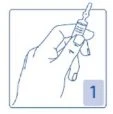
Hold the ampoule firmly, with the coloured dot facing towards you (Figure 1).
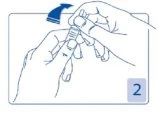
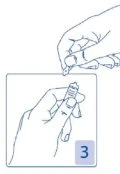
Hold the ampoule head between your thumb and index finger (thumb on the coloured dot); then press backwards (Figure 2 and 3).
Use in children and adolescents
Intravenous medicinal products containing benzyl alcohol should be used with caution in children under 3 years of age (see also "Trangorex contains benzyl alcohol").
Data on safety and efficacy in children are limited. Your doctor will determine the appropriate dose.
Follow these instructions unless your doctor has given you different directions.
Consult your doctor or pharmacist if you have any doubts.
If you use more Trangorex than you should
If you have received more medicine than you should have, symptomatic treatment will be required. Neither amiodarone nor its metabolites are eliminated by dialysis.
In case of overdose or accidental ingestion, contact the Toxicology Information Service, telephone 91 562 04 20, stating the name of the medicinal product and the amount taken.
4. Possible adverse effects
Like all medicines, this medicine can cause adverse effects, although not everyone experiences them.
The adverse effects observed, categorized by their frequency of occurrence—very common (may affect more than 1 in 10 people); common (may affect up to 1 in 10 people); uncommon (may affect up to 1 in 100 people); rare (may affect up to 1 in 1,000 people); very rare (may affect up to 1 in 10,000 people); frequency not known (cannot be estimated from available data)—are as follows:
Blood and lymphatic system:
- Frequency not known: You may experience more infections than usual. This may be due to a decrease in the number of white blood cells (neutropenia). Severe reduction in white blood cells, increasing the likelihood of infections (agranulocytosis).
Cardiac:
-
Common: Mild to moderate slow heart rate (bradycardia), varying according to the administered dose.
-
Very rare: Marked slow heart rate (bradycardia). In some cases, particularly in patients with sinus dysfunction and/or aged over 65 years, this may require discontinuation of treatment. Onset or worsening of arrhythmia (change in heart rhythm), sometimes followed by cardiac arrest. These effects occur less frequently than with most other antiarrhythmics and are generally observed with certain drug combinations or electrolyte disturbances. Impulse conduction disturbances in the heart.
-
Frequency not known: Torsades de pointes.
Endocrine:
- Very rare: Feeling unwell, confusion or weakness, nausea (feeling sick), loss of appetite, irritability. These could be early symptoms of a condition called “syndrome of inappropriate antidiuretic hormone secretion (SIADH).”
- Frequency not known: Hyperthyroidism (when the thyroid glands produce more thyroid hormone than the body needs).
Eye disorders:
- Very rare: Inflammation of the optic nerve (optic neuritis), which may progress to blindness (see section 2, “Warnings and precautions”).
Gastrointestinal:
- Very rare: Nausea.
- Frequency not known: Sudden inflammation of the pancreas (acute pancreatitis).
General and administration site conditions:
- Common: At the injection site, pain, redness (erythema), swelling of the skin due to fluid accumulation (edema), darkening (necrosis), leakage of fluid (extravasation), fluid accumulation (infiltration), inflammation, hardening (induration), vein inflammation (phlebitis, thrombophlebitis), cellulitis, infection, changes in pigmentation. These can be avoided by placement of a central catheter.
Hepatobiliary:
- Very rare: Isolated and often moderate increases in transaminases (related to liver function) at the beginning of treatment. These may resolve upon dose reduction or even spontaneously. Acute liver disorders with increased transaminases in blood and/or yellowing of the skin (jaundice), which may be life-threatening.
Adverse reactions with amiodarone are common, particularly affecting the heart, lungs, and liver. Occasionally, these manifestations are dose-related and resolve after dose reduction.
Immune system:
- Very rare: Severe allergic reaction that may be life-threatening (anaphylactic shock).
- Frequency not known: Swelling due to fluid accumulation under the skin (Quincke's edema).
Musculoskeletal and connective tissue:
- Frequency not known: Back pain.
Nervous system:
- Very rare: Benign-type increased intracranial pressure, headache.
Psychiatric:
- Common: Decreased libido.
- Frequency not known: Confusional state (delirium). Seeing, hearing, or feeling things that are not real (hallucinations).
Respiratory:
- Very rare: Pneumonitis or fibrosis (lung disease in which fibrous tissue forms), sometimes fatal (see section 2, “Warnings and precautions”), severe respiratory complications. Bronchial muscle contraction (bronchospasm) and/or cessation of breathing (apnea) in cases of severe respiratory failure, mainly in asthmatic patients. These are generally reversible after stopping treatment.
Skin and subcutaneous tissue:
- Common: Itchy, red rash (eczema).
- Very rare: Sweating.
- Frequency not known: Urticaria, characterized by the appearance of hives, irritation, and itching of the skin. Life-threatening skin reactions characterized by skin rash, blisters, peeling, and pain (toxic epidermal necrolysis (TEN)), Stevens-Johnson syndrome (SJS), bullous dermatitis, drug reaction with eosinophilia and systemic symptoms (DRESS).
Vascular:
- Common: Decrease in blood pressure, usually mild and transient. In cases of overdose or too rapid injection, severe hypotension or collapse may occur.
- Very rare: Hot flushes.
Injury, poisoning, and procedural complications:
- Frequency not known: Life-threatening complication after heart transplant (primary graft dysfunction), in which the transplanted heart fails to function properly (see section 2, “Warnings and precautions”).
If you consider any of the adverse effects you experience to be severe, or if you notice any adverse effects not listed in this leaflet, inform your doctor or pharmacist.
Reporting of adverse effects:
If you experience any type of adverse effect, consult your doctor or pharmacist, even if it is a possible adverse effect not mentioned in this leaflet. You may also report them directly via the Spanish Pharmacovigilance System for Human Medicines: https://www.notificaram.es. By reporting adverse effects, you can help provide more information on the safety of this medicine.
5. Storage of Trangorex
Do not store above 25 ºC.
Keep in the original packaging to protect from light.
Keep this medicine out of the sight and reach of children.
Do not use this medicine after the expiry date stated on the packaging and on the ampoules after EXP. The expiry date refers to the last day of the month indicated.
Medicines must not be disposed of via wastewater or household waste. Dispose of unused medicines and their containers at the SIGRE point located at your pharmacy. If you are unsure, ask your pharmacist how to dispose of unused medicines and their containers. This will help protect the environment.
6. Contents of the pack and other information
Composition of Trangorex
- The active substance is amiodarone hydrochloride.
- The other components are: benzyl alcohol, polysorbate 80, and water for injections.
Appearance of the product and contents of the pack
The injectable solution is a pale yellow liquid. It is supplied in colorless glass ampoules. Each ampoule contains 3 ml of injectable solution.
Standard pack: contains 6 ampoules.
Marketing Authorization Holder and Manufacturer
Marketing Authorization Holder:
sanofi-aventis, S.A.
C/ Roselló i Porcel, 21
08016 Barcelona
Spain
Manufacturer:
Delpharm Dijon
6, boulevard de l’Europe
21800 Quétigny (France)
OR
Sanofi S.r.l.
Via Valcanello, 4
03012 Anagni (FR)
Italy
Date of the most recent review of this leaflet: January 2022
Detailed and up-to-date information on this medicine is available on the website of the Spanish Agency for Medicines and Health Products (AEMPS): http://www.aemps.gob.es/.
INFORMATION FOR HEALTHCARE PROFESSIONALS
This information is intended solely for doctors or healthcare professionals.
See section "Warnings and precautions".
Dosage and method of administration
Initial or loading dose: two alternatives are possible:
Intravenous infusion
- Initial or loading dose: The usual dose is 5 mg/kg administered in 250 ml of 5% dextrose solution only, infused over a period of 20 minutes to 2 hours. The infusion may be repeated 2 to 3 times within 24 hours. The infusion rate should be adjusted according to the clinical response.
- The effect begins within the first few minutes and gradually decreases; therefore, a maintenance infusion should be initiated.
- Maintenance dose: 10 to 20 mg/kg body weight/24 hours (usually 600 to 800 mg/24 hours, maximum 1,200 mg/24 hours) in 250 ml of 5% dextrose, administered over several days. Oral therapy should be initiated to replace the intravenous administration starting on the first day of infusion.
Intravenous injection (see section “Warnings and precautions”).
The dose is 5 mg/kg body weight. The injection must never be administered over less than 3 minutes. It must not be mixed with other preparations in the same syringe.
Cardiopulmonary resuscitation in the treatment of ventricular fibrillation resistant to defibrillation: The initial IV dose is 300 mg (or 5 mg/kg body weight) diluted in 20 ml of 5% dextrose, administered rapidly. An additional IV dose of 150 mg (or 2.5 mg/kg body weight) should be considered if ventricular fibrillation persists.
Except during cardiopulmonary resuscitation, amiodarone must be injected over no less than 3 minutes, and a second direct intravenous injection must not be administered until at least 15 minutes after the first injection, even if only a single vial has been administered (risk of irreversible collapse).
The use of medical equipment or products containing plastic material of the DEHP (di-2-ethylhexyl phthalate) type in the presence of amiodarone may cause leaching of this substance. To minimize patient exposure to DEHP, the final amiodarone solution for infusion should preferably be administered using materials that do not contain DEHP.
Do not add any other product to the same syringe. Do not administer other preparations through the same intravenous line. If treatment needs to be prolonged, initiate continuous infusion.
The original data is available in the language of the country of manufacture.
Data source: Online Medicines Information Centre (CIMA) — AEMPS
Data last verified: September 21, 2026