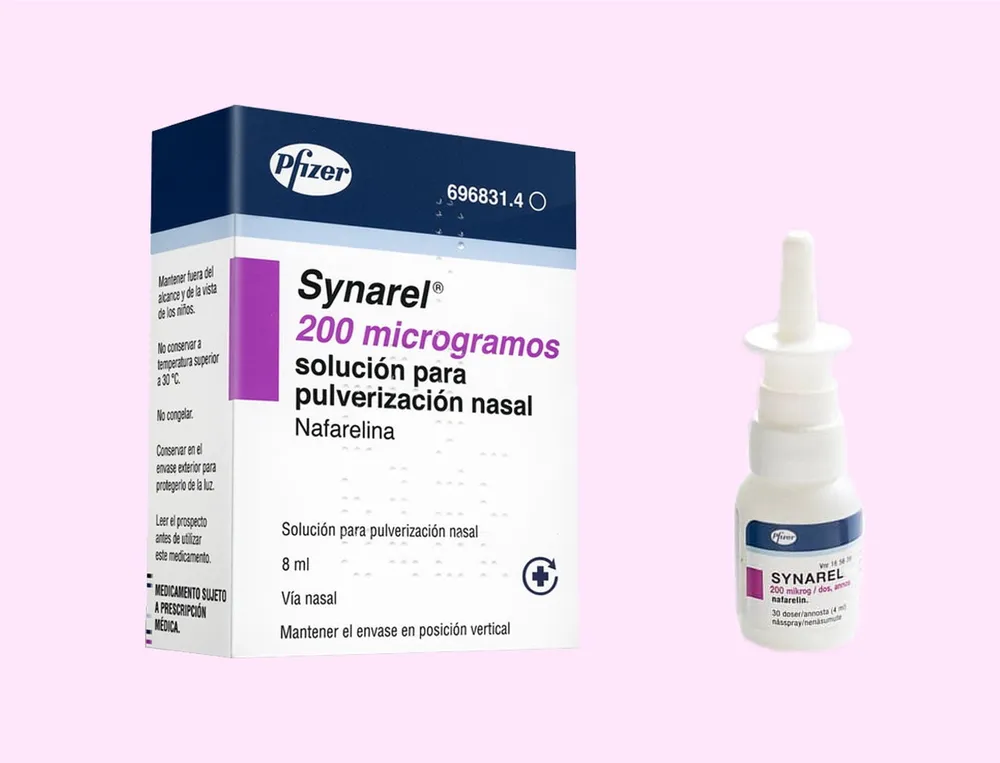
SYNAREL 200 MICROGRAMS, NASAL SPRAY SOLUTION
SpainIt is used to treat endometriosis (including relief of menstrual, pelvic, or coital pain and heavy bleeding) and in controlled ovarian stimulation programs prior to in vitro fertilization.
Frequently asked questions
How should I take Synarel?
It is administered nasally following your doctor's instructions. For endometriosis, the dose is usually 2 sprays per day (one in each nostril, one in the morning and one at night), although it may increase in some cases. For ovarian stimulation, the recommended dose is 4 sprays per day (two in the morning and two at night).
When should I not use this medication?
Do not use it if you are allergic to nafarelin or any of its components, if you have vaginal bleeding of unknown cause, if you are pregnant or breastfeeding, or if you have already used the medication for six months.
What side effects can Synarel cause?
The most common side effects include weight gain, mood changes, decreased libido, headache, hot flashes, acne, muscle pain, and changes in breast size or dryness. Alterations in bone density or vaginal bleeding may also occur.
Can I take other medications while using Synarel?
You must inform your doctor if you are taking other drugs. If you need to use a nasal decongestant, you must wait at least 30 minutes after using Synarel to prevent the latter from losing efficacy.
What should I do if I miss a dose?
If you miss a dose, take it as soon as you remember, but do not take a double dose to make up for it. Please note that missing doses may carry a risk of pregnancy or cause vaginal bleeding.
What precautions should I take regarding contraception?
During treatment, you must use non-hormonal barrier contraceptive methods (such as condoms, diaphragm, or IUD) to prevent pregnancy. You should not use oral contraceptives, as they are hormonal.
Instructions for use
Package Leaflet: Information for the User
Introduction
Package leaflet: information for the user
SYNAREL 200 micrograms solution for nasal spray
Nafarelin
Read the entire leaflet carefully before you start using this medicine, because it contains important information for you.
- Keep this leaflet, as you may need to read it again.
- If you have any questions, consult your doctor or pharmacist.
- This medicine has been prescribed for you only, and you should not give it to others, even if they have the same symptoms as you, because it may harm them.
- If you experience any adverse reactions, consult your doctor or pharmacist, even if they are adverse reactions not listed in this leaflet. See section 4.
Leaflet contents:
- What Synarel is and what it is used for
- What you need to know before using Synarel
- How to use Synarel
- Possible side effects
- How to store Synarel
Pack contents and additional information
1. What Synarel is and what it is used for
Synarel belongs to a class of medicines called synthetic analogues of gonadotropin-releasing hormone (a natural substance produced by the body that stimulates the ovaries in women—the organs containing the eggs—and the testes in men). It works by reducing your body's normal response to this hormone, resulting in the ovaries producing lower amounts of other hormones called estrogens. You will notice this reduction as your menstruation stops or decreases in volume approximately one month after starting this medicine.
Synarel is used for:
- Endometriosis (abnormal location of the tissue lining the uterus), including relief of associated symptoms such as painful menstruation, painful intercourse, general pelvic pain, and heavy menstrual bleeding.
- Controlled ovarian stimulation programs prior to in vitro fertilization, always under the supervision of a specialist physician.
2. What you need to know before using Synarel
Do not use Synarel
- If you are allergic to nafarelin, to natural gonadotropin-releasing hormone, to other gonadotropin-releasing hormone analogues, or to any of the other ingredients of this medicine (listed in section 6).
- If you have vaginal bleeding of undetermined cause.
- If you are pregnant or planning to become pregnant during treatment. If you are using this medicine as part of an in vitro fertilization program, your pregnancy will be planned to occur after treatment ends (see section “Pregnancy and breastfeeding”).
- If you are breastfeeding.
- If you have already used Synarel for six months (see section “Possible side effects”).
Warnings and precautions
Consult your doctor or pharmacist before starting this medicine
- If you miss one or more doses, as this may increase the risk of becoming pregnant.
- The use of non-hormonal barrier contraceptive methods (diaphragm, intrauterine devices (IUDs), condoms) is recommended while taking this medicine to prevent pregnancy (see section “Pregnancy and breastfeeding”).
- If you have a history of multiple ovarian cysts, as these may increase in number or size. Although these usually resolve spontaneously within 4–6 weeks of treatment, in some cases treatment interruption and/or surgical intervention may be necessary.
- If you have a family history of osteoporosis (a condition in which bones weaken, causing pain and increasing the risk of fractures), as a small loss of bone mineral may occur during treatment (see section “Possible side effects”).
- If your menstruation has not decreased or stopped after 2 months of treatment. Inform your doctor, as menstruation should stop or decrease during treatment with Synarel. Also, if menstruation does not return to normal within 4–8 weeks after stopping Synarel, consult your doctor.
- If you need to use a nasal decongestant; in this case, the decongestant should be used at least 30 minutes after using Synarel (see section “Use of other medicines”).
- If you are scheduled for tests evaluating the hypothalamic-pituitary-gonadal axis, as test results may be altered for up to 8 weeks after treatment ends.
- If you require re-treatment after a previous course, your doctor should assess your bone mineral density before restarting the medicine.
- Cases of depression, which may be severe, have been reported in patients taking Synarel. If you develop depression while taking Synarel, inform your doctor.
- The use of Synarel in combination with gonadotropins to treat infertility may sometimes cause an exaggerated ovarian response (ovarian hyperstimulation syndrome, OHSS). You may experience stomach pain, abdominal swelling, discomfort, or nausea. If this occurs, consult your doctor. See also section 4 “Possible side effects”.
Children and adolescents
The use of Synarel is not recommended in individuals under 18 years of age.
Other medicines and Synarel
Inform your doctor or pharmacist if you are taking, have recently taken, or might need to take any other medicines, including those obtained without a prescription.
Interactions between Synarel and other medicines are not expected.
Nasal decongestants may reduce the absorption of Synarel; therefore, you should not use such medicines within 30 minutes after administering Synarel. However, rhinitis (inflammation of the nasal mucosa due to allergy or cold, which may cause nasal congestion) does not appear to affect the absorption of Synarel, so you may continue using Synarel normally (see section “How to use Synarel”).
Pregnancy and breastfeeding
If you are pregnant or breastfeeding, think you may be pregnant, or are planning to become pregnant, consult your doctor or pharmacist before using this medicine.
Pregnancy must be ruled out before starting treatment with Synarel. You must not use Synarel if you are pregnant or suspect you may be pregnant.
During treatment, you should avoid becoming pregnant by using non-hormonal barrier contraceptive methods such as diaphragm, IUD, or condoms, but not oral contraceptives, as these are hormonal. This may seem unusual if you are taking Synarel as part of an in vitro fertilization program, but it is necessary because your pregnancy is planned to occur after treatment ends and should not occur earlier. If you become pregnant during treatment, you must stop taking Synarel and inform your doctor, who will provide further guidance on this matter.
This medicine should not be administered during breastfeeding.
Driving and using machines
The effect on the ability to drive and operate machinery is none or negligible.
Synarel contains benzalkonium chloride.
This medicine contains 0.01 mg of benzalkonium chloride per spray.
Benzalkonium chloride may cause irritation or inflammation inside the nose, especially when used over a long-term treatment period.
3. How to use Synarel
Synarel may only be used by women aged 18 years or older, as clinical experience is limited to this age group.
Always follow exactly the instructions for use of this medicine as given by your doctor.
Treatment with Synarel must be carried out under the supervision and guidance of your doctor, and requires regular monitoring by your doctor. Your doctor will determine the duration of your treatment with Synarel. Do not stop the treatment prematurely.
Remember to use your medicine regularly.
Synarel must be administered only through the nasal route. As a general rule, the dosage and frequency of administration are as follows:
- Endometriosis: Treatment should begin between day 2 and day 4 of the menstrual cycle. The recommended dose is 2 sprays per day (400 micrograms), divided into two administrations (one spray in one nostril in the morning and one spray in the other nostril at night). In some cases, it may be necessary to increase the dose to 4 sprays per day (800 micrograms); in this case, two sprays will be administered in the morning (one in each nostril) and two more at night (one in each nostril). Your doctor will advise you on the recommended dose for you.
The maximum recommended duration of treatment is 6 months.
- Controlled ovarian stimulation: If you are taking this medicine as part of an in vitro fertilization program, your doctor will tell you when to start treatment. The recommended dose is 4 sprays per day (800 micrograms), i.e., one spray in each nostril in the morning and one spray in each nostril at night. Your doctor may decide to discontinue treatment if no response is observed.
Typically, the treatment period does not exceed 8 weeks.
Important instructions for using Synarel
- The pump should produce a fine spray, which only occurs with a quick and firm pumping action. It is normal to see some larger droplets within the spray. However, if Synarel is released as a stream rather than a fine mist, the medicine may not work properly, and you should consult your pharmacist.
- Make sure to clean the spray nozzle before and after each use. If not cleaned, the nozzle may become blocked, and the prescribed amount of medication may not be delivered. Always replace the safety lock and plastic cap on the spray nozzle after use to prevent blockage.
- The pump is designed to deliver only a specific amount of medication, regardless of how hard the pump is pressed.
- Do not attempt to enlarge the opening of the spray nozzle. If the hole is enlarged, the pump will release an incorrect dose of Synarel.
Before first use, follow these instructions:
Before using each bottle of SYNAREL for the first time, the pump must be primed. This step needs to be performed only once, before the first use of the medicine.
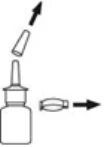
- Remove and keep the safety lock and cap to expose the nasal spray. Hold the bottle upright, placing two fingers on the pump flanges and your thumb on the base of the bottle.
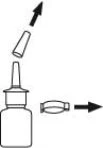
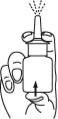
2. Prime the pump by pressing firmly and quickly upwards several times with your thumb until air is expelled and a fine spray appears. This requires 5 to 7 actuations, keeping the container with the top end pointed away from you. This step does not need to be repeated with subsequent uses, as it would waste the medication.
- Clean the spray nozzle after use:
Hold the bottle horizontally and rinse the spray nozzle with warm water, cleaning it with your fingers or a clean cloth for 15 seconds.
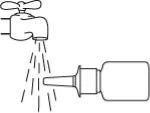
Do not clean the spray nozzle with a sharp object. This may cause an incorrect dose to be delivered. Do not detach the pump from the bottle, as this will release the spray pressure.
Dry the spray nozzle with a soft, clean cloth or a paper tissue.
Using the spray:
- Gently blow your nose to clear your nasal passages.


- Remove and keep the safety lock and cap from the container to expose the nasal spray. Hold the bottle as shown previously.
- Clean the nasal spray nozzle. Hold the bottle horizontally and rinse the nozzle with lukewarm water, cleaning it with your finger or a soft cloth for 15 seconds.
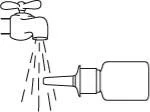
Do not clean the spray nozzle with a sharp object. This may cause an incorrect dose to be delivered. Do not detach the pump from the bottle, as this will release the spray pressure.
Dry the spray nozzle with a soft, clean cloth or a paper tissue.
- Tilt your head slightly forward. Insert the spray nozzle into one nostril, directing it toward the back and outer side of the nose. Close the other nostril with your finger.
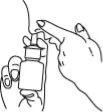
- Press the spray firmly and quickly once only, while gently inhaling at the same time.
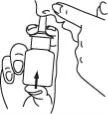
- Remove the spray from the nose and tilt your head back for a few seconds to allow the liquid to reach the back of the nasal cavity.

- Clean the nasal spray nozzle. Hold the bottle horizontally and rinse the nozzle with lukewarm water, cleaning it with your finger or a soft cloth for 15 seconds.
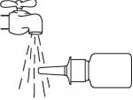
Do not clean the spray nozzle with a sharp object. This may cause an incorrect dose to be delivered. Do not detach the pump from the bottle, as this will release the spray pressure.
Dry the spray nozzle with a soft, clean cloth or a paper tissue.
Clean the spray nozzle before and after each use to prevent blockage, as a blocked nozzle may result in an incorrect dose of medication.
- Replace the cap and safety lock on the container to cover the spray nozzle. This is important to prevent the nozzle from becoming blocked.
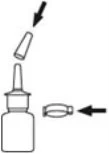
Consult your doctor or pharmacist if you have any doubts about these instructions.
It is important that you use this medicine regularly and at the recommended doses every day, both in the morning and at night (see section "If you forget to use Synarel").
Do not interrupt treatment if you have a common cold. If you wish to use a nasal decongestant, it is recommended to administer it at least 30 minutes after using Synarel (see section "Using other medicines").
If you sneeze while using this medicine or immediately after, it is advisable to repeat the dose. However, if you consistently sneeze every time you use Synarel, inform your doctor.
To ensure proper dosing, the bottle should not be used for more than 30 days (at 2 sprays per day) or 15 days (at 4 sprays per day). After this time, you will notice a small amount of solution remaining in the container, but you should not use it.
If you feel that the effect of Synarel is too strong or too weak, inform your doctor or pharmacist.
If you use more Synarel than you should, contact your doctor or pharmacist immediately.
In case of overdose or accidental ingestion, contact the Toxicology Information Service at telephone number 91-562 04 20.
If you forget to use Synarel:
You should use this medicine regularly. If you forget to take it at the scheduled time, do so as soon as you remember, then continue using it as directed, i.e., in the morning and at night.
If you miss a dose, you may experience vaginal bleeding. If you miss several doses, you may become pregnant. If this occurs, you must stop taking this medicine immediately and inform your doctor without delay.
Do not take a double dose to make up for missed doses.
4. Possible adverse effects
Like all medicines, Synarel may cause adverse effects, although not everyone experiences them. The estimated frequency of occurrence in adults is as follows:
Very common adverse effects (affecting at least 1 in 10 patients) are:
- Weight gain.
- Emotional lability (mood changes), decreased libido (reduced sexual desire).
- Headache.
- Hot flushes.
- Rhinitis (inflammation of the nasal mucosa).
- Acne, seborrhoea (excess skin oiliness).
- Myalgia (muscle pain).
- Breast atrophy, vulvovaginal dryness, decreased breast size.
- Oedema (swelling).
Common adverse effects (affecting at least 1 in 100 patients) are:
- Hypersensitivity to the drug, characterized by chest pain, dyspnoea (difficulty breathing), pruritus (itching), rash, urticaria (raised red skin lesions).
- Oestrogen deficiency (lack of female sex hormones).
- Weight loss.
- Depression, insomnia (difficulty sleeping), increased libido (increased sexual desire).
- Paraesthesia (tingling sensations).
- Hypertension (high blood pressure), hypotension (low blood pressure).
- Nasal mucosa irritation.
- Hirsutism (excessive hair growth).
- Arthralgia (joint pain).
- Artificial menopause, uterine haemorrhage (bleeding from the uterus).
- Decreased bone density (increased bone porosity).
Uncommon adverse effects (affecting at least 1 in 1,000 patients) are:
- Alopecia (hair loss).
- Breast enlargement, ovarian cysts (fluid accumulation within the ovary).
Rare adverse effects (affecting at least 1 in 10,000 patients) are:
- Elevated serum GOT, GPT and alkaline phosphatase (increased liver enzymes, indicators of liver function).
Adverse effects with unknown frequency (cannot be estimated from available data):
- Migraine.
- Blurred vision (visual impairment).
- Palpitations (awareness of heartbeat).
- Ovarian hyperstimulation syndrome (an exaggerated response to ovarian stimulation that may cause abdominal distension, nausea and/or vomiting and diarrhoea; in severe cases, fluid accumulation in the abdomen).
Other adverse effects in children and adolescents
The adverse effects and their estimated frequency of occurrence in the paediatric population are as follows:
Very common adverse effects (affecting at least 1 in 10 patients) are:
- Breast enlargement.
Common adverse effects (affecting at least 1 in 100 patients) are:
- Hypersensitivity to the drug, characterized by chest pain, dyspnoea (difficulty breathing), pruritus (itching), rash, urticaria (raised red skin lesions).
- Emotional lability (mood changes).
- Hot flushes.
- Rhinitis.
- Acne, hirsutism (excessive hair growth), seborrhoea (excess skin oiliness), abnormal body odour.
Uncommon adverse effects (affecting at least 1 in 1,000 patients) are:
- Vaginal bleeding, vaginal discharge.
Adverse effects with unknown frequency (cannot be estimated from available data):
- Transient increase in pubic hair.
During the first two months of treatment, some vaginal bleeding may occur. Do not be concerned, as this is normal.
A slight decrease in bone mineral content may also occur, although this recovers within 6 months after stopping treatment. If you have a family history of osteoporosis, you may have an increased risk of bone mineral loss during treatment (see section “Take special care with Synarel”).
Most of these adverse effects are not serious, disappear when treatment ends, and do not require discontinuation of the medicine.
Some patients have experienced symptoms suggesting an allergic reaction to this medicine, such as difficulty breathing, chest pain, rash, skin redness, and itching. If any of these symptoms occur, stop taking the medicine and consult your doctor.
If you consider any of the adverse effects you experience to be severe, or if you notice any adverse effects not listed in this leaflet, inform your doctor or pharmacist.
Reporting of adverse effects
If you experience any adverse effect, talk to your doctor, pharmacist, or nurse, even if it is a possible adverse effect not listed in this leaflet. You can also report them directly via the Spanish Pharmacovigilance System for Human Medicines: www.notificaram.es. By reporting adverse effects, you can help provide more information on the safety of this medicine.
5. Storage of Synarel
Do not store above 30 °C.
Keep the container in an upright (vertical) position.
Do not freeze.
Store in the outer packaging to protect from light.
When not using this medicine, keep the cap and safety closure securely in place.
Keep out of the reach and sight of children.
Do not use Synarel after the expiry date stated on the packaging.
Each Synarel container may be used for up to 30 days, although this period may be shorter depending on the dosage regimen (see section “How to use Synarel”).
Medicines should not be disposed of via wastewater or household waste. Dispose of containers and unused medicines at a pharmacy’s SIGRE collection point. If in doubt, ask your pharmacist how to properly dispose of unused medicines and their containers. This will help protect the environment.
6. Contents of the container and additional information
Composition of Synarel
- The active substance is nafarelin (as acetate). Each spray delivers 100 microliters of aqueous solution containing nafarelin acetate equivalent to 200 micrograms of nafarelin base.
- The other components are: sorbitol (E-420), benzalkonium chloride, glacial acetic acid, and purified water.
Appearance of the product and contents of the container
Synarel is presented as a nasal spray solution. Each container consists of an 8 ml bottle of aqueous solution equipped with a metering valve. Each bottle contains 60 doses.
Marketing Authorization Holder and Manufacturer
Marketing Authorization Holder:
Pfizer, S.L.
Avda. de Europa, 20-B
Parque Empresarial La Moraleja
28108 Alcobendas (Madrid)
Spain
Manufacturer:
Pfizer Service Company BV
Hermeslaan 11
1932 Zaventem
Belgium
Date of the most recent review of this leaflet: January 2022
Detailed and up-to-date information on this medicinal product is available on the website of the Spanish Agency for Medicines and Health Products (AEMPS) http://www.aemps.gob.es/
The original data is available in the language of the country of manufacture.
Data source: Online Medicines Information Centre (CIMA) — AEMPS
Data last verified: September 21, 2026