PYRAZINAMIDE PRODES 250 MG TABLETS
SpainIt is used in combination with other medications for the initial phase of tuberculosis treatment, which usually lasts 2 months.
Frequently asked questions
How should I take Pirazinamida Prodes?
You must follow your doctor's instructions exactly. The dose depends on your weight and whether you take it every day or three days a week. You must not exceed the dose of 2g per day (8 tablets).
When should I not take this medication?
You must not take it if you are allergic to pyrazinamide or its components, if you have acute or previous liver problems due to medication, if you suffer from severe kidney problems, if you have elevated uric acid levels (hyperuricemia) or a history of gout, or if you suffer from porphyria.
What side effects can Pirazinamida Prodes cause?
Common effects include allergic reactions, increased uric acid, loss of appetite, abdominal pain, nausea, vomiting, elevated liver enzymes, muscle and joint pain, and worsening of porphyria. Rare effects may also occur, such as anemia, clotting problems, yellowing of the skin (jaundice), skin rashes, itching, or fever.
Does it interact with other medications?
Yes, it may affect or be affected by other drugs. For example, with certain anti-tuberculosis drugs, it may increase the risk of liver toxicity; with probenecid, it may increase uric acid; and it may decrease the blood concentration of cyclosporine or zidovudine.
What should I do if I forget a dose?
Take it as soon as possible, but if it is almost time for your next dose, skip the forgotten dose and continue with your regular schedule. Do not take a double dose to make up for it.
What should I inform my doctor about before starting treatment?
You must inform them if you have liver or kidney problems, diabetes, gout, or porphyria. You should also inform them if you are pregnant, breastfeeding, or taking any other medication.
Instructions for use
Package leaflet: Information for the user
Introduction
Package leaflet: information for the user
Pirazinamida Prodes 250 mg tablets
pirazinamide
Read the entire leaflet carefully before you start taking this medicine, because it contains important information for you.
- Keep this leaflet, as you may need to read it again.
- If you have any questions, ask your doctor or pharmacist.
- This medicine has been prescribed for you only, and you should not give it to other people, even if they have the same symptoms as you, because it could harm them.
- If you experience any adverse reactions, consult your doctor or pharmacist, even if they are adverse reactions not listed in this leaflet. See section 4.
Contents of the leaflet
- What Pirazinamida Prodes is and what it is used for
- What you need to know before taking Pirazinamida Prodes
- How to take Pirazinamida Prodes
- Possible adverse effects
- How to store Pirazinamida Prodes
- Contents of the pack and other information
1. What Pirazinamida Prodes is and what it is used for
Pirazinamida Prodes is a medicine that belongs to the group of medicines called antituberculosis agents.
Antibiotics are used to treat bacterial infections and are not effective against viral infections such as influenza or the common cold. It is important to follow your doctor's instructions regarding dosage, dosing interval, and duration of treatment. Do not store or reuse this medicine. If you have any antibiotic left after completing the treatment, return it to the pharmacy for proper disposal. Medicines must not be disposed of via wastewater or household waste. |
Pirazinamida Prodes is used in combination with other antituberculosis medications during the initial phase of tuberculosis treatment, which usually lasts 2 months.
2. What you need to know before starting to take Pirazinamida Prodes.
Do not take Pirazinamida Prodes:
- if you are allergic to pyrazinamide or to any of the other ingredients of this medicine (listed in section 6),
- if you have acute liver problems or have previously had a liver disorder caused by taking medicines,
- if you have severe kidney problems,
- if you have hyperuricemia (high levels of uric acid in the blood) or a history of gout, as this medicine reduces the elimination of uric acid,
- if you have been diagnosed with a disease called porphyria.
Do not take Pirazinamida Prodes if you are in any of the above situations.
Warnings and precautions
Talk to your doctor or pharmacist before starting to take Pirazinamida Prodes.
Before starting this medicine, inform your doctor if you have any of the following conditions:
- liver problems or chronic liver disease,
- kidney problems,
- gout,
- diabetes mellitus,
- porphyria.
Inform your doctor if you are pregnant or think you might be pregnant.
Do not stop treatment with Pirazinamida Prodes without consulting your doctor.
Other medicines and Pirazinamida Prodes
Tell your doctor or pharmacist if you are taking, have recently taken, or might need to take any other medicines.
Pyrazinamide may interact with or be affected by other medicines. For example:
- When used together with certain antituberculosis medicines, such as isoniazid, rifampicin, and ethionamide, liver toxicity may occur, requiring close monitoring of liver function during treatment.
- When used with probenecid, increased levels of uric acid in the blood and worsening of gout symptoms may occur.
- When pyrazinamide is used simultaneously with cyclosporine (an immunosuppressant), decreased blood concentrations of cyclosporine may be observed.
- When pyrazinamide is used simultaneously with zidovudine (a medicine used to treat HIV), decreased blood concentrations of pyrazinamide may be observed.
Pregnancy, breastfeeding, and fertility
If you are pregnant, think you may be pregnant, or are planning to become pregnant, consult your doctor or pharmacist before using this medicine. Your doctor will decide whether it is safe to continue treatment with this medicine during pregnancy.
It is important to inform your doctor if you are breastfeeding or plan to breastfeed before taking this medicine. Your doctor will determine whether it is safe to continue treatment with this medicine during breastfeeding.
There are no human data available on the long-term effects of pyrazinamide on fertility.
Driving and use of machines
The effects of pyrazinamide on the ability to drive and use machines have not been studied. The influence of this product on these functions cannot be predicted.
Pirazinamida Prodes contains lactose
This medicine contains lactose. If your doctor has informed you that you have an intolerance to certain sugars, consult with him before taking this medicine.
Pirazinamida Prodes contains sodium
This medicine contains less than 1 mmol of sodium (23 mg) per tablet; i.e., essentially "sodium-free".
3. How to take Pirazinamide Prodes
Follow exactly the instructions given by your doctor or pharmacist for taking this medicine. If in doubt, consult your doctor or pharmacist again.
The recommended dose depends on the patient's body weight and frequency of dosing:
- Daily administration: The recommended dose ranges between 20 and 30 mg per kg of body weight per day, taken as a single daily dose. The usual dose is 25 mg per kg of body weight per day, but in severe infections, for example meningitis, a higher dose may be used (such as 30 mg per kg of body weight per day).
- Administration three times a week: The recommended dose ranges between 30 and 40 mg per kg of body weight per day, taken as a single daily dose. The usual dose is 35 mg per kg of body weight per day.
The amount of this medicine given to each individual may vary, as it depends on their body weight. Your doctor will determine your daily dose and the duration of your treatment. Do not stop your treatment prematurely. Do not exceed a dose of 2 g/day (8 tablets/day).
Use in children
Children ≥ 3 months
The dose for children is based on their body weight. It usually ranges between 30 mg and 35 mg per kg of body weight per day.
The usual dose for children in the treatment of tuberculosis is 35 mg per kg of body weight per day. In children with abnormal body weight, a dose reduction may be necessary. In severe infections, for example meningitis, a higher dose may be used, such as 40 mg per kg of body weight per day.
There are insufficient data to make a recommendation for children under three months of age.
If you take more Pirazinamide Prodes than you should
If you take more tablets than you should, seek advice from your doctor or pharmacist. If possible, show them the container or this leaflet.
In case of overdose or accidental ingestion, contact your doctor or pharmacist immediately or call the Toxicology Information Service, telephone: 91 562 04 20, indicating the medicine and the amount ingested.
If you forget to take Pirazinamide Prodes
If you forget to take a dose, take it as soon as possible. However, if it is almost time for your next dose, skip the missed dose and take the next tablet at the usual time. Do not take a double dose to make up for forgotten doses.
4. Possible adverse effects
Like all medicines, this medicine can cause adverse effects, although not everyone will experience them.
Listed below are the adverse effects.
The following adverse effects have been reported with pyrazinamide:
Frequent: may affect up to 1 in 10 patients
- Allergic reactions.
- Hyperuricemia (elevated uric acid levels in the blood). Treatment should be discontinued in case of severe hyperuricemia. Pyrazinamide-induced hyperuricemia is dose-related.
- Loss of appetite, abdominal pain, nausea, and vomiting.
- Elevated liver enzymes.
- Muscle and joint pain. This side effect is dose-dependent and less frequent and milder at the recommended dose.
- Worsening of porphyria and acute intermittent porphyria (a group of disorders characterized by photosensitivity, skin lesions, anemia, psychosis, and acute abdominal pain).
Rare: may affect up to 1 in 1,000 patients
- Anemia (sideroblastic), coagulation disorders, changes in platelet count, splenomegaly.
- Dose-related hepatotoxicity, jaundice (yellowing of the skin due to elevated bilirubin), liver enlargement.
- Skin rash, urticaria, itching, photosensitivity reactions (after exposure to sunlight), acne.
- Urinary discomfort, interstitial nephritis (inflammation of the renal tubules).
- Fever.
In the case of very prolonged treatments, it is advisable to carry out periodic liver function tests.
Reporting of adverse effects
If you experience any type of adverse effect, consult your doctor or pharmacist, even if it is a possible adverse effect not listed in this leaflet. You may also report them directly through the Spanish System of Pharmacovigilance for Human Medicines: https://www.notificaram.es. By reporting adverse effects, you can help provide more information on the safety of this medicine.
5. Storage of Pyrazinamide Prodes
Keep this medicine out of the sight and reach of children.
Do not use this medicine after the expiry date stated on the packaging after EXP. The expiry date refers to the last day of the month indicated.
No special storage conditions are required.
Medicines must not be disposed of via wastewater or household waste. Dispose of unused medicines and their containers at the SIGRE collection point at your pharmacy. If you are unsure, ask your pharmacist how to dispose of medicines and containers you no longer need. This will help protect the environment.
6. Contents of the pack and other information
Composition of Pyrazinamide Prodes
- The active substance is pyrazinamide. Each tablet contains 250 mg of pyrazinamide.
- The excipients are lactose, magnesium stearate, povidone, talc (E-553b) and sodium croscarmellose.
Appearance of the product and contents of the pack
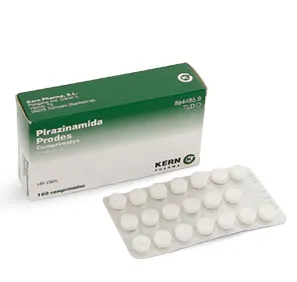
White, round, flat bevelled tablets with a central groove on one side and a smooth surface on the other. The groove is not intended to divide the tablet into equal doses.
Pack size: 100 tablets.
Marketing Authorization Holder and Manufacturer
Kern Pharma, S.L.
Venus, 72 - Pol. Ind. Colón II
08228 Terrassa - Barcelona
Spain
Date of the most recent revision of this leaflet: November 2022.
Detailed and up-to-date information on this medicinal product is available on the website of the Spanish Agency of Medicines and Medical Devices (AEMPS) http://www.aemps.es/.
The original data is available in the language of the country of manufacture.
Data source: Online Medicines Information Centre (CIMA) — AEMPS
Data last verified: September 21, 2026