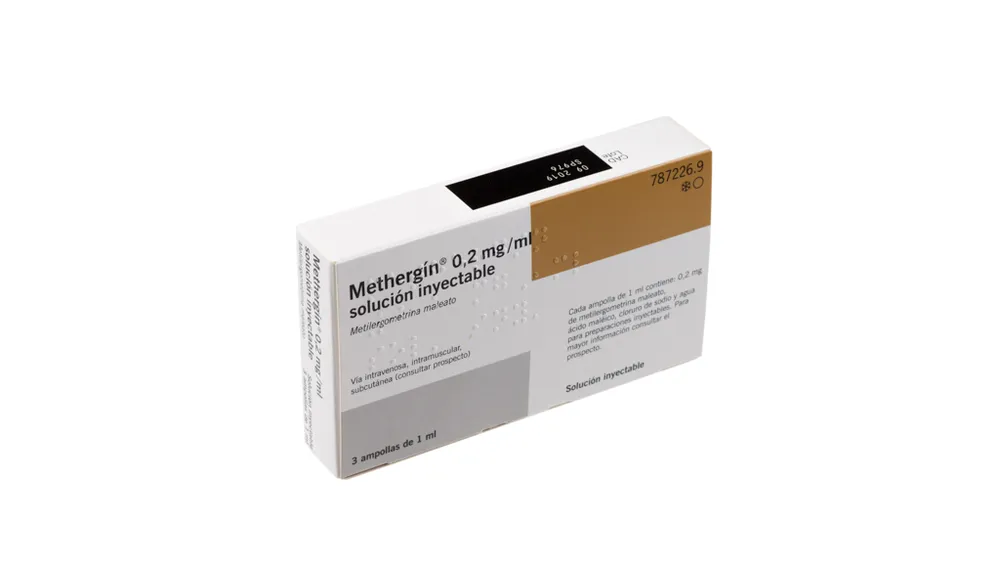
METHERGIN 0.2 MG/ML SOLUTION FOR INJECTION
SpainIt is used to treat postpartum hemorrhage or hemorrhage following a cesarean section, when the uterus does not regain its muscle tone or when blood clots appear. It is also used in scheduled deliveries to help expel the placenta and in cases of hemorrhage due to miscarriage.
Frequently asked questions
When should I not use this medication?
It should not be used if you are allergic to its components, if you are pregnant or think you may be pregnant, if you are in the dilation phase of labor, if you have very high blood pressure, if you suffer from preeclampsia or eclampsia, if you have diseases caused by lack of blood supply (such as angina pectoris), or if you have a blood infection.
How should Methergín 0.2 mg/ml solution for injection be administered?
Administration must strictly follow your doctor's instructions. It is generally administered via intramuscular injection, although in certain cases of childbirth or loss of uterine tone, it may be administered via slow intravenous or subcutaneous injection.
What side effects can Methergín 0.2 mg/ml solution for injection cause?
Frequent effects include headache, high blood pressure, skin rashes, and abdominal pain due to contractions. Less common effects may occur, such as seizures, chest pain, nausea, vomiting, or dizziness. If you experience seizures, chest pain, difficulty breathing, confusion, or signs of an allergic reaction, you must seek emergency medical attention immediately.
Can I take this medication if I am breastfeeding?
Breastfeeding is not recommended while using this medication, as it passes into breast milk and may affect the baby, in addition to reducing milk production. Breast milk should be discarded during treatment and for up to 12 hours after the last dose.
What should I inform my doctor about before starting treatment?
You must communicate if you have high blood pressure, heart disease, liver or kidney problems, or if you are using other medications such as antibiotics, HIV treatments, antifungals, vasoconstrictors, anesthetics, or medications for angina pectoris.
Should I be cautious when driving?
Yes, you should be cautious when driving or using machinery, as the medication may cause dizziness and seizures.
Instructions for use
Table of contents
- Introduction
- 1. What Methergín 0.2 mg/ml injectable solution is and what it is used for
- 2. What you need to know before starting to use Methergin 0.2 mg/ml injectable solution
- **Do not use Methergín**
- **Use of Methergín with other medicines**
- 3. How to use Methergín 0.2 mg/ml injection solution
- 4. Possible adverse effects
- 5. Storage of Methergin 0.2 mg/ml solution for injection
- 6. Contents of the pack and other information
Package leaflet: Information for the user
Introduction
Package leaflet: information for the patient
METHERGÍN 0.2 mg/ml injection solution
methylergometrine maleate
Read the entire leaflet carefully before you start using this medicine, as it contains important information for you.
- Keep this leaflet, as you may need to read it again.
- If you have any questions, ask your doctor or pharmacist.
- This medicine has been prescribed for you only, and you should not give it to other people, even if they have the same symptoms as you, since it could harm them.
- If you experience any side effects, consult your doctor or pharmacist, even if they are side effects not listed in this leaflet. See section 4.
Leaflet contents
- What Methergín 0.2 mg/ml injection solution is and what it is used for
- What you need to know before using Methergín 0.2 mg/ml injection solution
- How to use Methergín 0.2 mg/ml injection solution
- Possible side effects
- How to store Methergín 0.2 mg/ml injection solution
- Contents of the pack and other information
1. What Methergín 0.2 mg/ml injectable solution is and what it is used for
Methergín contains methylergometrine as the active substance. It belongs to a group of medicines that act by stimulating the uterus, increasing the frequency and duration of uterine contractions.
Methergín is used:
- in cases of loss of uterine muscle tone and bleeding after childbirth
- in planned deliveries, for the expulsion of the placenta
- to control uterine bleeding during caesarean sections
- postpartum bleeding when the uterus fails to contract or when blood clots appear in the uterus after delivery
- bleeding associated with abortion, incomplete or induced abortions, and curettage procedures
Methergín must not be used to induce or accelerate labour.
2. What you need to know before starting to use Methergin 0.2 mg/ml injectable solution
Do not use Methergín
- if you are allergic to methylergometrine, to ergot alkaloids, or to any of the other ingredients of this medicine (listed in section 6)
- if you are pregnant or think you might be pregnant
- if you are in the dilation phase of labour or before the baby's shoulder has emerged
- if you have very high blood pressure
- if you have a serious pregnancy complication associated with high blood pressure, edema, protein in the urine, and seizures (pre-eclampsia or eclampsia)
- if you suffer from diseases caused by inadequate blood supply (including angina pectoris)
- if you have a blood infection
Warnings and precautions
Consult your doctor or pharmacist before starting to use Methergín.
If any of the following circumstances apply, inform your doctor:
- if you have high blood pressure
- if you have heart disease (particularly affecting the arteries supplying the heart) or if you are at risk of developing heart disease (due to obesity, diabetes, high cholesterol, or smoking)
- if you suffer from liver or kidney disease
Children
Methergín is not intended for use in children. Accidental administration in newborns has been reported and led to serious consequences.
Use of Methergín with other medicines
Inform your doctor or pharmacist if you are taking, have recently taken, or might need to take any other medicines.
It is important that you inform your doctor if you are using:
- macrolide antibiotics such as erythromycin, clarithromycin, and troleandomycin
- medicines used to treat HIV infection (antiretrovirals), such as ritonavir, nelfinavir, indinavir, delavirdine, or nevirapine
- medicines for fungal infections, such as itraconazole or voriconazole
- vasoconstrictor medicines including triptans (used for migraine) or those containing ergot alkaloids such as ergotamine, or beta-blockers (medicines used for cardiac rhythm disorders and after heart attack)
- bromocriptine (a medicine used to suppress lactation)
- anaesthetics (including local anaesthetics)
- prostaglandins (used to contract the uterus)
- glyceryl trinitrate or other medicines used for angina pectoris
- rifampicin (an antibiotic)
Pregnancy and breastfeeding
If you are pregnant or breastfeeding, think you may be pregnant, or are planning to become pregnant, consult your doctor or pharmacist before using this medicine.
Consult your doctor or pharmacist before using any medicine.
Methergín must not be given to pregnant women due to its potent uterine-stimulating effect.
Methergín passes into breast milk. Because of the possible effects on the infant and the reduction in milk secretion caused by this medicine, breastfeeding is not recommended while receiving Methergín. Breast milk should be discarded during treatment with Methergín and for 12 hours after the last dose.
Driving and use of machines
Methergín may cause dizziness and seizures; therefore, caution should be exercised when driving, operating machinery, or performing any activity requiring concentration.
Methergín contains sodium
This medicine contains less than 23 mg of sodium (1 mmol) per 5 ml (maximum daily dose), which is considered essentially "sodium-free".
3. How to use Methergín 0.2 mg/ml injection solution
Follow exactly the instructions for administration of this medicine as given by your doctor. If in doubt, consult your doctor or pharmacist again.
For both induced deliveries and loss of uterine tone, the recommended route of administration for Methergín is intramuscular.
Induced deliveries
The recommended route of administration for Methergín is intramuscular.
1 ml (0.2 mg) injected into muscle or 0.5 to 1 ml (0.1 to 0.2 mg) by slow intravenous injection when the shoulder appears, or at the latest immediately after delivery of the baby.
In some cases, manual assistance with expulsion of the placenta may be advisable.
In cases of delivery under anesthesia, the recommended dose is 1 ml (0.2 mg) administered slowly intravenously.
Loss of uterine muscle tone
The recommended route of administration for Methergín is intramuscular.
1 ml (0.2 mg) intramuscularly or 0.5 to 1 ml (0.1 to 0.2 mg) by slow intravenous injection. This may be repeated every 2 to 4 hours if necessary, up to 5 times within 24 hours.
Caesarean section
After delivery of the baby, 1 ml intramuscularly or 0.5 to 1 ml intravenously or injected into the uterine muscle.
Haemorrhage, when the uterus does not contract or clots appear in the uterus
0.5 to 1 ml (0.1 to 0.2 mg) intramuscularly or subcutaneously up to 3 times daily for 5 days.
Detailed instructions for use are provided at the end of the leaflet in the section “Instructions for the correct administration of Methergín”.
If you use more Methergín than you should
If you think you have been given more Methergín than you should have, inform your doctor, nurse, or pharmacist immediately or go to the nearest hospital.
An overdose may cause nausea, vomiting, changes in blood pressure, numbness, tingling and pain in the limbs, difficulty breathing, seizures, and loss of consciousness.
In case of overdose or accidental ingestion, contact your doctor or pharmacist immediately or call the Toxicology Information Service at telephone number 91 562 04 20, stating the medication and the amount ingested.
If you have any further questions about the use of this medicine, ask your doctor or pharmacist.
4. Possible adverse effects
Like all medicines, this medicine can cause adverse effects, although not everyone will experience them.
These adverse effects occur more frequently when the intravenous route is used and mainly affect the muscles of the uterus, digestive system, blood vessels, and bronchi.
-
Frequent (may affect more than 1 in 10 people):
-
headache
-
high blood pressure
-
skin rashes
-
abdominal pain (caused by uterine contractions)
-
Uncommon (may affect up to 1 in 100 people):
- seizures (fits). If this symptom occurs, consult your doctor immediately or go to the nearest hospital emergency department
- chest pain. If this symptom occurs, consult your doctor immediately or go to the nearest hospital emergency department
-
nausea, vomiting
-
dizziness
-
low blood pressure
-
increased sweating
-
Rare (may affect up to 1 in 1,000 people):
-
slow heart rate
-
fast heart rate
-
palpitations
-
numbness or tingling in hands and feet, and cold, pale hands and feet. If these symptoms occur, consult your doctor immediately or go to the nearest hospital emergency department
-
Very rare (may affect up to 1 in 10,000 people):
-
ringing in the ears
-
nasal congestion
-
diarrhoea
-
muscle cramps
-
unexplained breathing difficulty, severe chest pain, mental confusion. If these symptoms occur, consult your doctor immediately or go to the nearest hospital emergency department
- signs of allergy, such as sudden drop in blood pressure, flushing and/or widespread swelling. If these symptoms occur, consult your doctor immediately or go to the nearest hospital emergency department
- hallucinations. If this symptom occurs, consult your doctor immediately or go to the nearest hospital emergency department
- local swelling, redness or pain due to blockage of a vein (symptoms of thrombophlebitis). If these symptoms occur, consult your doctor immediately or go to the nearest hospital emergency department
-
Frequency not known (cannot be estimated from available data):
- weakness or paralysis of limbs, lips or face, difficulty speaking (signs of stroke). If these symptoms occur, consult your doctor immediately or go to the nearest hospital emergency department
- angina pectoris. If this symptom occurs, consult your doctor immediately or go to the nearest hospital emergency department
- very severe fast and/or irregular heartbeat. If these symptoms occur, consult your doctor immediately or go to the nearest hospital emergency department
Reporting of adverse effects
If you experience any type of adverse effect, consult your doctor, pharmacist or nurse, even if it is an adverse effect not listed in this leaflet. You may also report them directly via the Spanish Pharmacovigilance System for Human Medicines (www.notificaRAM.es). By reporting adverse effects, you can help provide more information on the safety of this medicine.
5. Storage of Methergin 0.2 mg/ml solution for injection
Keep this medicine out of the sight and reach of children.
Store in the outer packaging to protect from light. Keep refrigerated (between 2 and 8°C). Do not freeze. Ampoules may be stored outside the refrigerator for up to 14 days at a temperature not exceeding 25°C.
Do not use this medicine after the expiry date stated on the carton after EXP. The expiry date refers to the last day of the month indicated.
Medicines should not be disposed of via wastewater or household waste. Dispose of containers and unused medicines at the SIGRE collection point at your pharmacy. If you have any doubts, ask your pharmacist how to dispose of containers and medicines you no longer need. This will help protect the environment.
6. Contents of the pack and other information
Composition of Methergín 0.2 mg/ml injectable solution
- The active substance is methylergometrine maleate 0.20 mg (in 1 ml of injectable solution).
- The other components are: maleic acid, sodium chloride and water for injections.
Appearance of the medicinal product and contents of the container
Methergín injectable solution is supplied in 1 ml ampoules containing a clear, colourless injectable solution.
Marketing Authorisation Holder
Essential Pharma Limited,
Vision Exchange Building
Triq it-Territorjals, Zone 1,
Central Business District,
Birkirkara, CBD 1070,
Malta
Manufacturer
Novartis Farmacéutica, S.A.
Ronda Santa María 158
Barberà del Vallès
08210 – Barcelona
Date of the most recent revision of this leaflet: December 2020
Other sources of information
Detailed information on this medicinal product is available on the website of the Spanish Agency of Medicines and Medical Devices (AEMPS) http://www.aemps.gob.es/.
This information is intended for healthcare professionals only:
See also section 3 “How to use Methergín 0.2 mg/ml injectable solution”.
Instructions for the correct administration of Methergín
Intramuscular injections are preferred over intravenous administration. If administered intravenously, Methergín injectable solution must be given slowly over a period of not less than 60 seconds. Intra- or periarterial injection must be avoided.
Administer only if the solution is clear and colourless.
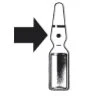
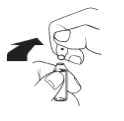
Breakable ampoule. Break line Place your thumb above the coloured spot
below the coloured spot and break the ampoule by bending
coloured spot backwards.
The original data is available in the language of the country of manufacture.
Data source: Online Medicines Information Centre (CIMA) — AEMPS
Data last verified: September 21, 2026