SEVREDOL
PolandThe medicine is used to treat moderate to severe pain that has not been controlled by weaker painkillers.
Frequently asked questions
How should Sevredol be taken?
The medicine should be taken strictly according to the doctor's instructions. Adults and adolescents over 12 years of age may take 10 mg (half a tablet) or 20 mg (one whole tablet) every 4 hours. Children aged 6 to 12 years may take 10 mg (half a tablet) every 4 hours. Tablets should be swallowed with liquid; they may be split in half if recommended by a doctor. The medicine does not need to be taken with food.
When should this medicine not be used?
Do not use the medicine if you are allergic to morphine or any of the ingredients of the medicine, have severe asthma or chronic lung disease, severe respiratory depression, intestinal obstruction, acute abdomen, acute liver disease, uncontrolled seizures, or if you are breastfeeding.
What are the possible side effects of Sevredol?
The most common side effects are constipation, nausea, and mood changes. Fatigue, vomiting, headache, drowsiness, dry mouth, or dizziness may also frequently occur. You must contact a doctor immediately if a severe skin reaction occurs (blisters, skin peeling with fever), breathing problems, severe abdominal pain, nausea, vomiting, or fever.
Can this medicine be combined with other substances?
Extreme caution should be exercised if taking sedatives (e.g., benzodiazepines), antidepressants (MAO inhibitors), sleeping pills, anesthetics, or other opioid medicines, as this may lead to dangerous slowing of breathing, excessive drowsiness, or coma. Alcohol must not be consumed during treatment.
Does the medicine affect the ability to drive vehicles?
Yes, the medicine may affect reaction speed, which may make driving a car or operating machinery difficult. You should consult a doctor regarding this matter.
What to do in case of overdose?
In case of taking more than the recommended dose, contact a doctor immediately or go to a hospital, as an overdose can lead to respiratory arrest, loss of consciousness, or even death.
Instructions for use
Package leaflet: Information for the patient
Sevredol, 20 mg, coated tablets
Morphini sulfas
Please read carefully the entire leaflet before using the medicine, as it contains
important information for the patient.
- Keep this leaflet for future reference.
- If you have any questions, consult your doctor or pharmacist.
- This medicine has been prescribed for a specific individual. Do not pass it on to others. This medicine may harm other people, even if their symptoms are the same.
- If you experience any adverse reactions, including those not listed in this leaflet, inform your doctor or pharmacist. See section 4.
Table of contents
- What Sevredol is and what it is used for
- Important information before taking Sevredol
- How to take Sevredol
- Possible side effects
- How to store Sevredol
- Contents of the pack and other information
1. What Sevredol is and what it is used for
Sevredol contains morphine sulfate as the active substance, which is a strong analgesic belonging to the group of opioid medicines.
Sevredol is used to relieve moderate to severe pain that does not respond to weaker pain-relieving medicines.
2. Important information before using Sevredol
When not to use Sevredol
- if the patient is allergic (hypersensitive) to morphine sulfate or any of the other ingredients of this medicine (listed in section 6),
- if the patient has severe chronic obstructive pulmonary disease,
- if the patient has severe bronchial asthma,
- if the patient has severe respiratory depression with hypoxia and (or) hypercapnia (slowed or suppressed respiratory function),
- if the patient has paralytic ileus or suspected paralytic ileus,
- if the patient has acute abdomen syndrome,
- if the patient has acute liver disease,
- if the patient has uncontrolled seizures,
- during breastfeeding.
Tolerance, dependence and addiction
This medicine contains morphine, which is an opioid. Repeated use of opioid medicines may lead to reduced effectiveness of the medicine (the patient becomes accustomed, known as tolerance). Repeated use of Sevredol may also lead to dependence and abuse, which can result in life-threatening overdose. The risk of these
adverse effects may increase with higher doses and longer duration
of use.
Dependence or abuse may cause the patient to feel they have lost control over the dose or frequency of medicine intake.
The risk of dependence varies between patients. The risk of dependence on Sevredol may be higher if:
- the patient or any family member has ever abused or been dependent on alcohol, prescription medicines or drugs;
- the patient smokes cigarettes;
- the patient has had mood disorders (depression, anxiety or personality disorders) or has been treated by a psychiatrist for other mental illnesses.
Warnings and precautions
Exercise special caution when using Sevredol:
- if the patient is dependent on opioid medicines (see below),
- if the patient has a history of drug or substance abuse and (or) alcohol abuse due to the abuse profile (see below),
- in cases of tolerance, physical dependence and withdrawal (see below),
- if the patient has severe respiratory disorders,
- if the patient has respiratory depression,
- if the patient has sleep apnoea,
- if the patient has severe right ventricular hypertrophy known as severe cor pulmonale,
- if the patient has head injury, intracranial lesions or increased intracranial pressure,
- if the patient has disorders of consciousness of unknown origin,
- if the patient has low blood pressure due to reduced circulating blood volume (e.g. from haemorrhage),
- if the patient has benign prostatic hyperplasia causing urinary retention,
- if the patient has urethral stricture,
- if the patient has renal colic,
- if the patient has biliary tract dysfunction,
- if the patient has intestinal obstruction or inflammatory bowel conditions leading to delayed gastrointestinal motility (see section 3),
- if the patient has a chromaffin tumour (pheochromocytoma),
- if the patient has pancreatitis or gallbladder problems due to gallstones,
- if the patient has severe renal insufficiency,
- if the patient has severe hepatic insufficiency,
- if the patient has hypothyroidism,
- if the patient has epilepsy or increased seizure susceptibility,
- if the patient is concurrently taking MAO inhibitors or within 2 weeks after discontinuation of MAO inhibitors,
- if the patient is concurrently taking any other medicines affecting the central nervous system (see section 2. Sevredol and other medicines),
- if the patient has constipation (see below and section 4).
Consult a doctor if the patient experiences severe upper abdominal pain radiating to the back,
nausea, vomiting or fever, as these may be symptoms of pancreatitis or biliary tract disease.
If any of the following symptoms occur during treatment with Sevredol, consult a doctor, pharmacist or nurse:
- Increased sensitivity to pain despite increasing the dose (hyperalgesia). The doctor will decide whether dosage adjustment or a stronger analgesic is needed (see section 2).
- Weakness, fatigue, loss of appetite, nausea, vomiting or low blood pressure. These may indicate adrenal insufficiency, and hormone supplementation may be required.
- Loss of libido, impotence, amenorrhea. This may be due to reduced secretion of sex hormones.
- If the patient has previously been dependent on drugs or alcohol. Inform the doctor if the patient notices signs of dependence on Sevredol during treatment, e.g. frequently thinking about taking another dose even when not needed for pain relief.
- Symptoms of withdrawal or dependence. The most common withdrawal symptoms are listed in section 3. In such cases, the doctor may change the medicine or adjust the dosing interval.
When to exercise special caution when using Sevredol
Acute generalised exanthematous pustulosis (AGEP) has been reported during treatment with Sevredol.
Symptoms usually occur within the first 10 days of treatment. Inform the doctor if the patient has ever had
severe skin rash, skin peeling, blisters or (and) oral ulcers after taking Sevredol or other opioids.
Discontinue Sevredol and seek immediate medical advice if the patient notices any of the following:
appearance of blisters, widespread skin peeling or pustular eruptions with fever.
Respiratory depression
If the patient has breathing difficulties, shortness of breath or apnoea, they should contact a doctor.
Suppression of the respiratory centre in the central nervous system is a significant risk in opioid overdose.
Sleep-related breathing disorders
Sevredol may cause sleep-related breathing disorders such as sleep apnoea (pauses in breathing during sleep), hypoxemia (low blood oxygen levels), or worsening of pre-existing sleep disorders. Symptoms may include episodes of stopped breathing during sleep, waking up at night due to breathlessness, difficulty maintaining sleep or excessive daytime sleepiness. Report these symptoms to a doctor. The doctor may consider reducing the dose.
If the patient is taking Sevredol and is scheduled for surgery, they should inform the doctor before the procedure. The medicine is not recommended before surgery or within 24 hours after surgery.
If the patient has adrenal cortex dysfunction (e.g. Addison's disease), the doctor may recommend testing cortisol levels and, if necessary, prescribe appropriate medication.
Morphine may mask serious abdominal complications such as intestinal perforation.
During treatment, especially with high doses, hyperalgesia (increased sensitivity to pain) may occur, which does not respond to further increases in morphine dose (see also section 3).
Before prescribing Sevredol to men and women of reproductive age, the doctor will recommend effective contraception.
The medicine may give a positive result in anti-doping controls.
Morphine may increase the risk of seizures in patients with epilepsy.
Morphine has an addiction potential similar to other strong opioid medicines.
Physical dependence on morphine rarely develops under controlled conditions. Sevredol should be used with special caution in patients currently or previously dependent on drugs or alcohol.
Dependence and withdrawal syndrome
With prolonged use, the patient may develop tolerance to the active substance (increasing doses are required to maintain the same analgesic effect). Long-term use of Sevredol, like other opioids, may lead to physical dependence. If treatment is stopped abruptly, withdrawal symptoms may occur (e.g. diarrhoea, pain, circulatory disturbances). If the doctor decides that treatment with Sevredol is no longer necessary, they will recommend gradually reducing the dose to prevent withdrawal symptoms (see section 3 "Discontinuation of Sevredol").
Constipation is a common adverse effect associated with morphine treatment. Discuss this with the doctor. The doctor may recommend laxatives from the start of morphine treatment, especially if the patient had prior bowel motility problems.
Children
See section 3.
Sevredol and other medicines
Inform the doctor about all medicines currently or recently taken, as well as any planned medications, including over-the-counter medicines.
This is particularly important when using the following medicines:
- Rifampicin, used in the treatment of, for example, tuberculosis.
- Some medicines used to treat blood clots (e.g. clopidogrel, prasugrel, ticagrelor) may have delayed and reduced effects when taken with morphine.
- Concurrent use of Sevredol and sedatives, e.g. benzodiazepines or related drugs, increases the risk of excessive sedation (drowsiness), breathing difficulties (respiratory depression) or coma, which may be life-threatening. Therefore, combination therapy should only be considered when no other treatment options are available. If Sevredol is used with sedatives, the doctor should limit the dose and duration of concurrent use. The patient should inform the doctor about all sedative medicines taken and strictly follow the prescribed dose. Informing a relative or close friend about the possibility of these symptoms may be helpful. If the described symptoms occur, consult a doctor.
- If the patient is taking MAO inhibitors (used in the treatment of depression or Parkinson's disease) or has discontinued MAO inhibitors within the last two weeks, Sevredol should be used with special caution (see "Warnings and precautions" above).
Concurrent use of morphine and certain medicines may increase the risk of adverse effects. These include:
- anaesthetics, other opioid medicines, hypnotics, neuroleptics, barbiturates, antidepressants (including phenothiazines), antihistamines, antiemetics and alcohol. Morphine enhances their effects: respiratory depression (reduced breathing rate or respiratory arrest), excessive sedation, low blood pressure, potentially leading to coma or death;
- psychotropic medicines, antihistamines, antiemetics, Parkinson's disease medicines, whose concurrent use may lead to constipation, dry mouth or urinary retention;
- cimetidine (a medicine used to treat gastric ulcers);
- gabapentin or pregabalin used in the treatment of epilepsy and neuropathic pain;
- muscle relaxants (morphine may enhance their effects).
Concurrent use of morphine and other opioid receptor agonist-antagonist analgesics (e.g. pentazocine, nalbuphine, butorphanol, buprenorphine) may cause withdrawal symptoms (see section "Discontinuation of Sevredol").
If, during treatment with Sevredol, the patient notices any of the following symptoms, this may indicate developing tolerance or dependence:
- the patient needs to take the medicine longer than prescribed;
- the patient must take a higher dose than recommended;
- the patient uses the medicine for reasons other than prescribed, e.g. "to stay calm" or "to help sleep";
- the patient has made repeated unsuccessful attempts to stop or control medicine use;
- the patient feels unwell after stopping the medicine and feels better after resuming it ("withdrawal effects").
If any of these symptoms are noticed, discuss with the doctor the best treatment strategy for the patient, including when it is appropriate to discontinue treatment and how to safely stop (see section 3 "Discontinuation of Sevredol").
Sevredol with food, drink or alcohol
Do not consume alcohol while taking Sevredol due to the risk of respiratory centre suppression, including slowed breathing up to respiratory arrest.
Pregnancy
Do not use Sevredol during pregnancy unless the doctor considers morphine treatment absolutely necessary. If Sevredol has been taken for a prolonged period during pregnancy, there is a risk of neonatal withdrawal symptoms, which should be managed by a doctor.
Breastfeeding
Morphine is excreted in breast milk; therefore, breastfeeding is not recommended during treatment.
Fertility
Due to the mutagenic properties of morphine, effective contraception should be used during treatment with Sevredol.
Driving and operating machinery
Sevredol may affect reaction speed, causing the patient to respond inadequately or too slowly to unexpected or sudden events. Consult the doctor about the possibility and conditions of driving.
Sevredol contains lactose and sunset yellow
Sevredol contains lactose as an excipient. One 20 mg tablet of Sevredol contains 197.5 mg of lactose. If the patient has previously been diagnosed with carbohydrate intolerance, they should consult a doctor before taking Sevredol.
One 20 mg tablet of Sevredol contains 0.023 mg of sunset yellow (E110), which may cause allergic reactions.
Sevredol contains sodium
The medicine contains less than 1 mmol (23 mg) of sodium per tablet, meaning it is considered "sodium-free".
3. How to use Sevredol
Always use this medicine exactly as prescribed by the doctor. If in doubt, consult the doctor or pharmacist.
Before starting and regularly during treatment, the doctor will discuss with the patient what to expect from Sevredol, when and how long to take it, when to contact the doctor and when to discontinue treatment (see also "Discontinuation of Sevredol" in this section).
The dose of Sevredol should be adjusted based on pain intensity, patient age and response to previous analgesics.
Adults and adolescents over 12 years
10 mg (half a Sevredol 20 mg tablet)
or 20 mg of morphine sulfate (one Sevredol 20 mg tablet)
every 4 hours.
Children aged 6 to 12 years
10 mg of morphine sulfate (half a Sevredol 20 mg tablet)
every 4 hours.
The coated tablets should be swallowed whole with sufficient liquid. However, the tablets may be divided along the score line if prescribed by the doctor. There is no need to take the medicine with food.
Increased pain intensity or development of tolerance (reduced effect due to repeated dosing) may require increasing the dose or changing the medicine. Hyperalgesia (increased pain sensitivity) may require dose reduction or switching to another medicine.
Duration of treatment
The duration of treatment will be determined by the doctor based on the patient's pain.
If the effect of Sevredol seems too strong or too weak, consult the doctor.
Patients with liver or kidney dysfunction and patients with delayed gastrointestinal motility
In patients with liver or kidney dysfunction or delayed gastrointestinal motility, the dose of Sevredol should be carefully adjusted.
Elderly patients and (or) patients in poor health
Elderly patients and those in poor general health may be more sensitive to morphine. The doctor may recommend longer intervals between doses or a lower-strength formulation for these patients.
Use of higher than recommended dose of Sevredol
If a higher than recommended dose of Sevredol is taken, contact a doctor immediately, as opioid overdose can be fatal.
Sensitivity to morphine varies between patients, so poisoning symptoms may occur in adults even after single prescribed doses. Symptoms of Sevredol overdose include: slowed breathing up to respiratory arrest, low blood pressure (initially slow, then very rapid), weakness, drowsiness, muscle twitching (especially in children), irregular heartbeat, decreased body temperature, loss of consciousness.
Morphine overdose may lead to brain damage (known as toxic leukoencephalopathy).
If a higher than recommended dose of Sevredol is taken, aspiration pneumonia due to vomiting or foreign bodies may occur. Symptoms may include breathlessness, cough and fever. Additionally, overdose symptoms may include breathing difficulties leading to loss of consciousness or even death.
First aid in case of Sevredol overdose:
Immediately transport the patient to hospital. While waiting for professional help, keep the patient conscious, give breathing commands and assist breathing, e.g. by placing the patient in a sitting position.
Missed dose of Sevredol
Taking a lower than recommended dose or missing a dose leads to inadequate or insufficient pain relief.
Do not take Sevredol more frequently than every 4 hours.
Do not take a double dose to make up for a missed dose.
Discontinuation of Sevredol
If the patient wishes to stop taking Sevredol, they should first discuss withdrawal conditions and further treatment with the doctor.
Do not discontinue Sevredol unless otherwise advised by the doctor. To discontinue Sevredol, consult the doctor, who will decide how to gradually reduce the dose to avoid withdrawal symptoms. Physical withdrawal symptoms may include: body aches, tremors, diarrhoea, stomach pain, nausea, flu-like symptoms, rapid heartbeat and dilated pupils. Psychological symptoms include intense discomfort, anxiety and irritability.
4. Possible adverse reactions
Like all medicines, this medicine can cause adverse reactions, although not everyone will experience them.
The severity and nature of many adverse reactions of morphine may vary individually
depending on the patient's personality, dose of the medicine and duration of treatment.
If any of the following symptoms occur, stop taking Sevredol and contact your doctor immediately:
Constipation is a characteristic adverse reaction of long-term treatment,
- intestinal obstruction,
- morphine causes dose-dependent respiratory depression and sedation of variable degree ranging from mild fatigue to drowsiness,
- bronchospasm,
- morphine may cause severe allergic reactions leading to difficulty in breathing or dizziness,
- clinically significant decrease or increase in blood pressure, heart failure,
- pancreatitis,
- renal colic.
- Severe skin reaction with blistering, extensive peeling of the skin, pustular eruptions accompanied by fever. This may be a condition called acute generalized exanthematous pustulosis (AGEP).
Seek immediate medical attention if any serious adverse reactions occur.
In assessing adverse reactions, the following frequency categories are used:
Very common (affects more than 1 in 10 people):
constipation (during long-term treatment), nausea, mood changes, mainly euphoria, but also low mood.
Common (affects more than 1 in 100 and up to 1 in 10 people):
weakness, itching, asthenia, fatigue, malaise, urinary disorders, excessive sweating, rash, vomiting (especially at the beginning of treatment), abdominal pain, loss of appetite (anorexia), dry mouth, decreased appetite up to complete loss of appetite, headache, dizziness, drowsiness, involuntary muscle spasms, changes in activity level (usually reduced, but also increased activity or states of excitement), insomnia, changes in cognitive and sensory functions (e.g. thinking disturbances, disturbances in perception and/or hallucinations), confusion.
Uncommon (affects more than 1 in 1,000 and up to 1 in 100 people):
peripheral edema, urinary retention, urticaria, increased liver enzyme activity, intestinal obstruction, dyspepsia, taste disturbances, non-cardiogenic pulmonary edema (including due to rapid dose escalation), bronchospasm, respiratory depression, clinically significant decrease in blood pressure, clinically significant increase in blood pressure, facial flushing, rapid heartbeat (tachycardia), slow heartbeat (bradycardia), vestibular dizziness, blurred vision, seizures, increased muscle tension, tingling and numbness (paresthesia), fainting, hypersensitivity reactions.
Rare (affects more than 1 in 10,000 and up to 1 in 1,000 people):
withdrawal symptoms or drug dependence (see also section 3 "Discontinuation of Sevredol"), renal colic, biliary colic, increased pancreatic enzyme activity or pancreatitis.
Very rare (affects fewer than 1 in 10,000 people):
chills, muscle spasms, muscle rigidity, other skin rashes such as exanthema, dental changes, although a definite relationship with morphine treatment has not been established, dyspnea, blurred vision, double vision and nystagmus, drug dependence (see also section 2), erectile dysfunction, amenorrhea, syndrome of inappropriate ADH secretion (SIADH; main leading symptom: hyponatremia), tremor.
Frequency not known (cannot be estimated from available data):
tolerance to the medicine, neonatal withdrawal syndrome, gallbladder pain, reduced cough reflex, palpitations, heart failure, miosis (pupil constriction), increased sensitivity to pain (perception of pain in situations that do not cause pain in healthy individuals), sweating, dysphoria, anaphylactic reactions (severe allergic reactions causing difficulty in breathing or dizziness), anaphylactoid reactions, decreased libido.
Other possible adverse reactions:
Frequency not known (frequency cannot be estimated from available data)
- sleep apnea (episodes of breathing cessation during sleep);
- severe skin reaction with blistering, extensive peeling of the skin, pustular eruptions accompanied by fever. This may be a condition called acute generalized exanthematous pustulosis (AGEP);
- symptoms related to pancreatitis and biliary tract disorders, e.g. severe upper abdominal pain radiating to the back, nausea, vomiting or fever.
Reporting of adverse reactions
If any adverse reactions occur, including any not listed in this leaflet, inform your doctor or pharmacist. Adverse reactions can be reported directly to:
Department of Monitoring of Adverse Drug Reactions
Office for Registration of Medicinal Products, Medical Devices and Biocidal Products
Al. Jerozolimskie 181C, 02 222 Warsaw, Phone: +48 22 49 21 301, Fax: +48 22 49 21 309
Website: https://smz.ezdrowie.gov.pl
Adverse reactions can also be reported to the marketing authorization holder.
Reporting adverse reactions helps provide more information on the safety of the medicine.
5. How to store Sevredol
Store below 30 °C.
Keep the medicine out of the sight and reach of children.
Do not use this medicine after the expiry date stated on the packaging after the words
"Expiry date" or "EXP". The expiry date refers to the last day of the stated month.
Medicines should not be disposed of via wastewater or household waste. Ask your
pharmacist how to dispose of medicines no longer required. This will help protect
the environment.
6. Contents of the pack and other information
What Sevredol contains
The active substance is morphine.
One coated tablet contains 20 mg of morphine sulfate (Morphini sulphas).
The other ingredients are:
Anhydrous lactose, maize starch, povidone (K25), talc, magnesium stearate, Opadry
85F240092 (pink) [containing partially hydrolysed polyvinyl alcohol, titanium dioxide (E171),
macrogol 3350, talc, erythrosine (E127), orange-yellow (E110), purified water].
What Sevredol looks like and contents of the pack
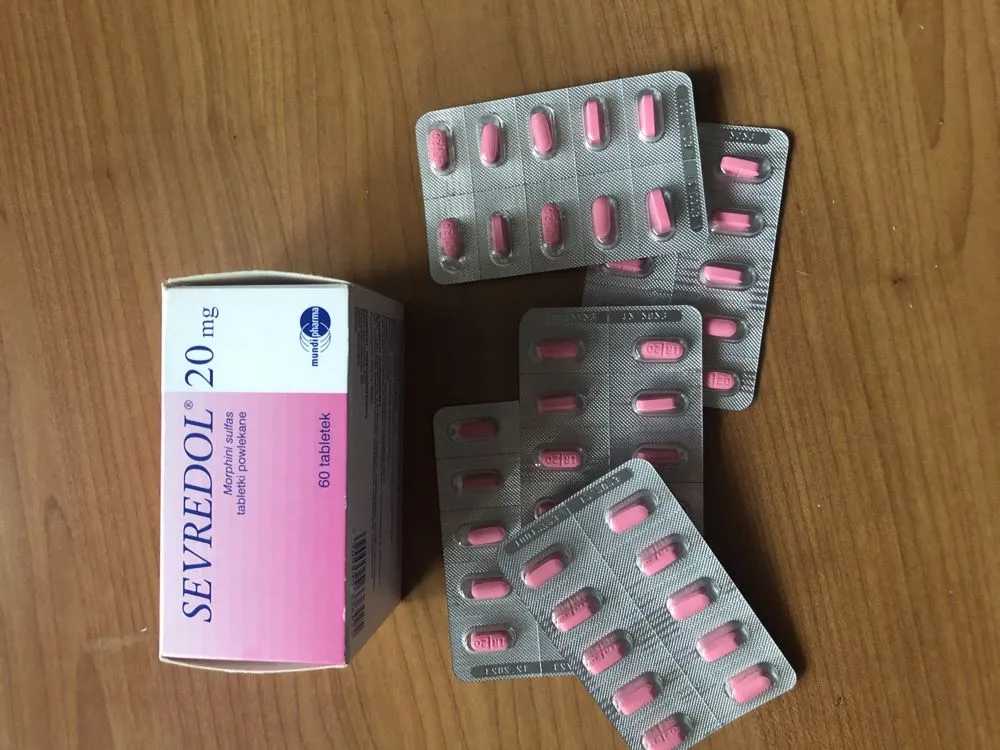
Sevredol 20 mg coated tablet, biconvex, capsule-shaped, pink, smooth on one side, on the other side with a division line, with the mark “IR” on the left and “20” on the right of this line. The tablet can be divided into equal doses.
Blisters made of PVC/PVDC/Al or polypropylene containers with PE cap, packed in a cardboard box.
Pack sizes:
- 20, 30 or 60 tablets in blisters of 10
- 20 or 56 tablets in polyethylene containers
Not all pack sizes may be marketed.
Marketing Authorisation Holder
Mundipharma A/S
Frydenlundsvej 30
2950 Vedbæk, Denmark
Importer and Manufacturer
Mundipharma DC B.V.,
Leusderend 16
3832 RC Leusden, The Netherlands
For further information about this medicine, please contact the Marketing Authorisation Holder's representative: Mundipharma Polska Sp. z o.o., Międzyborska 11B, lok.104, 04-041 Warsaw, Poland, tel. +48 22 3824850.
The original data is available in the language of the country of manufacture.
Data source: Register of Medicinal Products of Poland (URPL)
Data last verified: September 01, 2026