SEREVENT
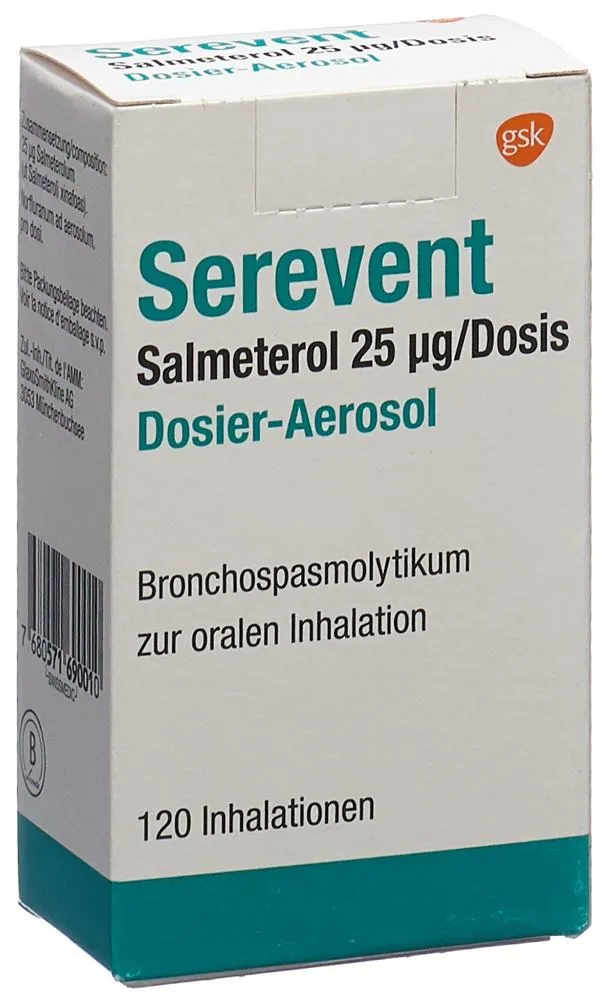
PolandThe medicine is used to prevent breathing difficulties caused by asthma (including exercise-induced or nocturnal asthma) and in chronic obstructive pulmonary disease (COPD). It also helps to relieve episodes of shortness of breath or wheezing in the airways, but it does not act immediately.
Frequently asked questions
How should Serevent be used?
The medicine should be inhaled directly into the lungs through the mouth. Adults and adolescents over 12 years old, as well as children aged 4–12 years, usually take 2 inhalations twice daily. In patients with severe asthma, the dose may be higher. Adults with COPD also usually take 2 inhalations twice daily. The medicine should be taken daily, and in asthma patients, always in combination with an inhaled steroid.
When should you not take this medicine?
Do not use the medicine if you are hypersensitive to salmeterol or any other ingredient of the preparation (e.g., norflurane).
What are the possible side effects of Serevent?
Muscle cramps, tremors, headache, and rapid or irregular heartbeat may occur frequently. Other possible symptoms include, among others, rash, anxiety, dizziness, insomnia, nausea, and less commonly, increased blood sugar levels or heart rhythm problems. If severe breathing difficulties or wheezing occur immediately after taking the medicine, you must stop using it immediately and contact a doctor.
Does the medicine interact with other medicines?
Yes. You should inform your doctor about all medicines you are taking. The risk of side effects (e.g., irregular heartbeat) may increase when using antifungal medicines (ketoconazole, itraconazole) or ritonavir. Beta-adrenergic receptor blockers (e.g., atenolol, propranolol) should be avoided, as they may reduce the effect of the medicine. Use with diuretics, theophylline, or steroids may lower blood potassium levels.
What should you do if you miss a dose or take too much of the medicine?
If you forget to take a dose, take the next one at the usual time; do not take a double dose. In case of taking more than the recommended dose, you should contact a doctor or pharmacist, as symptoms such as rapid heartbeat, tremors, dizziness, or headache may occur.
Instructions for use
Patient Information Leaflet
Serevent, 25 micrograms/dose, inhalation aerosol, suspension
Salmeterol
Please read all of this leaflet carefully before using this medicine, because it contains
important information for you.
- Keep this leaflet. You may need to read it again.
- If you have any further questions, ask your doctor or pharmacist.
- This medicine has been prescribed for you only. Do not pass it on to other people. It may harm them, even if their symptoms are the same as yours.
- If you experience any side effects, including any not listed in this leaflet, tell your doctor or pharmacist. See section 4.
Leaflet contents:
- What Serevent is and what it is used for
- What you need to know before you use Serevent
- How to use Serevent
- Possible side effects
- How to store Serevent
- Contents of the pack and other information
1. What Serevent is and what it is used for
- Serevent contains the active substance salmeterol. It is a long-acting bronchodilator. It works by opening up the airways in the lungs, making it easier for air to flow in and out of the lungs. The effect usually starts within 10 to 20 minutes and lasts for 12 hours or longer.
- Your doctor has prescribed this medicine to prevent breathing difficulties, which may be caused by asthma. Regular use of Serevent helps prevent asthma attacks, including those triggered by exercise or occurring only at night.
- Regular use of Serevent also helps prevent breathing difficulties caused by other chest conditions such as chronic obstructive pulmonary disease (COPD).
- Serevent helps relieve episodes of breathlessness or wheezing. However, it does not work immediately during an asthma attack or episode of wheezing. If this happens, you should use a fast-acting bronchodilator such as salbutamol.
- Serevent is delivered as an aerosol. The medicine is inhaled directly into the lungs.
In patients with asthma, Serevent must always be used in combination with an inhaled corticosteroid.
2. Important information before using Serevent
When not to use Serevent
- if the patient is allergic (hypersensitive) to salmeterol xinafoate or any other ingredient of the medicine, norflurane (HFA 134a).
Warnings and precautions
- If asthma or breathing difficulties worsen, contact a doctor immediately. This may be indicated by increased wheezing, more frequent sensation of chest tightness, or increased use of fast-acting bronchodilator medicines. Do not increase the number of inhalations of Serevent. The condition may seriously worsen. Contact a doctor, as a change in asthma treatment may be necessary.
- If good control of asthma symptoms has been achieved, the doctor may consider gradually reducing the dose of Serevent.
- If the doctor has prescribed Serevent for asthma, continue taking other medicines previously used for asthma. These may include inhaled steroids or oral steroids. Continue treatment with the previously used dose, even if symptoms improve, unless the doctor advises otherwise. Do not stop using inhaled steroids (or oral steroids) after starting Serevent.
- The doctor will regularly monitor the patient's health if the patient has hyperthyroidism, diabetes (Serevent may increase blood sugar levels), or heart disease, including irregular or rapid heartbeat.
Serevent and other medicines
- Inform the doctor about all medicines currently taken or taken recently, as well as any medicines the patient plans to use. This includes medicines used for asthma and other medicines available without prescription. It may not be appropriate to use Serevent with other medicines.
- Before using Serevent, inform the doctor if the patient is currently being treated with antifungal medicines containing ketoconazole or itraconazole for fungal infections, or if being treated with ritonavir for HIV infection. These medicines may increase the risk of adverse effects associated with Serevent, including irregular heartbeat, or may worsen existing adverse effects.
- While using Serevent, avoid taking beta-adrenergic receptor blockers unless the doctor advises their use. Beta-blockers such as atenolol, propranolol, and sotalol are mainly used to treat high blood pressure or other heart conditions. Inform the doctor about any beta-blockers currently or recently taken, as these medicines may reduce or block the effect of salmeterol.
- Serevent may decrease potassium levels in the blood. If this occurs, the patient may experience irregular heartbeat, muscle weakness, or cramps. This is more likely if the patient is taking Serevent with certain medicines used to treat high blood pressure (diuretics) and other medicines used for breathing difficulties, such as theophylline or steroids. The doctor may recommend blood tests to check potassium levels. If in doubt, contact the doctor.
Pregnancy and breastfeeding
If the patient is pregnant or breastfeeding, suspects she may be pregnant, or is planning to have a child, she should consult a doctor or pharmacist before using this medicine.
Driving and operating machinery
It is unlikely that adverse effects associated with the use of Serevent will affect the ability to drive or operate machinery.
3. How to use Serevent
This medicine should always be used exactly as directed by your doctor or pharmacist. If in doubt,
consult your doctor or pharmacist.
- In patients with asthma, Serevent should always be used in combination with an inhaled corticosteroid.
- Serevent should be used daily unless your doctor advises otherwise.
- You may notice the medicine working within the first day of use.
Serevent is for oral inhalation only.
Adults and adolescents aged 12 years and over with asthma
- The usual starting dose is 2 inhalations twice daily.
- In patients with severe asthma, your doctor may increase the dose to 4 inhalations twice daily.
Children with asthma
- For children aged 4 to 12 years, the usual dose is 2 inhalations twice daily.
- Serevent is not recommended for use in children under 4 years of age.
Adults with chronic obstructive pulmonary disease (COPD, including chronic bronchitis and emphysema)
- The usual starting dose is 2 inhalations twice daily.
- Not applicable to children and adolescents.
Instructions for use
Your doctor, nurse, or pharmacist should show you how to use the inhaler. They should check from time
to time how you are using it. Incorrect use of the Serevent inhaler or failure to follow instructions
may mean the medicine will not help you with asthma or COPD.
The medicine is contained in a pressurized metal canister fitted inside a plastic casing with a mouthpiece.
Checking the inhaler
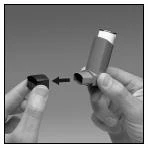
- When using the inhaler for the first time, check that it works properly. Remove the mouthpiece cap gently, holding it between your thumb and index finger.
- To ensure the inhaler is working, shake it well, point the mouthpiece away from you into the air, and press the canister to release two puffs of medicine into the air. If the inhaler has not been used for one week or longer, release two puffs of medicine into the air before use.
Using the inhaler
It is important to begin breathing slowly— as slowly as possible—before using the inhaler.
- Use the inhaler while standing or sitting.
- Remove the mouthpiece cap from the inhaler (as shown in Figure 1). Check the mouthpiece inside and out to ensure it is clean and free from foreign objects.
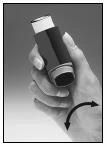
- Shake the inhaler 4 or 5 times to ensure any accidental contamination is removed and the contents are properly mixed.
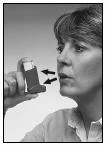
- Hold the inhaler upright between your fingers and thumb, with your thumb placed under the mouthpiece at the base of the inhaler. Breathe out fully, to the limit of your comfortable capacity.
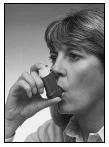
- Place the mouthpiece in your mouth and seal your lips tightly around it. Do not bite the mouthpiece.
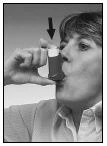
- Begin to breathe in slowly through your mouth. As soon as you start inhaling, press down on the canister to release one dose of medicine. Continue to breathe in slowly and deeply.
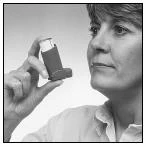
- Hold your breath, remove the inhaler from your mouth, and remove your finger from the canister. Continue holding your breath for a few seconds, or as long as is comfortable without causing discomfort.
- Wait about half a minute before taking the next dose, and repeat steps 3 to 7.
- After inhalation, always replace the mouthpiece cap to prevent dust from entering. Push the cap firmly into place.
Perform the first few inhalations in front of a mirror. If you see a "spray" coming from the top of the inhaler or from the corners of your mouth, repeat the inhalation technique.
If you have difficulty using the inhaler, either as an adult or a child, a Volumatic spacer device may help you use Serevent effectively. Consult your doctor or pharmacist.
Cleaning the inhaler
To prevent blockage, clean the inhaler at least once a week.
To clean the inhaler:
- Remove the mouthpiece cap.
- Never remove the metal canister from the plastic casing.
- Wipe the mouthpiece inside and out, and the outside of the plastic casing, with a dry cloth or tissue.
- Replace the mouthpiece cap.
Do not immerse the metal canister in water.
Use of more than the recommended dose of Serevent
It is important to use the inhaler exactly as prescribed by your doctor. If you accidentally use more
Serevent than recommended, consult your doctor or pharmacist immediately. You may experience
an increased heart rate, tremors, and/or dizziness. Headache, a sensation of muscle weakness, and joint pain may also occur.
Missing a dose of Serevent
Do not take a double dose to make up for a missed dose. Take the next dose at your usual time.
If you have any further questions about the use of this medicine, consult your doctor or pharmacist.
4. Possible adverse effects
Like all medicines, this medicine can cause adverse effects, although not everyone experiences them.
To reduce the likelihood of adverse effects occurring, your doctor will prescribe the lowest dose of Serevent that provides control of asthma or COPD. Below are the adverse effects observed in patients using Serevent.
Allergic reactions: after using Serevent, sudden breathing difficulties may occur.
Wheezing and coughing may worsen. Symptoms such as itching and swelling (usually of the face, lips, tongue or throat) may also occur. If such symptoms appear, or occur suddenly after using Serevent, you should contact your doctor immediately.
Allergic reactions after using Serevent are very rare (may affect up to 1 in 10,000 people).
Other adverse effects are listed below:
Common (may affect up to 1 in 10 people):
- Muscle cramps.
- Tremor; rapid or irregular heartbeat (palpitations), headache, trembling hands (tremors). Tremors may occur more frequently if the patient uses more than two inhalations twice daily. These adverse effects do not last long and usually decrease during continued treatment with Serevent.
Uncommon (may affect up to 1 in 100 people):
- Rash.
- Very fast heartbeat (tachycardia). This symptom is more likely if the patient uses more than two inhalations twice daily.
- Feeling of restlessness.
Rare (may affect up to 1 in 1,000 people):
- Dizziness.
- Insomnia or difficulty falling asleep.
- Decreased blood potassium levels (may cause irregular heartbeat, muscle weakness, cramps).
Very rare (may affect up to 1 in 10,000 people):
- Breathing difficulties or worsening of wheezing immediately after using Serevent. If such symptoms occur, Serevent must be discontinued. A fast-acting inhaled bronchodilator should be used to help breathing, and you should contact your doctor immediately.
- Irregular heartbeat or extra beats (arrhythmias). In such a case, do not stop using Serevent, but inform your doctor.
- Increased blood sugar (glucose) levels (hyperglycaemia). If the patient has diabetes, more frequent monitoring of blood glucose levels may be necessary, and the dose of previously used antidiabetic medicines may need to be adjusted.
- Pain in the mouth and throat.
- Nausea.
- Pain, joint swelling, or chest pain.
Reporting of adverse effects
If any adverse effects occur, including any not listed in this leaflet, inform your doctor or pharmacist. Adverse effects can be reported directly to the Department of Monitoring Adverse Drug Reactions of the Office for Registration of Medicinal Products, Medical Devices and Biocidal Products, Al. Jerozolimskie 181C, 02-222 Warsaw, Tel.: +48 22 49 21 301, Fax: +48 22 49 21 309, website: https://smz.ezdrowie.gov.pl
Reporting adverse effects helps to provide more information on the safety of the medicine.
5. How to store Serevent
- Keep out of the sight and reach of children.
- After each inhalation, replace the mouthpiece cap and press it firmly into place. Do not force the cap into position.
- Do not store above 30°C.
- The metal container holds a pressurized suspension. Do not expose to temperatures above 50°C. Do not pierce, damage, or burn the container, even if it appears to be empty.
- Do not use this medicine after the expiry date stated on the label and the outer carton. The expiry date refers to the last day of the stated month.
Medicines should not be disposed of via wastewater or household waste. Ask your pharmacist how to dispose of medicines you no longer use. This will help protect the environment.
6. Contents of the pack and other information
What Serevent contains
- The active substance is salmeterol.
- Each puff contains 25 micrograms of the active substance – salmeterol.
- Each inhaler contains 120 doses.
- The other ingredient of the medicine is norflurane (HFA 134a).
This medicine contains fluorinated greenhouse gases. Each inhaler contains 12 g of HFC-134a (also
known as norflurane or HFA 134a), which corresponds to 0.0172 tonnes of CO2 equivalent (global
warming potential GWP = 1430).
What Serevent looks like and contents of the pack
Inhalation aerosol, suspension. The pressurised container holds a white or almost white suspension
for inhalation.
Marketing Authorisation Holder and Manufacturer
Marketing Authorisation Holder
GlaxoSmithKline Trading Services Limited
12 Riverwalk
Citywest Business Campus
Dublin 24
D24 YK11
Ireland
Manufacturer
Glaxo Wellcome Production
Zone Industrielle 2
Rue Lavoisier 23
F-27000 Evreux
France
Aspen Bad Oldesloe GmbH
Industriestrasse 32-36
23843 Bad Oldesloe
Germany
This medicine is authorised for supply in the European Economic Area countries under the
following names:
Austria Serevent Evohaler
Belgium Serevent Evohaler
Denmark Serevent
Estonia Serevent
Hungary Serevent Evohaler
Iceland Serevent
Ireland Serevent Evohaler
Lithuania Serevent
Luxembourg Serevent Evohaler
Malta Serevent Evohaler
Netherlands Serevent Inhalator
Norway Serevent
Poland Serevent
Slovakia Serevent Inhaler N
Slovenia Serevent
Sweden Serevent Evohaler
The original data is available in the language of the country of manufacture.
Data source: Register of Medicinal Products of Poland (URPL)
Data last verified: September 01, 2026