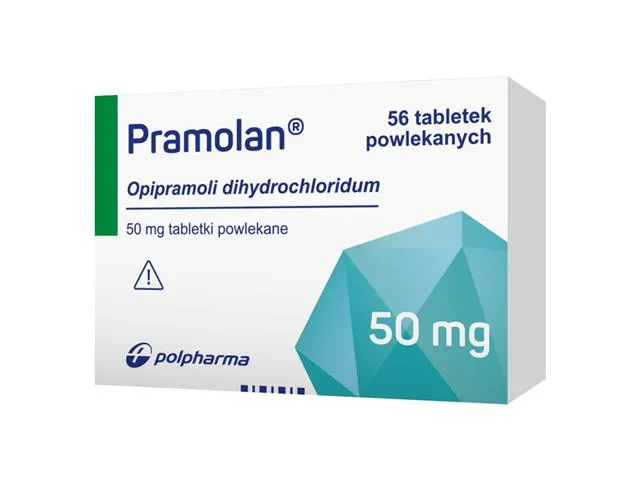
PRAMOLAN
PolandThe medicine is used to treat generalized anxiety disorders and disorders occurring in somatic form (i.e., physical discomfort not or weakly related to organ diseases). It has an anti-anxiety and calming effect, facilitates falling asleep, improves well-being, and relieves states of depression.
Frequently asked questions
How to use Pramolan?
Tablets should be taken during or immediately after a meal, with water. The dosage is determined by a doctor. In adults, the usual dose is 1 tablet in the morning and at noon, and 2 tablets in the evening, although the doctor may adjust the dose to the patient's needs. To feel an improvement in mood, the medicine should be used systematically for at least 2 weeks.
When should you not take this medicine?
Do not use the medicine if you have an allergy to any of its ingredients, acute alcohol poisoning, acute poisoning by sleeping pills, painkillers, or psychotropic drugs, acute urinary retention, disorientation (delirium), untreated narrow-angle glaucoma, prostatic hypertrophy with urinary retention, paralytic ileus, or serious cardiac conduction disturbances. The use of MAO inhibitors is also contraindicated.
Can Pramolan be combined with other medicines or alcohol?
You should not drink alcohol during treatment, as it may increase drowsiness. Inform your doctor about all medicines you are taking, especially sleeping pills, sedatives, antidepressants, anticonvulsants, and MAO inhibitors (which must be discontinued at least 14 days before starting treatment).
What side effects may occur?
Pramolan may cause, among others, fatigue, dry mouth, nasal congestion, dizziness, drowsiness, constipation, rapid heartbeat, or allergic reactions (rash). Less commonly, problems with urination, sleep disturbances, nausea, or headaches may occur.
What to do in case of a missed dose or taking too much of the medicine?
If you forget to take a dose, take it as soon as possible, but do not take a double dose to make up for the missed one. In case of taking more than the recommended dose or if poisoning is suspected, contact a doctor or go to a hospital immediately.
Instructions for use
Package leaflet: information for the patient
Pramolan, 50 mg, coated tablets
Opipramol dihydrochloride
Please read all of this leaflet carefully before taking this medicine, because it contains
important information for the patient.
- Keep this leaflet so that you can read it again if necessary.
- If you have any questions, please consult your doctor or pharmacist.
- This medicine has been prescribed for a specific individual. Do not pass it on to others. The medicine may harm another person, even if their symptoms are the same.
- If the patient experiences any adverse reactions, including any adverse reactions not listed in this leaflet, inform your doctor or pharmacist. See section 4.
Contents of the leaflet
- What Pramolan is and what it is used for
- Important information before taking Pramolan
- How to take Pramolan
- Possible side effects
- How to store Pramolan
- Contents of the pack and other information
1. What Pramolan is and what it is used for
Pramolan (opipramol dihydrochloride) is a tricyclic antidepressant with anxiolytic and sedative properties. It facilitates falling asleep, relieves depressive states and improves well-being.
Pramolan is indicated for the treatment of:
- Generalized anxiety disorders and somatic-type disorders (physical discomfort not related or insufficiently related to organic disorders).
2. Important information before using Pramolan
When not to use Pramolan:
- if the patient is allergic to opipramol dihydrochloride, tricyclic antidepressants, or any of the other ingredients of this medicine (listed in section 6);
- if the patient has acute alcohol, hypnotic, analgesic, or psychotropic drug intoxication;
- if the patient has acute urinary retention;
- if the patient is confused (disoriented), agitated, experiencing hallucinations, and sometimes severe physical disturbances (so-called delirium);
- if the patient has untreated narrow-angle glaucoma;
- if the patient has benign prostatic hyperplasia with urinary retention;
- if the patient has paralytic ileus;
- if the patient has pre-existing higher-degree atrioventricular block or supraventricular and ventricular conduction disorders;
- if the patient is taking MAO inhibitors (see section below "Pramolan and other medicines").
Warnings and precautions
Before starting treatment with Pramolan, discuss with your doctor:
- if the patient has benign prostatic hyperplasia without urinary retention;
- if the patient has liver or kidney disease;
- if the patient has an increased predisposition to seizures (e.g. due to brain damage of various origins, epilepsy, alcoholism);
- if the patient has insufficient cerebral blood supply (cerebrovascular insufficiency) or previous heart damage, especially with conduction disorders;
- if the patient has blood cell formation disorders;
- if the patient has pre-existing first-degree atrioventricular block;
- if fever, flu-like infections, or sore throat occur during treatment. In such cases, contact your doctor, who may order a blood test.
- if skin allergic reactions occur. In such cases, discontinue the medicine and consult your doctor.
- during long-term treatment. Liver function tests are recommended in such cases.
Pramolan and other medicines
Inform your doctor or pharmacist about all medicines currently or recently taken, as well as any medicines you plan to take.
It is especially important to inform your doctor about the use of:
- neuroleptics (e.g. haloperidol, risperidone);
- hypnotics (e.g. barbiturates);
- sedatives (e.g. benzodiazepines);
- tricyclic antidepressants;
- medicines used in Parkinson's disease;
- anticonvulsants;
- phenothiazines;
- serotonin reuptake inhibitors (e.g. sertraline);
- fluoxetine and fluvoxamine;
- beta-blockers (e.g. propranolol);
- antiarrhythmic drugs;
- drugs affecting the hepatic microsomal enzyme system;
- monoamine oxidase inhibitors (MAO) – MAO inhibitors should be discontinued at least 14 days before planned administration of Pramolan, and similarly, Pramolan should be discontinued 14 days before planned administration of an MAO inhibitor.
Pramolan may also enhance the effects of drugs used in general anesthesia.
Pramolan and alcohol
Do not drink alcohol during treatment. Concurrent use with alcohol may cause drowsiness.
Pregnancy and breastfeeding
If the patient is pregnant or breastfeeding, suspects she may be pregnant, or is planning to have a child, she should consult her doctor or pharmacist before using this medicine.
Pregnancy
This medicine may be used in pregnant women only if absolutely necessary, as determined by the physician (especially regarding use during the first trimester).
Breastfeeding
Opipramol – the active ingredient of the medicine – passes into human milk in small amounts. The medicine should not be taken during breastfeeding, or breastfeeding should be discontinued if the use of Pramolan is absolutely indicated.
Driving and operating machinery
There is a possibility that the ability to drive or operate machinery may be impaired. Therefore, it is recommended to assess individual response to the medicine before driving or operating machinery.
Pramolan contains lactose
Each tablet contains 0.84 mg of monohydrate lactose.
If the patient has previously been diagnosed with intolerance to certain sugars, the patient should consult a doctor before taking this medicine.
Pramolan contains sunset yellow, lake (E110) and quinoline yellow, lake (E104)
The medicine may cause allergic reactions.
3. How to use Pramolan
This medicine should always be taken as directed by the physician. In case of doubt, consult a
doctor or pharmacist.
The dosage is determined individually by the physician for each patient.
Use in adults
The usual recommended dose for adults is 50 mg (1 tablet) of opipramol hydrochloride in the
morning and at noon, and 100 mg (2 tablets) of opipramol hydrochloride in the evening.
Depending on the efficacy and patient's tolerance to the medicine, the physician may:
- reduce the dose to 50 mg (1 tablet) or 100 mg (2 tablets) of opipramol hydrochloride administered once daily, usually in the evening, or
- increase the dose to 100 mg (2 tablets) of opipramol hydrochloride administered up to three times daily.
Use in children
Experience with the use of opipramol hydrochloride in children is limited; therefore, treatment
should be conducted exclusively under medical supervision.
Children over 6 years of age are usually given 3 mg of opipramol hydrochloride per kilogram of
body weight. Maximum dose: 100 mg (2 tablets) per day.
Method of administration
The coated tablets should be taken during or immediately after meals, with water.
Since the effect of opipramol hydrochloride does not appear immediately and mood changes occur
gradually, the medicine should be taken regularly for at least 2 weeks.
The recommended average duration of treatment is from 1 to 2 months.
Taking more Pramolan than recommended
If an overdose is taken, or in case of suspected poisoning, seek immediate medical advice from a
physician who will initiate appropriate treatment, or go to the nearest hospital.
Symptoms of overdose may include:
- drowsiness, insomnia, dizziness, agitation, coma, stupor, transient confusional states, increasing anxiety;
- ataxia (motor incoordination), seizures;
- oliguria, anuria;
- tachycardia or bradycardia, arrhythmia (irregular heartbeat), atrioventricular block, decreased blood pressure, shock, breathing difficulties, rarely cardiac arrest.
In case of even a minor overdose in a child, contact a physician immediately, as children are more sensitive to overdose.
Missed dose of Pramolan
If a dose is missed, take it as soon as possible. Do not take a double dose to make up for the missed dose.
Stopping Pramolan
Treatment must be conducted exclusively under medical supervision; therefore, only a physician
can decide to discontinue treatment. Discontinuation should be gradual, with a slow reduction in dose.
Avoid abrupt discontinuation, especially if the medicine has been used for a long time and in high doses,
as this may lead to withdrawal symptoms such as:
- anxiety;
- sweating;
- nausea, vomiting;
- sleep disturbances.
If you have any further doubts regarding the use of this medicine, consult your doctor or pharmacist.
4. Possible adverse reactions
Like all medicines, this medicine may cause adverse reactions, although not everyone will experience them.
The following adverse reactions have been reported during treatment with this medicine:
Common (occur in less than 1 in 10 patients):
- fatigue, dry mouth and nasal congestion (especially at the beginning of treatment);
- hypotension and blood pressure drops related to changes in body position (especially at the beginning of treatment).
Uncommon (occur in less than 1 in 100 patients):
- dizziness, drowsiness, urinary disorders, accommodation disorders, tremor, weight gain, feeling of thirst;
- increased heart rate, palpitations;
- constipation;
- skin allergic reactions (rash, urticaria);
- ejaculation disorders, erectile dysfunction.
Rare (occur in less than 1 in 1,000 patients):
- agitation, headache, paresthesia (tingling, burning or prickling sensations in the limbs), particularly in elderly patients, confusion and delirium (particularly associated with abrupt discontinuation or long-term use of high doses), restlessness, sweating, sleep disturbances;
- cardiovascular collapse, conduction disorders, worsening of existing heart failure;
- nausea, vomiting, gastrointestinal disturbances, altered taste, paralytic ileus (particularly in cases of abrupt discontinuation or long-term treatment with high doses);
- oedema;
- urinary retention;
- galactorrhea.
Very rare (occur in less than 1 in 10,000 patients):
- seizures, movement coordination disorders (ataxia, dyskinesias), inability to sit still (akathisia), peripheral nerve diseases (polyneuropathies), acute glaucoma, anxiety;
- severe liver function disorders, prolonged treatment may lead to jaundice and chronic liver damage;
- hair loss.
The medicine may cause changes in blood parameters, therefore the doctor may recommend regular blood tests. During treatment, the following may occur:
- increased serum liver enzyme activity (substances indicating liver function);
- decreased white blood cell count (leukopenia);
- absence of granulocytes in blood (agranulocytosis).
Reporting of adverse reactions
If any adverse symptoms occur, including any adverse symptoms not listed in this leaflet, inform your doctor or pharmacist. Adverse reactions can be reported directly to the Department of Monitoring Adverse Reactions of Medicinal Products at the Office for Registration of Medicinal Products, Medical Devices and Biocidal Products
Al. Jerozolimskie 181C
02-222 Warsaw
Tel.: +48 22 49 21 301
Fax: +48 22 49 21 309
Website: https://smz.ezdrowie.gov.pl
Adverse reactions can also be reported to the marketing authorisation holder.
Reporting adverse reactions helps provide more information on the safety of this medicine.
5. How to store Pramolan
Keep this medicine out of sight and reach of children.
Store at a temperature not exceeding 25°C. Keep in the original packaging to protect from light.
Do not use this medicine after the expiry date stated on the carton and blister. The expiry date refers to the last day of the stated month.
The label on the packaging shows the expiry date after the abbreviation EXP, and the batch number after the abbreviation Lot/LOT.
Medicines must not be disposed of via wastewater or household waste. Ask your pharmacist how to dispose of medicines no longer in use. This will help protect the environment.
6. Contents of the packaging and other information
What Pramolan contains
- The active substance is opipramol dihydrochloride. Each coated tablet contains 50 mg of opipramol dihydrochloride.
- Other components of the medicine are:
Tablet core: microcrystalline cellulose, povidone K 30, crospovidone, colloidal anhydrous silica, magnesium stearate.
Tablet coating: hypromellose, titanium dioxide (E171), lactose monohydrate, macrogol, triacetin, quinoline yellow, lac (E104), indigo carmine, lac (E132), orange yellow, lac (E110).
What Pramolan looks like and contents of the pack
The medicine is in the form of round, biconvex, coated tablets, green in colour.
Pack sizes: 20, 28, 56, 60, 84 coated tablets.
Not all pack sizes may be marketed.
Marketing Authorisation Holder and Manufacturer
POLPHARMA Pharmaceuticals Works S.A.
Pelplińska Street 19, 83-200 Starogard Gdański, Poland
Tel. +48 22 364 61 01
Similar drugs
| Brand name | Dosage form | Active substance / Dosage | Manufacturer |
|---|---|---|---|
| APROPOL | tablets, film-coated |
|
Polfarmex S.A. |
The original data is available in the language of the country of manufacture.
Data source: Register of Medicinal Products of Poland (URPL)
Data last verified: September 01, 2026