OPTIVATE
PolandThe medicine is used to prevent and treat bleeding in people with hemophilia A (congenital deficiency of factor VIII in the blood).
Frequently asked questions
When should you not take Optivate?
Do not use the medicine if you are allergic (hypersensitive) to human coagulation factor VIII or any of the other ingredients of the preparation.
How should Optivate be taken?
The medicine is administered by intravenous injection. The dosage and frequency of injections are determined by a doctor. In the event of the first symptoms of bleeding, the medicine should be administered, and if necessary, injections should be repeated until the bleeding stops.
Can this medicine be mixed with other preparations?
The medicine should not be mixed in the same syringe with other medicines. Inform your doctor about all medicines you are currently taking or planning to take.
What are the possible side effects of Optivate?
Common side effects may include: headache, dizziness, cough, sneezing, rash, pain at the injection site, limb edema, itching, fever, chills, muscle stiffness, or drowsiness. Very rarely, allergic reactions may occur, such as throat swelling, sudden skin flushing, hives, rapid heartbeat, nausea, chest tightness, or wheezing – in such cases, stop injection immediately and contact a doctor.
What should you do if you miss a dose of the medicine?
Do not take a double dose to make up for a missed dose. Inject the normal dose as soon as possible, and then continue treatment according to the doctor's instructions.
How should the medicine be prepared for use?
The medicine must be reconstituted only with the sterile water for injection included in the package. Before reconstitution, ensure that the vials are at room temperature (20-30°C). After reconstitution, the medicine must be used immediately (within one hour) and must not be stored.
Instructions for use
Package leaflet: Information for the user
Optivate 250 IU, 500 IU, 1000 IU
Powder and solvent for solution for injection
Human coagulation factor VIII
Please read all of this leaflet carefully before using this medicine because it contains
important information for you.
- Keep this leaflet as you may need to read it again.
- If you have any questions, please consult your doctor.
- This medicine has been prescribed for a specific individual. Do not pass it on to others. It may harm other people, even if their symptoms are the same.
- If you experience any adverse reactions, including any not listed in this leaflet, inform your doctor immediately.
Contents of the leaflet
- What Optivate is and what it is used for
- What you need to know before using Optivate
- How to use Optivate
- Possible side effects
- How to store Optivate
- Contents of the pack and other information
1. What Optivate is and what it is used for
Optivate is a highly purified concentrate of coagulation factor VIII derived from human plasma obtained from screened donors. It is a white or pale yellow sterile powder supplied with water for injection.
Optivate is administered as intravenous injections for the prevention and treatment of bleeding episodes in patients with haemophilia A (congenital deficiency of factor VIII in the blood). Your doctor can explain in more detail why this medicine has been prescribed.
2. Important information before using Optivate
When not to use Optivate:
- if the patient is allergic (hypersensitive) to human factor VIII or to any of the other components of this medicine (listed in section 6).
Warnings and precautions
- If bleeding is heavier or lasts longer than usual and does not stop after injection of Optivate, consult a doctor. Some patients with factor VIII deficiency may develop inhibitors (antibodies) against factor VIII during treatment. As a result, treatment may not work as expected. The treating physician will regularly order tests to detect possible antibodies, especially before surgical procedures. Both before and after treatment with this medicine, particularly during the first treatment cycle, the doctor will likely order tests to check factor VIII levels in the blood.
- This medicine may contain small amounts of antibodies against blood group antigens originally present in donor plasma. This is normal and in most cases these antibodies do not cause problems. However, if large doses of Optivate are required, for example during surgery, and the patient has blood group A, B or AB, the doctor may order a blood test to check whether the medicine affects red blood cells.
Complications related to catheterisation: if use of a central venous access device (CVAD) is necessary, the risks associated with CVAD use should be considered, including local infections, bacteraemia, and catheter site thrombosis.
For medicines prepared from human blood or plasma, specific measures are taken to prevent transmission of infections to patients. These measures include:
- careful selection of blood and plasma donors to exclude those who may be carriers of infections,
- testing individual samples of donated blood and pooled plasma for the presence of viruses/infections,
- implementation of blood and plasma processing steps that can inactivate or remove viruses.
Despite these measures, it cannot be completely excluded that administration of medicines prepared from human blood or plasma may transmit infection. This also applies to unknown or newly emerging viruses and other types of infections.
These measures are considered effective against enveloped viruses such as human immunodeficiency virus (HIV), hepatitis B virus, hepatitis C virus, and non-enveloped hepatitis A virus. The effectiveness of these measures may be limited against non-enveloped viruses such as parvovirus B19.
Parvovirus B19 infection may be dangerous for pregnant women (fetal infection) and for individuals with weakened immune systems or certain types of anaemia (e.g. sickle cell or haemolytic anaemia).
It is recommended that before each administration of Optivate, the product name and batch number be recorded to maintain a record of batches used.
For patients receiving factor VIII products derived from human plasma regularly or repeatedly, the physician may recommend considering vaccination against hepatitis A and B.
Optivate with other medicines
Optivate for injection must not be mixed in the same syringe with other medicines. Inform the doctor about all medicines the patient is currently taking, has recently taken, or plans to take.
Pregnancy, breastfeeding and fertility
If the patient is pregnant or breastfeeding, suspects she may be pregnant, or is planning to have a child, she should consult her doctor before using this medicine.
Driving and operating machinery
The effect of this medicine on the ability to drive or operate machinery is unknown.
3. How to use Optivate
Before injecting the medicine at home, patients will be trained at a hemophilia treatment center
in the administration of the medicine. Only the recommended injection equipment supplied with
the medicine should be used.
This medicine must always be used exactly as prescribed by the doctor. If in doubt, consult
the doctor.
The doctor will explain the dose to be administered and when to take the medicine.
The doctor usually prescribes the dose in terms of the number of full vials required for the most appropriate
dose. If further treatment is needed, additional doses may be administered every 8, 12 or 24 hours,
depending on requirements. The doctor will provide the patient with information if this is necessary. The table below shows the approximate doses of factor VIII required to control bleeding in various
clinical situations:
Adults:
| Medical condition | Initial dose of Optivate (IU/kg body weight) |
| Mild spontaneous bleeding into joints and muscles | 8–16 |
| Severe bleeding into joints and muscles, hematoma (swelling caused by accumulation of blood) in potentially serious situations, blood in urine | 12–24 |
What dose is required to prevent bleeding in adults?
The usual dose is 20 to 40 IU/kg every 2 or 3 days.
Children
For children under 6 years of age, the doctor will recommend an appropriate dose, but it usually
ranges from 17 to 30 IU/kg. It may be administered up to 3 times per week to prevent bleeding.
Patients who have not been previously treated
The safety and efficacy of Optivate in patients who have not been previously treated have not yet been established.
When to inject Optivate
- The medicine should be injected after the first signs of bleeding occur.
- Injections should be repeated as needed until bleeding stops.
- Each bleeding episode should be individually assessed for severity.
- When using the product for the first time, the patient should be supervised by a physician.
Reconstituting the medicine before use
The medicine must be reconstituted exclusively with the sterile water provided with the product.
| Optivate dose | Volume of water for injection used |
| 250 i.u. | 2.5 ml |
| 500 i.u. | 5 ml |
| 1000 i.u. | 10 ml |
- Optivate must be reconstituted only with the water for injections supplied with the product.
- Before removing the cap, check that the Optivate vial and the container with water supplied with it are at room temperature (between 20°C and 30°C).
- The water for injections intended for use with Optivate is supplied in a glass vial with a rubber stopper.
- Optivate is supplied with the appropriate volume of water for injections, as shown in the table.
How to reconstitute Optivate
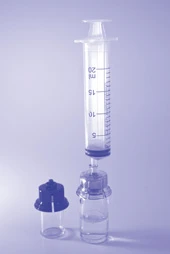
Optivate can be reconstituted using the transfer device called Mix2Vial:
The Mix2Vial transfer device is supplied with the medicine to allow for easy, safe,
needle-free use.
Preparation of the solution is carried out as follows:
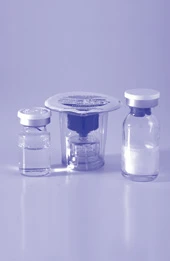 | Step 1
|
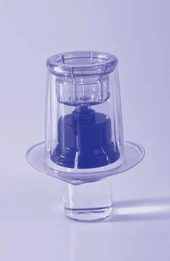 | Step 2
|
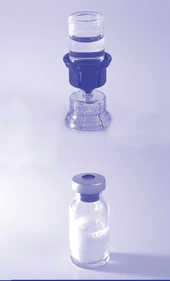 | Step 3
|
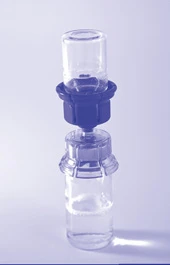 | Step 4
|
 | Step 5
|
Step 6
|
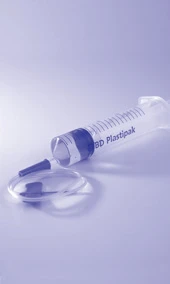
| Use immediately after dissolution; do not store. |
Warning: If more than one vial is required to administer the dose, repeat steps 1 to 6 by withdrawing the solution from the vial into the same syringe. The transfer device supplied with the product is sterile and intended for single use only. After completing the reconstitution process, it should be disposed of in a container for contaminated materials.
Do not use this medicine if:
- water is not drawn into the vial containing the medicine (this indicates loss of vacuum in the vial; in such a case, the medicine must not be used)
- during step 6, particles are visible in the syringe, if the solution is cloudy, or if a gel or clot has formed (in such a case, contact Bio Products Laboratory, quoting the batch number printed on the vial).
Use of a higher than recommended dose of Optivate
If an overdose is suspected, stop administration immediately and consult a doctor. If the patient knows they have received too high a dose, they should contact their doctor as soon as possible.
Missing a dose of Optivate
Do not administer a double dose to make up for a missed dose. Administer the normal dose as soon as possible, then continue dosing according to the recommendations of the doctor or nurse specialized in the treatment of hemophilia.
Stopping treatment with Optivate
Before deciding to discontinue treatment, consult your doctor.
4. Possible adverse reactions
Like all medicines, this medicine can cause adverse reactions, although not everyone experiences them.
If any of the following symptoms occur, stop the injection immediately and contact your doctor
or go to the emergency room of the nearest hospital:
- swelling of the throat
- sudden redness of the skin
- hives
- dizziness (low blood pressure)
- rapid heartbeat
- nausea or vomiting
- restlessness
- chest tightness or wheezing
- tingling
These symptoms may lead to severe shock. The above allergic reactions are very rare (occurring in less than 1 patient per 10,000 treated patients).
Other known adverse reactions include:
Adults and children
Common adverse reactions (may occur in more than 1 in 100 treated patients):
- headache
- sensation that surrounding objects are moving, spinning, or tilting (dizziness)
- cough
- sneezing
- redness of the skin (rash) or pain at the injection site
- other skin rashes
- swelling of limbs
- itching
- elevated body temperature (fever)
- sudden chills, feeling cold, followed by a rapid rise in temperature
- muscle and joint stiffness
- drowsiness, lethargy, or malaise
If any adverse reactions occur in the patient, speak to your doctor. This includes any possible adverse reactions not listed in this leaflet.
Reporting of adverse reactions
If any adverse symptoms occur, including any adverse symptoms not listed in this leaflet, inform your doctor, pharmacist, or nurse. Adverse reactions can be reported directly to the Department of Monitoring Adverse Drug Reactions, Office for Registration of Medicinal Products, Medical Devices and Biocidal Products, Al. Jerozolimskie 181C, 02-222 Warsaw, phone: +48 22 49 21 301, fax: +48 22 49 21 309, e-mail: [email protected].
Adverse reactions may also be reported to the marketing authorization holder.
Reporting adverse reactions helps to provide more information on the safety of the medicine.
5. How to store Optivate
- Do not store above 25°C.
- Do not freeze.
- Keep the vial in the outer packaging to protect from light.
- Keep the medicine out of the sight and reach of children.
- Do not use this medicine after the expiry date stated on the packaging. The expiry date refers to the last day of the stated month.
- Do not use this medicine if small particles are observed in the solution. After reconstitution, Optivate should be used within one hour.
- Medicines must not be disposed of via wastewater or household waste. The treatment centre will provide the patient with a special container for unused solution, used syringes, needles, and empty vials. This will help protect the environment.
6. Contents of the package and other information
What Optivate contains
The active substance is human coagulation factor VIII.
Other ingredients are: sodium chloride, calcium chloride, sodium citrate, polysorbate 20,
sodium hydroxide (for pH adjustment), hydrochloric acid (for pH adjustment), and trehalose.
The product contains human von Willebrand factor (Von Willebrand factor, VWF).
What Optivate looks like and contents of the pack
Optivate is a white or light yellow powder contained in glass vials at strengths of 250 IU (international units), 500 IU, or 1000 IU. The vials are sealed under vacuum with a halobutyl rubber stopper, protected with a polipropylene cap and an aluminium seal.
Optivate must be reconstituted exclusively using the water for injections supplied with Optivate in clear glass bottles.
An attached transfer device called Mix2Vial is also included, which allows easy and safe reconstitution of the product without using a needle.
Marketing Authorisation Holder and Manufacturer
Bio Products Laboratory Limited, Dagger Lane, Elstree, Hertfordshire, WD6 3BX, United Kingdom.
This medicinal product is authorised in the European Economic Area countries under the following names:
Austria, Cyprus, Czech Republic, Estonia, Germany, Hungary, Ireland, Latvia, Lithuania, Malta, Netherlands, Poland, Portugal, Romania, Slovakia, United Kingdom: Optivate
Belgium: Optiwate
March 2017
For additional information, please contact BPL through the Marketing Department at the address below or by email at [email protected].
Bio Products Laboratory Limited,
Dagger Lane,
Elstree,
Hertfordshire,
WD6 3BX, United Kingdom.
Similar drugs
| Brand name | Dosage form | Active substance / Dosage | Manufacturer |
|---|---|---|---|
| OCTANINE F 1000 | solution for injection, powder and solvent for preparation of |
|
Octapharma Pharmazeutika Produktionsgesellschaft GmbH (OPG) Octapharma S.A.S. |
| OCTANINE F 500 | solution for injection, powder and solvent for preparation of |
|
Octapharma Pharmazeutika Produktionsgesellschaft GmbH (OPG) Octapharma S.A.S. |
| OPTIVATE | solution for injection, powder and solvent for preparation of |
|
Bio Products Laboratory Limited |
| OPTIVATE | solution for injection, powder and solvent for preparation of |
|
Bio Products Laboratory Limited |
The original data is available in the language of the country of manufacture.
Data source: Register of Medicinal Products of Poland (URPL)
Data last verified: September 01, 2026