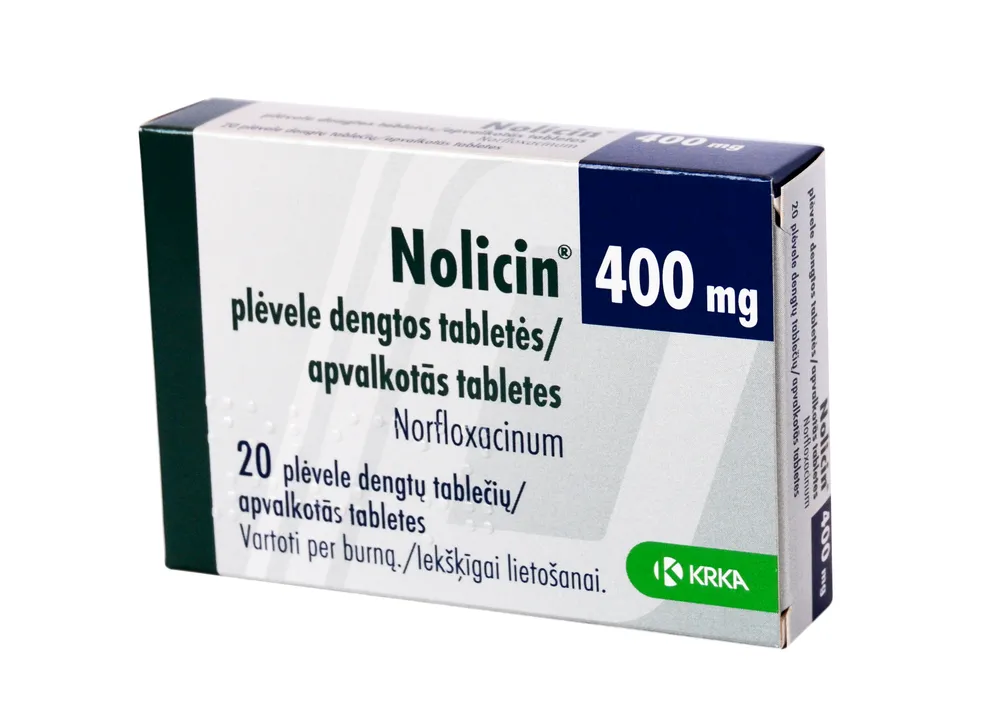
NOLICIN
PolandThe medicinal product is used for the treatment of uncomplicated acute cystitis, complicated urinary tract infections (except for complicated pyelonephritis), and bacterial prostatitis.
Frequently asked questions
How should Nolicin be taken?
Tablets should be swallowed whole with a glass of water. It is recommended to take the medicine at least 1 hour before eating or 2 hours after a meal or after the consumption of dairy products.
When should you not use this medicine?
It must not be used if you are allergic to norfloxacin or other quinolone antibiotics, in pregnant or breastfeeding women, and in children and adolescents during the period of growth and development. The occurrence of pain, inflammation, or tendon rupture after taking quinolone antibiotics is also a contraindication.
What are the possible side effects of Nolicin?
Common side effects include hepatitis and rash. Other side effects may include headache, dizziness, nausea, diarrhea, joint pain, tendonitis, and less commonly, allergic reactions, mood disturbances, vision problems, or seizures. Some side effects may be very rare, but long-lasting or irreversible.
Can Nolicin be combined with other medicines or food?
Caution should be exercised when using it with antidiabetic, anticoagulant, corticosteroid, and certain antiarrhythmic and antidepressant drugs. The medicine should not be taken simultaneously with multivitamin preparations, mineral supplements (e.g., magnesium, iron, zinc), antacids, sucralfate, or didanosine (maintain a minimum 2-hour interval). Avoid consuming alcohol and dairy products in close proximity to taking the medicine.
What should you remember during treatment?
During treatment, drink plenty of fluids to prevent the formation of crystals in the urine. It is recommended to avoid excessive physical exertion and exposure of the skin to sunlight and UV radiation. For people with diabetes, careful monitoring of blood sugar levels is necessary.
Instructions for use
PACKAGE LEAFLET: INFORMATION FOR THE USER
Warning! Keep the leaflet. Information on the immediate packaging is in a foreign language.
Nolicin
400 mg, coated tablets
Norfloxacinum
Please read the entire leaflet carefully before using the medicine, as it contains important information for the patient.
- Keep this leaflet, as you may need to read it again.
- If you have any doubts, consult your doctor or pharmacist.
- This medicine has been prescribed for a specific individual. Do not give it to others. This medicine may harm other people, even if their symptoms are the same.
- If the patient experiences any adverse reactions, including any not listed in this leaflet, inform a doctor or pharmacist immediately. See section 4.
Table of contents
- What Nolicin is and what it is used for
- Important information before taking Nolicin
- How to take Nolicin
- Possible side effects
- How to store Nolicin
- Contents of the package and other information
1. What Nolicin is and what it is used for
Norfloxacin, the active substance in Nolicin, is a chemotherapeutic agent belonging to the quinolone group with broad-spectrum antibacterial activity. Nolicin is active against many species of aerobic Gram-positive and Gram-negative bacteria.
Indications
Nolicin is indicated for the treatment of the following infections caused by microorganisms sensitive to norfloxacin:
- Uncomplicated acute cystitis. In uncomplicated acute cystitis, Nolicin should be used only when the use of other antibacterial agents commonly recommended for treatment of these infections is considered inappropriate.
- Complicated urinary tract infections (with the exception of complicated pyelonephritis)
- Bacterial prostatitis
The sensitivity of the causative microorganism to norfloxacin should be determined, if possible. However, norfloxacin therapy may be initiated before the results of sensitivity testing are available.
2. Important information before using Nolicin
When not to use Nolicin
- if the patient is allergic to norfloxacin, other drugs in the quinolone group, or any of the other ingredients of this medicine (listed in section 6),
- in pregnant and breastfeeding women,
- in children and adolescents during the period of growth and development,
- if the patient has experienced pain, inflammation, or rupture of tendons after taking quinolone antibiotics (see section "Warnings and precautions" and section "Possible side effects").
Warnings and precautions
Before starting treatment with Nolicin, discuss this with your doctor.
If the patient has previously had or currently has any of the following
conditions, inform the doctor before starting treatment:
- Do not take antibacterial drugs containing fluoroquinolones or quinolones, including Nolicin, if the patient has previously experienced any severe adverse reaction while taking a quinolone or fluoroquinolone. In such a case, contact the doctor as soon as possible.
- seizures or predisposition to seizures, epilepsy, or other brain disorders, such as reduced cerebral blood flow or stroke, because the drug may cause brain damage;
- psychiatric disorders; the drug may lead to worsening and intensification of symptoms in patients with known or suspected psychiatric disorders, hallucinations, and (or) disorientation;
- myasthenia (a disease causing muscle weakness); norfloxacin may cause exacerbation of symptoms of this disease, including life-threatening respiratory disorders;
- glucose-6-phosphate dehydrogenase deficiency (an inherited red blood cell disorder related to abnormal structure of this enzyme); if this condition has occurred in the patient or in a family member, consult a doctor, because during treatment massive destruction of red blood cells (hemolytic reaction) causing anemia may occur;
- if the patient has diabetes, because there is a risk of hypoglycemic coma (see below and section 4);
- renal impairment; the doctor will recommend an appropriately reduced dose of the drug; during treatment with Nolicin, adequate fluid intake is recommended;
- cardiac disorders associated with risk factors for QT interval prolongation, such as:
- congenital or familial QT prolongation (visible on ECG – examination of the heart's electrical activity);
- documented electrolyte imbalance in the blood (especially low potassium and magnesium levels);
- very slow heart rate (called bradycardia);
- heart failure (impaired heart function);
- history of myocardial infarction;
- the patient is a woman or elderly person;
- use of other drugs that may cause changes in the ECG (see section "Nolicin with other medicines");
- if the patient has been diagnosed with aortic or large peripheral artery aneurysm (dilation of a major blood vessel);
- if the patient has previously experienced aortic dissection (tearing of the aortic wall);
- if the patient has been diagnosed with heart valve insufficiency;
- if there is a family history of aortic aneurysm or aortic dissection, congenital heart valve disease, or other risk factors or predisposing conditions (e.g., connective tissue disorders such as Marfan syndrome or vascular Ehlers-Danlos syndrome, Turner syndrome, Sjögren's syndrome [an autoimmune inflammatory disease], or vascular diseases such as Takayasu arteritis, giant cell arteritis, Behçet's disease, hypertension, confirmed arterial atherosclerosis, rheumatoid arthritis [joint disease], or endocarditis [heart infection]).
If the patient develops any of the symptoms described below during treatment, seek medical attention immediately (see section 4):
-
Allergic reactions:
-
itching and hives
-
swelling of the face, lips, tongue, and (or) throat with difficulty breathing or swallowing (angioedema)
-
severe skin reactions: bullous erythema multiforme (Stevens-Johnson syndrome), exfoliative dermatitis, and toxic epidermal necrolysis (Lyell's syndrome) characterized by blistering rash over the entire body, erosions in the mouth, eyes, genital organs, and on the skin, red spots on the trunk, often with blisters in the center, giant ruptured blisters, peeling of large sheets of epidermis, weakness, fever, and joint pain
-
potentially fatal anaphylactic shock characterized by low blood pressure, pale skin, rapid breathing, cold sweats, weakness, and fainting. If such reactions occur, treatment must be stopped immediately and contact must be made with a doctor or emergency physician who will take appropriate emergency measures.
-
Fever, rash, itching, or small red spots on the skin may be symptoms of photosensitivity or ultraviolet radiation allergy. The doctor will decide whether to discontinue treatment.
-
In case of worsening myasthenia symptoms, including respiratory disorders (which may be life-threatening), seek immediate medical help.
-
Convulsive seizures; treatment with norfloxacin must be discontinued.
-
Weakness, shortness of breath, and pale skin, especially in patients with glucose-6-phosphate dehydrogenase deficiency, may indicate massive destruction of red blood cells (hemolytic reaction) leading to anemia.
-
Persistent and severe diarrhea, which may be a symptom of pseudomembranous colitis. This complication, sometimes resulting from antibiotic use, may range from mild to severe and may even be fatal. Mild cases usually resolve after discontinuation of the drug. If necessary, the doctor will decide on appropriate treatment. Do not take antidiarrheal drugs, as they inhibit toxin elimination.
-
Patients may rarely experience symptoms of nerve damage (neuropathy), such as pain, burning, tingling, numbness, and (or) weakness, especially in the feet and legs, as well as hands and arms. In such a case, stop taking Nolicin and inform the doctor immediately to prevent progression to potentially irreversible disease.
-
Loss of appetite, jaundice, dark urine, itching, or abdominal tenderness, which may be symptoms of cholestatic hepatitis (liver inflammation with bile flow obstruction). If subjective and objective symptoms of liver disease occur, patients should be advised to discontinue treatment and contact their doctor.
-
Worsening of vision or other visual disturbances. If these occur, consult an ophthalmologist immediately.
-
Rarely, joint pain, swelling, inflammation, or tendon rupture may occur. The risk is increased in elderly patients (over 60 years), organ transplant recipients, patients with kidney problems, or those receiving corticosteroid treatment. Tendon inflammation and rupture may occur within the first 48 hours of treatment or even months after discontinuation of Nolicin. After the first symptoms of tendon pain or inflammation (e.g., in the ankle, wrist, elbow, shoulder, or knee) appear, stop taking Nolicin, contact a doctor, and rest the affected area. Avoid excessive physical exertion, as it may increase the risk of tendon rupture.
-
Crystals in urine, causing pain and discomfort during urination (crystalluria). - In case of sudden severe abdominal, back, or chest pain, which may be a symptom of aortic aneurysm or dissection, seek immediate emergency care. The risk of these conditions may be higher during systemic corticosteroid treatment.
-
In case of sudden shortness of breath, especially after lying down, or observation of ankle, foot, or abdominal swelling, or occurrence of palpitations (feeling of rapid or irregular heartbeat), seek immediate medical attention.
Quinolone antibiotics may cause increased blood glucose levels above normal (hyperglycemia) or decreased blood glucose levels below normal, potentially leading to loss of consciousness in severe cases (hypoglycemic coma) (see section 4). This is important for diabetic patients. Diabetic patients are advised to carefully monitor blood glucose levels.
Due to the possibility of photosensitivity reactions, avoid excessive exposure to sunlight or ultraviolet radiation during treatment.
Due to the risk of tendon inflammation and rupture, avoid excessive physical exertion during and immediately after treatment with Nolicin.
Because of the risk of crystal formation in urine, ensure proper hydration. During treatment with Nolicin, drink plenty of fluids. Ask your doctor how much fluid should be consumed daily. In case of prolonged treatment, check for the presence of crystals in urine.
Long-term, disabling, and potentially irreversible serious adverse effects
Antibacterial drugs containing fluoroquinolones/quinolones, including Nolicin, have been associated with very rare but serious adverse effects. Some of these were long-lasting (persisting for months or years), disabling, or potentially irreversible. These include: tendon, muscle, and joint pain in the upper and lower limbs, difficulty walking, abnormal sensations such as pricking, tingling, tickling, numbness, or burning (paresthesias), sensory disturbances, including vision, taste, smell, and hearing disorders, depression, memory disorders, severe fatigue, and severe sleep disturbances.
If any of these adverse effects occur after taking Nolicin, contact your doctor immediately before continuing treatment. The patient and doctor will decide whether to continue treatment, also considering antibiotics from other groups.
Children and adolescents
Nolicin should not be used in children and adolescents during the period of growth and development.
Nolicin with other medicines
Inform your doctor or pharmacist about all medicines currently or recently taken, as well as any medicines the patient plans to take.
Norfloxacin is a known inhibitor of the CYP1A2 enzyme. Exercise caution when using norfloxacin concomitantly with other substances metabolized via the same enzymatic pathway (theophylline, caffeine, and others). Norfloxacin, by inhibiting the metabolic transformation of these substances, may lead to increased blood concentrations and, consequently, to substance-specific adverse effects.
Multivitamin preparations, mineral supplements (e.g., iron, zinc, aluminum, or magnesium), antacids containing magnesium or aluminum, sucralfate, or didanosine should not be taken simultaneously or within 2 hours of taking norfloxacin, as they may affect norfloxacin absorption, reducing its blood and urine concentrations. Therefore, it is recommended to take Nolicin two hours after taking these drugs.
Milk and yogurts (liquid dairy products) reduce the absorption of Nolicin. The patient should take Nolicin one hour before or two hours after a dairy meal.
Concomitant use of Nolicin and cyclosporine may intensify cyclosporine adverse effects due to increased blood concentration. The doctor will monitor cyclosporine blood levels and, if necessary, recommend reducing its dose.
Concomitant use of Nolicin and oral anticoagulants (warfarin or its derivatives) may enhance the anticoagulant effect.
Didanosine, a drug used in HIV infections, should not be administered simultaneously with norfloxacin or within two hours before or after norfloxacin administration, as it affects norfloxacin absorption and causes reduced serum and urine levels of norfloxacin.
It has been shown that caffeine metabolism is inhibited by quinolones, including norfloxacin. During norfloxacin treatment, avoid taking caffeine-containing drugs (e.g., certain painkillers) as much as possible.
Concomitant use of Nolicin and corticosteroids increases the risk of tendon inflammation or rupture.
During treatment with Nolicin, the effect of certain antidiabetic drugs (sulfonylurea derivatives, such as glibenclamide) may be intensified.
Do not take Nolicin and nitrofurantoin simultaneously, as the efficacy of both drugs is reduced.
Animal studies have shown that quinolones in combination with phenylbutazone may cause seizures. Therefore, avoid concomitant use of Nolicin and phenylbutazone.
Exercise caution when using Nolicin concomitantly with non-steroidal anti-inflammatory drugs, as seizures may occur.
If the patient is taking other drugs that may affect heart rhythm, such as antiarrhythmic drugs (e.g., quinidine, hydroquinidine, disopyramide, amiodarone, sotalol, dofetilide, ibutilide), tricyclic antidepressants, certain antibacterial drugs (macrolide group), or certain antipsychotics, inform the doctor (see warnings regarding cardiac function disorders above).
Taking Nolicin with food, drink, and alcohol
Tablets should be swallowed with a glass of water at least 1 hour before or 2 hours after a meal or dairy product intake.
Within 2 hours after taking Nolicin, do not take multivitamin preparations, mineral supplements (e.g., iron, zinc, aluminum, or magnesium), antacids containing magnesium and aluminum, sucralfate, or didanosine. Do not consume alcoholic beverages during treatment with Nolicin.
Pregnancy and breastfeeding
If the patient is pregnant or breastfeeding, suspects she may be pregnant, or plans to have a child, she should consult a doctor or pharmacist before using this medicine.
Nolicin should not be used during pregnancy or by breastfeeding women.
Driving and operating machinery
Nolicin has a moderate effect on the ability to drive motor vehicles and operate machinery. If the patient takes the drug and drinks alcoholic beverages simultaneously, adverse effects are intensified.
Nolicin contains sunset yellow (E 110) and sodium
Sunset yellow (E 110) may cause allergic reactions.
The medicine contains less than 1 mmol (23 mg) of sodium per dose, meaning the medicine is considered "sodium-free."
3. How to use Nolicin
This medicine should always be used as directed by the physician. If in doubt, consult a doctor or pharmacist.
Dosage and administration
The physician will determine the appropriate dose depending on the severity and type of infection. Tablets should be swallowed whole with a glass of water, at least 1 hour before meals or 2 hours after a meal or consumption of dairy products.
Indications | Dosage | Duration of treatment
--- | --- | ---
Uncomplicated acute cystitis | 400 mg twice daily | 3 days
Complicated urinary tract infections (excluding complicated pyelonephritis) | 400 mg twice daily | 7 to 10 days
Bacterial prostatitis | 400 mg twice daily | up to 12 weeks
In patients with renal impairment, the physician will adjust the dosage accordingly.
Use in children and adolescents
Nolicin should not be used in children and adolescents during the period of growth and development.
Dosage in elderly patients
In elderly patients with normal renal function, dosage adjustment is not necessary.
If you feel that the effect of the medicine is too strong or too weak, consult your doctor or pharmacist.
Taking more Nolicin than recommended
If you take more Nolicin than prescribed, contact your doctor or pharmacist immediately.
Excessive doses may cause nausea, vomiting, diarrhoea, and in more severe cases dizziness, fatigue, disorientation, and seizures.
Missing a dose of Nolicin
If you miss a dose, take it as soon as you remember, unless it is almost time for the next dose. Do not take a double dose to make up for a missed dose.
Stopping Nolicin treatment prematurely
Nolicin should be taken for the duration prescribed by the physician, even if symptoms improve earlier. Premature discontinuation of treatment may result in recurrence of the infection.
If you have any further questions about the use of this medicine, consult your doctor or pharmacist.
4. Possible adverse reactions
Like all medicines, this medicine can cause adverse reactions, although not everyone will experience them.
Serious adverse reactions may occur during treatment with Nolicin. If any of these occur,
contact your doctor immediately. Please read the information provided under "Warnings and precautions" in section 2 and below.
Administration of quinolone and fluoroquinolone antibiotics has very rarely led, even in the absence of pre-existing risk factors, to long-term (lasting for months or years) or permanent adverse reactions, such as tendon inflammation, tendon rupture, joint pain, limb pain, difficulty walking, sensory disturbances such as pricking, tingling, tickling, burning, numbness or pain (neuropathy), depression, fatigue, sleep disturbances, memory problems, and disturbances in hearing, vision, taste, and smell.
Common adverse reactions (occur in 1 to 10 out of 100 patients):
- cholestatic hepatitis, hepatitis (see "Warnings and precautions" in section 2),
- rash.
Uncommon adverse reactions (occur in 1 to 10 out of 1,000 patients):
- altered counts of certain blood cells (eosinophilia, leukopenia, neutropenia, thrombocytopenia). If you experience frequent infections, mouth ulcers, or easy bruising and bleeding, contact your doctor.
- reduced blood clotting ability (prolonged prothrombin time). If you experience prolonged bleeding, contact your doctor.
- headache, dizziness,
- abdominal pain and cramps, heartburn, diarrhoea, nausea,
- crystals in the urine causing pain and discomfort during urination (crystalluria) (see "Warnings and precautions" in section 2),
- increased liver enzyme activity, increased blood urea and creatinine levels, decreased haematocrit (percentage of red blood cells in the blood).
Rare adverse reactions (occur in 1 to 10 out of 10,000 patients):
- allergic reactions (urticaria, rash, itching),
- severe allergic reactions, including anaphylactic shock (anaphylaxis) (see "Warnings and precautions" in section 2),
- mood changes, depression, anxiety, nervousness, irritability, euphoria, disorientation, hallucinations, confusion, psychiatric disorders and psychotic reactions,
- visual disturbances, increased lacrimation (see "Warnings and precautions" in section 2),
- ringing in the ears (tinnitus),
- subcutaneous bleeding with inflammation of blood vessels,
- vomiting, loss of appetite,
- severe and persistent diarrhoea (pseudomembranous colitis) (see "Warnings and precautions" in section 2),
- pancreatitis,
- severe skin reactions: exfoliative dermatitis, erythema multiforme, Stevens-Johnson syndrome, toxic epidermal necrolysis (Lyell's syndrome) (see "Warnings and precautions" in section 2),
- photosensitivity (see "Warnings and precautions" in section 2),
- itching and urticaria,
- swelling of the face, lips, tongue and (or) throat with difficulty breathing or swallowing (angioedema) (see "Warnings and precautions" in section 2),
- tendon inflammation, inflammation of the synovial membrane forming the joint capsule, muscle and (or) joint pain, arthritis,
- kidney inflammation,
- vaginal candidiasis,
- fatigue.
Very rare adverse reactions (occur in fewer than 1 in 10,000 patients):
- tingling or numbness of hands and feet (paresthesia),
- degenerative nerve disorders (polyneuropathy), including Guillain-Barré syndrome (see "Warnings and precautions" in section 2),
- seizures (see "Warnings and precautions" in section 2),
- insomnia,
- tendon rupture (e.g., Achilles tendon), usually in combination with other harmful factors (see "Warnings and precautions" in section 2),
- hemolytic anaemia,
- exacerbation of myasthenia symptoms (see "Warnings and precautions" in section 2).
Frequency not known (frequency cannot be estimated from available data):
- very rapid heartbeat (see "Warnings and precautions" in section 2),
- life-threatening irregular heartbeat (see "Warnings and precautions" in section 2),
- QT interval prolongation visible on ECG – an examination of the heart's electrical activity (see "Warnings and precautions" in section 2),
- jaundice,
- loss of consciousness due to a significant drop in blood glucose levels (hypoglycaemic coma). See section 2.
In patients receiving fluoroquinolones, cases of arterial wall dilation and weakening or arterial wall rupture (aneurysm and dissection) have been reported, which may lead to rupture and result in death, as well as cases of heart valve insufficiency. See also section 2.
Reporting of adverse reactions
If any adverse reactions occur, including any not listed in this leaflet, inform your doctor or pharmacist. Adverse reactions can be reported directly to the Department of Monitoring Adverse Drug Reactions of the Office for Registration of Medicinal Products, Medical Devices and Biocidal Products
Al. Jerozolimskie 181C, 02-222 Warsaw
Tel.: +48 22 49 21 301
Fax: +48 22 49 21 309
Website: https://smz.ezdrowie.gov.pl
Adverse reactions can also be reported to the marketing authorisation holder.
Reporting adverse reactions helps provide more information on the safety of this medicine.
5. How to store the medicine Nolicin
Keep the medicine out of sight and reach of children.
Store below 25°C, in the original packaging.
Do not use this medicine after the expiry date stated on the carton and blister. The expiry date refers to the last day of the stated month.
Medicines must not be disposed of via wastewater or household waste. Ask your pharmacist how to dispose of medicines no longer required. This will help protect the environment.
6. Contents of the pack and other information
What Nolicin contains
- The active substance is norfloxacin. Each coated tablet contains 400 mg of norfloxacin.
- The other ingredients are:
- tablet core: sodium carboxymethyl starch (type A), microcrystalline cellulose, colloidal anhydrous silica, magnesium stearate, povidone
- tablet coating: hypromellose, talc, titanium dioxide (E 171), sunset yellow (E 110), propylene glycol. See section 2 "Nolicin contains sunset yellow (E 110) and sodium".
What Nolicin looks like and contents of the pack
The coated tablets are orange, round, slightly convex, with a score line on one side. The
score line is intended only to facilitate breaking the tablet for easier swallowing and does not allow
division into equal doses.
The pack contains 10 or 20 coated tablets in PVC-PVDC/Al blisters, packed in a cardboard
box.
For further information, please contact the responsible party or parallel importer.
Responsible party in Romania, country of export:
KRKA d. d.,
Novo mesto
Šmarješka cesta 6
8501 Novo mesto
Slovenia
Manufacturer:
KRKA d. d.,
Novo mesto
Šmarješka cesta 6
8501 Novo mesto
Slovenia
Parallel importer:
Medezin Sp. z o.o.
Zbąszyńska 3 Street
91-342 Łódź
Repackaged in:
Medezin Sp. z o.o.
Zbąszyńska 3 Street
91-342 Łódź
02-234 Warsaw
Romania marketing authorisation number, country of export: 7701/2015/01
Parallel import authorisation number: 87/24
Similar drugs
| Brand name | Dosage form | Active substance / Dosage | Manufacturer |
|---|---|---|---|
| NOLICIN | tablets, film-coated |
|
Krka d.d., Novo mesto |
| NOLICIN | tablets, film-coated |
|
KRKA d.d. |
| NOLICIN | tablets, film-coated |
|
Krka d.d., Novo mesto |
| NOLICIN | tablets, film-coated |
|
Krka, d.d., Novo mesto |
| NOLICIN | tablets, film-coated |
|
Krka, d.d., Novo mesto |
The original data is available in the language of the country of manufacture.
Data source: Register of Medicinal Products of Poland (URPL)
Data last verified: September 01, 2026