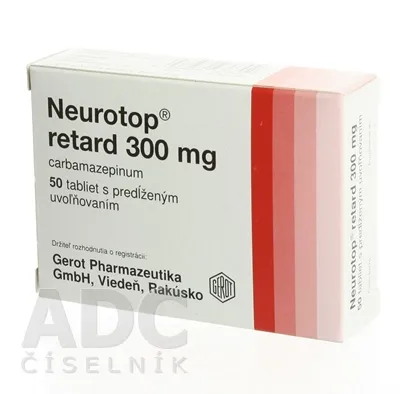
NEUROTOP RETARD 300
PolandThe medicine is used in the treatment of epilepsy (various types of seizures), manic syndromes, and in the prevention of bipolar disorder. It is also used in the treatment of alcohol withdrawal syndrome, diabetic neuropathy, and trigeminal neuralgia.
Frequently asked questions
How should Neurotop Retard be taken?
Tablets should be swallowed with liquid, during or after a meal. They may be divided or dissolved in water, tea, milk, or juice (except grapefruit juice). The dosage and duration of treatment are determined by a physician.
When should this medicine not be used?
It must not be used in case of hypersensitivity to carbamazepine or other ingredients, in cases of atrioventricular block, severe hepatic impairment, bone marrow disorders, and in children under 1 year of age (for the 600 mg version – in children under 6 years of age). It must also not be used simultaneously with certain antidepressants (MAO inhibitors).
What are the possible side effects of Neurotop Retard?
The medicine may cause, among others, dizziness, drowsiness, nausea, vomiting, headache, double vision, fatigue, and skin reactions. You must contact a doctor immediately if fever, rash, oral ulcers, yellowing of the skin or eyes, or an irregular heartbeat occurs.
Can alcohol or juices be consumed during treatment?
While using the medicine, alcohol and grapefruit juice should be avoided, as they may interfere with the action of the active substance.
How does the medicine affect the use of other drugs and contraception?
Neurotop Retard may weaken the effect of anticoagulants, certain antibiotics, heart medications, and hormonal contraceptives. Women of childbearing age should use an effective method of contraception, as the medicine may reduce its efficacy.
Can the medicine be used during pregnancy?
Use of the medicine during pregnancy is associated with a risk of serious congenital defects in the child. If the patient is pregnant or planning a pregnancy, she must consult a doctor. Treatment must not be discontinued independently without medical consultation.
Instructions for use
Package leaflet: Information for the patient
Neurotop Retard 300, 300 mg, prolonged-release tablets
Neurotop Retard 600, 600 mg, prolonged-release tablets
Carbamazepinum
Please read carefully the entire leaflet before using the medicine, as it contains important information for the patient.
- Keep this leaflet so that you can read it again if necessary.
- If you have any doubts, please consult your doctor or pharmacist.
- This medicine has been prescribed for a specific individual. Do not pass it on to others. The medicine may harm another person, even if their symptoms are similar.
- If you experience any adverse reactions, including any adverse reactions not listed in this leaflet, inform your doctor or pharmacist. See section 4.
Table of contents
- What is Neurotop Retard and for what purposes is it used
- Important information before using Neurotop Retard
- How to use Neurotop Retard
- Possible adverse effects
- How to store Neurotop Retard
- Contents of the pack and other information
1. What is Neurotop Retard and for what purposes is it used
Neurotop Retard contains the active substance carbamazepine.
Carbamazepine has anticonvulsant and mood-stabilizing properties in various forms of epilepsy.
In certain neurological disorders, carbamazepine has analgesic effects and influences sensory disturbances.
Indications:
Epilepsy
- complex or simple partial seizures;
- generalized tonic-clonic seizures; mixed seizure types.
Manic syndromes and prevention of manic-depressive (bipolar) disorders.
Alcohol withdrawal syndrome.
Idiopathic trigeminal neuralgia and trigeminal neuralgia associated with multiple sclerosis.
Diabetic neuropathy.
Carbamazepine is generally ineffective in seizures with loss of consciousness (absence seizures, petit mal) and in myoclonic seizures.
2. Important information before using Neurotop Retard
When not to use Neurotop Retard: if the patient is allergic to carbamazepine or related substances (tricyclic antidepressants) or to any of the other ingredients of this medicine (listed in section 6); if there is atrioventricular block; in case of severe heart failure; in case of bone marrow dysfunction; if antidepressant medicines containing MAO inhibitors are being used at the same time; treatment with such medicines must be discontinued at least two weeks before starting carbamazepine; in children under 1 year of age; Neurotop Retard 600 in children under 6 years of age.
Warnings and precautions
Tell your doctor if you have any of the following conditions:
- cardiovascular disorders;
- kidney or (and) liver function disorders;
- liver damage;
- glaucoma.
In such cases, your doctor will decide whether to use Neurotop Retard.
Please inform your doctor if:
- you have other diseases or allergies;
- you have recently taken other medicines, even those available without a prescription;
- you are planning pregnancy, are pregnant, or are breastfeeding.
Do not start or stop treatment without consulting your doctor.
Your doctor will recommend regular laboratory tests (blood, liver function).
Contact your doctor immediately if you experience such adverse effects as skin rash, fever, sore throat, ulceration (especially in the mouth and throat), or jaundice (yellowing of the skin and eyes).
There have been reports of potentially life-threatening skin reactions associated with the use of carbamazepine. These may include Stevens-Johnson syndrome, toxic epidermal necrolysis, which initially present as red spots on the trunk, often with blisters in the center. Additional symptoms include ulceration in the mouth, throat, nose, and genital organs, as well as conjunctivitis (redness and swelling of the eyes).
Flu-like symptoms may occur together with the above symptoms.
The number of blisters may increase. Skin peeling may also occur.
The risk of severe skin reactions is higher during the initial weeks of treatment.
If the patient has ever experienced Stevens-Johnson syndrome or toxic epidermal necrolysis after taking carbamazepine, this medicine must never be used again.
If the patient develops a rash or the above skin reactions, carbamazepine must be discontinued and medical advice sought immediately. However, patients taking carbamazepine for epilepsy should be warned by their doctor that seizures may occur or their frequency may increase after stopping the medicine (see section 4. "Adverse effects").
Alcohol and grapefruit juice may interfere with the action of carbamazepine, therefore during treatment with Neurotop Retard, alcohol and grapefruit juice should not be consumed.
When using Neurotop Retard during pregnancy, there is a risk of harmful effects on the unborn child. If the patient is of childbearing age, she should use an effective method of contraception during treatment with Neurotop Retard and for two weeks after the last dose (see "Pregnancy and breastfeeding").
Neurotop Retard may reduce the effectiveness of oral contraceptives. Therefore, another appropriate method of contraception should be used in consultation with the doctor.
If heart rhythm disturbances (slowing), blood disorders (manifested by paleness, fatigue, reduced resistance to infections, increased tendency to bleeding), or kidney disorders (blood or protein in urine) occur, contact your doctor immediately.
Severe skin-related adverse effects are rare during treatment with Neurotop Retard. Such effects may be predicted in patients of Chinese or Thai descent based on blood testing. Consult your doctor if you belong to such ethnic groups.
A small number of people taking antiepileptic medicines containing carbamazepine have thought about harming or killing themselves. If such thoughts ever occur, contact your doctor immediately.
Neurotop Retard and other medicines
Medicines may affect each other's actions.
Tell your doctor or pharmacist about all medicines you are currently taking or have recently taken, as well as any medicines you plan to take.
Neurotop Retard may reduce the effectiveness of the following medicines:
- blood-thinning medicines (anticoagulants);
- some antibiotics (e.g. doxycycline);
- medicines for irregular heart rhythm (quinidine);
- hormonal contraceptives, e.g. pills, patches, injections, or implants. Neurotop Retard may affect the action of hormonal contraceptives and reduce their effectiveness in preventing pregnancy. Talk to your doctor, who will discuss the most appropriate type of contraception during treatment with Neurotop Retard.
The following active substances may affect the effectiveness of Neurotop Retard:
- some medicines for bacterial infections (e.g. erythromycin, troleandomycin, isoniazid);
- medicines for cardiovascular diseases (e.g. verapamil, diltiazem);
- painkillers (dextropropoxyphene);
- antidepressants (viloxazine);
- medicines for gastric acid reduction (cimetidine);
- some antiepileptic medicines (phenytoin, primidone, valproic acid, brivaracetam).
Concomitant use of some psychiatric medicines containing lithium may cause drowsiness and confusion.
Neurotop Retard may alter thyroid function test results.
Neurotop Retard, food, drink, and alcohol
During treatment with Neurotop Retard, avoid consuming alcohol and grapefruit juice, as they may interfere with the action of carbamazepine.
Pregnancy, breastfeeding, and fertility
If you are pregnant or breastfeeding, think you may be pregnant, or are planning to have a child, consult your doctor or pharmacist before using this medicine.
Pregnancy
Neurotop Retard may cause serious congenital malformations. If you take Neurotop Retard during pregnancy, the risk of congenital malformation in the child may be up to three times higher than in women who do not take antiepileptic medicines. Serious congenital malformations have been reported, including neural tube defects (spina bifida), facial malformations such as cleft lip and palate, skull defects, heart defects, genital malformations associated with hypospadias (urethral opening on the underside of the penis), and finger defects. If you take Neurotop Retard during pregnancy, the unborn child should be closely monitored.
In infants born to mothers who took Neurotop Retard during pregnancy, neurological development problems (brain development) have been reported. Some studies have shown that carbamazepine has a negative effect on the nervous system development in children exposed to carbamazepine in utero, while other studies have not shown such an effect. A negative effect on neurological development cannot be ruled out.
If you are of childbearing age and do not plan pregnancy, you should use an effective method of contraception during treatment with Neurotop Retard. Neurotop Retard may affect the action of hormonal contraceptives, such as birth control pills, and reduce their effectiveness in preventing pregnancy. You should discuss the most appropriate type of contraception with your doctor during treatment with Neurotop Retard. If treatment with Neurotop Retard is discontinued, effective contraception should be continued for two weeks after stopping the medicine.
If you are of childbearing age and plan to become pregnant, consult your doctor before stopping contraception and before becoming pregnant, so that your treatment can be changed to another method appropriate for protecting the unborn child from exposure to carbamazepine.
If you are or think you may be pregnant, inform your doctor immediately. Do not stop taking the medicine until you have discussed it with your doctor. Stopping the medicine without consulting your doctor may cause seizures, which could be dangerous for you and your unborn child. Your doctor may decide to change your treatment.
If you take Neurotop Retard during pregnancy, there is also a risk of bleeding problems immediately after delivery. Your doctor may prescribe a medicine for you and your baby to prevent this.
Breastfeeding
Carbamazepine passes into breast milk. Ask your doctor whether breastfeeding is possible. If breastfeeding must be discontinued, it should be done gradually to avoid withdrawal symptoms in the newborn.
Driving and operating machinery
Caution: this medicine may reduce reaction speed and the ability to drive a car.
Neurotop Retard may cause disturbances in reaction ability, including dizziness, drowsiness, ataxia, double vision, accommodation disorders, and blurred vision, especially during the initial period of treatment, after dose adjustments, at higher doses, or in combination with alcohol consumption. Therefore, special caution should be exercised when driving vehicles or operating machinery, and if such symptoms occur, driving, operating machinery, or performing other activities requiring special attention should be avoided.
Neurotop Retard contains sodium
The medicine contains less than 1 mmol (23 mg) of sodium per prolonged-release tablet, meaning the medicine is considered "sodium-free".
3. How to use Neurotop Retard
This medicine should always be used as directed by the physician. In case of doubt, consult your doctor or pharmacist.
Method of administration:
Tablets should be swallowed whole with liquid, during or after meals.
The tablets may be divided without loss of extended-release properties. Tablets may also be dispersed in various liquids (1 glass of water, tea, milk, or fruit juice – except grapefruit juice). The resulting solution should be taken immediately after preparation.
Dosage:
The dosage of Neurotop Retard and duration of treatment are individually determined by the physician for each patient.
Prior to initiating treatment, blood tests and liver function tests should be performed.
Antiepileptic treatment
When introducing carbamazepine, gradual reduction of previously administered antiepileptic drugs is recommended.
Adults and children over 10 years of age:
Treatment is usually initiated at a dose of 150 mg (half a 300 mg tablet) twice daily. The dose should then be gradually increased until the individual optimal dose is reached. It is recommended to increase the evening dose. The maintenance dose is 600 mg per day. If the medicine is taken once daily, it should be taken in the evening.
In some adults, higher doses may be required.
Children aged 1 to 5 years:
The usual dose is 150 mg twice daily (morning and evening).
Children aged 6 to 10 years:
The usual dose is 150 mg or 300 mg twice daily (morning and evening).
Manic episodes and prevention of bipolar affective disorder (bipolar disorder)
The usual daily dose ranges from 300 mg to 1500 mg. Most commonly, 600 mg of carbamazepine per day in two divided doses is recommended.
In the treatment of acute manic states, the dose should be increased rapidly. In contrast, for prophylaxis of bipolar affective disorder, the dose should be increased gradually to ensure optimal tolerability.
Trigeminal neuralgia
Treatment is usually initiated at a dose of 300 mg once daily, followed by gradual dose escalation until pain relief is achieved. Subsequently, the lowest effective dose should be established by gradually reducing the administered dose. The usual daily dose is 600 mg.
Diabetic neuropathy
The usual dose is 600 mg once daily or two doses of 300 mg (morning and evening).
Alcohol withdrawal syndrome
The usual daily dose is 600 mg. In acute cases, up to 1200 mg per day may be administered during the first few days of treatment.
Dosage in patients with renal impairment
In patients with renal impairment, the physician will adjust the dose appropriately to a lower level.
Use of a higher than recommended dose of Neurotop Retard
If an overdose is accidentally taken, contact your doctor or pharmacist immediately.
Symptoms such as difficulty breathing, rapid or irregular heartbeat, disorientation, drowsiness, agitation, hallucinations, loss of consciousness, fainting, tremors, seizures, visual disturbances, dilated pupils, speech disturbances, nystagmus, nausea or vomiting, or difficulty urinating may indicate overdose. In such cases, discontinue use of the medicine immediately and seek medical advice promptly or go to the nearest emergency department.
Missed dose of Neurotop Retard
If a dose of Neurotop Retard is missed, take the next scheduled dose at the usual time. Do not take a double dose to make up for the missed dose.
Discontinuation of Neurotop Retard
Treatment with Neurotop Retard should only be initiated and discontinued under medical supervision.
If you have any further doubts regarding the use of this medicine, consult your doctor or pharmacist.
4. Possible adverse reactions
Like all medicines, this medicine can cause adverse reactions, although not everyone gets them.
The list below includes adverse reactions, even those occurring in single cases.
If any of the following symptoms occur, seek immediate medical attention or go to the nearest hospital emergency department:
- fever, sore throat, skin rash, mouth ulcers, swollen lymph nodes (e.g. in the mouth or throat area);
- unexplained bruising under the skin or unexplained skin spots;
- dark-coloured urine;
- symptoms of severe skin reactions such as skin peeling;
- yellowing of the skin and eyes (jaundice);
- swelling of the lower legs, ankles or feet;
- irregular heartbeat, loss of consciousness.
Inform your doctor if any of the following adverse reactions persist for more than a few days:
Dizziness, drowsiness, vomiting, feeling tired, skin rash, headache, blurred or double vision, dry mouth, constipation, diarrhoea, joint or muscle pain, increased sensitivity of the skin or eyes to sunlight, increased sweating, loss of appetite, sexual disturbances.
Other adverse reactions may also occur:
Very common (may affect more than 1 in 10 people):
- decreased number of white blood cells (leukopenia);
- dizziness, lack of coordination, drowsiness, fatigue;
- nausea, vomiting;
- allergic skin reactions, ulceration (urticaria), which may lead to death.
Common (may affect up to 1 in 10 people):
- weight gain, decreased blood sodium concentration, which in rare cases may lead to apathy, vomiting, headache, confusion and neurological disorders;
- decreased number of blood platelets (thrombocytopenia), increased number of white blood cells (eosinophilia);
- headache, double vision, blurred vision;
- dry mouth;
- swelling, reduced urine output.
Uncommon (may affect up to 1 in 100 people):
- abnormal, involuntary movements such as convulsions, muscle tremors, involuntary eye movements (oculogyria);
- increased aminotransferase activity;
- diarrhoea or constipation;
- exfoliative dermatitis.
Rare (may affect up to 1 in 1000 people):
- disturbances in cardiac conduction;
- increased number of white blood cells (leukocytosis), swollen lymph nodes, folic acid deficiency;
- spontaneous movements in the mouth and face area, persistent involuntary eye movements, speech disorders, uncontrollable body movements, nerve inflammation, tingling, muscle weakness, signs of paralysis;
- abdominal pain;
- symptoms resembling systemic lupus erythematosus (fever, fatigue, photosensitivity, rheumatic joint pain, skin redness);
- blood pressure too high or too low;
- delayed allergic reactions affecting various organs, with symptoms such as fever, skin rash, vasculitis, swollen lymph nodes, joint pain, changes in blood count and liver function disorders; changes may also affect other organs such as lungs, kidneys, pancreas, heart and parts of the large intestine;
- jaundice;
- hallucinations (visual or auditory), depression, loss of appetite, anxiety, aggressive behaviour, confusion.
Very rare (may affect up to 1 in 10,000 people):
- abnormal thyroid function test results, increased blood cholesterol levels, including HDL cholesterol and triglycerides;
- slowed heart rate, heart rhythm disturbances, heart failure, worsening of heart disease;
- significantly reduced number of white blood cells (agranulocytosis), anaemia, reduced production of blood pigment (porphyria), increased number of red blood cells;
- conjunctivitis, lens opacities;
- increased or decreased hearing sensitivity, altered sensitivity to high tones;
- hypersensitivity reactions of the respiratory tract with fever, breathing difficulties, pneumonia;
- taste disturbances, inflammation of the tongue or oral mucosa, pancreatitis;
- kidney inflammation, kidney failure, impaired kidney function, frequent urination, difficulty passing urine (urinary retention);
- disc-shaped redness or nodular skin changes and bleeding (Stevens-Johnson syndrome), skin damage that may lead to death (toxic epidermal necrolysis), photosensitivity, skin or mucous membrane inflammation, skin colour changes, redness, acne, excessive sweating, hair loss, increased hair growth;
- joint pain, muscle cramps, disturbances in bone mineralization leading to bone softening;
- increased prolactin levels, which may lead to breast enlargement in men and non-lactation-related milk production (galactorrhoea);
- phlebitis, venous obstruction;
- meningitis, facial swelling with possible difficulty swallowing and breathing (angioedema);
- limited liver function;
- sexual disturbances;
- activation of psychosis.
Frequency not known (frequency cannot be estimated from available data):
- elevation of certain liver function parameters and liver inflammation, which may occur with varying frequency;
- suicidal thoughts and behaviour during antiepileptic treatment or shortly after discontinuation;
- high blood ammonia levels (hyperammonemia). Symptoms of hyperammonemia may include irritability, disorientation, vomiting, loss of appetite and drowsiness.
There have been reports of bone tissue disorders, including osteopenia and osteoporosis (reduced bone density) and fractures. Patients should discuss treatment with their doctor, taking into account treatment duration, previous history of osteoporosis and steroid use.
Reporting of adverse reactions
If any adverse reactions occur, including any not listed in this leaflet, inform your doctor or pharmacist. Adverse reactions can be reported directly to the Department of Monitoring Adverse Reactions of Medicinal Products, Office for Registration of Medicinal Products, Medical Devices and Biocidal Products
Al. Jerozolimskie 181 C
02-222 Warsaw
Phone: +48 22 49 21 301
Fax: +48 22 49 21 309
Website: https://smz.ezdrowie.gov.pl
Adverse reactions can also be reported to the marketing authorization holder.
Reporting adverse reactions helps to provide more information on the safety of the medicine.
5. How to store Neurotop Retard
Keep the medicine out of the sight and reach of children.
Store below 25°C.
Keep in the original packaging to protect from light.
Do not use this medicine after the expiry date stated on the carton and blister pack after: EXP.
The expiry date refers to the last day of the stated month.
Medicines should not be disposed of via wastewater or household waste.
Ask your pharmacist how to dispose of medicines no longer in use.
This will help protect the environment.
6. Package contents and other information
What Neurotop Retard contains
The active substance is carbamazepine.
One tablet of Neurotop Retard 300 contains 300 mg of carbamazepine.
One tablet of Neurotop Retard 600 contains 600 mg of carbamazepine.
The other ingredients are:
ammonio methacrylate copolymer (type B), methacrylic acid and ethyl acrylate copolymer (1:1) 30% dispersion, colloidal anhydrous silica, magnesium stearate, talc, sodium carboxymethyl starch (type A), microcrystalline cellulose.
What Neurotop Retard looks like and contents of the pack
Neurotop Retard 300: white, flat tablets with bevelled edges and a dividing groove on one side. The tablet can be divided into equal doses.
Neurotop Retard 600: white, elongated tablets with a dividing groove on both sides. The tablet can be divided into equal doses.
Neurotop Retard is a prolonged-release tablet, packed in PVC/PVDC/Aluminium blister foils in a cardboard box.
The pack contains 50 prolonged-release tablets.
Marketing Authorisation Holder and Manufacturer
G.L. Pharma GmbH
Schloßplatz 1,
A-8502 Lannach,
Austria
For further information regarding this medicinal product, please contact the local representative of the Marketing Authorisation Holder:
G.L. PHARMA POLAND Sp. z o.o.
Al. Jana Pawła II 61/313,
01-031 Warsaw, Poland
Tel: 022/636 52 23; 636 53 02
[email protected]
Similar drugs
| Brand name | Dosage form | Active substance / Dosage | Manufacturer |
|---|---|---|---|
| CARBAMAZEPINE TILLOMED | tablets, prolonged release |
|
MIAS Pharma Limited Tillomed Malta Limited |
| CARBAMAZEPINE TILLOMED | tablets, prolonged release |
|
MIAS Pharma Limited Tillomed Malta Limited |
| FINLEPSIN 200 RETARD | tablets, prolonged release |
|
Teva Operations Poland Sp. z o.o. |
| FINLEPSIN 400 RETARD | tablets, prolonged release |
|
Teva Operations Poland Sp. z o.o. |
| NEUROTOP RETARD 600 | tablets, prolonged release |
|
Gerot Pharmazeutika GmbH |
The original data is available in the language of the country of manufacture.
Data source: Register of Medicinal Products of Poland (URPL)
Data last verified: September 01, 2026