NEBBUD
PolandThe medicine is used to reduce or prevent inflammation in the lungs. It is intended for the treatment of asthma (in adults, adolescents, and children over 6 months of age), the hospital treatment of croup in infants and children, and as support during pulmonary exacerbations in COPD.
Frequently asked questions
How should Nebbud be taken?
The medicine should be used with a jet nebulizer, inhaling the resulting mist through a mouthpiece or a mask. After each inhalation, the mouth should be rinsed with water and spat out (do not swallow), and if a mask is used, the face should be washed. Dosage depends on age and the condition and must be strictly determined by a doctor.
When should you not use this medicine?
It must not be used if you are allergic to budesonide or any of the ingredients of the medicine. Before starting treatment, you should inform your doctor about any history of tuberculosis, liver disease, or respiratory infections.
What are the possible side effects of Nebbud?
Pain or irritation of the mouth, hoarseness, cough, or difficulty swallowing may occur frequently. Less commonly, sleep problems, anxiety, hand tremors, changes in vision, or skin reactions may occur. You should contact a doctor immediately if sudden wheezing, difficulty breathing, or swelling of the face and lips occurs.
Can Nebbud be used with other medicines?
Some medicines may enhance the effect of the preparation, so you should inform your doctor about them. This includes, among others, antifungal medicines (e.g., ketoconazole), certain antibiotics (erythromycin, clarithromycin), estrogens, and contraceptive steroids.
Can the medicine be used during pregnancy or breastfeeding?
There is no evidence that the use of the medicine is harmful to the mother or child; however, women who are pregnant or breastfeeding should consult a doctor before starting treatment.
What should be remembered when using the medicine in children?
Long-term use in children and adolescents may result in slowed growth, so a doctor should regularly monitor their development. After each inhalation, the child's mouth should also be rinsed with water to prevent oral thrush.
Instructions for use
Package leaflet: Information for the patient
Nebbud, 0.25 mg/2 ml, suspension for nebulization
Budesonidum
Please read the entire leaflet carefully before using the medicine, as it contains
important information for the patient.
- Keep this leaflet, so that you can read it again if necessary.
- If you have any questions, please consult your doctor or pharmacist.
- This medicine has been prescribed for a specific individual. Do not pass it on to others. The medicine may harm someone else, even if their symptoms are the same.
- If you experience any adverse reactions, including any not listed in this leaflet, inform your doctor or pharmacist. See section 4.
Table of contents
- What Nebbud is and what it is used for
- Important information before using Nebbud
- How to use Nebbud
- Possible side effects
- How to store Nebbud
- Contents of the pack and other information
1. What Nebbud is and what it is used for
Budesonide belongs to a group of medicines called glucocorticosteroids, which are used to reduce or prevent inflammatory reactions (swelling) in the lungs.
This medicine can be used in adults, adolescents, children and infants aged 6 months and older.
This medicine is used for the treatment of asthma in patients in whom the use of other types of inhalers, such as pressurized metered-dose inhalers or dry powder inhalers, is unsatisfactory or inappropriate.
Nebbud is also used in hospital treatment of infants and children with severe croup, i.e. acute laryngitis ( laryngitis subglottica ).
Nebbud may also be used for the treatment of pulmonary exacerbations in chronic obstructive pulmonary disease (COPD) as an alternative to systemic (oral and/or injectable) anti-inflammatory medicines, but only after adequate training in the use of this medicine via nebulization and for no longer than 10 consecutive days.
2. Important information before using Nebbud
When not to use Nebbud
- if the patient is allergic to budesonide or to any of the other ingredients of this medicine (listed in section 6).
Warnings and precautions
If any of the conditions listed below apply to the patient, tell the doctor before starting treatment with Nebbud:
- if the patient has or has ever had tuberculosis;
- if the patient currently has or has ever had liver disease in the past;
- if the patient has a fungal, viral, or other respiratory tract infection, such as a cold or chest infection;
- if the patient experiences symptoms such as muscle and joint pain, fatigue, headache, nausea, and vomiting. These symptoms may occur when switching from oral corticosteroids (anti-inflammatory medicines) such as prednisolone to Nebbud. The doctor will adjust the treatment if necessary;
- when switching from oral corticosteroids (anti-inflammatory medicines) to Nebbud suspension for nebulization, allergic symptoms may become apparent. This is because oral anti-inflammatory medicines suppress allergy symptoms;
- if the patient develops blurred vision or other visual disturbances, contact the doctor.
Nebbud is not suitable for treating acute attacks of chest tightness. Acute episodes of chest tightness should be treated with a short-acting bronchodilator. If shortness of breath or wheezing occurs immediately after taking Nebbud, stop using the medicine immediately and consult a doctor.
Budesonide is a steroid. Be aware that use of this medicine may result in a positive anti-doping test. If in doubt, consult a doctor.
Children and adolescents
In rare cases, long-term treatment with budesonide may cause slowed growth in children and adolescents. If a child requires prolonged treatment with Nebbud, the doctor will regularly monitor the child's growth.
After each inhalation, rinse the mouth with water. This reduces the risk of developing oral fungal infection (thrush) and hoarseness. If oral fungal infections (white spots in the mouth or on the tongue) or hoarseness occur, inform the doctor.
Using a mouthpiece instead of a face mask for inhalation reduces the risk of facial skin irritation. If using a face mask, wash the face immediately after inhalation. Alternatively, the skin covered by the mask can be coated with petroleum jelly before inhalation (which should be washed off afterwards).
If higher than recommended doses are used for a prolonged period, symptoms such as "moon face" may occur, which are also observed with oral anti-inflammatory tablets.
Nebbud and other medicines
Tell the doctor or pharmacist about all medicines the patient is currently taking or has recently taken, including medicines obtained without a prescription.
Some medicines may increase the effect of Nebbud, and the doctor may need to monitor the patient closely when taking such medicines (including certain HIV medicines: ritonavir, cobicistat):
- medicines used to treat fungal infections, such as ketoconazole or itraconazole;
- antibiotics, erythromycin and clarithromycin;
- other medicines that help breathing;
- estrogens and steroid contraceptives.
Pregnancy, breastfeeding, and fertility
If the patient is pregnant or breastfeeding, suspects she may be pregnant, or is planning to have a child, she should consult her doctor or pharmacist before using this medicine.
Pregnancy
There is no evidence that using Nebbud during pregnancy is harmful to the mother or the unborn child. It is important to properly manage asthma also during pregnancy. Uncontrolled asthma may be harmful to both the mother and the unborn child. To control asthma, the lowest possible dose of Nebbud should be used. Therefore, it is recommended to consult a doctor if pregnancy occurs during treatment with Nebbud.
Breastfeeding
There is no evidence that using Nebbud during breastfeeding is harmful to the mother or the infant. If the patient is breastfeeding, she does not need to discontinue treatment with Nebbud.
Driving and operating machinery
Nebbud has no or negligible effect on the ability to drive or operate machinery.
3. How to use Nebbud
This medicine should always be used as directed by the physician. If in doubt, consult your
doctor or pharmacist.
The doctor will determine the dose appropriate for the patient depending on the severity of asthma.
Improvement in health may occur as early as 3 days after starting treatment; however,
full therapeutic effect may take from 2 to 4 weeks. It is important to continue taking the medicine
as directed by the physician, even if the patient feels better.
The recommended doses are as follows:
Asthma
Adults (including elderly patients) and adolescents aged 12 years and older
The usual dose is 0.5 to 2 mg of budesonide per day. The daily dose is usually administered
in two divided doses throughout the day. If asthma is stable and not severe, the doctor may recommend
taking this medicine once daily. The doctor will inform the patient how and at what times it is best to take the medicine. Always follow the doctor's instructions.
Infants and children (aged 6 months to 11 years)
The usual dose is 0.25 mg to 1 mg of budesonide per day. The doctor will advise how the child should take this medicine. Usually, the medicine is recommended to be taken in two divided doses during the day. If asthma is stable and not severe, the doctor may recommend administering the medicine once daily.
Croup
The usual dose for infants and children is 2 mg of budesonide per day. This dose may be given as a single dose (2 vials of 1 mg/2 ml) or divided into two doses, administering two vials of 1 mg each, 30 minutes apart. This dosing regimen may be repeated every 12 hours, for up to 36 hours or until improvement in the patient's condition is achieved.
Exacerbations of chronic obstructive pulmonary disease (COPD)
The recommended dose of budesonide is 4 to 8 mg per day, divided into 2 to 4 administrations. Nebbud should be used until symptoms resolve, but not for longer than 10 consecutive days.
Instructions for use of the medicine
The medicine should be administered using a jet nebulizer. The resulting "mist" is then inhaled through a mouthpiece or face mask. Do not use ultrasonic nebulizers for administering this medicine.
To take the medicine, follow the steps below:
- Detach one sterile plastic container (vial) from the strip by twisting and pulling (Figure A).
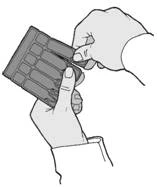
(Fig. A).
- Gently shake the vial in circular motions for about 10 seconds or until the precipitate is no longer visible.
- Holding the vial upright, unscrew the top part of the vial (Figure B).
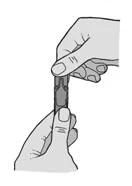
(Fig. B).
- Squeeze the entire contents of the vial into the nebulizer chamber (Figure C). Attach the nebulization chamber cover and carefully remove the empty vial.
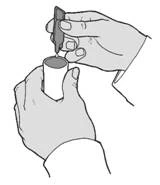
(Fig. C)
- Connect one end of the nebulizer chamber to the mouthpiece or face mask, and the other end to the air pump.
- Gently shake the nebulizer chamber, then switch on the nebulizer. Breathe calmly and deeply through the mist using the mouthpiece or face mask.
- When no more "mist" is produced at the mouthpiece or face mask, the inhalation is complete.
- Rinse the mouth with water. Spit out the water. Do not swallow. If a face mask was used, wash the face as well. It is important to do this, as it may reduce the risk of certain adverse effects associated with this medicine.
- After each use, clean the nebulizer. Wash the nebulizer chamber, mouthpiece, or face mask in warm water using a mild detergent, as recommended by the manufacturer. Thoroughly rinse and dry the nebulizer by connecting the nebulizer chamber to the air pump inlet.
It is important to always follow the manufacturer's instructions provided with the nebulizer.
If the patient has any doubts about how to use the nebulizer, consult the doctor or pharmacist.
The doctor may also recommend the following:
- During periods of stress (e.g., during infection), or when the patient has been taking high doses of inhaled steroid for a prolonged period, or prior to surgery, the doctor may consider additional treatment with steroid tablets.
- If a patient with asthma has previously been taking steroids in tablet form, the doctor may reduce the number of tablets after the patient starts using Nebbud inhalation suspension. As a result, symptoms such as nasal congestion, runny nose, lack of energy, depression, rash (a type of skin eruption), and joint and/or muscle pain may occur. If any of these symptoms are troublesome or do not resolve, contact the doctor.
- The doctor may recommend mixing this medicine with 0.9% sodium chloride solution or solutions containing other active substances acting on the respiratory tract, such as salbutamol, terbutaline, sodium cromoglicate, and ipratropium bromide. In such cases, follow the instructions carefully. The mixture should be used within 30 minutes of preparation. Do not mix this medicine with other medicines unless specifically recommended by the doctor.
Use of a higher than recommended dose of Nebbud
Contact your doctor or pharmacist as soon as possible. Bring the medicine packaging with all remaining vials. It is important to take the medicine dose as stated in the package leaflet or as directed by the physician. Do not increase or decrease the dose without consulting your doctor.
Missed dose of Nebbud
Do not take a double dose to make up for a missed dose. Take the next dose at the usual time.
If you have any further doubts regarding the use of this medicine, consult your doctor or pharmacist.
4. Possible adverse effects
Like all medicines, this medicine can cause adverse effects, although not everyone will experience them.
All medicines can cause allergic reactions, but severe allergic reactions are very rare.
You should immediately inform the doctor if the patient experiences any of the following symptoms:
sudden wheezing, breathing difficulties, eyelid, facial or lip swelling, rash or itching (especially if affecting the whole body).
Rarely, inhaled medicines such as budesonide may cause sudden wheezing and (or) breathlessness.
If any of the described symptoms occur, treatment with the medicine should be stopped immediately and medical advice should be sought.
The following adverse effects have been reported:
Common adverse effects (occur in fewer than 1 in 10 people):
Pain and (or) irritation of the mouth (including oral thrush), throat irritation, hoarseness, difficulty swallowing, cough.
Pneumonia (lung infection) in patients with COPD.
You should tell your doctor if any of the following symptoms occur during treatment with budesonide; these may be symptoms of a lung infection:
- fever or chills,
- increased mucus production, change in mucus colour,
- worsening cough or increased breathing difficulties.
Uncommon adverse effects (occur in fewer than 1 in 100 people):
Anxiety
Depression
Aggression
Hyperactivity
Sleep problems
Tremor
Clouding of the eye lens (cataract)
Muscle spasms
Blurred vision
Rare adverse effects (occur in fewer than 1 in 1000 people):
Skin reactions, including itching, rash, bruising, inflammation, redness of the skin and (or) skin eruptions, swelling, growth suppression in children and adolescents, hypersensitivity (allergic reaction to the medicine) and bronchospasm (muscle tightening in the airways causing wheezing).
Adrenal suppression (reduced function of the adrenal glands, small glands located above the kidneys) may also occur. The main symptoms of adrenal suppression include headache, fatigue, nausea and vomiting, weight loss, abdominal pain and loss of appetite.
Restlessness, nervousness and irritability (these symptoms are more likely to occur in children).
Voice changes.
Very rare adverse effects (occur in fewer than 1 in 10,000 people):
Decreased bone mineral density (osteoporosis).
Adverse effects with unknown frequency (frequency cannot be estimated from available data):
Glaucoma (increased pressure in the eye).
Reporting of adverse effects
If any adverse effects occur, including any not listed in this leaflet, inform your doctor or pharmacist. Adverse effects can be reported directly to the Department of Monitoring Adverse Drug Reactions, Office for Registration of Medicinal Products, Medical Devices and Biocidal Products: Al. Jerozolimskie 181C, 02-222 Warsaw, Tel.: +48 22 49 21 301, Fax: +48 22 49 21 309,
Website: https://smz.ezdrowie.gov.pl
Adverse effects can also be reported to the marketing authorization holder.
Reporting adverse effects helps to provide more information on the safety of the medicine.
5. How to store Nebbud
Keep this medicine out of the sight and reach of children.
Do not use this medicine after the expiry date stated on the outer packaging,
sachet, and ampoule following EXP. The expiry date refers to the last day of the stated month.
Do not freeze.
Store the medicine in an upright position.
After first opening the sachet, the ampoules contained within should be used within 3 months
(it is advisable to mark the opening date on the foil sachet). After opening the sachet, store the ampoules
inside the sachet and within the cardboard box to protect them from light. Do not freeze them.
Each ampoule is intended for single use only.
After opening the ampoule: use immediately. Any unused portion of the medicine must be discarded.
Medicines must not be disposed of via wastewater or household waste. Ask your pharmacist
how to dispose of medicines no longer required. This practice helps protect the environment.
6. Contents of the pack and other information
What Nebbud contains
- The active substance is budesonide.
Nebbud, 0.25 mg/2 ml, suspension for nebulisation contains 0.25 mg budesonide as the active substance
in each single-dose 2 ml ampoule.
- The other ingredients are: edetate disodium, sodium chloride, polysorbate 80, citric acid monohydrate, sodium citrate, and water for injections.
What Nebbud looks like and contents of the pack
The medicine is available as plastic, single-dose ampoules containing 2 ml of a white or almost white,
sterile suspension for nebulisation (converted into a fine inhalation mist).
Packs of 5 ampoules made of LDPE in foil sachets (PET/LDPE/Aluminium/LDPE), contained in a cardboard box.
Pack sizes: 20, 30, 40 or 60 ampoules in a cardboard box.
Not all pack sizes may be marketed.
Marketing Authorisation Holder and Manufacturer
Marketing Authorisation Holder
Teva Pharmaceuticals Polska Sp. z o.o.
ul. Emilii Plater 53
00-113 Warsaw
Poland
Manufacturer/Importer
Merckle GmbH
Ludwig-Merckle-Str. 3
89143 Blaubeuren
Germany
This medicinal product is authorised in the Member States of the European Economic Area under the following names:
Belgium Budesonide Teva 0.125 mg/ml, nebuliser suspension
Bulgaria Infaresp 0.5 mg/2 ml nebuliser suspension
Denmark Budesonide Teva Pharma
Estonia Budesonide Teva
Finland Budesonide Teva 0.5 mg/ml sumutinsuspensio
Ireland Budesonide Teva Pharma 0.5 mg/2 ml and 1 mg/2 ml Nebuliser Suspension
Latvia Budesonide Teva 1 mg/2 ml suspensija izsmidzināšanai
Lithuania Budesonide Teva 0.5 mg/2 ml purškiamoji įkvepiamoji suspensija
Netherlands Budesonide Teva Steri-Neb® 0.25 mg/2 ml, vernevelsuspensie
Norway Budesonid Teva
Poland Nebbud
Sweden Budesonide Teva Pharma
Similar drugs
| Brand name | Dosage form | Active substance / Dosage | Manufacturer |
|---|---|---|---|
| BDS N | suspension for nebulization |
|
Genetic S.p.A. |
| BDS N | suspension for nebulization |
|
Genetic S.p.A. |
| BDS N | suspension for nebulization |
|
Genetic S.p.A. |
| BENODIL | suspension for nebulization |
|
Genetic S.p.A Pharmaceutical Works POLPHARMA S.A. |
| BENODIL | suspension for nebulization |
|
Genetic S.p.A Pharmaceutical Works POLPHARMA S.A. |
| BENODIL | suspension for nebulization |
|
Genetic S.p.A Pharmaceutical Works POLPHARMA S.A. |
| BUDIPULMI | suspension for nebulization |
|
Genetic S.p.A |
| BUDIPULMI | suspension for nebulization |
|
Genetic S.p.A |
| BUDIXON NEB | suspension for nebulization |
|
Adamed Pharma S.A., Genetic S.p.A. |
| BUDIXON NEB | suspension for nebulization |
|
Adamed Pharma S.A., Genetic S.p.A. |
| NEBBUD | suspension for nebulization |
|
Merckle GmbH |
| NEBBUD | suspension for nebulization |
|
Merckle GmbH |
The original data is available in the language of the country of manufacture.
Data source: Register of Medicinal Products of Poland (URPL)
Data last verified: September 01, 2026