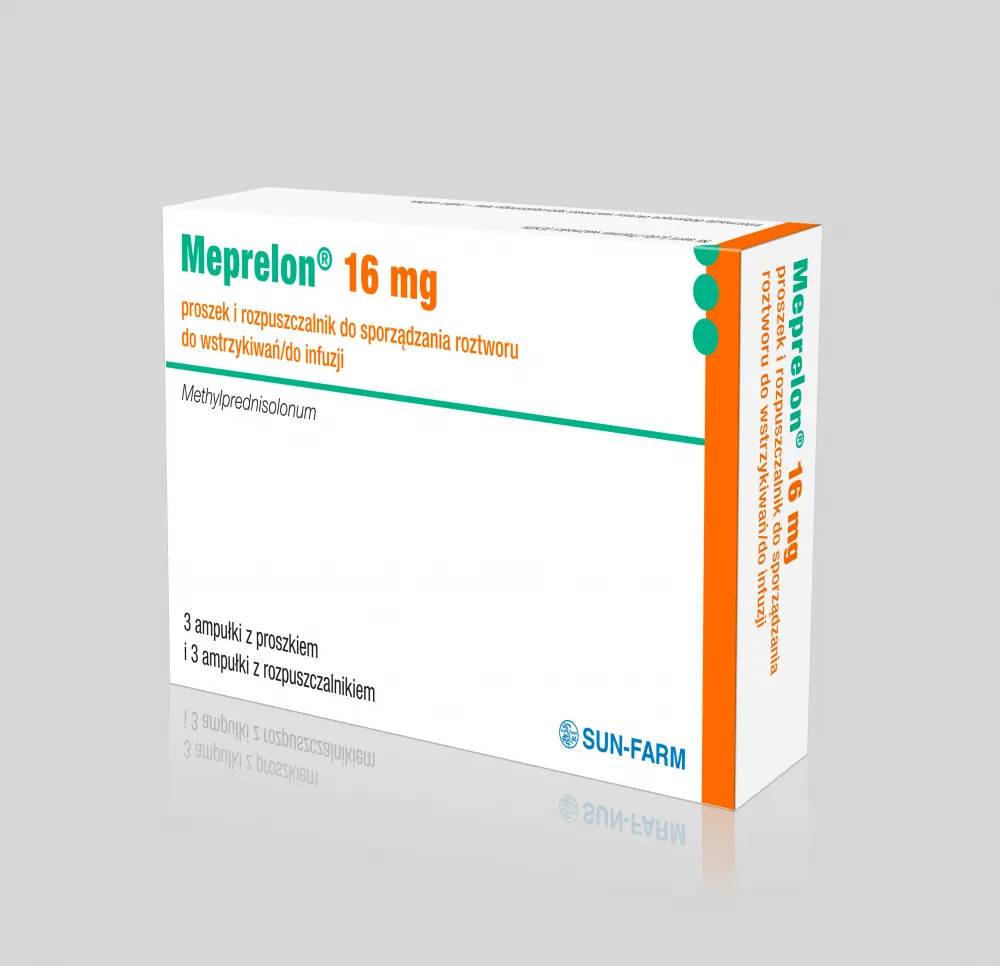
MEPRELON
PolandThe medicine is used in conditions requiring very rapid action of glucocorticosteroids, such as: severe acute asthma attack, cerebral edema, severe allergic reaction, acute blood or liver disorders, as well as in cases of adrenal insufficiency.
Frequently asked questions
How should Meprelon be taken?
The medicine is administered via intravenous injection or infusion according to the doctor's instructions. Before use, the powder must be dissolved in the included solvent. The prepared solution should be used immediately.
When should you not use this medicine?
Do not use it if you are allergic to methylprednisolone, other glucocorticosteroids, or any of the ingredients of the medicine.
What are the possible side effects after administering Meprelon?
Possible side effects include, among others, changes in blood morphology, increased risk of infection, mood disorders, vision problems (e.g., cataracts, glaucoma), cardiac arrhythmias, gastrointestinal problems (e.g., ulcers), as well as changes in skin appearance (e.g., striae, acne).
Does Meprelon interact with other medicines?
Yes, the medicine may affect the action of many other substances. It may enhance the effect of contraceptives, certain antifungal drugs, or HIV medications. Conversely, anticonvulsants, anti-tuberculosis drugs, or certain sleeping pills may weaken its effect. The medicine may also affect the action of antidiabetic, anticoagulant, and blood pressure-lowering drugs.
Should caution be exercised during long-term use?
Yes, after long-term treatment, the medicine must not be discontinued suddenly, as this may lead to steroid withdrawal syndrome, adrenal insufficiency, or a recurrence of the underlying disease. In such cases, the dose should be reduced gradually under medical supervision.
Instructions for use
Package leaflet: Information for the user
Meprelon, 32 mg,
powder and solvent for solution for injection/infusion
Methylprednisolonum
Please read all of this leaflet carefully before using this medicine, because it contains
important information for the patient.
- Keep this leaflet, as you may need to read it again.
- If you have any further questions, ask your doctor, pharmacist, or nurse.
- This medicine has been prescribed for a specific individual. Do not pass it on to others. It may harm someone else, even if their symptoms are the same.
- If you experience any adverse reactions, including any not listed in this leaflet, tell your doctor, pharmacist, or nurse. See section 4.
Contents of the leaflet
- What Meprelon is and what it is used for
- Before you use Meprelon
- How to use Meprelon
- Possible side effects
- How to store Meprelon
- Contents of the pack and other information
1. What Meprelon is and what it is used for
Meprelon contains an active substance belonging to the group of modified adrenal cortex hormones (glucocorticosteroids), in a form that is highly water-soluble. Therefore, Meprelon is administered directly into the bloodstream in conditions requiring a very rapid onset of glucocorticosteroid action.
Meprelon is indicated for:
All corticosteroid treatment indications where a very rapid therapeutic effect is required, or when for other reasons (e.g. vomiting or loss of consciousness) parenteral administration is necessary, particularly in the following conditions:
- severe acute asthma attack,
- cerebral edema (only in cases of symptoms of increased intracranial pressure confirmed by computed tomography) caused by brain tumor or intracerebral metastases,
- severe allergic reaction (e.g. angioedema, reaction after insect bites),
- initial treatment of extensive, severe skin diseases with acute course (e.g. erythroderma, pemphigus vulgaris),
- acute blood disorders (e.g. autoimmune hemolytic anemia, acute idiopathic thrombocytopenic purpura),
- acute liver tissue disorders (e.g. acute alcoholic hepatitis),
- pulmonary fluid due to inhalation of irritating gas (toxic pulmonary edema),
- diminished or absent adrenal cortex activity (adrenal insufficiency): Addisonian crisis (hydrocortisone is the drug of choice).
2. Important information before using Meprelon
When not to use Meprelon
- if the patient is allergic to methylprednisolone, other glucocorticosteroids, or any of the other ingredients of this medicine (listed in section 6).
Warnings and precautions
Before starting treatment with Meprelon, discuss this with your doctor, pharmacist, or
nurse,
- if the patient has hyperthyroidism.
In severe infections, Meprelon should be administered only in combination with specific
antimicrobial agents.
Meprelon should be used in the following conditions only when the doctor considers it
absolutely necessary. If indicated, appropriate concomitant antimicrobial therapy should be
administered:
- acute viral infections (e.g. chickenpox, shingles, herpes virus infection, herpes keratitis),
- infectious hepatitis (chronic active hepatitis with positive HBsAg test),
- approximately 8 weeks before and up to 2 weeks after vaccination with live vaccines,
- fungal infections involving internal organs,
- certain parasitic diseases (e.g. infestations with protozoa, helminths),
- Heine-Medin disease (poliomyelitis),
- lymph node involvement after BCG vaccination,
- acute and chronic bacterial infections,
- if there is a history of tuberculosis, the medicine may be used only simultaneously with anti-tuberculosis drugs and under strict medical supervision.
Furthermore, Meprelon should be used only when the doctor considers it absolutely necessary and with concomitant specific treatment in the following conditions:
- gastrointestinal ulceration,
- severe osteoporosis (loss of bone mass),
- difficult-to-control hypertension,
- difficult-to-control diabetes,
- psychiatric disorders (including history),
- increased intraocular pressure (glaucoma with narrow or open angle),
- corneal ulcers and corneal damage.
Due to the risk of intestinal wall perforation with peritonitis, Meprelon may be used only when there are strong indications and under strict control in the following cases:
- in patients with severe colitis (ulcerative colitis) at risk of perforation, with abscesses or purulent inflammations,
- in patients with diverticulitis,
- immediately after certain intestinal surgeries (enteroanastomosis).
In patients receiving high doses of glucocorticosteroids, symptoms of peritoneal irritation after gastric or intestinal perforation may not occur.
Treatment with Meprelon may cause gas accumulation in the intestinal wall, known as pneumatosis cystoides intestinalis (frequency unknown, see section 4 "Possible side effects"). Pneumatosis cystoides intestinalis may range from mild, self-limiting conditions not requiring treatment to severe conditions requiring immediate surgical intervention.
If symptoms such as nausea, vomiting, and abdominal pain persist or worsen, contact a doctor immediately. The doctor will decide on the need for further diagnosis and treatment.
In patients with diabetes, metabolism (metabolic state) should be monitored regularly. An increased need for antidiabetic medications (insulin, oral antidiabetics, etc.) should be considered.
In cases of high blood pressure or severe heart failure, the doctor should carefully monitor the patient, as these conditions may worsen.
Before starting treatment with Meprelon, discuss this with your doctor if:
- the patient has scleroderma (an autoimmune disorder also known as systemic sclerosis), because doses of at least 12 mg methylprednisolone per day may increase the risk of a serious complication called scleroderma renal crisis. Symptoms of scleroderma renal crisis include elevated blood pressure and reduced urine output. The treating physician may recommend regular monitoring of blood pressure and urine output.
- the patient has kidney disease or high blood uric acid levels before starting treatment with Meprelon.
Inform the doctor if the patient develops symptoms of tumour lysis syndrome, such as
muscle cramps, muscle weakness, confusion, visual disturbances or loss, shortness of breath, seizures,
irregular heartbeat, or renal failure (reduced urine output or darker urine), especially if the patient has a
haematological malignancy (see section 4. "Possible side effects").
After administration of glucocorticosteroids, cases of phaeochromocytoma crisis have been reported,
which may present as elevated blood pressure with headache, sweating, tachycardia, and pallor, and
may be fatal (see section 4. "Possible side effects"). Corticosteroids should be administered to patients
with suspected or diagnosed phaeochromocytoma (most commonly an adrenal gland tumour producing
hormones) only after careful benefit-risk assessment.
During corticosteroid therapy, thromboembolic events, including venous thromboembolic disease,
have been reported. Inform the doctor if the patient has conditions associated with blood clot formation
in blood vessels. In such cases, Meprelon should be used with caution.
During treatment with Meprelon, pre-existing myasthenia (a type of muscle paralysis) may initially
worsen, leading to myasthenic crisis.
Treatment with Meprelon may mask symptoms of concurrent or developing infection, thus complicating
diagnosis.
Due to immunosuppression, treatment with glucocorticosteroids such as Meprelon may increase the
risk of infection, including infections caused by microorganisms that rarely cause disease under other
circumstances (so-called opportunistic pathogens).
Inactivated vaccines (containing killed pathogens) may generally be administered. However, the immune
response, and thus vaccine efficacy, may be reduced during treatment with high-dose corticosteroids.
Therefore, vaccination is not recommended in patients receiving long-term high-dose therapy (except
replacement therapy).
When high doses of Meprelon are administered, adequate potassium intake (e.g. vegetables, bananas)
should be ensured, and dietary salt intake should be limited. The doctor should monitor blood potassium
levels.
Viral diseases may have a particularly severe course and sometimes be life-threatening in patients
treated with Meprelon. The risk particularly affects immunocompromised children and patients without
a history of chickenpox or measles. If such patients come into contact with individuals suffering from
measles, chickenpox, or shingles during treatment with Meprelon, they should consult a doctor
immediately, who may initiate prophylactic treatment if necessary.
After intravenous administration of high doses of methylprednisolone (over 500 mg methylprednisolone),
cardiac arrhythmias and/or circulatory collapse and/or cardiac arrest have been reported, even in patients
without diagnosed heart disease. Close medical supervision during treatment and for several days
afterwards is therefore recommended.
Bradycardia (slowed heart rate) may occur during or after intravenous administration of high doses of
methylprednisolone, regardless of the rate or duration of infusion.
Rare cases of drug-induced liver injury, including acute hepatitis and increased liver enzyme activity,
have been reported after intravenous administration of methylprednisolone (usually initial dose ≥ 1000 mg
per day). Symptoms may appear after several weeks or later. In most cases, adverse effects resolved after
discontinuation of treatment. Appropriate monitoring is therefore necessary (see section 4. "Possible
side effects").
Systemic (whole-body) treatment with glucocorticosteroids may cause choroidal and retinal disorders
(chorioretinopathy), which may lead to visual disturbances, including vision loss. Long-term systemic
glucocorticosteroid treatment may cause chorioretinopathy even after low-dose administration (see
section 4. "Possible side effects").
If the patient experiences blurred vision or other visual disturbances, contact a doctor.
Meprelon is intended for short-term use. However, if Meprelon is used long-term contrary to
recommendations, the additional warnings and precautions applicable to long-term glucocorticosteroid
therapy should be observed.
During long-term glucocorticosteroid treatment, regular medical check-ups (including ophthalmological
examinations every three months) are recommended.
During treatment with glucocorticosteroids, in special stress situations such as febrile illness, accidents,
surgery, or childbirth, the patient must immediately contact a doctor and inform them about the medication
being taken. A temporary increase in the daily dose may be required. Patients on long-term therapy should
be issued a special identification card indicating glucocorticosteroid use, which should always be carried.
Depending on the duration and dosage of treatment, an adverse effect on calcium metabolism may be
expected. Therefore, osteoporosis prevention is recommended. This particularly concerns patients with
concomitant risk factors such as family history, advanced age, inadequate protein and calcium intake, heavy
smoking, excessive alcohol consumption, postmenopausal status, and lack of physical activity. Prevention
includes adequate calcium and vitamin D intake and physical exercise. In cases of existing osteoporosis,
additional medication should be considered.
After discontinuation or, if necessary, interruption of long-term treatment, the following risks should be
considered: exacerbation or recurrence of the underlying disease, acute adrenal insufficiency (especially
in stress situations such as infections, after accidents, during intense physical exertion), and symptoms
and discomfort due to steroid withdrawal syndrome (see section 4. "Possible side effects").
In cases of untreated hypothyroidism or liver cirrhosis, relatively low or reduced doses may be sufficient.
Close medical supervision is required.
Seek immediate medical advice if muscle weakness or pain, cramps, or stiffness occur during
methylprednisolone treatment. These may be symptoms of a condition called thyrotoxic periodic paralysis,
which may occur in patients with hyperthyroidism treated with methylprednisolone. Additional treatment
may be necessary to alleviate this condition.
Children
After systemic treatment of preterm infants with glucocorticosteroids, a specific cardiac muscle disorder
(hypertrophic cardiomyopathy) has been observed. Therefore, infants receiving systemic glucocorticoid
therapy should have their heart monitored.
Meprelon should be used in children only when there are strong medical reasons, due to the risk of
growth suppression. During long-term treatment with Meprelon, the child's growth should be monitored
regularly.
Misuse of Meprelon as a doping agent
Use of Meprelon may lead to positive results in doping tests. The health consequences of using Meprelon
as a doping agent cannot be predicted. Moreover, using Meprelon as a doping agent may pose a health
risk.
Meprelon and other medicines
Inform your doctor or pharmacist about all medicines currently used, recently used, or planned for use,
including over-the-counter medicines.
The following medicines affect the action of Meprelon:
Increased effect and risk of enhanced adverse effects:
- Certain female sex hormones, e.g. contraceptive drugs ("the pill"), may enhance the effect of corticosteroids.
- Medicines that slow corticosteroid metabolism in the liver, such as certain antifungal drugs (containing ketoconazole, itraconazole), may enhance corticosteroid effects.
- Certain medicines may enhance the effect of Meprelon, 32 mg, and the doctor may wish to closely monitor patients taking such medicines (including certain HIV drugs: ritonavir, cobicistat).
- Medicines used to treat heart disease (e.g. diltiazem [a calcium channel blocker]) may slow methylprednisolone breakdown. Therefore, the initial treatment period should be under medical supervision. Dose adjustment of methylprednisolone may be necessary.
Reduced effect:
- Medicines that accelerate corticosteroid metabolism in the liver, such as certain sedatives (containing barbiturates), anticonvulsants (containing phenytoin, carbamazepine, primidone), and certain tuberculosis drugs (containing rifampicin) may reduce corticosteroid effects.
- Medicines containing ephedrine, used to reduce mucosal swelling, may accelerate glucocorticosteroid metabolism, potentially reducing their efficacy.
Meprelon affects the action of other medicines
Increased effect and risk of enhanced adverse effects:
- When used concomitantly with certain antihypertensive drugs (angiotensin-converting enzyme inhibitors), Meprelon may increase the risk of blood morphology changes.
- Meprelon may cause hypokalaemia, which may enhance the effect of cardiac-stimulating drugs (cardiac glycosides).
- Meprelon may enhance potassium loss caused by diuretics (sodium-excreting diuretics) and laxatives.
- When used concomitantly with anti-inflammatory and antirheumatic drugs (salicylates, indomethacin, and other non-steroidal anti-inflammatory drugs), Meprelon may increase the risk of gastrointestinal ulcers and bleeding.
- Meprelon may prolong the action of certain muscle relaxants (non-depolarizing skeletal muscle relaxants) (see also section 4. "Possible side effects").
- Meprelon may enhance the effect of certain drugs (atropine and other anticholinergics) in increasing intraocular pressure.
- When used simultaneously with drugs used for malaria and rheumatic diseases (containing chloroquine, hydroxychloroquine, mefloquine), Meprelon may increase the risk of muscle diseases (myopathies) or heart muscle disorders (cardiomyopathies).
- Meprelon may increase blood cyclosporine levels (a drug that suppresses the body's immune system). There is an increased risk of seizures.
Reduced effect:
- Meprelon may reduce the effect of glucose-lowering oral antidiabetic drugs and insulin.
- Meprelon may reduce the effect of anticoagulant drugs (oral anticoagulants, coumarin derivatives).
- Meprelon may reduce the effect of antiparasitic drugs (praziquantel).
- Meprelon may reduce the effect of growth hormone (somatotropin).
- Meprelon may reduce the increase in thyroid-stimulating hormone (TSH) after protirelin administration (TRH, a hormone secreted by the hypothalamus).
Other possible interactions
Effect on laboratory test results:
- Glucocorticosteroids may suppress skin reactions in allergy tests.
Pregnancy and breastfeeding
If the patient is pregnant or breastfeeding, suspects she may be pregnant, or plans to become pregnant,
she should consult a doctor or pharmacist before using this medicine.
Pregnancy
During pregnancy, especially in the first three months, Meprelon should be used only after careful
benefit-risk assessment by the doctor.
Methylprednisolone should be used in the first trimester of pregnancy only after discussing with the
doctor the possible benefits and risks associated with different treatment options for the patient and the
unborn child. This is because methylprednisolone may increase the risk of cleft lip and/or cleft palate
(an opening or split in the upper lip and/or palate) in the newborn. Long-term glucocorticosteroid
treatment during pregnancy may not exclude growth disturbances in the unborn child. In cases of
treatment in late pregnancy, fetal adrenal cortical atrophy may occur, which may require treatment after
birth.
Breastfeeding
Glucocorticosteroids, including methylprednisolone, pass into breast milk. Breastfeeding should be
avoided during treatment with high doses or long-term therapy.
Driving and operating machinery
Due to possible side effects such as impaired visual acuity (due to cataract or increased intraocular
pressure), dizziness or headache, concentration or ability to concentrate and reaction may be impaired
in rare cases. The patient may not be able to react quickly enough to sudden and unexpected events.
This may pose a risk, for example when driving a vehicle or operating machinery. The same applies to
performing activities without safe support. The patient may unnecessarily endanger themselves and others.
It should be noted that alcohol may increase this risk.
Meprelon contains sodium
The medicine contains less than 1 mmol (23 mg) of sodium per ampoule, meaning the medicine is considered "sodium-free".
3. How to use Meprelon
Meprelon 32 mg should always be used as directed by the physician. Generally, Meprelon should be used according to the following dosage recommendations:
In the treatment of acute symptoms, the dose for adults is usually 32 mg to 64 mg of methylprednisolone (1–2 vials of Meprelon 32 mg) or more. The dose for children is 8 to 32 mg (up to one vial of Meprelon 32 mg) or 1 to 2 mg/kg body weight. In such cases, Meprelon 16 mg is also available.
In the treatment of acute, life-threatening conditions, the dose in adults is 250–500 mg of methylprednisolone; and in children, 4 to 8 mg/kg body weight. Depending on symptoms, single doses up to 30 mg/kg body weight may be required. In such cases, Meprelon 250 mg and Meprelon 1000 mg are available.
Depending on the disease condition, intervals between injections range from 30 minutes to 24 hours.
Unless otherwise prescribed by the physician, dosage recommendations for individual indications are as follows:
Severe acute asthma attack
Depending on symptoms, the initial dose is 32–96 mg of methylprednisolone (1–3 vials of Meprelon 32 mg) in combination with standard basic treatment or concomitant medications. Depending on the clinical condition, this dose may be repeated every 6 hours.
In the case of a severe, life-threatening asthma attack, an initial dose of 250–500 mg of methylprednisolone is recommended. In such cases, Meprelon 250 mg is available.
Cerebral edema (caused by brain tumor or brain metastases)
In the treatment of acute or severe cerebral edema, an initial dose of 250–500 mg of methylprednisolone is administered. In such cases, Meprelon 250 mg is available.
For maintenance treatment of acute or severe cerebral edema, or mild or chronic cerebral edema, usually 32–64 mg of methylprednisolone (1–2 vials of Meprelon 32 mg) is administered three times daily for several days. If necessary, the dose should be gradually reduced and transitioned to oral therapy.
Acute hypersensitivity reactions (e.g., angioedema, reactions to insect stings)
In angioedema, up to 96–160 mg of methylprednisolone (3–5 vials of Meprelon 32 mg) is administered intravenously as a single dose. In reactions to insect stings, 96 mg of methylprednisolone (3 vials of Meprelon 32 mg) or more is administered intravenously as a single dose.
In acute upper airway obstruction, 250 mg of methylprednisolone may be administered. This dose may be repeated after 6 and 12 hours. In such cases, Meprelon 250 mg is available.
Severe acute skin diseases (e.g., erythroderma, pemphigus vulgaris)
In skin diseases, oral methylprednisolone may be administered at a dose of 80–160 mg per day, depending on severity and progression. In initial treatment of severe acute skin diseases, parenteral administration of 96–160 mg of methylprednisolone (3–5 vials of Meprelon 32 mg) may also be considered. Subsequently, oral treatment should be initiated.
Acute hematological disorders (e.g., autoimmune hemolytic anemia, acute idiopathic thrombocytopenic purpura)
Initially, instead of oral therapy, 96–160 mg of methylprednisolone per day (3–5 vials of Meprelon 32 mg) is administered intravenously. Subsequently, oral treatment should be initiated.
Acute liver tissue disorders (e.g., acute alcoholic hepatitis)
The initial dose is 16–32 mg of methylprednisolone per day (½–1 vial of Meprelon 32 mg), administered intravenously. Subsequently, oral treatment should be initiated.
Toxic pulmonary edema caused by inhalation of irritant gas
Immediately administer 1000 mg of methylprednisolone intravenously. If necessary, repeat after 6, 12, and 24 hours. In such cases, Meprelon 1000 mg is available. For the next two days, administer 32 mg of methylprednisolone intravenously three times daily (1 vial of Meprelon 32 mg). Then, for the following two days, administer 16 mg of methylprednisolone intravenously (½ vial of Meprelon 32 mg) three times daily. In such cases, Meprelon 16 mg is available. Afterwards, the dose should be gradually reduced and transitioned to inhaled corticosteroids.
Addisonian crisis
The initial dose is 16–32 mg of methylprednisolone (½–1 vial of Meprelon 32 mg) administered by intravenous infusion in combination with standard concomitant treatment. Subsequently, another 16–32 mg of methylprednisolone (½–1 vial of Meprelon 32 mg) should be administered in a 24-hour intravenous infusion, followed by transition to oral treatment, if necessary in combination with mineralocorticoids.
Note:
Considering the known profile of adverse effects, administration of the first intravenous dose is recommended to be performed in a hospital setting.
Meprelon is administered by intravenous injection or intravenous infusion. Intramuscular administration should be used only exceptionally, when intravenous administration is not possible, due to uncertainty regarding the extent of absorption of the active substance. Intravenous injection should be performed slowly.
To prepare the ready-to-use injection solution, inject the provided solvent (1 ml of water for injection) into the vial containing the powder immediately before use, and shake until dissolved.
To prepare an infusion (intravenous drip), first dissolve the drug according to the above instructions, then mix it with 5% glucose solution, 0.9% sodium chloride solution, or Ringer's solution.
Solutions or mixtures must be prepared and administered under strictly aseptic (microorganism-free) conditions.
Concomitant administration with other medicinal products mixed in the same syringe should be avoided, as precipitation may occur. For the same reason, Meprelon should not be added to infusion solutions other than those specified, nor injected into an infusion line.
Injection or infusion solutions prepared by dissolving the powder must be used as soon as possible.
Medicinal products intended for parenteral administration should be visually inspected before use. Only clear solutions without visible particles should be used.
The duration of treatment depends on the individual course of the disease and is determined by the physician.
After prolonged treatment, particularly with relatively high doses, Meprelon should not be discontinued abruptly, but gradually tapered off.
Use of a higher than recommended dose of Meprelon
Cases of acute Meprelon overdose are unknown. Due to its low toxicity, poisoning is not expected. If severe or unusual adverse effects occur, the physician will decide on the necessary measures, if any.
Discontinuation of Meprelon treatment
When discontinuing treatment after prolonged use of Meprelon, follow the physician's instructions. The physician may recommend gradually reducing the dose until complete withdrawal. Abrupt discontinuation may result in (see also section 2, "Warnings and precautions"):
- steroid withdrawal syndrome (see section 4, "Possible adverse effects"),
- adrenal insufficiency (low cortisol levels), or
- recurrence of the underlying disease.
If you have any further questions about the use of this medicine, please consult your doctor, pharmacist, or nurse.
4. Possible adverse effects
Like all medicines, this medicine can cause adverse effects, although not everyone will experience them.
The following adverse effects are listed without regard to frequency.
Frequency could not be estimated from the available data.
Depending on the duration of treatment and dose, the following adverse effects may occur:
Blood and lymphatic system disorders
Changes in blood counts (i.e. blood morphology) (increased white blood cell count, increased red blood cell count, increased platelet count, or decreased number of certain white blood cells and platelets).
Immune system disorders
Severe hypersensitivity reactions (anaphylactic reactions) with circulatory collapse, cardiac arrest, cardiac arrhythmias, bronchospasm, and/or hypotension or hypertension.
Weakened immune defense with increased risk of infection (some viral diseases such as chickenpox, herpes simplex, or – during the viremic phase – shingles may have a severe, sometimes life-threatening course), masking of infections, reactivation of latent infections, allergic reactions.
Endocrine disorders
Catecholamine crisis in pheochromocytoma (markedly elevated blood pressure with headache, sweating, tachycardia, and pallor; for pheochromocytoma, see section 2, "Warnings and precautions"), induction of Cushing's syndrome (typical symptoms: moon face, central obesity, and facial flushing), adrenal cortex insufficiency or atrophy, steroid withdrawal syndrome, growth suppression in children, disturbances in sex hormone secretion (amenorrhea, hirsutism, erectile dysfunction).
Metabolism and nutrition disorders
Tumour lysis syndrome has been reported in patients with haematological malignancies. Tumour lysis syndrome may be diagnosed by the physician based on changes in blood test results, including elevated levels of uric acid, potassium, or phosphates, and decreased calcium levels. Symptoms include muscle cramps, muscle weakness, confusion, visual disturbances or loss, shortness of breath, seizures, irregular heartbeat, or renal failure (reduced urine output or darker urine). If such symptoms occur, contact your doctor immediately (see section 2, "Warnings and precautions").
Accumulation of fat tissue in certain body areas (in the spinal canal [epidural space] or temporarily in the chest cavity [in the pericardium, mediastinum]).
Edema due to sodium retention in tissues (sodium retention), increased potassium excretion, which may be associated with hypokalemia (potentially leading to cardiac arrhythmias), increased blood glucose levels, diabetes mellitus, increased blood lipid levels (cholesterol and triglycerides), enhanced protein catabolism.
Psychiatric disorders
Severe depression, irritability, personality changes, mood swings, euphoria, increased energy and appetite, psychosis, sleep disturbances.
Nervous system disorders
Increased intracranial pressure (pseudotumor cerebri – especially in children), occurrence of previously unrecognized epileptic seizures and increased seizure susceptibility in existing epilepsy, feeling of emptiness in the head, dizziness, headache.
Eye disorders
Retinal and choroidal disorders (chorioretinopathy; see section 2, "Warnings and precautions"), lens opacity (cataract), increased intraocular pressure (glaucoma), worsening of corneal ulcer symptoms, exacerbation of viral, fungal, and bacterial eye infections, blurred vision.
Cardiac disorders
Cardiac arrhythmias, cardiac arrest, worsening of pulmonary congestion in heart failure, certain myocardial disorders in premature infants (see section 2, "Children").
Vascular disorders
Vascular collapse, arterial hypertension, increased blood coagulability (thromboembolic events), increased risk of atherosclerosis and thrombosis, vasculitis (also as a withdrawal syndrome after long-term treatment).
Gastrointestinal disorders
Gastric and intestinal ulcers with risk of perforation (e.g. peritonitis), gastrointestinal bleeding, pancreatitis, epigastric discomfort, gas accumulation in the intestinal wall (pneumatosis intestinalis).
Hepatobiliary disorders
Methylprednisolone may cause liver damage. Cases of hepatitis and increased liver enzyme activity have been reported. This includes liver cell injury and cholestatic liver damage, which may lead to acute liver failure (see section 2, "Warnings and precautions").
Skin and subcutaneous tissue disorders
Skin striae, decreased skin thickness (atrophy) ("parchment skin"), dilatation of skin vessels (telangiectasia), increased capillary fragility ("capillary fragility"), tendency to bruising, petechial or purpuric skin bleeding, hirsutism, acne, delayed wound healing, facial dermatitis (especially around the mouth, nose, and eyes), skin pigmentation changes, hypersensitivity reactions such as skin rashes.
Musculoskeletal and connective tissue disorders
Muscle weakness and atrophy, reversible increase in muscle weakness in myasthenia (muscle fatigue), potentially leading to myasthenic crisis, induction of acute myopathy (muscle disease) when administered concomitantly with non-depolarizing skeletal muscle relaxants (see also section 2, "Meprelon and other medicines"), osteoporosis (brittle bone disease) (dose-dependent, possible even with short-term use), in severe cases increasing the risk of bone fractures, other forms of bone necrosis (avascular necrosis: humeral head and femoral head), tendon rupture.
Rapid dose reduction after long-term treatment may cause symptoms such as muscle and joint pain.
Renal and urinary disorders
Scleroderma renal crisis in patients with scleroderma (an autoimmune disorder). Symptoms of scleroderma renal crisis include elevated blood pressure and reduced urine output (see section 2, "Warnings and precautions").
General disorders and administration site conditions
Subcutaneous injection may cause local atrophy of fatty tissue.
Investigations
Increased body weight.
The following adverse effects have been observed after abrupt discontinuation following prolonged methylprednisolone use, although they do not occur in everyone:
Symptoms such as fever, loss of appetite, nausea, weakness, restlessness, apathy (drowsiness), malaise, joint pain, skin peeling, low blood pressure, and weight loss (steroid withdrawal syndrome).
Special warnings
Since Meprelon may very rarely cause allergic reactions, even leading to anaphylactic shock, patients with a predisposition to allergies (e.g. bronchial asthma) should have immediate access to emergency treatment (e.g. adrenaline, intravenous infusion, artificial ventilation).
If gastrointestinal or intestinal disturbances, back, shoulder or hip joint pain, psychiatric disturbances, abnormal blood glucose levels (in diabetic patients), or any other disturbances occur, inform your doctor immediately.
Reporting of adverse effects
If any adverse effects occur, including any not listed in this leaflet, inform your doctor or pharmacist. Adverse effects can be reported directly to the Department of Monitoring Adverse Drug Reactions, Office for Registration of Medicinal Products, Medical Devices and Biocidal Products
Al. Jerozolimskie 181C
02-222 Warsaw
Tel.: + 48 22 49 21 301
Fax: + 48 22 49 21 309
Website: https://smz.ezdrowie.gov.pl
Adverse effects can also be reported to the marketing authorization holder.
Reporting adverse effects helps to provide more information on the safety of this medicine.
5. How to store Meprelon
Keep this medicine out of sight and reach of children.
Do not use this medicine after the expiry date stated on the carton and ampoule following: EXP.
The expiry date refers to the last day of the stated month.
No special temperature storage requirements.
Store ampoules in the outer packaging to protect from light.
Medicines must not be disposed of via wastewater or household waste. Ask your pharmacist how to dispose of medicines no longer required. Such practices help protect the environment.
Note on shelf-life after opening or reconstitution
For single use only. Any remaining solution must be discarded after opening the vial.
Chemical and physical in-use stability of Meprelon has been demonstrated for 24 hours at 25 °C when diluted with water for injections, and for 8 hours at 25 °C when diluted with 5% (50 mg/ml) glucose solution, 0.9% (9 mg/ml) sodium chloride solution, or Ringer's solution.
From a microbiological standpoint, the prepared solution should be used immediately. If the solution is not administered immediately, the user is responsible for the duration and storage conditions.
6. Contents of the package and other information
What Meprelon 32 mg contains
- The active substance is methylprednisolone.
One vial of powder contains 41.85 mg of methylprednisolone sodium succinate, equivalent to
31.57 mg of methylprednisolone.
1 ml of prepared solution contains 41.85 mg of methylprednisolone sodium succinate, equivalent to
31.57 mg of methylprednisolone.
- Other ingredients: disodium dihydrogen phosphate dihydrate, disodium phosphate dihydrate.
One vial of solvent contains 1 ml of water for injections.
What Meprelon 32 mg looks like and contents of the pack
Meprelon 32 mg contains a white to creamy powder and a clear, colourless solvent.
Meprelon 32 mg is available in packs containing:
3 vials of powder for solution for injection/infusion, each containing 32 mg of methylprednisolone,
and 3 vials of solvent, each containing 1 ml of water for injections.
Marketing Authorisation Holder and Manufacturer
Marketing Authorisation Holder:
SUN-FARM Sp. z o.o.
ul. Dolna 21
05-092 Łomianki
tel. +48 22 350 66 69
Manufacturer:
mibe GmbH Arzneimittel
Münchener Straße 15
06796 Brehna
Germany
This medicinal product is authorised in the European Economic Area member states under the following names:
Austria Metasol 32 mg Powder and solvent for solution for injection/infusion
Germany Methylprednisolut 32 mg
Poland Meprelon
Similar drugs
| Brand name | Dosage form | Active substance / Dosage | Manufacturer |
|---|---|---|---|
| MEPRELON | solution for injection / infusion, powder and solvent for preparation of |
|
mibe GmbH Pharmaceuticals |
The original data is available in the language of the country of manufacture.
Data source: Register of Medicinal Products of Poland (URPL)
Data last verified: September 01, 2026