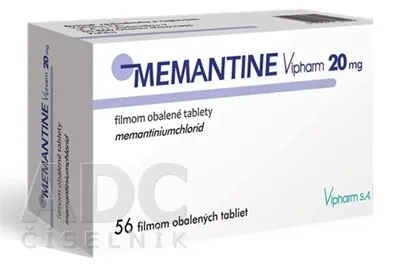
MEMANTINE VIPHARM
PolandThe medicine is used in the treatment of patients with moderate to severe Alzheimer's disease.
Frequently asked questions
How should Memantine Vipharm be taken?
Tablets should be taken orally, once daily, preferably at the same time each day. They can be swallowed with water and taken with or without food. The dosage should be increased gradually during the first weeks of treatment, in accordance with the doctor's instructions.
When should you not use this medicine?
Do not use the medicine if you are allergic to its active substance or any of the other ingredients. It is also not recommended for use in children and adolescents under 18 years of age, or in women who are pregnant or breastfeeding.
What precautions should be taken before starting treatment?
Before using the medicine, inform your doctor if you have experienced seizures, heart problems (e.g., myocardial infarction, heart failure, uncontrolled hypertension), or kidney problems. You should also mention the use of other medicines, such as amantadine, ketamine, or dextromethorphan.
What side effects may Memantine Vipharm cause?
The most common side effects may include: headache, drowsiness, constipation, dizziness, balance disorders, or high blood pressure. Uncommon side effects may include fatigue, vomiting, hallucinations, or walking difficulties. Very rarely, seizures may occur.
What should I do if I forget to take a dose?
If you forget to take the medicine, take the next dose at the usual time. Do not take a double dose to make up for a missed one.
Does the medicine interact with other substances?
Yes, the medicine may change the effect of many other drugs, including anticonvulsants, sleeping pills, anticoagulants, neuroleptics, and certain medicines used to treat Parkinson's disease or cough.
Instructions for use
Package leaflet: Information for the patient
Memantine Vipharm, 10 mg, coated tablets
Memantine Vipharm, 20 mg, coated tablets
Memantini hydrochloridum
Please read the entire leaflet carefully before using the medicine, as it contains
important information for the patient.
- Keep this leaflet so that you can read it again if necessary.
- If you have any doubts, please consult your doctor.
- This medicine has been prescribed for a specific individual. Do not pass it on to others. The medicine may harm another person, even if their symptoms are the same.
- If any adverse effects occur, including any not listed in this leaflet, inform your doctor or pharmacist. See section 4.
Table of contents of the leaflet
- What Memantine Vipharm is and what it is used for
- Important information before taking Memantine Vipharm
- How to take Memantine Vipharm
- Possible side effects
- How to store Memantine Vipharm
- Contents of the pack and other information
1. What Memantine Vipharm is and what it is used for
How Memantine Vipharm works
Memantine Vipharm contains an active substance called memantine hydrochloride (Memantini hydrochloridum). It belongs to a group of medicines known as anti-dementia drugs.
Memory loss in Alzheimer's disease is caused by disturbances in the transmission of nerve impulses that carry information in the brain. In the brain, there are receptors known as N-methyl-D-aspartate (NMDA) receptors, which play a role in transmitting nerve signals important for learning and memory processes. Memantine Vipharm belongs to a group of medicines called NMDA receptor antagonists. By acting on NMDA receptors, Memantine Vipharm improves the transmission of nerve impulses and memory function.
For what purpose is Memantine Vipharm used
Memantine Vipharm is used in the treatment of patients with moderate to severe Alzheimer's disease.
2. Important information before using Memantine Vipharm
When not to use Memantine Vipharm
- if the patient is allergic to memantine hydrochloride or any of the other ingredients of this medicine (listed in section 6).
Warnings and precautions
Before starting treatment with Memantine Vipharm, discuss the following with your doctor or
pharmacist:
- if the patient has ever had seizures;
- if the patient has recently suffered a myocardial infarction (heart attack), or suffers from congestive heart failure or uncontrolled arterial hypertension (high blood pressure).
In the above situations, treatment with Memantine Vipharm should be carried out under strict
supervision of the attending physician, who should regularly assess the benefits of ongoing therapy.
When administering memantine to patients with renal impairment (kidney problems),
the attending physician should closely monitor kidney function and, if necessary,
adjust the dose of the medicine accordingly.
Concomitant use of the following medicines should be avoided: amantadine (used in the treatment of
Parkinson's disease), ketamine (a substance usually used as an anaesthetic), dextromethorphan
(commonly used to treat cough), and other medicines belonging to the NMDA antagonist group.
The attending physician should be informed if the patient has recently made or plans to make
significant changes in dietary habits (e.g. switching from a normal diet to a strict vegetarian diet),
or if the patient has been diagnosed with renal tubular acidosis (excessive concentration of acidic
substances in the blood caused by kidney dysfunction (impaired kidney function)) or severe urinary
tract infection (infection of structures through which urine flows). In the above cases,
the physician may need to modify the dosage regimen.
Children and adolescents
Memantine Vipharm is not recommended for use in children and adolescents under 18 years of age.
Memantine Vipharm and other medicines
Inform your doctor or pharmacist about all medicines the patient is currently taking or has recently taken, as well as any medicines the patient intends to take.
Memantine Vipharm may alter the effects of, and necessitate dose adjustments by the physician for the following medicines:
- amantadine, ketamine, dextromethorphan;
- dantrolene, baclofen;
- cimetidine, ranitidine, procainamide, quinidine, quinine, nicotine;
- hydrochlorothiazide (and all combination products containing hydrochlorothiazide);
- anticholinergic agents (substances usually used in the treatment of movement disorders or intestinal spasms);
- anticonvulsants (substances used to prevent or stop seizures);
- barbiturates (substances mainly used as sedatives);
- dopaminergic agonists (such as L-dopa, bromocriptine);
- neuroleptics (substances used in the treatment of psychiatric disorders);
- oral anticoagulants.
If hospitalization occurs, inform the physician that the patient is taking Memantine Vipharm.
Memantine Vipharm with food and drink
Inform the attending physician if the patient has recently made or plans to make significant changes in dietary habits (e.g. switching from a normal diet to a strict vegetarian diet) or if the patient has been diagnosed with renal tubular acidosis (excessive concentration of acidic substances in the blood caused by kidney dysfunction (impaired kidney function)) or severe urinary tract infection (infection of structures through which urine flows). In the above cases, the physician may need to modify the dosage regimen.
Pregnancy and breastfeeding
If the patient is pregnant or breastfeeding, suspects she may be pregnant, or is planning to have a child, she should consult her doctor or pharmacist before using this medicine.
Pregnancy
Memantine is not recommended for use in pregnant women.
Breastfeeding
Women taking Memantine Vipharm should not breastfeed.
Driving and operating machinery
The doctor should advise the patient whether the disease allows him to safely drive vehicles and operate machinery.
Memantine may also affect reaction speed, making driving vehicles or operating machinery inadvisable.
Memantine Vipharm contains lactose
If the patient has previously been diagnosed with intolerance to certain sugars, the patient should contact the doctor before taking this medicine.
3. How to use Memantine Vipharm
This medicine should always be used as directed by the physician. If in doubt, consult a doctor or pharmacist.
Recommended dose
10 mg
The recommended dose of Memantine Vipharm for adults and elderly patients is 20 mg once daily.
To reduce the risk of adverse effects, the dose should be increased gradually according to the following schedule:
| half a tablet 10 mg |
| one tablet 10 mg |
| one and a half tablets 10 mg |
| two tablets 10 mg once daily |
The usual dosing starts with half a tablet once daily (1 x 5 mg) for the first week of treatment. In the second week, the dose is increased to one tablet once daily (1 x 10 mg), and to one and a half tablets once daily in the third week of treatment. Starting from the fourth week, two tablets once daily (1 x 20 mg) are usually administered.
20 mg
The recommended dose of Memantine Vipharm for adults and elderly patients is 20 mg once daily.
To reduce the risk of adverse reactions, the dose should be increased gradually according to the treatment regimen. Other tablet strengths are available to allow gradual dose escalation.
Treatment starts with 5 mg of memantine once daily (half a 10 mg tablet). The dose should be increased weekly by 5 mg until the recommended maintenance dose is reached. The recommended maintenance dose is 20 mg once daily, achieved at the beginning of week 4.
Dosing in patients with renal impairment
In patients with impaired renal function, the appropriate dosage must be determined by the treating physician. In such cases, regular monitoring of renal function at specified intervals, as directed by the treating physician, is necessary.
10 mg and 20 mg
Tablet splitting
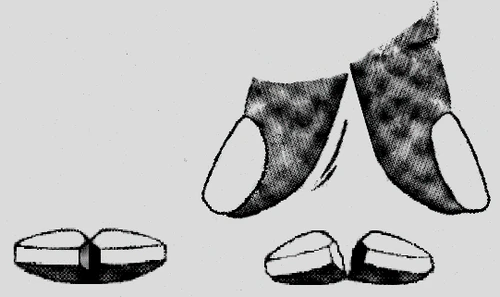
Place the tablet with the round side on a hard surface, with the score line facing upwards. Press with the thumb and index finger of the same hand on both sides of the score line and press downwards until the tablet breaks, as shown in the figure.
Administration method
Memantine Vipharm should be taken orally once daily. For effective treatment, the medicine should be taken regularly every day at the same time. Tablets should be swallowed whole with water. Tablets may be taken with food or independently of meals.
Duration of treatment
Treatment with Memantine Vipharm should be continued as long as beneficial effects are observed. The treating physician should regularly evaluate the treatment course.
Overdose of Memantine Vipharm
Generally, taking an excessive dose of Memantine Vipharm does not pose a serious health risk. In such cases, the symptoms described in section 4, "Possible adverse effects," may be intensified.
In the event of a significant overdose of Memantine Vipharm, contact the treating physician or another doctor, as appropriate management may be required.
Missed dose of Memantine Vipharm
If a patient forgets to take the medicine, they should wait and take the next dose at the usual time.
A double dose should not be taken to make up for a missed dose.
If there are any further doubts regarding the use of this medicine, consult a physician or pharmacist.
4. Possible adverse reactions
Like all medicines, this medicine can cause adverse reactions, although not everyone experiences them.
Generally observed adverse reactions are mild to moderate in severity.
Common (may affect up to 1 in 10 people):
- headache, somnolence, constipation, increased liver enzyme levels, dizziness, balance disorders, high blood pressure, shallow breathing, drug hypersensitivity.
Uncommon (may affect up to 1 in 100 people):
- fatigue, fungal infections, confusion, hallucinations, vomiting, abnormal gait, heart failure, venous thromboembolism (thrombosis, thromboembolism).
Very rare (may affect up to 1 in 10,000 people):
- seizures.
Frequency unknown (cannot be estimated from available data):
- pancreatitis, hepatitis, psychotic reactions.
Alzheimer's disease is associated with depression, suicidal thoughts, and suicide. Such cases have been reported in patients treated with memantine.
Reporting of adverse reactions
If any adverse reactions occur, including any adverse reactions not listed in this leaflet, inform your doctor, pharmacist, or nurse. Adverse reactions can also be reported directly to the Department of Monitoring Adverse Drug Reactions of the Office for Registration of Medicinal Products, Medical Devices and Biocidal Products:
Al. Jerozolimskie 181C
02-222 Warsaw
Phone: +48 22 49-21-301
Fax: +48 22 49-21-309
Email: [email protected].
Adverse reactions may also be reported to the marketing authorization holder.
Reporting adverse reactions helps to provide more information on the safety of the medicine.
5. How to store Memantine Vipharm
Keep this medicine out of sight and reach of children.
Do not use this medicine after the expiry date stated on the carton and blister pack after:
"EXP". The expiry date refers to the last day of the stated month.
No special storage instructions apply for this medicinal product.
Medicines must not be disposed of via the sewage system or household waste. Ask your
pharmacist how to dispose of medicines no longer required. Such measures will help
protect the environment.
6. Contents of the pack and other information
What Memantine Vipharm contains
- The active substance is memantine hydrochloride. Each film-coated tablet contains 10 mg of memantine hydrochloride, equivalent to 8.31 mg of memantine. Each film-coated tablet contains 20 mg of memantine hydrochloride, equivalent to 16.62 mg of memantine.
- The other ingredients are:
Tablet core
Monohydrate lactose, microcrystalline cellulose, talc, colloidal anhydrous silica, magnesium stearate.
Coating
10 mg
Monohydrate lactose, hypromellose 15 cps, titanium dioxide (E 171), macrogol 4000.
20 mg
Monohydrate lactose, hypromellose 15 cps, titanium dioxide (E 171), macrogol 4000, iron oxide yellow (E172), iron oxide red (E172).
What Memantine Vipharm looks like and contents of the pack
10 mg
10 mg film-coated tablets are white, round (8 mm), biconvex tablets with a division line on one side and engraved with the code "M9MN" and "10" on the other side. The tablet can be divided into equal doses.
Memantine Vipharm is available in blister packs containing 10, 14, 20, 28, 30, 42, 50, 56, 60, 90, 98, 100, 112 or 120 film-coated tablets, and in a blister pack containing a single dose of 30x1 tablet.
Not all pack sizes may be marketed.
20 mg
20 mg film-coated tablets are pink, oval (13.5 x 6.6 mm), biconvex tablets with a division line on one side and engraved with the code "M9MN 20" on the other side. The tablet can be divided into equal doses.
Memantine Vipharm is available in blister packs containing 10, 14, 20, 28, 30, 42, 50, 56, 60, 90, 98, 100, 112 or 120 film-coated tablets, and in a blister pack containing a single dose of 30x1 tablet.
Not all pack sizes may be marketed.
Marketing Authorisation Holder
Vipharm S.A.
ul. A. i F. Radziwiłłów 9
05-850 Ożarów Mazowiecki
tel: (+4822) 679-51-35
fax: (+4822) 678-92-87
e-mail: [email protected]
Poland
Manufacturer
Vipharm S.A.
ul. A. i F. Radziwiłłów 9
05-850 Ożarów Mazowiecki
Poland
Synthon BV
Microweg 22
6545 CM, Nijmegen
The Netherlands
Synthon Hispania SL
C/ Castelló 1, Polígono Las Salinas
Sant Boi de Llobregat
08830 Barcelona
Spain
Genericon Pharma Gesellschaft m.b.H.
Hafnerstrasse 211
A-8054 Graz
Austria
Industria Química y Farmacéutica Vir, S.A
C/ Laguna 66-70
Polígono Industrial Urtinsa II
28923 Alcorcón (Madrid)
Spain
This medicinal product is authorised for sale in the European Economic Area countries under the following names:
Austria Memantin Genericon 10 mg Filmtabletten
Memantin Genericon 20 mg Filmtabletten
Czech Republic Memantine Vipharm 10 mg potahované tablety
Memantine Vipharm 20 mg potahované tablety
Finland Adaxor 10 mg
Adaxor 20 mg
Greece Memantine Synthon Ariti 10 mg
Memantine Synthon Ariti 20 mg
Iceland ZALATINE 10 mg filmuhúðuð tafla
ZALATINE 20 mg filmuhúðuð tafla
The Netherlands Memantine Synthon 10 mg, tabletten
Memantine Synthon 20 mg, tabletten
Poland Memantine Vipharm
Portugal Memantina Synthon
Slovakia Memantine Vipharm 10 mg filmom obalené tablety
Memantine Vipharm 20 mg filmom obalené tablety
Spain Memantina Vir 10 mg comprimidos recubierto con película EFG
Memantina Vir 20 mg comprimidos recubierto con película EFG
Hungary Memantine Vipharm 10 mg filmtabletta
Memantine Vipharm 20 mg filmtabletta
United Kingdom Memantine Synthon 10 mg film-coated tablets
Memantine Synthon 20 mg film-coated tablets
Similar drugs
| Brand name | Dosage form | Active substance / Dosage | Manufacturer |
|---|---|---|---|
| AUROMEMO | tablets, film-coated |
|
APL Swift Services (Malta) Ltd. Generis Farmaceutica, S.A. |
| AUROMEMO | tablets, film-coated |
|
APL Swift Services (Malta) Ltd. Generis Farmaceutica, S.A. |
| BIOMENTIN | tablets, film-coated |
|
Biofarm Sp. z o.o. |
| BIOMENTIN | tablets, film-coated |
|
Biofarm Sp. z o.o. |
| COGNOMEM | tablets, film-coated |
|
S.C. Zentiva S.A., Zentiva, spol. s r.o. |
| COGNOMEM | tablets, film-coated |
|
S.C. Zentiva S.A., Zentiva, spol. s r.o. |
| MEMANTIN NEUROPHARMA | tablets, film-coated |
|
Laboratorios Lesvi S.L. neuraxpharm Arzneimittel GmbH |
| MEMANTIN NEUROPHARMA | tablets, film-coated |
|
Laboratorios Lesvi S.L. neuraxpharm Arzneimittel GmbH |
| MEMANTINE GLENMARK | tablets, film-coated |
|
Glenmark Pharmaceuticals s.r.o. |
| MEMANTINE GLENMARK | tablets, film-coated |
|
Glenmark Pharmaceuticals s.r.o. |
| MEMANTINE GRINDEKS | tablets, film-coated |
|
AS Grindeks |
| MEMANTINE ORION | tablets, film-coated |
|
Orion Corporation |
The original data is available in the language of the country of manufacture.
Data source: Register of Medicinal Products of Poland (URPL)
Data last verified: September 01, 2026