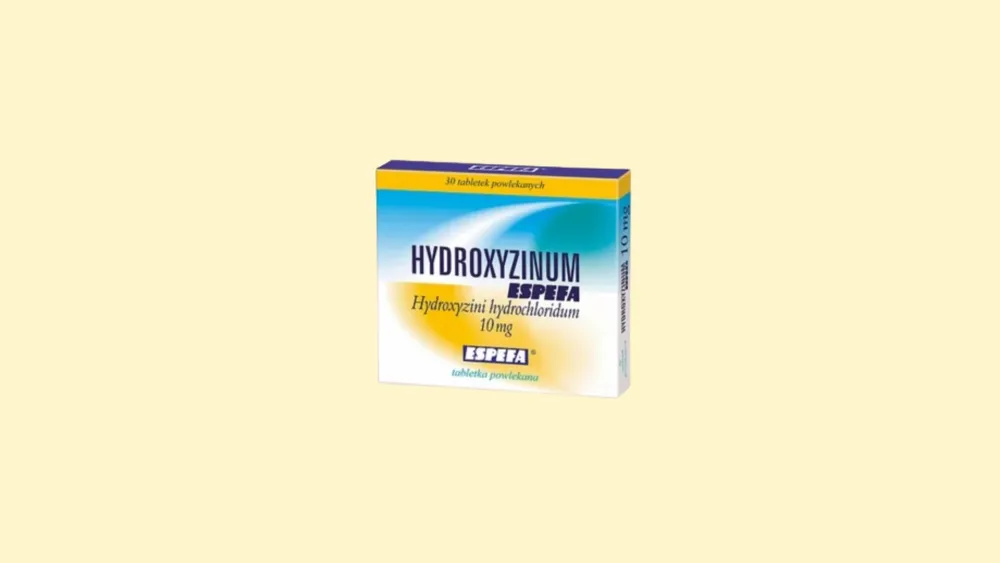
HYDROXYZINE ESPEFA
PolandThe medicinal product is used for the symptomatic treatment of anxiety in adults, the symptomatic treatment of pruritus (itching), and as premedication before surgical procedures.
Frequently asked questions
How to use Hydroxyzinum Espefa?
The medicine is taken orally, always according to the doctor's instructions. Adults should use the lowest effective dose for the shortest possible time. The dosage depends on the purpose of treatment (e.g., 50 mg per day for anxiety or doses adjusted for pruritus). In elderly patients, it is recommended to start with half of the adult dose.
When should you not take this medicine?
Do not use this medicine if you are allergic to the active substance or other ingredients, have porphyria, cardiac rhythm disorders (QT interval prolongation), cardiovascular diseases, low electrolyte levels (e.g., potassium or magnesium), are pregnant, breastfeeding, or if the patient is taking certain heart medications.
What are the possible side effects of Hydroxyzinum Espefa?
Drowsiness is the most common side effect. Frequent side effects may include: dry mouth, fatigue, headache, and excessive sedation. Other possible symptoms include nausea, dizziness, tremors, constipation, blurred vision, or seizures. Anaphylactic shock requires urgent medical attention.
Can you drive while using the medicine?
You should not drive vehicles or operate machinery while using the medicine, as it may cause drowsiness.
Can the medicine be combined with alcohol?
Avoid using the medicine with alcohol or other sedative medications, as hydroxyzine enhances their effects.
Does the medicine interact with other drugs?
Yes, the medicine may affect the action of other substances. You must inform your doctor if you are taking, among others, painkillers, sleeping pills, antidepressants, antispasmodics, or medications for Parkinson's disease. It must not be combined with certain antibiotics, heart medications, or medications used for Alzheimer's disease.
What should you do in case of overdose?
In case of taking a dose higher than recommended, contact a doctor or pharmacist immediately. The most common symptom of overdose is excessive sedation, but nausea, tremors, confusion, and even cardiac rhythm disturbances may also occur.
Instructions for use
Package leaflet: information for the patient
HYDROXYZINUM ESPEFA, 25 mg, coated tablets
Hydroxyzini hydrochloridum
Please read all of this leaflet carefully before taking this medicine, because it contains
important information for you.
- Keep this leaflet, as you may need to read it again.
- If you have any further questions, please ask your doctor or pharmacist.
- This medicine has been prescribed for a specific individual. Do not pass it on to others. It may harm other people, even if their symptoms are the same.
- If you experience any adverse effects, including any not listed in this leaflet, tell your doctor or pharmacist. See section 4.
Contents of the leaflet
- What Hydroxyzinum Espefa is and what it is used for
- Important information before taking Hydroxyzinum Espefa
- How to take Hydroxyzinum Espefa
- Possible side effects
- How to store Hydroxyzinum Espefa
- Contents of the pack and other information
1. What Hydroxyzinum Espefa is and what it is used for
Pharmacological action of the medicine
1 coated tablet of Hydroxyzinum Espefa contains 25 mg of hydroxyzine hydrochloride.
Hydroxyzine has antihistaminic, sedative and anxiolytic properties.
This action is believed to be related to its influence on nerve transmission involving acetylcholine,
histamine and dopamine.
Indications
Symptomatic treatment of anxiety in adults, symptomatic treatment of pruritus, premedication before surgical procedures.
2. Important information before using Hydroxyzinum Espefa
When not to use Hydroxyzinum Espefa:
- if the patient is allergic (hypersensitive) to the active substance, hydroxyzine, other piperazine derivatives, aminophylline, or ethylenediamine, or to any of the other ingredients of this medicine (listed in section 6);
- if the patient has been diagnosed with porphyria;
- in pregnant women and during breastfeeding;
- if the patient's ECG (electrocardiogram) shows heart rhythm disturbances known as QT interval prolongation;
- if the patient has or has had cardiovascular disease or if the heart rate is very low;
- if the patient has low electrolyte levels (e.g. low potassium or magnesium levels);
- if the patient is taking certain medicines used to treat heart rhythm disorders or medicines that may affect heart rhythm (see "Hydroxyzinum Espefa and other medicines");
- if someone in the patient's family has died suddenly due to heart disease.
Warnings and precautions
Before starting treatment with Hydroxyzinum Espefa, discuss with your doctor:
- if the patient has an increased tendency to seizures;
- if the patient has glaucoma;
- if the patient has been diagnosed with difficulty in urination due to urinary retention;
- if the patient has weakened gastrointestinal peristalsis;
- if the patient has been diagnosed with muscle weakness or mental dullness;
- if the patient has known risk factors predisposing to heart rhythm disturbances;
- if the patient is taking other medicines – see section "Hydroxyzinum Espefa and other medicines".
Treatment with Hydroxyzinum Espefa may be associated with an increased risk of life-threatening heart rhythm disturbances. Therefore, inform your doctor about any heart problems and about any other medicines you are taking, including those available without a prescription.
If heart-related symptoms occur during treatment with Hydroxyzinum Espefa, such as rapid heartbeat (palpitations), difficulty breathing, or loss of consciousness, seek immediate medical advice. Treatment with hydroxyzine should also be discontinued.
Avoid using Hydroxyzinum Espefa together with alcohol or sedative medicines, as hydroxyzine enhances their effects.
To avoid interference with allergy test results or methacholine bronchial provocation tests, treatment with the medicine should be discontinued at least 5 days before the tests.
Children and adolescents
Young children are more susceptible to adverse effects on the central nervous system (see section 4 "Possible side effects").
Patients with renal and/or hepatic impairment
In patients with moderate or severe renal impairment, due to reduced excretion of the drug metabolite cetyryzine, the dose should be reduced.
Dosing in patients with liver impairment should be determined by a physician.
Elderly patients
In elderly patients, treatment should be initiated at half the adult dose.
Hydroxyzinum Espefa and other medicines
Inform your doctor or pharmacist about all medicines the patient is currently taking or has recently taken, as well as any medicines the patient plans to take. This includes medicines available without a prescription. Hydroxyzinum Espefa may affect the action of other medicines, and other medicines may affect the action of Hydroxyzinum Espefa.
Particular attention should be paid to concomitant use of: analgesics, sleeping pills and sedatives, tricyclic antidepressants such as imipramine, antispasmodics, antiparkinsonian drugs, disopyramide (antiarrhythmic agent), phenothiazine derivatives used in psychiatric disorders, hypotensive agents, peptic ulcer disease treatments (cimetidine alters drug metabolism), flecainide (antiarrhythmic agent), thioridazine (used, among others, in schizophrenia).
Do not take Hydroxyzinum Espefa if the patient is taking medicines used to treat:
- bacterial infections (e.g. antibiotics such as erythromycin, moxifloxacin, levofloxacin);
- fungal infections (e.g. pentamidine);
- heart diseases or high blood pressure (e.g. amiodarone, quinidine, disopyramide, sotalol);
- psychoses (e.g. haloperidol);
- depression (e.g. citalopram, escitalopram);
- gastrointestinal disorders (e.g. prucalopride);
- allergies;
- malaria (e.g. mefloquine);
- cancer (e.g. toremifene, vandetanib);
- drug addiction or severe pain (methadone).
Concomitant administration of hydroxyzine and cholinesterase inhibitors (medicines used, among others, in Alzheimer's disease) or monoamine oxidase (MAO) inhibitors (medicines used, among others, in depression) should be avoided.
Hydroxyzine reduces the blood pressure-raising effect of adrenaline and the anticonvulsant effect of phenytoin.
Avoid concomitant use of Hydroxyzinum Espefa with alcohol or other sedatives, as the medicine enhances their effects.
Pregnancy and breastfeeding
If the patient is pregnant, breastfeeding, suspects she may be pregnant, or is planning to have a child, she should consult a doctor before using this medicine.
Hydroxyzine should not be administered during pregnancy, as there are no adequate clinical studies conclusively establishing its safety in pregnant women.
Hydroxyzine should not be administered during childbirth.
The medicine should not be used during lactation, as it is likely excreted into breast milk.
Driving and operating machinery
Hydroxyzinum Espefa may cause drowsiness; therefore, during treatment, patients should not drive or operate machinery or perform tasks requiring full psychomotor performance.
Hydroxyzinum Espefa contains lactose
If the patient has previously been diagnosed with intolerance to certain sugars, the patient should consult a doctor before taking this medicine.
3. How to use Hydroxyzinum Espefa
This medicine should always be used as directed by a physician. If in doubt, consult a doctor or pharmacist.
The medicine is taken orally.
Hydroxyzinum Espefa should be used at the lowest effective dose. The duration of treatment should be as short as possible.
Recommended dosage:
Adults
For the treatment of anxiety:
50 mg per day in 2 or 3 divided doses.
For symptomatic treatment of pruritus (itching):
Begin treatment with a dose of 25 mg at bedtime. Continue therapy by increasing the dose as needed, administering 25 mg 3 or 4 times daily.
For premedication before surgical procedures:
50 mg to 100 mg as a single dose.
Use in children and adolescents
The use of tablets is not recommended in children under 6 years of age due to the risk of choking.
For children aged 12 months to 6 years, other medicinal products containing hydroxyzine in the form of oral syrup are available, which allow for appropriate dosing and do not pose a choking risk.
For symptomatic treatment of pruritus:
From 12 months of age: 1 mg/kg body weight per day up to 2 mg/kg body weight per day, given in divided doses.
For premedication before surgical procedures:
0.6 mg/kg body weight orally as a single dose.
In adults and children with body weight above 40 kg, the maximum daily dose in all indications is 100 mg.
In elderly patients, the maximum daily dose is 50 mg.
In children with body weight up to 40 kg, the maximum daily dose is 2 mg/kg body weight/day.
Dosage adjustment
Dosage should be individually adjusted within the recommended dosage range, depending on the patient's response to treatment.
Use of a higher than recommended dose of Hydroxyzinum Espefa
If a higher than recommended dose of Hydroxyzinum Espefa has been taken, contact a doctor or pharmacist immediately, especially if this concerns a child. In case of overdose, symptomatic treatment may be applied. ECG monitoring is recommended due to the potential risk of cardiac rhythm disturbances such as QT interval prolongation or torsade de pointes.
The most common symptom of hydroxyzine overdose is excessive sedation.
Other observed symptoms include: nausea, vomiting, tachycardia, fever, drowsiness, diminished pupillary reflex, tremor, confusion or hallucinations, followed by decreased level of consciousness, respiratory depression, seizures, hypotension or cardiac arrhythmia, and progressively worsening coma and cardiovascular collapse.
Missed dose of Hydroxyzinum Espefa
Do not take a double dose to make up for a missed dose.
If you have any further doubts regarding the use of this medicine, consult a doctor or pharmacist.
4. Possible adverse reactions
Like any medicine, this medicine can cause adverse reactions, although not everybody gets them.
| Frequency | Side effects | |
| very common | affect more than 1 in 10 people | drowsiness |
| common | affect 1 to 10 in 100 people | dry mouth, fatigue, headache, excessive sedation |
| uncommon | affect 1 to 10 in 1,000 people | nausea, malaise, fever, dizziness, insomnia, tremor of head or body, restlessness, confusion |
| rare | affect 1 to 10 in 10,000 people | palpitations, accommodation disturbances (manifested by blurred vision), blurred vision, constipation, vomiting, hypersensitivity reactions of the immune system, abnormal liver function test results, convulsions, |
| involuntary and uncoordinated movements of limbs or entire body, disorientation, hallucinations, urinary retention, itching, erythematous rash, maculopapular rash, urticaria, dermatitis, hypotension | ||
| very rare | affect fewer than 1 in 10,000 people | anaphylactic shock (symptoms include: shortness of breath, swelling of the larynx and throat, skin itching and redness, headache, feeling of "tightness", dizziness, profound weakness, up to loss of consciousness; in severe cases may be life-threatening), bronchospasm, angioedema, increased sweating, persistent drug eruption |
| unknown | frequency cannot be estimated from available data | cardiac arrhythmias of the torsade de pointes type (ventricular tachycardia), QT interval prolongation, weight gain |
The medication should be discontinued immediately and medical advice should be sought without delay if the patient experiences cardiac rhythm disturbances such as rapid heartbeat (palpitations), breathing difficulties, or loss of consciousness.
Reporting of adverse reactions
If any adverse reactions occur, including any adverse reactions not listed in this leaflet, inform a doctor or pharmacist.
Anaphylactic shock requires urgent medical attention.
Adverse reactions can be reported directly to the Department of Monitoring Adverse Drug Reactions at the Office for Registration of Medicinal Products, Medical Devices and Biocidal Products
Al. Jerozolimskie 181C,
02-222 Warsaw
Phone: +48 22 49 21 301
Fax: +48 22 49 21 309
Website: https://smz.ezdrowie.gov.pl
Adverse reactions can also be reported to the marketing authorization holder.
Reporting adverse reactions enables continuous monitoring of the benefit-risk balance of the medicinal product and helps improve drug safety.
5. How to store Hydroxyzinum Espefa
Keep this medicine out of sight and reach of children.
Do not use this medicine after the expiry date stated on the packaging. The expiry date refers to the last day of the stated month.
Store below 25°C.
Keep in the original packaging to protect from moisture.
Medicines must not be disposed of via wastewater or household waste. Ask your pharmacist how to dispose of medicines no longer required. This practice helps protect the environment.
6. Contents of the packaging and other information
What Hydroxyzinum Espefa contains
- The active substance is hydroxyzine hydrochloride. One coated tablet contains 25 mg of hydroxyzine hydrochloride.
- The other ingredients (excipients) are: potato starch, microcrystalline cellulose, lactose, sodium carboxymethyl starch, colloidal anhydrous silica, magnesium stearate, talc, and Opadry II pink coating containing: polyethylene glycol 3350, polyvinyl alcohol, titanium dioxide (E171), talc, cochineal (E120).
What Hydroxyzinum Espefa looks like and contents of the pack
The pack contains 25, 30 or 60 coated tablets.
Not all pack sizes may be marketed.
Marketing Authorisation Holder and Manufacturer:
Chemiczno-Farmaceutyczna Spółdzielnia Pracy ESPEFA
ul. J. Lea 208
30-133 Kraków, Poland
tel. 12 639 27 27
Information for blind and partially sighted people: 800-007-777
04.10.2021
Similar drugs
| Brand name | Dosage form | Active substance / Dosage | Manufacturer |
|---|---|---|---|
| ATARAX | tablets, film-coated |
|
UCB Pharma, S.A. |
| ATARAX | tablets, film-coated |
|
UCB Pharma, S.A. |
| ATARAX | tablets, film-coated |
|
UCB Pharma, S.A. |
| COMFORTIN | tablets, film-coated |
|
HASCO-LEK S.A. Pharmaceutical Production Enterprise |
| HYDROXYZINE ADAMED | tablets, film-coated |
|
Adamed Pharma S.A. |
| HYDROXYZINE ADAMED | tablets, film-coated |
|
Adamed Pharma S.A. |
| HYDROXYZINE BLUEFISH | tablets, film-coated |
|
Bluefish Pharmaceuticals AB |
| HYDROXYZINE BLUEFISH | tablets, film-coated |
|
Bluefish Pharmaceuticals AB |
| HYDROXYZINE ESPEFA | tablets, film-coated |
|
Chemiczno-Farmaceutyczna ESPEFA Workers' Cooperative |
| HYDROXYZINE HASCO | tablets, film-coated |
|
HASCO-LEK S.A. Pharmaceutical Production Enterprise |
| HYDROXYZINE ORION | tablets, film-coated |
|
Orion Corporation Orion Pharma |
| HYDROXYZINE ORION | tablets, film-coated |
|
Orion Corporation Orion Pharma |
The original data is available in the language of the country of manufacture.
Data source: Register of Medicinal Products of Poland (URPL)
Data last verified: September 01, 2026