GALVENOX
PolandThe medicine is used in the case of diabetic retinopathy, symptoms of chronic venous insufficiency of the lower limbs (such as pain, muscle cramps, swelling, or skin changes), as an adjunct in superficial thrombophlebitis of the lower limbs, and in the case of hemorrhoids.
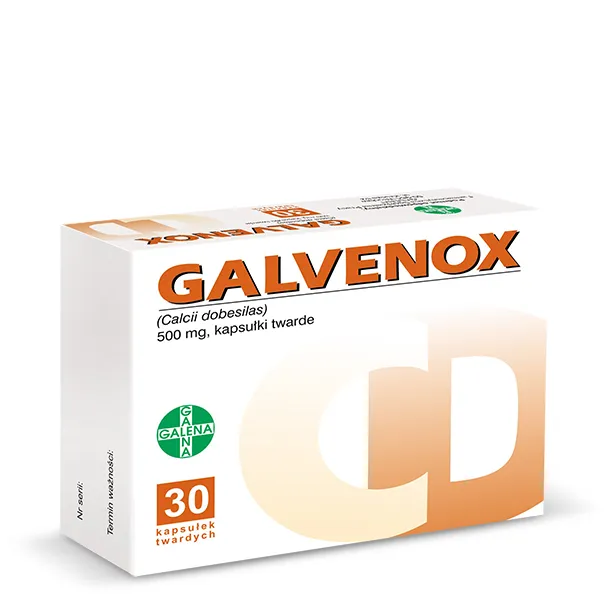
Frequently asked questions
How should Galvenox be taken?
The capsules should be taken orally during main meals. Usually, one capsule is taken once or twice daily.
When should you not use this medicine?
Do not use the medicine if you are allergic to the active substance or any of its other ingredients, or in children. Particular caution should be exercised and a doctor should be consulted if there is active gastric or duodenal ulcer disease or chronic gastritis.
What are the possible side effects of Galvenox?
Rarer side effects include: epigastric pain, nausea, diarrhea, vomiting, skin reactions, joint pain, headache and dizziness, and fever. Very rarely, bone marrow suppression (manifesting, among other things, as high fever or infections in the mouth or genital organs) and allergic reactions, such as rash or urticaria, may occur.
Can the medicine be used during pregnancy or breastfeeding?
Pregnant women may use the medicine only if the benefit of taking it outweighs the risk to the fetus. In the case of breastfeeding, a doctor should be consulted; it is recommended to discontinue breastfeeding before starting the medicine.
Does the medicine interact with other medicines?
There is no data regarding interactions with other medicines; however, you should inform your doctor about all medicines you are currently taking or have recently taken.
What should you do if you miss a dose?
If you forget to take the medicine, do not take a double dose to make up for the missed portion.
Instructions for use
Patient Information Leaflet
GALVENOX
500 mg, hard capsules
Calcii dobesilas monohydricus
Please read this leaflet carefully before using the medicine, as it contains important information for the patient.
- Keep this leaflet for future reference.
- If you have any questions, please consult your doctor or pharmacist.
- This medicine has been prescribed for a specific individual. Do not share it with others. The medicine may harm someone else, even if their symptoms are similar.
- If you experience any adverse reactions, including those not listed in this leaflet, inform your doctor or pharmacist. See section 4.
Table of Contents
- What is Galvenox and for what is it used
- Important information before taking Galvenox
- How to take Galvenox
- Possible side effects
- How to store Galvenox
- Contents of the pack and other information
1. What is Galvenox and for what is it used
The active substance in Galvenox is calcium dobesilate. The sites of action of calcium dobesilate are:
the capillary endothelium, venous walls, and lymphatic vessels. Maximum blood concentration of the drug is reached approximately 6 hours after administration.
Galvenox reduces capillary wall permeability, thereby decreasing exudation; increases venous wall elasticity and tone; reduces blood viscosity by altering protein composition and decreases platelet aggregation; improves microcirculation and prevents blood stasis in venous vessels and thrombus formation.
The drug also reduces lymphatic vessel permeability and enhances lymphatic drainage, resulting in reduced edema.
Indications
- Diabetic retinopathy
- Clinical symptoms of chronic venous insufficiency of the lower limbs (pain, muscle cramps, paresthesia, edema, skin changes associated with venous stasis)
- Adjunctive treatment in thrombophlebitis of superficial veins of the lower limbs
- Hemorrhoids
2. Important information before using Galvenox
When not to use Galvenox
- if the patient is allergic to the active substance or to any of the other ingredients of this medicine listed in section 6,
- in children.
Warnings and precautions
Before starting treatment with Galvenox, discuss it with your doctor.
Contact your doctor if you have active gastric or duodenal ulcer disease or chronic gastritis. Periodic monitoring of gastric and duodenal function is recommended. If symptoms worsen, discontinue the medicine and consult your doctor.
Consult your doctor even if the above warnings refer to conditions that occurred in the past.
Use of Galvenox in patients with kidney function disorders
In patients with severe renal impairment, especially those undergoing dialysis, reduced doses should be used.
Children
The effect of the medicine has not been studied in children under 12 years of age. Galvenox should not be used in children.
Galvenox and other medicines
Tell your doctor about all medicines you are currently taking or have recently taken, as well as any medicines you plan to take.
There are no data available on interactions with other medicines.
Galvenox and food
The medicine should be taken orally during main meals.
Pregnancy and breastfeeding
If the patient is pregnant or breastfeeding, suspects she may be pregnant, or is planning to become pregnant, she should consult her doctor before using this medicine.
Pregnancy
Galvenox may be used during pregnancy only if the potential benefit justifies the potential risk to the fetus.
Breastfeeding
The medicine passes into breast milk in small amounts. There are no data on the effects of the medicine on the breastfed infant.
Women should discontinue breastfeeding before starting treatment with this medicine.
Driving and operating machinery
Galvenox has no influence on the ability to drive or operate machinery.
Galvenox contains azorubine (E122) and quinoline yellow (E104)
This medicine contains azorubine (E122) and quinoline yellow (E104), which may cause allergic reactions.
3. How to take Galvenox
This medicine should always be taken as prescribed by a doctor. If in doubt, consult your doctor.
Recommended dose
The usual dose is one hard capsule once or twice daily (i.e. 500 mg to 1000 mg daily).
The treatment period usually lasts from several weeks to several months.
Method of administration
The medicine should be taken orally, during main meals.
Overdose of Galvenox
If you take more than the recommended dose, consult your doctor or pharmacist immediately.
Missed dose of Galvenox
Do not take a double dose to make up for a missed dose.
If you have any further questions about the use of this medicine, consult your doctor.
4. Possible adverse effects
Like all medicines, this medicine can cause adverse effects, although not everybody will experience them.
Rarely (in less than 1 in 1,000 people but more than 1 in 10,000 people) the following have been reported:
- abdominal pain,
- nausea,
- diarrhoea,
- vomiting,
- skin reactions,
- joint pain,
- headache and dizziness,
- fever.
Very rarely (in less than 1 in 10,000 people), bone marrow suppression with agranulocytosis has been observed (an acute condition which may present with high fever, oral infections, or inflammatory conditions of the anorectal area and genital organs). In such cases, treatment with Galvenox should be discontinued and medical advice should be sought immediately.
Cases of local (rash) and generalized allergic reactions (urticaria) have been reported.
Most adverse reactions resolve after discontinuation of Galvenox or after dose reduction.
Reporting of adverse effects
If any adverse effects occur, including any adverse effects not listed in this leaflet, inform your doctor or pharmacist. Adverse effects can be reported directly to the Department of Monitoring Adverse Drug Reactions, Office for Registration of Medicinal Products, Medical Devices and Biocidal Products
Al. Jerozolimskie 181C
02-222 Warsaw
Phone: +48 22 49 21 301
Fax: +48 22 49 21 309
Website: https://smz.ezdrowie.gov.pl
Adverse effects can also be reported to the marketing authorization holder.
Reporting adverse effects helps to provide more information on the safety of the medicine.
5. How to store Galvenox
Store below 30°C. Keep in the original packaging to protect from moisture.
Keep this medicine out of the sight and reach of children.
Do not use this medicine after the expiry date stated on the packaging after: EXP. The expiry date refers to the last day of the stated month.
Medicines must not be disposed of via wastewater or household waste. Ask your pharmacist how to dispose of medicines no longer required. This will help protect the environment.
6. Contents of the pack and other information
What Galvenox contains
- The active substance is calcium dobesilate monohydrate. Each hard capsule contains 500 mg of calcium dobesilate monohydrate.
- Other ingredients are: microcrystalline cellulose, magnesium stearate, titanium dioxide (E171), azorubine (E122), quinoline yellow (E104), gelatin.
What Galvenox looks like and contents of the pack
Galvenox is available as hard capsules. The capsule is cylindrical-oval in shape and consists of two parts. The body – white, the cap – red.
The capsule contents – white or almost white powder.
Available pack sizes:
30 hard capsules,
60 hard capsules,
90 hard capsules.
The packaging consists of PVC/PVDC/Aluminium foil blisters in a cardboard box.
Not all pack sizes may be marketed.
Marketing Authorisation Holder and Manufacturer
Farmaceutyczna Spółdzielnia Pracy „GALENA”
ul. Dożynkowa 10
52-311 Wrocław
Poland
Tel.: + 48 71 710 62 01
Similar drugs
| Brand name | Dosage form | Active substance / Dosage | Manufacturer |
|---|---|---|---|
| ADPROCTIN | capsules, hard |
|
Galena” Pharmaceutical Workers' Cooperative |
| DOXIUM 500 | capsules, hard |
|
Flavine Pharma France |
| GALVENOX VENO | capsules, hard |
|
Galena” Pharmaceutical Workers' Cooperative |
The original data is available in the language of the country of manufacture.
Data source: Register of Medicinal Products of Poland (URPL)
Data last verified: September 01, 2026