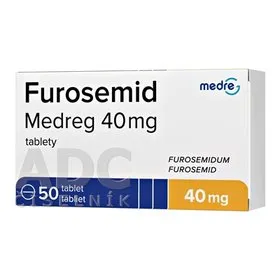
FUROSEMIDE MEDREG
PolandThe medicine is used to reduce excess water in the body by increasing urine production. It helps with edema associated with heart, liver, or kidney diseases, as well as with high blood pressure.
Frequently asked questions
How should Furosemid Medreg be taken?
Tablets should be swallowed whole with a glass of water and taken on an empty stomach. Tablets may be divided into equal doses. The dosage must always be strictly determined by a physician.
When should you not use this medicine?
It should not be used in case of hypersensitivity to furosemide or other ingredients of the medicine, dehydration, low blood volume, severe potassium or sodium deficiencies, as well as in cases of anuria or breastfeeding.
Can Furosemid Medreg cause side effects?
Yes, the medicine may cause, among others, electrolyte imbalance, dehydration, increased creatinine or lipid levels in the blood, as well as potassium and sodium deficiencies. Dizziness, nausea, hearing disturbances, or skin reactions are also possible.
Which medicines may interact with this medicine?
Particular caution should be exercised if taking, among others, sleeping pills, certain antibiotics, antihypertensive drugs, thyroid hormones, antidiabetic drugs, corticosteroids, or anti-inflammatory drugs (e.g., acetylsalicylic acid).
Can you drive while using the medicine?
If the medicine causes dizziness or malaise, you should not drive vehicles or operate machinery.
Instructions for use
Package leaflet: Information for the patient
Furosemid Medreg, 40 mg, tablets
Furosemidum
Please read this leaflet carefully before taking this medicine because it contains important information for you.
- Keep this leaflet so that you can read it again if necessary.
- If you have any further questions, please consult your doctor or pharmacist.
- This medicine has been prescribed for a specific individual. Do not pass it on to others. It may harm them even if their symptoms are the same.
- If you experience any adverse reactions, including any not listed in this leaflet, inform your doctor or pharmacist. See section 4.
Table of contents:
- What Furosemid Medreg is and what it is used for
- Important information before taking Furosemid Medreg
- How to take Furosemid Medreg
- Possible side effects
- How to store Furosemid Medreg
- Contents of the pack and other information
1. What Furosemid Medreg is and what it is used for
Furosemid Medreg contains furosemid, which belongs to a group of medicines called loop diuretics. It reduces excess fluid (fluid retention) in the body by increasing urine production.
Furosemid Medreg is indicated in the following conditions:
- oedema associated with heart disease
- oedema associated with liver disease
- oedema associated with kidney disease (in nephrotic syndrome, treatment of the underlying disease is necessary)
- high blood pressure (hypertension).
2. Important information before using Furosemid Medreg
When not to use Furosemid Medreg
- if the patient is allergic to furosemide, sulfonamides (possible cross-sensitivity with furosemide), or any of the other ingredients of this medicine (listed in section 6)
- if the patient has abnormally low blood volume (hypovolemia) or dehydration
- if the patient has kidney failure with absence of urine production (anuria) unresponsive to furosemide treatment
- if the patient has severe potassium deficiency (hypokalemia)
- if the patient has severe sodium deficiency (hyponatremia)
- if the patient has become unconscious due to liver failure (hepatic coma and pre-coma state)
- if the patient is breastfeeding (see section "Pregnancy, breastfeeding and fertility").
Warnings and precautions
Before starting treatment with Furosemid Medreg, consult a doctor or pharmacist if:
- the patient has difficulty passing urine (e.g. prostate enlargement (benign prostatic hyperplasia), urethral stricture)
- the patient has low blood pressure or dizziness upon changing position from lying to standing
- there is a risk of significant drop in blood pressure, e.g. patients with circulatory problems in the brain or heart
- the patient is elderly, taking other medicines that may lower blood pressure, or has other conditions that may cause low blood pressure
- the patient has diabetes
- the patient has gout
- the patient has abnormally low protein levels in the blood (hypoproteinemia), e.g. in nephrotic syndrome (kidney disease; protein loss, disturbed lipid metabolism, and fluid retention)
- the patient has kidney disease associated with severe liver disease (hepatorenal syndrome)
- excessive fluid loss occurs (e.g. vomiting, diarrhea, or excessive sweating).
If the patient has electrolyte deficiencies, the doctor will need to regularly monitor serum electrolyte levels (especially potassium, sodium, and creatinine) during treatment with Furosemid Medreg.
There is a possibility of exacerbation or activation of systemic lupus erythematosus (a chronic autoimmune connective tissue disease).
Concomitant use with risperidone
In placebo-controlled studies of risperidone in elderly patients with dementia, increased mortality was observed in patients treated with furosemide in combination with risperidone compared to patients treated with risperidone alone or furosemide alone. Therefore, caution is advised, and the doctor should carefully weigh the risks and benefits before deciding to use this combination or concurrent treatment with other potent diuretics. This combination should be avoided if dehydration is present.
Children
Premature infants treated with furosemide should be closely monitored for kidney function due to the risk of developing kidney stones or calcifications.
Furosemid Medreg and other medicines
Inform the doctor or pharmacist about all medicines currently used, recently used, or planned to be used.
Furosemid Medreg may affect the action of certain medicines. Likewise, other medicines may affect the action of Furosemid Medreg.
It is especially important to inform the doctor if the patient is taking:
- chloral hydrate (a sedative)
- ototoxic medicines, e.g. aminoglycoside antibiotics (used to treat bacterial infections) or cisplatin (used in the treatment of cancer)
- sucralfate (used for gastrointestinal disorders)
- lithium (used in psychiatric disorders)
- antihypertensive medicines, including other diuretics
- risperidone (used in psychiatric disorders)
- thyroid hormones, e.g. levothyroxine
- aliskiren – used in the treatment of arterial hypertension
- nonsteroidal anti-inflammatory drugs (NSAIDs), e.g. indomethacin and acetylsalicylic acid
- phenytoin (used in the treatment of epilepsy)
- corticosteroids (used in inflammatory and autoimmune diseases)
- carbenoxolone (used in the treatment of ulcers)
- laxatives (used for constipation)
- cardiac glycosides, e.g. digoxin
- probenecid (used in the treatment of gout)
- methotrexate (used to suppress the immune system and in certain types of cancer)
- antidiabetic medicines (medicines that lower blood glucose levels)
- muscle relaxants (medicines that relax muscles and cause anesthesia)
- theophylline (used in asthma treatment)
- nephrotoxic medicines, e.g. aminoglycoside antibiotics, cephalosporins (used in the treatment of bacterial infections), or cisplatin
- cyclosporine A (an immunosuppressive medicine)
- radiopharmaceutical contrast agents (radioactive substances administered before medical imaging procedures).
Furosemid Medreg with food and drink
It is recommended to take Furosemid Medreg on an empty stomach.
Combining liquorice and Furosemid Medreg may lead to increased potassium loss.
Pregnancy, breastfeeding and fertility
If the patient is pregnant, breastfeeding, suspects she may be pregnant, or plans to become pregnant, she should consult a doctor or pharmacist before using this medicine.
Pregnancy
Furosemid Medreg should not be given to pregnant women unless absolutely necessary. Furosemide treatment during pregnancy requires monitoring of fetal growth.
Breastfeeding
Furosemide passes into breast milk and reduces milk production. The use of Furosemid Medreg is contraindicated during breastfeeding.
Fertility
There are no data available on the effect of furosemide on fertility in humans.
Driving and operating machinery
This medicine may cause dizziness or malaise. In such cases, the patient should not drive or operate tools and machinery.
Furosemid Medreg contains lactose
If the patient has been diagnosed with intolerance to certain sugars, the patient should consult a doctor before taking this medicine.
Furosemid Medreg contains sodium
This medicine contains less than 1 mmol (23 mg) of sodium per tablet, meaning the medicine is considered "sodium-free".
3. How to use Furosemid Medreg
This medicine should always be used as directed by the doctor. In case of doubt, consult a
doctor or pharmacist.
The recommended dose for adults is as follows:
The recommended maximum daily dose of furosemide is 1500 mg following oral administration.
Oedema associated with heart disease
The recommended initial dose is 20 mg (1/2 tablet) to 80 mg (2 tablets) per day. If necessary,
this dose may be adjusted according to the response achieved. It is recommended to administer the daily dose in two or three divided doses.
Oedema associated with liver disease
Furosemid Medreg is used in the treatment of oedema associated with liver disease in combination with other medicines called aldosterone antagonists, when treatment with these medicines is insufficient.
The recommended initial dose is 20 mg (1/2 tablet) to 80 mg (2 tablets) per day. If necessary, this dose may be adjusted according to the response achieved. This daily dose may be given as a single dose or in several divided doses.
Oedema associated with kidney disease
The recommended initial dose is 40 mg (1 tablet) to 80 mg (2 tablets) per day. If necessary, the dose may be adjusted according to the response. The total daily dose may be administered as a single dose or in two divided doses. In dialysed patients, the usual maintenance dose is usually from 250 mg to 1500 mg per day.
High blood pressure (hypertension)
The usual maintenance dose is 20 mg (1/2 tablet) to 40 mg (1 tablet) per day.
Furosemid Medreg may be used alone or in combination with other antihypertensive medicines.
Use in children and adolescents
In children, the dose should be reduced according to body weight. The recommended dose is from 2 mg/kg to a maximum of 6 mg/kg body weight. The dose should not exceed 40 mg per day.
Elderly patients
The initial dose is 20 mg (1/2 tablet) per day, which is gradually increased until the desired response is achieved.
Method of administration
The tablet should be swallowed with a glass of water and on an empty stomach.
The tablet may be divided into equal doses.
The duration of treatment is determined by the doctor.
Use of a higher than recommended dose of Furosemid Medreg
If a patient suspects having taken an excessive dose of Furosemid Medreg, they should contact a doctor immediately. The doctor will decide on the appropriate management based on an assessment of the severity of overdose.
In case of overdose of Furosemid Medreg, symptoms such as excessive fluid excretion (urine), low blood pressure, acute kidney failure, thrombosis, cardiac arrhythmia, delirium, flaccid paralysis, apathy, and confusion may occur.
These symptoms depend on the degree of electrolyte (potassium, sodium, and chloride) and fluid loss.
If ingestion occurred recently, gastric lavage or activated charcoal may be used to reduce absorption.
Missed dose of Furosemid Medreg
The missed dose should be taken as soon as remembered. The next dose should be taken at the usual time. A double dose should not be taken to make up for a missed dose.
If there are further questions about the use of this medicine, consult a doctor or pharmacist.
4. Possible adverse effects
Like all medicines, this medicine can cause adverse effects, although they do not occur in everyone.
The classification of adverse effects is based on the following frequencies:
Very common (may occur in more than 1 in 10 people):
- electrolyte imbalance (including symptomatic), dehydration and reduced circulating blood volume (especially in elderly patients)
- increased levels of certain lipids in the blood (triglycerides)
- increased creatinine levels in the blood.
Common (may occur in up to 1 in 10 people):
- blood concentration due to excessive urine excretion (haemoconcentration)
- deficiency of sodium and chloride in the blood
- deficiency of potassium in the blood
- increased levels of cholesterol and uric acid in the blood, and attacks of gout
- hepatic encephalopathy (liver disease affecting the brain) in patients with advanced liver failure
- increased urine volume.
Uncommon (may occur in up to 1 in 100 people):
- reduced number of platelets (thrombocytopenia)
- increased blood glucose levels (impaired glucose tolerance and hyperglycaemia). This may lead to worsening metabolic status in patients with symptoms of diabetes. Latent diabetes may be unmasked.
- hearing disturbances (mostly transient), especially in patients with impaired kidney function or reduced blood protein levels (e.g. nephrotic syndrome)
- nausea
- itching, urticaria, skin and mucous membrane reactions with redness, blistering or skin peeling (e.g. bullous rash, erythema multiforme, pemphigoid, exfoliative dermatitis, purpura)
- increased sensitivity to light (photosensitivity).
Rare (may occur in up to 1 in 1,000 people):
- increased number of certain white blood cells (eosinophilia)
- reduced number of white blood cells (leukopenia)
- severe hypersensitivity reactions (anaphylactic shock)
- tingling or numbness of limbs (paraesthesia)
- inflammation of blood vessels (vasculitis)
- deafness (sometimes irreversible), ringing in the ears (tinnitus)
- gastrointestinal disturbances (vomiting, diarrhoea)
- kidney inflammation (tubulointerstitial nephritis)
- fever.
Very rare (may occur in up to 1 in 10,000 people):
- anaemia caused by excessive breakdown of red blood cells (haemolytic anaemia)
- anaemia caused by impaired blood formation in the bone marrow (aplastic anaemia)
- marked reduction in the number of certain white blood cells, associated with increased risk of infection and severe systemic symptoms (agranulocytosis)
- acute pancreatitis
- disturbances in bile flow (cholestasis)
- increased activity of certain liver enzymes (transaminases).
Frequency not known (frequency cannot be estimated from available data):
- exacerbation or activation of systemic lupus erythematosus (a disease in which the immune system attacks the body's own tissues)
- deficiency of calcium in the blood
- deficiency of magnesium in the blood
- metabolic alkalosis (elevated blood pH)
- kidney function disorders associated with abuse and (or) long-term use of furosemide (pseudo-Bartter syndrome) (elevated blood pH, potassium loss and low blood pressure)
- dizziness, fainting and loss of consciousness, headaches
- thrombosis (obstruction of a blood vessel by a blood clot)
- severe skin and mucous membrane reactions involving blistering or skin detachment: Stevens-Johnson syndrome (SJS), toxic epidermal necrolysis (TEN), acute generalized exanthematous pustulosis (AGEP, acute febrile exanthema), drug reaction with eosinophilia and systemic symptoms (DRESS, increased number of a certain type of white blood cells), lichenoid reactions
- cases of serious muscle problems (rhabdomyolysis), often associated with severe potassium deficiency (see section "When not to use Furosemid Medreg")
- increased concentration of sodium in urine, increased concentration of chlorides in urine, increased concentration of urea in urine
- symptoms of urinary tract obstruction with urine retention (in patients with partial urination)
- kidney stones in premature infants (nephrolithiasis/renal calcinosis)
- kidney failure
- increased risk of patent ductus arteriosus (a vascular connection bypassing the pulmonary circulation before birth not closing) in premature infants treated with furosemide during the first weeks of life.
Reporting of adverse effects
If any adverse symptoms occur, including any adverse effects not listed in this leaflet, you should inform your doctor or pharmacist. Adverse effects can be reported directly to the Department of Monitoring of Adverse Drug Reactions of the Office for Registration of Medicinal Products, Medical Devices and Biocidal Products, Al. Jerozolimskie 181C, 02-222 Warsaw, tel.: +48 22 49 21 301, fax: +48 22 49 21 309, website: https://smz.ezdrowie.gov.pl
Adverse effects can also be reported to the marketing authorisation holder.
By reporting adverse effects, additional information on the safety of the medicine can be collected.
5. How to store Furosemid Medreg
Keep this medicine out of sight and reach of children.
There are no special requirements regarding the storage temperature of the medicine.
Store in the original packaging to protect from light.
Do not use this medicine after the expiry date stated on the cardboard box and blister pack following: EXP. The expiry date refers to the last day of the stated month.
Medicines must not be disposed of via wastewater or household waste. Ask your pharmacist how to dispose of medicines no longer required. These measures will help protect the environment.
6. Contents of the package and other information
What Furosemid Medreg contains
- The active substance is furosemide. Each tablet contains 40 mg of furosemide.
- The other ingredients are: monohydrate lactose, corn starch, pregelatinized corn starch, sodium carboxymethyl starch (type A), magnesium stearate.
What Furosemid Medreg looks like and contents of the pack
Furosemid Medreg is a white or almost white, round tablet with a diameter of approximately 8 mm, marked with
“F 40” on one side (with “F” and “40” separated by a dividing line) and smooth on the other side.
The tablet can be divided into equal doses.
The tablets are supplied in PVC/PVDC/Aluminium foil blisters, packed in a cardboard box.
Pack sizes: 10, 20, 30, 40, 50, 60, 70, 80, 90 and 100 tablets.
Not all pack sizes may be marketed.
Marketing Authorisation Holder and Manufacturer
Marketing Authorisation Holder:
Medreg s.r.o.
Na Florenci 2116/15
Nové Město
110 00 Prague 1
Czech Republic
Tel.: (+420) 516 770 199
Manufacturer/Importer:
Medis International a.s.
Výrobní závod Bolatice
Průmyslová 961/16
747 23 Bolatice
Czech Republic
Dr. Max Pharma s.r.o.
Na Florenci 2116/15
Nové Město
110 00 Prague 1
Czech Republic
This medicinal product is authorised in the following countries of the European Economic Area under the following names:
Poland: Furosemid Medreg
Czech Republic: Furosemid Medreg
Romania: Furosemid Gemax Pharma 40 mg comprimate
Slovakia: Furosemid Medreg
Similar drugs
| Brand name | Dosage form | Active substance / Dosage | Manufacturer |
|---|---|---|---|
| FUROSEMIDE AUROVITAS | tablets |
|
APL Swift Services (Malta) Ltd. Generis Farmaceutica, S.A. |
| FUROSEMIDE POLFARMEX | tablets |
|
Polfarmex S.A. |
| FUROSEMIDE POLPHARMA | tablets |
|
Polpharma Pharmaceutical Works S.A. |
The original data is available in the language of the country of manufacture.
Data source: Register of Medicinal Products of Poland (URPL)
Data last verified: September 01, 2026