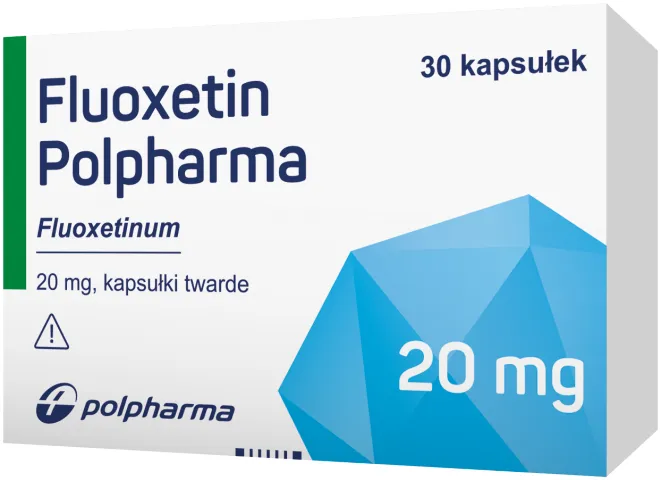
FLUOXETIN POLPHARMA
PolandThe medicine is used in adults for the treatment of episodes of major depression, obsessive-compulsive disorder (OCD), and bulimia. In children and adolescents (from 8 years of age), it is used for the treatment of moderate to severe depression, exclusively in combination with psychotherapy.
Frequently asked questions
How should Fluoxetin Polpharma be taken?
Capsules should be swallowed whole with water. They must not be chewed. The medicine can be taken during or independent of meals. It should be used strictly according to the doctor's instructions.
When should this medicine not be used?
The medicine must not be used if there is an allergy to fluoxetine or other ingredients, or if other antidepressants (MAO inhibitors) or metoprolol are being taken. Particular caution should be exercised in cases of epilepsy, heart disease, diabetes, liver disease, or the use of tamoxifen.
What are the possible side effects of Fluoxetin Polpharma?
The most common may include: insomnia, headache, diarrhea, nausea, and fatigue. Also frequent are: decreased appetite, anxiety, dizziness, tremor, and sexual dysfunction. You must contact a doctor immediately if suicidal thoughts, severe allergic reactions, breathing problems, or symptoms of serotonin syndrome (e.g., fever, muscle stiffness, confusion) occur.
Can alcohol be consumed during treatment?
Alcohol should not be consumed while using the medicine.
Does the medicine interact with other substances?
Yes, the medicine may affect the action of many other drugs, including MAO inhibitors, lithium, St. John's wort, painkillers (e.g., tramadol), and certain antiarrhythmic and anticoagulant drugs. The doctor must be informed about all medications being taken.
What to do in case of a missed dose or overdose?
If you forget to take a dose, take the next one the following day at the usual time. Do not take a double dose to make up for the missed one. In case of taking too much medicine, go to a hospital or doctor immediately.
Instructions for use
Package leaflet: Information for the patient
Fluoxetin Polpharma, 20 mg, hard capsules
Fluoxetinum
Please read all of this leaflet carefully before taking this medicine, because it contains
important information for you.
- Keep this leaflet, as you may need to read it again.
- If you have any further questions, please ask your doctor or pharmacist.
- This medicine has been prescribed for a specific individual. Do not pass it on to others. It may harm other people, even if their symptoms are the same as yours.
- If you experience any adverse reactions, including any not listed in this leaflet, tell your doctor or pharmacist. See section 4.
Table of contents
- What Fluoxetin Polpharma is and what it is used for
- What you need to know before taking Fluoxetin Polpharma
- How to take Fluoxetin Polpharma
- Possible side effects
- How to store Fluoxetin Polpharma
- Contents of the pack and other information
1. What Fluoxetin Polpharma is and what it is used for
Fluoxetin Polpharma belongs to a group of antidepressant medicines known as selective serotonin reuptake inhibitors (SSRIs).
This medicine is used to treat the following conditions:
Adults
- Major depressive episodes.
- Obsessive-compulsive disorder (OCD).
- Bulimia (bulimia nervosa): the medicine is used together with psychotherapy to reduce binge eating and purging.
Children aged 8 years and older, and adolescents
- Moderate to severe depression, when no improvement is observed after 4–6 sessions of psychotherapy. Fluoxetin Polpharma should be prescribed for children and adolescents with moderate to severe depression only in combination with psychotherapy.
2. Important information before using Fluoxetin Polpharma
When not to use Fluoxetin Polpharma
- if the patient is allergic to fluoxetine or any of the other ingredients of this medicine (listed in section 6);
- if the patient is taking other antidepressant medicines known as irreversible, non-selective monoamine oxidase inhibitors (MAO inhibitors, e.g. iproniazid);
- if the patient is taking metoprolol (a medicine used in the treatment of heart conditions).
Treatment with fluoxetine may only be started 2 weeks after discontinuation of
irreversible MAO inhibitors (e.g. tranylcypromine).
Treatment with fluoxetine may be started the day after discontinuation of reversible
MAO-A inhibitors (e.g. moclobemide).
MAO inhibitors should not be used for at least 5 weeks after stopping
Fluoxetin Polpharma. If Fluoxetin Polpharma has been used for a long period and/or at high doses,
the physician should consider a longer waiting period before starting treatment with MAO inhibitors.
Medicines belonging to the group of MAO inhibitors include: nialamide,
iproniazid, selegiline, moclobemide, phenelzine, tranylcypromine, isocarboxazid and toloxatone.
Warnings and precautions
Before starting treatment with Fluoxetin Polpharma, discuss this with your doctor.
Special caution is required when using Fluoxetin Polpharma:
- if the patient develops a rash or other signs of allergic reaction (e.g. itching, swelling of the lips or face, or difficulty breathing). The medicine should be stopped immediately and medical advice sought without delay;
- if the patient has epilepsy or a history of seizures. If a seizure (convulsion) occurs or the frequency of seizures increases, contact the doctor immediately, as discontinuation of the medicine may be necessary;
- if the patient has previously experienced manic episodes. In case of a manic episode, contact the doctor immediately, as discontinuation of the medicine may be necessary;
- if the patient has diabetes, as a change in insulin or other antidiabetic medication dosage may be required;
- if the patient has impaired liver function (a dose adjustment may be necessary);
- if the patient has heart disease;
- if the patient is taking tamoxifen (a medicine used in the treatment of breast cancer);
- if the patient is taking diuretics, especially if elderly;
- if the patient is undergoing electroconvulsive therapy;
- if the patient experiences restlessness associated with an urge to move, often accompanied by inability to sit still or remain in one place (akathisia). Increasing the dose may worsen these symptoms;
- if the patient has increased intraocular pressure or is at risk of acute narrow-angle glaucoma, because fluoxetine may cause pupil dilation;
- if the patient has previously experienced bleeding or develops bruises or unusual bleeding, or if the patient is pregnant (see "Pregnancy, breastfeeding and fertility");
- if the patient is pregnant or breastfeeding;
- if the patient develops fever, muscle stiffness or tremor, or changes in mental status such as disorientation, irritability and extreme agitation; this may be a condition known as serotonin syndrome or neuroleptic malignant syndrome. Although rare, this syndrome may be life-threatening; contact the doctor immediately, as discontinuation of the medicine may be necessary;
- if the patient is being treated for acute or chronic pain or other conditions with opioid medicines (tramadol, buprenorphine). Concurrent use of these medicines with Fluoxetin Polpharma may lead to serotonin syndrome (see "Fluoxetin Polpharma and other medicines");
- if the patient develops suicidal thoughts or self-harming behaviour. Patients with depression or anxiety disorders may sometimes experience thoughts of self-harm or suicide. This condition may worsen when the patient first starts taking antidepressants and may persist until the medicine begins to work fully, which usually occurs after two weeks of treatment, although sometimes later. Such thoughts are more common in patients who:
- have previously had thoughts of suicide or self-harm;
- are young adults. The risk of suicidal behaviour is higher in individuals under 25 years of age with psychiatric disorders treated with antidepressants. If the patient develops thoughts of self-harm or suicidal ideation,
immediate medical help should be sought from a doctor or the nearest hospital.
The patient may be unaware of the symptoms occurring. Therefore, observation of changes in the patient's behaviour during treatment by friends or family members may be helpful, and they should also read this leaflet. If depression or anxiety worsens, or if disturbing behavioural changes occur, the doctor should be informed immediately or the nearest hospital should be visited.
The risk of suicidal incidents may also be increased in other psychiatric disorders for which Fluoxetin Polpharma is used. Therefore, the same precautions should be taken during treatment of patients with other psychiatric disorders as in cases of depression and bulimia.
Medicines such as Fluoxetin Polpharma (so-called SSRIs) may cause sexual dysfunction symptoms (see section 4). In some cases, these symptoms persisted after discontinuation of treatment.
Children and adolescents
In patients under 18 years of age taking antidepressants of this class, the risk of suicidal behaviour (suicide attempts and suicidal thoughts) and hostility (mainly manifested as aggression, oppositional behaviour and anger) is increased. If the doctor considers it beneficial for the patient's health, the medicine may be used in children and adolescents aged 8 to 18 years in combination with psychotherapy exclusively for the treatment of moderate to severe major depressive episodes.
Data on the long-term impact on the safety of Fluoxetin Polpharma in this age group, including effects on growth, puberty, and cognitive and emotional development, are limited; therefore, this medicine should not be used for other indications.
Fluoxetin Polpharma should not be used in children under 8 years of age.
Fluoxetin Polpharma and other medicines
Inform the doctor about all medicines currently or recently taken, as well as any medicines the patient plans to take.
This medicine may affect the action of other medicines (interactions). Interactions may occur when using:
- MAO inhibitors (used in the treatment of depression or Parkinson's disease)
- irreversible, non-selective monoamine oxidase inhibitors (e.g. iproniazid) should not be used due to the risk of severe, even fatal, adverse effects (serotonin syndrome) (see section "When not to use Fluoxetin Polpharma");
- use of MAO-A inhibitors (including linezolid and methylene blue chloride) in combination with fluoxetine may cause serotonin syndrome; if such combination is necessary, the treating physician will closely monitor the patient's condition (see section "When not to use Fluoxetin Polpharma");
- metoprolol (used in heart failure) (see section "When not to use Fluoxetin Polpharma");
- lithium, tryptophan, selegiline, herbal remedies containing St. John's wort (Hypericum perforatum), or medicines belonging to the group of triptans (e.g. sumatriptan, zolmitriptan), or opioid medicines (buprenorphine, tramadol). Fluoxetine should not be used together with these medicines without prior consultation with a doctor. These medicines may interact with Fluoxetin Polpharma and may cause symptoms such as involuntary rhythmic muscle contractions, including those of the eye muscles, agitation, hallucinations, coma, excessive sweating, tremor, increased reflexes, increased muscle tone, and body temperature above 38°C. If such symptoms occur, contact the doctor—there is an increased risk of serotonin syndrome;
the treating physician may recommend more frequent monitoring;
- phenytoin (an anticonvulsant medicine); fluoxetine may affect blood levels of this medicine, and the treating physician may introduce phenytoin more cautiously during fluoxetine treatment and perform frequent monitoring;
- flecainide, propafenone and nebivolol (medicines used in heart conditions), as well as atomoxetine (used in the treatment of attention deficit hyperactivity disorder, ADHD), carbamazepine (used in epilepsy treatment), tricyclic antidepressants (e.g. imipramine, desipramine, amitriptyline) and risperidone (used in the treatment of psychiatric disorders). Since fluoxetine may decrease blood levels of these medicines, the treating physician may reduce their dosage;
- medicines that may affect heart rhythm (QT interval prolongation):
- class IA and III antiarrhythmic medicines
- antipsychotics (e.g. phenothiazine derivatives, pimozide, haloperidol)
- tricyclic antidepressants
- some antibacterial medicines (such as sparfloxacin, moxifloxacin, intravenous erythromycin, pentamidine)
- antimalarial medicines, particularly halofantrine
- some antihistamines used in allergy treatment (astemizole, mizolastine);
- tamoxifen (used in the treatment of breast cancer), due to the possibility of reduced efficacy, the treating physician may consider using another antidepressant;
- mequitazine (used in allergy treatment);
- medicines affecting blood coagulation (oral anticoagulants such as warfarin, antiplatelet medicines including acetylsalicylic acid, and non-steroidal anti-inflammatory drugs); concurrent use of these medicines with fluoxetine increases the risk of bleeding—the treating physician may order additional tests;
- cyproheptadine (used in allergy treatment), as cases of reduced antidepressant effect of fluoxetine in combination with this medicine have been reported;
- medicines causing decreased sodium levels in blood (e.g. diuretics, desmopressin, carbamazepine and oxcarbazepine). Hyponatremia is an adverse effect of fluoxetine; therefore, concomitant use of fluoxetine with these medicines may further reduce blood sodium levels;
- medicines that lower the seizure threshold, e.g. tricyclic antidepressants, other selective serotonin reuptake inhibitors (e.g. sertraline, citalopram, paroxetine), phenothiazine derivatives (e.g. perphenazine, prochlorperazine, chlorpromazine), butyrophenone derivatives (e.g. benperidol, haloperidol), mefloquine or chloroquine (used in malaria treatment), bupropion (used in depression treatment), tramadol (an analgesic). Concurrent use of fluoxetine with these medicines increases the risk of seizures.
Fluoxetin Polpharma with food, drink and alcohol
The medicine may be taken during or independently of meals.
Alcohol should not be consumed during treatment.
Pregnancy, breastfeeding and fertility
If the patient is pregnant, breastfeeding, suspects she may be pregnant, or plans to become pregnant, she should consult a doctor or pharmacist before using this medicine.
Pregnancy
In children whose mothers took fluoxetine during the first few months of pregnancy, an increased risk of congenital heart defects has been suggested. In the general population, about 1 in 100 children is born with heart defects. If the mother used fluoxetine, this rate increases to about 2 in 100. The patient and her doctor may decide to gradually discontinue fluoxetine during pregnancy. However, depending on individual circumstances, the doctor may recommend continuing fluoxetine treatment.
Taking medicines such as Fluoxetin Polpharma during pregnancy, especially during the last three months, may increase the risk of serious complications in the newborn, known as persistent pulmonary hypertension of the newborn (PPHN). It manifests as rapid breathing and cyanosis. These symptoms usually appear within the first 24 hours after birth. If such symptoms occur in the newborn, contact the doctor and/or midwife immediately.
Caution is advised, as symptoms such as irritability, tremor, muscle weakness, constant crying, feeding or sleeping difficulties have been reported in newborns whose mothers used fluoxetine during the last 3 months of pregnancy.
Taking Fluoxetin Polpharma near the end of pregnancy may increase the risk of serious vaginal bleeding shortly after delivery, especially if the patient has a history of blood coagulation disorders. If the patient is taking Fluoxetin Polpharma, she should inform her doctor or midwife so they can provide appropriate advice.
Breastfeeding
Fluoxetine is excreted in breast milk and may cause adverse effects in the infant. Breastfeeding during treatment should only occur if absolutely necessary. Breastfeeding women may be advised to use a lower dose of fluoxetine.
Fertility
Animal studies have shown that fluoxetine reduces semen quality. This may theoretically affect fertility, although no effect of this medicine on human fertility has been observed to date.
Driving and operating machinery
The medicine may affect mental processes and coordination. Do not drive or operate machinery without consulting a doctor.
Fluoxetin Polpharma contains monohydrate lactose
If the patient has previously been diagnosed with intolerance to certain sugars, the patient should contact the doctor before taking this medicine.
3. How to take Fluoxetin Polpharma
This medicine should always be taken exactly as your doctor has instructed. If in doubt, consult your doctor.
Adults
Depression
The recommended dose is 20 mg daily. If necessary, your doctor may adjust the dose during the first 3 to 4 weeks of treatment. The dose may be gradually and carefully increased, up to a maximum of 60 mg daily, ensuring that the lowest effective dose is used. The first effects of treatment may only become noticeable after some time, usually after several weeks of treatment.
Patients with depression should continue taking the medicine for at least 6 months.
Bulimia (psychogenic overeating)
The recommended dose is 60 mg daily.
Obsessive-compulsive disorder
The recommended dose is 20 mg daily. If necessary, your doctor may adjust the dose after 2 weeks of treatment. The dose may be gradually increased, up to a maximum of 60 mg daily. If there is no improvement in the patient's condition within 10 weeks, the continued use of Fluoxetin Polpharma should be re-evaluated.
Use in children and adolescents
Depression in children and adolescents aged 8 to 18 years
Treatment should be initiated and supervised by a specialist. The initial dose is 10 mg daily. Your doctor may increase the dose to 20 mg daily after one or two weeks. The dose should be increased cautiously, ensuring that the patient receives the lowest effective dose. Children with lower body weight may require a lower dose. If there is no improvement within 6 months, your doctor will reconsider the need for continued treatment.
Use in elderly patients (over 65 years of age)
In elderly patients, the dose should be increased with great caution. The daily dose should not exceed 40 mg. The maximum dose is 60 mg daily.
Use in patients with impaired liver function
In patients with impaired liver function or when taking other medicines that may affect fluoxetine's action, your doctor may recommend a lower dose or taking Fluoxetin Polpharma every other day.
How to take the medicine
Swallow the capsules with water. Do not chew the capsules.
Taking more Fluoxetin Polpharma than prescribed
If you take too many capsules, go immediately to the nearest hospital emergency department or outpatient clinic, or contact your doctor.
If possible, bring the medicine package with you.
Symptoms of overdose include:
- nausea, vomiting, seizures;
- heart problems (such as heart rhythm disturbances and cardiac arrest);
- lung function disorders;
- changes in mental state – from agitation to coma.
If you miss a dose of Fluoxetin Polpharma
If you miss a dose, take the next dose at your usual time the following day. Do not take a double dose to make up for a missed dose.
Taking the medicine at the same time each day helps you remember to take it.
Stopping Fluoxetin Polpharma
Do not stop taking Fluoxetin Polpharma without consulting your doctor, even if you feel better.
It is important to take the medicine continuously. Make sure you never run out of medicine needed for continuing treatment.
After stopping Fluoxetin Polpharma, the following symptoms may occur:
- dizziness, tingling or pricking sensations;
- sleep disturbances (vivid dreams, nightmares, insomnia);
- psychomotor agitation or restlessness;
- fatigue or weakness, anxiety;
- nausea or vomiting;
- tremor, headache.
In most people, any symptoms occurring after stopping Fluoxetin Polpharma are mild and resolve spontaneously within a few weeks. If you experience any symptoms after stopping treatment, contact your doctor.
If your doctor decides to discontinue Fluoxetin Polpharma, they will recommend gradually reducing the dose over a period of 1 to 2 weeks to minimize the risk of withdrawal symptoms.
If you have any further questions about the use of this medicine, consult your doctor.
4. Possible adverse effects
Like all medicines, this medicine can cause adverse effects, although not everyone gets them.
You should stop taking the medicine immediately and contact your doctor or go to the nearest hospital if:
- you have suicidal thoughts or an urge to self-harm (see section 2)
- you develop severe allergic reactions such as rash, itching, swelling of the lips or tongue, or wheezing or shortness of breath
- you experience psychomotor agitation and an inability to sit still or remain in one place (symptoms of akathisia); increasing the dose of Fluoxetin Polpharma may worsen your condition
- your skin becomes red, followed by blistering and peeling (symptoms of Stevens-Johnson syndrome or toxic epidermal necrolysis)
- you develop skin lesions with a concentric pattern resembling a target (symptoms of erythema multiforme).
You should also inform your doctor if you experience any of the following symptoms, especially if they persist for a long time or are particularly bothersome:
- a combination of symptoms known as serotonin syndrome: fever with rapid breathing or increased heart rate, excessive sweating, muscle stiffness or tremor, confusion, extreme agitation, or drowsiness
- feeling weak, drowsy, or confused – mainly in elderly people and in people taking diuretics (also in the elderly)
- prolonged and painful erection
- irritability and extreme agitation.
Other adverse effects
Very common (affects more than 1 in 10 patients)
- insomnia (including early morning awakening, difficulty falling asleep, difficulty returning to sleep after waking)
- headache
- diarrhoea, nausea
- fatigue (including weakness).
Common (affects less than 1 in 10 patients)
- decreased appetite (including anorexia), weight loss
- anxiety, nervousness
- motor restlessness, attention disturbances
- tension
- decreased libido (including loss of sexual drive), erectile dysfunction, ejaculation disorders
- sleep disturbances, unusual dreams (including nightmares), lethargy, drowsiness (including excessive drowsiness, sedation)
- dizziness, tremor
- taste disturbances
- blurred vision
- palpitations
- skin flushing of the face or other body parts (including hot flushes)
- yawning
- vomiting, indigestion, dryness of the oral mucosa
- itching, urticaria, excessive sweating, rash
- joint pain
- frequent urination
- genital bleeding
- tremor, chills.
Uncommon (affects less than 1 in 100 patients)
- concentration and thinking disturbances (e.g. depersonalization), elevated mood, euphoric mood, abnormal thinking, orgasmic disturbances (including anorgasmia), involuntary jaw clenching and teeth grinding
- psychomotor hyperactivity, involuntary movements (dyskinesia), coordination disturbances (ataxia), balance disturbances, myoclonic muscle jerks (myoclonus), memory disturbances
- pupil dilation
- tinnitus
- hypotension
- dyspnoea
- nosebleeds
- difficulty swallowing
- gastrointestinal bleeding (most commonly bleeding gums, vomiting blood, fresh blood in stool, rectal haemorrhage, bloody diarrhoea, tarry stools, bleeding from gastric ulcers)
- hair loss, increased tendency to bruise, cold sweats
- muscle tremor
- difficulty urinating
- sexual dysfunction
- unusual feelings, malaise, feeling cold, feeling hot
- abnormal liver function test results (increased aminotransferase activity, increased gamma-glutamyltransferase).
Rare (affects less than 1 in 1000 patients)
- decreased platelet count, increasing the risk of bleeding or bruising (thrombocytopenia)
- decreased neutrophil count, increasing susceptibility to infections (neutropenia)
- decreased white blood cell count (leukopenia)
- serum sickness
- inappropriate antidiuretic hormone secretion
- decreased sodium levels in blood (hyponatremia)
- hallucinations, manic reactions (hypomania, mania), agitation, panic attacks
- confusion, stuttering, aggression
- seizures
- uncontrolled movements of facial muscles and tongue (orofacial dyskinesia)
- serotonin syndrome
- ventricular arrhythmias (including torsade de pointes), QT interval prolongation on ECG
- vasculitis, blood vessel dilation
- pharyngitis
- lung diseases
- hepatitis
- oesophageal pain
- petechiae
- photosensitivity reactions
- purpura
- muscle pain
- urinary retention, micturition disorders
- galactorrhoea
- increased blood prolactin levels (hyperprolactinaemia)
- bleeding from mucous membranes
Frequency not known (cannot be estimated from available data)
- severe vaginal bleeding occurring shortly after childbirth (postpartum haemorrhage), see additional information in subsection "Pregnancy, breastfeeding and fertility" in section 2.
Children and adolescents (aged 8 to 18 years)
Treatment with fluoxetine in children and adolescents may slow growth rate or delay sexual maturation.
Nosebleeds have been frequently reported in children.
In patients over 50 years of age taking serotonin reuptake inhibitors and tricyclic antidepressants, there is an increased risk of bone fractures. The mechanism of this effect is unknown.
Reporting of adverse effects
If you experience any adverse effects, including any not listed in this leaflet, you should inform your doctor or pharmacist. Adverse effects can be reported directly to the Department of Monitoring Adverse Drug Reactions, Office for Registration of Medicinal Products, Medical Devices and Biocidal Products
Al. Jerozolimskie 181C
02 - 222 Warsaw
Tel.: + 48 22 49 21 301
Fax: + 48 22 49 21 309
Website: https://smz.ezdrowie.gov.pl
Adverse effects can also be reported to the marketing authorisation holder.
Reporting adverse effects helps provide more information on the safety of the medicine.
5. How to store Fluoxetin Polpharma
Keep this medicine out of sight and reach of children.
Do not store above 25°C.
Store in the original packaging to protect from light and moisture.
Do not use this medicine after the expiry date stated on the carton and blister pack. The expiry date refers to the last day of the stated month.
The marking on the packaging following "EXP" indicates the expiry date, and following "Lot/LOT" indicates the batch number.
Medicines must not be disposed of via wastewater or household waste. Ask your pharmacist how to dispose of medicines no longer required. Such measures help protect the environment.
6. Contents of the packaging and other information
What Fluoxetin Polpharma contains
- The active substance is fluoxetine. Each hard capsule contains 20 mg of fluoxetine (in the form of fluoxetine hydrochloride).
- The other ingredients are: maize starch, lactose monohydrate, magnesium stearate – forming the capsule core; and gelatin, titanium dioxide (E 171), indigo carmine (E 132), quinoline yellow (E 104) – forming the capsule coating.
What Fluoxetin Polpharma looks like and contents of the pack
Fluoxetin Polpharma is a hard capsule, green and white in colour.
The pack contains 30 capsules.
Marketing Authorisation Holder and Manufacturer
POLPHARMA S.A. Pharmaceutical Works
ul. Pelplińska 19, 83-200 Starogard Gdański
tel. + 48 22 364 61 01
Similar drugs
| Brand name | Dosage form | Active substance / Dosage | Manufacturer |
|---|---|---|---|
| ANDEPIN | capsules, hard |
|
Pharmaceutical and Chemical Enterprise "Synteza" Sp. z o.o. |
| FLUFENAMIC ACID | capsules, hard |
|
PRO.MED.CS Praha a.s. |
| FLUOXETINE AUROVITAS | capsules, hard |
|
APL Swift Services (Malta) Ltd. |
| FLUOXETINE EGIS | capsules, hard |
|
Egis Pharmaceuticals PLC |
| FLUOXETINE EGIS | capsules, hard |
|
Egis Pharmaceuticals Ltd. |
| SERONIL | capsules, hard |
|
Orion Corporation |
The original data is available in the language of the country of manufacture.
Data source: Register of Medicinal Products of Poland (URPL)
Data last verified: September 01, 2026