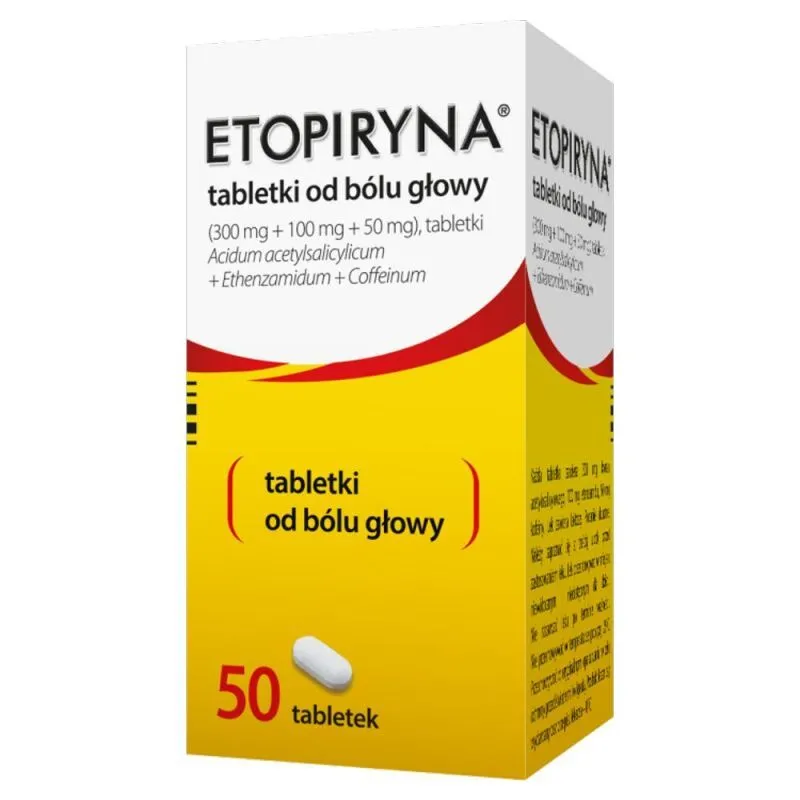
ETOPIRYNA
PolandThe medicinal product is used for the treatment of headaches and moderate pain, especially pain of inflammatory origin.
Frequently asked questions
How to use Etopiryna?
The tablets should be taken orally, preferably after a meal, with plenty of water. Adults and adolescents over 16 years of age may take 1 to 2 tablets at once or, if necessary, every 8 hours, not exceeding 6 tablets per day. The medicine should be used for the shortest possible time, not longer than a few days.
When should you not take this medicine?
Do not use this medicine if you are allergic to acetylsalicylic acid, ethenzamide, caffeine, or other anti-inflammatory drugs, or if you have asthma, respiratory diseases, active gastric or duodenal ulcer disease, severe liver, kidney, or heart failure, blood clotting disorders, or glucose-6-phosphate dehydrogenase deficiency. The medicine must not be used in children under 16 years of age, pregnant women (especially in the last trimester), or breastfeeding women.
Does Etopiryna interact with other medicines?
Yes, caution should be exercised when using the medicine with, among others, antidiabetic drugs, diuretics, anticoagulants (contraindicated), methotrexate (contraindicated at doses of 15 mg/week or higher), and non-steroidal anti-inflammatory drugs. You should inform your doctor about all medications you are currently taking.
What are the possible side effects?
The medicine may cause, among others, gastrointestinal problems (indigestion, heartburn, abdominal pain, gastrointestinal bleeding), allergic reactions (rash, urticaria, swelling of the face or tongue), tinnitus, dizziness, as well as blood disorders or impaired liver and kidney function.
Instructions for use
Patient Information Leaflet
ETOPIRYNA
(300 mg + 100 mg + 50 mg) tablets
Acidum acetylsalicylicum + Ethenzamidum + Coffeinum
Please read the entire leaflet carefully before using this medicine, as it contains
important information for the patient.
This medicine should always be used exactly as described in this patient leaflet or as directed by a
physician or pharmacist.
- Keep this leaflet for future reference.
- If advice or additional information is needed, please consult a pharmacist.
- If the patient experiences any adverse reactions, including any not listed in this leaflet, they should inform their doctor or pharmacist. See section 4.
- If there is no improvement after a few days, or if the patient feels worse, medical advice should be sought from a doctor.
Table of Contents
- What Etopiryna is and what it is used for
- Important information before taking Etopiryna
- How to take Etopiryna
- Possible side effects
- How to store Etopiryna
- Contents of the pack and other information
1. What Etopiryna is and what it is used for
Etopiryna is a medicine used for the treatment of headaches and mild to moderate pain, particularly of inflammatory origin.
2. Important information before using Etopiryna
When not to use Etopiryna
- if the patient is allergic to acetylsalicylic acid, etenzamide, caffeine, or any of the other ingredients of this medicine (listed in section 6). Hypersensitivity to acetylsalicylic acid occurs in 0.3% of the population, including 20% of patients with bronchial asthma or chronic urticaria. Symptoms of hypersensitivity (urticaria, or even shock) may occur within 3 hours after taking acetylsalicylic acid;
- if the patient is allergic to other non-steroidal anti-inflammatory drugs (NSAIDs), with symptoms such as bronchospasm, rhinitis, or shock;
- if the patient has bronchial asthma, chronic respiratory diseases, hay fever, or nasal mucosal edema, as patients with these conditions may react to non-steroidal anti-inflammatory drugs with asthma attacks, limited skin and mucosal edema (angioedema), or urticaria more frequently than other patients;
- if the patient has active gastric or duodenal ulcer disease and/or gastrointestinal inflammation or bleeding (this may lead to gastrointestinal bleeding or exacerbation of peptic ulcer disease);
- if the patient has severe liver, kidney, or heart failure;
- if the patient has blood coagulation disorders (e.g. hemophilia, thrombocytopenia) or is being treated concomitantly with anticoagulants (e.g. coumarin derivatives, heparin);
- if the patient has glucose-6-phosphate dehydrogenase deficiency (a rare inherited disorder);
- if the patient is simultaneously receiving methotrexate at doses of 15 mg per week or higher, due to harmful effects on the bone marrow;
- in children and adolescents under 16 years of age, especially during viral infections, due to the risk of Reye's syndrome, a rare but serious condition causing liver and brain damage;
- during the third trimester of pregnancy and during breastfeeding.
Warnings and precautions
Before starting treatment with Etopiryna, consult your doctor in the following situations:
- if the patient is taking oral antidiabetic sulfonylurea drugs, due to the risk of enhanced hypoglycemic effect (reducing blood glucose concentration), or if the patient is taking gout medications;
- in patients with renal function disorders or chronic kidney failure;
- in patients with juvenile rheumatoid arthritis and/or systemic lupus erythematosus, and in those with liver failure, as the toxicity of salicylates increases; liver function should be monitored in these patients;
- in cases of uterine bleeding, excessive menstrual bleeding, use of intrauterine contraceptive devices, arterial hypertension, or heart failure;
- in patients with psychomotor agitation or insomnia;
- when used concomitantly with methotrexate at doses lower than 15 mg per week, due to increased risk of methotrexate-induced bone marrow toxicity. Concomitant use with methotrexate at doses exceeding 15 mg per week is contraindicated;
- the medicine should be discontinued 5 to 7 days before any planned surgical procedure due to the risk of prolonged bleeding time during and after surgery.
Etopiryna with other medicines
Inform your doctor or pharmacist about all medicines currently used, recently used, or planned for use.
The use of Etopiryna is contraindicated with:
- anticoagulant drugs (heparin, coumarin derivatives);
- methotrexate at doses of 15 mg per week or higher.
Use Etopiryna with caution when taken with:
-
angiotensin-converting enzyme (ACE) inhibitors (e.g. enalapril, captopril), as Etopiryna may reduce the antihypertensive effect of these drugs;
-
acetazolamide, as Etopiryna may increase acetazolamide toxicity;
-
valproic acid, as acetylsalicylic acid enhances the toxic effect of valproic acid, while valproic acid enhances the antiplatelet (preventing platelet aggregation) effect of acetylsalicylic acid;
-
diuretics, as Etopiryna may reduce their effectiveness and increase the ototoxicity (hearing-damaging effect) of furosemide;
-
methotrexate at doses lower than 15 mg per week, as acetylsalicylic acid intensifies its toxic effect on the bone marrow;
-
non-steroidal anti-inflammatory drugs (e.g. ibuprofen), as there is an increased risk of gastrointestinal adverse effects;
-
systemic glucocorticoids (except hydrocortisone used as replacement therapy in Addison's disease), as they increase the risk of peptic ulcer disease and gastrointestinal bleeding, reduce plasma salicylate concentrations during treatment, and increase the risk of salicylate overdose after treatment discontinuation;
-
antidiabetic drugs, as Etopiryna may enhance their hypoglycemic effect (reducing blood glucose concentration);
-
drugs increasing uric acid excretion (e.g. probenecid, sulfinpyrazone), as salicylates reduce the effectiveness of these drugs. Do not use acetylsalicylic acid simultaneously with these drugs;
-
digoxin, as Etopiryna may enhance the effect of this drug;
-
thrombolytic drugs (clot-dissolving agents) such as streptokinase and alteplase, as Etopiryna may enhance their effect;
-
barbiturates (e.g. phenobarbital);
-
oral contraceptives;
-
cimetidine and disulfiram;
-
ergotamine and analeptics (e.g. nikethamide), as Etopiryna may enhance their effects;
-
omeprazole and ascorbic acid (vitamin C) do not affect the absorption of acetylsalicylic acid.
Taking Etopiryna with food, drink, and alcohol
Take the medicine after a meal, with a large amount of water.
Do not consume alcohol during treatment, due to the increased risk of gastrointestinal mucosal damage.
Use of Etopiryna in patients with liver and/or kidney function disorders
In patients with liver and/or kidney function disorders, there is an increased risk of adverse effects; therefore, dose adjustment may be necessary depending on the severity of liver and/or kidney impairment.
The medicine is contraindicated in cases of severe liver and/or kidney failure.
Use in elderly patients
In elderly patients (over 65 years of age), the medicine should be used at lower doses and with longer intervals between doses, due to the increased risk of adverse effects in this patient group.
Pregnancy, breastfeeding, and effects on fertility
If the patient is pregnant or breastfeeding, suspects she may be pregnant, or is planning to become pregnant, she should consult a doctor or pharmacist before using this medicine.
Pregnancy
The medicine may be used during the first and second trimesters of pregnancy only if, in the doctor's opinion, it is absolutely necessary.
The medicine is contraindicated during the third trimester of pregnancy.
If the patient continues or starts treatment with Etopiryna during pregnancy as advised by the doctor, she should follow the doctor's instructions and not exceed the recommended dose.
Pregnancy – third trimester
Do not use acetylsalicylic acid in doses exceeding 100 mg per day during the last 3 months of pregnancy, as it may harm the unborn child or cause complications during delivery. Use of Etopiryna may cause kidney and heart disorders in the unborn child. It may affect the tendency to bleeding in both the mother and the child and may delay or prolong labor.
If the patient takes acetylsalicylic acid in low doses (up to 100 mg per day inclusive), close obstetric monitoring is required as advised by the doctor.
Pregnancy – first and second trimesters
Due to the presence of acetylsalicylic acid, this medicine should not be taken during the first 6 months of pregnancy unless absolutely necessary and prescribed by a doctor. If treatment is necessary during this period or when trying to conceive, the lowest effective dose should be used for the shortest possible duration. Taking acetylsalicylic acid for longer than a few days starting from week 20 of pregnancy may cause kidney dysfunction in the unborn child, leading to low levels of amniotic fluid surrounding the baby (oligohydramnios), or narrowing of a blood vessel (ductus arteriosus) in the baby's heart. If prolonged treatment is necessary, the doctor may recommend additional monitoring.
Breastfeeding
The medicine is contraindicated during breastfeeding.
Fertility
This medicine belongs to the group of non-steroidal anti-inflammatory drugs (NSAIDs), which may adversely affect fertility in women. This effect is reversible and disappears after discontinuation of treatment.
Driving and operating machinery
The medicine does not impair psychomotor performance and does not affect the ability to drive vehicles or operate machinery.
Etopiryna contains monohydrate lactose
If the patient has previously been diagnosed with intolerance to certain sugars, the patient should consult a doctor before taking this medicine.
3. How to use Etopiryna
This medicine should always be taken exactly as described in this patient leaflet or as directed by your doctor or pharmacist. If in doubt, consult your doctor or pharmacist.
The medicine should be taken orally, preferably after a meal, with a large amount of water.
Use the lowest effective dose for the shortest duration necessary to relieve symptoms in order to reduce the risk of adverse effects.
Do not use this medicine for longer than a few days.
The usual recommended dosage is as follows:
Use in adults and adolescents above 16 years of age
Take 1 to 2 tablets at a time, or repeat the same dose every 8 hours if needed.
Do not exceed 6 tablets per day.
Use in children and adolescents under 16 years of age
Etopiryna is contraindicated in children and adolescents under 16 years of age (see section “When not to use Etopiryna”).
Overdose of Etopiryna
If you take more than the recommended dose, seek medical advice immediately. In cases of severe poisoning, the patient should be taken to hospital without delay.
Overdose in elderly individuals and young children (whether due to excessive doses or accidental ingestion) requires special attention, as it may lead to death in these patient groups.
After an overdose of acetylsalicylic acid, the following symptoms may occur: nausea, vomiting, rapid breathing, tinnitus (ringing in the ears).
Other observed symptoms include hearing loss, visual disturbances, headache, restlessness, drowsiness and coma, convulsions, and hyperthermia (body temperature above normal).
In severe poisoning, acid-base and water-electrolyte imbalances occur (metabolic acidosis and dehydration).
Symptoms of caffeine overdose include insomnia, fatigue, muscle tremors, delirium, tachycardia (rapid heartbeat), extrasystoles (additional heartbeats), and convulsions.
Mild to moderate toxicity symptoms occur after acetylsalicylic acid intake of 150–300 mg/kg body weight (bw). Severe poisoning symptoms occur after ingestion of 300–500 mg/kg bw. A potentially lethal dose of acetylsalicylic acid is greater than 500 mg/kg bw.
Treatment of overdose:
There is no specific antidote for acetylsalicylic acid. The patient should be taken to hospital.
Management in case of poisoning:
- Induce vomiting and perform gastric lavage (to reduce drug absorption). This procedure is effective within 3–4 hours after ingestion, and in cases of very large overdoses, may still be effective up to 10 hours.
- Administer activated charcoal as an aqueous suspension (50–100 g for adults, 30–60 g for children) to reduce absorption of acetylsalicylic acid.
- In cases of hyperthermia, reduce body temperature by maintaining a cool environment and applying cold compresses.
In severe poisoning, forced alkaline diuresis (increased urine excretion induced by appropriate drugs), peritoneal dialysis, or hemodialysis may be required.
Missed dose of Etopiryna
If you miss a dose, take the next dose at the scheduled time. Do not take a double dose to make up for a missed dose.
If you have any further questions about the use of this medicine, consult your doctor or pharmacist.
4. Possible adverse reactions
Like all medicines, this medicine can cause adverse reactions, although not everyone experiences them.
Blood and lymphatic system disorders
thrombocytopenia (reduced number of blood platelets), anemia due to gastrointestinal bleeding, hemolytic anemia in patients with glucose-6-phosphate dehydrogenase deficiency, leukopenia (reduced number of white blood cells), agranulocytosis (absence of granulocytes in the blood), eosinopenia (reduced number of eosinophils in the blood), increased risk of bleeding, prolonged bleeding time and/or prolonged prothrombin time.
Immune system disorders
hypersensitivity reactions: rash, urticaria, angioedema (swelling of the face, tongue and airways causing breathing difficulties), bronchospasm. If any of these occur, inform your doctor immediately.
Nervous system disorders
tinnitus (usually as a sign of overdose), hearing disturbances, dizziness.
Cardiac disorders
heart failure.
Vascular disorders
hypertension.
Gastrointestinal disorders
dyspepsia, heartburn, feeling of fullness in the upper abdomen, nausea, vomiting, loss of appetite, abdominal pain, gastrointestinal bleeding, gastric mucosal damage, exacerbation of peptic ulcer disease, perforations.
Gastric ulceration occurs in 15% of patients on long-term acetylsalicylic acid therapy.
Hepatobiliary disorders
focal necrosis of liver cells, tenderness and enlargement of the liver, particularly in patients with juvenile rheumatoid arthritis, systemic lupus erythematosus, rheumatic fever or liver disease; transient increases in serum aminotransferase activity, alkaline phosphatase and bilirubin concentration.
Renal and urinary disorders
proteinuria, presence of leukocytes and erythrocytes in urine, renal papillary necrosis, interstitial nephritis.
Reporting of adverse reactions
If any adverse reactions occur, including any not listed in this leaflet, inform your doctor or pharmacist. Adverse reactions can be reported directly to the Department of Monitoring Adverse Drug Reactions, Office for Registration of Medicinal Products, Medical Devices and Biocidal Products
Al. Jerozolimskie 181C
02-222 Warsaw
Tel.: +48 22 49 21 301
Fax: +48 22 49 21 309
Website: https://smz.ezdrowie.gov.pl
Adverse reactions may also be reported to the marketing authorization holder.
Reporting adverse reactions helps provide more information on the safety of this medicine.
5. How to store Etopiryna
Do not store above 25°C. Keep in the original packaging to protect from light and moisture.
Keep the medicine out of the sight and reach of children.
Do not use this medicine after the expiry date stated on the container. The expiry date refers to the last day of the stated month.
Medicines must not be disposed of via wastewater or household waste. Ask your pharmacist how to dispose of medicines no longer required. These measures will help protect the environment.
6. Contents of the pack and other information
What Etopiryna contains
- The active substances in this medicine are acetylsalicylic acid, phenacetin, and caffeine. Each tablet contains 300 mg of acetylsalicylic acid, 100 mg of phenacetin, and 50 mg of caffeine.
- Other ingredients are: potato starch and lactose monohydrate.
What Etopiryna looks like and contents of the pack
White, elongated, biconvex tablets.
The pack contains 2, 6, 10, 30 or 50 tablets.
Marketing Authorisation Holder and Manufacturer
Marketing Authorisation Holder
POLPHARMA Pharmaceutical Works S.A.
Pelplinska Street 19, 83-200 Starogard Gdanski
tel. + 48 22 364 61 01
Manufacturer
POLPHARMA Pharmaceutical Works S.A.
Pelplinska Street 19, 83-200 Starogard Gdanski
POLPHARMA Pharmaceutical Works S.A.
Production Plant in Nowa Dęba
Metalowca Street 2, 39-460 Nowa Dęba
The original data is available in the language of the country of manufacture.
Data source: Register of Medicinal Products of Poland (URPL)
Data last verified: September 01, 2026