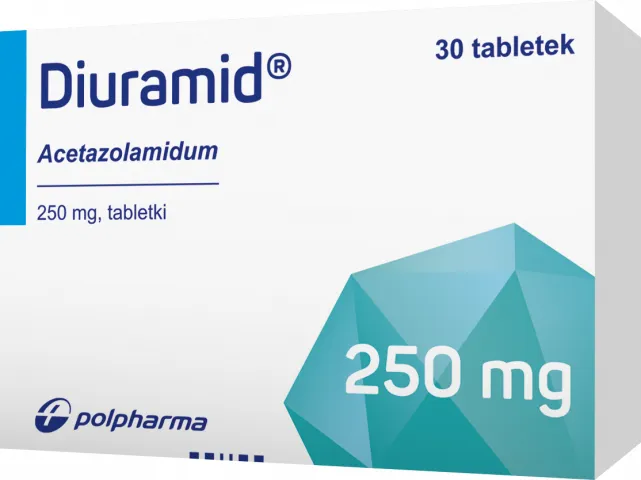
DIURAMID
PolandThe medicine is used in the treatment of glaucoma, epilepsy (in combination with other medicines), and edema caused by circulatory failure or induced by drugs. It also helps in the prevention and treatment of acute mountain sickness.
Frequently asked questions
How to use Diuramid?
The medicine should be taken according to the doctor's instructions, who will determine the individual dose. Tablets can be taken regardless of meals. In the case of glaucoma, the dosage depends on its type; in epilepsy, a dose of 8 to 30 mg/kg of body weight per day is used, and for mountain sickness, 500 mg to 1000 mg per day in divided doses.
When should you not take this medicine?
The medicine must not be used if there is an allergy to acetazolamide, other sulfonamides, or the ingredients of the medicine. Contraindications also include liver and kidney dysfunction, liver cirrhosis, adrenal insufficiency, hypochloremic acidosis, and decreased serum sodium or potassium levels. It should not be used for long-term treatment of chronic angle-closure glaucoma.
What are the possible side effects of Diuramid?
The most common side effects at the beginning of treatment are: tingling in the limbs, hearing disturbances or tinnitus, loss of appetite, nausea, diarrhea, headaches and dizziness, frequent urination, and fatigue. Serious reactions may also occur, such as shortness of breath, severe skin rash with blisters, vision problems or eye pain, as well as changes in blood test results (e.g., anemia or decreased platelet count).
Can Diuramid be combined with other medicines?
Yes, but the doctor must be informed. It is particularly important to report the use of folic acid, anticoagulants, blood pressure-lowering drugs, anticonvulsants, lithium, diabetes medications, and other medicines from the carbonic anhydrase inhibitor group.
What should I do if I forget to take a dose?
If you forget to take a dose, take it as soon as possible. However, if it is almost time for the next dose, skip the forgotten dose and return to the prescribed schedule. Do not take a double dose to make up for a forgotten one.
Does the medicine affect driving vehicles?
Yes, the medicine may cause side effects that impair the ability to drive vehicles; therefore, you should not drive cars or operate machinery during the treatment period.
Instructions for use
Package leaflet: Information for the patient
Diuramid, 250 mg, tablets
Acetazolamidum
Please read the entire leaflet carefully before using the medicine, as it contains
important information for the patient.
- Keep this leaflet, so that you can read it again if necessary.
- If you have any doubts, consult your doctor or pharmacist.
- This medicine has been prescribed for a specific individual. Do not pass it on to others. The medicine may harm another person, even if their symptoms are the same.
- If the patient experiences any adverse reactions, including any not listed in this leaflet, inform the doctor or pharmacist. See section 4.
Table of contents of the leaflet
- What Diuramid is and what it is used for
- Important information before taking Diuramid
- How to take Diuramid
- Possible side effects
- How to store Diuramid
- Contents of the pack and other information
1. What Diuramid is and what it is used for
Diuramid is a carbonic anhydrase inhibitor with diuretic action. It is used in the treatment of glaucoma, epilepsy (in combination with other medicines), and oedema caused by heart failure or induced by drugs. It is also used for the prevention and treatment of acute mountain sickness.
2. Important information before using Diuramid
When not to use Diuramid:
- if the patient is allergic to acetazolamide, other sulfonamides, or any of the other ingredients of this medicine (listed in section 6)
- if the patient has impaired liver or kidney function, hepatic cirrhosis, adrenal insufficiency, decreased serum sodium or potassium levels, or hypochloremic acidosis (related to reduced chloride levels in blood serum)
- in the case of long-term treatment of chronic uncompensated angle-closure glaucoma.
Warnings and precautions
Before starting treatment with Diuramid, consult a doctor or pharmacist if:
- the patient has kidney problems, such as kidney stones
- the patient has lung problems, such as chronic bronchitis or emphysema, which may cause breathing difficulties
- the patient previously experienced lung or breathing problems (fluid in the lungs) after taking acetazolamide
- the patient has diabetes or glucose intolerance (see section "Diuramid and other medicines").
If the patient develops shortness of breath or difficulty breathing after taking Diuramid, seek immediate medical help (see also section 4).
Worsening of vision or eye pain may be symptoms of fluid accumulation in the choroid (excessive fluid buildup between the choroid and sclera or choroidal detachment). This may occur within a few hours after taking Diuramid. If these symptoms occur, contact a doctor immediately.
Cases of suicidal thoughts or suicide attempts have been reported in a small number of patients treated with antiepileptic medicines, including acetazolamide.
If the patient experiences suicidal thoughts or self-harm ideation, contact a doctor immediately.
Diuramid may affect the results of certain laboratory tests.
During treatment with acetazolamide, blistering skin reactions, sometimes fatal, such as Stevens-Johnson syndrome or toxic epidermal necrolysis, may occasionally occur (see section 4). If flu-like symptoms or progressive rash (often with blisters or mucosal lesions) occur, discontinue treatment and contact a doctor immediately.
Diuramid and other medicines
Inform your doctor or pharmacist about all medicines the patient is currently taking, has recently taken, or plans to take.
It is especially important to inform the doctor about the use of:
- folic acid
- oral anticoagulants (e.g. warfarin)
- acetylsalicylic acid
- cardiac glycosides (e.g. digoxin)
- antihypertensive medicines
- anticonvulsants (particularly: phenytoin, primidone, and carbamazepine)
- other medicines from the carbonic anhydrase inhibitor group (e.g. dorzolamide or brinzolamide, also used in glaucoma treatment)
- amphetamines
- methenamine (a medicine used to prevent and treat chronic or recurrent lower urinary tract infections)
- quinidine (a medicine used to treat heart conditions and certain types of malaria)
- lithium (a medicine used to treat bipolar disorder)
- antidiabetic medicines. Acetazolamide may increase or decrease blood glucose levels. The doctor may adjust the insulin or oral antidiabetic dosage in diabetic patients.
- cyclosporine (a medicine used to prevent transplant rejection)
- sodium bicarbonate (a medicine used to neutralize excess hydrochloric acid in the stomach).
Diuramid with food and drink
See section 3.
Pregnancy and breastfeeding
If the patient is pregnant, breastfeeding, suspects she may be pregnant, or is planning to have a child, she should consult a doctor or pharmacist before using this medicine.
Acetazolamide passes into human milk in small amounts. Due to the risk of adverse effects in the breastfed infant, a decision should be made in consultation with the doctor whether to discontinue the medicine or to stop breastfeeding during treatment.
Driving and operating machinery
This medicine may cause adverse effects that impair the ability to drive or operate machinery. Patients should not drive or operate machinery during treatment with Diuramid.
Diuramid contains sodium
This medicine contains less than 1 mmol (23 mg) of sodium per tablet; therefore, the medicine is considered "sodium-free".
3. How to use Diuramid
This medicine should always be used according to the instructions given by your doctor or pharmacist. If you have any doubts,
you should consult your doctor or pharmacist.
Your doctor will determine the appropriate dose individually for each patient.
Glaucoma
The usual dosing recommendations for adults are as follows:
In open-angle glaucoma: 250 mg (1 tablet) 1 to 4 times daily.
Doses higher than 1000 mg (4 tablets) do not increase the effectiveness
of treatment.
In secondary glaucoma: 250 mg (1 tablet) every 4 hours.
In some patients, the medicine is effective at a dose of 250 mg (1 tablet)
twice daily (for short-term treatment).
In acute glaucoma attacks: 250 mg (1 tablet) 4 times daily.
Epilepsy
Adults and children: Usually 8 to 30 mg of body weight per kg per day, divided into 1 to 4 doses.
The optimal dose ranges from 375 mg to 1000 mg (1 to 4 tablets) per day.
When acetazolamide is used concomitantly with other anticonvulsant medicines, treatment is usually started with 250 mg (1 tablet) once daily.
Your doctor may then gradually increase the dose if necessary.
In children, the daily dose should not exceed 750 mg.
Oedema in cardiac insufficiency and drug-induced oedema
Initial dose: 250 mg to 375 mg (1 to 1\½ tablets) once daily in the morning.
Optimal diuretic effect is achieved when the medicine is taken every other day or for two consecutive days with a one-day break.
While taking acetazolamide, treatment recommended for cardiac insufficiency should be continued, such as using cardiac glycosides, restricting salt intake, and potassium supplementation.
Your doctor may adjust the dose of acetazolamide if it is administered concomitantly with cardiac glycosides or antihypertensive medicines.
Acute mountain sickness
The recommended dose is 500 mg to 1000 mg (2 to 4 tablets) daily, divided into several doses.
In case of rapid ascent (more than 500 m per day): 1000 mg (4 tablets) daily in divided doses.
The medicine should be taken 24 to 48 hours before planned ascent to high altitude. If symptoms of mountain sickness occur, treatment should be continued for another 48 hours or longer, if necessary.
Method of administration
The medicine may be taken regardless of meals.
Taking more Diuramid than recommended
If you take more Diuramid than recommended, you should immediately contact your doctor or pharmacist.
Symptoms of overdose may resemble the adverse effects observed during acetazolamide treatment.
Missing a dose of Diuramid
If you miss a dose, take it as soon as possible. However, if it is almost time for the next dose, do not take the missed dose. Instead, return to your regular dosing schedule. Do not take a double dose to make up for a missed dose.
If you have any further questions about the use of this medicine, consult your doctor or pharmacist.
4. Possible adverse reactions
Like all medicines, this medicine can cause adverse reactions, although not everyone will experience them.
If shortness of breath, skin rash or other serious adverse reactions occur,
the medicine should be discontinued and immediate contact must be made with a doctor or the Emergency Department
of the nearest hospital.
You should contact a doctor immediately if the patient experiences:
- severe skin reaction: red, peeling rash with subcutaneous nodules and blisters (erythema multiforme);
- shortness of breath or difficulty breathing. These may be symptoms of fluid accumulation in the lungs (pulmonary oedema). The frequency of these adverse reactions is unknown (cannot be estimated from available data).
The most common adverse reactions occurring at the beginning of treatment are:
- disturbances of sensation in the limbs (paraesthesiae), disturbances of hearing or tinnitus,
- loss of appetite, taste disturbances, nausea, vomiting, diarrhoea,
- frequent urination, haematuria (blood in urine), glycosuria (glucose in urine),
- headache, dizziness, hot flushes, depression,
- occasional drowsiness and disorientation,
- decreased sexual drive,
- transient myopia,
- hypersensitivity reactions (e.g. swelling of the face, lips, tongue, throat, causing difficulty in breathing or swallowing),
- urticaria,
- photosensitivity,
- liver dysfunction (jaundice, dark urine and pale stools), hepatic and renal colic,
- nephrolithiasis (kidney stones),
- thirst,
- fatigue,
- irritability.
Acetazolamide, as a sulfonamide derivative, may cause adverse reactions typical
of sulfonamides. These include:
- fever,
- rash,
- bone marrow suppression,
- crystalluria (crystal excretion in urine),
- kidney damage,
- fulminant hepatic necrosis,
- bullous skin reactions (erythema multiforme, Stevens-Johnson syndrome, toxic epidermal necrolysis).
Diuramid may cause changes in blood parameters, therefore the doctor may recommend regular blood tests. During treatment, the following may occur:
- decreased number of white blood cells or anaemia,
- decreased number of platelets, which may affect blood clotting. If unexplained bruising or red or purple spots appear on the skin, inform the doctor.
- marked decrease in granulocyte count in peripheral blood,
- pancytopenia (a haematological disorder characterized by deficiency of all normal blood cell components),
- blood acidification (metabolic acidosis),
- electrolyte imbalance (including abnormally low levels of sodium and/or potassium in blood),
- abnormally high or low blood glucose levels,
- presence of blood in stool,
- renal failure,
- flaccid muscle paralysis, seizures.
Additionally, the following have been observed:
- worsening of vision or eye pain due to accumulation of fluid in the uveal membrane of the eye (excessive accumulation of fluid between choroid and sclera or choroidal detachment) – frequency unknown.
Reporting of adverse reactions
If any adverse reactions occur, including any not listed
in this leaflet, inform your doctor or pharmacist. Adverse reactions can be reported
directly to the Department of Monitoring Adverse Reactions of Medicinal Products at the Office for Registration of Medicinal Products, Medical Devices and Biocidal Products
Al. Jerozolimskie 181C
02-222 Warszawa
Tel.: + 48 22 49 21 301
Fax: + 48 22 49 21 309
Website: https://smz.ezdrowie.gov.pl
Adverse reactions can also be reported to the marketing authorization holder.
Reporting adverse reactions helps to provide more information on the safety of the medicine.
5. How to store Diuramid
No special storage instructions are required.
The medicine should be stored in a place out of sight and reach of children.
Do not use this medicine after the expiry date stated on the packaging following EXP. The expiry date refers to the last day of the stated month.
The marking on the packaging following the abbreviation EXP indicates the expiry date, and following the abbreviation Lot/LOT indicates the batch number.
Medicines must not be disposed of via wastewater or household waste. Ask your pharmacist how to dispose of medicines no longer required. Such measures help protect the environment.
6. Contents of the packaging and other information
What Diuramid contains
- The active substance is acetazolamide. Each tablet contains 250 mg of acetazolamide.
- The other ingredients are: microcrystalline cellulose, povidone, sodium croscarmellose, colloidal anhydrous silica, magnesium stearate.
What Diuramid looks like and contents of the pack
Diuramid is white, round, biconvex tablets.
The pack contains 30 tablets.
Marketing Authorisation Holder and Manufacturer
Marketing Authorisation Holder
Zakłady Farmaceutyczne POLPHARMA S.A.
ul. Pelplińska 19, 83-200 Starogard Gdański
tel. + 48 22 364 61 01
Manufacturer
Zakłady Farmaceutyczne POLPHARMA S.A.
ul. Pelplińska 19, 83-200 Starogard Gdański
Zakłady Farmaceutyczne POLPHARMA S.A.
Medana Branch in Sieradz
ul. Władysława Łokietka 10, 98-200 Sieradz
Zakłady Farmaceutyczne POLPHARMA S.A.
Production Branch in Nowa Dęba
ul. Metalowca 2, 39-460 Nowa Dęba
The original data is available in the language of the country of manufacture.
Data source: Register of Medicinal Products of Poland (URPL)
Data last verified: September 01, 2026