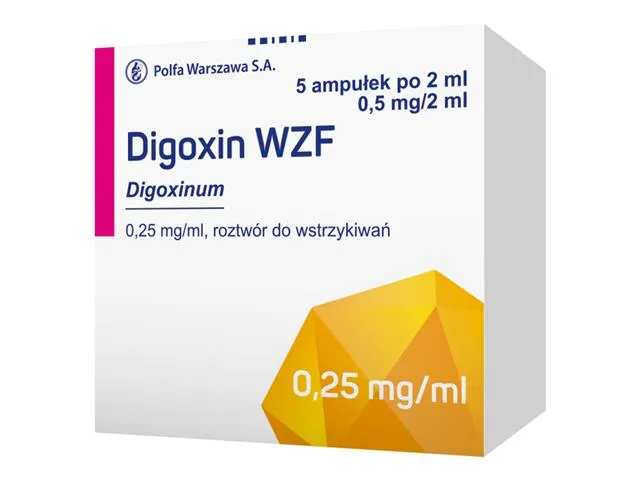
DIGOXIN WZF
PolandThe medicine is used in the treatment of heart failure and certain types of heart rhythm disorders (arrhythmias), such as atrial fibrillation or flutter.
Frequently asked questions
How should Digoxin WZF be taken?
The medicine is administered intravenously by medical personnel. The dosage is determined individually by a doctor depending on age, body weight, kidney function, and the type of heart problems.
When should you not use this medicine?
It must not be used if you are allergic to digoxin or other cardiac glycosides, or in the event of serious heart problems, such as heart block, certain types of arrhythmia, hypertrophic cardiomyopathy, or ventricular fibrillation.
What are the possible side effects of Digoxin WZF?
Common side effects may include: slow or irregular heartbeat, nausea, vomiting, diarrhea, itchy skin lesions, drowsiness, dizziness, and visual disturbances (e.g., seeing in yellow). You should contact a doctor immediately if palpitations, chest pain, or breathing problems occur.
Can Digoxin WZF be taken with other medicines?
You must inform your doctor about all medicines you are taking. Some medicines (e.g., diuretics, certain antibiotics, or blood pressure medications) may increase sensitivity to the medicine or change its concentration in the blood, which could lead to dangerous interactions.
Can you drive while using the medicine?
If you experience dizziness, fatigue, headache, or visual disturbances while using the medicine, you should not drive vehicles or operate machinery until these symptoms subside.
Instructions for use
Package leaflet: Information for the patient
DIGOXIN WZF, 0.25 mg/ml, solution for injection
Digoxinum
Please read all of this leaflet carefully before using this medicine, because it contains
important information for the patient.
- Keep this leaflet, so that you can read it again if necessary.
- If you have any further questions, please ask your doctor, pharmacist, or nurse.
- This medicine has been prescribed for a specific individual. Do not pass it on to others. It may harm other people, even if their symptoms are the same.
- If the patient experiences any adverse reactions, including any not listed in this leaflet, please inform your doctor, pharmacist, or nurse. See section 4.
Table of contents
- What Digoxin WZF is and what it is used for
- Important information before using Digoxin WZF
- How to use Digoxin WZF
- Possible side effects
- How to store Digoxin WZF
- Contents of the pack and other information
1. What Digoxin WZF is and what it is used for
Digoxin WZF contains digoxin, an active substance belonging to a group of medicines called cardiac glycosides. The medicine reduces the heart rate and simultaneously increases the force of contraction of the heart muscle. Digoxin WZF in the form of solution for injection is administered intravenously by medical personnel.
Digoxin WZF is used in conditions such as:
- Heart failure This refers to people whose heart is unable to pump blood with sufficient force to reach all parts of the body. This condition may be associated with certain types of heart rhythm disorders (see below).
- Certain types of heart rhythm disorders (arrhythmias) This refers to people with disorders involving "atrial fibrillation" and "atrial flutter". These are caused by abnormal conduction of electrical impulses in the heart and are characterized by irregular or excessively rapid heartbeat.
2. Information before using Digoxin WZF
When not to use Digoxin WZF
- if the patient is allergic to digoxin or other drugs known as cardiac glycosides, or to any of the other ingredients of this medicine (listed in section 6).
- if the patient has previously experienced serious heart problems, described as:
- second-degree heart block (symptoms: irregular heartbeat, significant slowing of heart rate);
- intermittent complete heart block (symptoms: uncoordinated activity between atria and ventricles, leading to inefficient heart function, possibly requiring pacemaker implantation);
- certain types of supraventricular arrhythmias (abnormal heart rhythms);
- ventricular tachyarrhythmias (rapid ventricular contractions) or ventricular fibrillation;
- hypertrophic cardiomyopathy (thickening of the left ventricle, presenting with exertional dyspnea, dizziness, and loss of consciousness);
- arrhythmias caused by cardiac glycoside poisoning.
Warnings and precautions
Before starting treatment with Digoxin WZF, discuss this with your doctor.
- If the patient is taking this medicine, the doctor may order regular blood tests to monitor digoxin levels. This may be particularly useful in patients with impaired kidney function.
- If digoxin toxicity occurs, it may lead to various types of cardiac arrhythmias, some of which resemble the rhythm disturbances for which the drug was prescribed.
- If the patient has an abnormal heart rhythm (heart block) and is taking this medicine, contact the doctor immediately if one or more of the following symptoms occur: fainting, transient loss of consciousness, dizziness or lightheadedness, fatigue, shortness of breath, chest pain, irregular heartbeat, or confusion.
- If the patient has sinoatrial conduction disturbances; in some patients with this condition, this medicine may cause slowing and/or irregular heartbeat. This may sometimes lead to fatigue, weakness, and dizziness, and if the heartbeat is very slow, fainting may occur.
- If the patient has recently had a heart attack.
- In cases of heart failure associated with abnormal protein deposition in heart tissue (cardiac amyloidosis), the doctor may recommend alternative treatment.
- If the patient has myocarditis (inflammation of the heart muscle), which in rare cases may cause blood vessel constriction, the doctor may prescribe a different medicine.
- If the patient has beriberi disease (caused by vitamin B deficiency).
- If the patient has constrictive pericarditis (inflammation of the sac surrounding the heart).
- If the patient is taking diuretics (medicines that increase urine production and help reduce fluid volume) with or without an ACE inhibitor (mainly used to treat hypertension), the doctor may recommend a lower dose of Digoxin WZF. Do not stop taking Digoxin WZF without consulting your doctor.
- If the patient is scheduled for a heart test called ECG (electrocardiogram), they should inform the person performing the test that they are taking Digoxin WZF, as this may affect test results.
- If the patient has severe respiratory (lung) disease, as sensitivity to Digoxin WZF may be increased.
- If the patient has low oxygen levels reaching certain body tissues, low potassium levels, abnormally low magnesium levels, or elevated calcium levels in the blood.
- If the patient has thyroid disease (such as hypothyroidism or hyperthyroidism), as this may require dose adjustment of this medicine.
- If the patient has malabsorption syndrome (inability to properly absorb minerals from food) or has previously undergone gastrointestinal reconstruction surgery.
- If the patient is scheduled for electrical cardioversion to correct an abnormal heartbeat.
If the patient has any doubts regarding the above conditions, they should
consult their doctor. The doctor will decide whether a dose adjustment, discontinuation, or replacement with another medicine is necessary.
Digoxin WZF and other medicines
Inform your doctor about all medicines currently or recently taken, as well as any medicines the patient plans to take. Taking multiple medicines may sometimes have harmful consequences or lead to undesirable interactions.
Sensitivity to Digoxin WZF may be increased by medicines that lower potassium levels in the blood, such as:
- diuretics (water pills),
- lithium salts (antidepressants),
- medicines containing corticosteroids,
- carbenoxolone (used to strengthen the gastric mucosa).
The following medicines increase digoxin blood levels, which may increase the risk of toxicity:
- certain heart medications: amiodarone, flecainide, prazosin, propafenone, quinidine,
- canagliflozin (used in the treatment of type 2 diabetes),
- certain antibiotics: erythromycin, clarithromycin, tetracycline, gentamicin, trimethoprim,
- daclatasvir (used in combination with other medicines for the treatment of hepatitis C virus infection),
- flibanserin (used to treat low sexual desire in premenopausal women),
- isavuconazole (used to treat fungal infections),
- itraconazole (used to treat fungal infections),
- ivacaftor (used to treat cystic fibrosis),
- spironolactone (a diuretic that increases urine production),
- alprazolam (a tranquilizer used to treat anxiety),
- indomethacin (used to treat inflammatory conditions),
- quinine (may be used to prevent malaria infection),
- propantheline (used to prevent muscle spasms),
- mirabegron (used to treat overactive bladder, causing sudden urge to urinate leading to involuntary urine leakage),
- nefazodone (an antidepressant),
- atorvastatin (lowers blood cholesterol levels),
- cyclosporine (an immunosuppressant often used to prevent transplant rejection),
- epoprostenol (used to treat pulmonary arterial hypertension),
- tolvaptan (used to treat low sodium levels in the blood),
- conivaptan (used to treat low sodium levels in the blood),
- carvedilol (used to treat mild to severe congestive heart failure and high blood pressure),
- ritonavir (used to treat HIV and AIDS infection),
- telaprevir (used to treat hepatitis C virus infection),
- dronedarone (used to treat irregular heartbeat),
- ranolazine (used to treat chest pain),
- simeprevir (used in combination with other medicines for the treatment of hepatitis C virus infection),
- telmisartan (used to treat high blood pressure),
- lapatinib (used to treat breast cancer),
- ticagrelor (used to prevent heart attack or stroke),
- verapamil (used to treat high blood pressure),
- felodipine (used to treat high blood pressure),
- tiapamil (used to treat chest pain),
- vandetanib (used to treat certain thyroid cancers),
- velpatasvir (used in combination with other medicines for the treatment of hepatitis C virus infection),
- P-glycoprotein inhibitors,
- venetoclax (used to treat patients with chronic lymphocytic leukemia),
- vemurafenib (used to treat adults with a type of cancer called melanoma),
- proton pump inhibitors (PPIs) (used to relieve symptoms of gastroesophageal reflux or gastroesophageal reflux disease (GERD)).
The following medicines may increase or have no effect on digoxin blood levels:
- nifedipine, diltiazem, angiotensin receptor blockers (ARBs), ACE inhibitors (used to treat high blood pressure and congestive heart failure),
- nonsteroidal anti-inflammatory drugs (NSAIDs) and cyclooxygenase-2 (COX-2) inhibitors (used to treat pain and inflammatory conditions).
If the patient has heart failure and is taking senna (laxatives) together with Digoxin WZF, there may be a moderate increase in the risk of digoxin toxicity.
The following medicines decrease digoxin blood levels:
- antacids (used to neutralize stomach acid),
- certain laxatives (increasing stool volume to aid bowel movements),
- kaolin-pectin (used to treat diarrhea),
- acarbose (used to treat certain types of diabetes),
- certain antibiotics: neomycin, penicillamine, rifampicin,
- certain cytostatic drugs (used as chemotherapy in cancer treatment),
- metoclopramide (a medicine used to treat nausea and vomiting),
- sulfasalazine (a medicine used to treat inflammatory bowel diseases),
- adrenaline (used to treat severe allergic reactions),
- salbutamol (a medicine used to treat asthma),
- cholestyramine (used to lower blood cholesterol levels),
- phenytoin (used to treat epilepsy),
- St. John's wort (Hypericum perforatum) (used to treat depression),
- bupropion (used to treat depression),
- P-glycoprotein inducers,
- enteral supplemental nutrition (tube feeding).
If the patient is taking Digoxin WZF together with the following medicines, there may be an increased risk of irregular heart rhythm:
- intravenous calcium,
- beta-blockers,
- sympathomimetics (used to treat heart attack and low blood pressure). If the patient is taking Digoxin WZF and suxamethonium (a medicine used to relax muscles and for short-term paralysis), there may be an increased risk of high potassium levels in the blood.
Inform the doctor if the patient is taking a medicine containing enzalutamide (used
to treat prostate cancer). This medicine may affect digoxin test results.
Digoxin WZF with food and drink
Not applicable, as Digoxin WZF is intended for intravenous administration.
Pregnancy, breastfeeding, and fertility
If the patient is pregnant or breastfeeding, suspects she may be pregnant, or is planning to have a child, she should consult her doctor before using this medicine.
Pregnancy
The doctor will prescribe this medicine cautiously during pregnancy.
If the patient is pregnant, she may require a higher dose of this medicine.
This medicine may be administered to the mother to treat abnormally high fetal heart rate
and congestive heart failure in the unborn child.
Adverse effects of Digoxin WZF treatment in the mother may also affect
the unborn child.
Breastfeeding
This medicine passes into breast milk, but in very small amounts. Therefore, this medicine may be used in breastfeeding women.
Fertility
There is no available information on the effect of Digoxin WZF on fertility.
Driving and using machines
While taking Digoxin WZF, dizziness, fatigue, headache, or visual disturbances (blurred vision or yellow vision) may occur. If such symptoms occur, do not drive or operate machinery until they resolve.
Digoxin WZF contains alcohol (ethanol 96%), propylene glycol (E 1520), and sodium
This medicine contains 202.5 mg of alcohol (96% ethanol) in each ampoule (2 ml). The amount of alcohol in 2 ml of this medicine is equivalent to less than 5 ml of beer or 2 ml of wine.
The small amount of alcohol in this medicine will not cause noticeable effects.
The medicine contains 414.8 mg of propylene glycol per ml, which corresponds to 829.6 mg of propylene glycol in each ampoule (2 ml). Before administering this medicine to children under 5 years of age, inform the doctor, especially if the child is taking other medicines containing propylene glycol or alcohol.
Children with impaired kidney or liver function should not receive this medicine without medical advice. The doctor may decide to perform additional tests in such patients.
The medicine contains 1.16 mg of sodium (main component of table salt) in each ampoule (2 ml). This corresponds to 0.06% of the maximum recommended daily sodium intake in adults.
The medicine may be diluted – see below “Information intended exclusively for healthcare professionals”. The sodium content from the diluent should be considered when calculating the total sodium content in the prepared diluted solution. For accurate information on sodium content in the solution used to dilute the medicine, refer to the product characteristics of the diluent used.
3. How to use Digoxin WZF
This medicine should always be used exactly as prescribed by your doctor. If in doubt, consult
your doctor.
This medicine is usually administered by medical personnel.
- Digoxin WZF is administered intravenously.
- The dose and dosing regimen of Digoxin WZF is individually determined by the doctor for each patient. The dose depends on the type and severity of heart problems, as well as on age, body weight, and kidney function. The usual loading and maintenance doses are provided below.
- Digoxin treatment usually begins with a loading dose (although there may be patients for whom the doctor does not recommend a loading dose), which may be administered according to one of the regimens listed below. After the loading dose has been administered, your doctor will recommend taking a maintenance dose of digoxin in another form, e.g. tablets.
- Your doctor may recommend increasing or decreasing the dose of Digoxin WZF depending on how well the patient tolerates the medicine. To determine the appropriate dose for a given patient, your doctor may recommend blood and urine tests.
Recommended dose
Adults and children over 10 years of age:
Loading dose:
- Usually 0.5 to 1 mg (2 to 4 ml) given in divided doses every 4 to 8 hours, strictly according to the doctor's instructions. Before each subsequent dose, the doctor will assess the medicine's effect in the patient.
Maintenance dose:
- The doctor will decide the appropriate dose for the individual patient; it is usually 0.125 to 0.25 mg (125 to 250 micrograms) per day.
Children under 10 years of age:
Loading dose:
- Depends on the child's body weight and is usually 0.020 to 0.035 mg (20 to 35 micrograms) per kilogram of body weight per day;
- this dose should be given in divided doses every 4 to 8 hours, strictly according to the doctor's instructions. Before each subsequent dose, the doctor will assess the medicine's effect in the patient.
Maintenance dose:
- The doctor will decide the appropriate dose for the individual child; it is usually ⅕ (one fifth) or ¼ (one quarter) of the daily loading dose.
Elderly patients and (or) patients with kidney disease
In elderly patients and (or) those with kidney problems, as well as those taking diuretics, the doctor may reduce the dose of Digoxin WZF.
Use of a higher than recommended dose of Digoxin WZF
This medicine is usually administered by medical personnel—using a higher than recommended dose is unlikely. However, if the patient experiences any symptoms listed in section 4. "Possible side effects", inform medical personnel immediately.
Missing a dose of Digoxin WZF
This medicine is usually administered by medical personnel—missing a dose is unlikely.
If you have any further questions about the use of this medicine, consult your doctor or pharmacist.
Stopping Digoxin WZF treatment
- The decision to discontinue treatment is made by the doctor.
- In patients taking diuretics (e.g. furosemide) and antihypertensive medicines (e.g. enalapril, captopril), stopping digoxin may lead to worsening of the medical condition.
If you have any further questions about the use of this medicine, consult your doctor.
4. Possible side effects
Like all medicines, this medicine can cause side effects, although not everybody gets them.
Side effects usually occur when the medicine is given in too high a dose.
You should immediately inform your doctor or nurse if any of the following symptoms occur:
- palpitations,
- chest pain,
- breathing difficulties, so-called "shortness of breath",
- excessive sweating. These occur very rarely (less frequently than in 1 out of 10,000 people). These may be symptoms of serious heart problems caused by new heart rhythm disturbances and require immediate medical consultation.
You should inform your doctor if any of the following side effects occur.
Common (less frequent than in 1 out of 10 people):
- slow or irregular heartbeat;
- nausea, vomiting, diarrhoea;
- itchy skin rash (rash);
- drowsiness, dizziness;
- vision disturbances (blurred or fuzzy vision or yellow vision).
Uncommon (less frequent than in 1 out of 100 people):
- depression.
Very rare (less frequent than in 1 out of 10,000 people):
- bruising or bleeding more easily than usual (may be symptoms of reduced platelet count);
- abdominal pain caused by intestinal ischaemia or damage;
- psychiatric disturbances (apathy; confusion - impaired consciousness with difficulty assessing the situation; psychosis);
- weakness, feeling of fatigue or general malaise;
- breast enlargement in men;
- loss of appetite (anorexia);
- headache;
- heart rhythm disturbances.
Digoxin WZF may very rarely cause a serious irregular heart rhythm. In such a case, you should consult your doctor. Your doctor should then arrange for regular check-ups to ensure that the medicine is working properly.
Reporting of side effects
If any side effects occur, including any side effects not listed in this leaflet, you should inform your doctor, pharmacist, or nurse. Side effects can be reported directly to the Department of Monitoring Adverse Drug Reactions of the Office for Registration of Medicinal Products, Medical Devices and Biocidal Products
Al. Jerozolimskie 181C
02-222 Warszawa
Tel.: + 48 22 49 21 301
Fax: + 48 22 49 21 309
Website: https://smz.ezdrowie.gov.pl
Side effects can also be reported to the marketing authorization holder.
Reporting side effects helps provide more information on the safety of the medicine.
5. How to store Digoxin WZF
Store at a temperature not exceeding 25°C. Protect from light. Do not freeze.
Keep the medicine out of sight and reach of children.
Do not use this medicine after the expiry date stated on the carton and ampoule.
The expiry date refers to the last day of the stated month.
The marking on the packaging following EXP indicates the expiry date, and following Lot indicates the batch number.
Medicines must not be disposed of via wastewater or household waste. Ask your pharmacist how to dispose of medicines no longer required. This will help protect the environment.
6. Contents of the pack and other information
What Digoxin WZF contains
- The active substance is digoxin. Each ml of solution contains 0.25 mg of digoxin. Each ampoule (2 ml) contains 0.5 mg of digoxin.
- The other ingredients are: ethanol 96%, propylene glycol (E 1520), disodium phosphate dodecahydrate, citric acid monohydrate, water for injections.
What Digoxin WZF looks like and contents of the pack
Digoxin WZF is a colourless, transparent liquid.
The medicine is available in colourless glass ampoules containing 2 ml of solution, packed in cardboard boxes containing 5 ampoules.
Marketing Authorisation Holder and Manufacturer
Zakłady Farmaceutyczne POLPHARMA S.A.
ul. Pelplińska 19, 83-200 Starogard Gdański
tel. +48 22 364 61 01
Information intended exclusively for healthcare professionals:
DIGOXIN WZF, 0.25 mg/ml, solution for injection
Digoxinum
Please refer to the current Summary of Product Characteristics for Digoxin WZF.
Dosage and method of administration
Intravenous administration.
Dosages must be individually determined according to age, body weight, and renal function of the patient. The dosages given below are for guidance only.
In cases where cardiac glycosides have been administered within the last two weeks, reconsideration of initial dosing recommendations for the patient is required – dose reduction is recommended.
Due to differences in bioavailability between oral and intravenous digoxin, when switching from tablets to intravenous injection solution, the dosage should be reduced by 33%.
Adults and children over 10 years of age:
Parenteral loading dose
Parenteral loading may be used only in patients who have not received cardiac glycosides within the last 2 weeks:
Total parenteral loading dose: 0.5 mg to 1 mg (2 ml to 4 ml), depending on patient's age, body weight, and renal function.
The total loading dose should be administered in divided doses, with the first dose equal to half of the total dose, and subsequent doses administered every 4 to 8 hours, assessing clinical effect before administering the next dose.
Each dose should be administered as an intravenous infusion over 10 to 20 minutes – see below "Method of administration".
Maintenance dose
The maintenance dose can be calculated using the formula:

Where:
loading dose – dose individually determined for the patient
% eliminated per day = 14 + C /5
C – is creatinine clearance, corrected to 70 kg body weight or 1.73 m² body surface area.
If only serum creatinine concentration is known, C can be approximately calculated according to age:
- for men:
140 − age
serum creatinine concentration (mg/100ml)
Ccr =
Note: if creatinine is measured in micromoles/l, it can be converted to mg/100 ml (mg%) as follows:

= serum creatinine concentration (micromoles/l)
88.4
Where 113.12 is the molecular weight of creatinine.
- for women – multiply the result obtained by 0.85.
Note: the above formulas are not suitable for calculating creatinine clearance in children.
In practice, this means that for most patients, the maintenance dose ranges from 125 to 250 μg (micrograms) of digoxin per day. In sensitive patients with pronounced adverse effects, lower doses are recommended, e.g. 62.5 μg per day or less may be sufficient.
However, some patients may require higher doses.
Children
Neonates, infants, and children up to 10 years of age
If cardiac glycosides were administered within the two weeks preceding initiation of digoxin therapy, lower loading doses than those recommended below may be optimal.
In neonates, especially preterm infants, renal clearance is reduced; therefore, doses should be reduced beyond general dosing recommendations.
Beyond the neonatal period, children generally require proportionally higher doses of digoxin than adults, per body weight or body surface area, as indicated in the table below.
For children over 10 years of age, adult dosages should be used, taking body weight into account.
Parenteral loading dose
The intravenous loading dose should be administered according to the following schedule:
Preterm infants with body weight < 1.5 kg: 20 micrograms/kg body weight per day
Preterm infants with body weight from 1.5 kg to 2.5 kg: 30 micrograms/kg body weight per day
Neonates and children up to 2 years: 35 micrograms/kg body weight per day
Children from 2 to 5 years: 35 micrograms/kg body weight per day
Children from 5 to 10 years: 25 micrograms/kg body weight per day
The loading dose should be administered in divided doses, with the first dose equal to half of the total dose, and subsequent doses administered every 4 to 8 hours, assessing clinical effect before administering the next dose.
Each dose should be administered as an intravenous infusion over 10 to 20 minutes.
Maintenance therapy:
The maintenance dose should be administered according to the following schedule:
Preterm infants: daily dose = 20% of the 24-hour loading dose.
Term neonates and children up to 10 years: daily dose = 25% of the 24-hour loading dose.
The above schedule should be considered as a general guide; in these paediatric and adolescent groups, clinical observation and monitoring of serum digoxin concentrations should be used as the basis for dose adjustment.
Elderly patients
In elderly patients, reduced renal function and reduced lean body mass should be considered. If necessary, the dose should be reduced and adjusted according to altered pharmacokinetics to prevent increased serum digoxin concentration and risk of toxicity. Serum digoxin concentration should be monitored regularly, and hypokalaemia should be avoided.
Renal function impairment
Dosing recommendations should be reconsidered if patients are elderly or if other causes of reduced renal clearance of digoxin exist. Consideration should be given to reducing both initial and maintenance doses.
Dosing recommendations for digoxin in patients with renal disease or receiving diuretics
In elderly patients or those with reduced renal clearance, consider reducing both loading and maintenance doses.
In patients receiving diuretics and angiotensin-converting enzyme inhibitors, or diuretics alone, discontinuation of digoxin leads to worsening of clinical condition.
Monitoring
Serum digoxin concentration test results may be expressed in nanograms/ml (ng/ml) or in SI units as nanomoles/l (nmol/l). To convert ng/ml to nmol/l, multiply ng/ml by 1.28.
Serum digoxin concentration can be measured by radioimmunoassay methods.
Blood samples for testing should be taken at least 6 hours or more after the last dose of digoxin.
There are no strict guidelines for the optimal serum concentration range.
Several post hoc analyses of patients with heart failure participating in the Digitalis Investigation Group trials showed that the optimal serum digoxin concentration ranges from 0.5 ng/ml (0.64 nmol/l) to 1.0 ng/ml (1.28 nmol/l).
Digoxin toxicity symptoms occur more frequently when serum digoxin concentration exceeds 2 ng/ml, but may occur at lower serum concentrations.
When interpreting test results, serum potassium concentration and thyroid gland function should also be considered. However, serum digoxin concentration should be interpreted in the context of the overall clinical picture.
Toxicity may occur at lower serum digoxin concentrations. When deciding whether a patient's symptoms are due to digoxin, important factors include clinical status, serum potassium concentration, and thyroid function.
Serum digoxin concentration measurement may be very helpful in deciding on continued digoxin therapy, but other glycosides and endogenous substances similar to digoxin, including digoxin metabolites, may interfere with test results, and values inconsistent with the patient's clinical status should always be viewed with caution. More appropriate may be observations during temporary withdrawal of digoxin.
Dilution
The medicine may be administered without dilution or after dilution in a fourfold or greater volume of infusion solution. Dilution in a smaller volume than recommended may lead to precipitation of digoxin.
The following infusion solutions may be used for dilution:
- 0.9% NaCl solution,
- 0.18% NaCl and 4% glucose solution,
- 5% glucose solution.
Prepare the intravenous infusion solution immediately before use. If necessary, the prepared solution may be stored, at the user's responsibility, for up to 24 hours at 2°C to 8°C, provided that dilution is carried out under controlled and validated aseptic conditions. Any unused solution not administered within 24 hours must be discarded.
Method of administration
Intravenous administration.
Each dose must be administered intravenously as an infusion over 10 to 20 minutes.
The total loading dose should be administered in divided doses, with approximately half of the total dose given as the first dose, and subsequent portions administered at intervals of four to eight hours. Clinical response should be assessed before administering each additional dose.
Intramuscular administration is painful and may cause muscle necrosis. Intramuscular administration is not recommended.
Rapid intravenous injection may cause vasoconstriction, leading to high blood pressure and/or reduced coronary blood flow. Therefore, slow injection rate is important in heart failure with arterial hypertension and in acute myocardial infarction.
Patients receiving digoxin must not be given intravenous calcium salts.
Instructions for opening the ampoule
Before opening the ampoule, ensure that all the solution is in the lower part of the ampoule. Gently shake the ampoule or tap it with a finger to help the solution flow down.
Each ampoule has a coloured dot (see Figure 1) indicating the score line located beneath it.
- To open the ampoule, hold it vertically in both hands, with the coloured dot facing you – see Figure 2. The upper part of the ampoule should be gripped so that the thumb is positioned above the coloured dot.
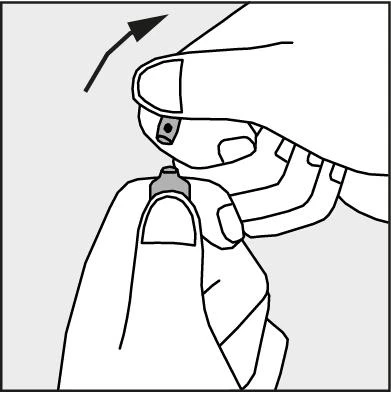
- Press in the direction of the arrow shown in Figure 3. Ampoules are intended for single use only and should be opened immediately before use. Any unused portion of the medicine must be destroyed in accordance with applicable regulations.
Figure 1.
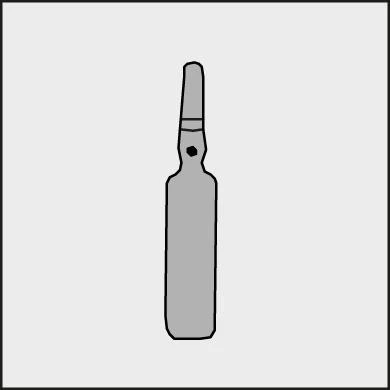
Figure 2.
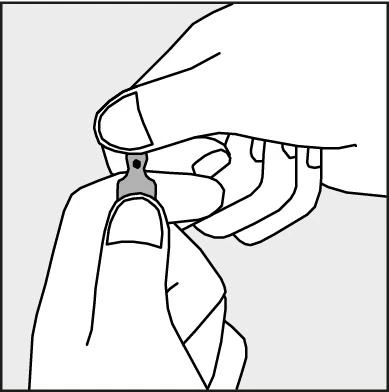
Figure 3.
Information on management in case of overdose
DIGOXIN WZF are provided in the Summary of Product Characteristics.
The original data is available in the language of the country of manufacture.
Data source: Register of Medicinal Products of Poland (URPL)
Data last verified: September 01, 2026